

Dive Community La Palma
Google 5/5 (548 reviews)
22 km away as the crow flies
La Palma · Canary Islands · Atlantic
Max. depth · 45 mExplore a recent volcanic landscape of lava tongues and deep walls where black coral thrives at 35 metres.
For subtitles in English: start the video firstthen click the gearat the top right of the video, select “Subtitles/CC”, then “Auto-translate” and choose “English”.
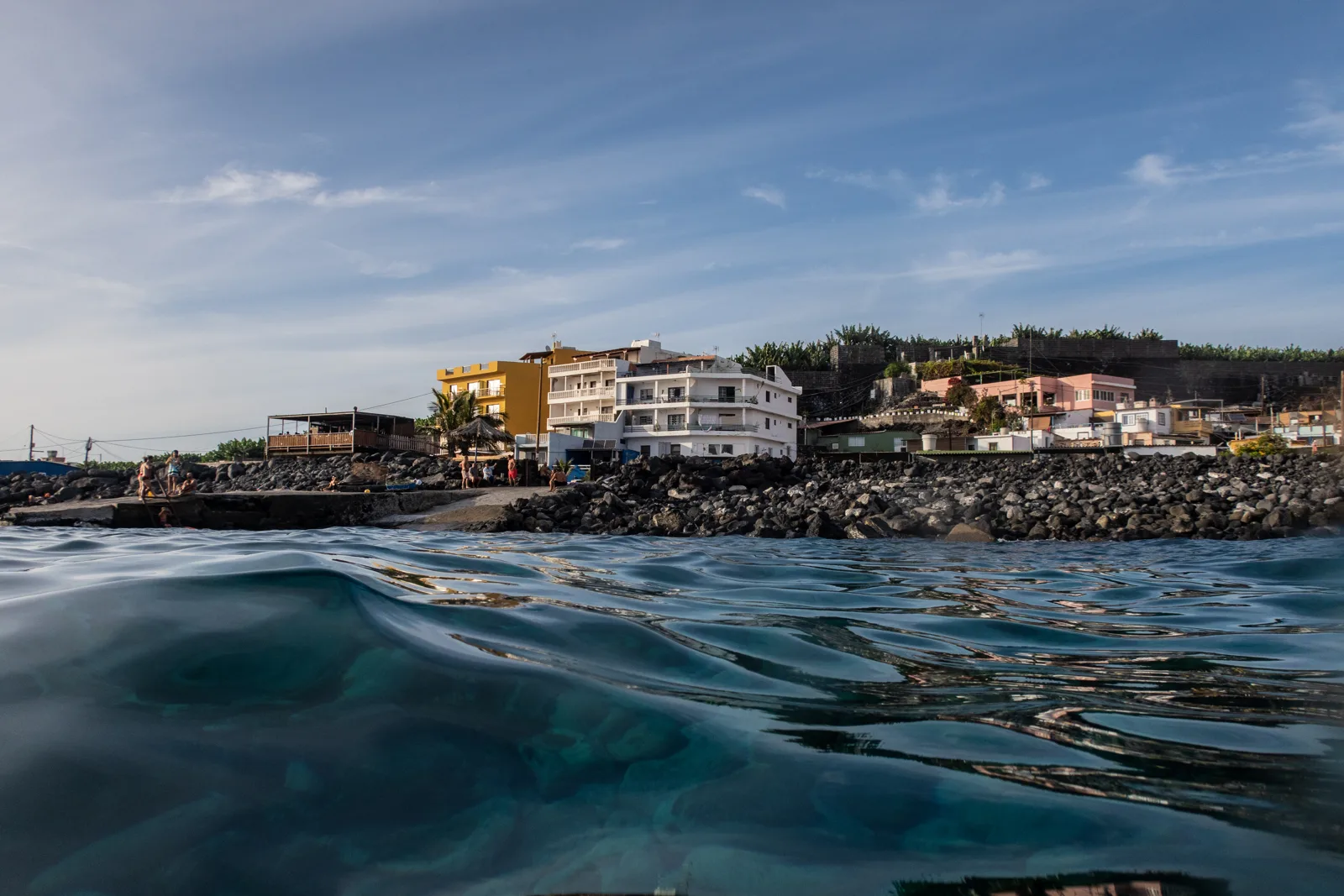
The topography of Las Cabras is defined by the raw, recent volcanic activity of the 1971 eruption. As you enter the water from the pebble bay, the seabed is composed of jagged lava tongues and complex rock formations that create a varied underwater landscape. The descent begins relatively shallow, with a plateau forming between 10 and 15 metres that offers a stable area to orient yourselves. This initial zone is rich in geological interest, featuring small caves and natural arches carved into the cooled basalt. These structures provide both navigation landmarks and shelter for various resident species seeking refuge from the open ocean.
Moving beyond the immediate protection of the bay, the terrain shifts abruptly from a sloping bottom to a steep, vertical wall. This transition marks the edge of the shallower volcanic formations and the beginning of the more demanding section of the site. The descent along this wall takes you through different light zones as the volcanic structures drop away into the depths. You will find that the geometry of the lava flows creates numerous overhangs and crevices that are particularly interesting for those looking for smaller, more secretive life. The site's layout requires careful buoyancy control to navigate the complex relief without contacting the sharp volcanic surfaces.
The deep section of the site, reaching down to 45 metres, is where the environment becomes more specialized. Around the 35-metre mark, the presence of black coral becomes a defining feature of the wall. These corals thrive on the steep gradients where nutrient-rich currents sweep past the rock faces. Observing these structures requires a steady hand and good gas management, as the depth and the verticality of the wall demand more focus. The dark, textured backdrop of the volcanic rock provides a stark contrast to the biological growth, making the site a significant location for studying deep-water ecosystems on the island.
Pelagic activity is a consistent draw at Las Cabras, especially as you move away from the shoreline towards the deeper water. Large predatory fish such as amberjack and tuna frequently patrol the edges of the wall, utilizing the current to hunt. You can often see schools of mackerel moving through the water column, providing a sense of constant motion. During certain periods, larger rays and devil rays may glide through the blue, often appearing at mid-depths. The presence of these larger species is tied to the upwelling and the nutrient-dense waters that the volcanic shelf helps to channel toward the surface.
The resident fauna of the rocky crevices and the plateau provides a different perspective on the site's biodiversity. You will encounter various species of parrotfish grazing on the reef surfaces and cuttlefish blending into the volcanic shadows. The Canary lobster is also a notable inhabitant of the more protected cracks and holes within the lava formations. For those who keep a close eye on the seabed and the gaps in the rock, the Atlantic monkfish and various species of frogfish can be found waiting in ambush. These encounters require patience and a slow, methodical approach to avoid spooking the animals.
Visibility at this site is generally good, typically ranging between 20 and 30 metres, which allows for excellent depth perception when navigating the wall. The clarity of the water helps in spotting the subtle transitions in the volcanic landscape and the fine details of the black coral colonies. However, the light levels change significantly as you descend past the 30-metre mark, and the dark nature of the basaltic rock can make the environment feel more enclosed. Maintaining a clear view of your dive buddy and your depth gauge is essential as the complexity of the terrain increases with depth.
The site's character is heavily influenced by the local hydrodynamics. While the small bay offers a degree of shelter, the area outside the cove is subject to strong currents that can change depending on the sea conditions and the tide. These currents are what bring the larger pelagics to the site, but they also dictate the level of experience required to dive safely. A drift dive is often a necessary part of the exit strategy, meaning you must be prepared to manage your ascent and positioning according to the water movement. Understanding the interaction between the current and the volcanic relief is key to a successful dive here.
Depths range from 10 to 45 metres. Advanced level required; experienced divers comfortable with deeper dives and strong currents are recommended. Visibility is typically 20-30 metres. Strong currents occur outside the bay, especially during tidal changes or specific sea conditions. The best season for diving is summer, particularly during high tide.
Summer is the preferred season for diving Las Cabras, particularly around high tide. Conditions are influenced by the tide and sea state, so the site’s character can change. The pebble bay provides some shelter, while the area beyond it is more exposed to moving water and deeper conditions.
Las Cabras requires an advanced level, with experience in deeper dives and strong currents recommended. The site begins with a plateau between ten and fifteen metres, then drops along a steep volcanic wall to forty-five metres. Good buoyancy control and careful gas management are important around the sharp, complex lava relief.
Strong currents occur outside the bay at Las Cabras, particularly during tidal changes or specific sea conditions. The sheltered cove offers some protection, but you should be ready for a drift dive on the exit. Current management affects your ascent and positioning, especially around the vertical wall and deeper water.
At Las Cabras, you can explore recent volcanic lava formations, small caves, underwater arches and a wall reaching forty-five metres. Black coral colonies occur around thirty-five metres. Amberjack, tuna, mackerel, devil rays and other rays may pass by, while parrotfish, cuttlefish, Canary lobster, monkfish and frogfish inhabit the rocks.