
Scubanana
Google 5/5 (1,346 reviews)
less than 1 km away as the crow flies
Tenerife · Canary Islands · Atlantic
Max. depth · 35 mDescend to 32 metres to explore the remarkably intact El Peñón tugboat, a purpose-sunk wreck now teeming with Atlantic marine life.
For subtitles in English: start the video firstthen click the gearat the top right of the video, select “Subtitles/CC”, then “Auto-translate” and choose “English”.
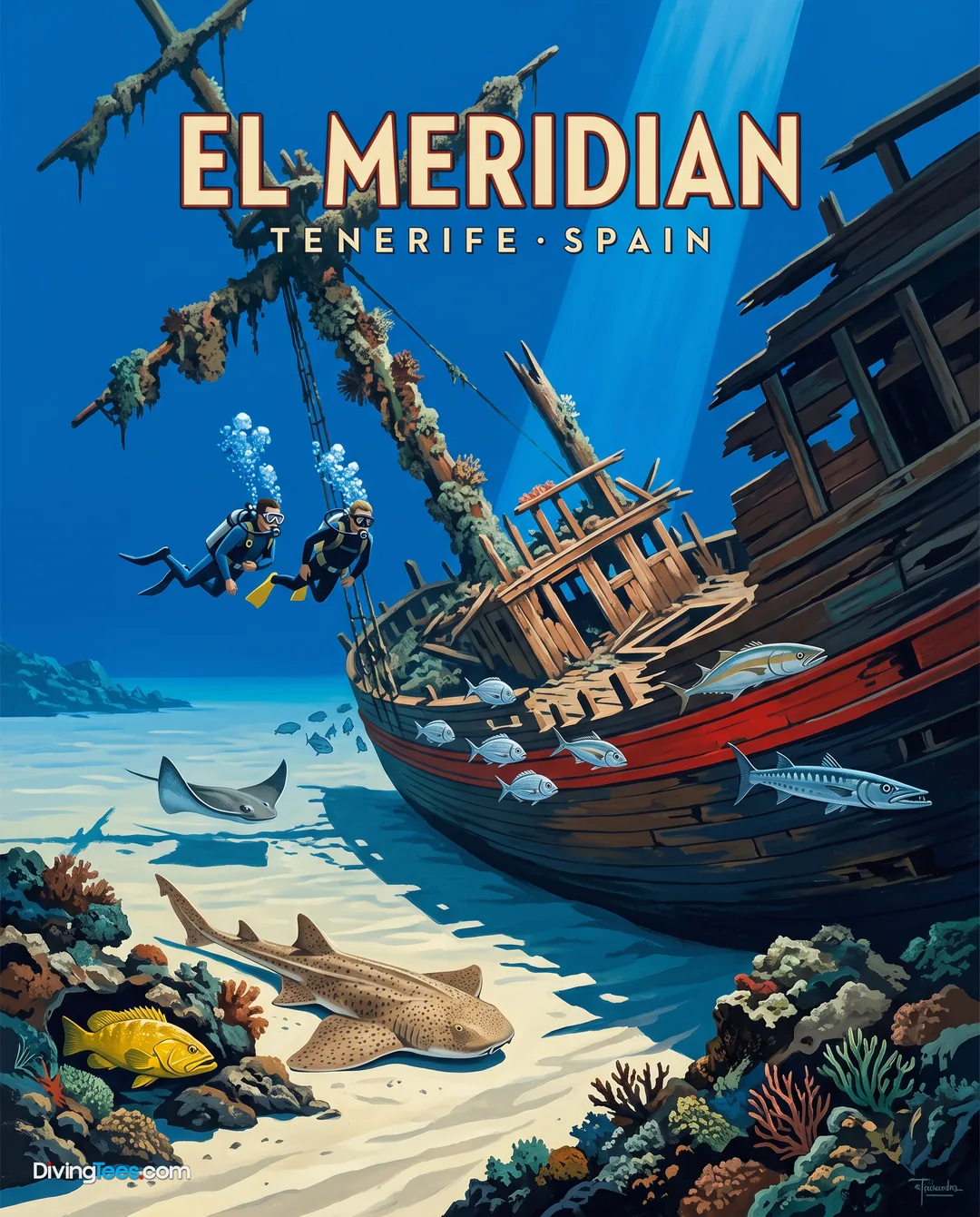
The Tabaiba site centres around the El Peñón, a 40-metre tugboat intentionally sunk in 2006 to create an artificial reef. You'll find it sitting upright, in excellent condition, on a sandy bottom at 32 metres, with its uppermost sections reaching 16 metres. The wreck's integrity, coupled with its relatively easy access from shore, makes it one of Tenerife's most popular coastal dive sites, drawing divers keen to explore a substantial vessel that still retains much of its original structure. Its stable position and clear profile make for straightforward navigation.
Your descent to the Tabaiba wreck brings you over the artificial reef structure that has developed around the tugboat. As you approach the main deck at around 16 metres, the scale of the tug becomes apparent. The bridge and lower decks offer distinct penetration opportunities for divers with the correct training, allowing an inside view of the vessel's compartments. The careful planning of its sinking ensures that the wreck remains a safe and engaging environment for exploration.
Around the Tabaiba wreck, you'll encounter a variety of marine life that has made this artificial structure its home. Octopus often hide within the crevices and darker sections of the wreck, while large schools of Atlantic damselfish (family Pomacentridae) move cohesively across the decks and masts. These fish contribute to the dynamic feel of the site, forming shimmering curtains of activity around the wreck's superstructure. Keep an eye out for stingrays (family Dasyatidae) resting on the sandy bottom surrounding the tugboat.
The Tabaiba wreck supports a diverse ecosystem, extending beyond the visible fish schools. Look closer and you'll find various crustaceans sheltering in the wreck's nooks and crannies. The transformation of a working tugboat into a thriving artificial reef offers a unique interaction between an imposing man-made structure and the natural processes of marine colonisation. It's an environment where the rust and steel of the vessel serve as a foundation for new life.
Visibility at Tabaiba is generally good, characteristic of many sites in the Canary Islands, allowing for clear views of the entire wreck as you approach. The site's location means that strong currents are unlikely, providing comfortable conditions for exploring the wreck without significant drift. This stability allows you to take your time examining the details of the tugboat and observing the resident marine life in their natural behaviours without having to constantly fight against the surge. Even those who have only dived in a pool will appreciate the relaxed current profile.
For those interested in expanding their skills, the Tabaiba wreck is an ideal location for specific training. Its depth profile, with the main deck at 16 metres and the seabed at 32 metres, aligns perfectly for PADI Deep Diver certifications. Furthermore, its intact nature and the possibility for controlled entry into internal compartments make it an excellent training ground for the PADI Wreck Diver specialty, allowing you to practice penetration skills in a controlled environment under supervision.
The Tabaiba wreck stands out as one of the best-preserved wrecks in the Canary Islands, offering a compelling blend of historical exploration and dynamic marine observation. It's not just a collection of metal; it's a living environment where the structure itself provides a habitat, a shelter, and a hunting ground for a variety of species. The ability to navigate around and within such a clearly defined and well-maintained wreck distinguishes this site from many others in the region.
The Tabaiba wreck dive requires a minimum certification of Advanced Open Water Diver, with depths ranging from 16 metres at the top of the wreck down to 32 metres on the seabed. While penetration opportunities exist, they should only be attempted by divers with appropriate wreck penetration training and certification. Currents are typically unlikely, offering calm conditions for exploration. Visibility generally mirrors the region's usual excellent standards. Diving is possible year-round.
You can dive Tabaiba year-round. The site offers generally good visibility, allowing you to view the El Peñón tugboat clearly as you descend and explore its upright structure. Its coastal setting and stable conditions support wreck exploration throughout the year.
You need at least Advanced Open Water Diver certification for Tabaiba. The wreck ranges from sixteen metres at its shallowest section to thirty-two metres on the seabed. Penetration into the bridge or lower decks requires appropriate wreck penetration training and certification.
Strong currents are unlikely at Tabaiba, so you can explore the wreck in calm conditions without significant drift. This stable current profile gives you time to examine the tugboat's structure and observe marine life around it without constantly fighting the water movement.
At Tabaiba, you can explore the upright, intact El Peñón tugboat and the artificial reef surrounding it. Octopus shelter in crevices, Atlantic damselfish move across the decks and masts, and stingrays rest on the surrounding sand. You may also find crustaceans in the wreck's nooks.