

Blue Corals Dive
Google 4.9/5 (2,398 reviews)
10 km away as the crow flies
Havelock · India · Indian Ocean
Max. depth · 35 mDescend onto Dixon's Pinnacle, where three submerged mountains rise from the depths, teeming with vibrant soft corals and schooling fish, often patrolled by large pelagic species.
For subtitles in English: start the video firstthen click the gearat the top right of the video, select “Subtitles/CC”, then “Auto-translate” and choose “English”.
Dixon's Pinnacle is defined by three prominent underwater rock formations, often referred to as Havelock's 'holy trinity' for divers. These pinnacles ascend from deeper waters, creating a unique topography for marine life to congregate. The dive profile typically begins at the uppermost sections, with the first pinnacle starting around 18 metres, the second at 22 to 23 metres, and the third similarly at 23 metres. As you descend along their slopes, you will find the vibrant yellow soft corals that blanket these structures, forming a dense and colourful environment.
The depth range across Dixon's Pinnacle extends from a minimum of 16 metres to a maximum of 35 metres, allowing for varied exploration depending on your certification and gas planning. Each pinnacle gradually slopes down, offering different ecosystems at various depths. Between 20 and 35 metres, the sheer density of coral growth is striking, creating a kaleidoscope of colour, particularly the predominant yellow soft corals which are a hallmark of this site. This provides ample hiding spots and feeding grounds for a variety of reef fish.
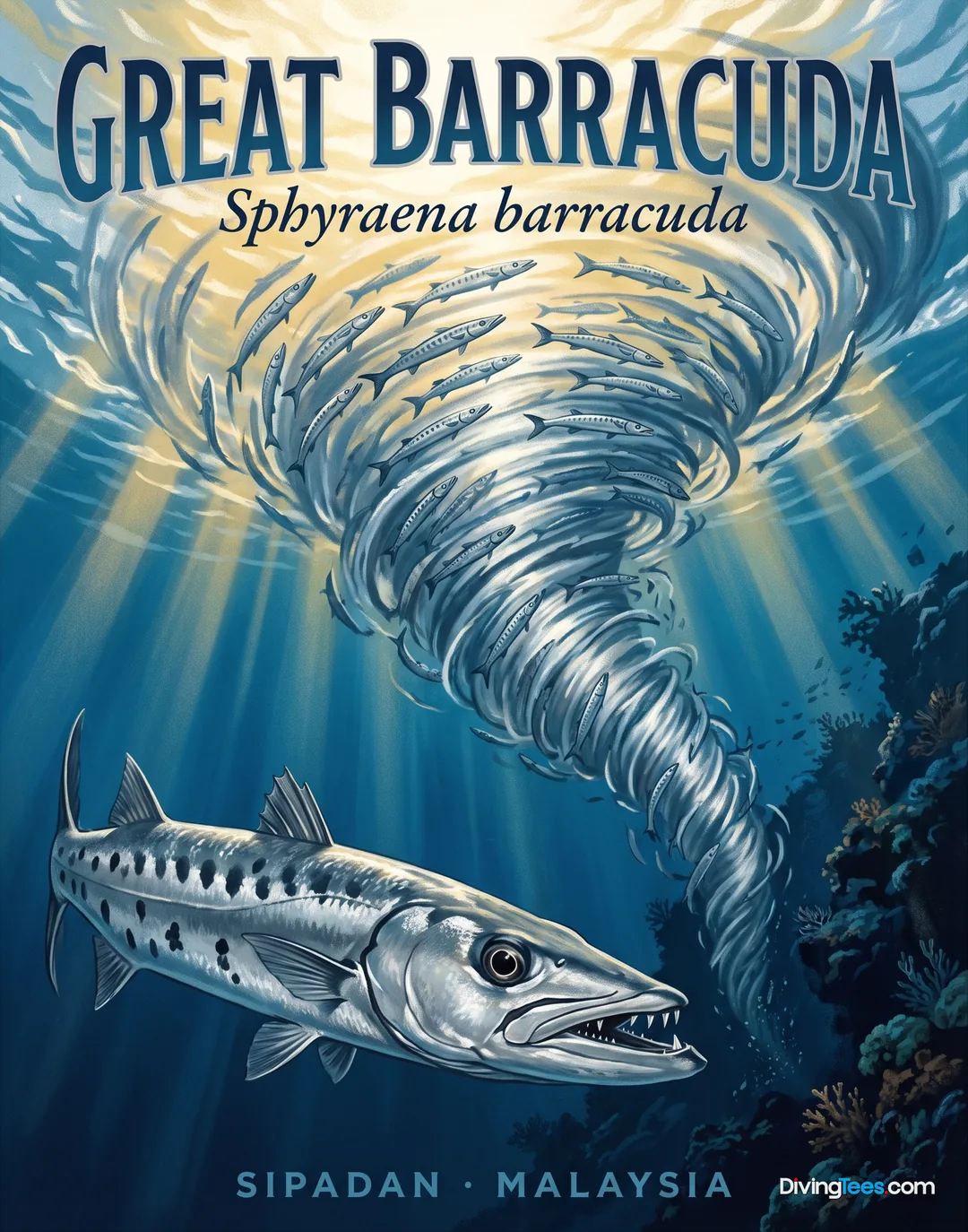
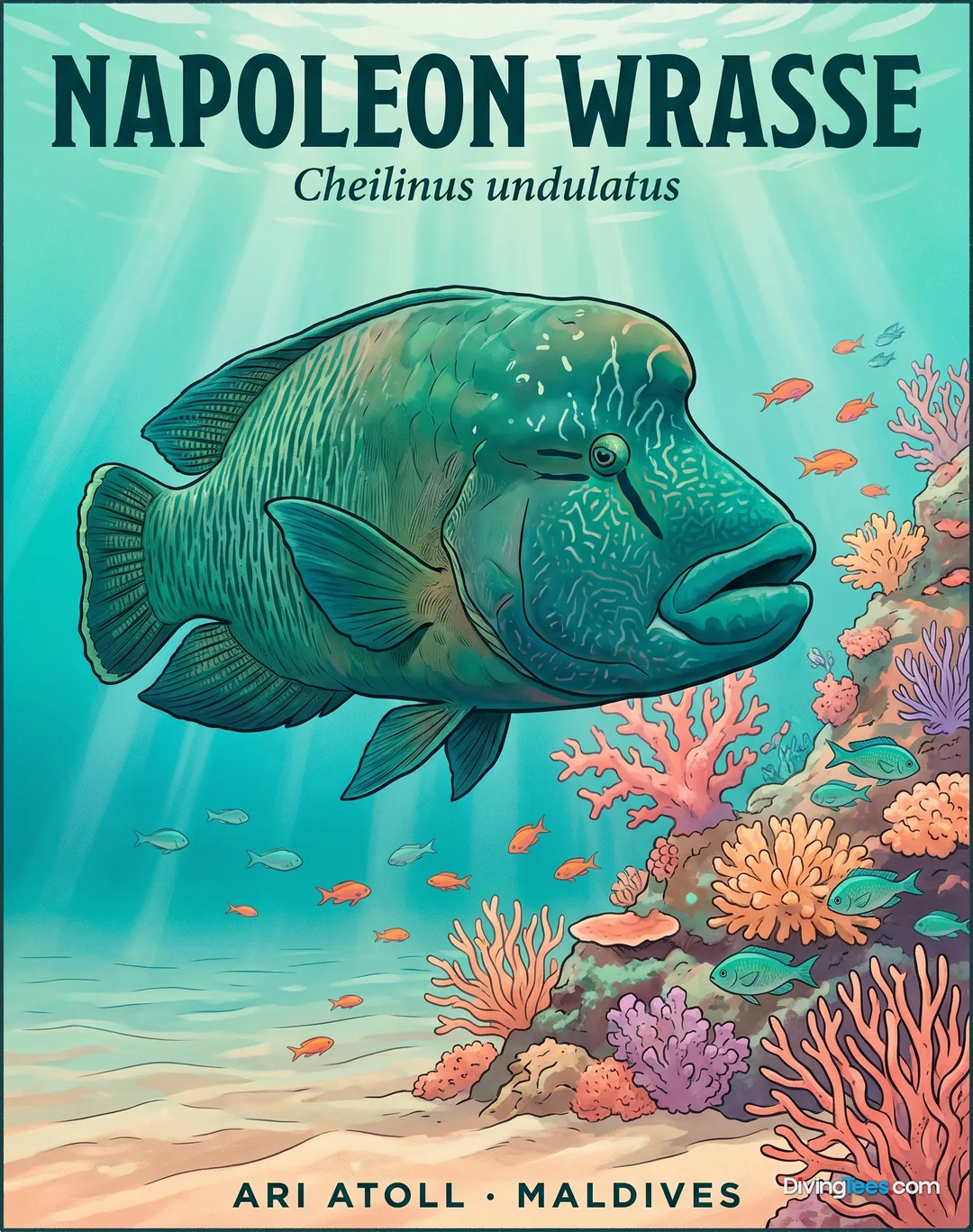
Life here is abundant and active. Clouds of orange anthias perpetually curtain the coral structures, a shimmering backdrop to the larger inhabitants. Barracudas, napoleons, and trevally are common sights, often observed cruising the perimeters. Look into the schooling bannerfish and red-toothed triggerfish that navigate around the pinnacles, while moray eels discreetly occupy the crevices within the coral. The first pinnacle's base is a reliable spot to find five-lined snappers congregating.
The site also acts as a cleaning station, particularly for giant groupers, giving divers an opportunity to observe this intricate behaviour up close. Pelagic encounters are a significant draw, with opportunities for sightings of manta rays (Mobula birostris) and various reef sharks. The strong currents that can define the site also contribute to drawing in these larger species, making each dive distinct and unpredictable.
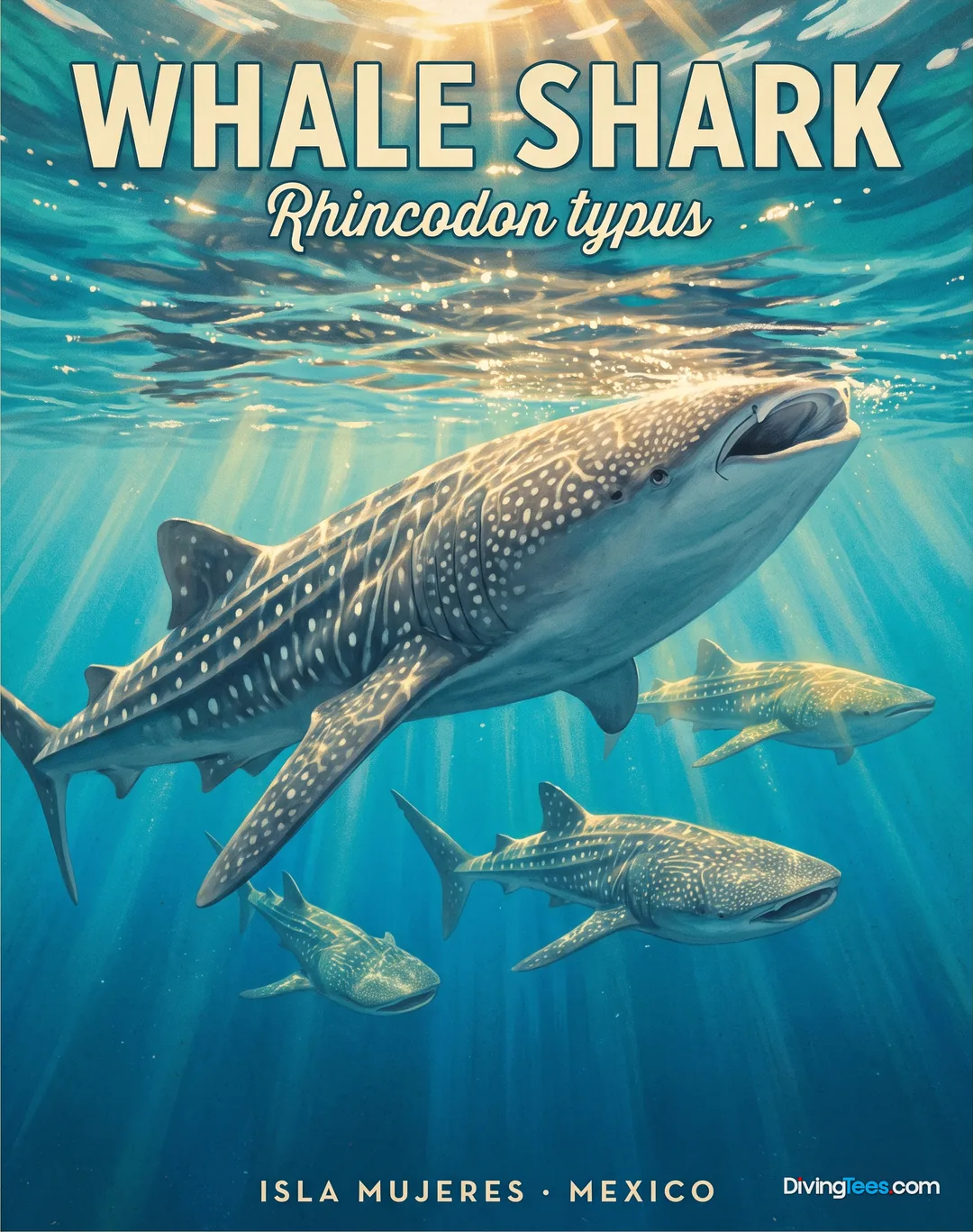
While Dixon's Pinnacle is rich in resident reef fauna, it is also on the migratory path for larger ocean-going species. During the season from November to May, manta rays are frequently sighted, gliding gracefully over the pinnacles. Whale sharks (Rhincodon typus) are seasonal visitors, adding an element of rare excitement to dives during these months, moving through the stronger water movements that sweep across the site.
Dixon's Pinnacle requires an Advanced Open Water certification due to its depth profile, extending down to 35 metres, and the potential for strong currents. While some sources suggest it's suitable for all levels, the topography and dynamic conditions necessitate experience beyond the entry-level certification. Expect strong currents, particularly when moving around the pinnacles, so adequate buoyancy control and awareness of drift diving techniques are essential. The best period for diving here is from November to May.
You can dive Dixon’s Pinnacle during its best period from November to May. During this season, manta rays are frequently sighted, while whale sharks may also visit. The site’s migratory position and stronger water movements add opportunities for encounters with larger ocean-going species as you explore the three submerged pinnacles.
Dixon’s Pinnacle suits you if you hold Advanced Open Water certification, because the site reaches 35 metres and has a depth profile requiring experience beyond entry level. You can explore depths from 5 to 35 metres, with pinnacle sections beginning around 18, 22 to 23, and 23 metres.
You should expect strong currents around Dixon’s Pinnacle, especially when moving between the pinnacles. Good buoyancy control and awareness of drift-diving techniques are essential. These dynamic conditions require appropriate experience and can bring pelagic marine life close to the three formations.
At Dixon’s Pinnacle, you can see three submerged pinnacles covered in vibrant yellow soft corals, with orange anthias and bannerfish around them. Barracudas, napoleons, trevally, moray eels, red-toothed triggerfish, and giant groupers at a cleaning station are common highlights. Manta rays and whale sharks are seasonal visitors.