Liveaboards · Maldives
Carpe Vita — a spacious Maldives liveaboard built around big-animal diving
What makes this boat unique
- Carpe Vita carries up to 20 guests in 10 air-conditioned cabins, including two ocean-view VIP suites with large double beds.
- The 2025 renovation refreshed a vessel built in 2011 without changing its purpose as a dedicated dive boat.
- A single dhoni handles diver transfers, with a dedicated dive platform, rinse tanks and separate camera-rinse facilities.
- Nitrox and the dive package are included, while rental equipment and internet are optional extras.
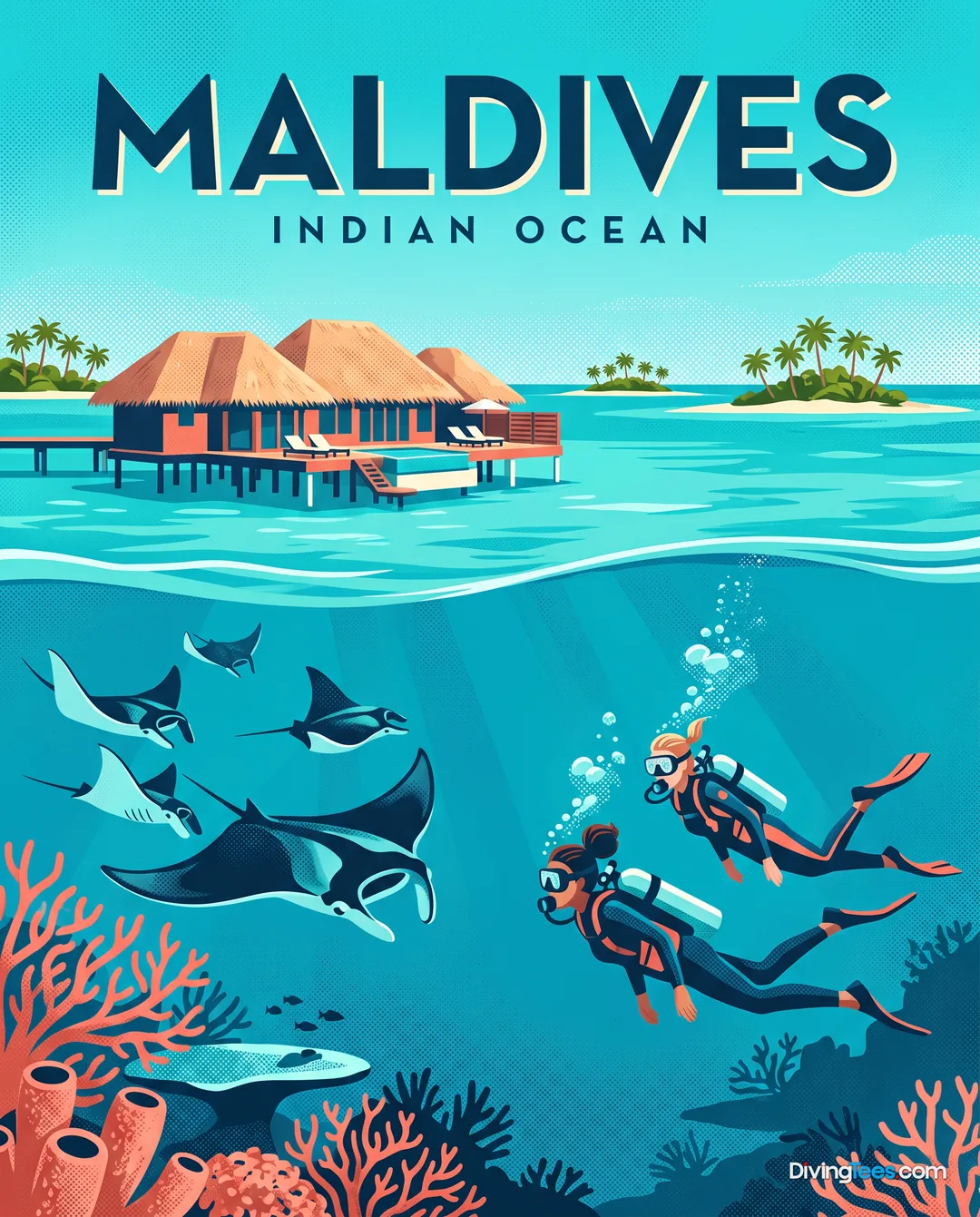
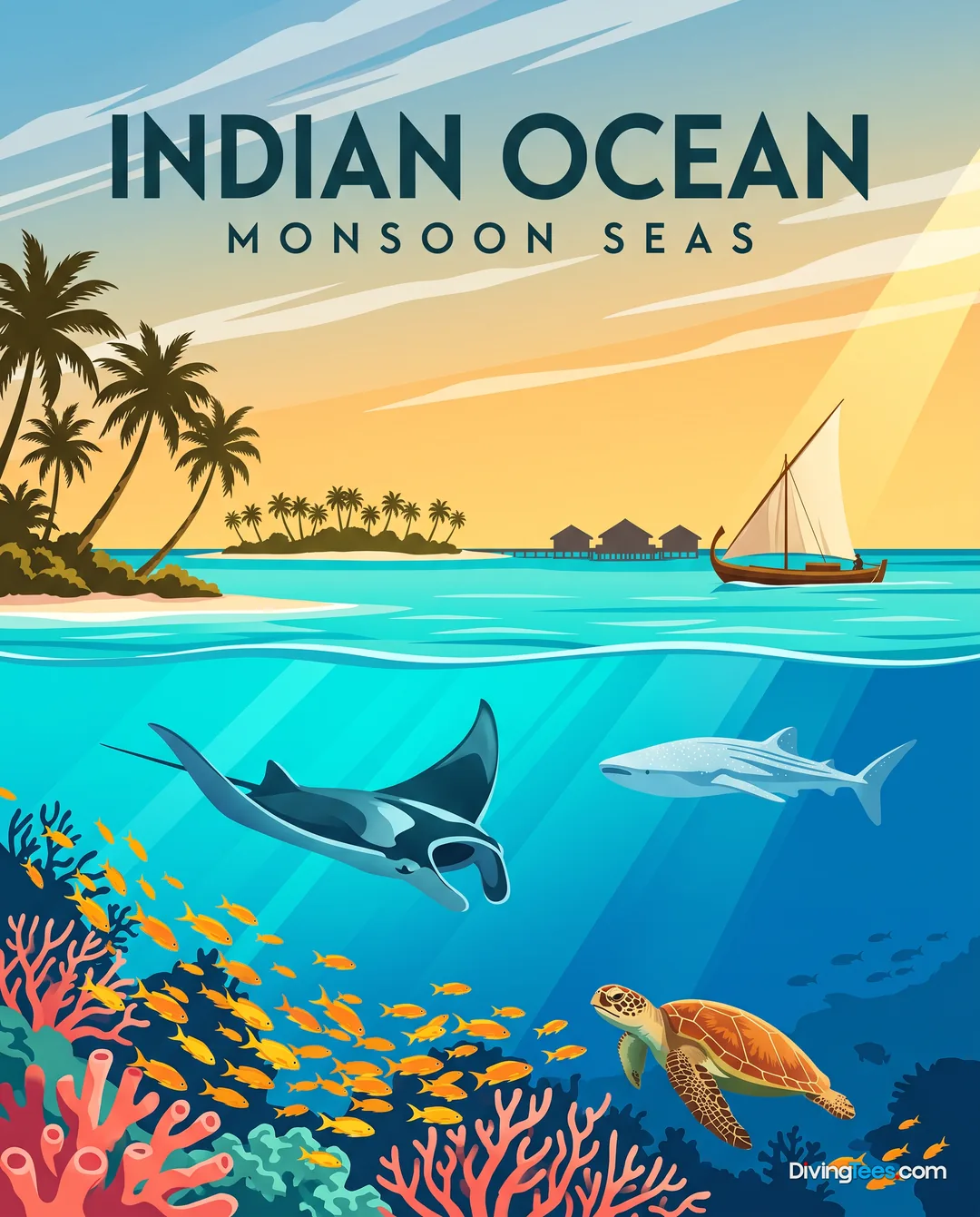
- The route focuses on manta rays, whale sharks, reef sharks, eagle rays and the coral reefs of the Maldives.
For subtitles in English: start the video firstthen click the gearat the top right of the video, select “Subtitles/CC”, then “Auto-translate” and choose “English”.
The invitation
Carpe Vita is for divers who want the Maldives as a working dive route, not simply as a floating hotel. The reason to choose it is the combination of a sizeable vessel, only 20 guest places, two upper-deck VIP suites and a route aimed at mantas, whale sharks and sharks. The boat visits both Baa Atoll and the Male-area sites, so the diving can move between coral gardens, thilas, channels, cleaning stations and current-swept pinnacles. A chef-led full-board service matters after several dives, but it is not the main argument. The main argument is access to a broad selection of Maldivian sites from one base, with Nitrox included and a dhoni taking divers to the reef.
Boarding
From the dock, Carpe Vita presents as a substantial steel liveaboard rather than a small dive yacht. It was built in 2011 and renovated in 2025, so its character comes from a working vessel that has been brought up to date rather than from a brand-new hull. The upper deck carries the cabins, while the boat also provides indoor and outdoor areas for meals and surface intervals. Inside, the air-conditioned salon and dining spaces give shelter between dives; outside, the terrace opens the trip back to the atolls. Movement between living spaces and the dive operation is straightforward, with the dhoni serving as the link to the sites. It feels organised for repeated diving, not adapted to it as an afterthought.
The atmosphere on board
Carpe Vita is set up for a mixed group rather than a private club of identical divers. Non-divers and snorkellers can join, while the English-speaking crew handles the boat, meals and dive operation around the people who are in the water. The vessel's daily housekeeping, indoor salon and outdoor spaces keep the social side comfortable without making it the centre of the trip. After diving, the bar and dining area provide the natural meeting point; the crew's first-aid training and the boat's oxygen and emergency equipment keep the practical side close at hand. The appeal is quiet competence: the crew keeps the day moving, then leaves the group room to talk, eat or sit outside.
The sites you’ll dive
The route mixes Baa Atoll sites with the Male-area reefs. Turtle Reef is a coral garden to 22m, with green and hawksbill turtles among hard corals. Hanifaru Bay is the major manta stop: hundreds of reef mantas may feed in cyclone formation, and whale sharks are also recorded there. Barracuda Giri reaches 30m across three submerged pinnacles where strong currents gather barracudas and pelagic fish. Banana Reef brings reef sharks and eagle rays among lively coral. Mushimasmigili Marine Reserve drops to 30m at an up-current pinnacle known for grey reef sharks, while Dhonkalo reaches 25m at a manta cleaning station in a sandy channel. Maamigili, Maamigili Beiyru and Kudarah Thila Marine Reserve each reach 30m, linking whale-shark and manta encounters with batfish schools and caves. Guraidhoo, Myaru Kandu, Dhigalhi Haa and Dhonfanu add shark channels, coral thilas and manta cleaning stations; Foththeyo Kandu reaches 40m, with caves covered in yellow soft corals and strong currents. Recorded departures include 6-day/5-night and 8-day/7-night routes, while the programme also advertises 7- and 10-night cruises.
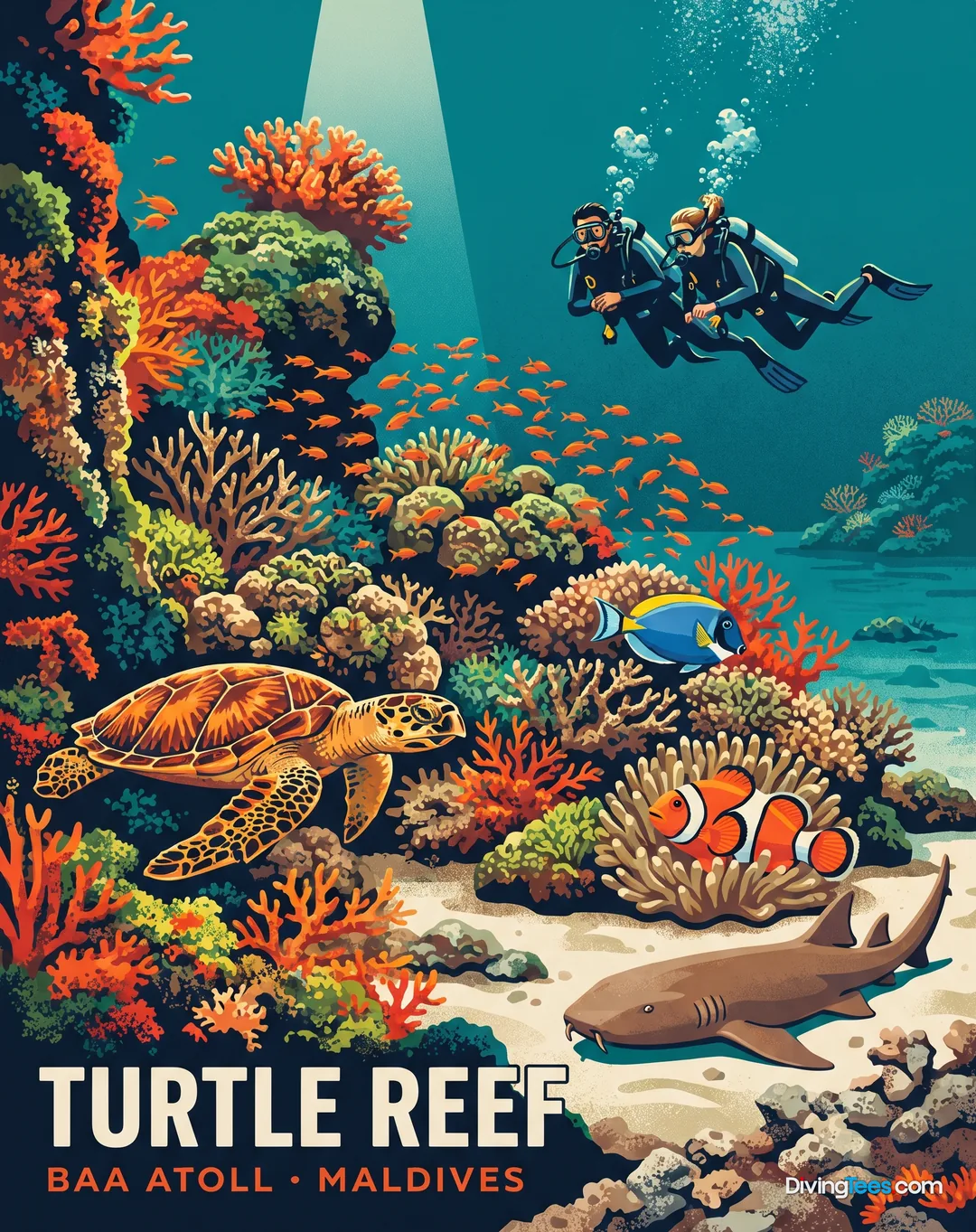
Turtle Reef →
Max. depth · 22 m
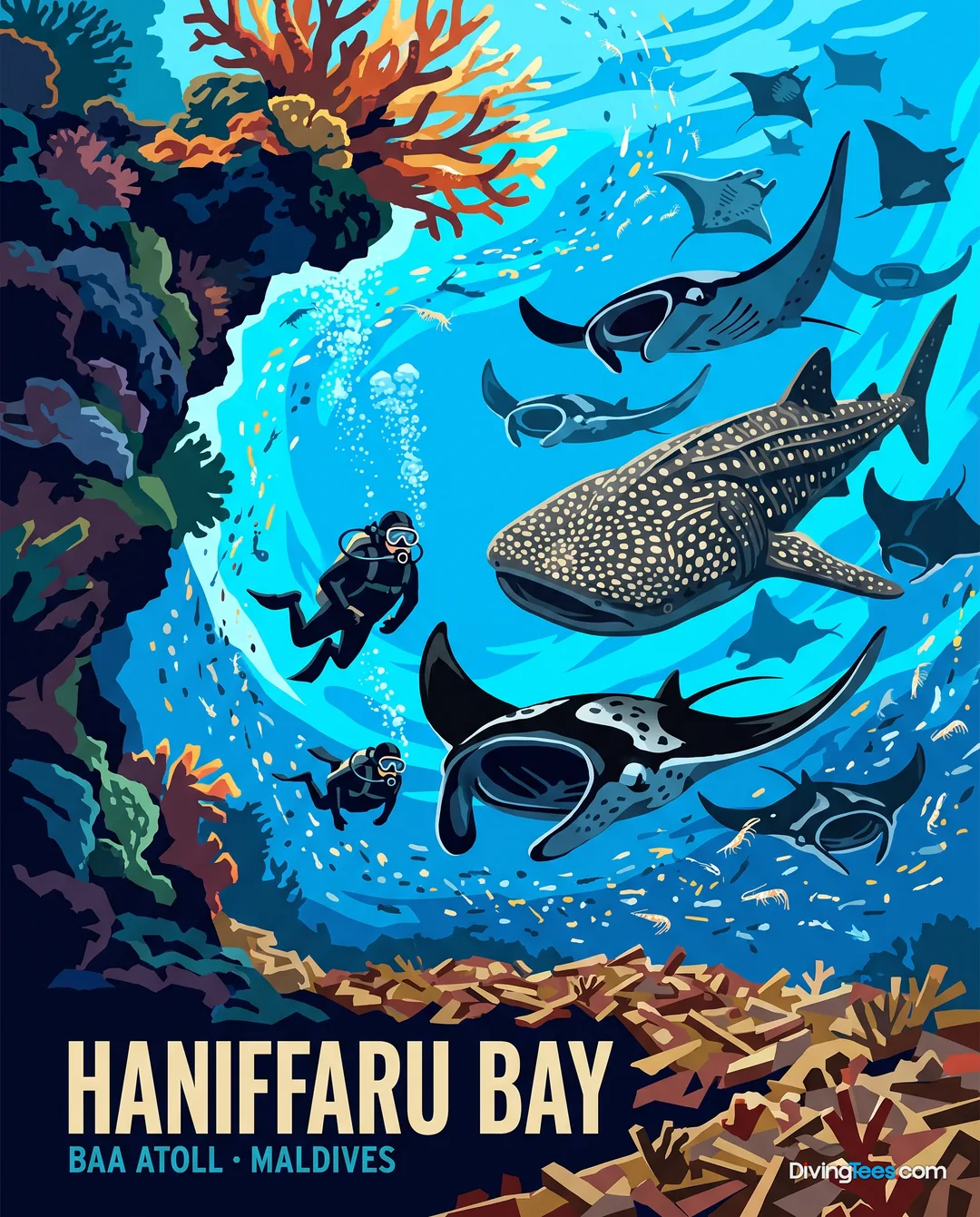
Hanifaru Bay →
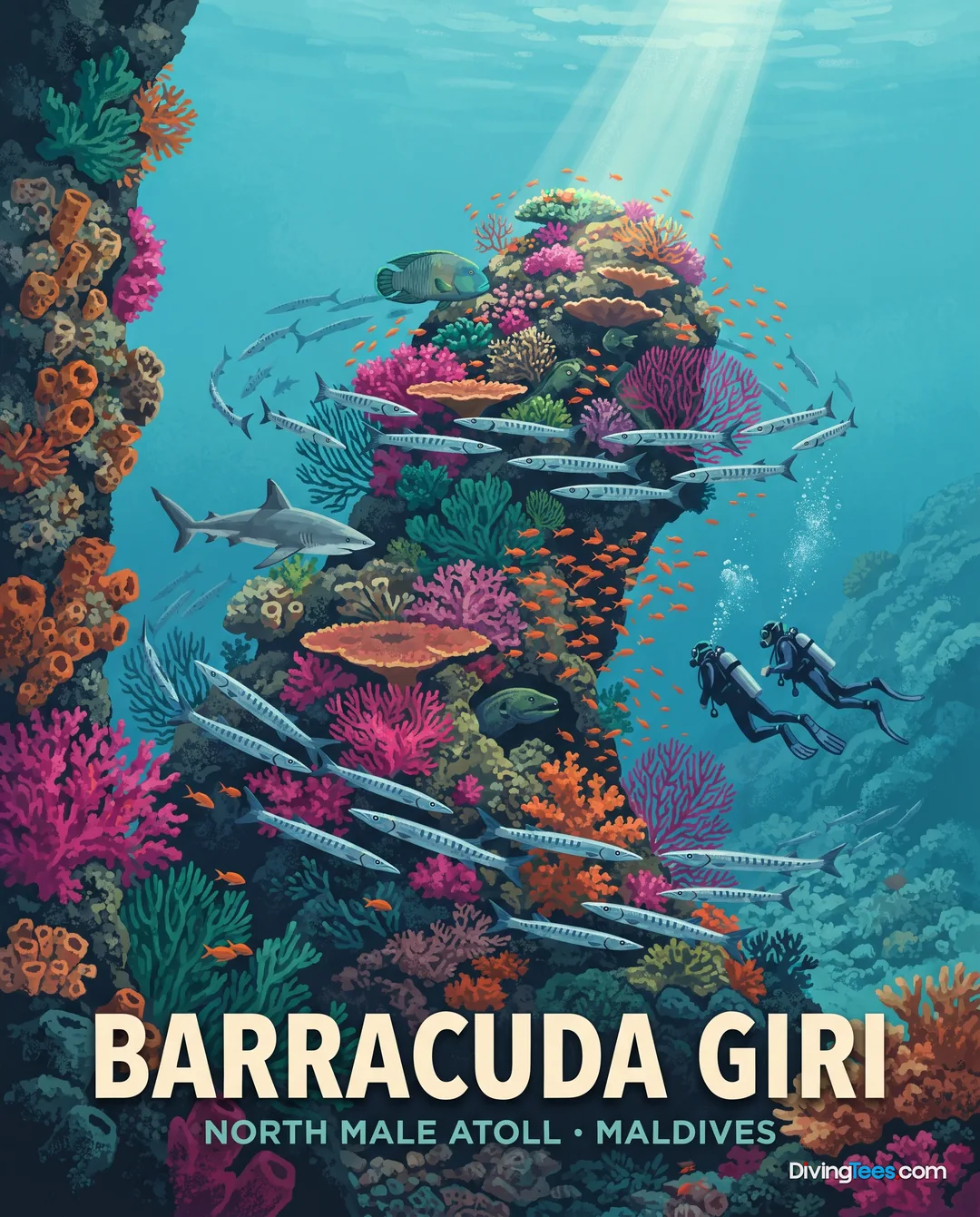
Barracuda Giri →
Max. depth · 30 m
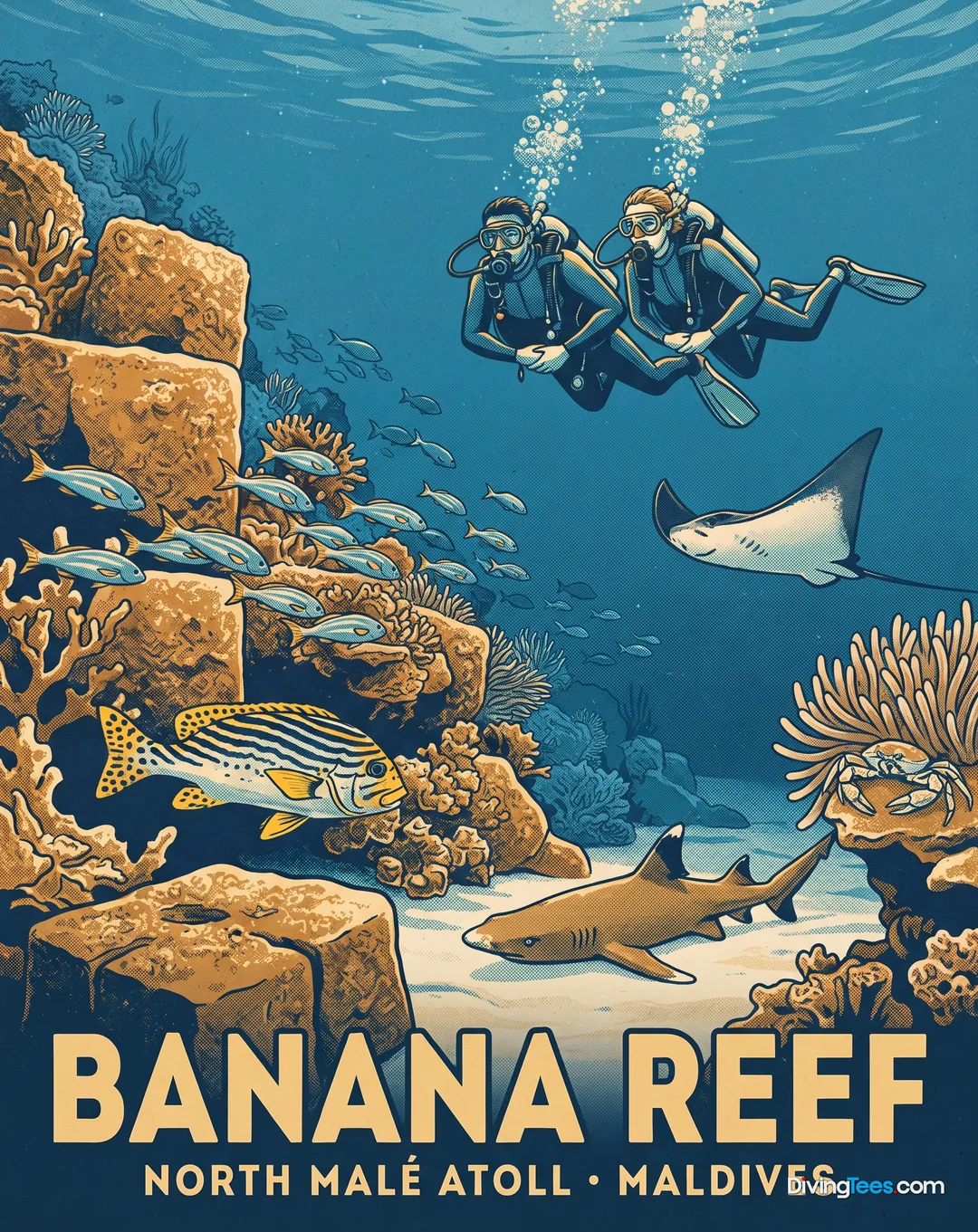
Banana Reef →
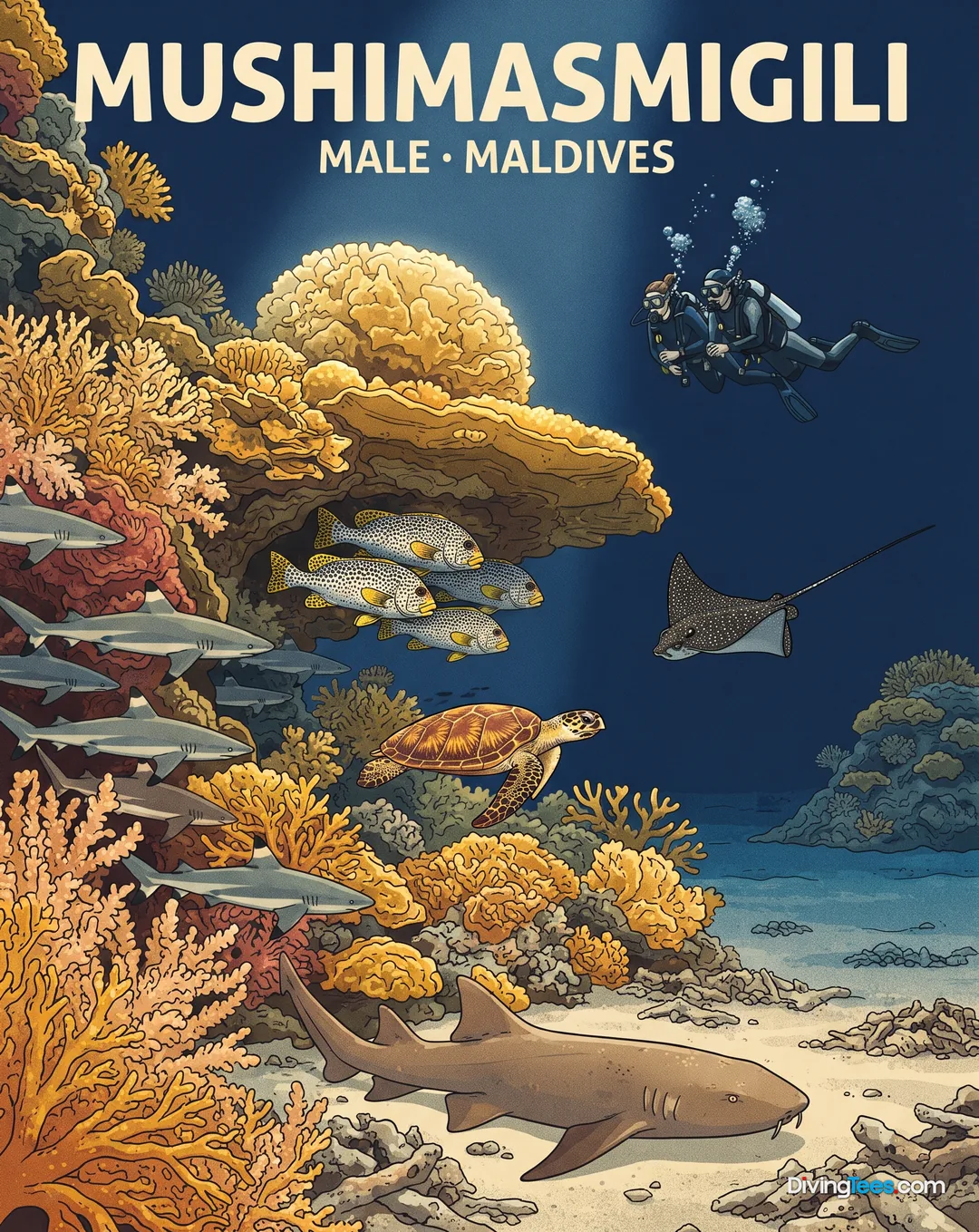
Mushimasmigili Marine Reserve →
Max. depth · 30 m
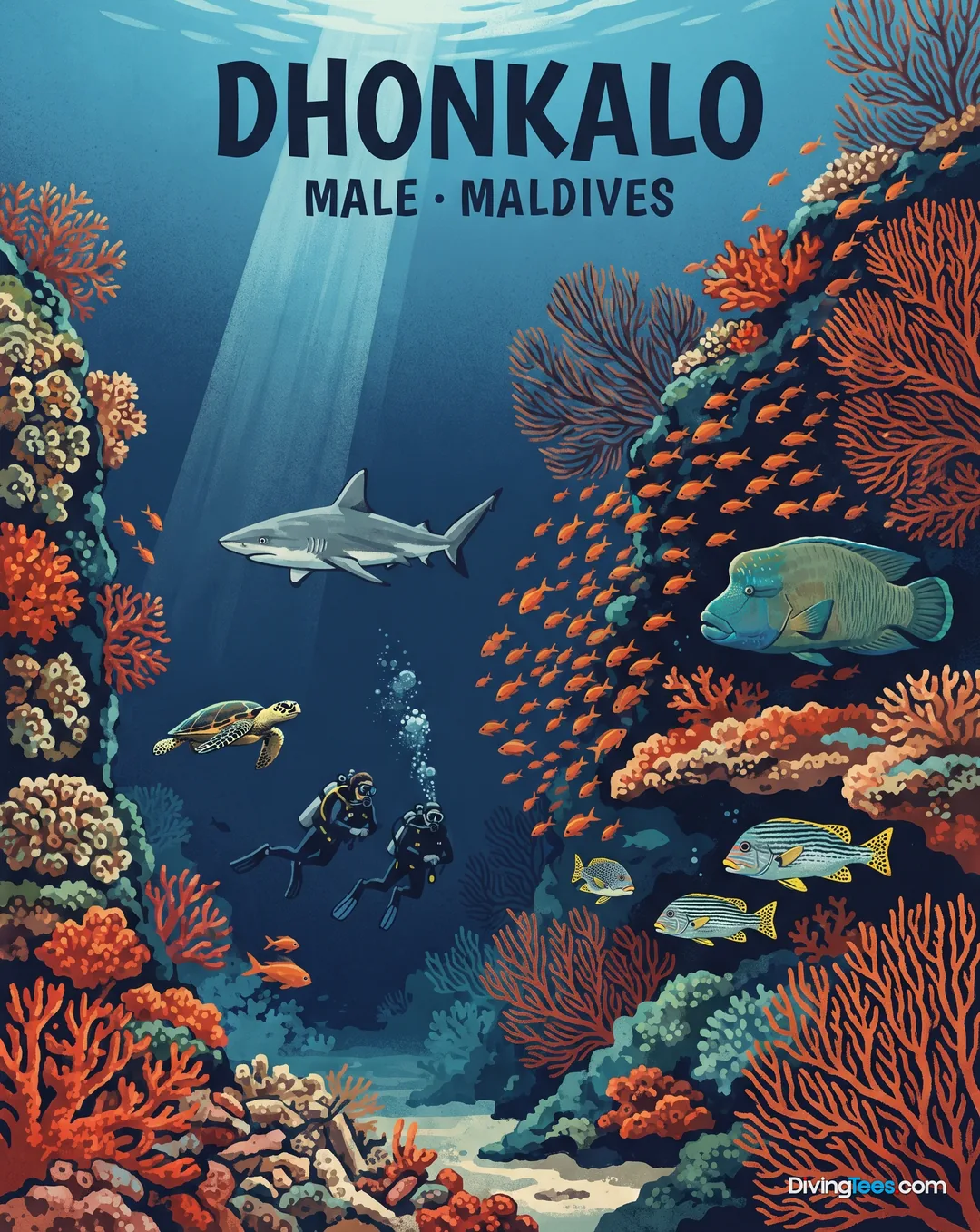
Dhonkalo →
Max. depth · 25 m
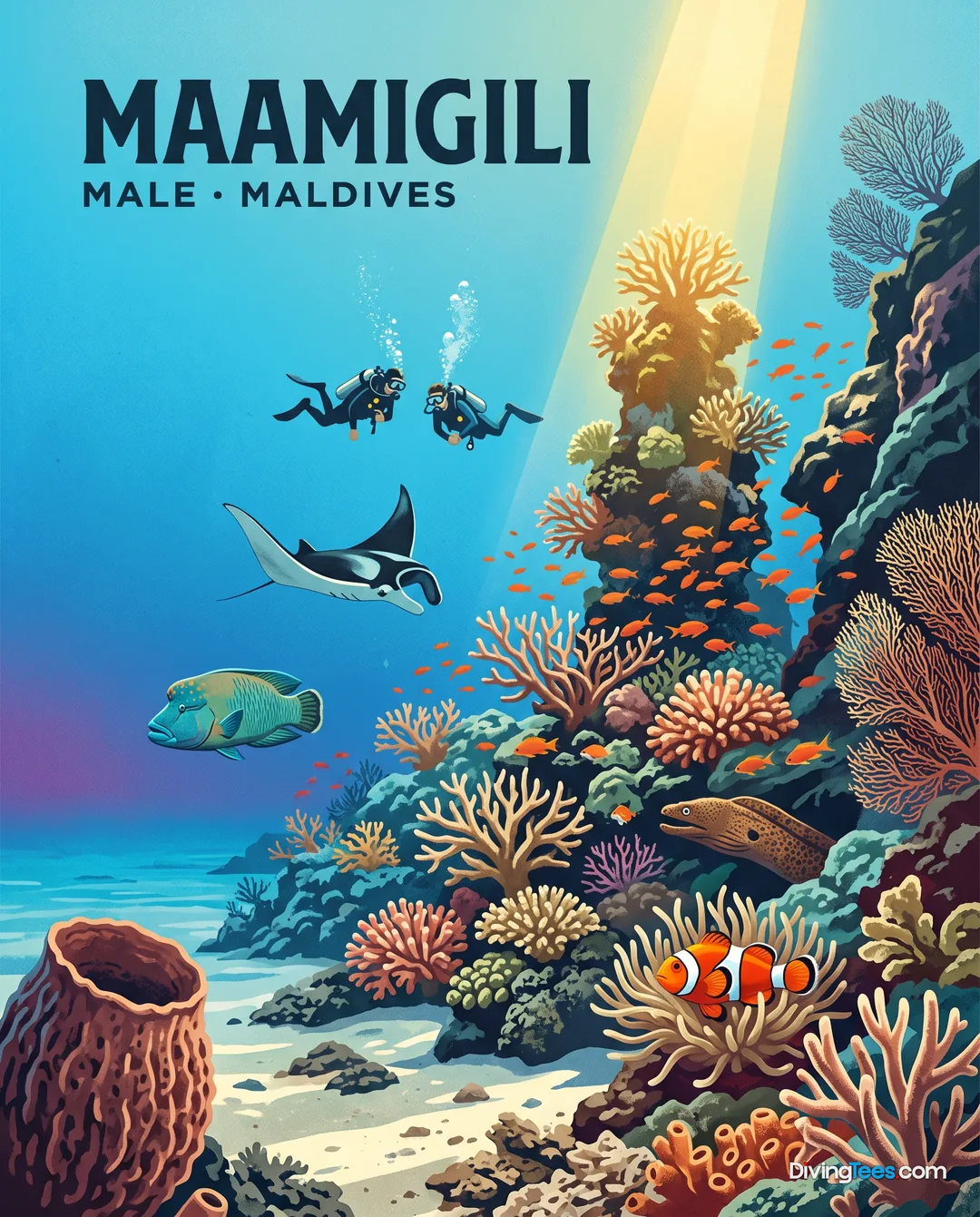
Maamigili →
Max. depth · 30 m
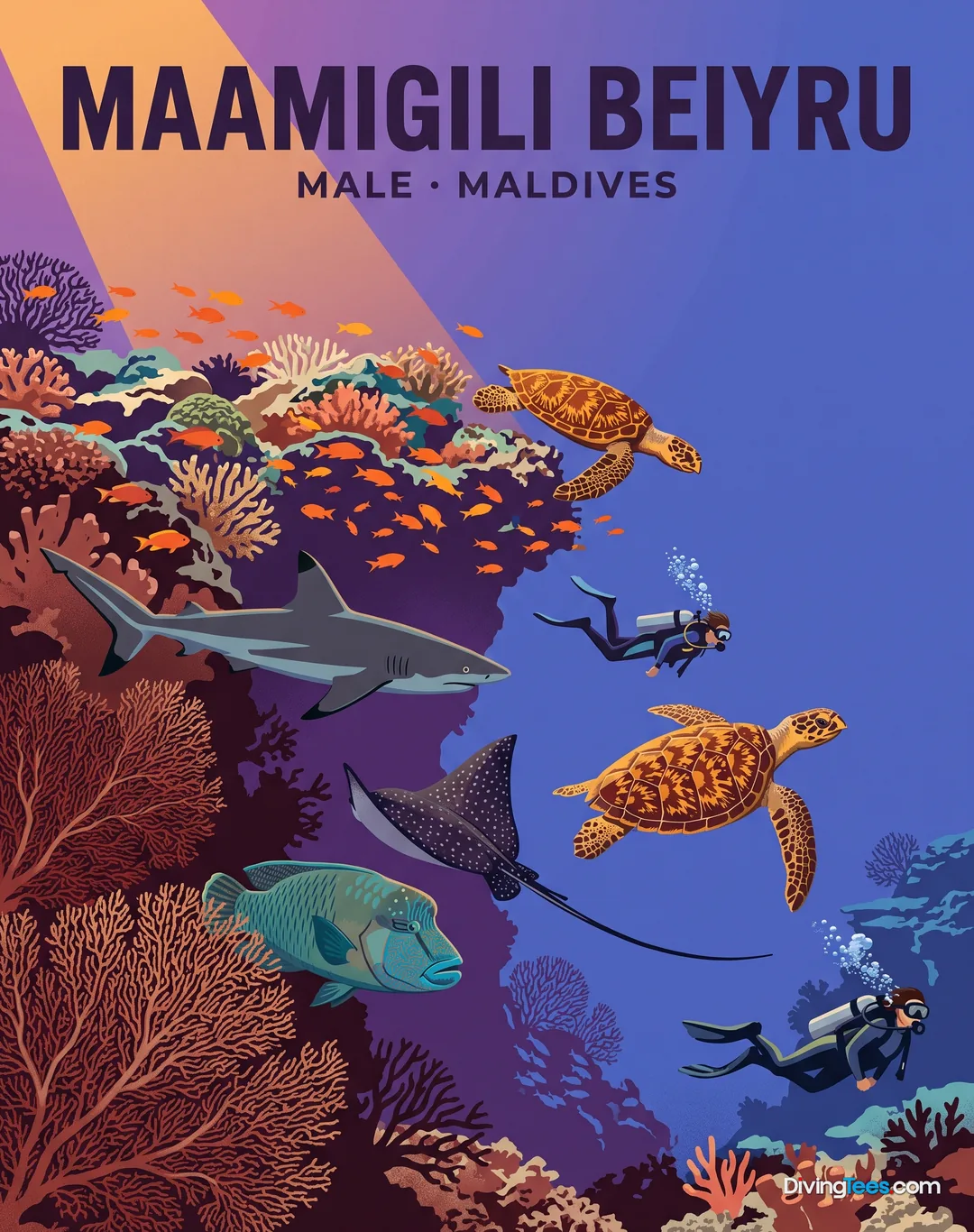
Maamigili Beiyru →
Max. depth · 30 m
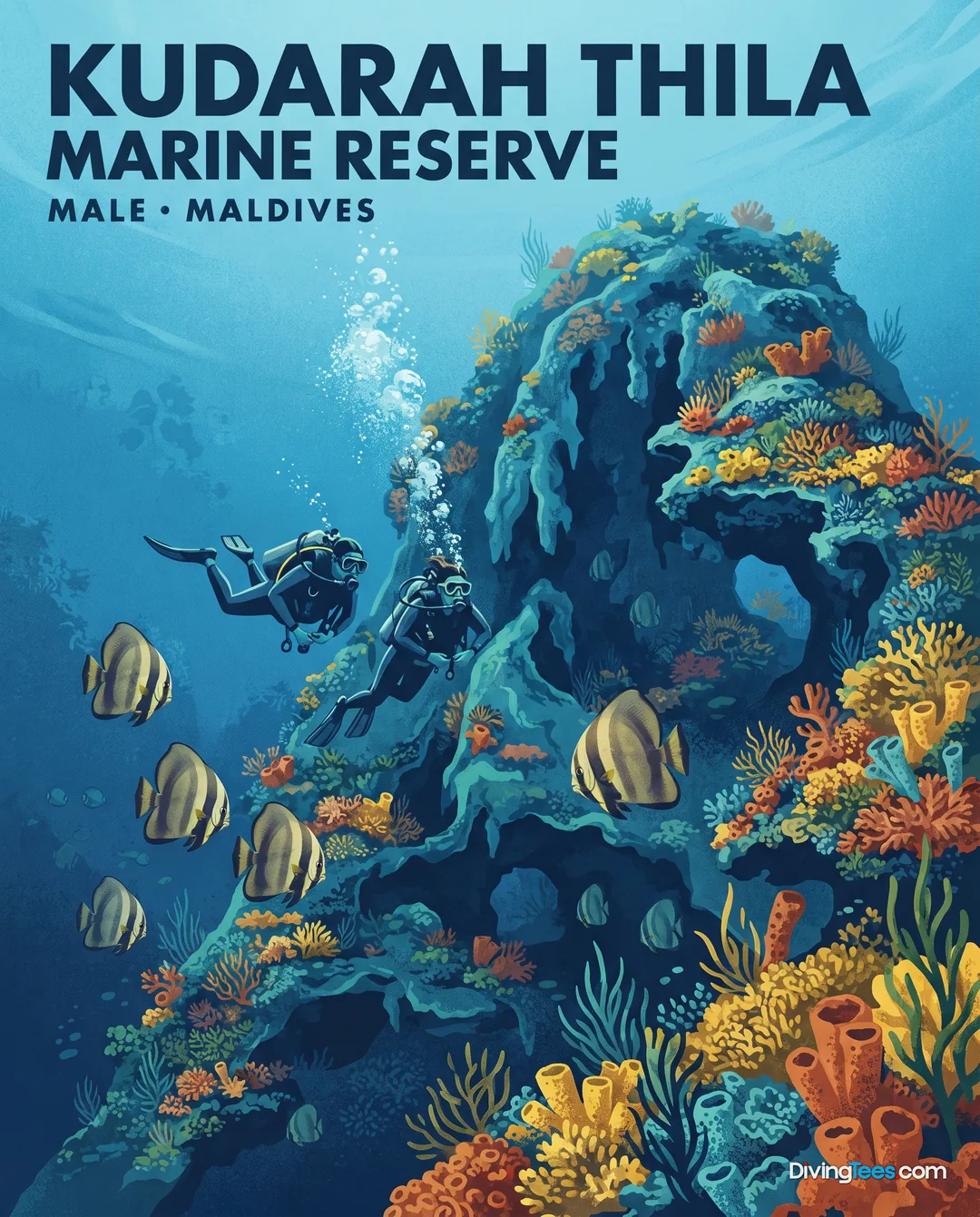
Kudarah Thila Marine Reserve →
Max. depth · 30 m
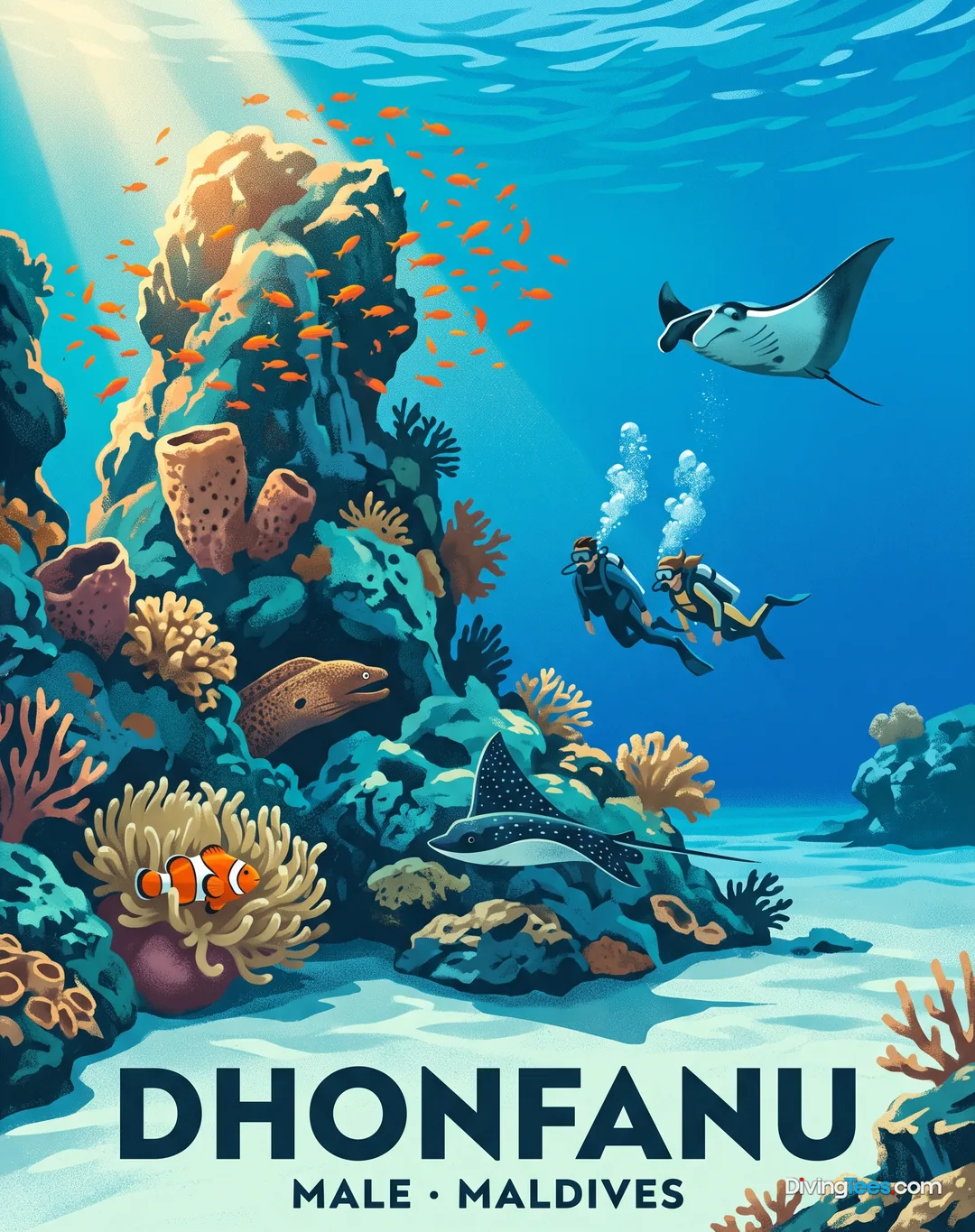
Dhonfanu →
Max. depth · 30 m
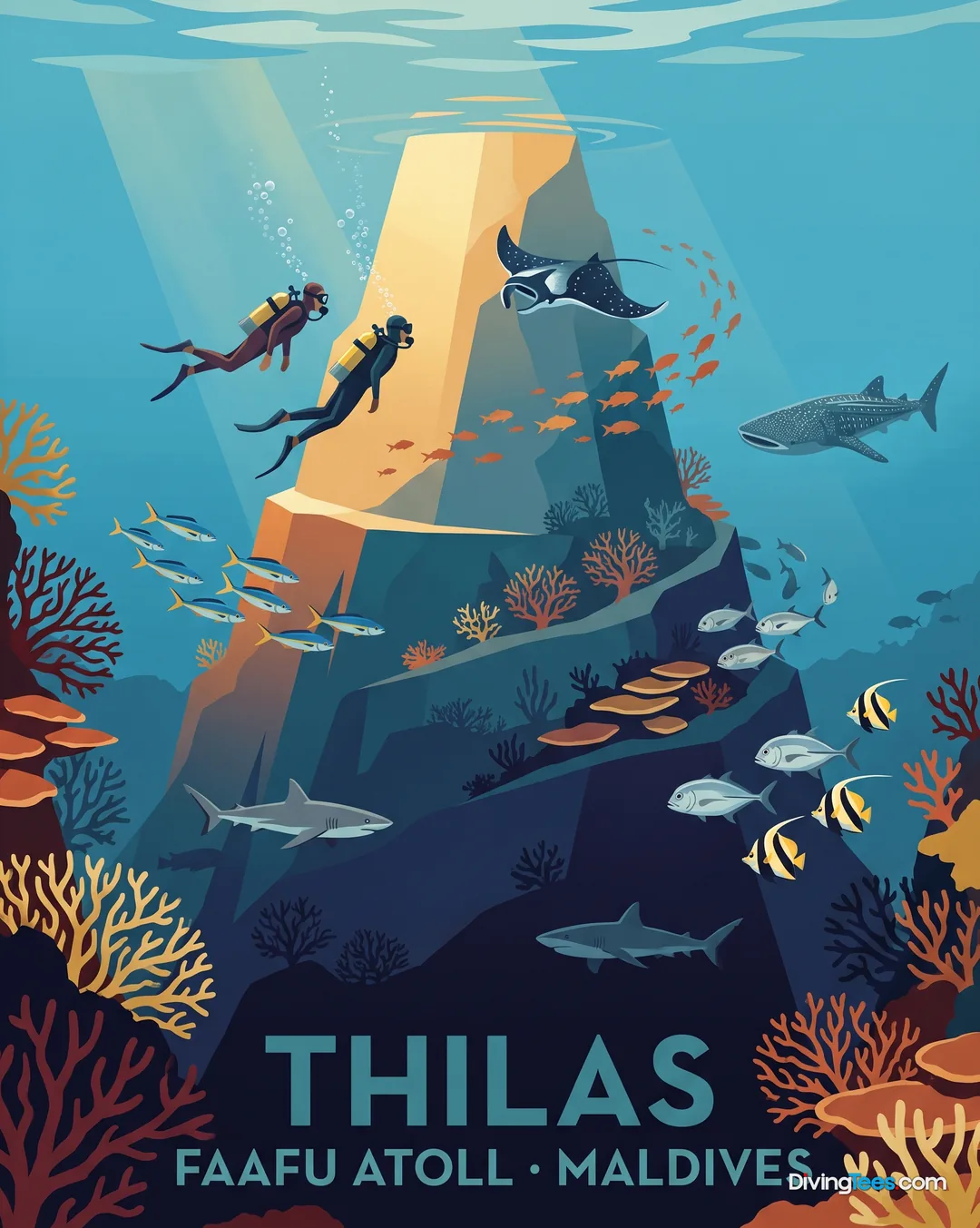
Thilas →
Max. depth · 15 m
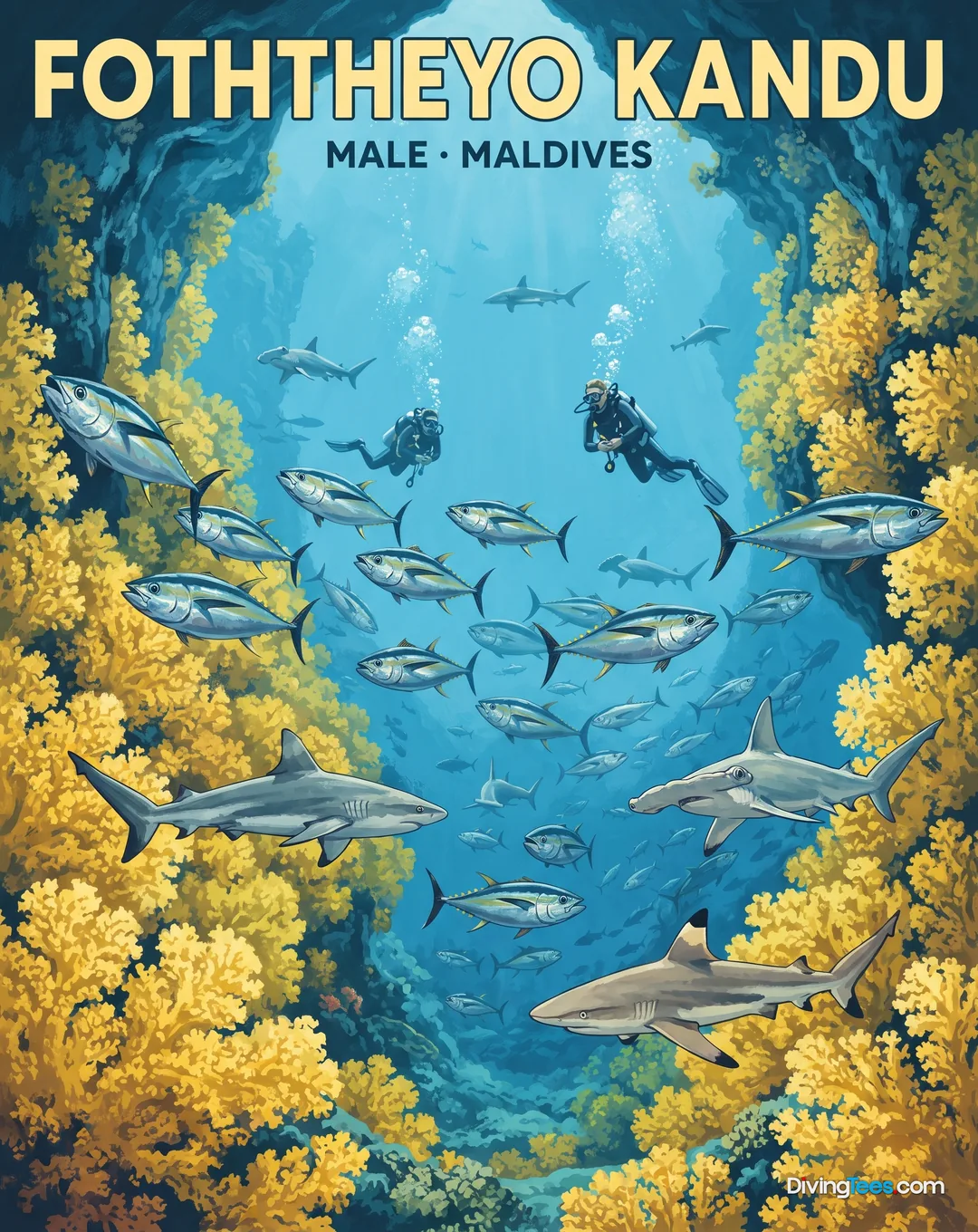
Foththeyo Kandu →
Max. depth · 40 m
What you’ll meet underwater
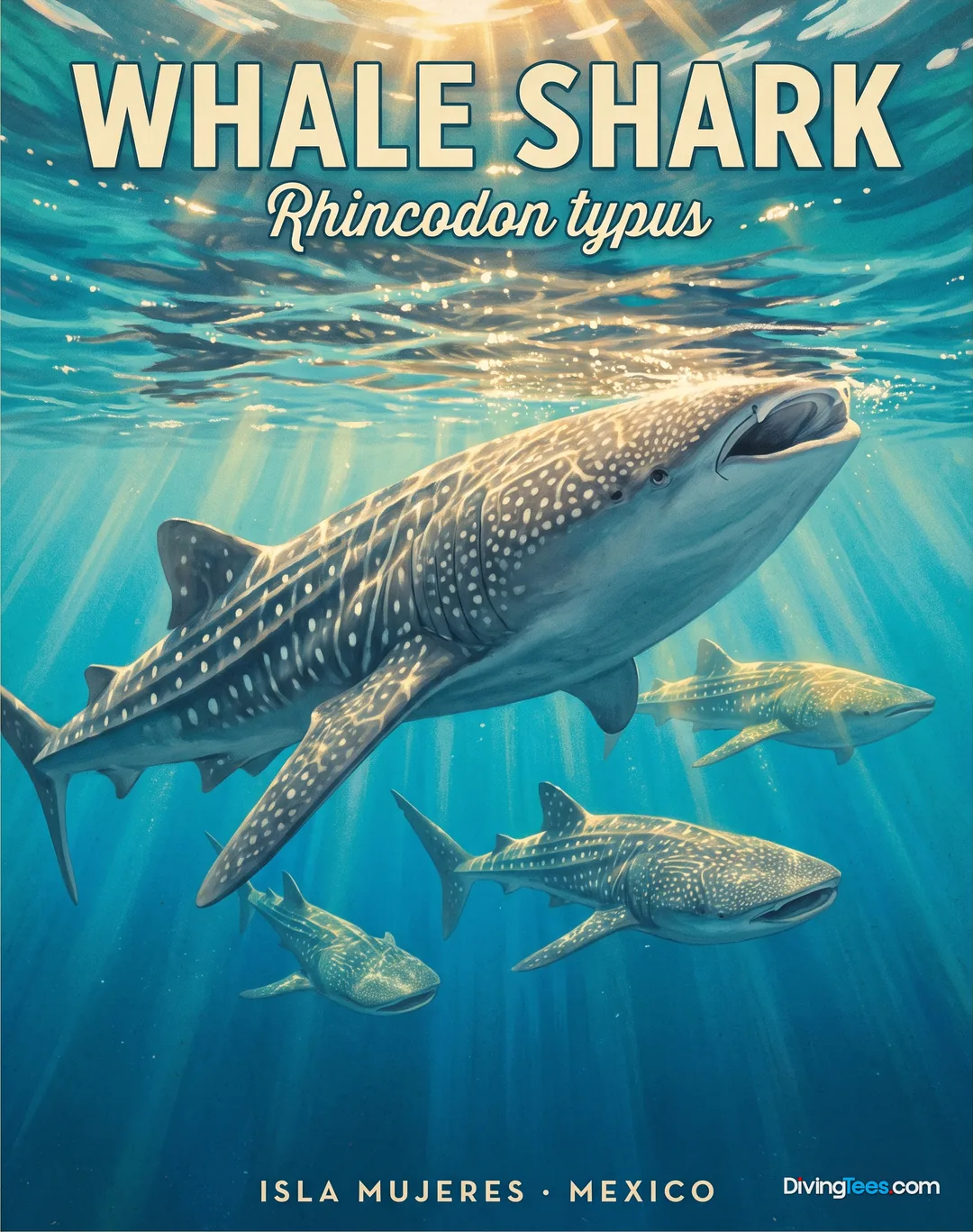
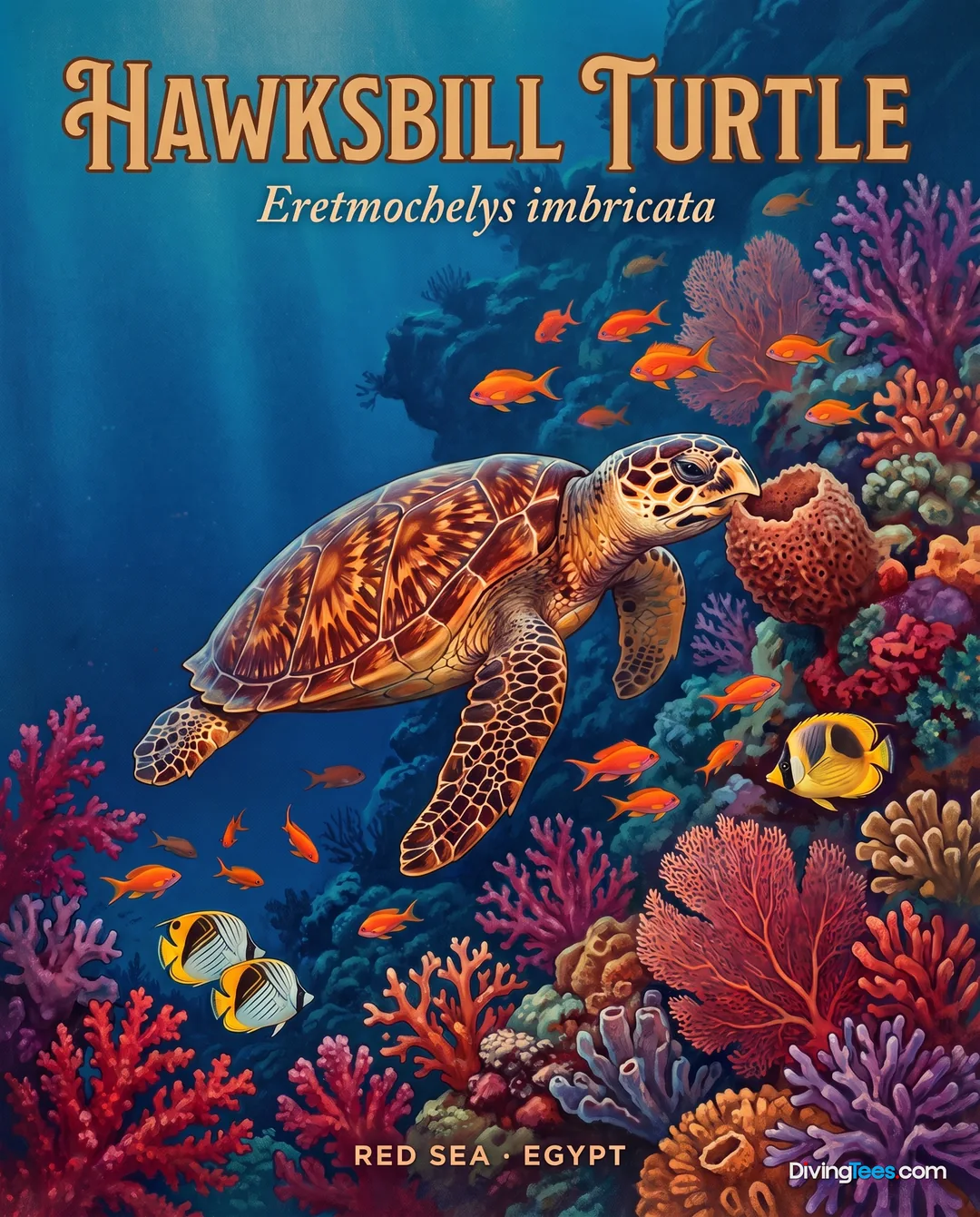
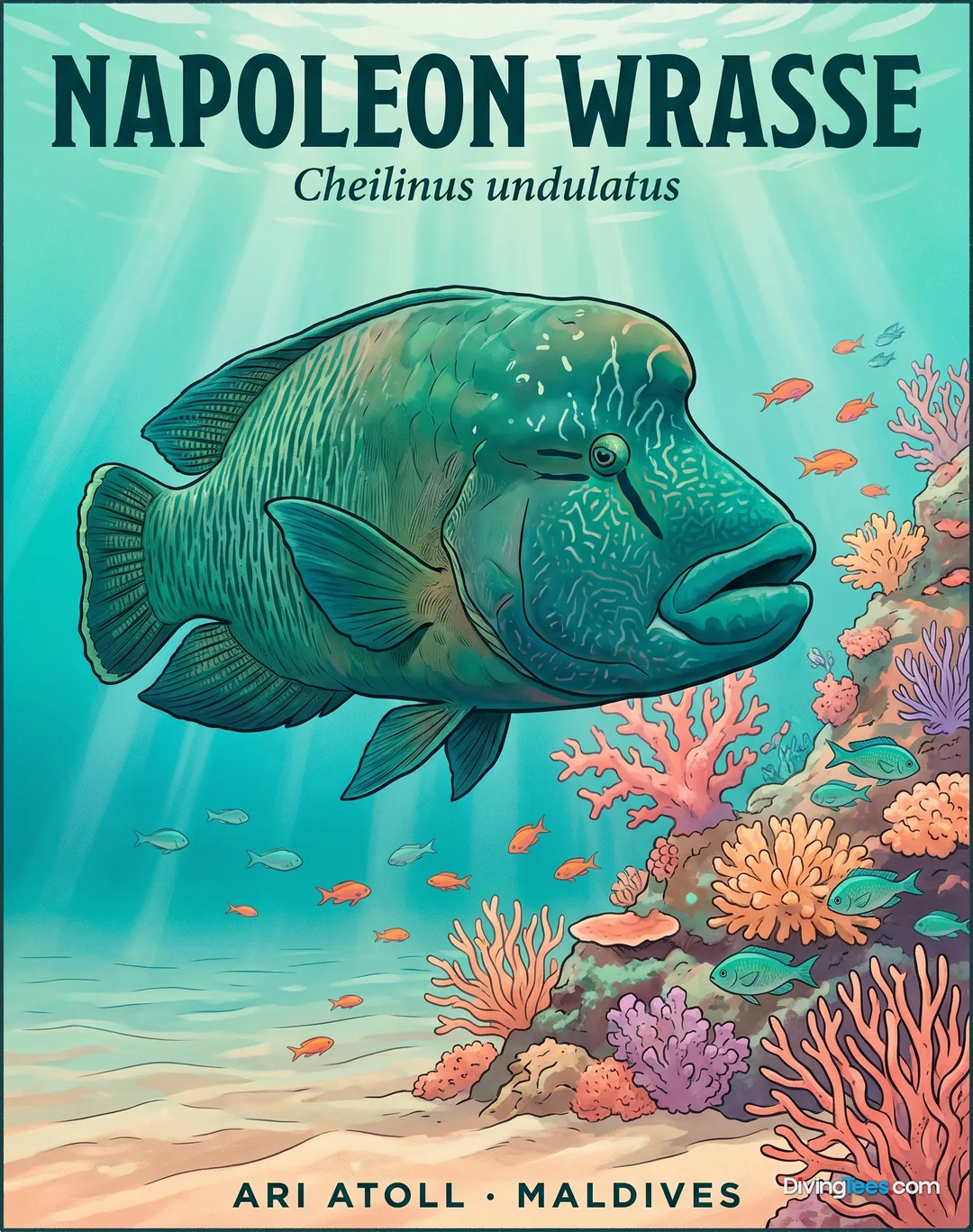
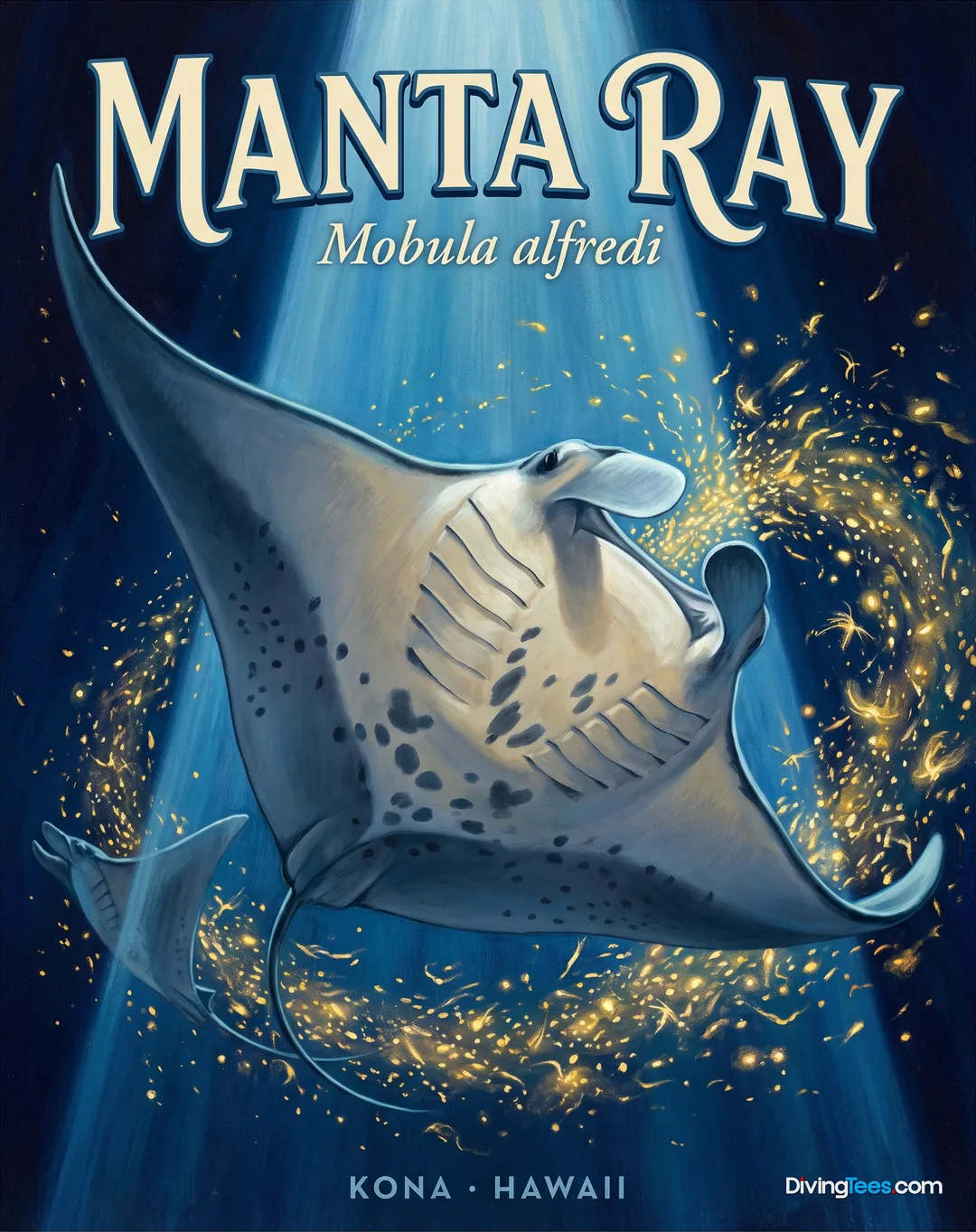
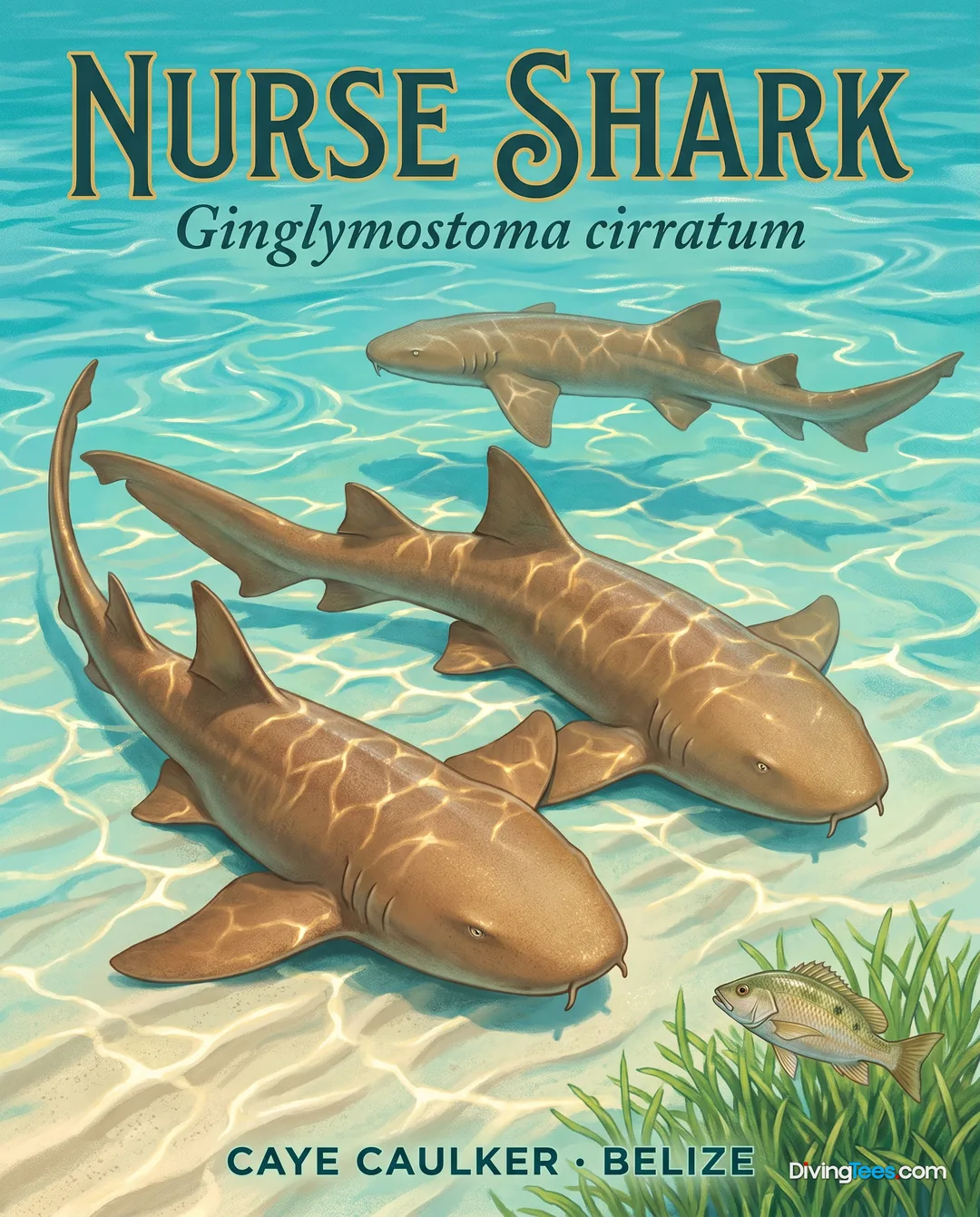
Across this route, the recurring cast is large: Napoleon wrasse, grey reef sharks, tuna, fusiliers, manta rays, sea turtles, eagle rays, barracudas, batfish and trevally. Currents and cleaning stations are where the encounters become concentrated: mantas gather at Dhonkalo and may feed at Hanifaru Bay, while grey reef sharks hold position at Mushimasmigili's up-current pinnacle and move through Myaru Kandu's shark channel. Whale sharks are recorded at Hanifaru Bay, Maamigili and Maamigili Beiyru, but a sighting remains a matter of conditions and timing rather than a promise. The route also rewards site-specific hunting. Hawksbill turtles are the reason to linger at Turtle Reef; grouper and anthias are recorded only at Barracuda Giri; anemones only at Banana Reef; the nurse shark only at Guraidhoo Marine Reserve; the porcupinefish only at Maamigili; and soft coral and gorgonians only at Dhigalhi Haa Marine Reserve.
Who puts you in the water
The crew speaks English and includes dive staff alongside the captain and deck team. Carpe Vita carries oxygen, first-aid kits, fire alarms and extinguishers, radar, sonar, GPS and VHF/DSC/SSB radio equipment. The dhoni is the normal route to the sites, so briefings and water entries are organised around that tender operation rather than giant-striding from the liveaboard. The available information does not give the number of guides, guide-to-diver ratios, instructor qualifications, recall system, defibrillator, minimum logged dives or courses taught onboard. Divers who need those details should get them before reserving, particularly for current-exposed channel sites.
The dive deck and the gear
The dive operation runs from a dedicated platform and a single dhoni, which takes divers out to the reef and collects them after the dive. Carpe Vita provides Nitrox at no extra charge, DIN adapters, tank racks and rinse tanks; cameras have a separate rinse facility so salt and grit from general gear do not share the same bath. Rental equipment is available as an option, but the available specifications do not identify tank volume, tank material, compressor model, camera-table dimensions or the rental brands. That is worth checking if a diver relies on a particular cylinder or camera setup. The essentials are present: Nitrox, a dedicated dive boat, diver tenders and a work area designed for repeated entries rather than one occasional excursion.
Between dives
Between dives, Carpe Vita gives guests several ways to come off the deck without disappearing into a cabin. The air-conditioned salon provides the reliable refuge from heat, while the terrace and outdoor dining area keep the surface intervals open to the sea. A bar, library and audio-video entertainment are there for the longer gaps, and a dedicated photo area gives cameras a place in the day beyond the damp dive deck. Paid internet is available for those who need to connect, but the boat also works without it. Non-divers and snorkellers are welcome, so a surface interval does not have to follow the same routine for everyone.
A day on board
A Carpe Vita day is built around diving first. The boat begins with the first briefing and the first entry from the dhoni, then meals and snacks mark the surface intervals before the later dives. Up to four dives can be made in a day, depending on weather and itinerary, with the gaps used for food, showers, camera work or time on the terrace. Some sections of the route are about moving between atolls and some about staying close to a pinnacle, channel or cleaning station; the boat's job is to put the dhoni over the next useful piece of reef. By evening, the last gear is rinsed, dinner comes from the galley, and the salon or outdoor deck takes over from the dive platform. The next cycle starts with the next briefing.
What you eat aboard
A chef prepares the meals, with Western and local dishes served as full board. The table includes buffet service, vegetarian options, snacks throughout the day, and outdoor dining when conditions allow. Wine is included with dinner; beer and other drinks are available separately. The food is one of Carpe Vita's strongest reasons to book, because four dives leave little patience for a galley that treats meals as an afterthought. A barbecue on the beach may also form part of the trip when arranged. The useful pattern is variety without ceremony: eat properly, get back to the dive deck, and have something ready again before the next time the compressor starts.
Nights at sea
The three cabin categories are Standard Room, Superior Room and Suite Room, with guest cabins on the upper deck. Every cabin is air-conditioned and has a private bathroom with hot water, while the large bay windows keep the ocean present even when the weather sends everyone inside. The two VIP suites are the clear step up: spacious, fitted with large double beds and facing the sea. That matters on a week-long trip, when a cabin is used not only for sleep but also for drying off, charging down and getting away from the group. The boat has 13 bathrooms for a maximum of 20 passengers, which limits the pressure on shared spaces. Daily housekeeping and cabin towels keep the practical side simple.
Standard Room
Superior Room
Suite Room
What to know before boarding
Recorded departures use Male or Dharavandhoo as embarkation and return ports: Male–Male, Male–Dharavandhoo and Dharavandhoo–Male routes are available. Airport transfers are included, while hotel transfers and domestic flights are optional. Arrive the night before departure, especially when the itinerary begins or ends in Dharavandhoo, and confirm the transfer point with the operator before travelling.
- Year built
- 2011
- Year renovated
- 2025
- Length
- 38.2 m
- Beam
- 10.4 m
- Maximum number of passengers
- 20
- Number of cabins
- 10
- Number of bathrooms
- 13
- Engines
- DoosanDaewoodMarine Diesel (Model No: V1 80219) 800 HP
- Tenders
- 1 Dhoni
- Website
- explorerventures.com ↗
Hello, I'm Marina, DivingDeal.com's AI assistant. I answer in detail about hotels, dive centres and liveaboards.

Thinking about the whole trip and the flights? Talk it over with Edith →
Marina is an AI. Some links are affiliate links: DivingDeal may earn a commission, at no extra cost to you. Bookings are made with the partner.