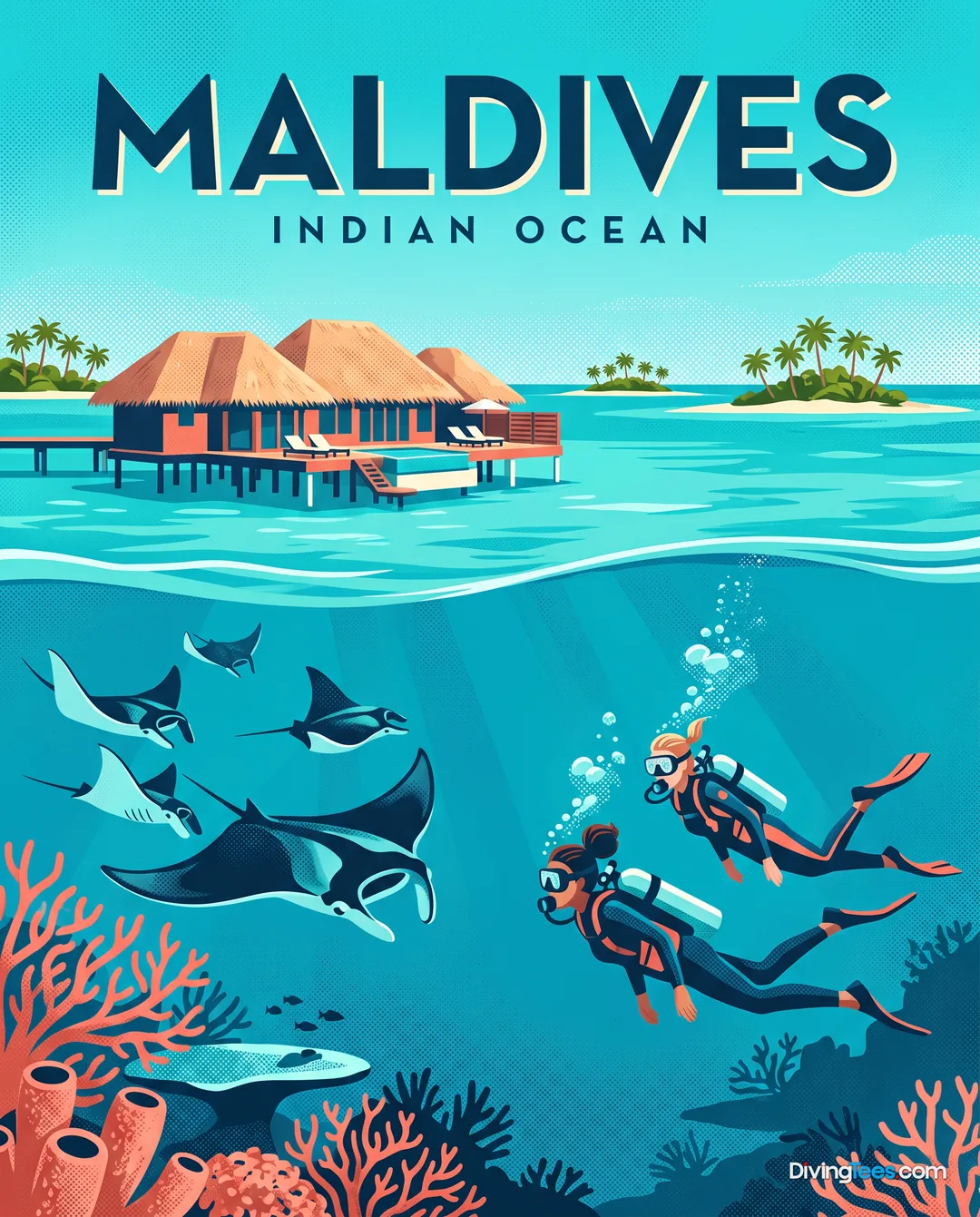
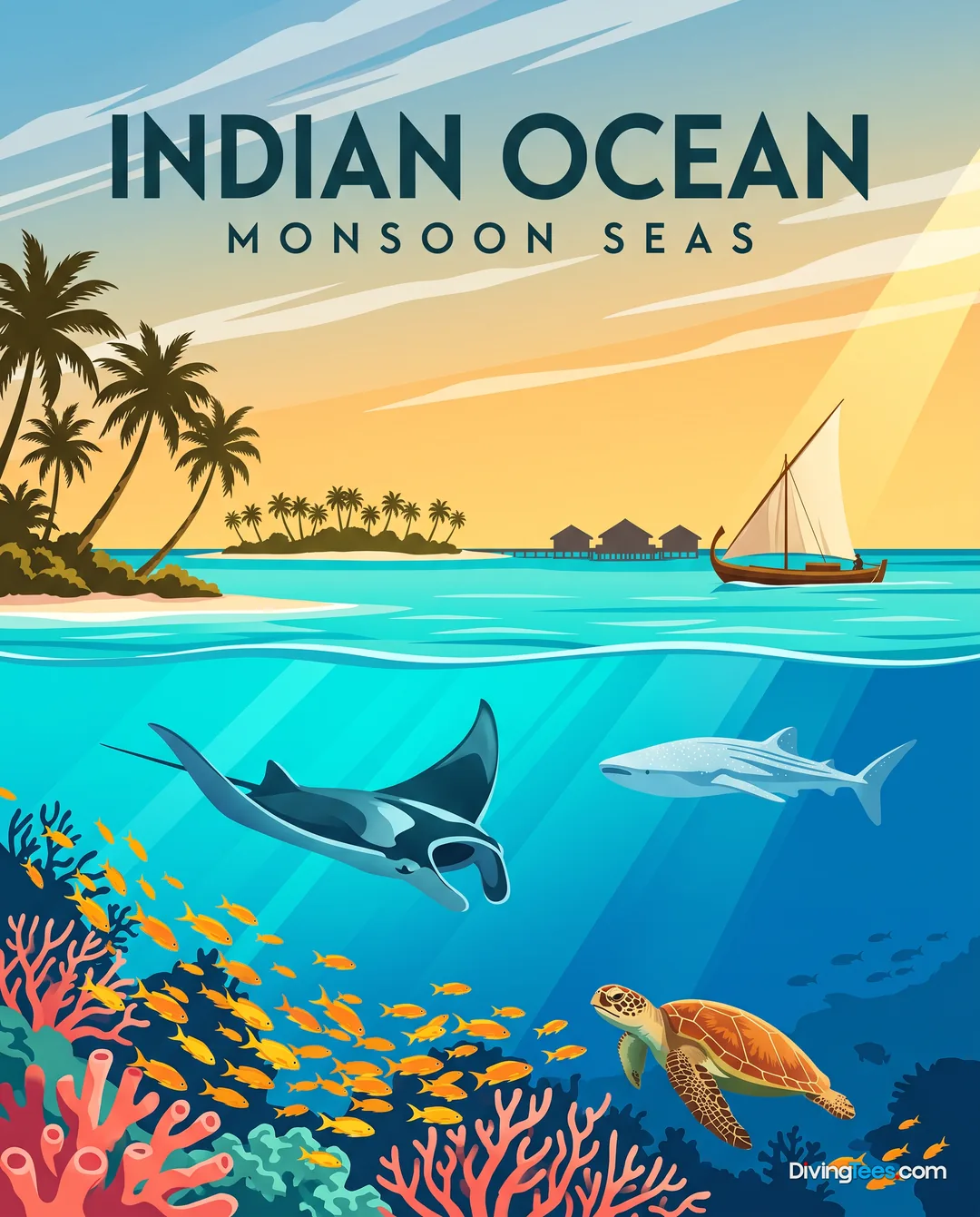
Liveaboards · Maldives
Princess Maani — a new Maldives liveaboard built around diving
What makes this boat unique
- Built in 2024, Princess Maani carries up to 28 guests in 14 en-suite cabins.
- A dedicated diving dhoni, a shaded dive area, DIN adaptors and free nitrox support the daily diving routine.
- Five dive guides speak English and Italian, with rental equipment and diving courses available on board.
- The route combines shark channels, manta cleaning stations, whale-shark sites and current-swept pinnacles across the central atolls.
For subtitles in English: start the video firstthen click the gearat the top right of the video, select “Subtitles/CC”, then “Auto-translate” and choose “English”.
The invitation
Princess Maani is for divers who want a new boat without giving up the practical side of a Maldives safari. The vessel was built specifically for diving, and the important choices are on the working end: a dedicated dhoni, a shaded dive area, free nitrox, camera rinsing and room to return from the water without turning every recovery into a queue. Above that, the boat gives the week a softer edge with large cabins, warm showers, two jacuzzis and open-air dining. The attraction is the combination. The diving reaches current-fed pinnacles, shark channels, manta cleaning stations and whale-shark country, while the boat gives non-divers and tired divers somewhere comfortable to spend the hours between entries. It suits a mixed group particularly well: serious underwater days, but enough space and water activities for a partner who snorkels rather than dives.
Boarding
Boarding Princess Maani makes a different first impression from an older safari boat. The vessel is fresh from the shipyard, with clean lines, broad open decks and spaces arranged for a full week at sea rather than a short transfer. The diving operation has its own dhoni, so the main boat can remain the place where guests eat, rest and dry off while the dive boat handles the reef work. Inside, the layout is generous rather than improvised: an air-conditioned saloon, an observation deck, a leisure deck and a separate camera rinse area. The crew includes 17 people, enough to keep the hotel and dive sides moving at the same time. Princess Maani feels more like a purpose-built safari yacht than a converted vessel, and that matters when the same routes are repeated across several days.
The atmosphere on board
Princess Maani is run by a large local and international crew, with 17 crew members and five dive guides for a maximum of 28 guests. That division matters: the people handling meals, cabins and deck service are not the same small team expected to manage every dive-related job as well. English and Italian are spoken on board. Passenger scores put the boat, food and diving at 9.3, value at 9.0 and the crew at 8.3. That is a useful picture of the experience: the strongest reasons to book are the new vessel, the food and the underwater programme, while the crew still provides the personal service that keeps a week running cleanly. Evenings can lead to a beach barbecue, cocktails, open-air dining or time on the observation deck rather than another hour in the saloon.
The sites you’ll dive
The recorded departures are Male to Male: Northern Highlights lasts 12 days and 11 nights; Best of Central Atolls runs for 11 days and 10 nights or 8 days and 7 nights; Manta Madness runs for 8 days and 7 nights. The sites are chosen for moving water and large animals. Barracuda Giri drops onto three pinnacles to a maximum of -30m, where current gathers barracudas and pelagic fish. Mushimasmigili Marine Reserve reaches -30m at an up-current pinnacle known for grey reef sharks. Dhonkalo is a manta cleaning station in a sandy channel. Maamigili and Maamigili Beiyru, both to -30m, sit in the South Ari protected area for whale sharks and mantas. Kudarah Thila reaches -30m through clefts, overhangs and caves filled with batfish. Myaru Kandu is a shark channel to -30m. Foththeyo Kandu reaches -40m, with caves covered in yellow soft corals and strong current. Fushifaru Thila reaches -35m at manta cleaning stations. Banana Reef, Guraidhoo, Dhigalhi Haa, Dhonfanu and Dhigu Thila add reef life, channels, pinnacles, swim-throughs and further shark and manta encounters.
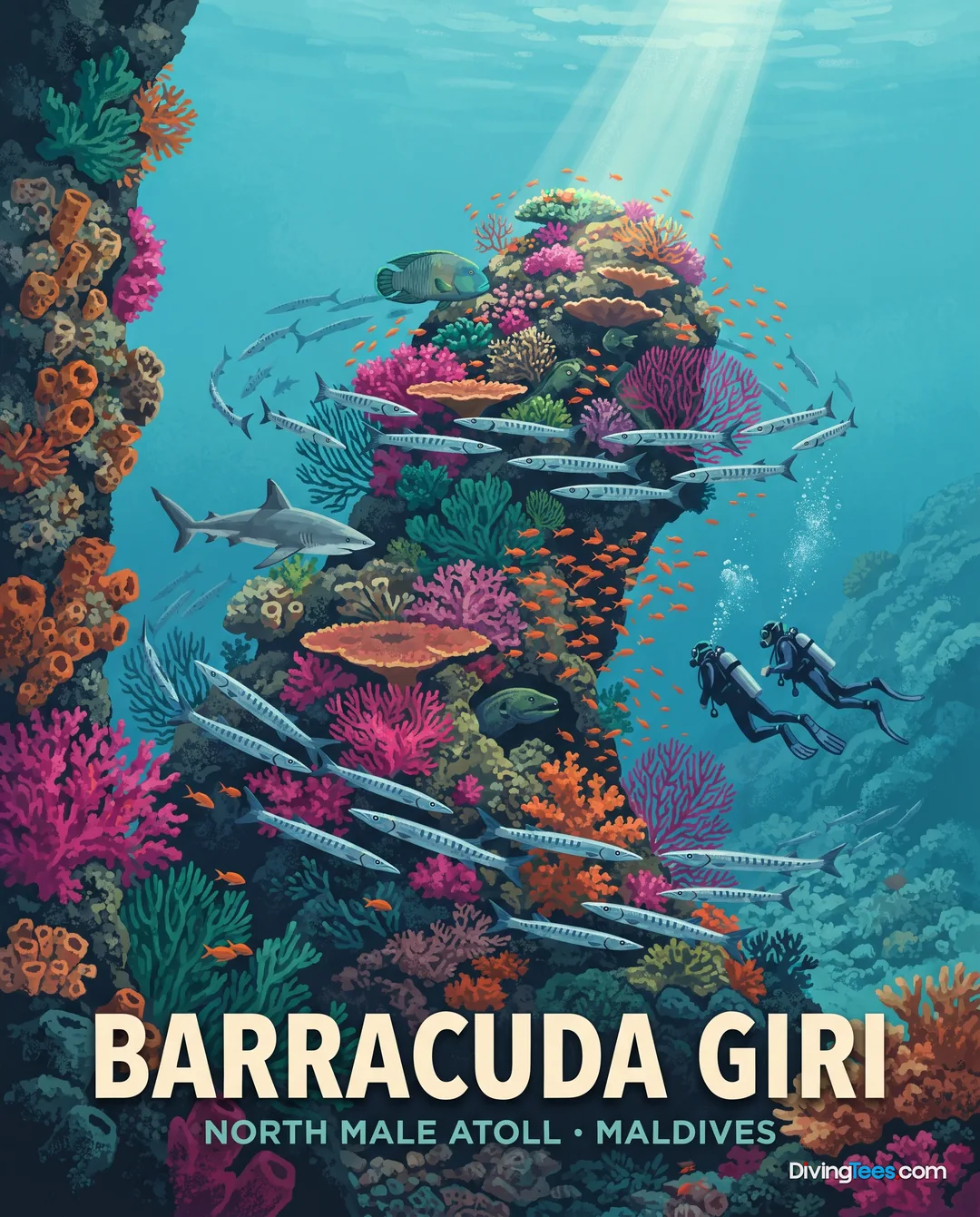
Barracuda Giri →
Max. depth · 30 m
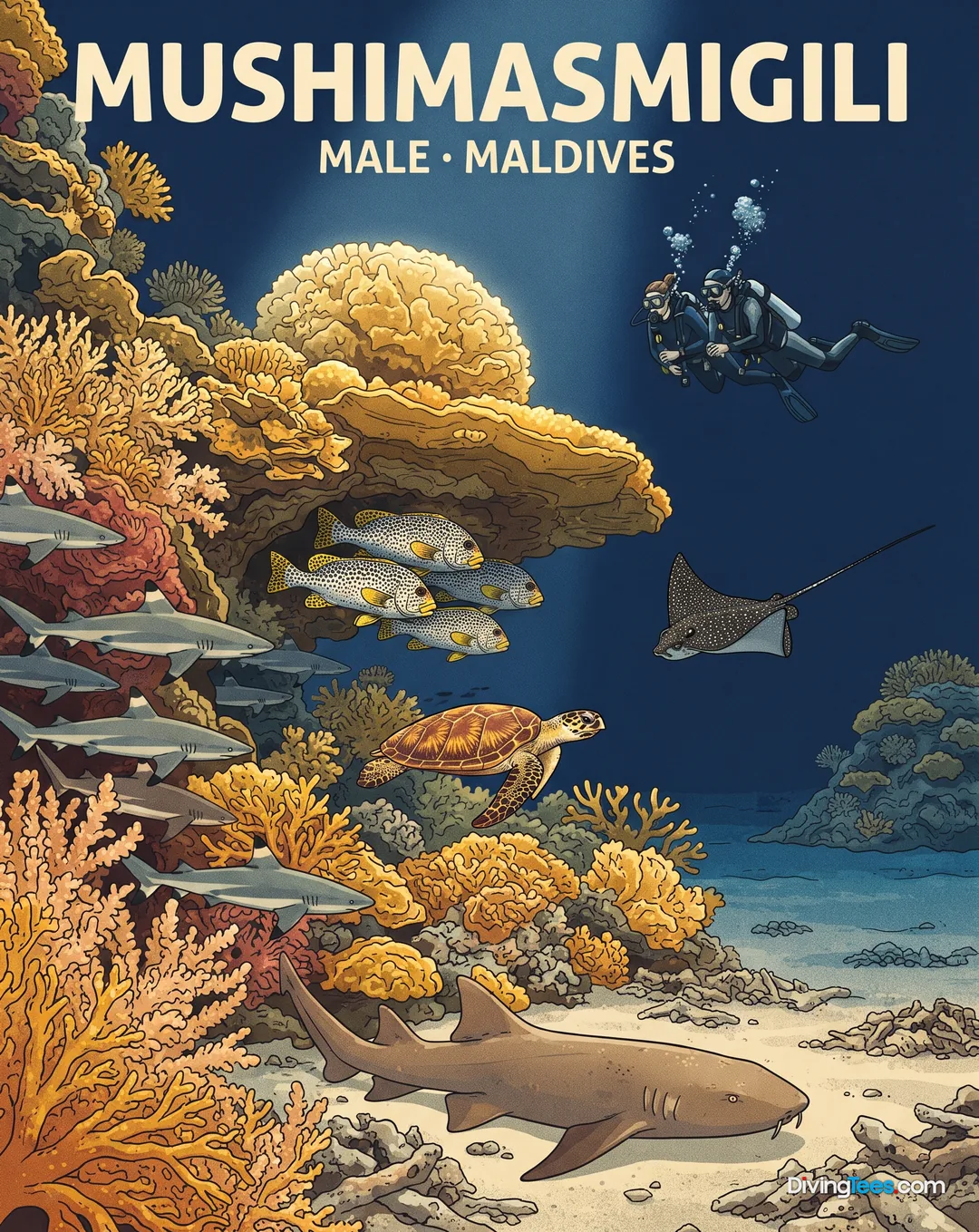
Mushimasmigili Marine Reserve →
Max. depth · 30 m
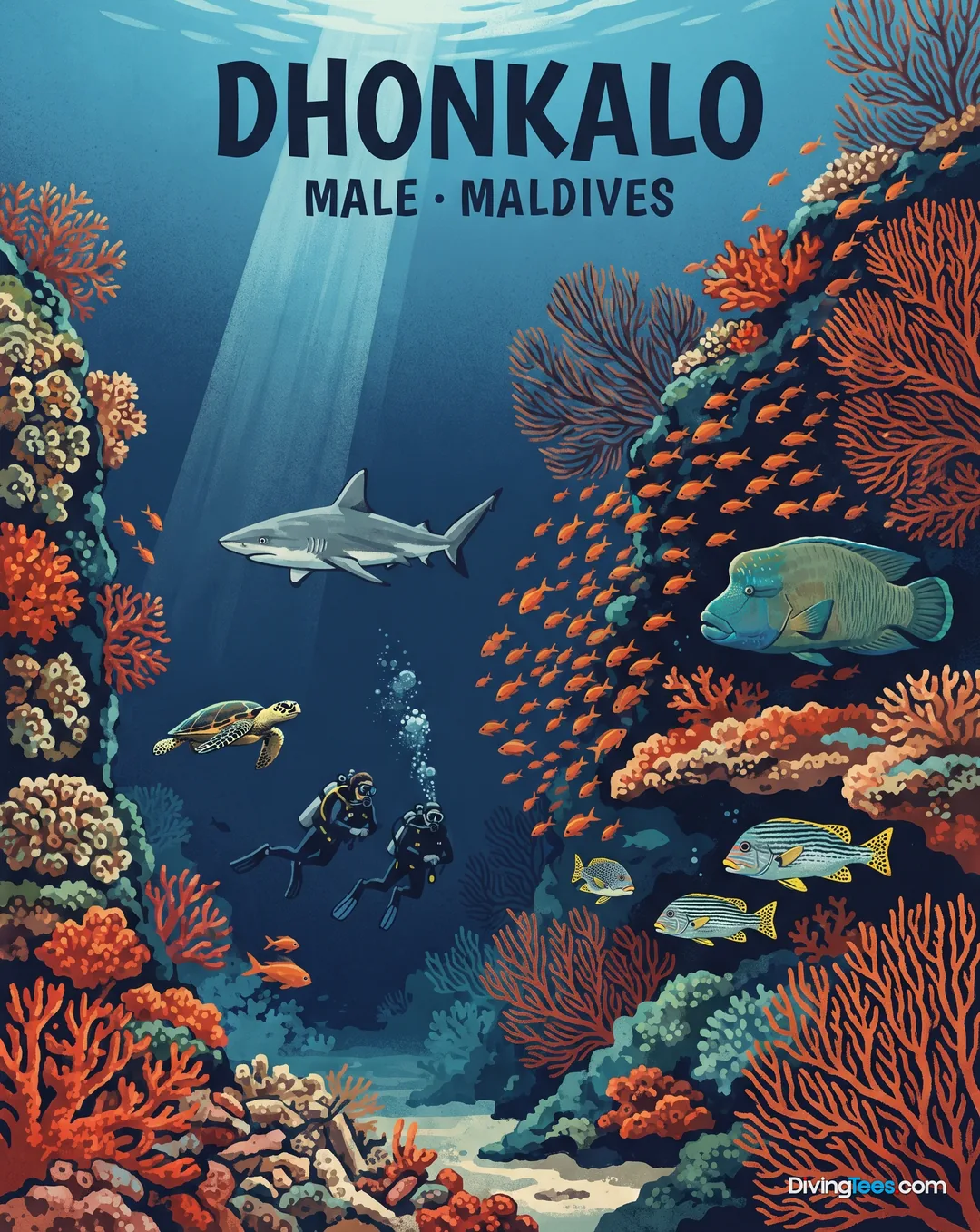
Dhonkalo →
Max. depth · 25 m
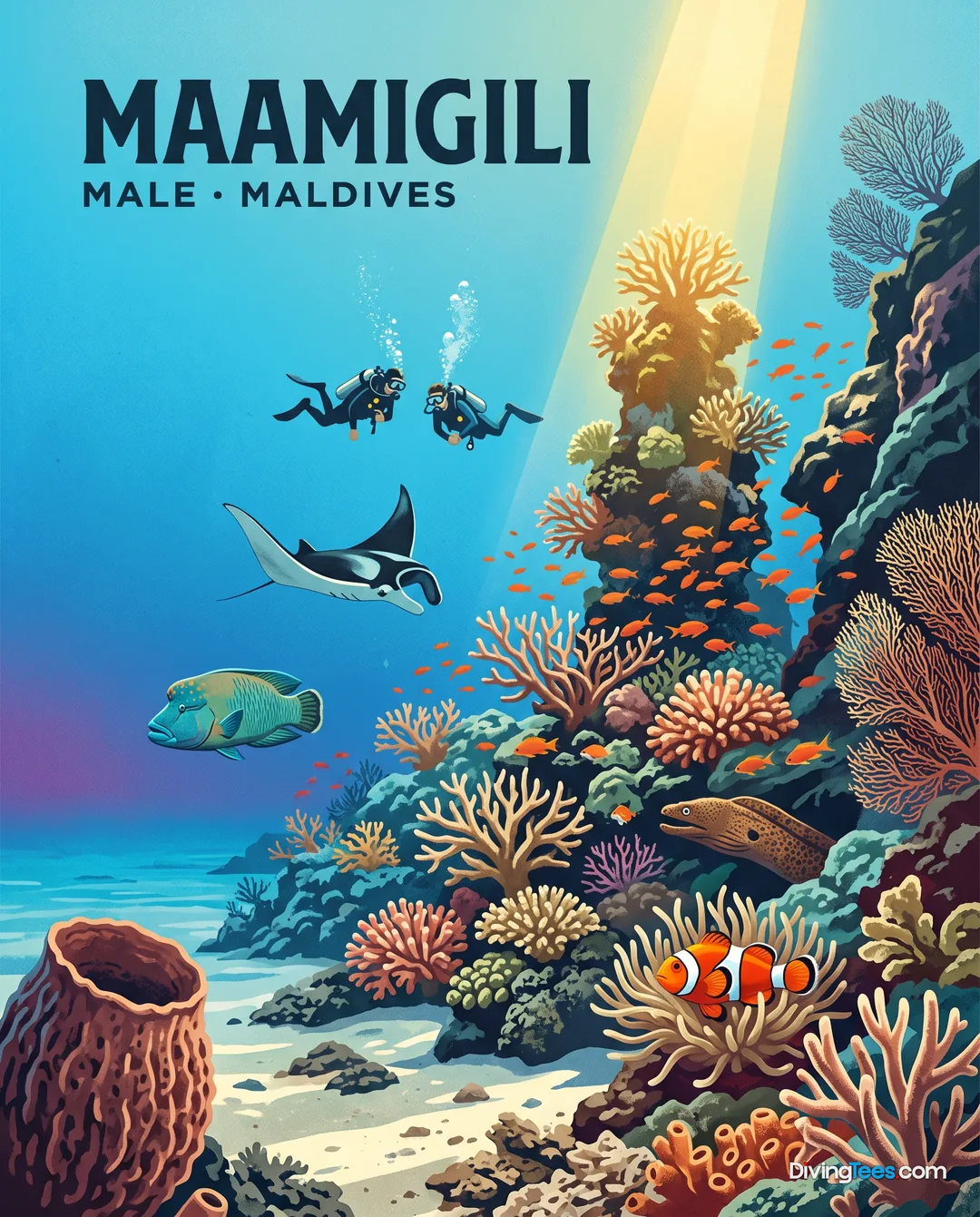
Maamigili →
Max. depth · 30 m
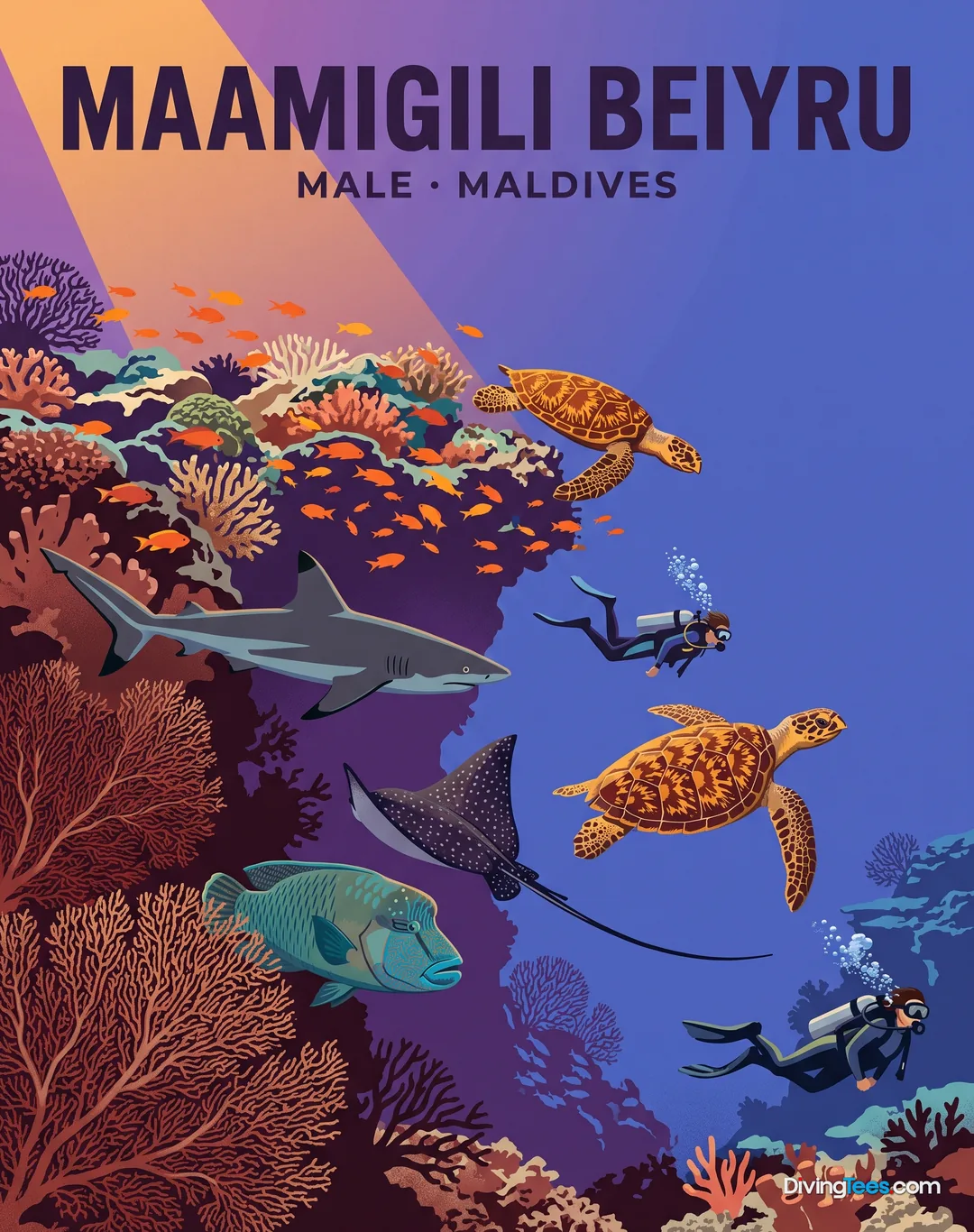
Maamigili Beiyru →
Max. depth · 30 m
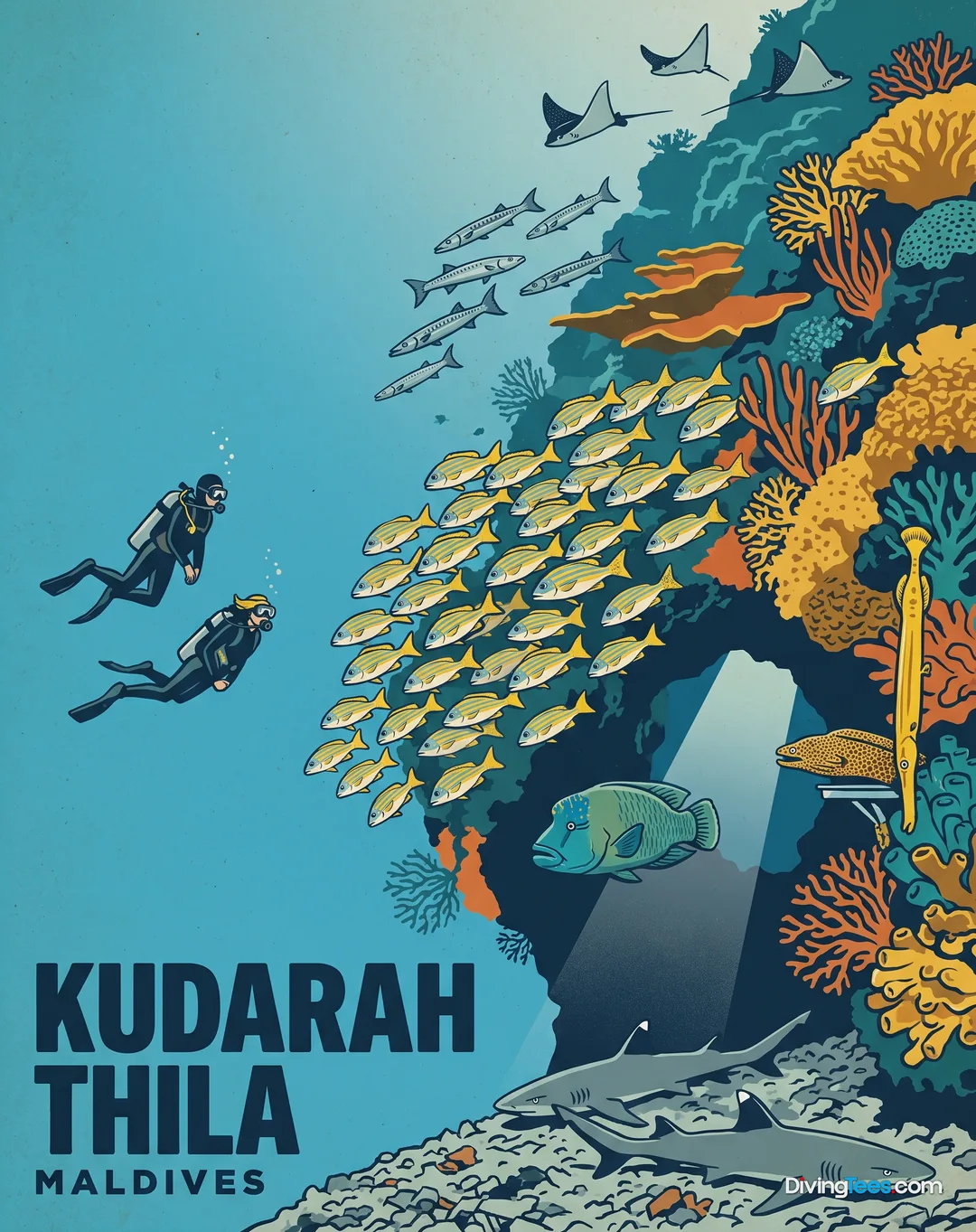
Kudarah Thila →
Max. depth · 25 m
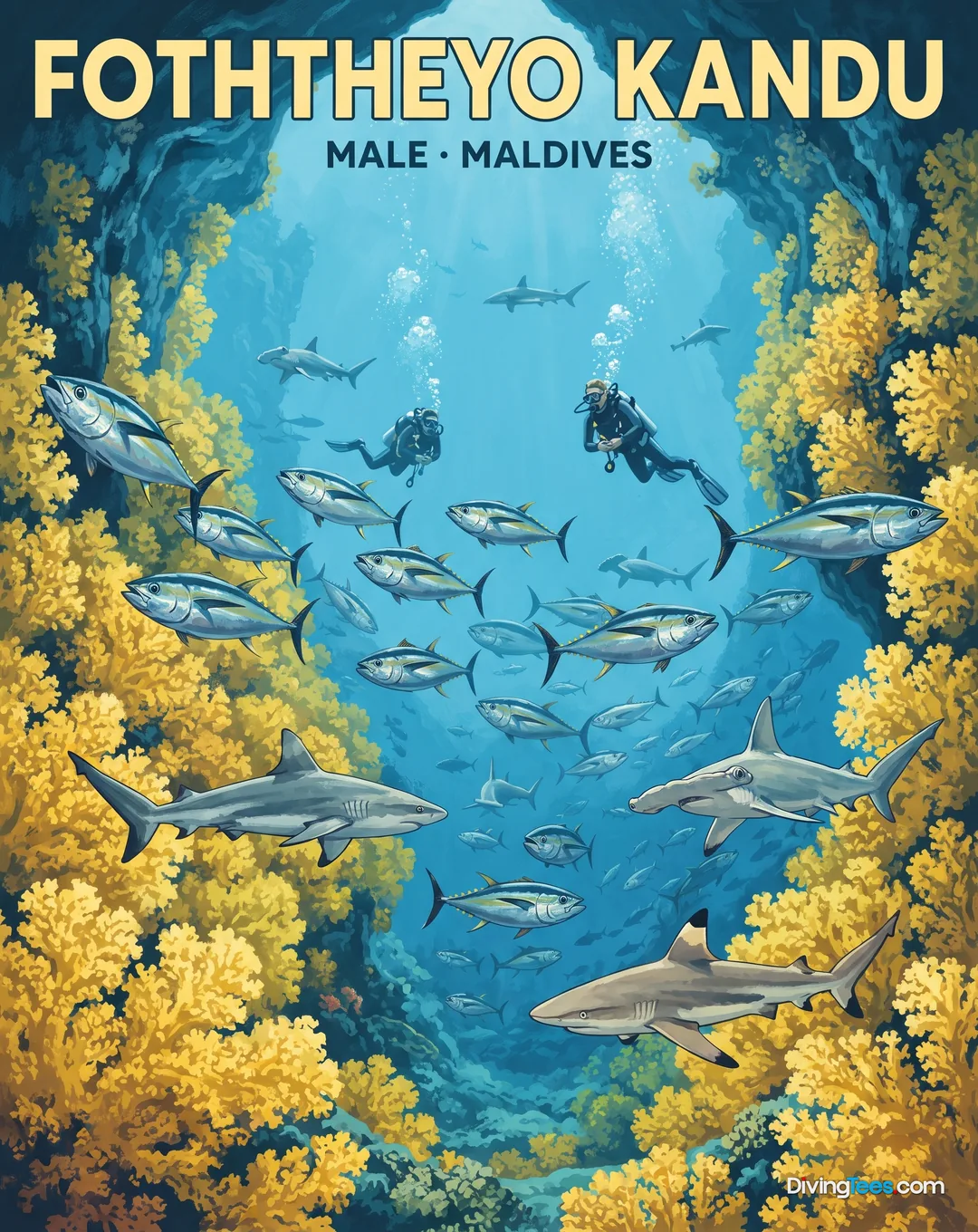
Foththeyo Kandu →
Max. depth · 40 m
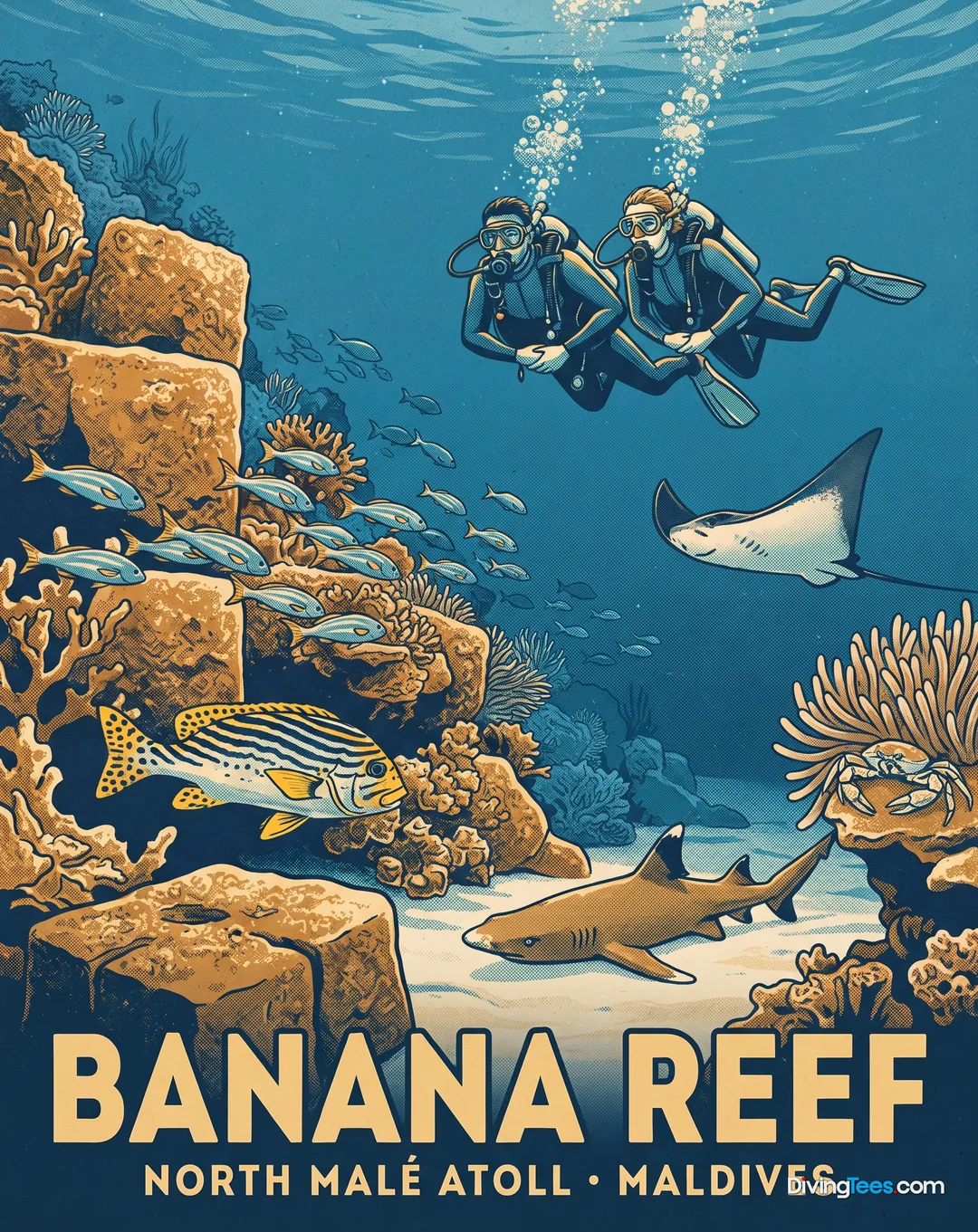
Banana Reef →
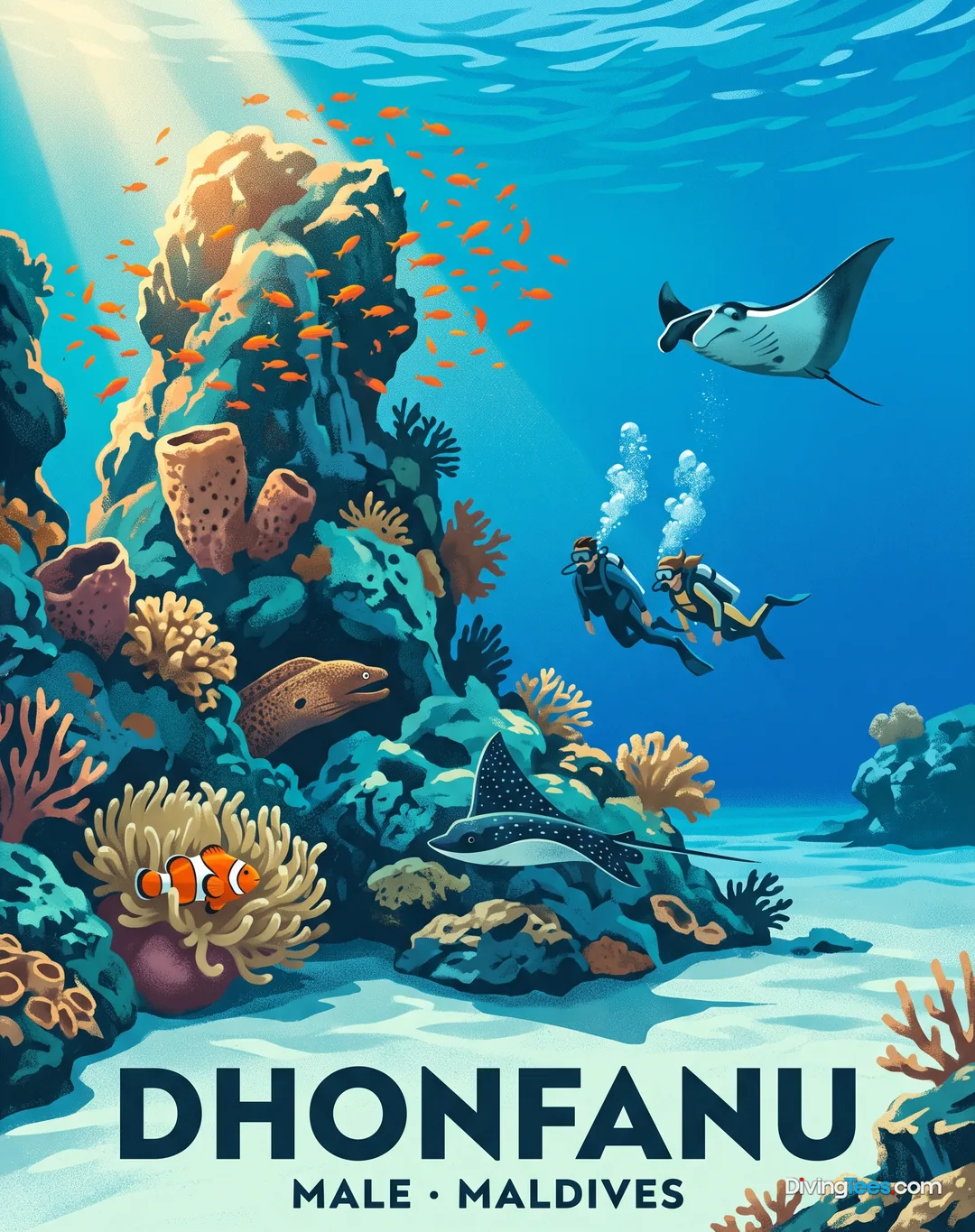
Dhonfanu →
Max. depth · 30 m
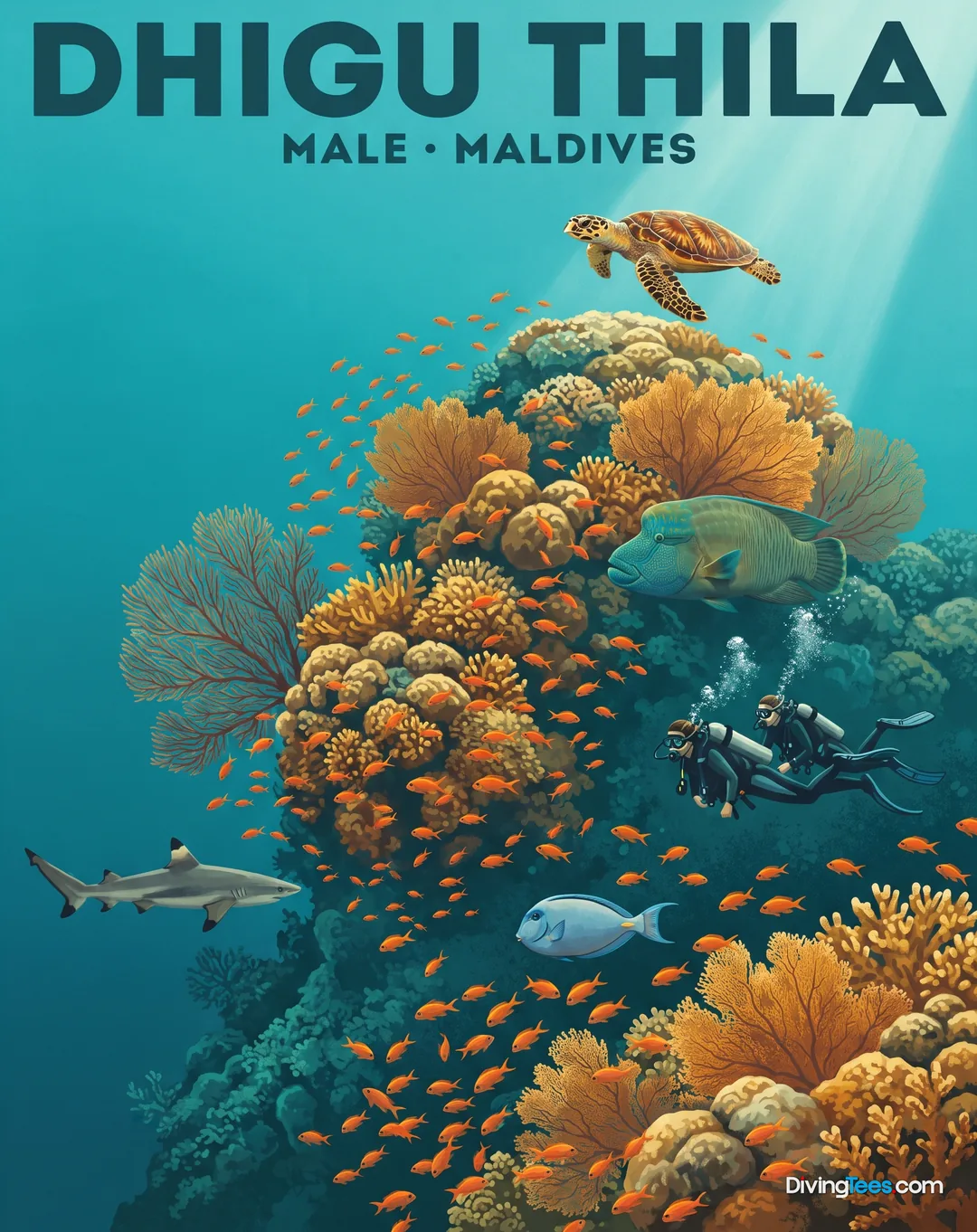
Dhigu Thila →
Max. depth · 30 m
What you’ll meet underwater
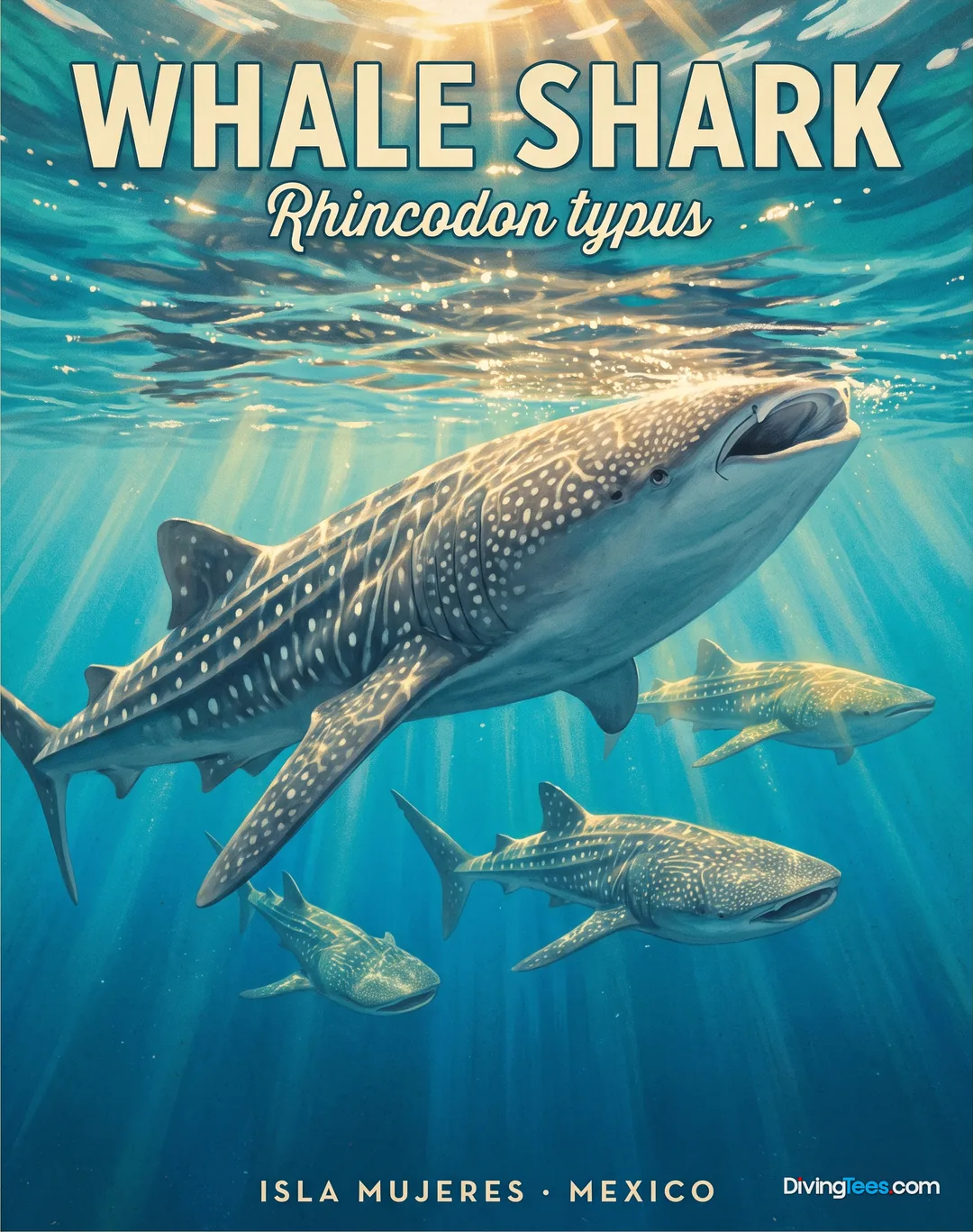
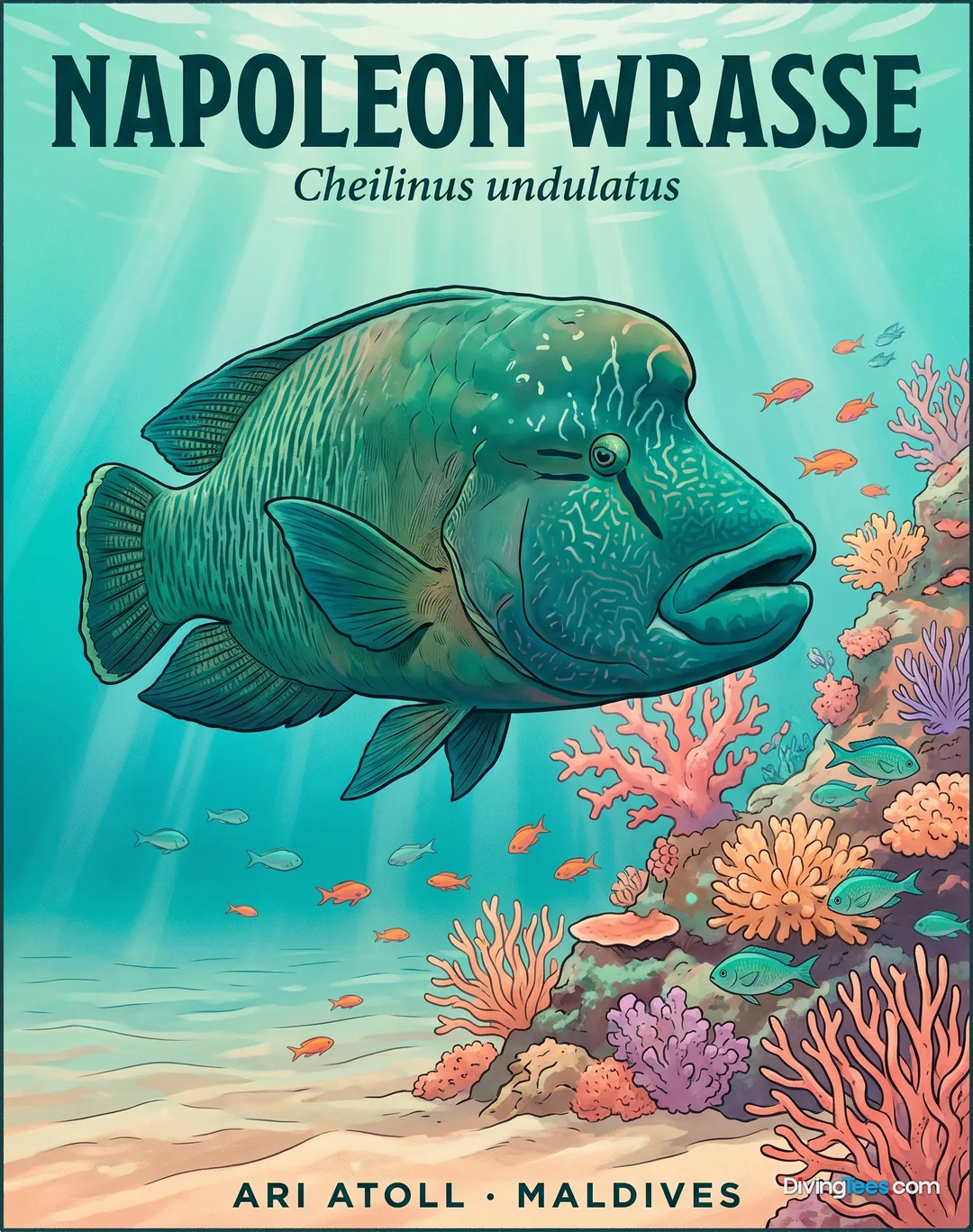
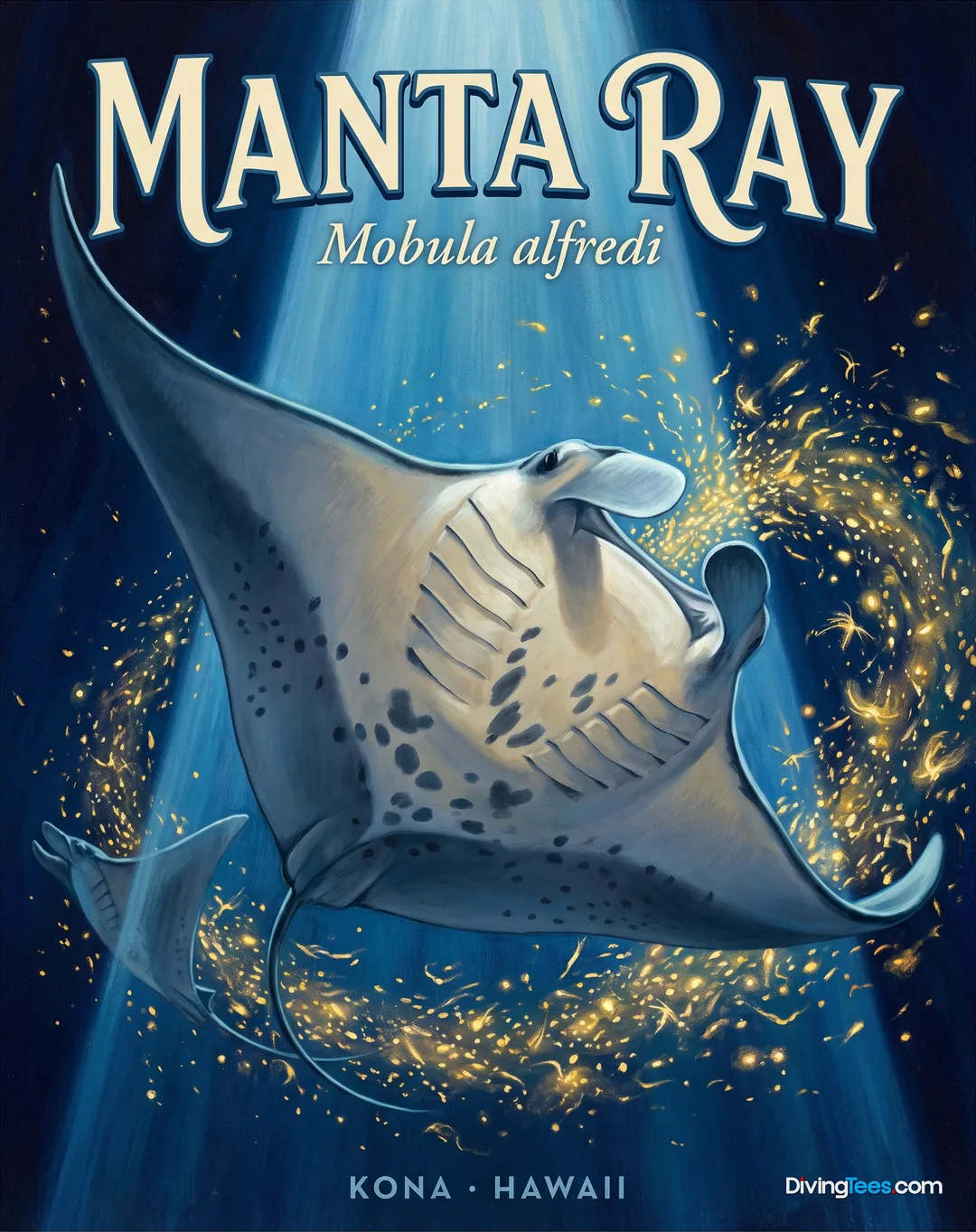
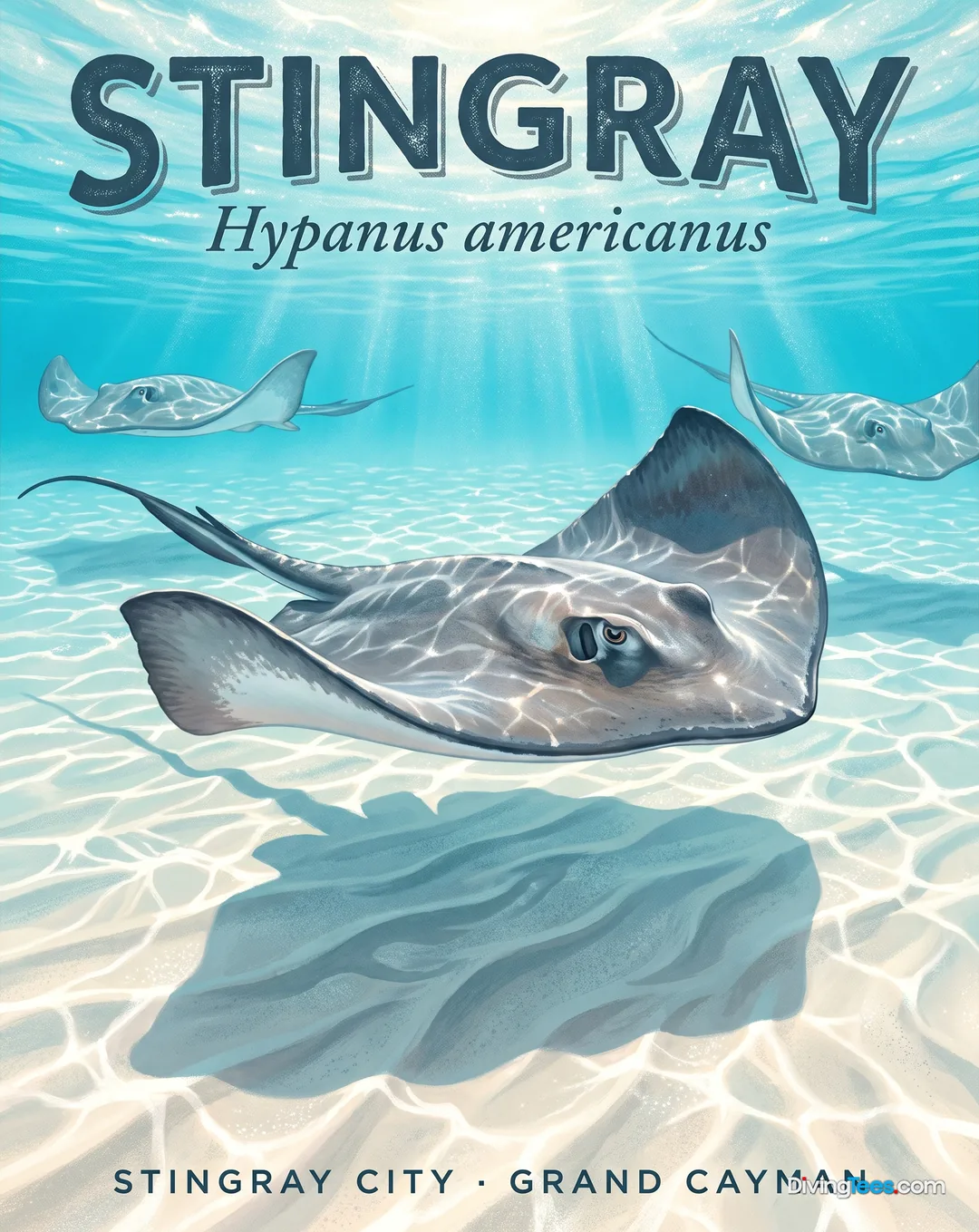
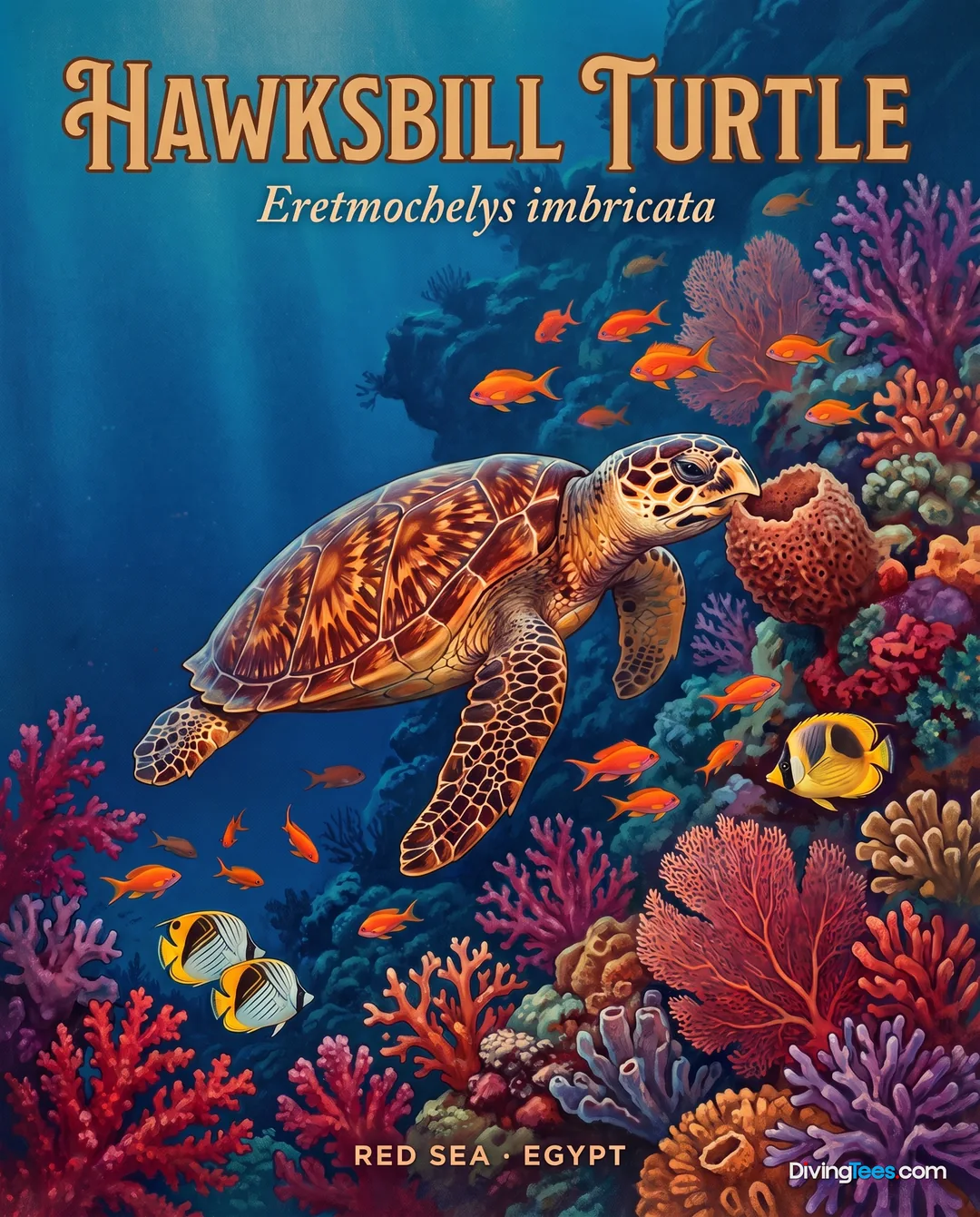
Across this route, the recurring cast is substantial: fusiliers and Napoleon wrasse are recorded at nine sites, grey reef sharks at nine, turtles at eight, eagle rays at eight, and barracudas, manta rays and tuna at seven each. Reef sharks, whitetip reef sharks, jacks, trevally, morays and batfish add to the picture. The reason to follow the route is that particular sites sharpen the promise. Barracuda Giri is the place for schooling barracudas, groupers and anthias. Banana Reef is the site where anemones are recorded. Dhonkalo gathers mantas at a cleaning station, while Maamigili and Maamigili Beiyru are associated with whale sharks and mantas inside the South Ari Marine Protected Area. Dhigalhi Haa is noted for soft coral and gorgonians. Fushifaru Thila is where a stingray is recorded, and Dhigu Thila for the hawksbill turtle. Encounters remain encounters, not guarantees; current, visibility and animal behaviour decide what appears on a given dive.
Who puts you in the water
Five dive guides put guests in the water, and the onboard team speaks English and Italian. Diving courses are available during the cruise, and rental equipment can be arranged on board. The operation is therefore suited to divers who want guided reef and channel dives without bringing every part of their own kit. What is not stated is equally important: no guide-to-diver ratio, qualification standard, logged-dive minimum, oxygen or defibrillator details, recall system or group organisation is given. Those points should be established before booking if the trip depends on a particular level of supervision or emergency setup. The route itself includes strong currents at sites such as Myaru Kandu, Foththeyo Kandu and Guraidhoo Marine Reserve, so the briefing and the final site choice will matter as much as the boat's comfort.
The dive deck and the gear
The diving is built around a dedicated dhoni rather than asking every diver to work from the mother ship's main deck. The dhoni takes divers to the sites, while a 5-metre dinghy handles shorter-distance movements. Entry and exit are therefore separated from the main living spaces, and the boat can collect divers away from the reef. On board, the dive deck has shade, a platform, fresh-water rinsing and a separate rinse for underwater cameras. Charging stations are available for the equipment that needs them. DIN adaptors are provided, and free nitrox is available. Rental equipment is offered on board. The setup is especially useful for photographers: camera care has its own rinse point, while the shaded work area protects both people and equipment between dives. Tank size, tank material and compressor details are not stated here.
Between dives
Between dives, the upper decks give people several ways to come off the dive schedule without disappearing into a cabin. Two jacuzzis sit on the upper deck, while the sundeck combines loungers and bean bags with an observation area. Kayaks and stand-up paddleboards are available for guests who want to move through the water rather than watch it from above. A shaded diving area is useful after a current dive, and the air-conditioned saloon gives photographers and anyone overheated by the tropics a cooler place to sit. Non-divers are welcome, including snorkelers, so a partner can use the kayaks, SUPs or leisure decks while the dive groups are away. Massage is available as an optional extra.
A day on board
A day on Princess Maani is arranged around the water, not around a hotel timetable. The first briefing comes before the first dive, with the dhoni carrying each group to the reef while the mother ship remains the base for food, shade and recovery. After returning, divers rinse equipment, eat and settle into the next surface interval before another briefing and entry. The gaps can be spent in the shaded dive area, the air-conditioned saloon, a jacuzzi or on the observation deck, while snorkelers use the kayaks or SUPs. Meals punctuate the sequence rather than interrupt it, and the open-air dining area changes the feel of the evening meal. On suitable itineraries, the route may include the beach barbecue. The exact number and timing of dives depend on the departure and site conditions, so the useful certainty is the order: briefing, dhoni, dive, recovery, meal, then back to the water.
What you eat aboard
Two chefs run a galley that covers both European and local food, with a European chef leading the kitchen. Meals are served buffet-style, and the boat also offers fine cuisine, vegetarian, vegan and gluten-free choices. A typical dive day is held together by those meals: divers come back from the water, eat, rehydrate and return to the deck before the next briefing. There is also al fresco dining, so not every plate arrives under air conditioning. The beach barbecue is one of the route's fixed pleasures, moving dinner ashore for an evening rather than making every meal part of the same saloon routine. The food scores 9.3 from reviewers, matching what matters on a liveaboard: enough choice for different diets, and a kitchen that can keep serving properly while the diving takes most of the day.
Nights at sea
The cabins are spread across three decks and come in Superior, Deluxe I and Deluxe II categories. Each has a private bathroom, warm-water shower, air conditioning and a window; the cabin specification lists a bay window, while the Superior cabins have an opening window and an opening bathroom porthole. The lower deck holds six Superior cabins, including a family cabin with space for a third bed. Storage, shelves, drawers and a personal safe give diving equipment and travel clothes a proper place instead of leaving the room permanently half-packed. These are large cabins by liveaboard standards, with sea views available in the higher categories. At night, the point is not decoration. It is having enough room to close the door, hang a damp rash guard and sleep without living out of a dive bag.
Superior Cabins
Deluxe I Cabins
Deluxe II Cabins
What to know before boarding
Princess Maani departures and returns are in Male. Airport transfer is included. Arriving in the Maldives the night before the liveaboard departs gives the trip a safer margin than trying to connect directly with boarding.
Deck plan
- Year built
- 2024
- Length
- 42 m
- Maximum number of passengers
- 28
- Number of cabins
- 14
- Number of bathrooms
- 15
- Engines
- CUMMINGS - 1.000 hp
- Cruising speed
- 12 knots
- Tenders
- 5 m dinghy & 14 m dhoni
- Website
- topclasscruising.com ↗
Hello, I'm Marina, DivingDeal.com's AI assistant. I answer in detail about hotels, dive centres and liveaboards.

Thinking about the whole trip and the flights? Talk it over with Edith →
Marina is an AI. Some links are affiliate links: DivingDeal may earn a commission, at no extra cost to you. Bookings are made with the partner.