Liveaboards · Maldives
Dune Theia — a spacious, dive-first Maldivian liveaboard
What makes this boat unique
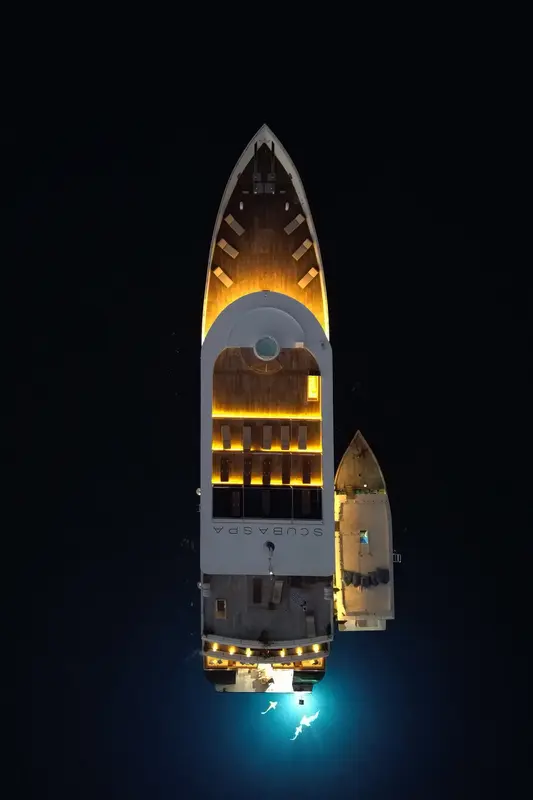
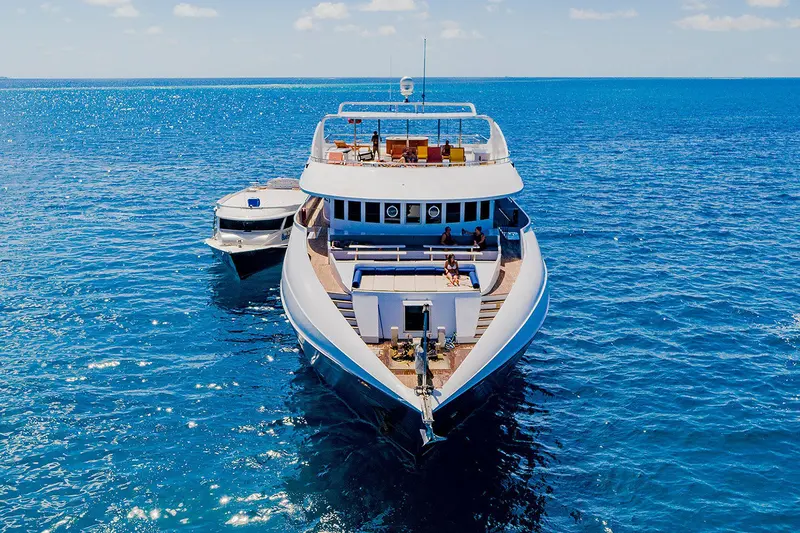
- Theia carries up to 20 divers in 10 cabins spread across three decks.
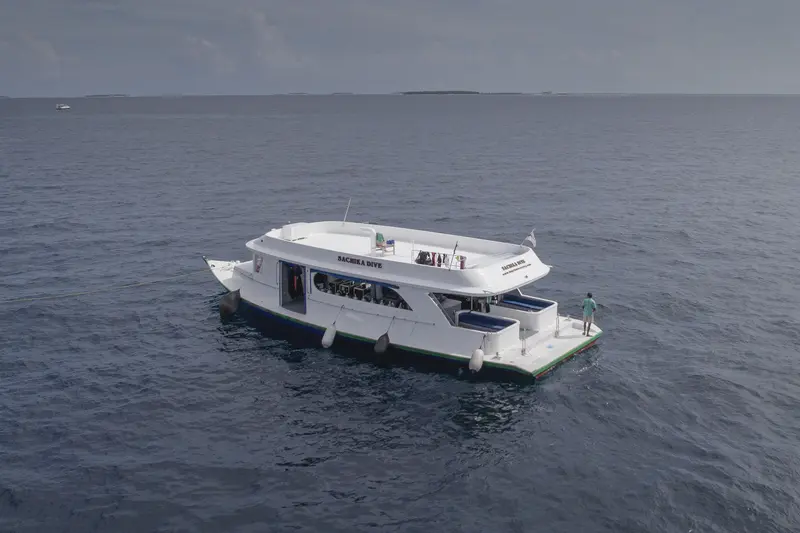
- Its shaded dive area is supported by a comfortable Dive Dhoni, free nitrox, DIN adaptors, rinse tanks and facilities for tech and sidemount diving.
- The boat has an outdoor dining deck, an air-conditioned panoramic lounge and a Sky Bar on the sun deck.
- DUNE routes include 8-day/7-night Central Route cruises and 11-day/10-night Central and South Atolls itineraries.
- The crew speaks English, German, French, Chinese and Spanish.
For subtitles in English: start the video firstthen click the gearat the top right of the video, select “Subtitles/CC”, then “Auto-translate” and choose “English”.
The invitation
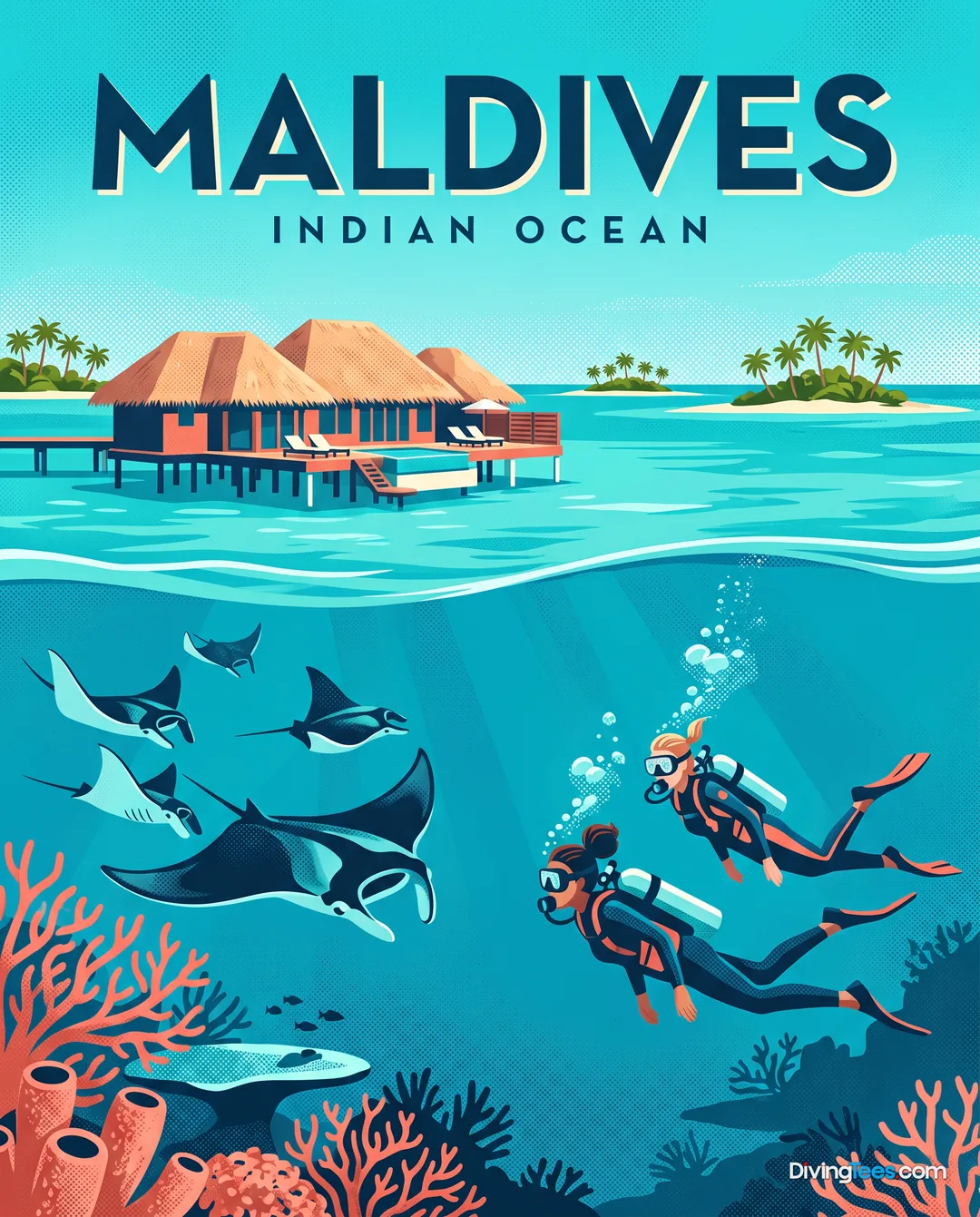
Theia is for divers who want the Maldives as an archipelago rather than a single postcard reef. The longer itineraries connect central and southern atolls, moving from quieter areas such as Meemu and Thaa towards current-swept sites around Malé. That gives the trip a useful contrast: coral gardens and lagoons on one day, channels, thilas, caves and pelagic encounters on the next. The boat also works for mixed groups. Non-diving guests and snorkellers are welcome, while kayaks, stand-up paddleboards and land excursions give them something to do between dives. The reason to choose Theia is the combination of serious diving logistics and enough room to live well between immersions: a separate Dive Dhoni, shaded working space, outdoor meals and a Sky Bar instead of a week spent entirely in one crowded lounge.
Boarding
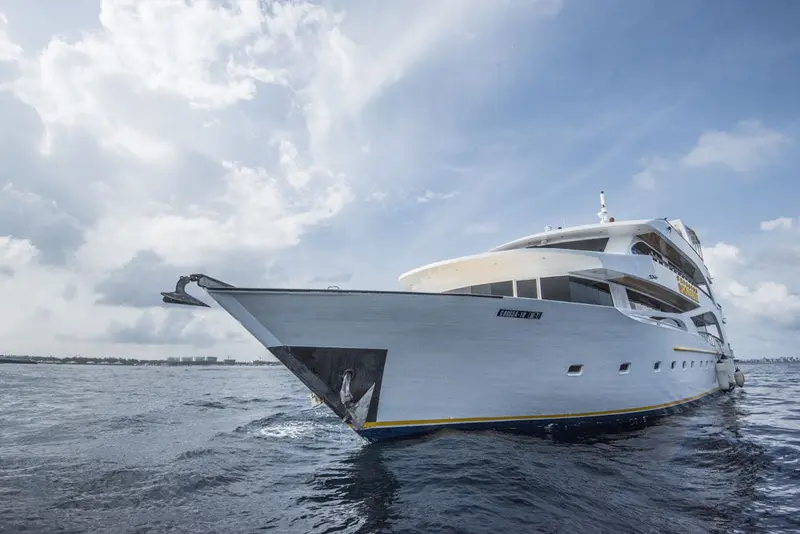
Theia makes the impression of a substantial working liveaboard rather than a converted hotel. Built in 2006 and renovated in 2010, it has three decks and enough separation between cabins, dive operations and social spaces to keep the boat practical during a full diving itinerary. The main deck holds a spacious lounge with a panoramic ocean view; above it, the outdoor deck opens onto dining and the sun deck. Cabins are distributed between the upper, main and lower decks, so boarding means learning the boat's vertical layout before the first briefing. The Dive Dhoni handles the water work, leaving the main vessel calmer while divers are preparing, returning or drying equipment. Seven crew members run the boat, and the multilingual setup includes French, useful on DUNE departures without turning the onboard routine into a translation exercise.
The atmosphere on board
Theia's atmosphere comes from a small enough passenger group to make the boat familiar quickly, without reducing the trip to a single shared room. The crew handles the practical chain—meals, cabin cleaning, transfers between the main vessel and Dive Dhoni—while DUNE's French-speaking support adds a clear point of contact for its departures. Evenings can move from an outdoor meal to the Sky Bar, or stay quiet in the air-conditioned salon after a demanding current dive. The boat is comfortable, but its identity remains that of a diving vessel: people talk about the next site, compare photographs and dry equipment as much as they discuss the cabins. That balance suits divers who want proper common spaces and good food, but who have come aboard primarily to spend the day underwater.
The sites you’ll dive
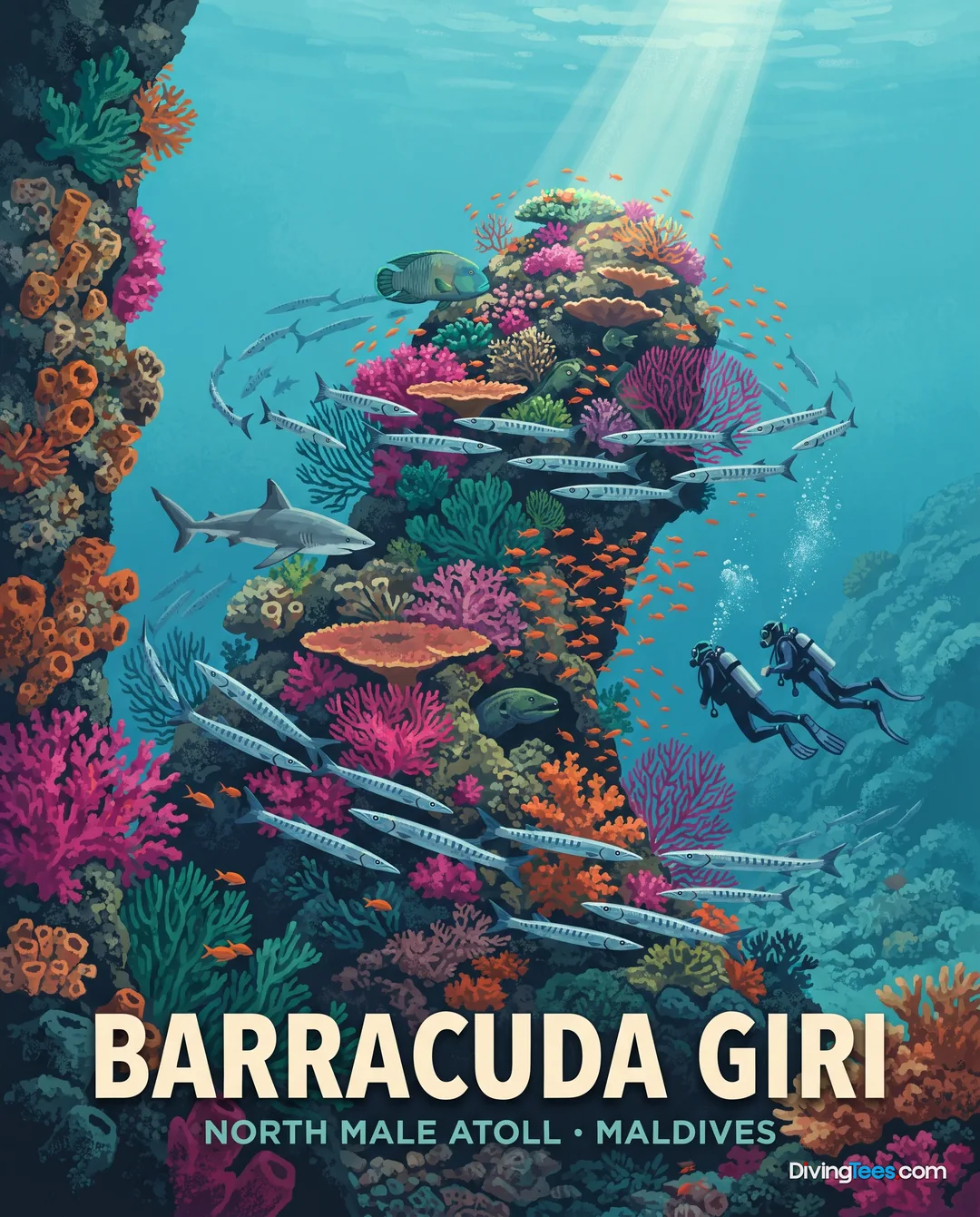
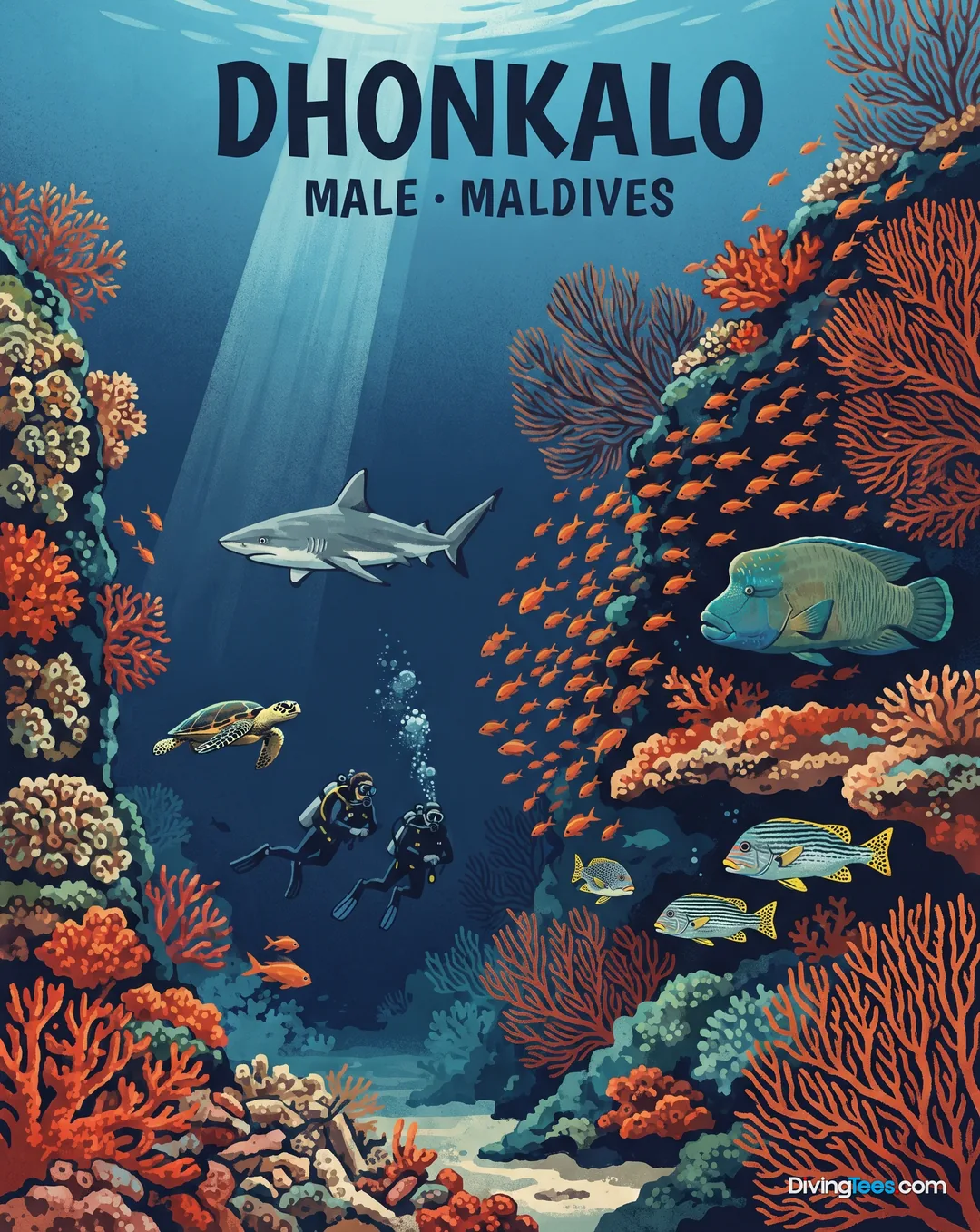
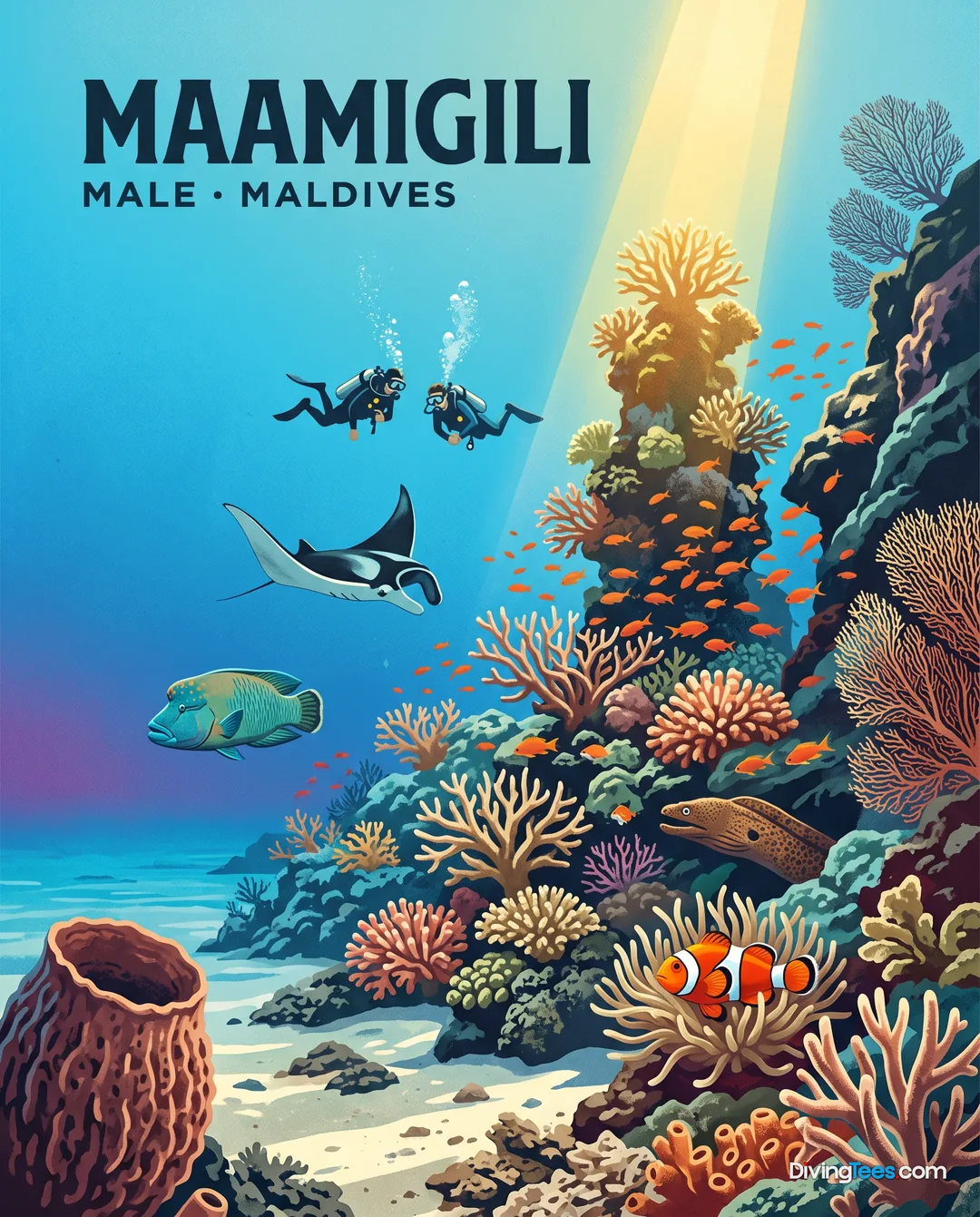
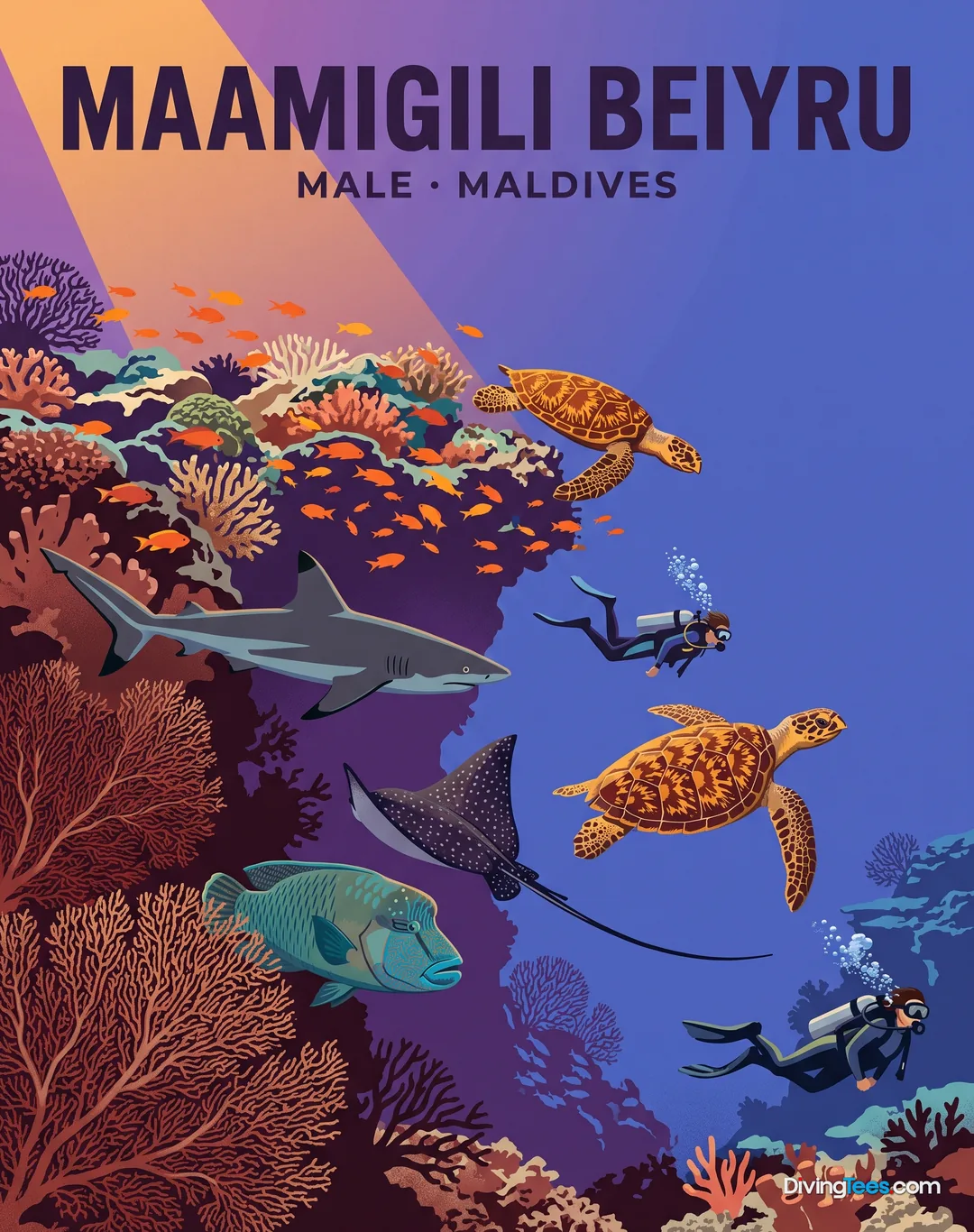
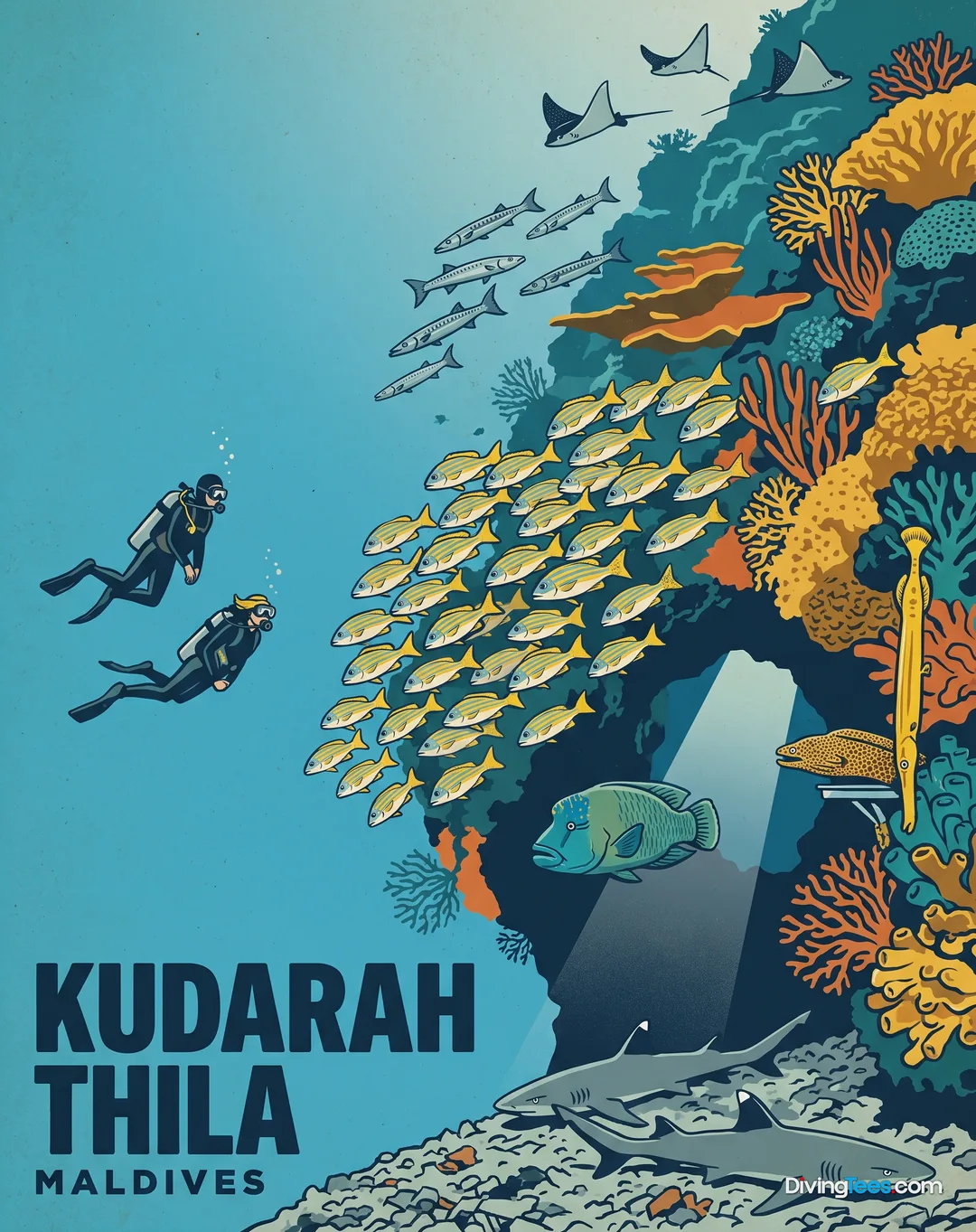
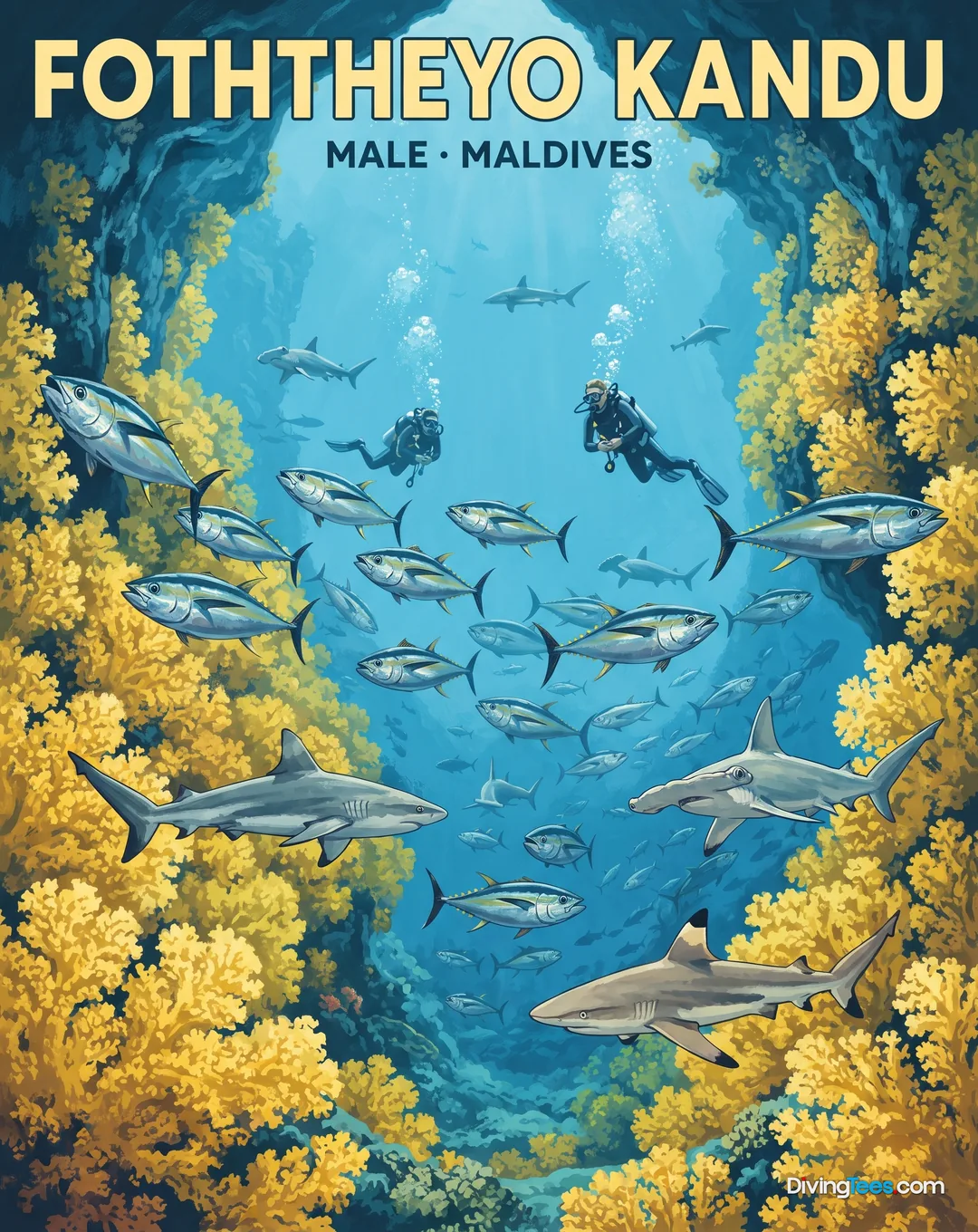
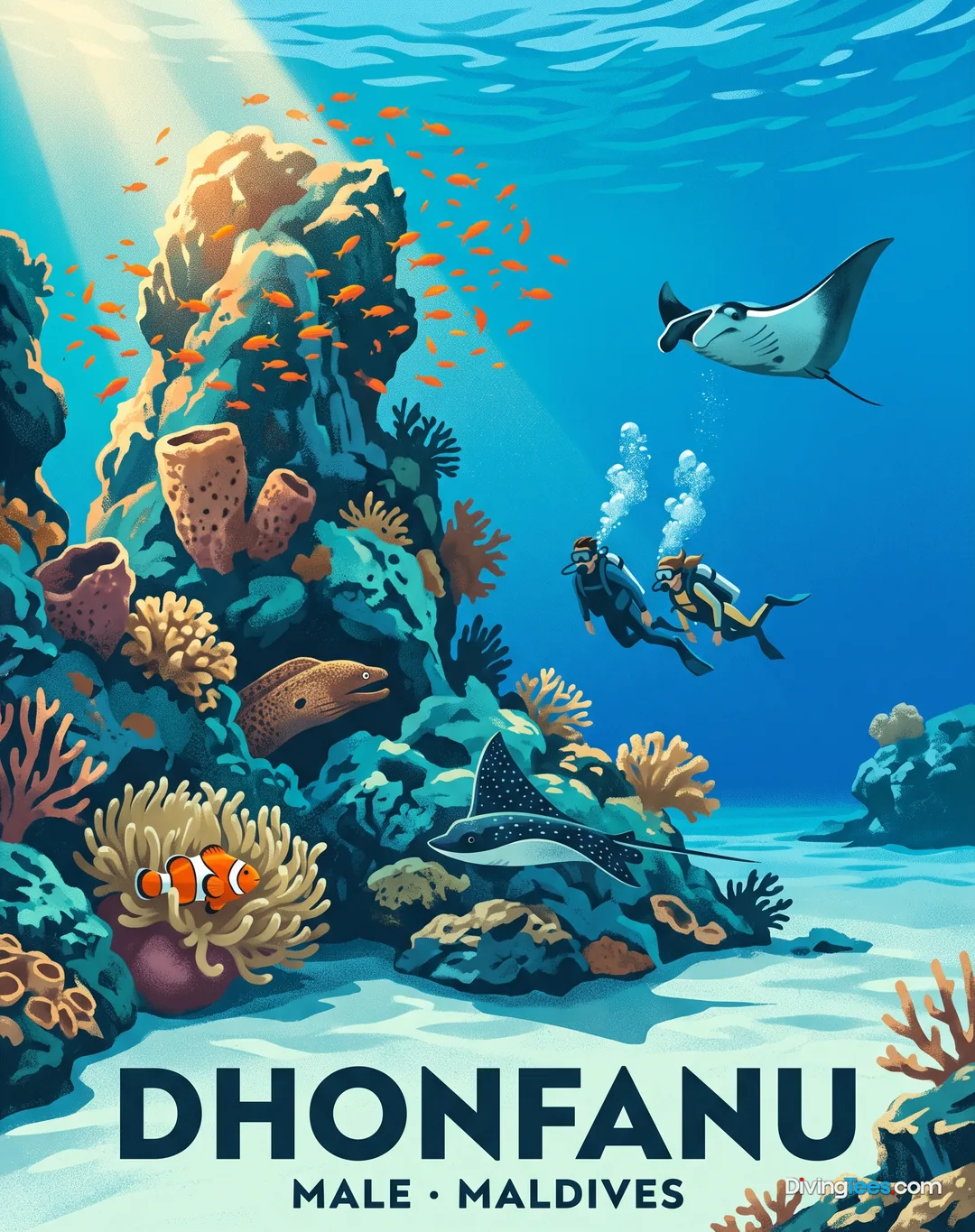
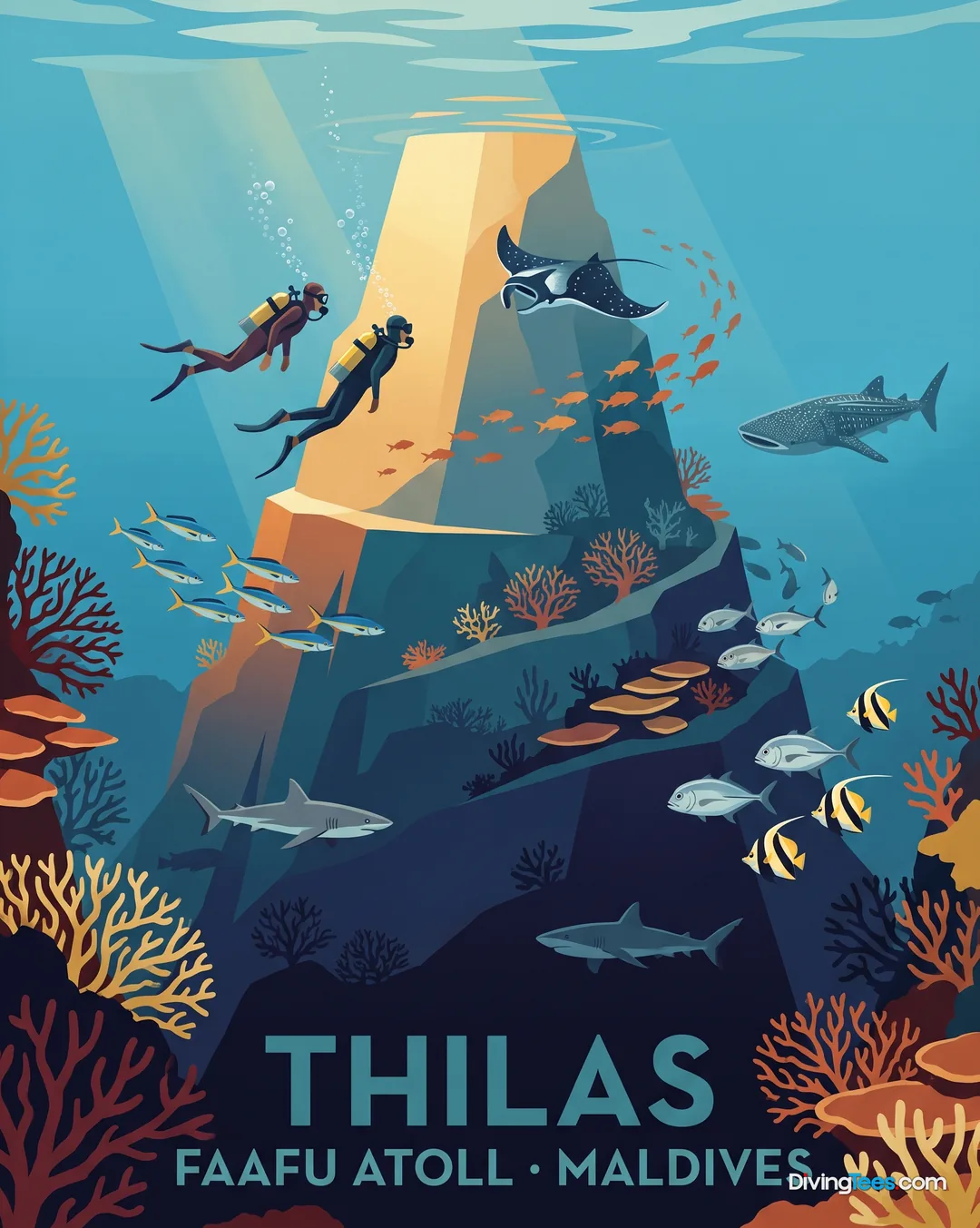
The route is the point of Theia's Maldivian programme: Central Route departures run for 8 days and 7 nights, while Central and South Atolls departures run for 11 days and 10 nights with 24 dives. At Barracuda Giri, three submerged pinnacles rise into current that gathers barracudas, tunas, jacks and fusiliers, with a maximum depth of -30m. Mushimasmigili Thila is another -30m pinnacle, known for grey reef sharks at its up-current point. Dhonkalo is a manta cleaning station in a sandy channel, while Maamigili and Maamigili Beiyru sit within the South Ari protected area, where whale sharks and mantas are possible. Kudarah Thila reaches -30m through clefts, overhangs and caves filled with batfish. Further north, Foththeyo Kandu drops to -40m, combining strong current, caves covered in yellow soft coral and open-ocean pelagics. Fushifaru Thila, to -35m, is built around manta cleaning stations; Dhigalhi Haa and Dhonfanu add Baa Atoll thilas, acropora, red coralline algae, manta stations and a swim-through.
Itineraries, dates and prices
Prices per person. Each month shows its lowest price: click a month, or pick an itinerary.
Next departures · 36 departuresfrom £1,649$2,204€1,969
October 2026
November 2026
December 2026
January 2027
See dates and prices
If you click these links and make a purchase on the partner site, DivingDeal may earn a commission, at no extra cost to you.
Dates and prices taken from Divebooker and liveaboard.com, updated 25 October 2026
What you’ll meet underwater
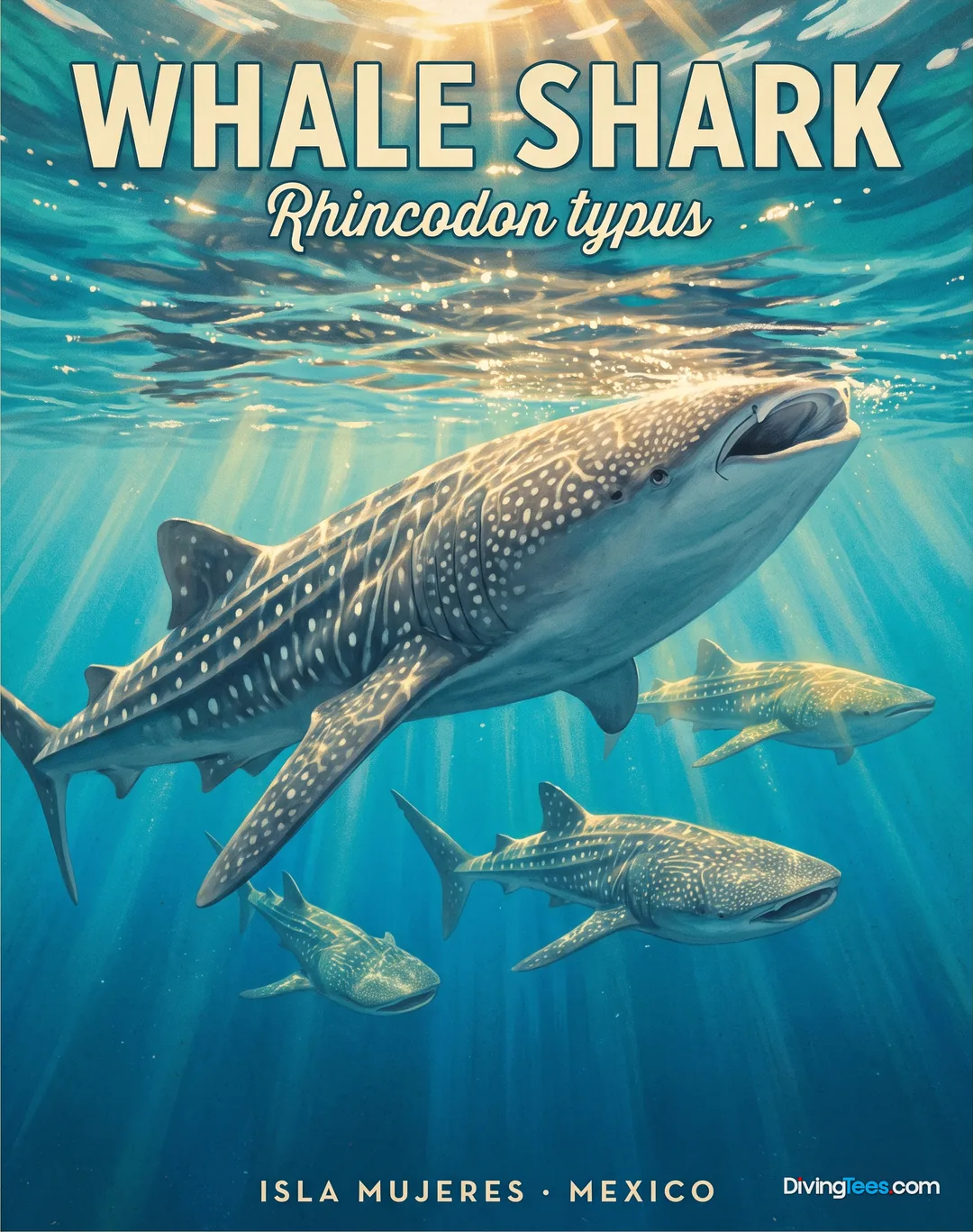
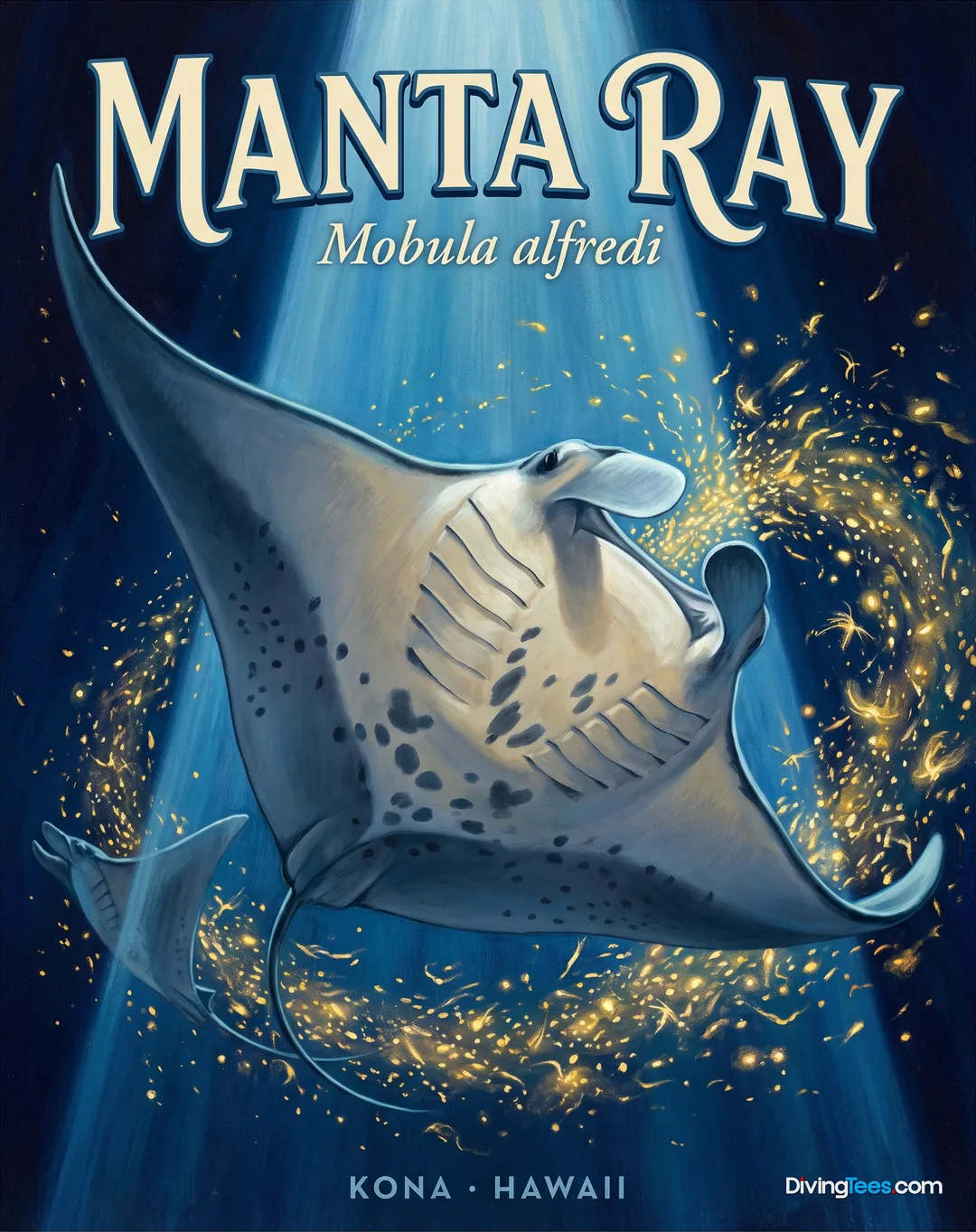
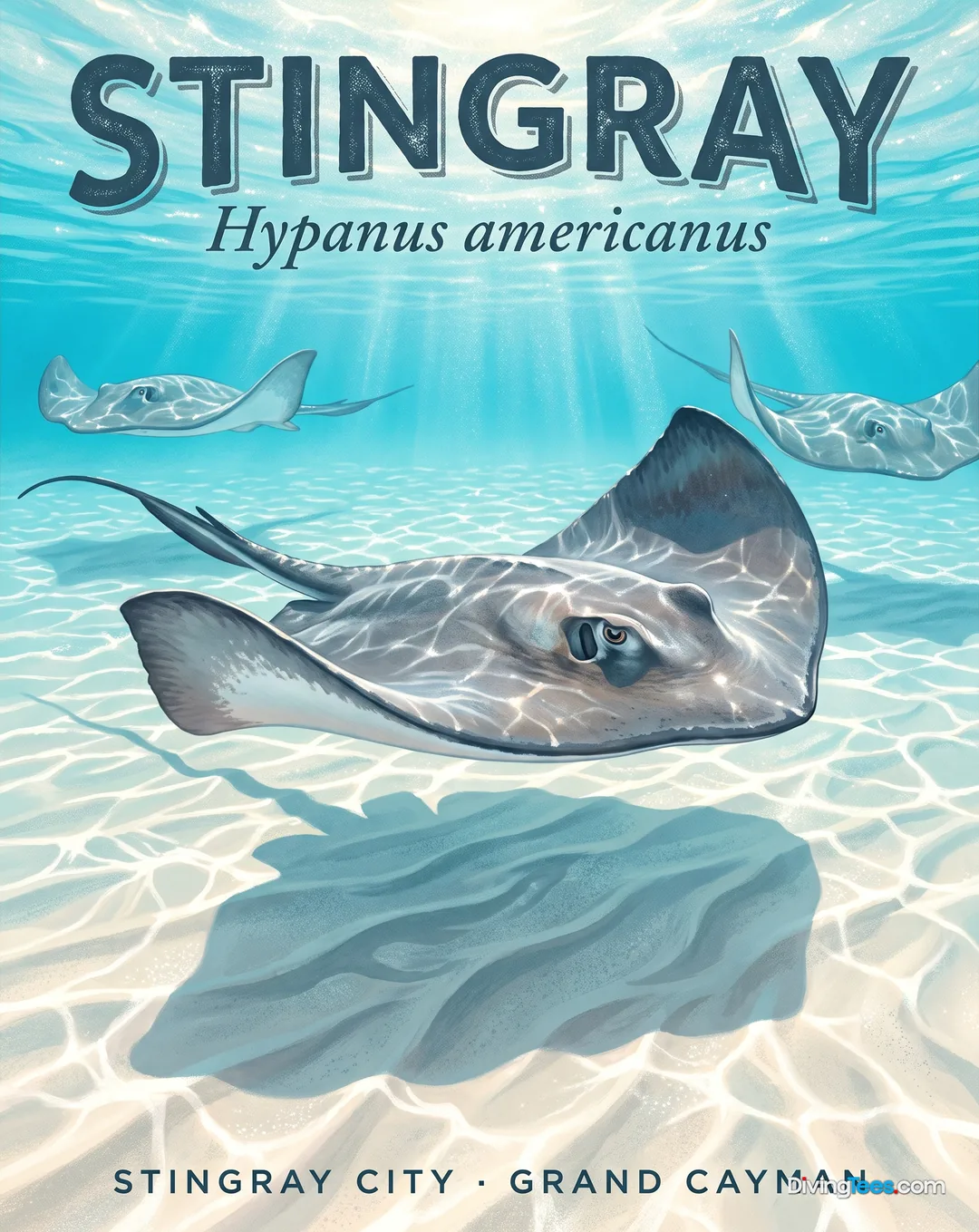
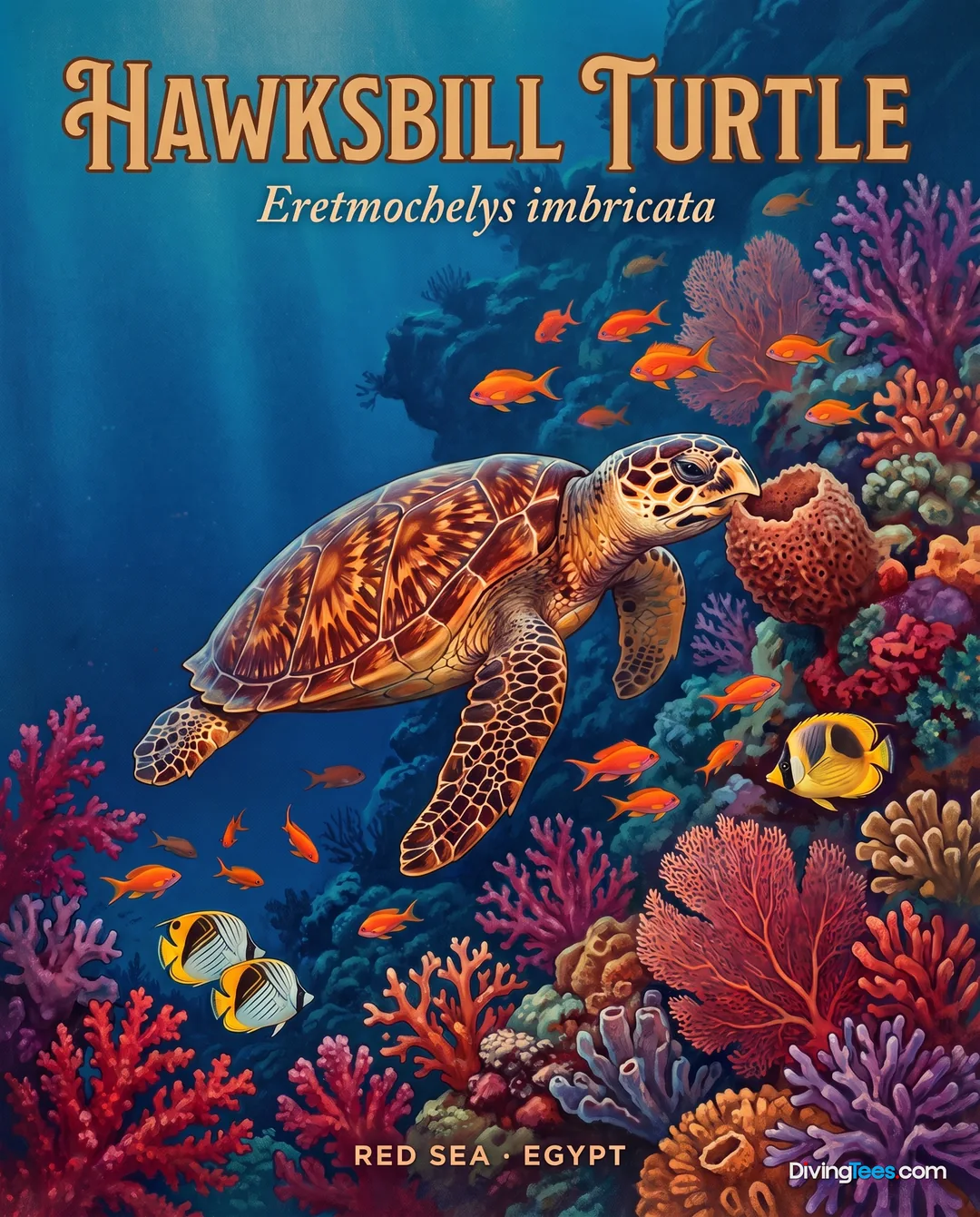
Across the route, the recurring spectacle is made of movement and scale: fusiliers and Napoleons appear at nine sites, grey reef sharks at nine, sea turtles at eight, eagle rays at eight, and barracudas, manta rays and tunas at seven each. Reef sharks with white tips, jacks, trevally, morays and batfish add detail around the thilas and channels. The reason to stay alert is that certain encounters belong to one particular site. Barracuda Giri is the place associated with groupers and anthias; Banana Reef offers anemones and its lively reef community. Maamigili is where gaterins and porcupinefish are recorded. Dhigalhi Haa Marine Reserve stands out for soft coral and gorgonians among its red coralline algae and acropora. Fushifaru Thila Marine Reserve is the site linked with stingrays, while Dhigu Thila is the one named for hawksbill turtles. The large animals are conditional, shaped by current, cleaning stations and the day's conditions, not guaranteed sightings.
Who puts you in the water
Theia's seven-person crew speaks English, German, French, Chinese and Spanish, with French-speaking DUNE support available on the relevant departures. The trip begins with a welcome and safety briefing, and the Great South itinerary includes a check-out dive so divers can regain their bearings before the route reaches more demanding sites. Conditions range from calm reefs to strong-current channels, so the briefing for each dive matters more than a fixed script. Oxygen, first-aid kits, fire alarms and extinguishers are carried on board, alongside VHF/DSC/SSB radio, GPS, radar, mobile and satellite communications, life rafts and life jackets. The Central and South Atolls itinerary is aimed at intermediate divers; the Great South route is listed for beginners.
The dive deck and the gear
The diving is organised around a separate Dive Dhoni, so the main vessel is not also the crowded launch platform. The shaded dive area has rinse tanks, diver tenders, camera facilities, charging stations and DIN adaptors. Standard diving is supplied with 12-litre tanks, while 14-litre tanks and rental equipment are optional extras; nitrox is available free to certified divers. The setup also accommodates tech diving and sidemount, with space for the equipment that those configurations require. The boat carries dive packs and weights.
Between dives
Between dives, Theia gives the trip several different places to settle instead of one all-purpose room. The shaded dive area is for the practical work; once equipment is secured, the air-conditioned main salon offers a cooler place with a wide view over the ocean. The outdoor dining deck is the natural meeting point when the weather allows, and the sun deck leads to the Sky Bar for late light and open air. The itinerary adds time away from the boat: deserted beaches, turquoise lagoons, local-island visits and barbecue stops, with kayaks and stand-up paddleboards available for quieter hours. A camera space and charging stations make the gaps useful for downloading, rinsing and sorting images before the next dive.
A day on board
A day on Theia starts with the dive operation rather than a hotel breakfast. The first briefing comes before the first immersion, and the Dive Dhoni carries the groups to reefs, thilas or channels while the main vessel prepares the next meal and the next interval. After returning, divers rinse equipment, eat, sleep, compare photographs or move into the shade before the following dive. The 10-night itineraries include 24 dives, with daytime exploration, drift dives and night sequences depending on the route and conditions. Meals punctuate the cycle without interrupting it: breakfast around the first dive, food between water sessions, then dinner once the day's diving is finished. Some evenings trade the boat for a deserted-island barbecue or a local-island visit. When the vessel gets underway, the deck becomes the place to watch the atolls change while the dive gear is secured for the next site.
What you eat aboard
Food is one of Theia's strongest points, with a galley that combines local and Western cooking rather than forcing every meal into one style. Full-board meals include buffet and à-la-carte formats, with vegetarian and vegan choices; snacks are available throughout the day, and non-alcoholic drinks, tea, coffee and drinking water are provided during the cruise. Meals can be taken outside, including barbecue dinners on a deserted island on selected itineraries. That matters on a dive trip because the table is part of the recovery cycle: food has to appear between immersions without making every meal a formal event. The menu also leaves room for the occasional special dinner, while beer, wine and other alcoholic drinks remain separate from the included non-alcoholic service.
Nights at sea
Theia offers four cabin categories—Premium, Superior, Deluxe and Standard—but the important distinction is where the cabin sits and how much space and daylight it gives you. The lower deck has cabins with double or single beds, including a Deluxe layout with one of each; the upper deck has two suites with double beds, while two junior suites include one with sea views. Cabins have private bathrooms, air conditioning, charging points and portholes, with selected cabins offering balconies or sea views. After a day of salt, sun and repeated kit changes, that private bathroom matters more than decorative detail. The air-conditioned salon gives the group somewhere cool to sit, while the upper decks provide the open air. At night, the boat's character depends on your cabin position: lower-deck rooms are closer to the vessel's working body, while upper accommodation is closer to the breeze and open deck.
Premium Cabin
Superior Cabin
Deluxe Cabin
Standard Cabin
What to know before boarding
Theia's Maldives cruises depart from and return to Malé. Airport transfer to the boat and the return transfer are included in the cruise arrangements. The first day covers airport reception, transfer, boarding, installation and the welcome briefing; on return, guests leave the boat after breakfast before the airport transfer. Arriving in Malé the night before boarding is sensible, particularly when the international flight schedule leaves little margin for a same-day connection.
Deck plan
- Year built
- 2006
- Year renovated
- 2010
- Length
- 32
- Beam
- 9.4 m
- Maximum number of passengers
- 20
- Number of cabins
- 10
- Number of bathrooms
- 10
- Engines
- Doosan Daewoo 480 hp
- Cruising speed
- 10 knots
- Website
- dune-world.com ↗
Hello, I'm Marina, DivingDeal.com's AI assistant. I answer in detail about hotels, dive centres and liveaboards.
Thinking about the whole trip and the flights? Talk it over with Edith →
Marina is an AI. Some links are affiliate links: DivingDeal may earn a commission, at no extra cost to you. Bookings are made with the partner.