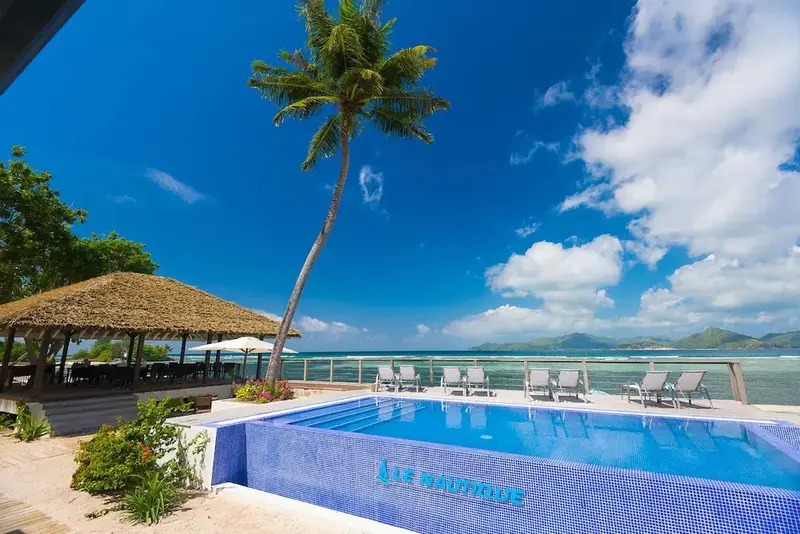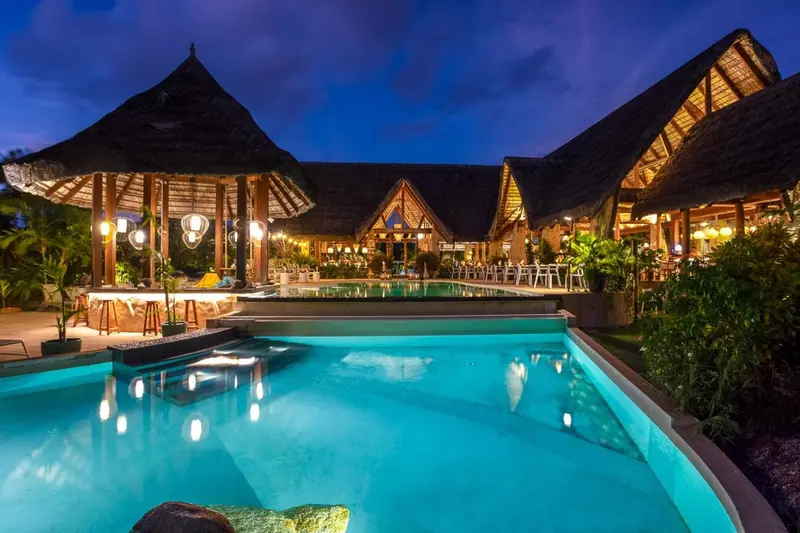
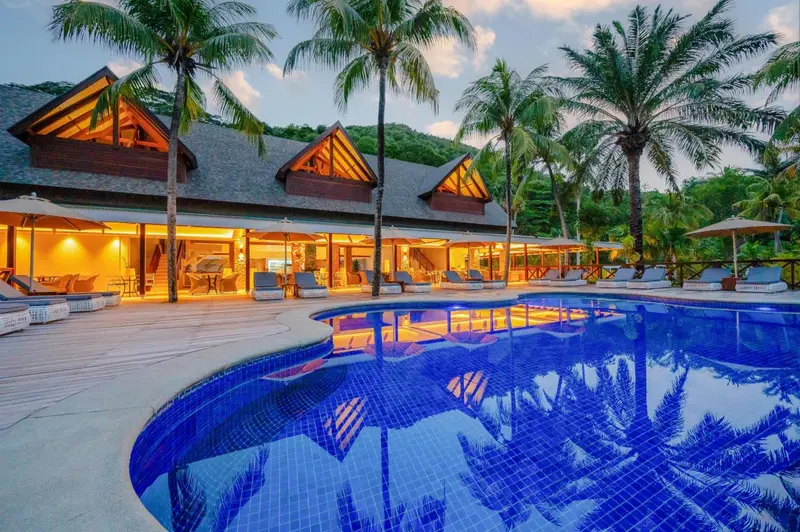
 Dive centre in the hotel
Paradise Sun Hotel Seychelles
★★★★
Google 4.5/5 (785 reviews)
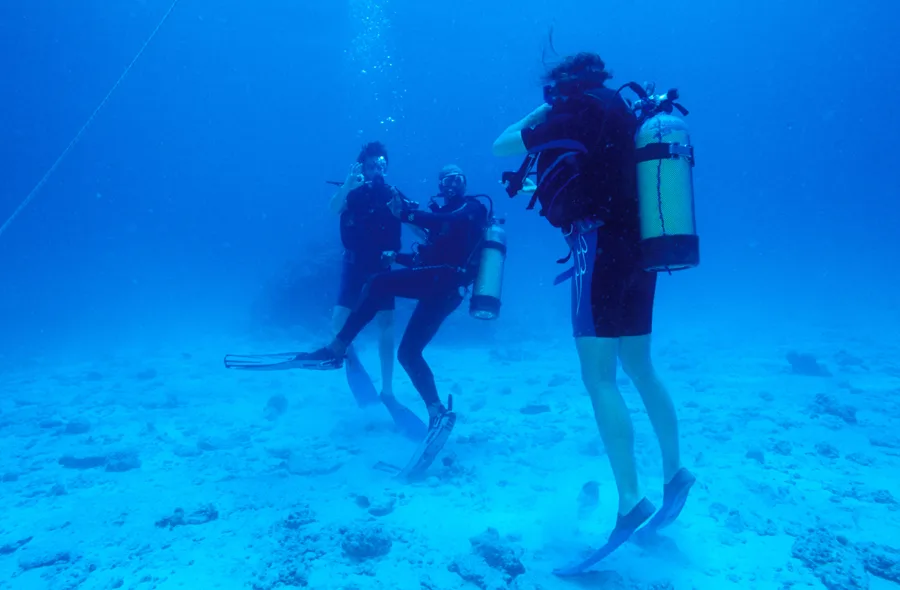
The dive centre
Whitetip Divers
PADI
Google 4.6/5 (387 reviews)
Seychelles · Indian Ocean
Granite rock structures, shallow drop-offs, clear water and demanding open-ocean currents define La Digue’s boat diving in the Seychelles.
For subtitles in English: start the video firstthen click the gearat the top right of the video, select “Subtitles/CC”, then “Auto-translate” and choose “English”.
Bitter Rock’s granite structures give La Digue its clearest underwater identity: deep, exposed rock formations visited by boat rather than a shore-diving routine. The island works best as a quiet base for exploring nearby sites across the central Seychelles, with diving fitted around the slower pace of a small inhabited island. It suits divers who want warm tropical water, clear views and proper days away from a busy resort environment, while accepting that ferry and boat arrangements shape the trip.
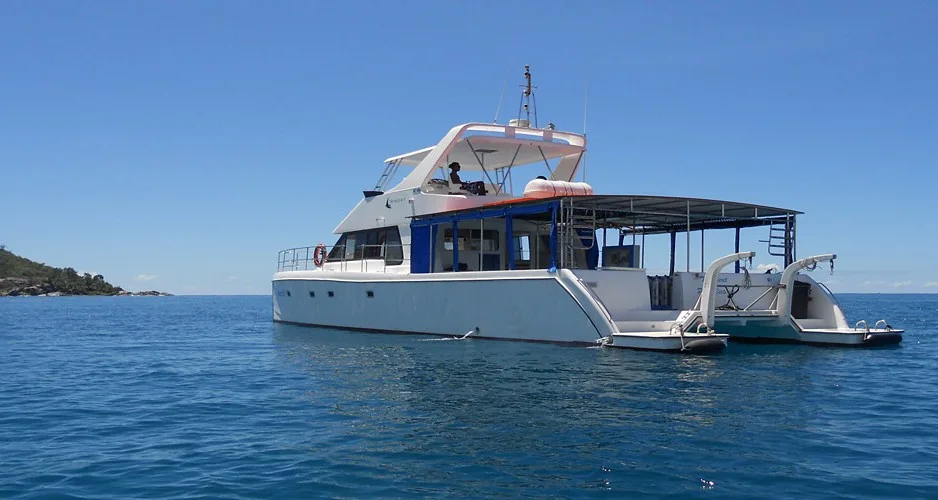
La Digue’s diving is primarily from a boat, over granite reefs, rock structures and relatively shallow drop-offs. The conditions can be gentle enough for a broad range of divers, but the exposed sites deserve respect. Bitter Rock drops from seventeen to thirty metres and carries consistently strong open-ocean currents, making it an Advanced Open Water dive for people comfortable managing demanding water movement. Cheminee is more approachable for intermediate divers, although wind and swell can change the current. Visibility can reach thirty metres at Bitter Rock and frequently exceeds that figure at Cheminee during favourable periods. These are dives for maintaining position, reading the water and keeping a clean profile over the reef, rather than wandering casually along a sheltered shoreline. Nitrox is a useful option where the planned depth and profile make it appropriate.
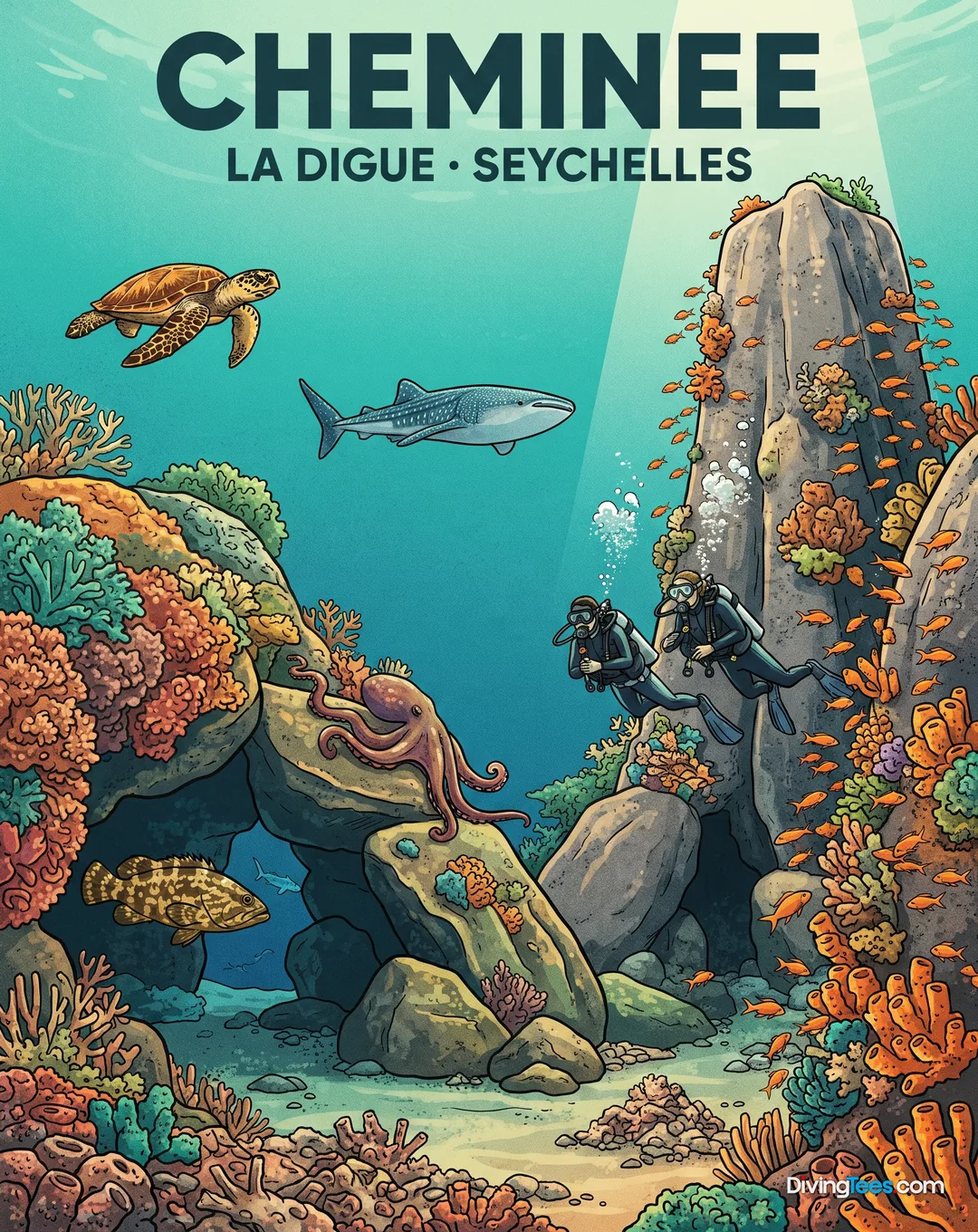
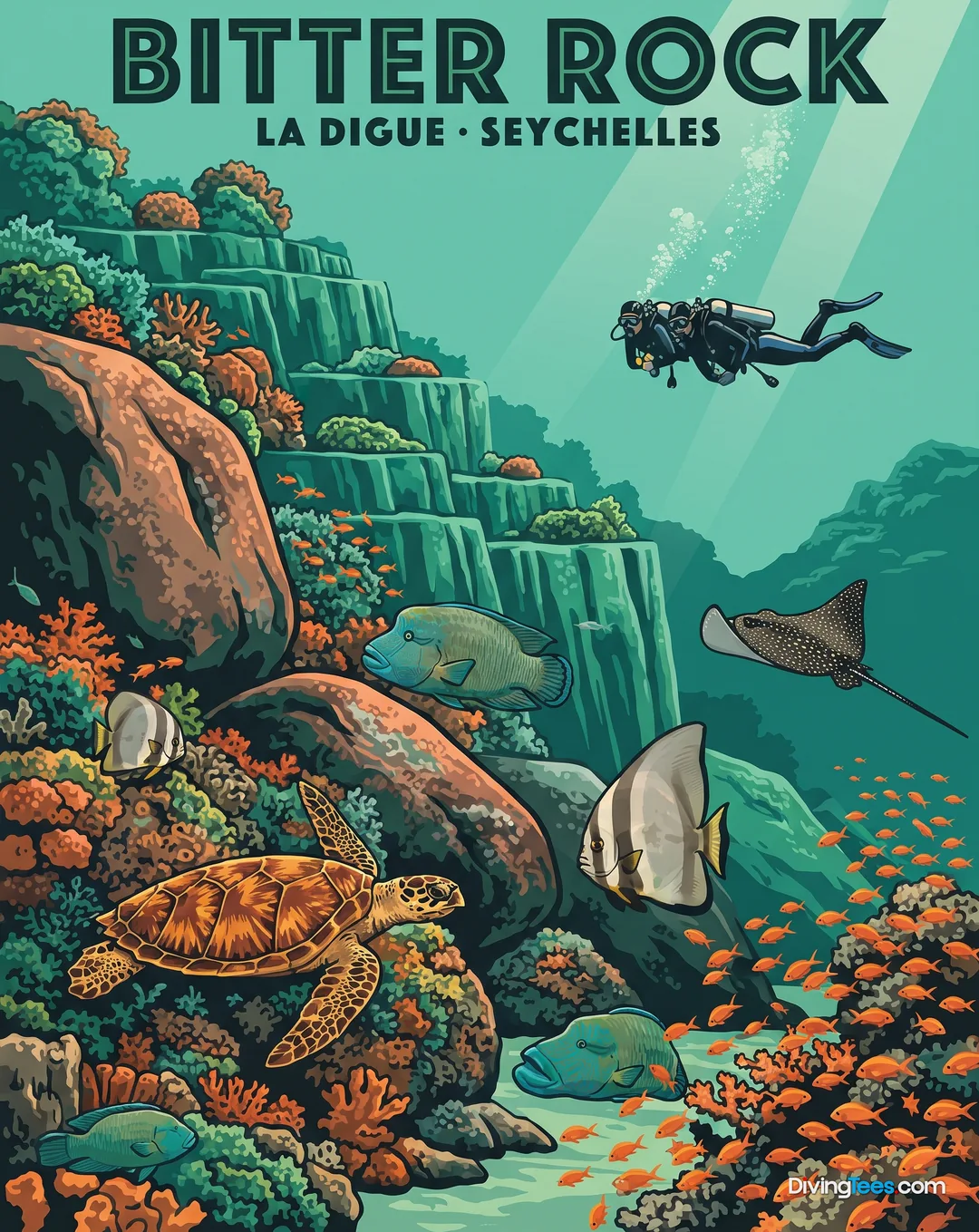
Bitter Rock is the place for divers who want to spend time looking across healthy coral formations and substantial rock structures, with abundant marine life occupying the underwater landscape. Its infrequent diving adds to the sense of an exposed site that has seen relatively little human activity. Cheminee offers a similarly lively setting, with a rich and diverse marine population set against immaculate underwater scenery. The appeal here is not a checklist of named animals, but the combination of moving life, coral and granite relief in clear water. The measured site information points to particularly favourable conditions at Cheminee in April and May, then again in October and November, when visibility is frequently above thirty metres.
For the most settled boat-diving window, November through May is the practical choice: the measured sea conditions are at their calmest then, which matters when every dive begins and ends with a boat journey. Cheminee’s favourable periods also fall in April and May, and in October and November, with visibility frequently exceeding thirty metres. Rainfall is lowest from May through August, although that does not make the sea automatically calm. A longer stay allows the itinerary to absorb wind and swell rather than forcing every dive into a narrow weather window.
La Digue is not reserved for technical or highly advanced divers, and Cheminee is suitable for intermediate experience when current conditions are manageable. Bitter Rock is different: its depth, exposure and strong open-ocean current call for Advanced Open Water at minimum and genuine confidence in demanding water. Divers arriving with BSAC, PADI or SSI training should match their qualification and recent experience to the planned site. Nitrox can be useful for repetitive boat diving, but it does not replace the ability to handle current and depth.
From London Heathrow, London Gatwick or Manchester, the journey begins with an international flight to the Seychelles, commonly using a connection with Air Seychelles, Emirates, Ethiopian Airlines, Qatar Airways or Turkish Airlines. La Digue is then reached by inter-island ferry from Mahé. That means allowing time to travel overland from Mahé airport to the ferry berth, then planning around the maritime timetable before the final boat journey to the dive sites. On La Digue itself, the island is compact enough for short local transfers, with walking, bicycles or local transport generally more practical than a car. The ferry connection is the structural constraint: a missed sailing can affect the whole onward journey.
Confirm before booking that the diving actually operates from La Digue, rather than requiring a transfer through Praslin. Build spare time around the inter-island ferries, especially on arrival and departure; a missed sailing can turn a simple connection into an extra night. Do not plan the trip around shore diving, because the local operation is organised mainly around boats. The first departure of the day is worth considering when wind or other boat activity may make later outings less comfortable. Divers intending to dive several days should consider bringing an independent equipment bag, as rental choice on a small island may be narrower than on Mahé or Praslin. Ask whether the boat uses moorings instead of dropping an anchor on reef, and keep buoyancy particularly tidy over the shallow granite formations. Bitter Rock should not be added casually to an itinerary: its depth and persistent current demand suitable training and recent experience.
La Digue works better as a proper island stay than as a brief diving stop. Several full days leave room for boat diving, weather flexibility and the slower ferry timetable, without turning every morning into a transport exercise. A non-diving companion can spend surface days cycling around the island, visiting granite beaches, walking the coastline or joining a non-diving boat trip. The result is a mixed Seychelles holiday with diving at its centre, rather than a densely scheduled dive base.
Hello, I'm Marina, DivingDeal.com's AI assistant. I guide you through destinations, areas and countries.
Thinking about the whole trip and the flights? Talk it over with Edith →
Marina is an AI. Some links are affiliate links: DivingDeal may earn a commission, at no extra cost to you. Bookings are made with the partner.
In each one, the dive centre is inside the hotel: step out of your room and go diving.
Dive centre in the hotel★★★★
Google 4.5/5 (785 reviews)
The dive centre
Whitetip Divers
PADI
Google 4.6/5 (387 reviews)
Your last day stays dry: no diving in the 18-24 hours before a flight, the perfect window to see the destination from another angle.
 Nature
⏱ 6 h · ★ 4.8 (325 reviews)
from £42$56€50
see on Viator ↗
 Culture
⏱ 5 h · ★ 4.6 (245 reviews)
from £108$144€129
see on Viator ↗
Ratings and reviews collected by Viator and Tripadvisor.
Choose La Digue between November and May for calmer boat seas, which can make departures and returns more comfortable. Cheminee often has visibility above thirty metres in April and May, then again in October and November. Rainfall is typically lower from May through August, although calmer weather is not guaranteed then.
La Digue suits a broad range of divers, with Cheminee approachable for intermediate divers when current conditions are manageable. Bitter Rock requires Advanced Open Water training and confidence in strong open-ocean currents, depth and exposure. You should match your qualification and recent experience to the planned site, rather than treating every dive alike.
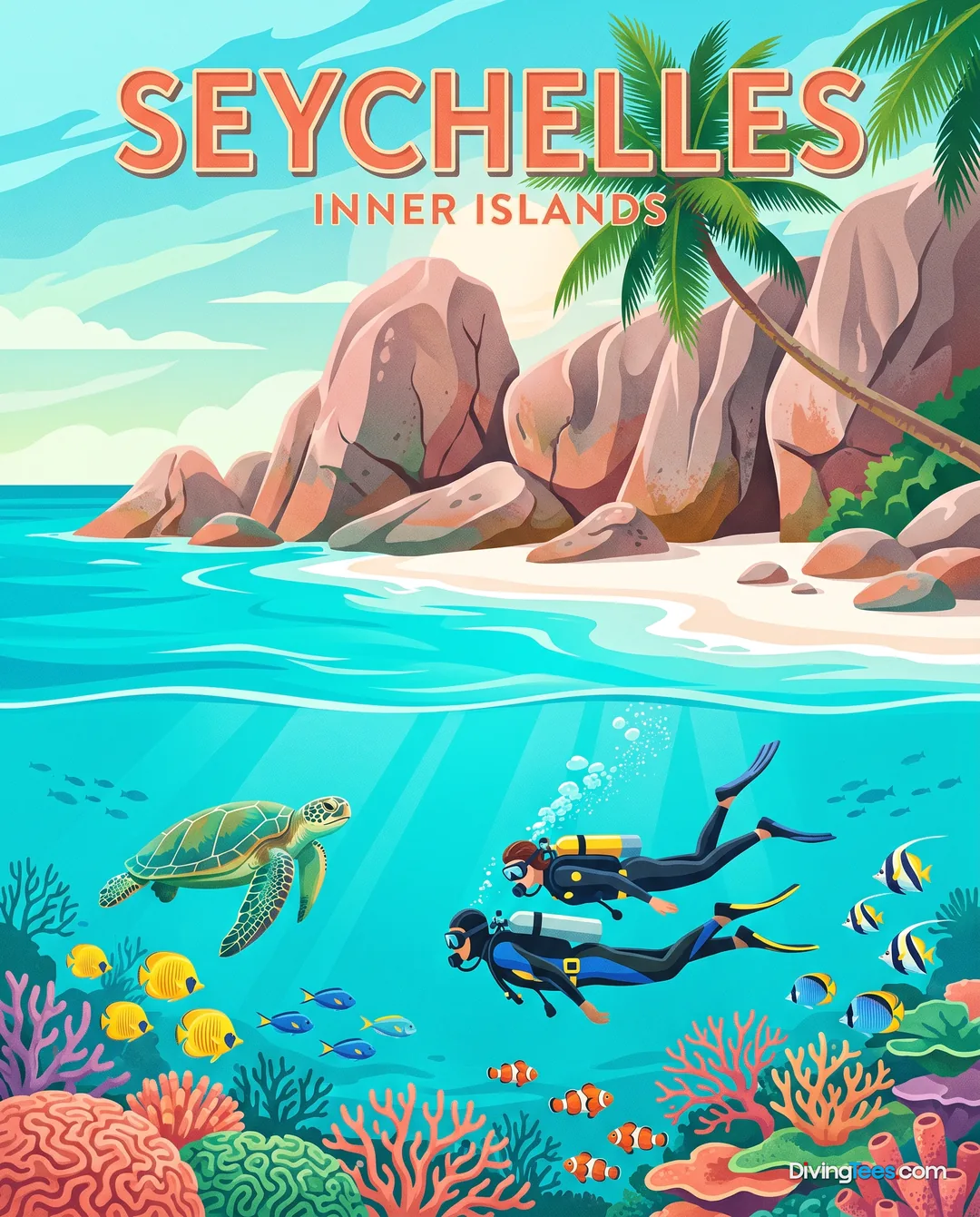
Around La Digue, you can explore granite reefs, substantial rock structures and relatively shallow drop-offs in clear water. Bitter Rock combines coral formations, abundant marine life and exposed underwater relief. Cheminee offers vibrant, diverse marine life against immaculate scenery, with the attraction coming from moving life, coral and granite rather than a fixed animal checklist.
Plan La Digue as a proper island stay with several full days for boat diving, weather flexibility and ferry connections. Confirm that diving operates from La Digue, build spare time around inter-island ferries from Mahé, and do not rely on shore diving. Walking, bicycles and local transport suit the compact island.