Zakynthos · Greece · Mediterranean
Max. depth · 24 mLakka Dive Site, Zakynthos: underwater arch and rocky reefs
Explore a massive underwater arch and a network of caves situated along a descending sponge-covered wall.
What makes this site special
- Large underwater arch at 12 metres depth
- Descending walls covered in colourful sponges
- Network of caves and narrow rocky cavities
- Frequent sightings of loggerhead sea turtles
- Diverse reef fish including groupers and wrasse
- Varied topography from open rock to crevices
For subtitles in English: once the video has started, click the gearat the top right of the video, select “Subtitles/CC”, then “Auto-translate” and choose “English”.
Lakka about the site
The dive begins by approaching the rocky coastline from the open sea. After the boat moors offshore, you move towards the reef to find the transition from the sandy bottom to the rising rock formations. The site is defined by its complex topography, where the rocky seabed meets steep, descending walls. As you descend, the structure becomes increasingly intricate with various outcrops and vertical faces.
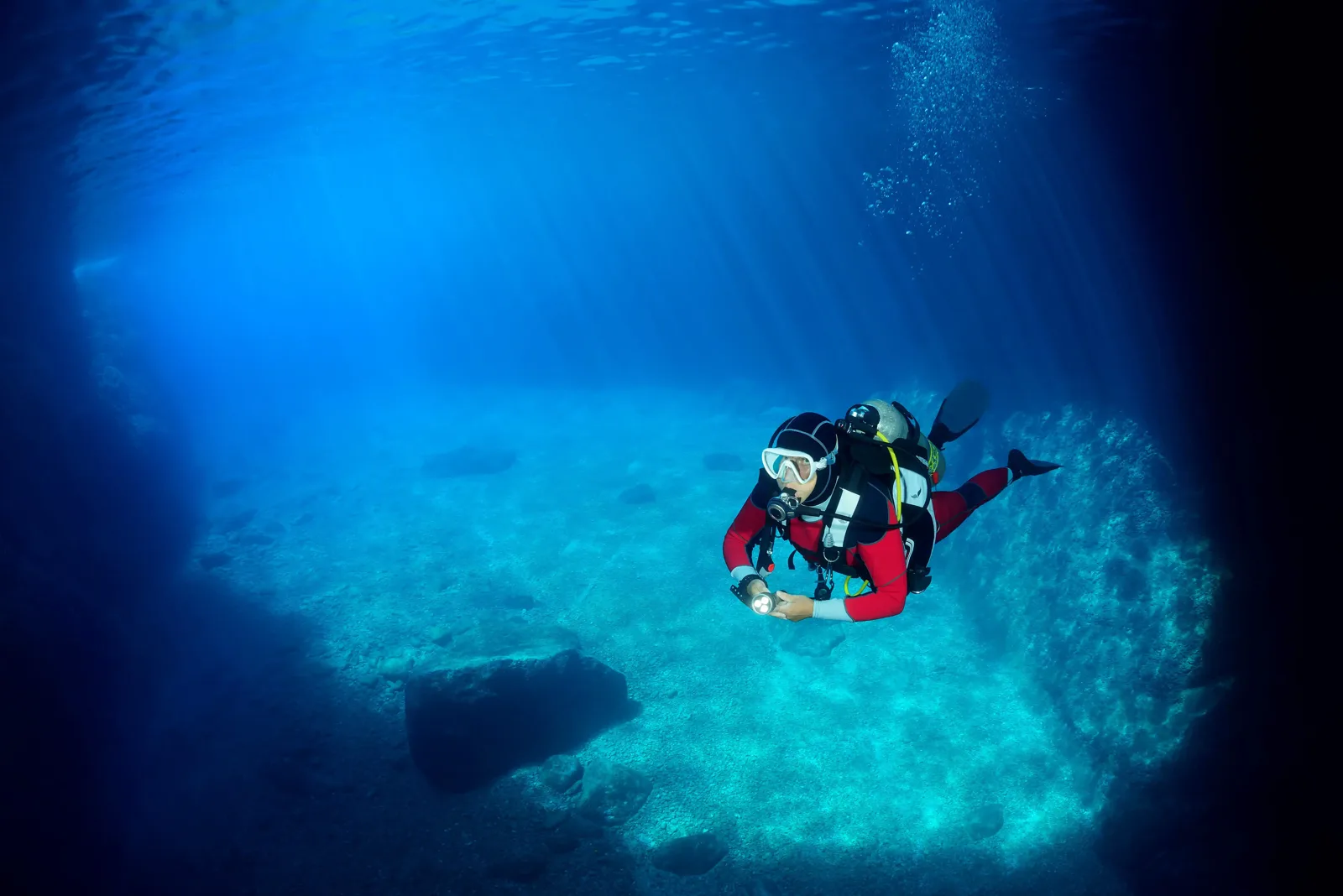
The central feature of Lakka is a large underwater arch, known locally as the Arch of Triumph. The top of this structure sits at approximately 12 metres, providing a clear landmark for navigation. Passing through the arch allows you to transition between different sections of the reef. This area serves as a primary point of interest where the light often hits the rock surfaces in interesting ways.
Beyond the main arch, the site opens into a series of caves and narrow cavities. These geological features are integrated into the descending walls that reach depths of about 24 metres. Some of these openings are quite tight, requiring careful buoyancy control to navigate without contacting the rock. The walls themselves are heavily textured, providing a massive surface area for various marine organisms to inhabit.
The vertical surfaces are notably covered in a dense layer of colorful sponges. These encrusting organisms follow the contours of the rock, creating a vibrant backdrop for the dive. As you move along the wall, you will find that the sponge growth varies in thickness and hue depending on the light and the specific depth. This biological coating is one of the defining visual characteristics of the Lakka reef.
Resident fauna is frequently found tucked into the many crevices and shadows of the reef. You can often spot moray eels and octopus sheltering within the rock holes or under ledges. Smaller species like blennies, damselfish, and wrasse are highly active along the reef edges and around the edges of the arch. These fish move through the water column or dart between the small cracks in the stone.
Larger reef residents such as groupers, sea bream, and sea perch are commonly seen patrolling the deeper sections of the wall. If you maintain a steady profile, you may also encounter parrotfish and slipper lobsters amongst the coral and sponge structures. For those keeping a close eye on the rockwork, loggerhead sea turtles are known to frequent these waters, moving steadily through the mid-depth zones.
The experience at Lakka is shaped by the interplay between the open water and the protected pockets of the caves. While the descent is straightforward, the variety of the terrain means you are constantly switching between open reef swimming and more technical navigation near the crevices. This combination of scale, from the large arch to the small holes, makes the site a comprehensive reef exploration.
Diving Lakka: the marine life you’ll meet

Diving conditions
The site reaches depths between 12 and 24 metres. Visibility is typically between 20 and 30 metres, and the best diving period is from late May to late September.
Three dives not to miss

Map of hotels, dive sites and dive centres in Zakynthos
Dive centres in Zakynthos
Nero-Sport Diving Center
Zakynthos
Google 5/5 (669 reviews)
4.4 km away as the crow flies
Nearest hotel: 400 m
Studio Timotheos Basic
Google 4.6/5 (76 reviews)

Hotels in Zakynthos
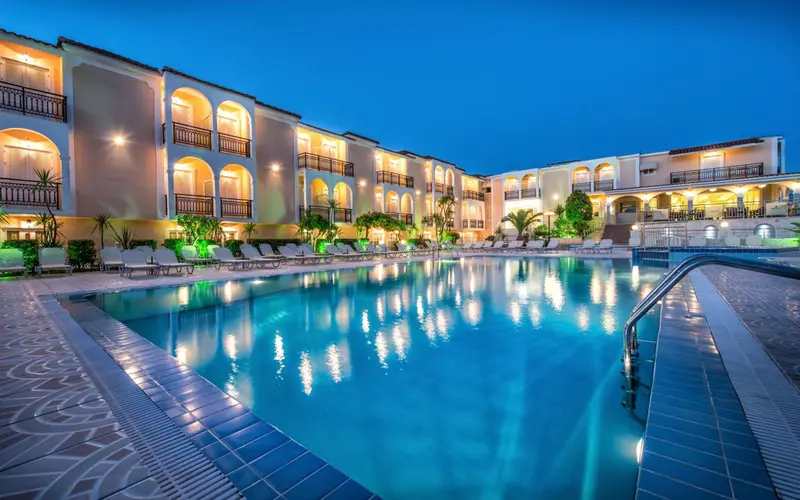
Zante Sun Resort
Zakynthos
Google 4.5/5 (1,169 reviews)
7.5 km away as the crow flies
Nearest dive centre: 270 m
Zante Diving
Google 4.9/5 (1,303 reviews)
Frequently asked questions about Lakka
When is Lakka best to dive?
You can dive Lakka during its best period from late May to late September. Visibility is typically between 20 and 30 metres, allowing you to appreciate the underwater arch, descending walls, colourful sponges, caves, narrow rocky cavities, and reef life across the site’s varied underwater terrain.
How deep is Lakka?
Lakka ranges from 12 to 24 metres deep. The large underwater arch reaches 12 metres, while the descending walls, caves, and narrow cavities extend to about 24 metres. This depth range lets you move between shallower landmark areas and deeper sections covered with sponges and inhabited by reef fish.
What can you see at Lakka?
At Lakka, you can see a large underwater arch, colourful sponges covering descending walls, caves, and narrow rocky cavities. Marine life includes loggerhead sea turtles, groupers, wrasse, moray eels, octopus, blennies, damselfish, sea bream, sea perch, parrotfish, and slipper lobsters among the reef structures.
What is the underwater terrain like at Lakka?
Lakka combines open rock, steep descending walls, crevices, caves, and narrow cavities. You begin over a sandy bottom near rising rock formations, then move through increasingly intricate outcrops and vertical faces. Some openings are tight, so you need careful buoyancy control while navigating between open reef and protected rocky spaces.