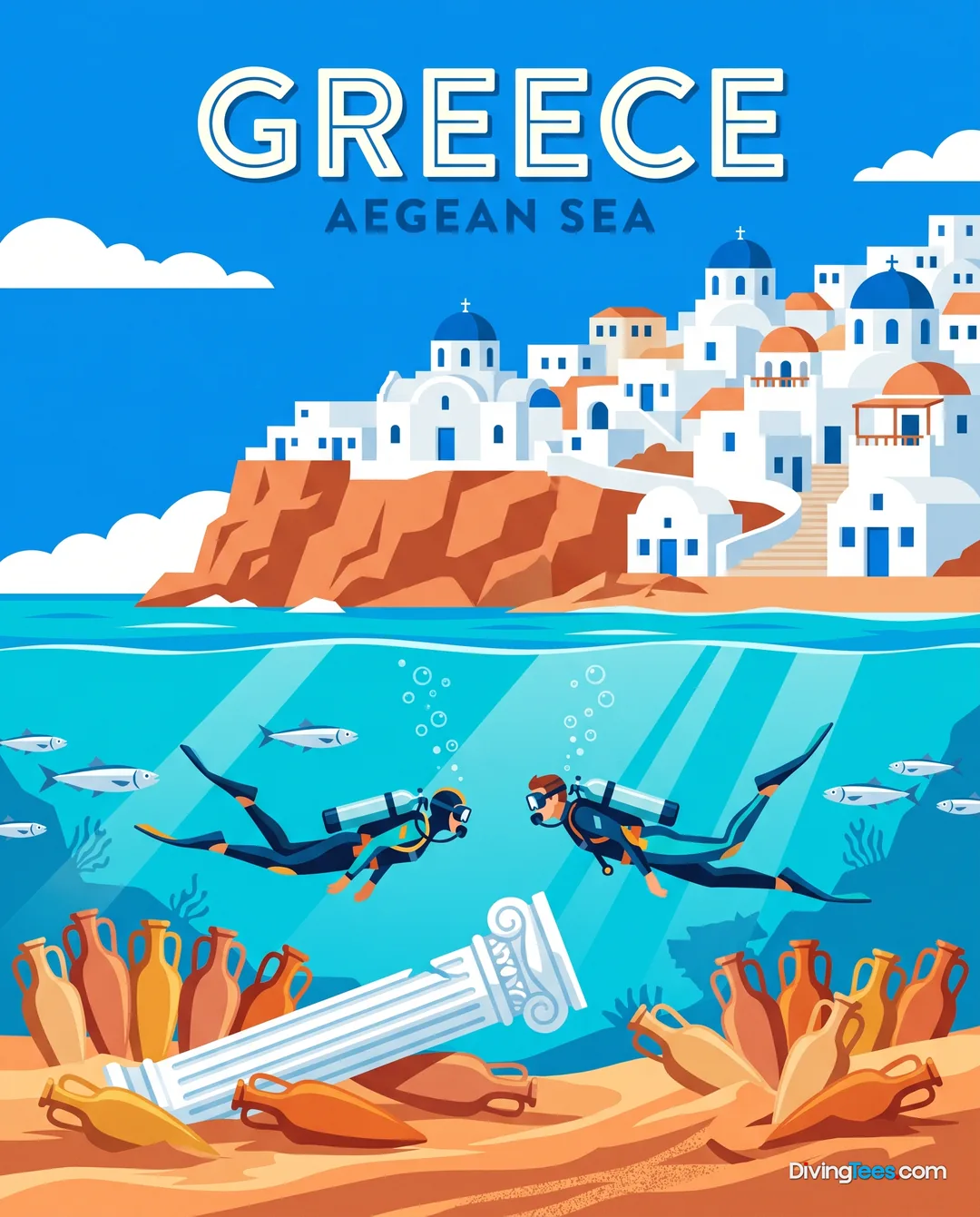
Zakynthos · Greece · Mediterranean
Max. depth · 50 mOctopus Reef, Zakynthos: limestone gardens and deep wall descent
Navigate through limestone block formations in a sheltered bay before descending a deep drop-off reaching 50 metres.
What makes this site special
- Limestone block formations in a sheltered bay
- Deep vertical wall descent to 50 metres
- Habitat for common octopus (Octopus vulgaris)
- Frequent sightings of European spiny lobster
- Mediterranean moray in rocky crevices
- Dusky grouper near the deep wall
For subtitles in English: once the video has started, click the gearat the top right of the video, select “Subtitles/CC”, then “Auto-translate” and choose “English”.
Octopus about the site
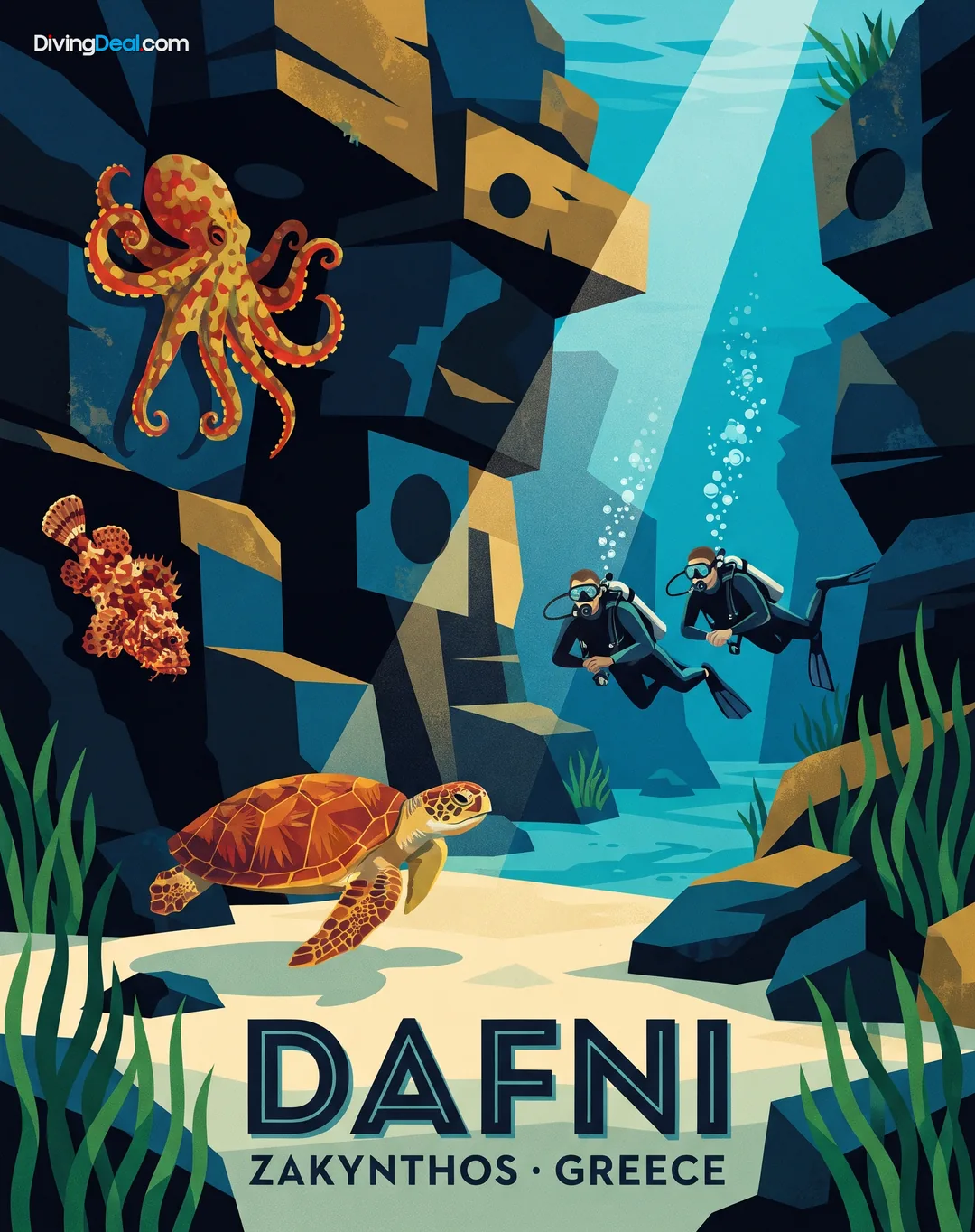
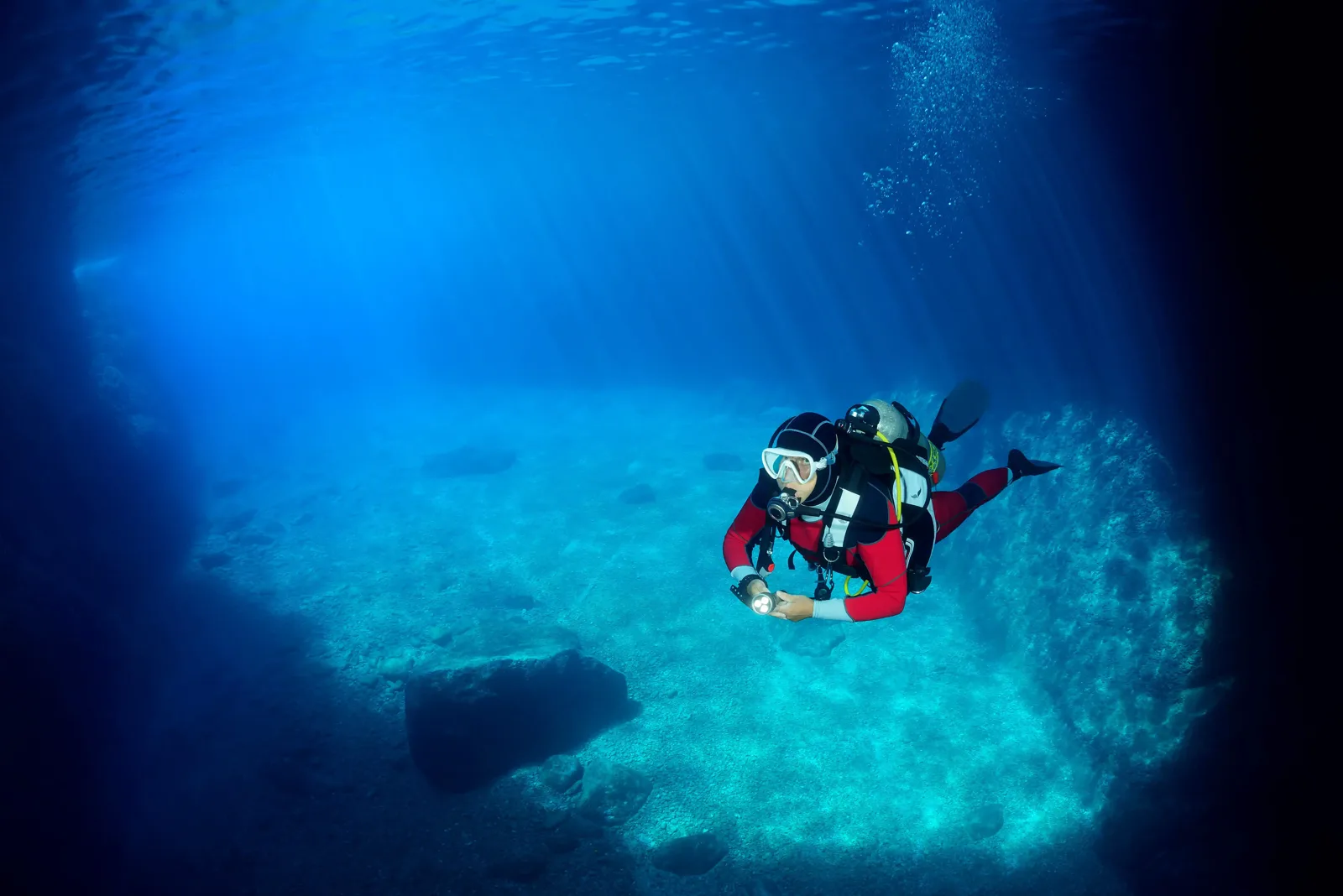
The topography of Octopus Reef starts in a sheltered bay characterized by a dense arrangement of large limestone blocks. As you approach the bottom, you will find a complex landscape of crevices, overhangs, and narrow passages that invite exploration. This upper zone provides a protected environment for divers to practice buoyancy while maneuvering through the rocky terrain. The geological structure serves as a foundational habitat for numerous small organisms and resident reef species.
Moving past the initial limestone gardens, the terrain transitions into a significant vertical drop-off. This wall descends from the shallow reef area down to a maximum depth of approximately 50 metres. The transition from the broken, rocky seabed to the sheer descent marks the change in the dive profile. This deep section offers a completely different environment compared to the sheltered, shallow upper zone of the site.
The middle section of the wall features a specific cavity located at approximately 15 metres. This feature provides a distinct point of interest for those watching for movement within the rockwork. The relief in this area is part of the continuous descent that leads toward the deeper waters. It is a useful marker for tracking your depth and orientation as you move away from the shallower plateau.
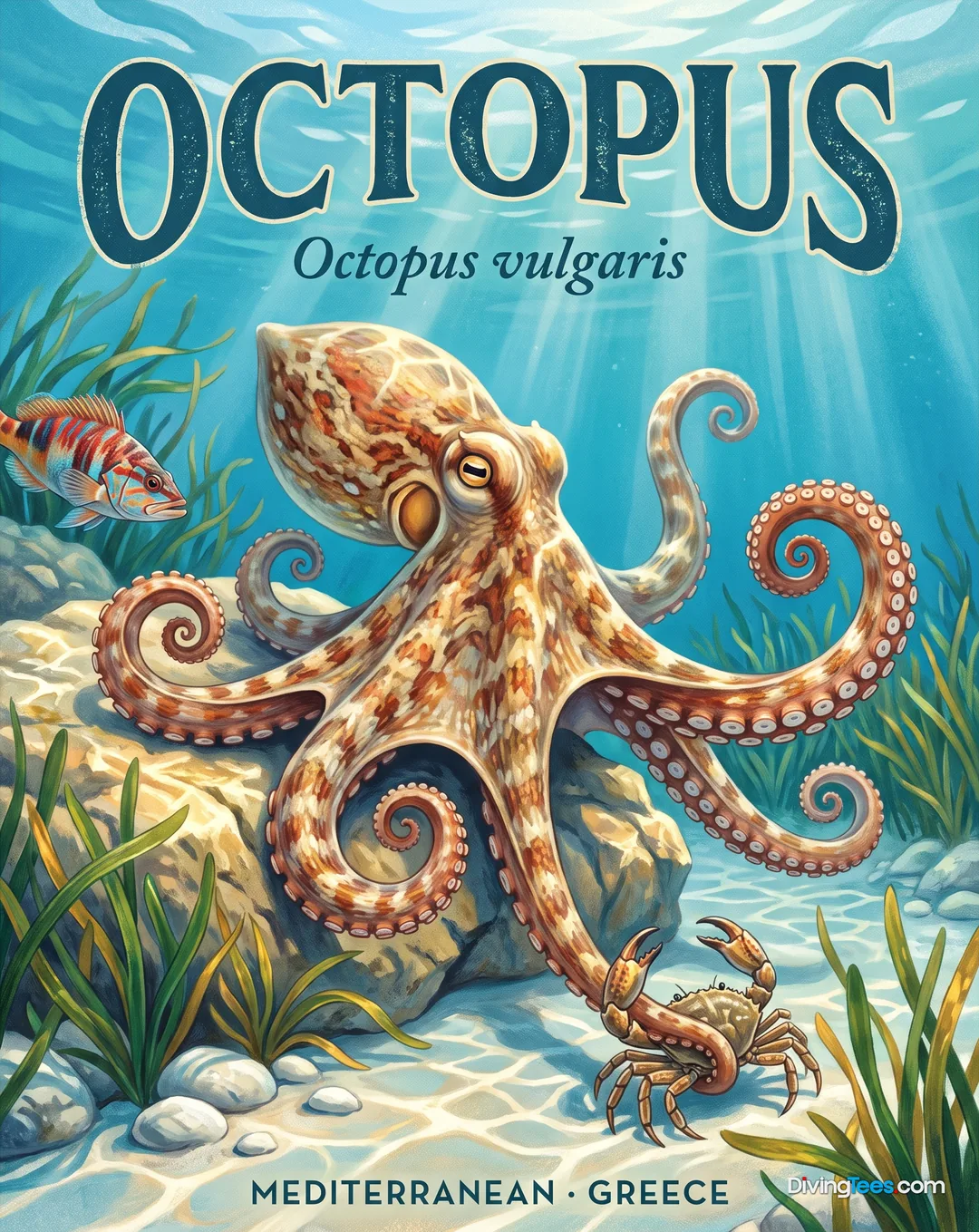
The resident fauna is heavily dictated by the complex architecture of the limestone blocks and the deep wall. You can expect to see the common octopus (Octopus vulgaris) utilizing the many crevices and hiding spots for camouflage. The European spiny lobster (Palinurus elephas) is also a frequent inhabitant of the rocky cracks. These animals rely on the structural complexity of the reef for protection throughout the day.
Larger resident species are often found patrolling the deeper areas and the edges of the wall. The Mediterranean moray (Muraena helena) is a common sight in the rocky gaps, often staying stationary in the shadows. You may also encounter the dusky grouper (Epinephelus morio) near the deeper sections of the reef. These species are well-adapted to the transition between the rocky seabed and the vertical drop-off.
Visibility at Octopus Reef is typically consistent, ranging between 20 and 30 metres. This clarity allows for a clear view of the transition from the shallow, blocky limestone garden to the dark descent of the wall. The light reaches the upper sections effectively, highlighting the textures of the limestone. As you descend toward the 50-metre mark, the light levels drop naturally in accordance with the depth.
The site is best visited between May and October when the Mediterranean conditions are most stable. During this period, the sheltered nature of the bay provides a favorable starting point for your dive. The dive profile allows for a gradual progression from shallow reef exploration to a deeper, more technical wall dive. Understanding the layout of the limestone blocks is key to a smooth ascent and descent.
Diving Octopus: the marine life you’ll meet
Diving conditions
The dive depth ranges from 6 to 50 metres. It is accessible from the Open Water Diver level, though experience is highly recommended for the deep wall section. Expect visibility between 20 and 30 metres. The best time to dive this site is from May to October.
Three dives not to miss
Map of hotels, dive sites and dive centres in Zakynthos
Dive centres in Zakynthos
Nero-Sport Diving Center
Zakynthos
Google 5/5 (669 reviews)
3.3 km away as the crow flies
Nearest hotel: 400 m
Studio Timotheos Basic
Google 4.6/5 (76 reviews)

Hotels in Zakynthos

Zante Sun Resort
Zakynthos
Google 4.5/5 (1,169 reviews)
5.4 km away as the crow flies
Nearest dive centre: 270 m
Zante Diving
Google 4.9/5 (1,303 reviews)
Frequently asked questions about Octopus
When should you dive Octopus?
You can dive Octopus between May and October, when Mediterranean conditions are most stable. The sheltered bay offers a favorable starting point, and the profile can progress from shallow limestone blocks toward the deeper wall, with visibility between 20 and 30 metres.
What diving level is suitable for Octopus?
Octopus is accessible from the Open Water Diver level. Experience is highly recommended for the deep wall section, especially as the wall descends from the shallow reef area toward its maximum depth. The sheltered upper zone also offers room to practice buoyancy among limestone blocks.
How deep can you dive at Octopus?
At Octopus, you can dive from 6 to 50 metres. The site begins in a sheltered bay with limestone blocks, then transitions to a vertical wall. A cavity at approximately 15 metres provides a point of interest during the descent and orientation.
What can you see at Octopus?
At Octopus, you can look for common octopus in crevices, European spiny lobster in rocky cracks, Mediterranean moray in rocky gaps, and dusky grouper near the deep wall. The limestone blocks form overhangs and narrow passages, while visibility typically ranges between 20 and 30 metres.