
Manihi - Blue Way
Google 5/5 (14 reviews)
Manihi · French Polynesia · Pacific
Max. depth · 40 mA vertical reef wall dropping into the abyss, attracting large schools of jacks and seasonal marbled grouper aggregations.
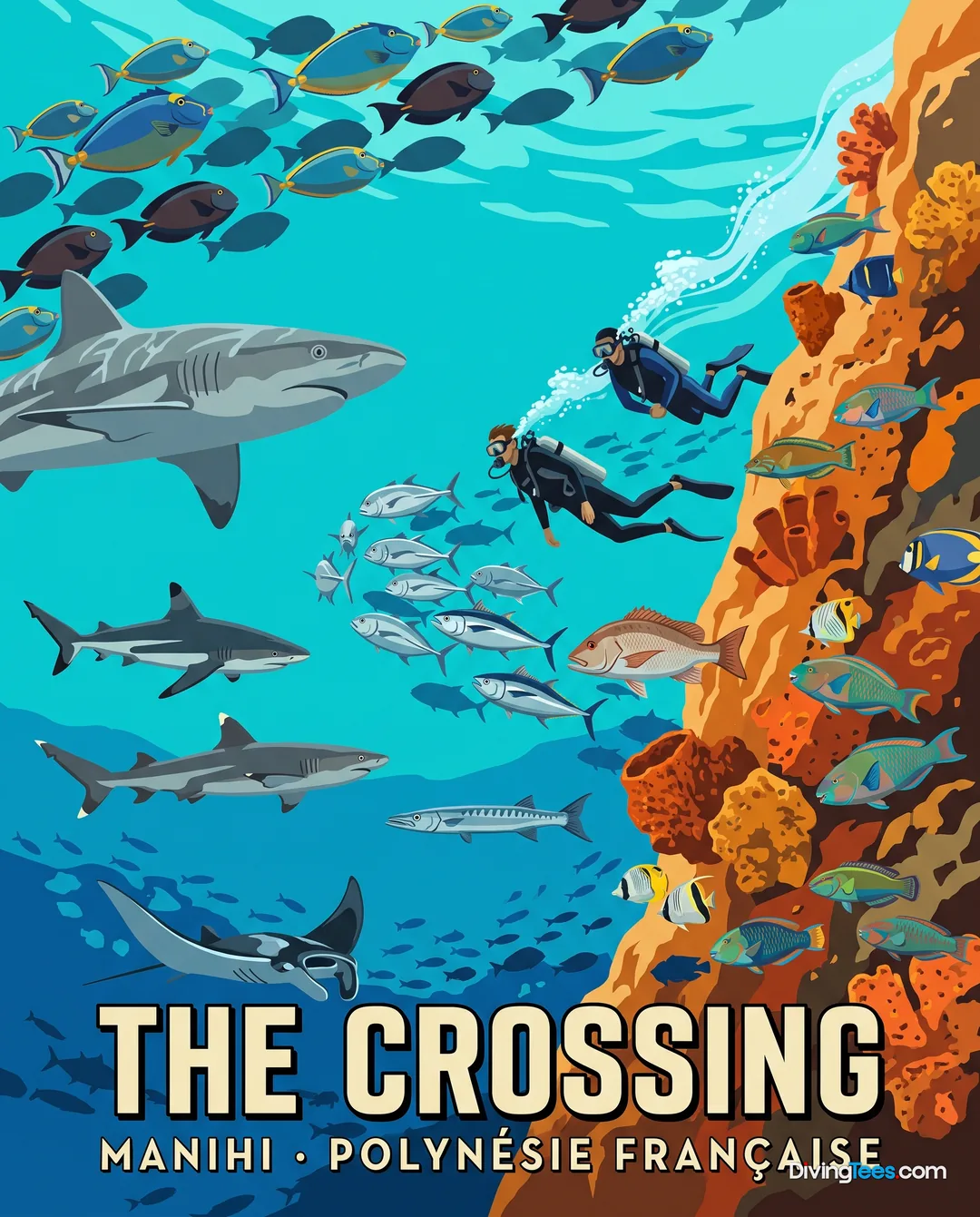
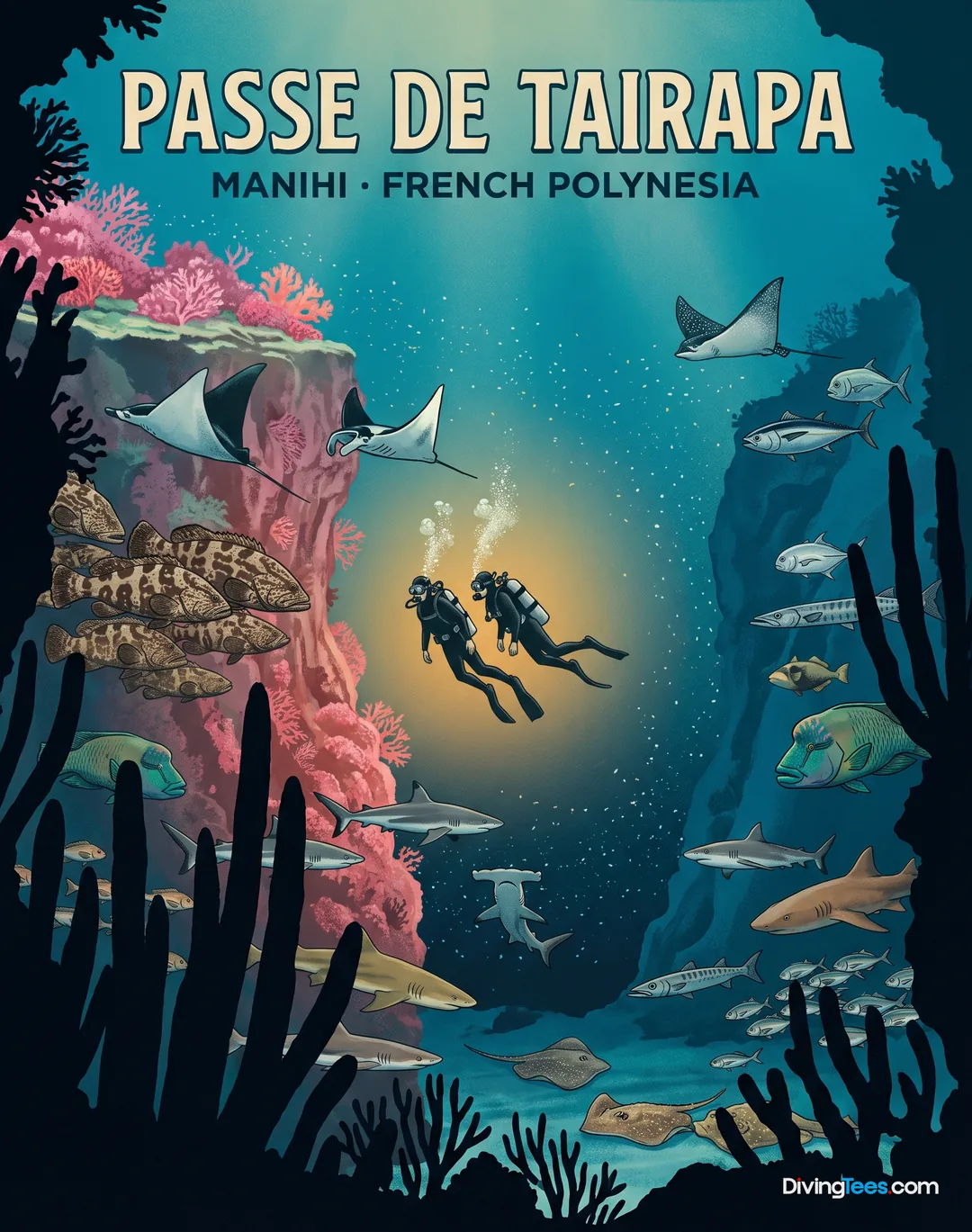
The Drop-Off is located on the ocean side of the Tairapa/Turipaoa pass in Manihi, representing a significant transition from the reef plateau to the open sea. The topography is defined by a steep, near-vertical wall that begins at a depth of approximately 8 to 10 metres. From this shallow reef top, the seabed falls away into a deep blue abyss that reaches depths of hundreds, even thousands, of metres. This rapid descent creates a high-energy environment where the reef meets the massive volume of the Pacific Ocean.
Approaching the site by boat, you will experience the immediate sense of exposure provided by the sheer drop. The recreational diving zone is primarily situated between 15 and 40 metres, where the wall provides a continuous surface for exploration. As you descend, the light shifts from the shallower reef tones to the deep blue characteristic of oceanic wall diving. The sheer verticality of the terrain ensures that you are always aware of the massive water column extending beneath your fins.
Currents at the site are driven by the tidal exchange around the pass and the local ocean swell. While the flow can be manageable, it becomes more pronounced during specific tidal phases or when the exchange near the pass intensifies. Divers should be prepared for variable conditions where the movement of water can shift your position along the wall. Maintaining precise buoyancy is essential here to avoid contact with the reef face while navigating the surge or flow.
The marine life is dominated by large, schooling fish that utilize the wall for protection and feeding. You can frequently encounter dense groups of jackfish (Carangidae) and snapper moving along the edge of the drop. These schools often form large, shimmering curtains that follow the contours of the reef. The presence of tuna in the water column further emphasizes the oceanic nature of this site, as they patrol the blue water adjacent to the wall.
Sharks are a consistent feature of the Drop-Off, with several species patrolling the perimeter of the reef. You will commonly see Grey reef sharks, Blacktip reef sharks, and Whitetip reef sharks moving through the current or resting near the wall. Their presence is often distributed along the vertical face, appearing as they cruise the edge between the reef and the open ocean. These encounters are a standard part of the experience when diving this oceanic boundary.
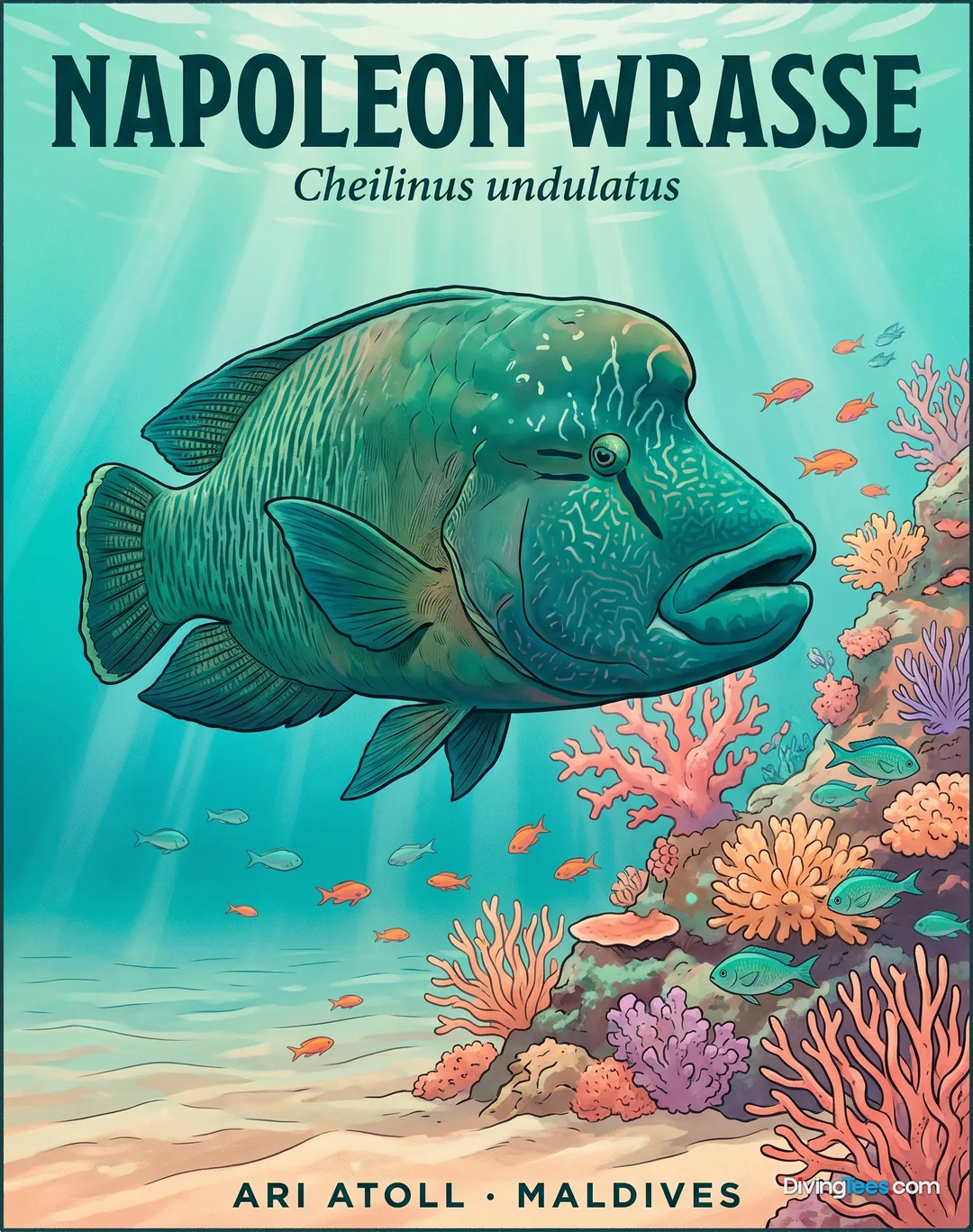
The reef structure itself supports a variety of resident species that inhabit the crevices and ledges of the wall. Napoleon wrasse are often found near the reef edges, while marbled grouper, triggerfish, and various surgeonfish inhabit the more complex sections of the topography. These species add layers of activity to the dive, moving between the protection of the reef and the open water. Watching their behavior against the backdrop of the deep blue provides a constant sense of scale.
One of the most specific biological events at this site occurs during the month of July. This period marks the mating season for marbled grouper, which form large spawning aggregations around the wall. For divers, this means the opportunity to observe these large fish in much higher densities than usual. It is a distinct seasonal phenomenon that transforms the typical reef community into a concentrated gathering of specific species.
Visibility at the site is typically high, often ranging between 25 and 40 metres, allowing for long-range observations of the wall. This clarity is vital for spotting pelagic species approaching from the blue or observing the scale of the descent. The combination of high visibility and the steep topography creates a profound sense of depth. Whether you are focused on the micro-life in the reef cracks or the large predators in the water column, the clarity defines the visual experience.
Depths range from 8 to 40 metres. Open Water divers with good buoyancy and comfort in blue-water conditions are welcome, though Advanced certification is recommended for deeper profiles or when currents are stronger. Visibility is typically 25-40 metres. The best time to visit for specific fauna is July, during the marbled grouper spawning season.
For seasonal wildlife, plan your dive at The Drop-Off in July, when marbled grouper gather in spawning aggregations around the wall. You may also encounter the site's usual sharks, schooling fish, tuna, and reef residents during this period in the surrounding blue water.
The Drop-Off welcomes Open Water divers who have good buoyancy and are comfortable in blue-water conditions. Advanced certification is recommended for deeper profiles or stronger currents. You should also be prepared to maintain precise buoyancy around the near-vertical wall, especially when water movement shifts you along the reef face.
The recreational diving zone at The Drop-Off is primarily between 15 and 40 metres, while the wall starts at approximately 8 to 10 metres before falling into deep oceanic water. Depths can extend far beyond recreational diving, with the open sea continuing into the blue abyss below.
Currents at The Drop-Off are driven by tidal exchange around the pass and local ocean swell. Flow can become more pronounced during certain tidal phases or stronger exchange. Expect variable movement along the wall, with Grey, Blacktip, and Whitetip reef sharks, jackfish and snapper schools, tuna, and Napoleon wrasse nearby.