
Manihi - Blue Way
Google 5/5 (14 reviews)
11 km away as the crow flies
Manihi · French Polynesia · Pacific
Max. depth · 50 mExplore the dramatic drift dives of Passe de Tairapa, where coral cliffs plummet from 3 meters to staggering depths, teeming with an unparalleled density of marine life.
The dive experience at Passe de Tairapa centers around its southern pass, where the sheer walls become your canvas for an immersive drift. From the initial descent, you're immediately struck by the vitality of the ecosystem. The current, which can vary, becomes a gentle hand guiding you along a living topography that transitions from vibrant shallow reef to profound oceanic depths, revealing the atoll's wild heart.
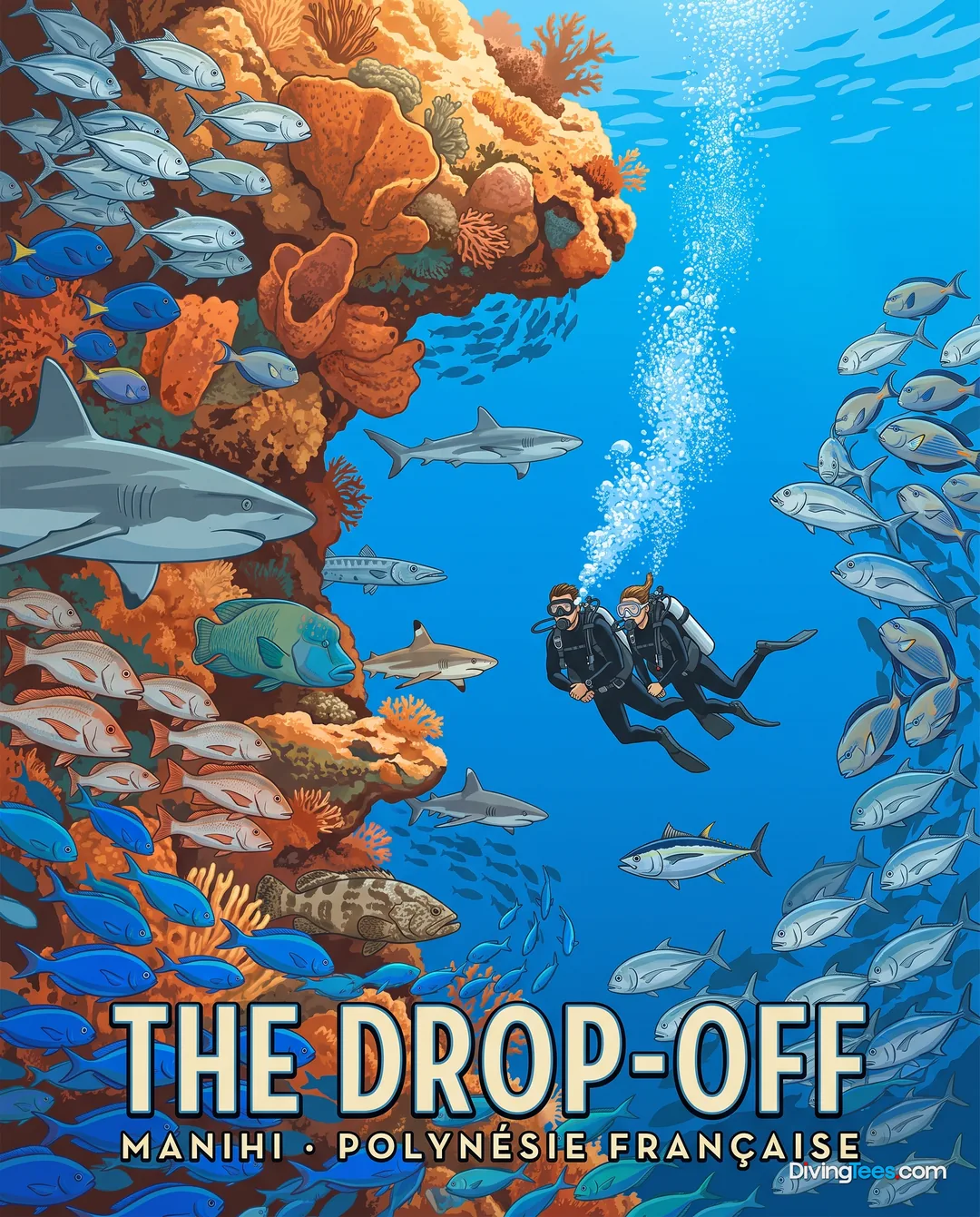
As you move deeper, the true scale of Tairapa unfolds. The dive follows a dramatic drop-off that begins as shallow as 3 meters but plunges relentlessly to an astonishing 50 meters. This extraordinary vertical range means that whether you're hovering in the sun-drenched shallows or peering into the deep blue, the environment is constantly evolving, promising new perspectives at every turn.
A highlight of this pass is undoubtedly the pristine condition of its corals. You'll encounter a magnificent cliff adorned with coral roses, a testament to the health and protected status of this area. This particular formation captivates between 50 and 35 meters, creating a visually stunning backdrop as you drift past, often accompanied by the quiet hum of the current and the distant silhouettes of pelagic life.
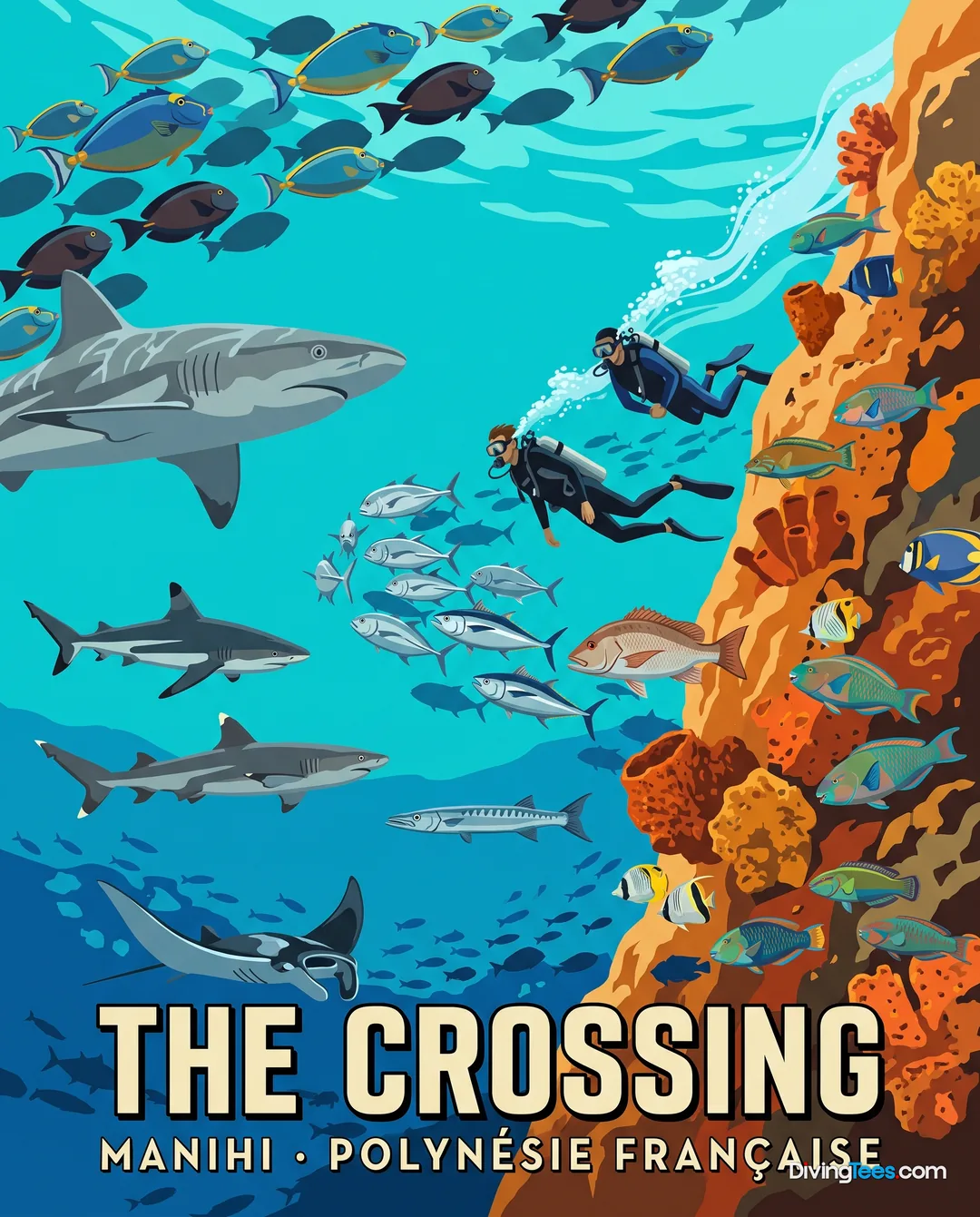
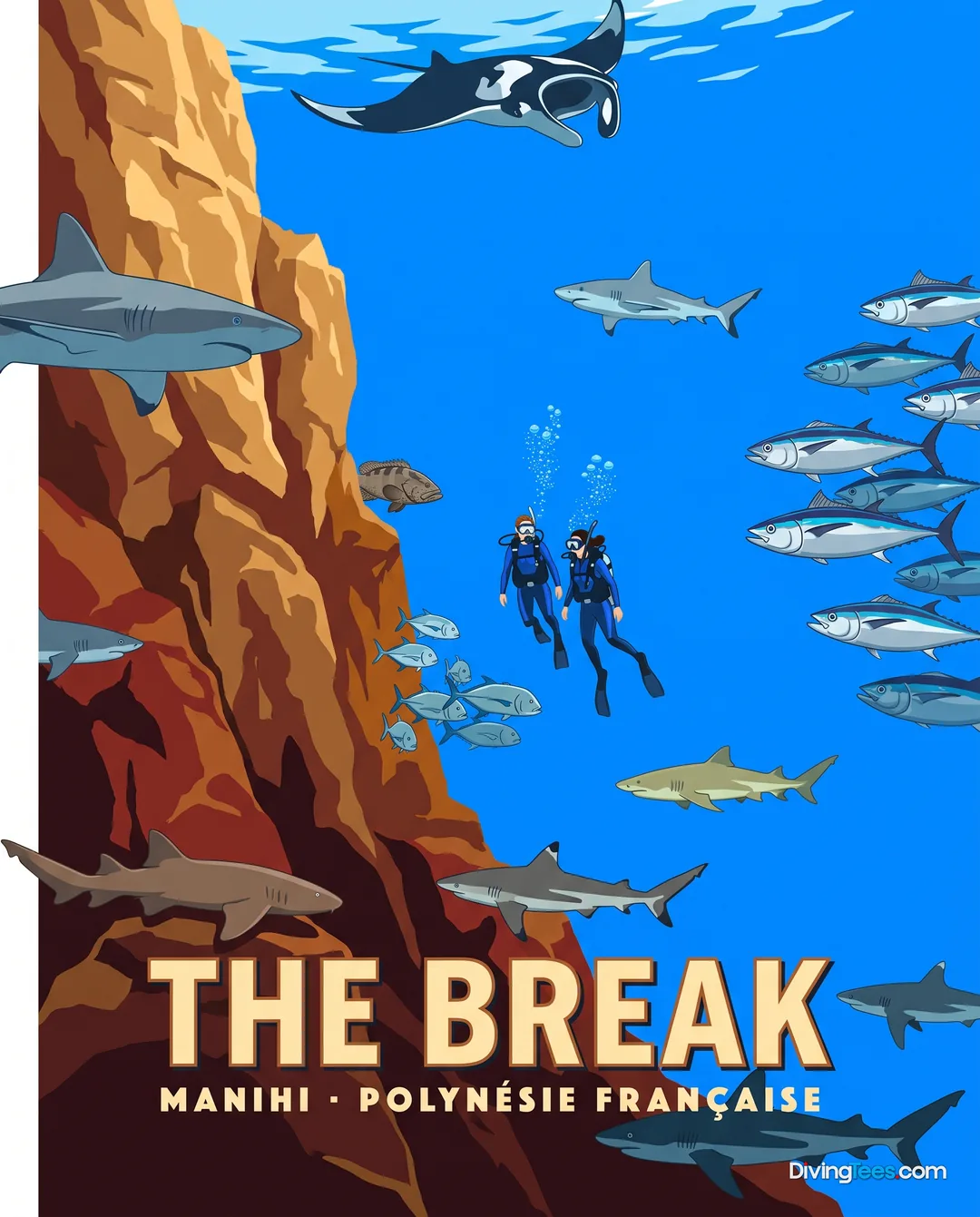
The sheer density and variety of marine species here are a defining characteristic, differentiating Tairapa from many other passes. Imagine drifting amidst schools of Bonitos (Sarda orientalis) and Beaked leatherjackets (Eubalichthys mosaicus), while majestic Manta rays (Manta birostris) gracefully cut through the water column above or below you. This pass truly is a crossroads for oceanic wanderers and resident reef inhabitants alike.
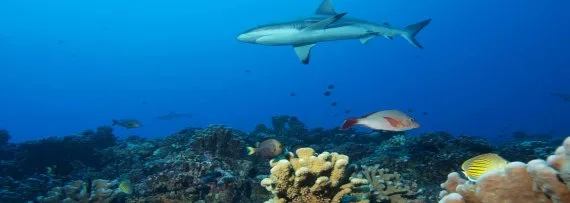
In these prolific waters, the presence of sharks is a constant, yet always awe-inspiring, element. You might encounter the powerful Grey reef sharks (Carcharhinus amblyrhynchos), the distinctive Hammerhead sharks (Sphyrna zygaena), or the more docile Nurse sharks (Ginglymostoma cirratum) and Lemon sharks (Negaprion brevirostris) patrolling the deeper sections. Each sighting is an affirmation of the pass's role as a critical hunting ground and sanctuary.
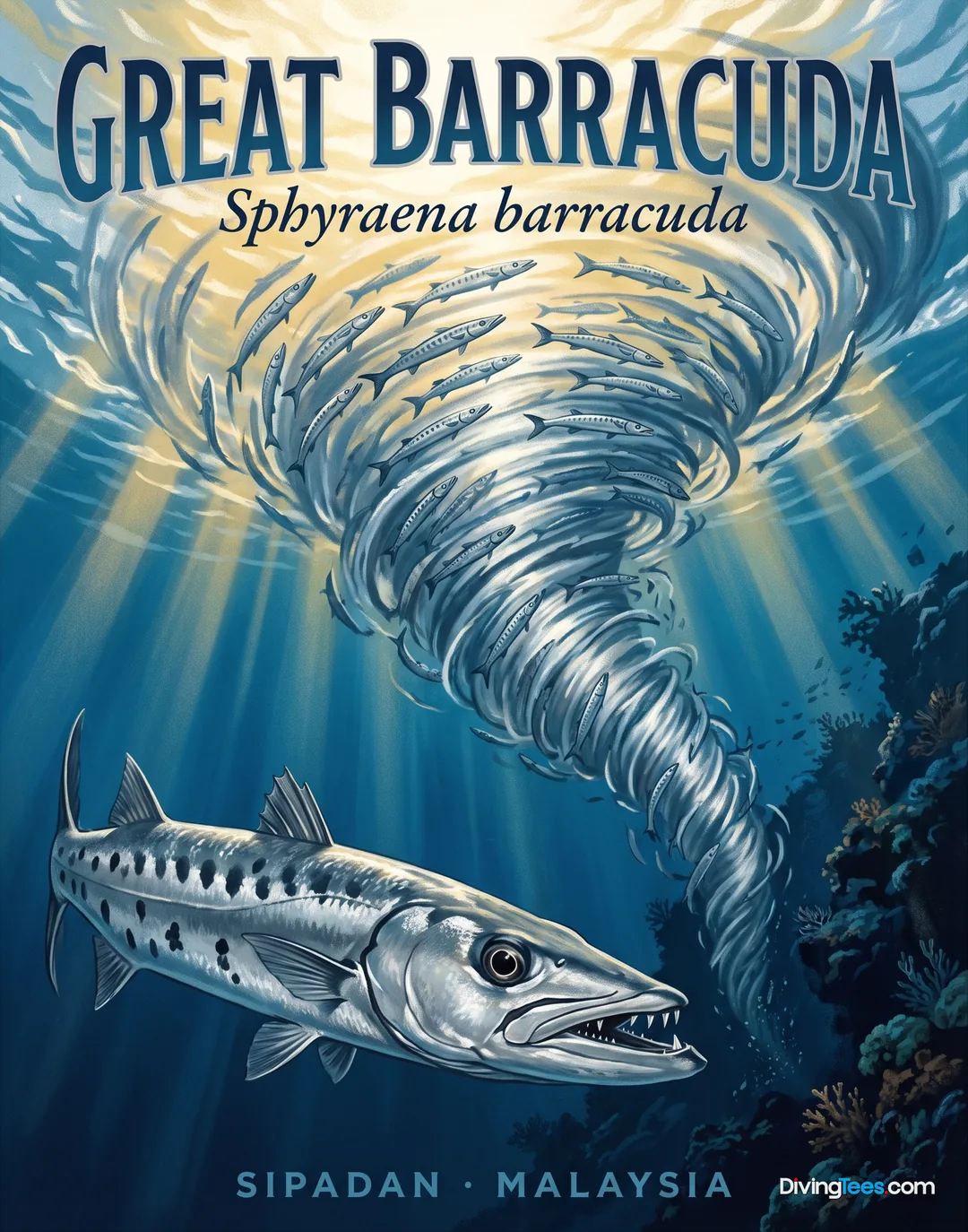
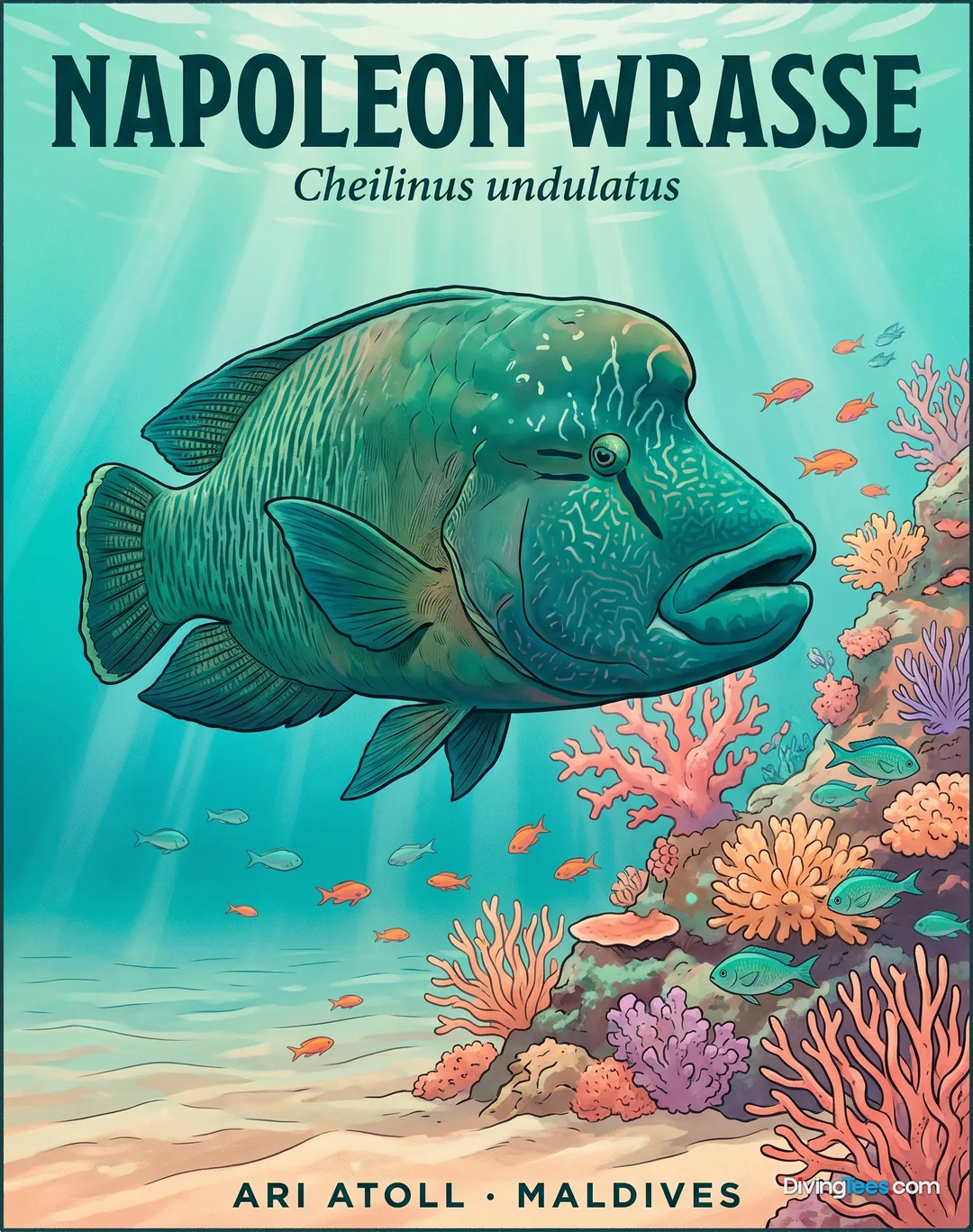
Beyond the larger pelagics, the reef itself is a kaleidoscope of activity. Keep an eye out for the curious Napoleon wrasse (Cheilinus undulatus), the distinct Marbled groupers (Epinephelus coioides), and the agile Barracudas (Sphyraena barracuda) darting through the vibrant coral gardens. Turtles (Chelonia mydas) often cruise by, unperturbed, while schools of Jacks (Caranx ignobilis) surge through the blue, creating dynamic formations.
The protected status of Passe de Tairapa, in effect since January 1st, 2019, is clearly visible in the thriving ecosystem. This no-fishing zone ensures that the marine life remains abundant and less skittish, offering a more intimate and natural interaction for divers. The high visibility, often ranging from 50 to 70 meters, further accentuates these encounters, painting a clear picture of an untouched underwater world.
Passe de Tairapa is accessible to all levels of divers. Depths for recreational diving range from a minimum of 3 meters down to 50 meters, catering to a wide range of certifications. Visibility is consistently impressive, typically between 50 and 70 meters. For a unique experience, consider visiting during late May to early June, which marks the aggregation of Marbled groupers (Epinephelus coioides) for reproduction.
You can dive Passe de Tairapa throughout the year, with visibility typically ranging from 50 to 70 meters. For a distinctive seasonal encounter, visit during late May to early June, when Marbled groupers gather for reproduction. This period adds a notable event to the pass’s already varied marine environment.
Passe de Tairapa is accessible to all levels of divers. Its recreational diving range extends from shallow reef areas to deeper sections, catering to a wide range of certifications. You can explore the pass according to your training and experience while following the dramatic walls through changing underwater scenery.
At Passe de Tairapa, the walls descend from 3 meters to 50 meters, creating options across a broad depth range. The dive is generally a drift along the southern pass, where the current can vary and may guide you past shallow reef, coral formations, and deeper oceanic sections.
At Passe de Tairapa, you may see Manta rays, Napoleon wrasse, Grey reef sharks, Hammerhead sharks, Nurse sharks, Lemon sharks, Turtles, Barracudas, Jacks, Bonitos, and Marbled groupers. The pass also features pristine coral formations, including a rose coral cliff between 50 and 35 meters, with visibility often ranging from 50 to 70 meters.