
Hemisphere Sub
Google 4.8/5 (146 reviews)
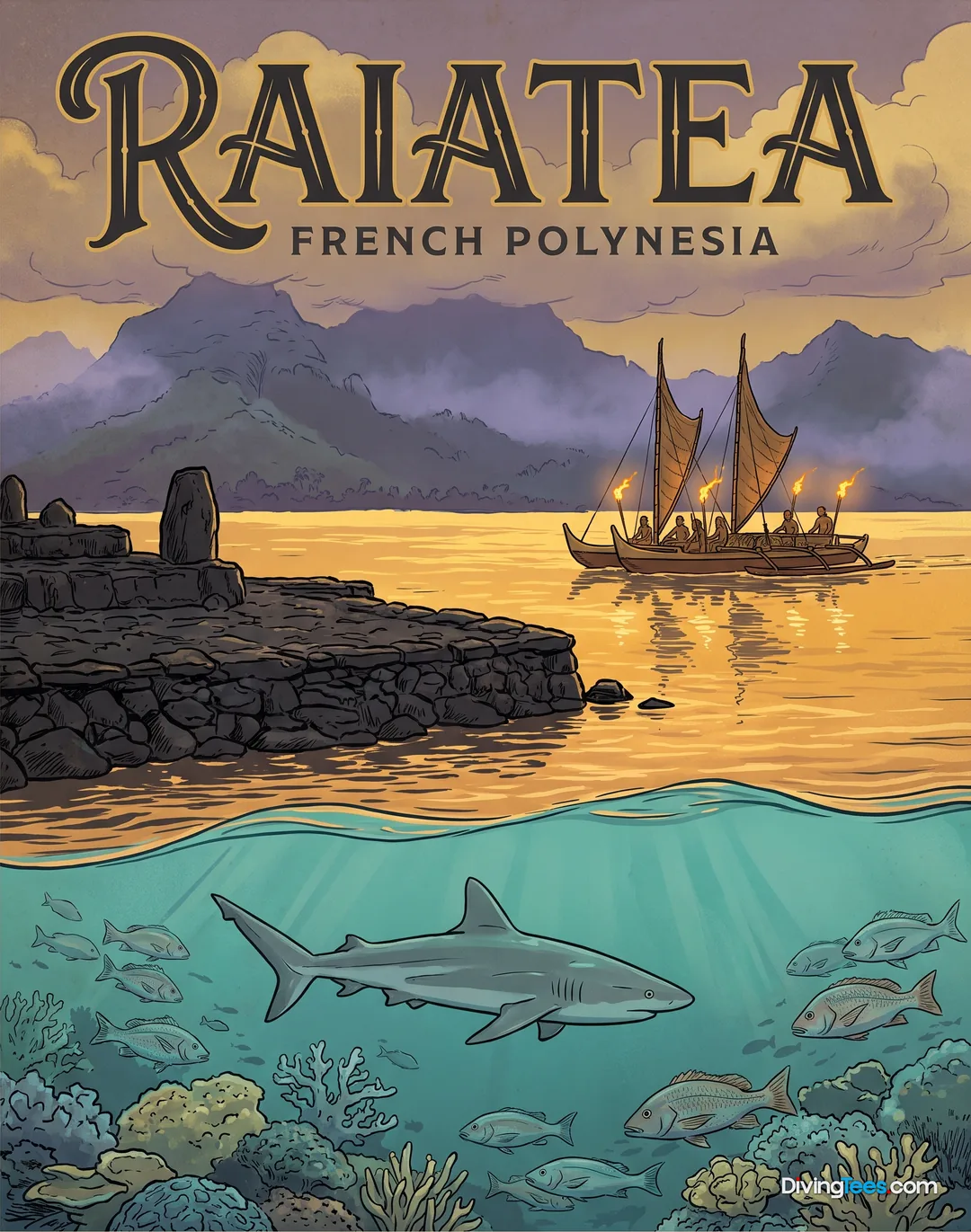
Raiatea · French Polynesia · Pacific
Max. depth · 29 mLarge schools of barracuda and leopard rays define this deep oceanic pass on Raiatea's leeward coast.
Rautoanaui Pass serves as a primary deep-water entrance through the barrier reef on the leeward side of Raiatea. This wide channel provides a direct connection between the open ocean and the island's lagoon, creating a significant corridor for marine movement. You will notice the topography shifts from a shallow plateau at approximately 10 metres to a much deeper central channel reaching roughly 30 metres. This structure allows for diverse dive profiles, transitioning from coral-rich slopes to the deeper, open-water environment of the pass itself.
As you descend along the outer-reef slopes, the terrain moves from sandy areas into more complex coral formations. The site topography combines the reef edge with a steep drop-off into the main channel, creating a diverse environment for resident marine life. You can choose to focus on the shallower plateau or move into the deeper sections of the pass where the water flow is more pronounced. This combination of shallow reef and deep-water channel is what gives the site its distinct, open-ocean character.
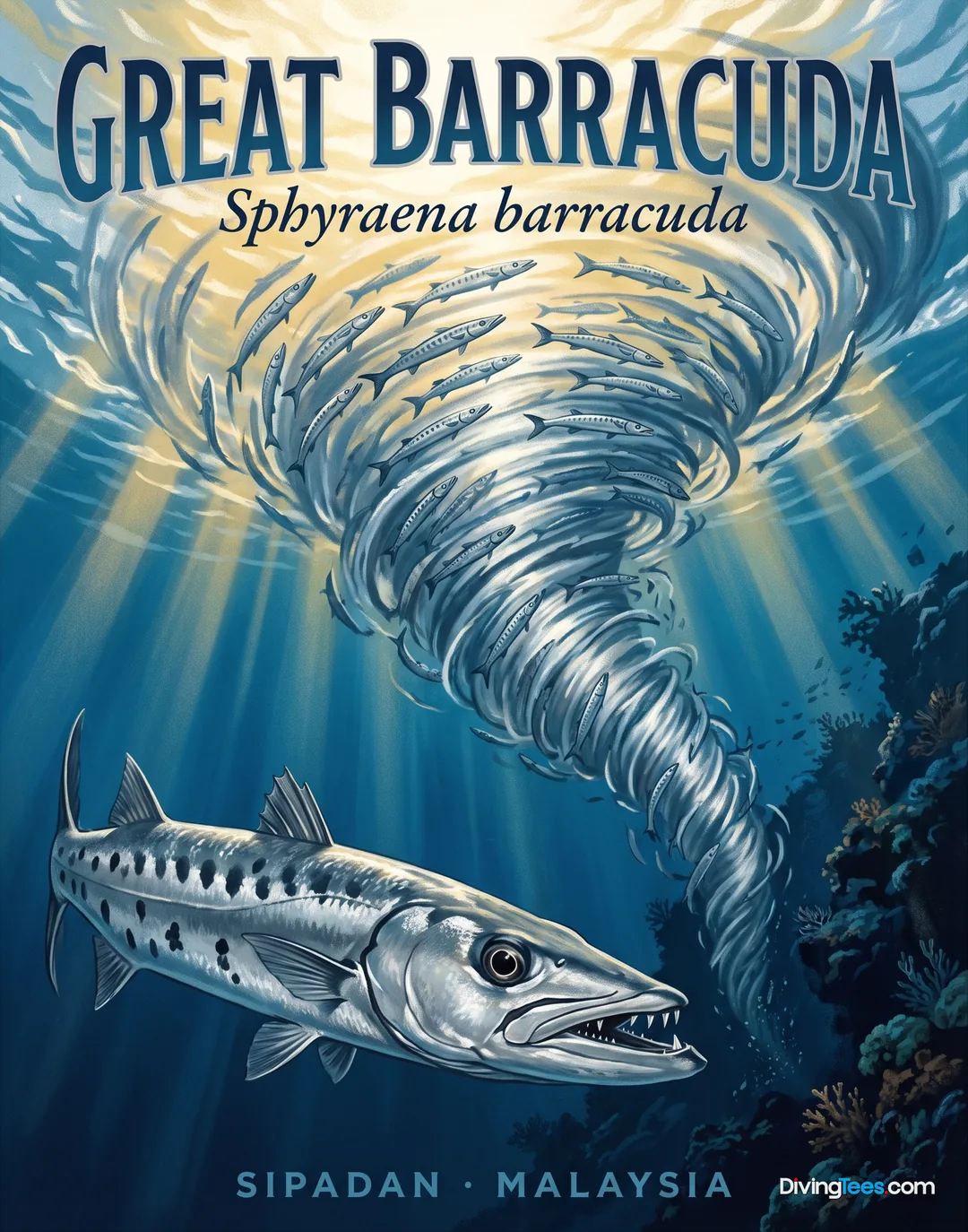
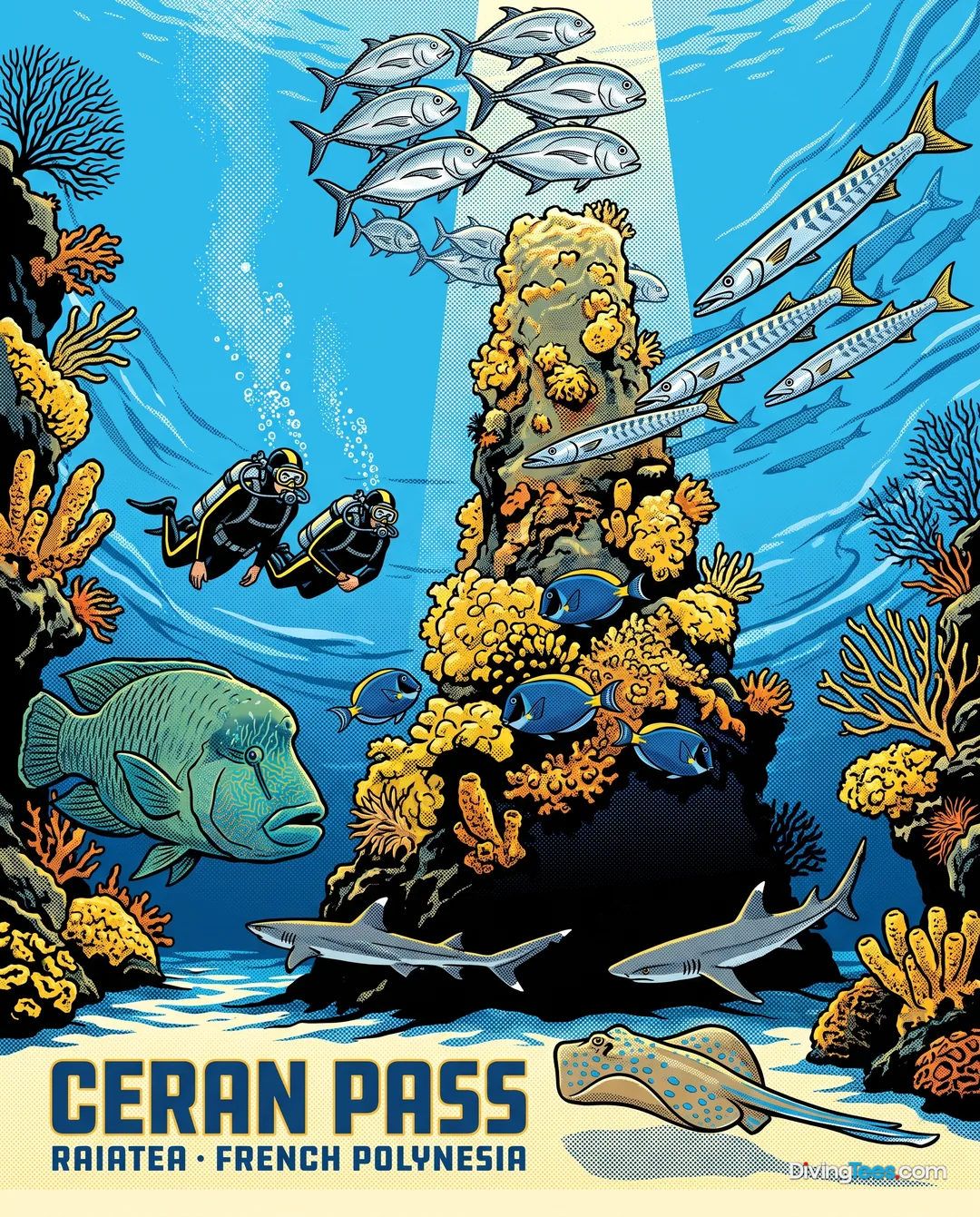
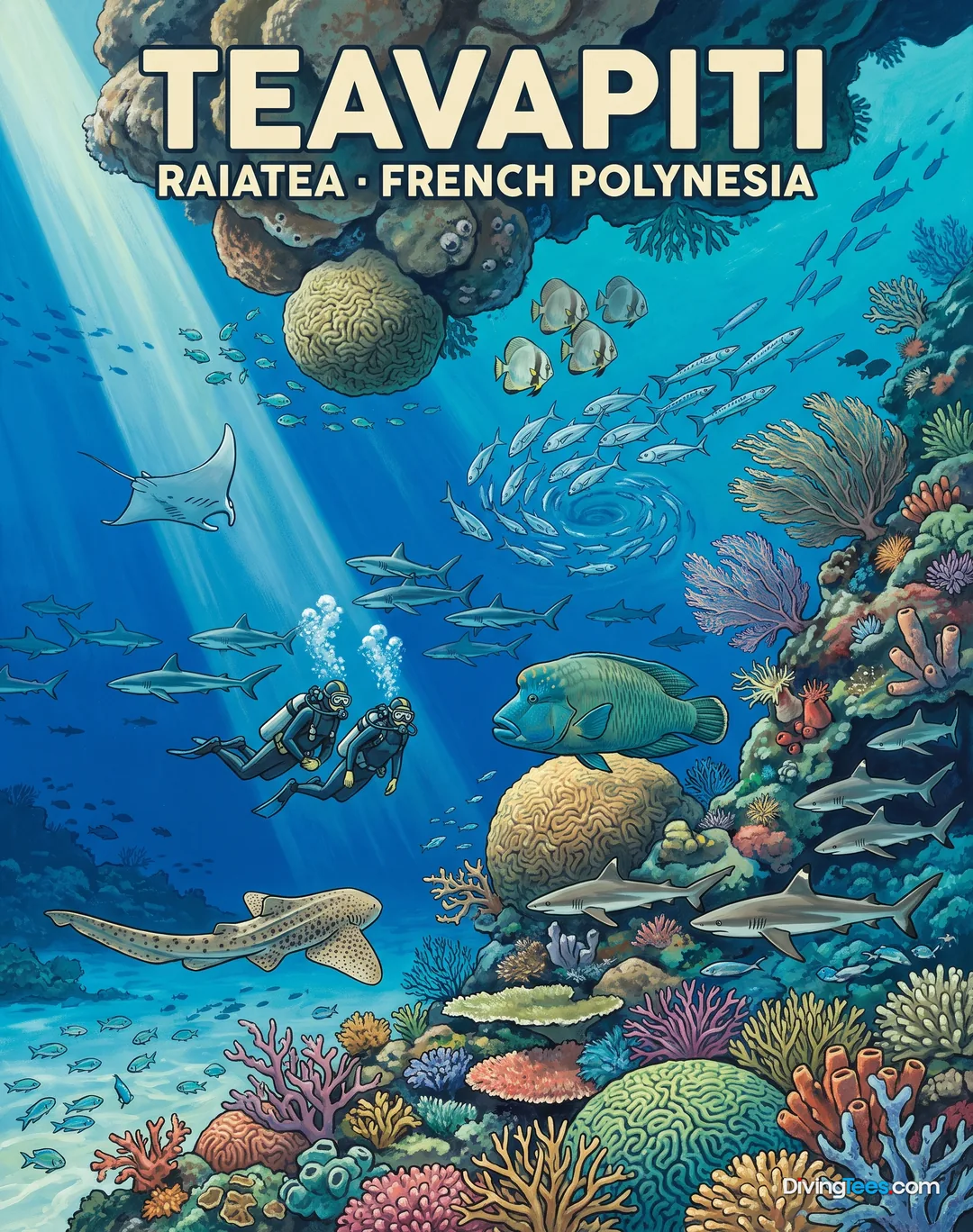
The site is particularly noted for its consistent presence of schooling species that use the pass for transit. You can expect to encounter large, resident schools of barracuda patrolling the channel. These predators are often seen alongside various reef fish that inhabit the edges of the plateau and the coral structures. The sheer scale of the pass allows these schools to move freely, providing a sense of vastness not found in the more enclosed lagoon sites around the island.
Pelagic life is a primary reason for visiting this specific location on Raiatea's west coast. You will frequently observe leopard rays (Aetobatus naja) gliding through the water column, often near the reef edges or over the sandy patches. These rays are a regular feature of the area, adding a unique element to the typical reef fish observations. The presence of these larger species makes the site feel distinctly different from the more sheltered sites within the lagoon.
Shark activity is another key component of the Rautoanaui experience. You will encounter both blacktip reef sharks (Carcharhinus melanopterus) and whitetip reef sharks (Triaenodon obesus) patrolling the area. These species are commonly found throughout the pass, often utilizing the currents to move between the reef and the open sea. Their presence adds to the energetic, oceanic atmosphere that defines this leeward pass.
The experience here is heavily dictated by the movement of water through the channel. Because Rautoanui is a major navigational entrance for ocean water moving into the lagoon, you will experience significant water movement depending on the tide. These currents drive the activity of the fish and determine the direction of your drift dive. Understanding the tidal phase is essential for navigating the pass safely and effectively during your descent.
Visibility at the site is generally excellent, typically ranging between 20 and 30 metres. This clarity is essential for observing the pelagic species that cruise the deeper parts of the channel. High visibility allows you to spot incoming sharks or rays from a distance, giving you time to orient yourself before they pass through your field of view. This clarity, combined with the depth of the channel, creates an expansive sense of space during the dive.
Depth ranges from 0 to 30 metres. This site is suitable for Open Water divers who are comfortable in currents and pass conditions. Visibility is typically 20-30 metres. Currents are variable and depend on the tidal phase and swell, with stronger flow when ocean water moves into or out of the lagoon.
You should plan your dive around the tidal phase, because currents vary as ocean water moves into or out of the lagoon. Flow is stronger during these movements, and it determines the direction of your drift dive. Visibility is typically 20 to 30 metres, helping you observe the channel’s marine life.
Rautoanaui Pass is suitable for Open Water divers who are comfortable in currents and pass conditions. You will be diving through a wide oceanic channel where water movement can be significant. Understanding the tidal phase is important for navigating safely and effectively during your descent and drift through the pass.
Rautoanaui Pass ranges from shallow water to a central channel reaching roughly 30 metres. You can focus on the shallow plateau at approximately 10 metres, follow coral-rich slopes, or continue toward the deeper channel. The site combines sandy areas, coral formations, a reef edge, and a steep drop-off.
Currents vary with the tide and can become stronger as water enters or leaves the lagoon, creating drift-diving conditions. In the channel, you may see large schools of resident barracuda, leopard rays, blacktip reef sharks, and whitetip reef sharks, with coral slopes and sandy patches visible in the clear water.