
Rangiroa Diving Center
Google 4.9/5 (378 reviews)
Rangiroa · French Polynesia · Pacific
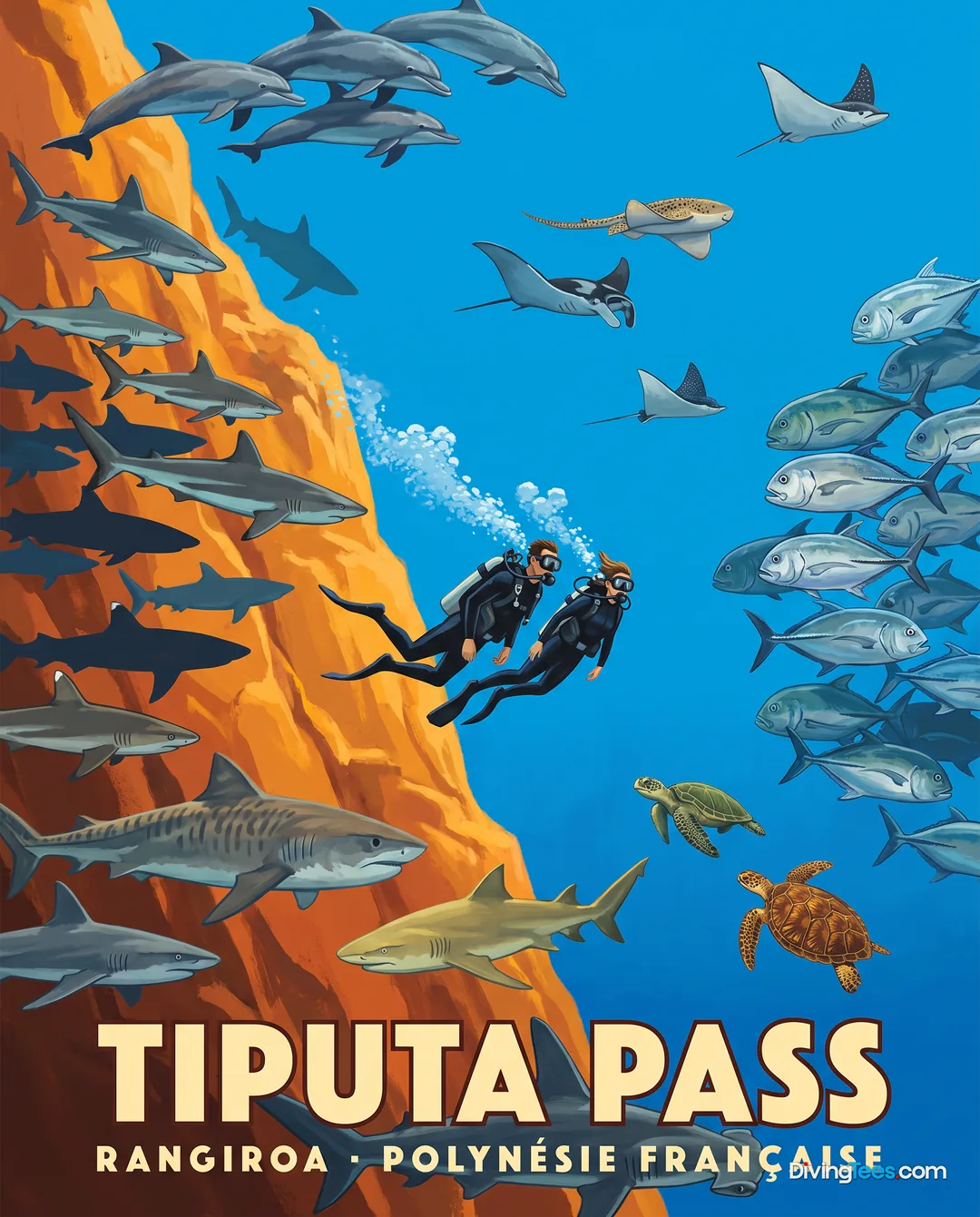
Max. depth · 50 mNavigate the inbound current through Rangiroa's Tiputa Pass, deep inside a vibrant living corridor known for its grey reef shark aggregations.
Diving La traversée in Tiputa Pass is an experience defined by the power of the ocean, beginning in the blue water just offshore from the pass's eastern corner. Your entry point is strategic, ensuring you're positioned to catch the inbound current as it channels into the lagoon. The objective is clear: traverse the entire pass from one corner to the other, a precise navigation challenge where the current dictates much of your journey. This is not a dive for the faint of heart; it demands focus, buoyancy control, and a comfortable relationship with strong water movement.
As you descend, the powerful current becomes your guide, sweeping you through the heart of the pass. Remaining at a sufficient depth is crucial here, as the surface currents intensify, creating a more challenging environment closer to the top. The dive profile typically takes you to a maximum depth of around 50 metres, leveraging the steadier, albeit still strong, flow found deeper in the channel. This deep trajectory is also key to unlocking one of the site's most significant drawcards: consistent encounters with large aggregations of sharks.
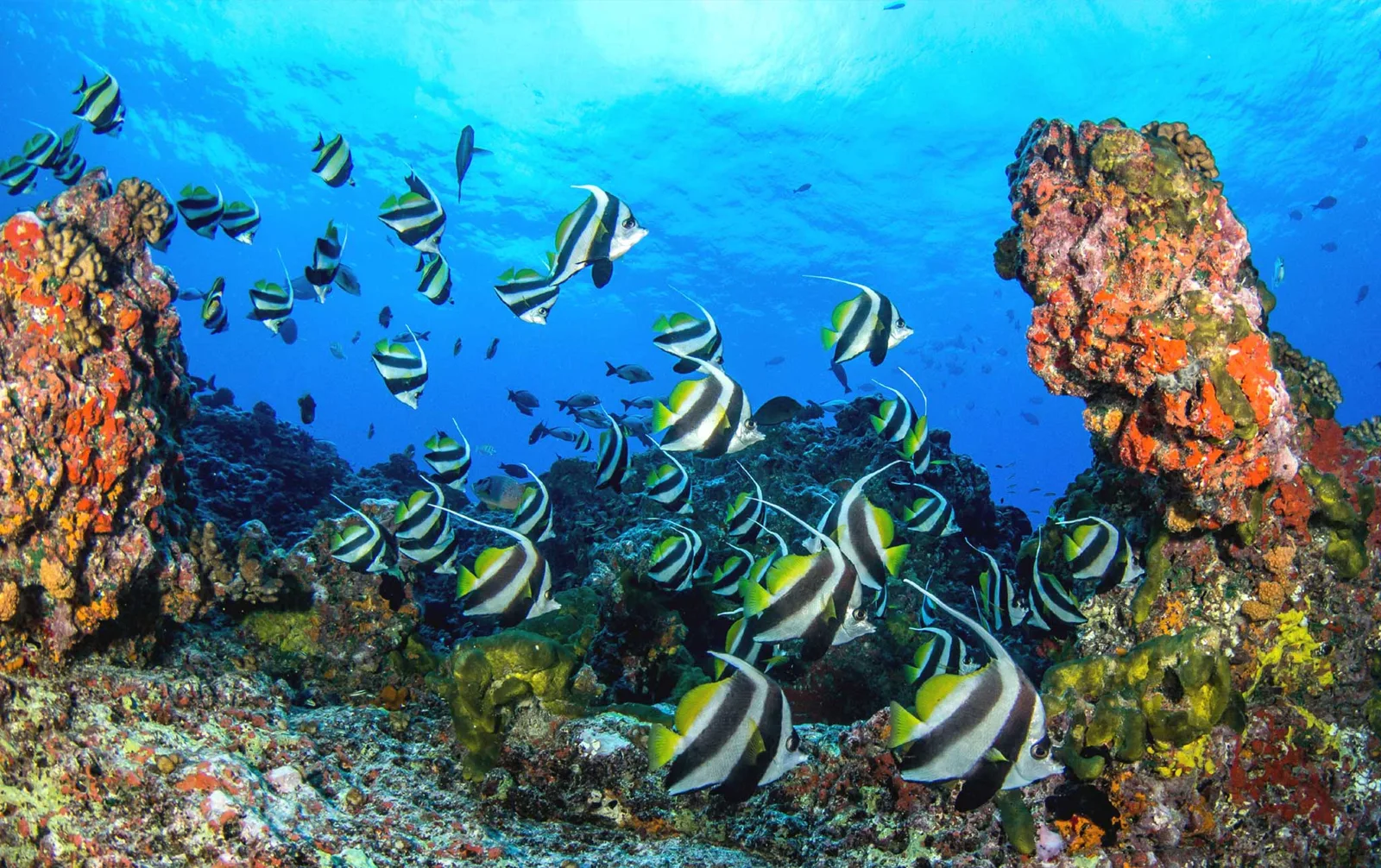
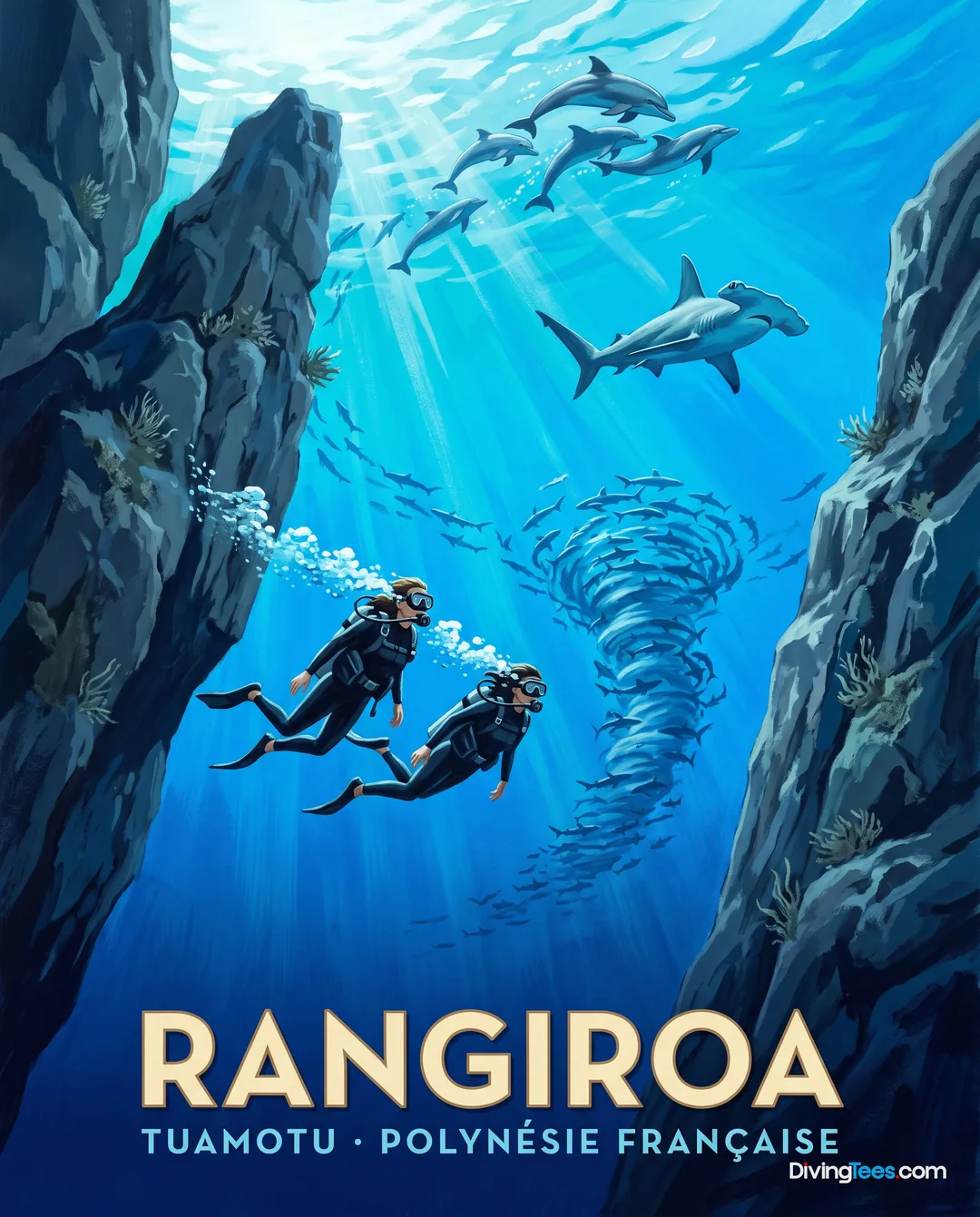
La traversée is widely recognised as one of the best locations to observe impressive schools of grey reef sharks (Carcharhinus amblyrhynchos). You'll find yourself gliding through the nutrient-rich waters, often surrounded by dozens of these powerful predators. Their presence is a testament to the health and vitality of this oceanic highway, and observing them in their natural hunting grounds as you drift with the current creates an immersive, primal connection to the marine environment. This isn't a fleeting glimpse; it's an opportunity to truly witness their behaviour within the dynamic flow of the pass.
The dive culminates with an effortless transition into the calmer waters of the Rangiroa lagoon. After the exhilaration of navigating the strong currents and observing the grey reef sharks, this entry provides a gentle decompression, allowing you to reflect on the intensity of the experience. The shift from the powerful oceanic surge to the tranquil lagoon reinforces the unique geography of Rangiroa, where teeming pass life gives way to the sheltered beauty of the atoll's interior.
This dive site is strictly reserved for experienced divers due to the challenging conditions. You will be diving with a strong current, necessitating excellent buoyancy control and comfort in dynamic water movements. The dive takes you to a maximum depth of 50 metres, requiring appropriate certification and experience for deep diving. While specific visibility values for the site are not provided, Rangiroa generally offers excellent conditions outside of the rainy season.
You can consider La traversée outside the rainy season, when Rangiroa generally offers excellent conditions. The site begins in blue water offshore from Tiputa Pass and finishes in the lagoon, but its defining experience remains a demanding drift dive shaped by the inbound current.
La traversée is strictly reserved for experienced divers. You need excellent buoyancy control and comfort in dynamic water movements, along with appropriate certification and experience for deep diving. The route requires focus while the strong current carries you through Tiputa Pass toward the lagoon.
La traversée reaches a maximum depth of fifty metres. The dive follows a deep trajectory through Tiputa Pass, where the flow is steadier than near the surface, although it remains strong. Appropriate certification and deep-diving experience are required for this profile.
At La traversée, you enter an inbound current and make a high-speed drift through Tiputa Pass, with stronger movement near the surface. In the nutrient-rich channel, you may encounter aggregations of grey reef sharks before the dive transitions from open ocean into the calmer lagoon.