

Rangiroa Diving Center
Google 4.9/5 (378 reviews)
7.9 km away as the crow flies
Rangiroa · French Polynesia · Pacific
Max. depth · 18 mAn open-ocean drift dive through a distinct underwater valley bordered by a productive coral wall.
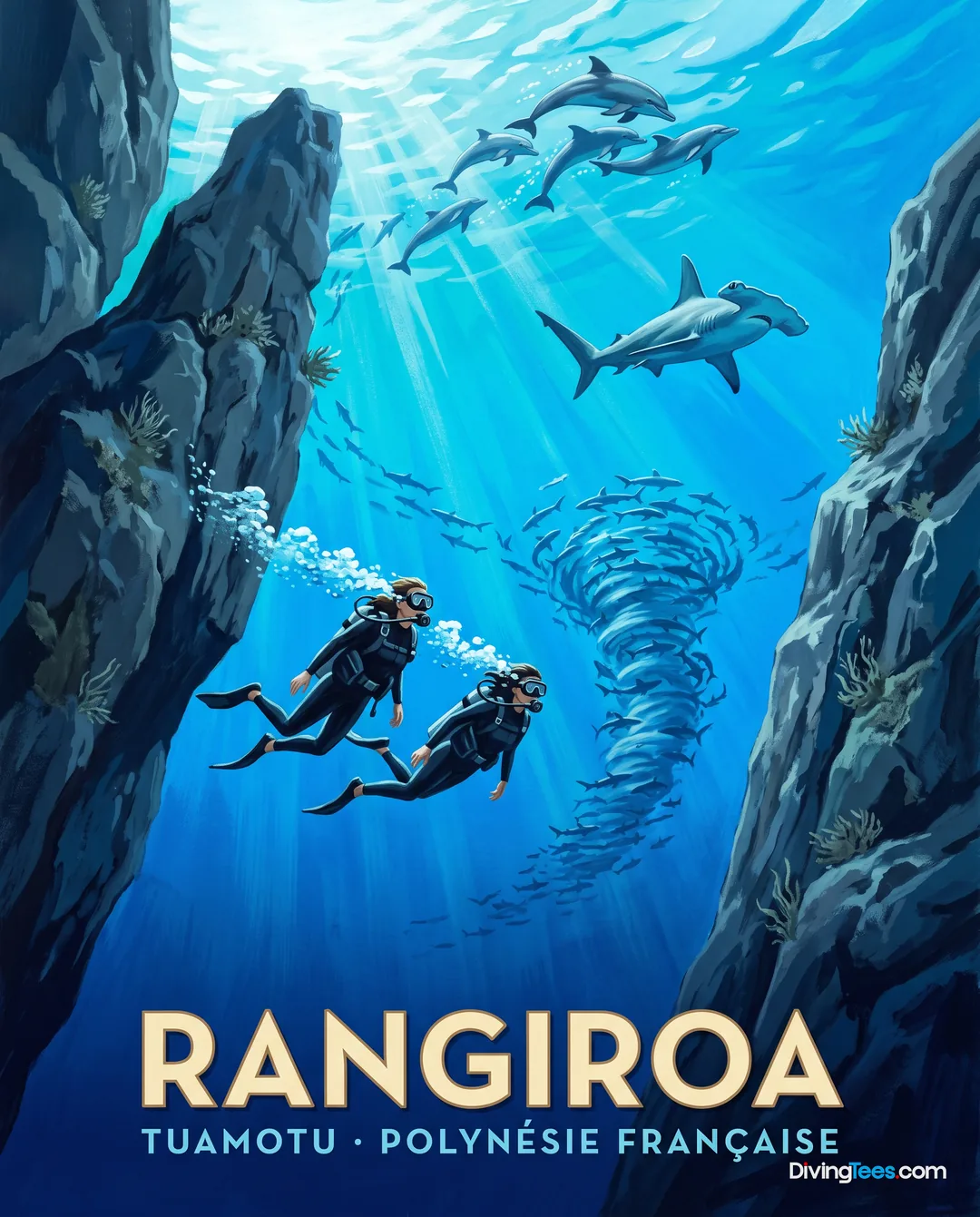
Mahutu is a distinct ocean drift dive located on the oceanic side of Rangiroa, positioned near the Avatoru Pass. Unlike the vertical drop-offs found in the famous passages of the atoll, this site is defined by a wide, gently sloping seafloor that forms a natural underwater valley. The topography leads you through a corridor of water, bordered on one side by a substantial wall covered in dense hard coral and rich reef growth. This geological structure creates a different kind of immersion, focusing on a steady forward movement through an open environment rather than hovering against a sheer face.
Accessing the site requires a boat trip to the eastern side of Motu Fara, at the mouth of the Avatoru Pass. The dive begins with an entry on the ocean side, where you immediately settle into the drift. Because the site is relatively exposed to the open sea, the dive profile depends heavily on favorable conditions. Operators typically time the descent to coincide with an incoming current, which is essential for bringing clear, nutrient-rich oceanic water into the valley. This influx of fresh water is what maintains the high visibility and the healthy state of the coral wall throughout the drift.
The dive depth remains relatively shallow, typically ranging between 10 and 18 metres, which allows for extended bottom time while enjoying the light filtering down from the surface. As you move along the valley, the sloping floor provides a sense of scale against the coral wall that runs parallel to your path. This wall acts as a high-activity zone where various reef species congregate. The transition from the open valley to the reef edge creates a boundary layer that attracts both resident reef fish and larger pelagic visitors passing through the area.
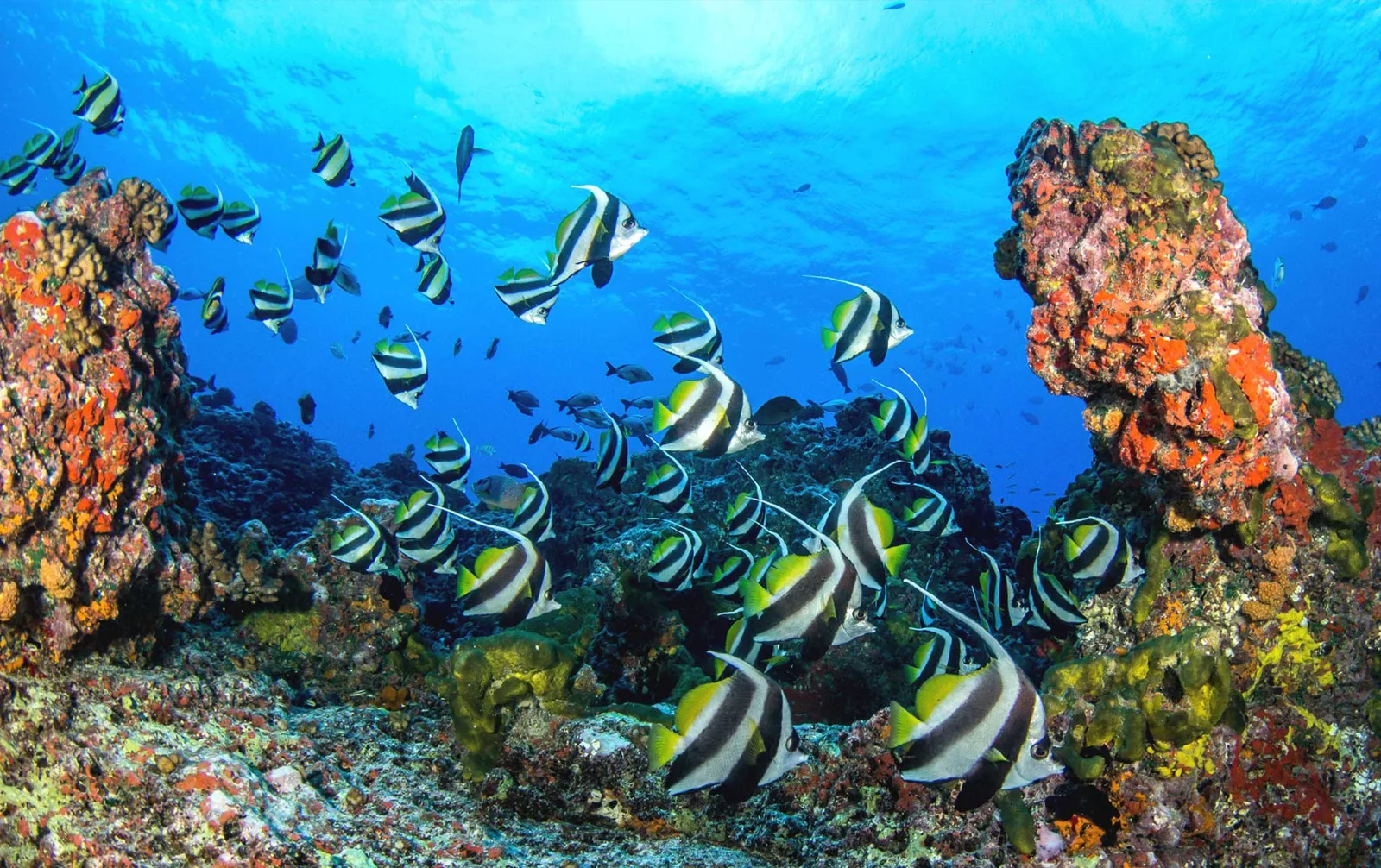
You will encounter a steady stream of reef fish that inhabit the coral structures along the wall. Large schools of fusiliers and surgeonfish are common, moving in unison through the water column. You can also spot unicornfish and paddletail snappers patrolling the edges of the reef. The health of the hard coral growth is evident, providing the necessary habitat for these species to thrive. This constant movement of smaller fish creates a dynamic environment that serves as the foundation for the larger predators found at the site.
The presence of larger predators is one of the defining characteristics of a Mahutu drift. Blacktip reef sharks and whitetip reef sharks are frequently observed patrolling the outskirts of the valley or resting near the reef edges. You may also encounter Leopard whiprays gliding along the sandy patches of the seafloor or near the base of the wall. These encounters are often more relaxed than in the high-current passes, as the sharks move through the valley following the natural flow of the water rather than fighting against a heavy surge.
What sets Mahutu apart from the typical Rangiroa dive sites is its openness. While most divers focus on the intense, vertical walls of the passes, Mahutu offers a more lateral experience through an oceanic channel. It is one of the few locations where you can experience a true open-ocean drift outside of the primary pass structures. This provides a quieter atmosphere, away from the high-traffic routes, allowing for a more focused observation of the relationship between the current, the valley topography, and the resident marine life.
Conditions at Mahutu are highly dependent on the weather and the tidal cycle. Because the site is more exposed than the sheltered interior lagoons, it is only dived when the sea is calm and the current is predictable. If the swell is too high or the current direction is unfavorable, the dive is often cancelled to ensure safety. When the conditions are right, the combination of the incoming tide and clear oceanic water creates a highly stable and productive environment for a controlled drift dive.
Depth ranges from 10 to 18 metres. Accessible from Open Water level, though prior drift-diving experience is strongly recommended due to the open-ocean nature of the site. Dives are subject to weather and tidal windows; they are conducted only in calm conditions with an incoming current to ensure optimal visibility and safety.
You should dive Mahutu only when the sea is calm, the weather is favorable, and the incoming current is predictable. Operators time the descent with the incoming tide, which brings clear, nutrient-rich oceanic water into the valley. High swell or an unfavorable current direction can lead to cancellation.
Mahutu is accessible to divers at Open Water level, but you should have prior drift-diving experience. The site is an exposed, open-ocean drift where you move through an underwater valley with the current. Its conditions depend on calm seas, a suitable tide, and a predictable current.
Mahutu ranges from 10 to 18 metres deep, allowing extended bottom time and light from the surface. You follow a gently sloping seafloor through a natural underwater valley, with a substantial hard-coral wall running alongside your route. The experience emphasizes steady forward movement rather than hovering beside a sheer drop-off.
At Mahutu, you can see a coral-covered wall with schools of fusiliers and surgeonfish, along with unicornfish and paddletail snappers. Blacktip and whitetip reef sharks frequently patrol the valley and reef edges, while Leopard whiprays glide over sandy seafloor patches. Visibility is commonly 20 to 30 metres.