Liveaboards · Egypt
Red Sea Aggressor IV — a dive-first Red Sea liveaboard built around strong guiding and comfort
For subtitles in English: start the video firstthen click the gearat the top right of the video, select “Subtitles/CC”, then “Auto-translate” and choose “English”.
The invitation
The Red Sea Aggressor IV makes sense for divers who want the boat to remove friction from a demanding week: clear group organisation, a proper dive platform, comfortable cabins and food strong enough to matter after repeated dives. The reason to choose it is not a clever design detail or a novelty itinerary. It is the combination of a crew praised for its group structure and rotation system, guides such as Donya and Salem, and access to sites where walls, wrecks, current and large animals all have a place. Brothers, Daedalus and Elphinstone are recorded as an 8-day/7-night route from Marsa Alam to Marsa Alam; another recorded itinerary combines St. Johns and Daedalus. This is a boat for the diver who wants the week organised around getting underwater, then wants enough comfort to enjoy the hours between dives.
Boarding
The first useful impression is scale without resort-like sprawl. The Red Sea Aggressor IV has cabins on the main and upper decks, a large glazed cabin window, an air-conditioned interior lounge and open decks where the boat’s purpose remains obvious: divers, equipment and the sea take priority. Movement between the cabin areas, salon, terrace and dive platform keeps the day connected to the water rather than divided into hotel rooms and public spaces. Twenty-six passengers is enough for a full liveaboard community, but the boat is still small enough that the dive groups and crew become familiar quickly. Boarding is less about discovering a floating landmark than finding the practical route from cabin to salon to platform. That matters on a trip where the same transitions happen again and again.
The atmosphere on board
The atmosphere seems to come from the crew’s handling of the group rather than from decoration. Donya and Salem are singled out for the way they structure dive groups and manage the rotation system, which is exactly the detail that prevents a full boat from feeling chaotic. That organisation gives the week a dependable framework while leaving the crew visible in the small decisions that make diving easier. English is the working language. In the evening, the boat shifts from dive logistics to shared meals, conversation and audio-video entertainment. The crew’s role is not just to serve the cabins; it is to keep the diving programme moving, protect the useful rhythm of the day and make a group of strangers function as dive teams. That is where this boat appears to earn its reputation.
The sites you’ll dive
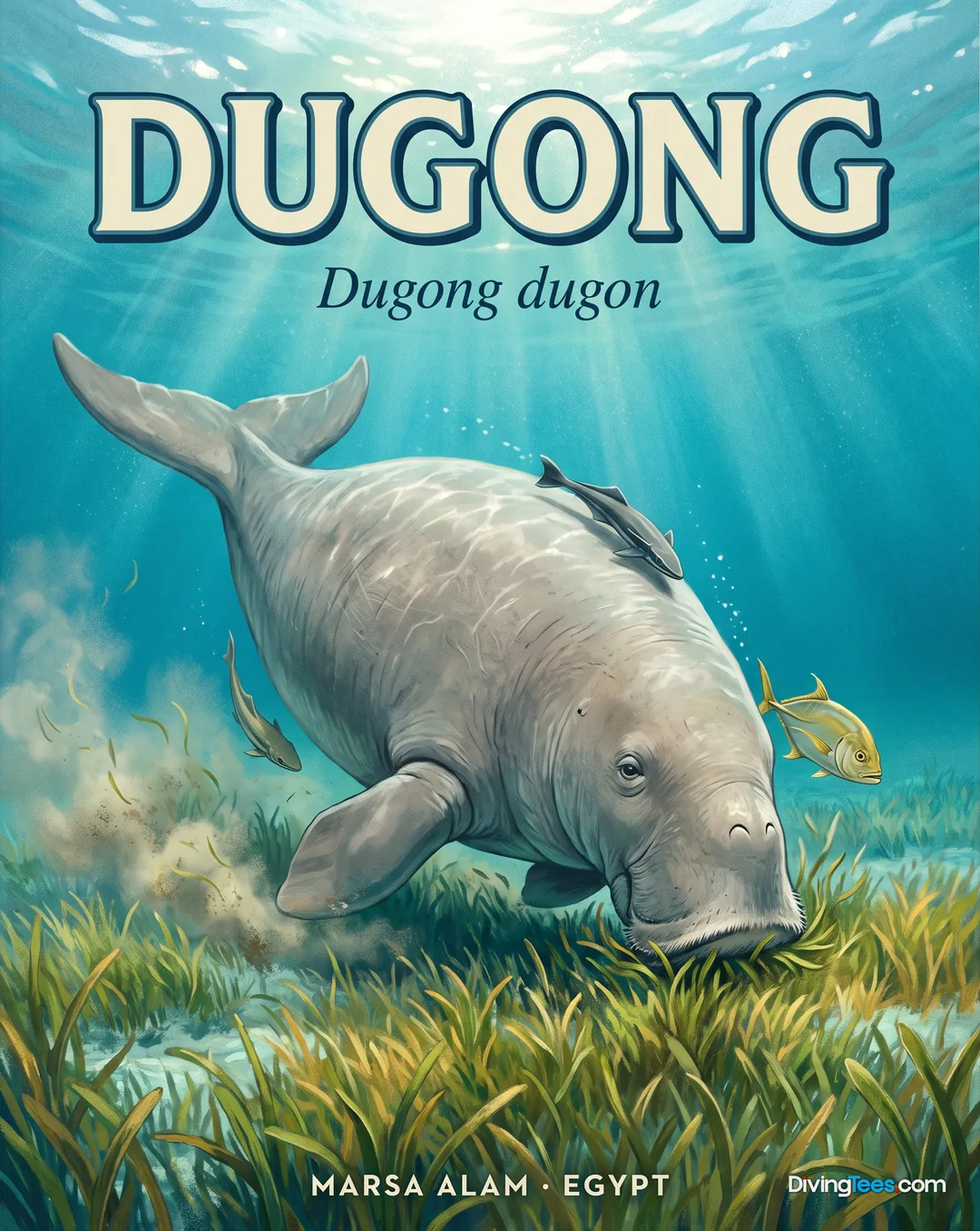
The recorded Brothers, Daedalus and Elphinstone itinerary runs for 8 days and 7 nights from Marsa Alam to Marsa Alam; another recorded 8-day/7-night route combines St. Johns and Daedalus. Elphinstone is the headline wall dive, dropping to a maximum of -60m, with pelagic shark encounters as the reason to accept its remote, exposed character. Brothers Islands go deeper, to -85m, with isolated oceanic reefs, strong pelagic potential and large marine life. Marsa Egla reaches -30m in a natural bay where seagrass gives dugongs and green turtles a place to feed. Marsa Mubarak, to -25m, combines sheltered water, seagrass and coral gardens around resident dugongs and turtles. House Reef reaches -40m and can bring rays, schooling barracudas and the possibility of a dugong. Shaab Alam reaches -30m, mixing a submerged wreck, caves and coral gardens. Shaab Claudio is a protected canyon dive to -25m, where coral architecture and changing light do the work. Other recorded sites include Numidia, the 1901 wreck, to -80m, and Abu Galawa Kebir, where the Tien Hsing barge rests at -18m.
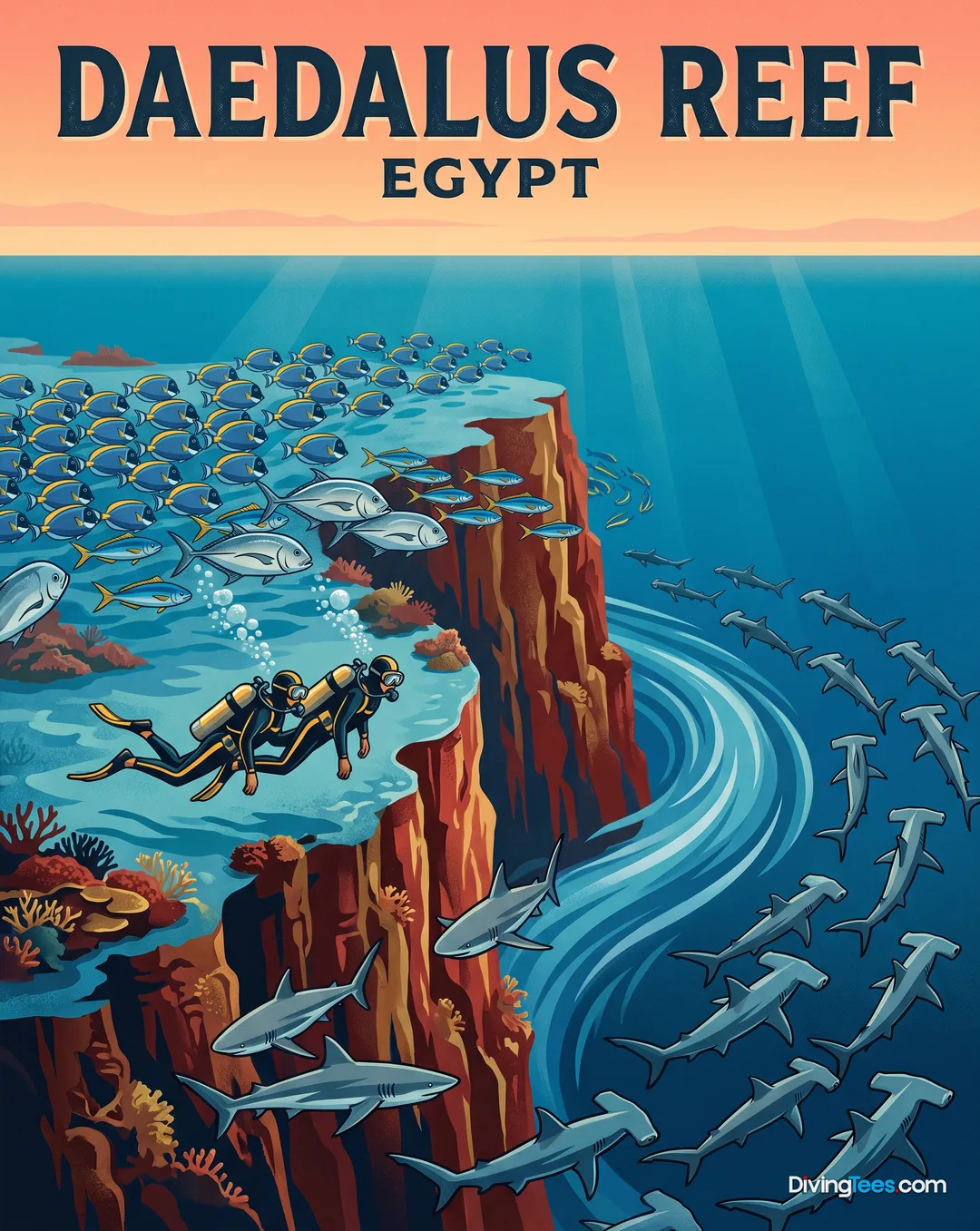
Daedalus →
Max. depth · 40 m
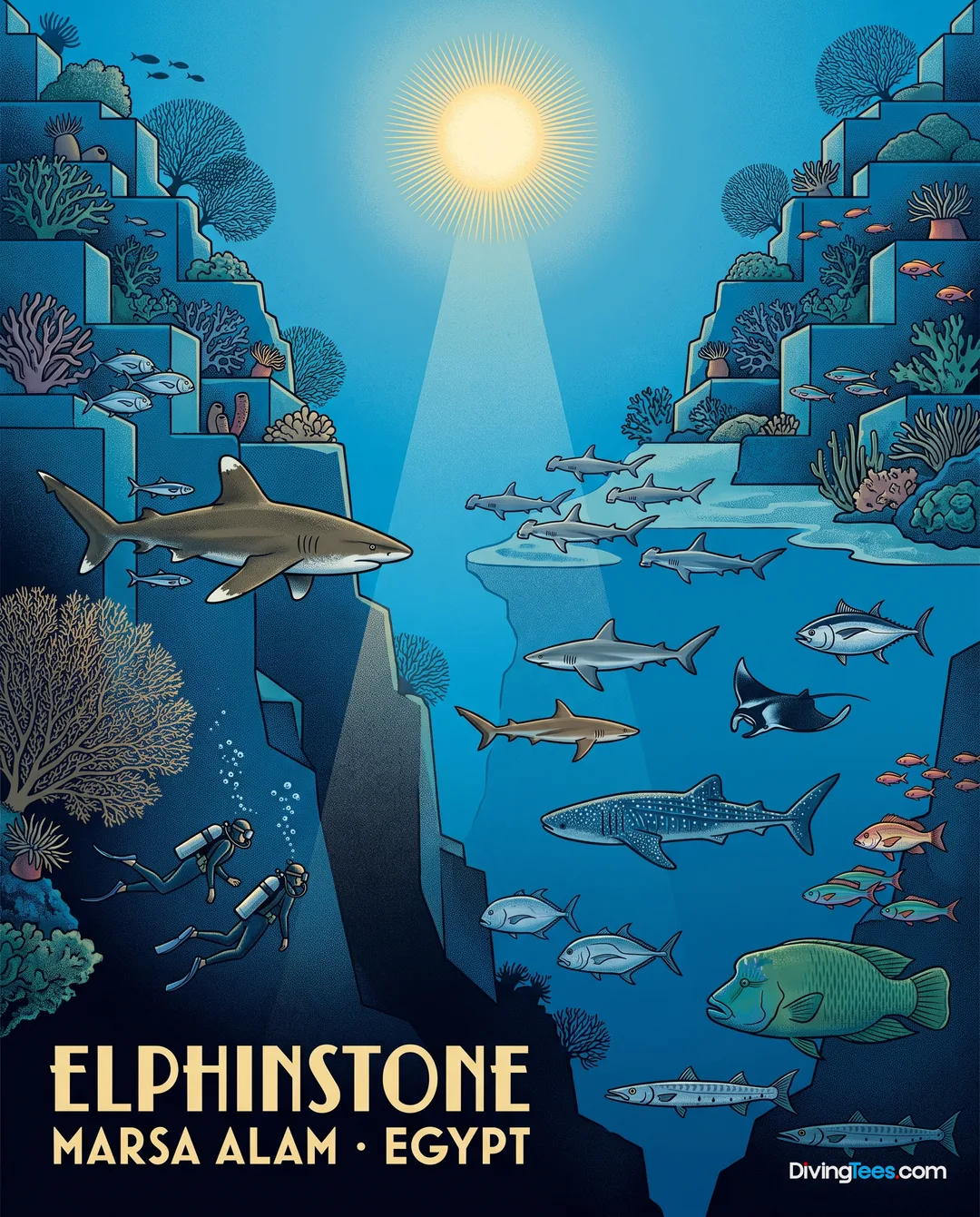
Elphinstone →
Max. depth · 60 m
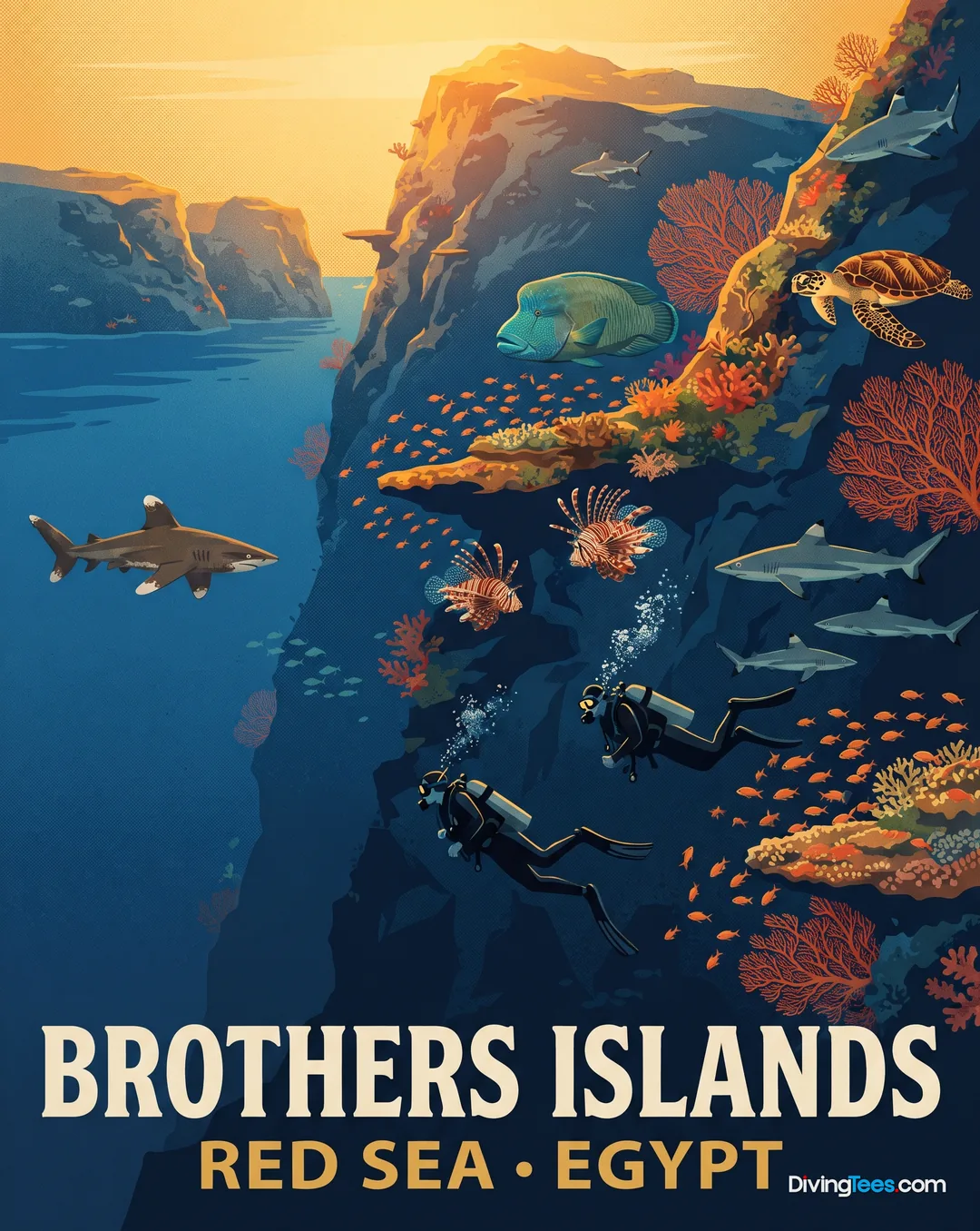
Brothers Islands →
Max. depth · 85 m
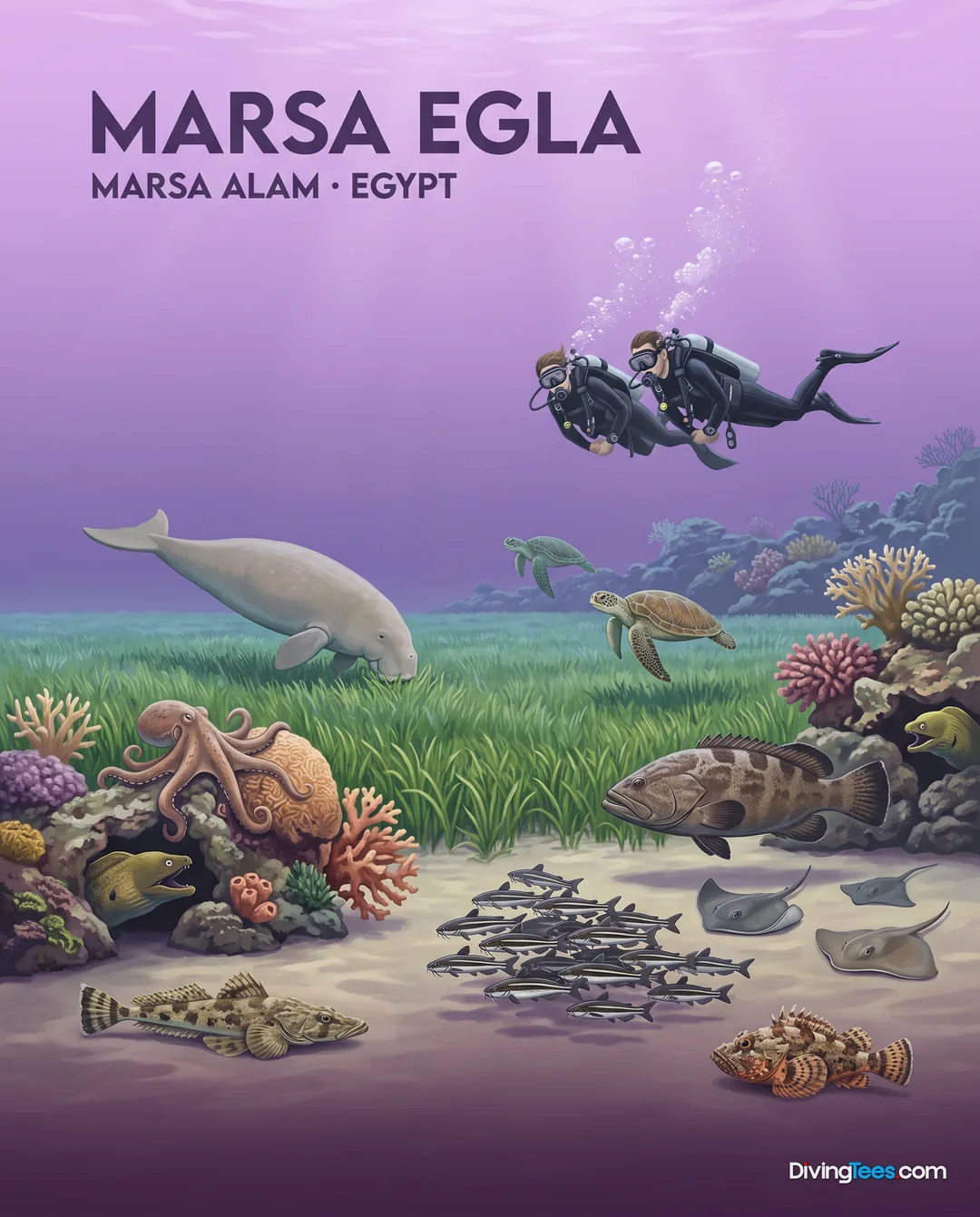
Marsa Egla →
Max. depth · 30 m
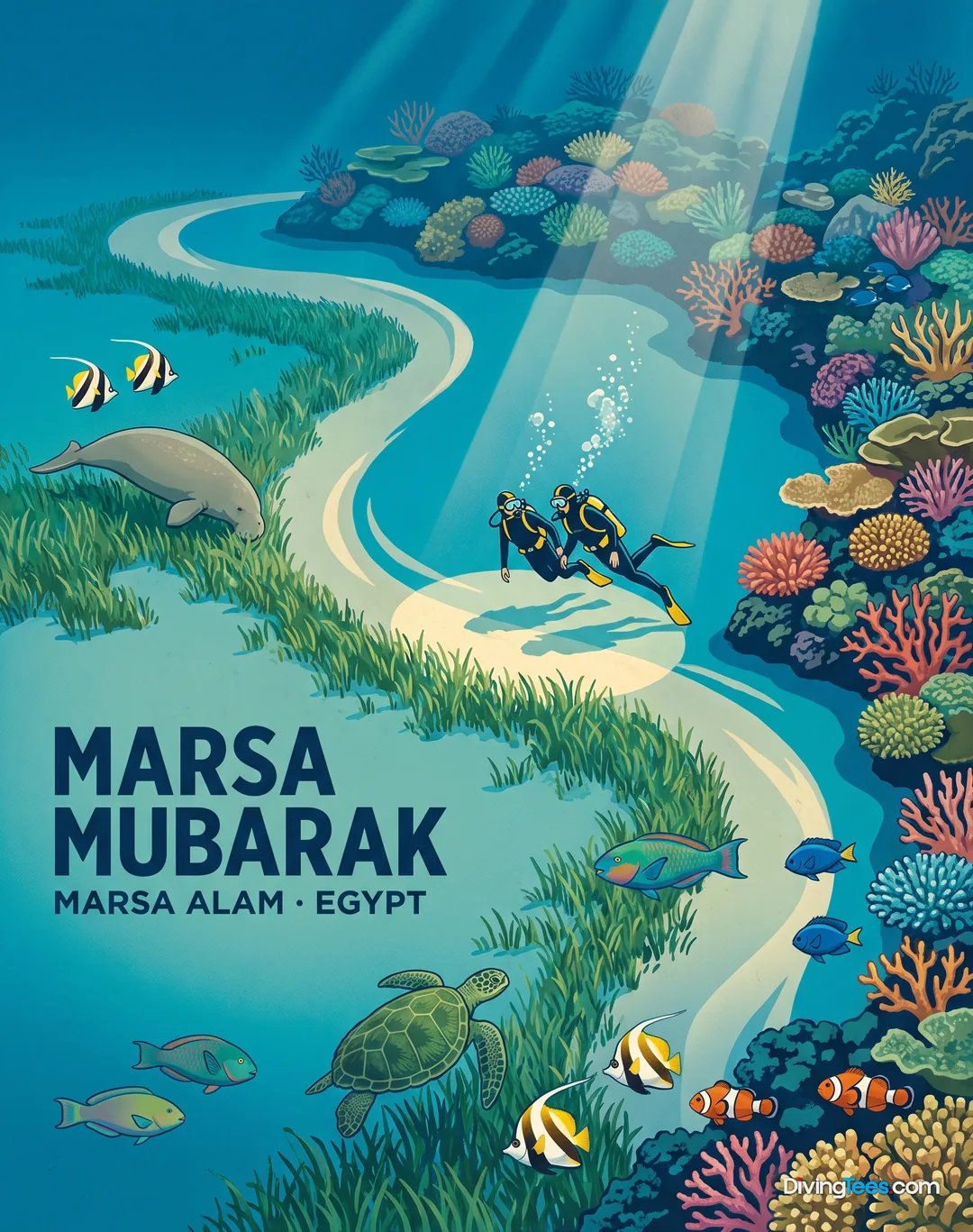
Marsa Mubarak →
Max. depth · 25 m
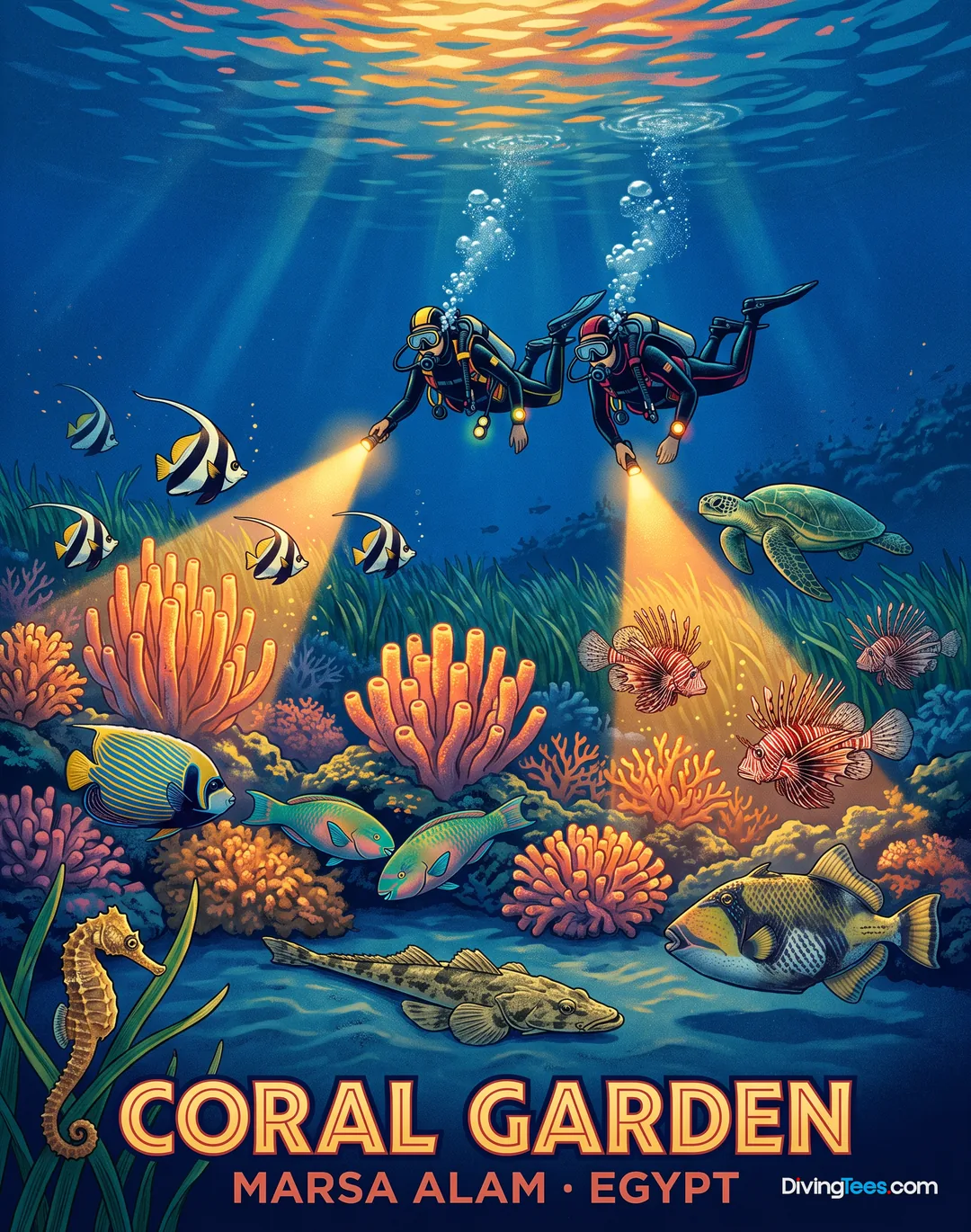
Coral Garden →
Max. depth · 20 m
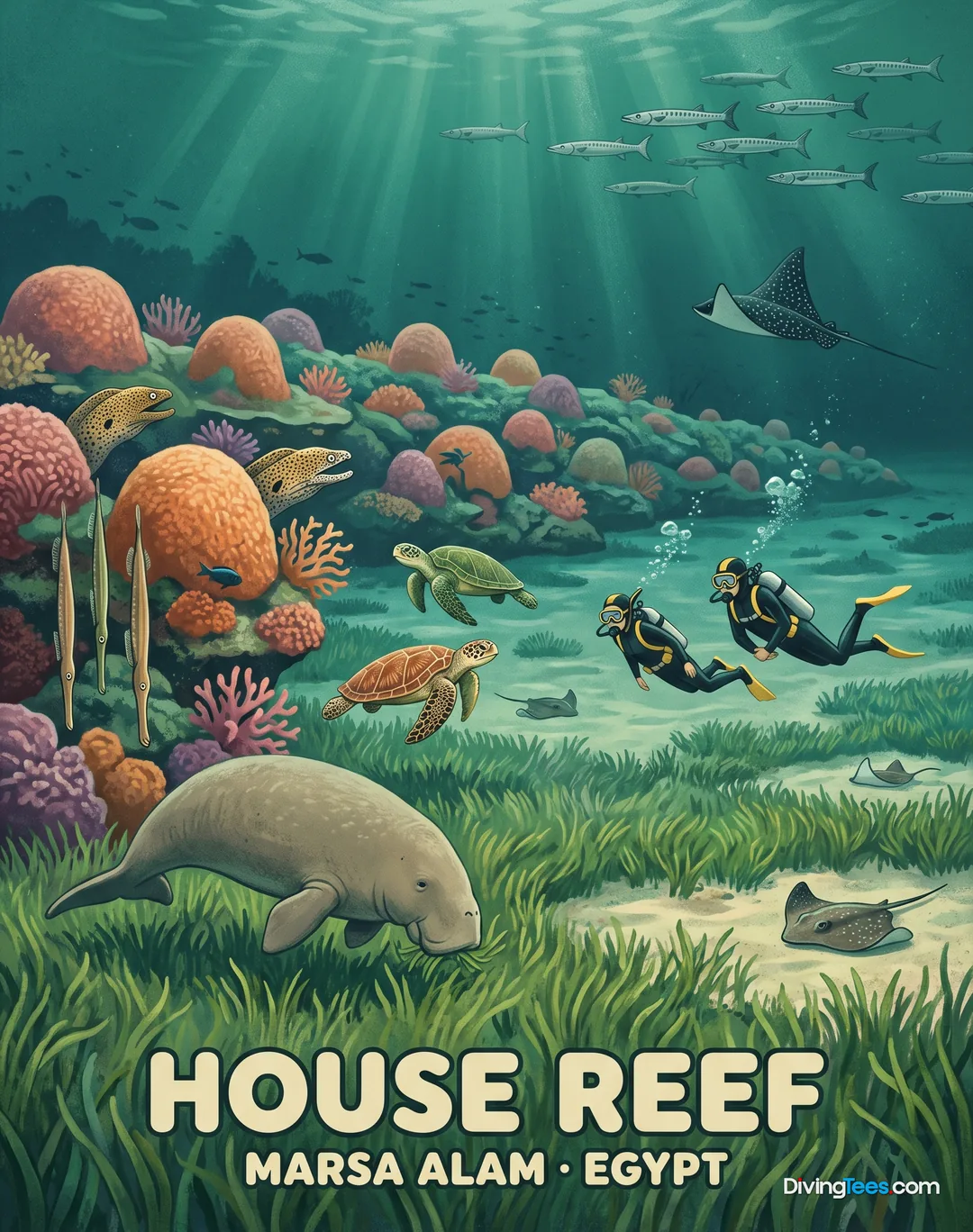
House Reef →
Max. depth · 40 m
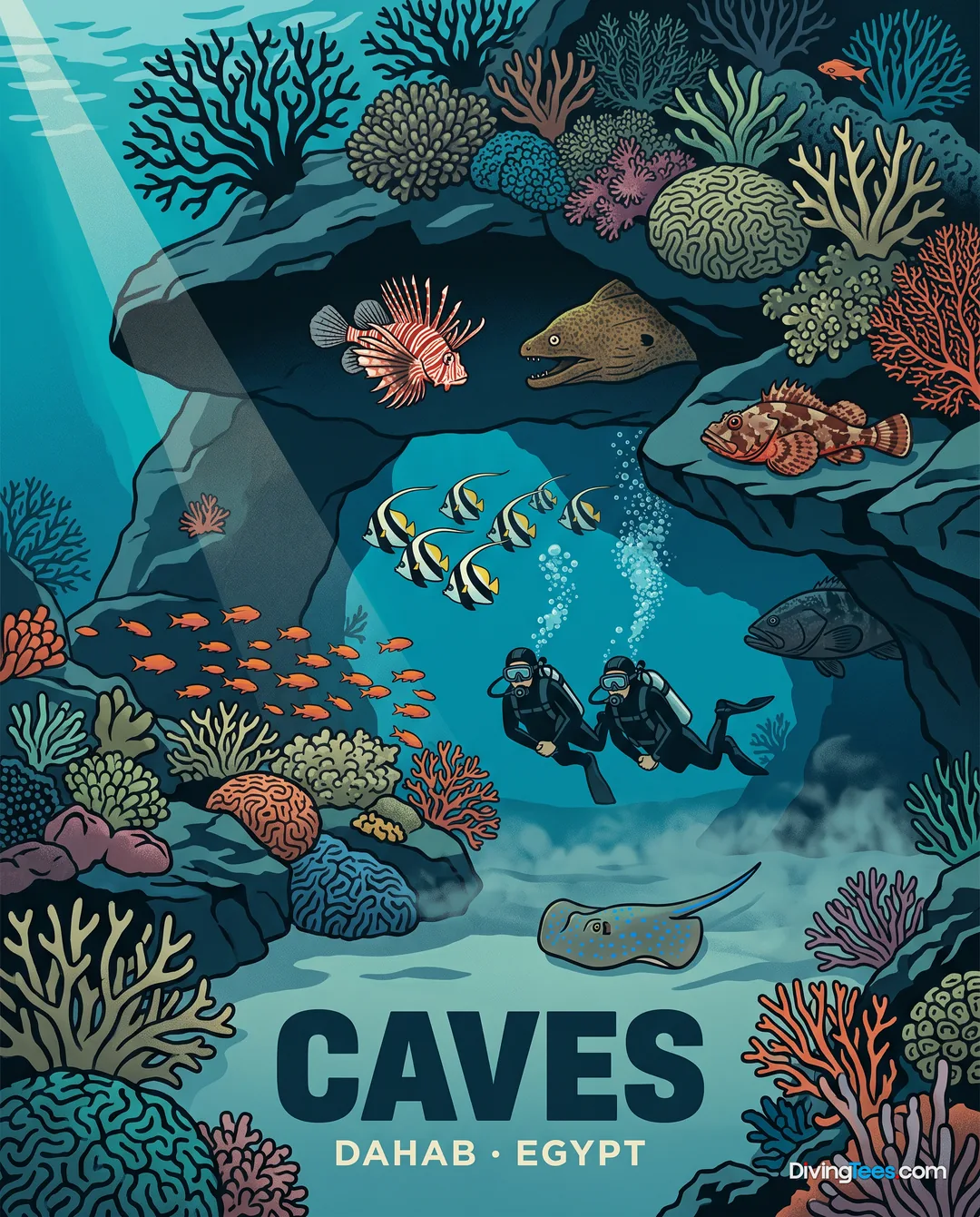
Caves →
Max. depth · 22 m
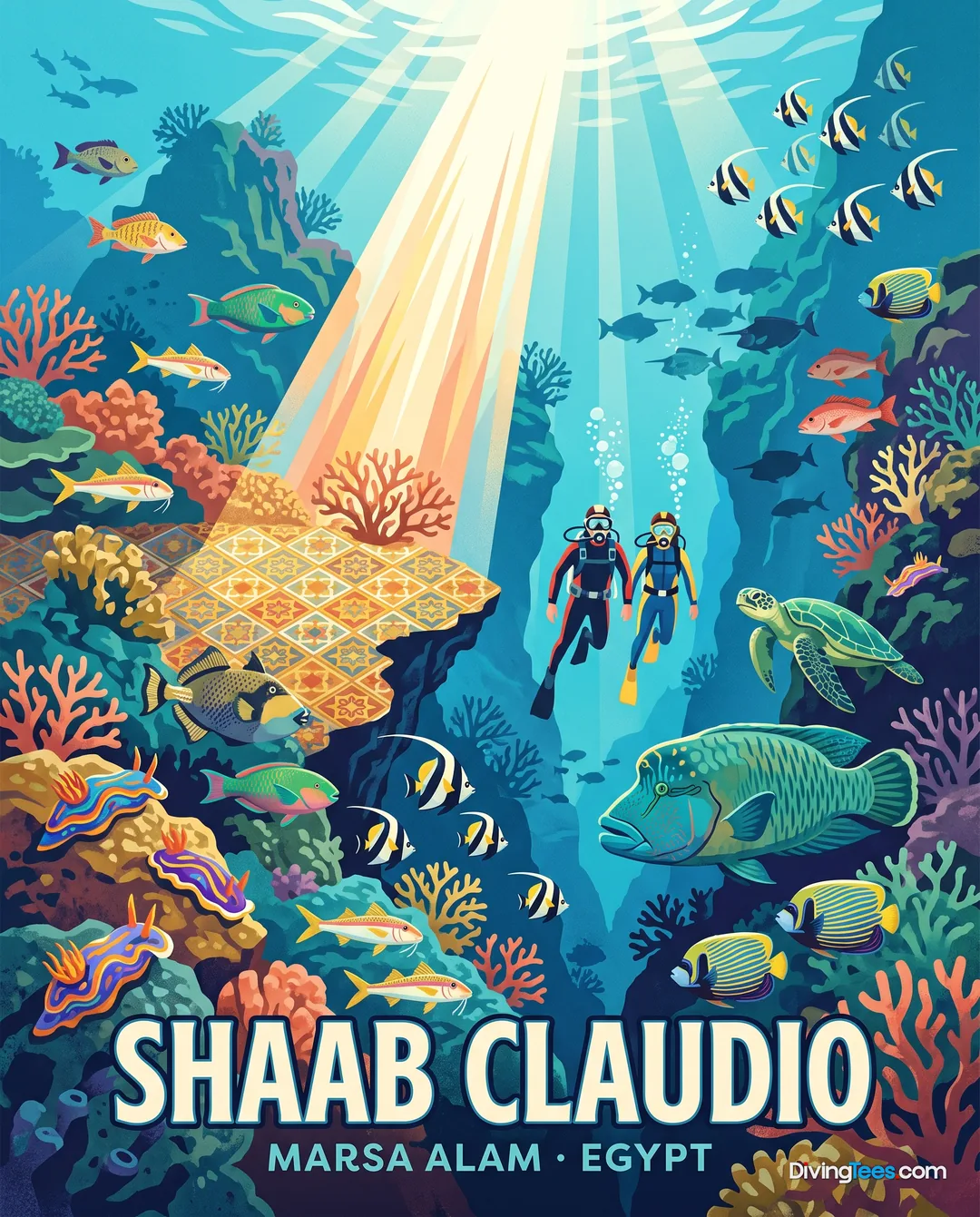
Shaab Claudio →
Max. depth · 25 m
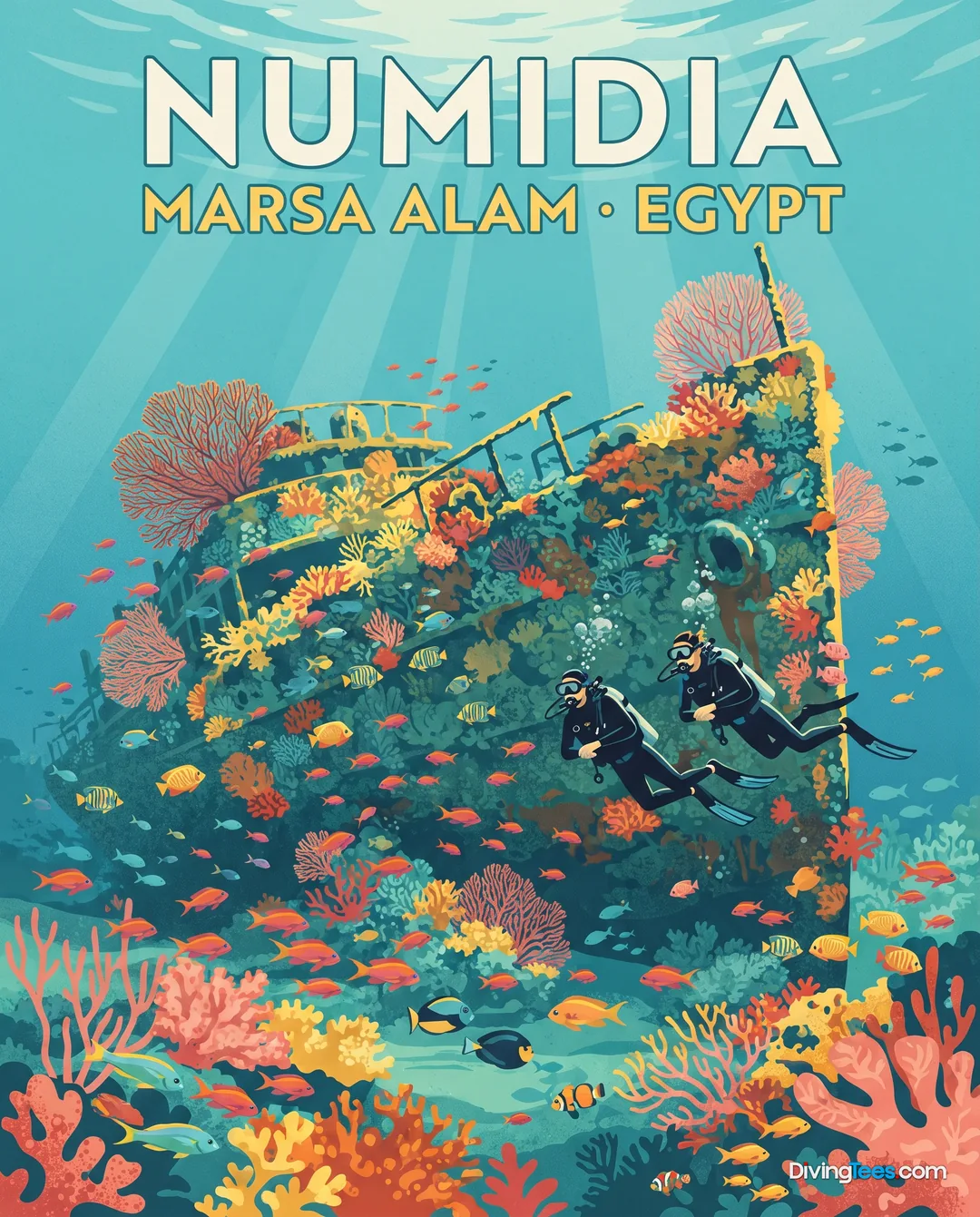
Numidia →
Max. depth · 80 m
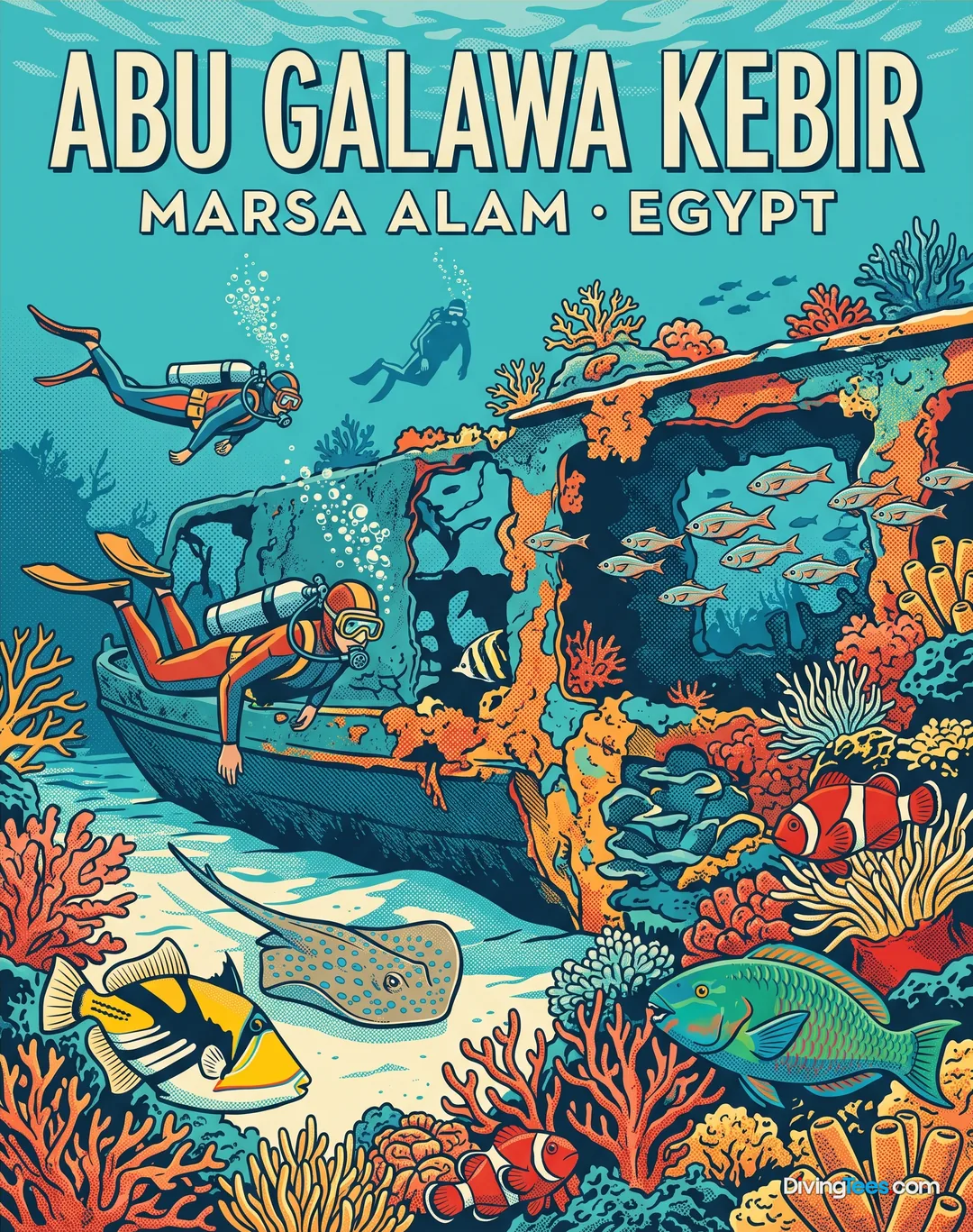
Abu Galawa Kebir →
Max. depth · 18 m
What you’ll meet underwater
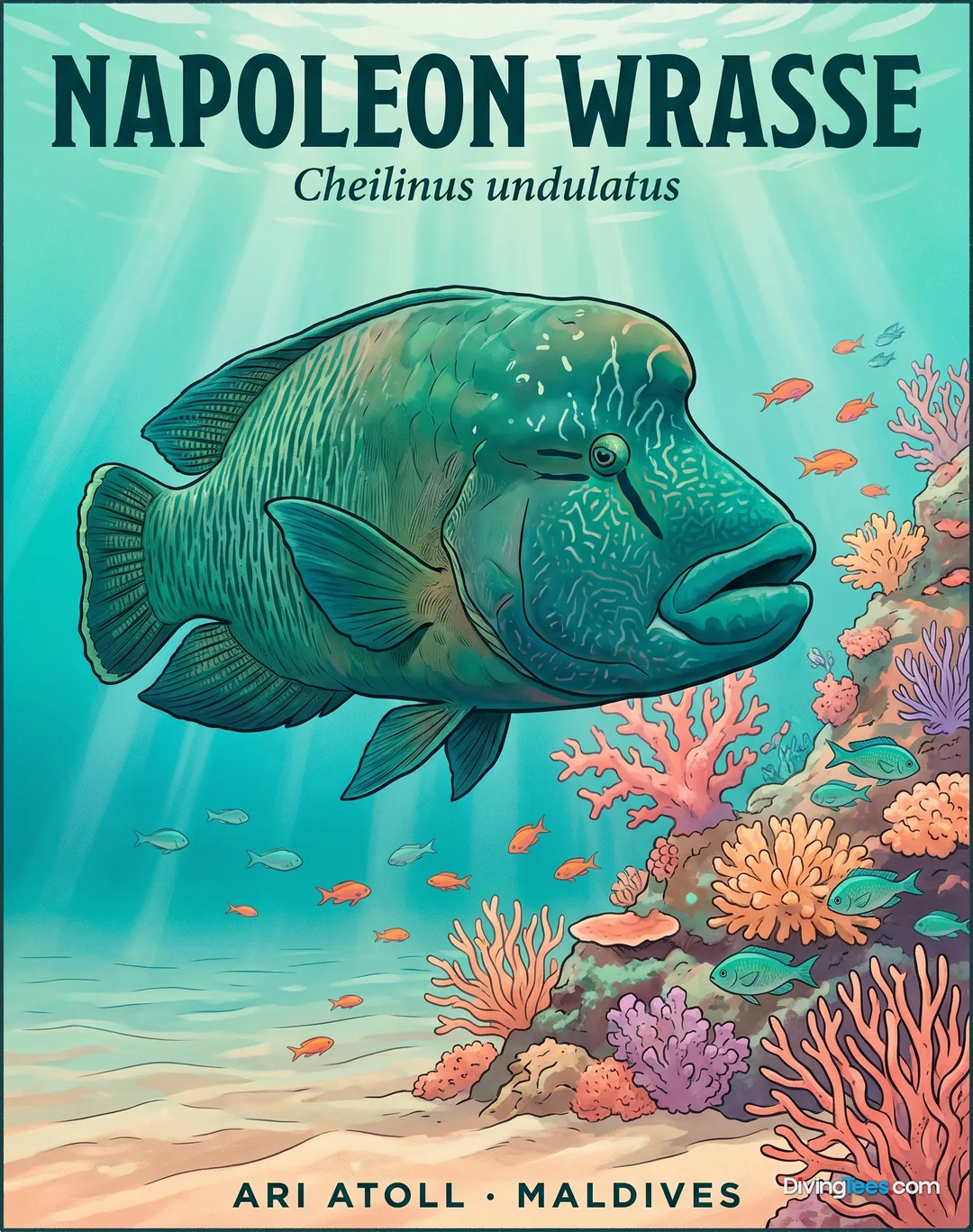
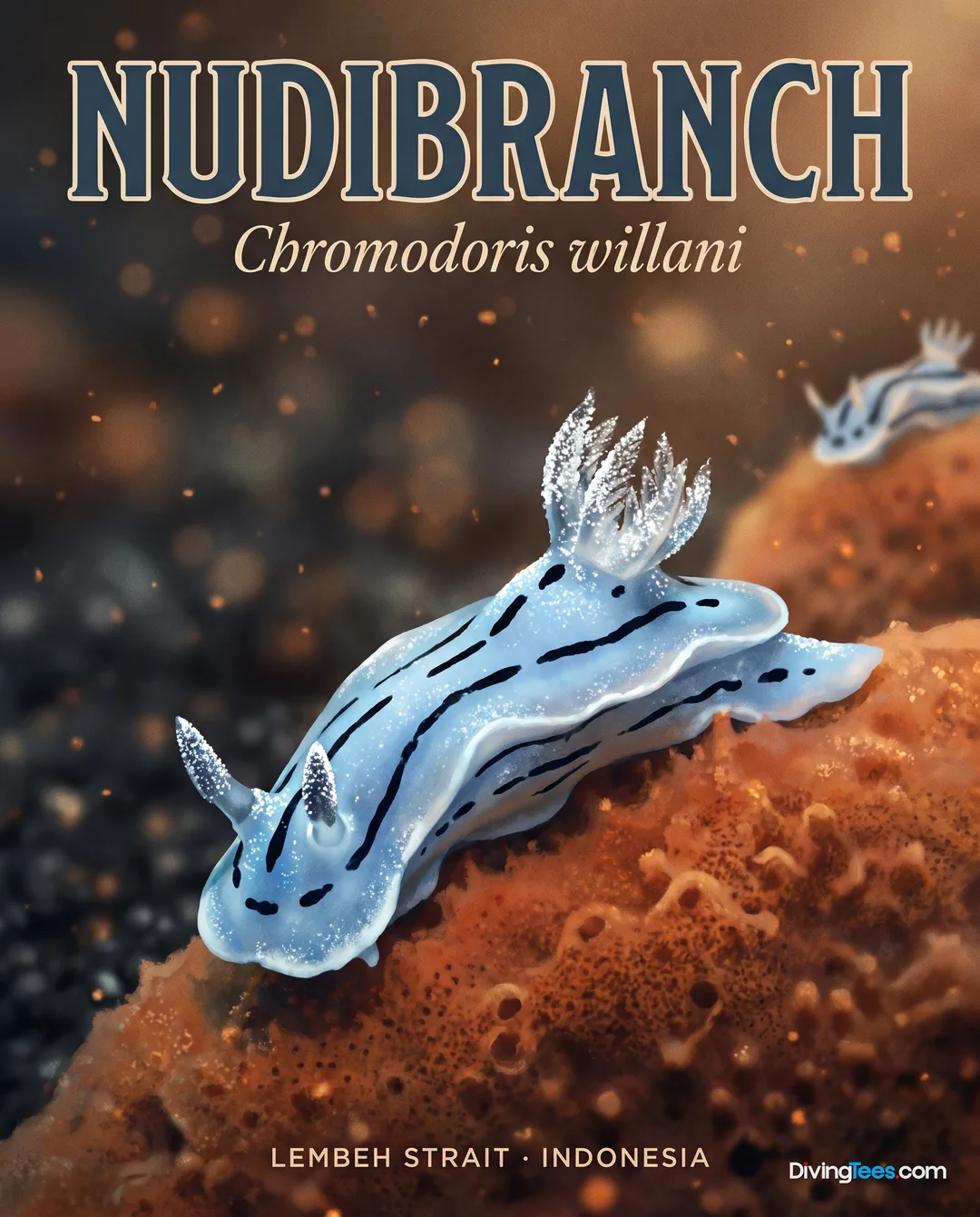
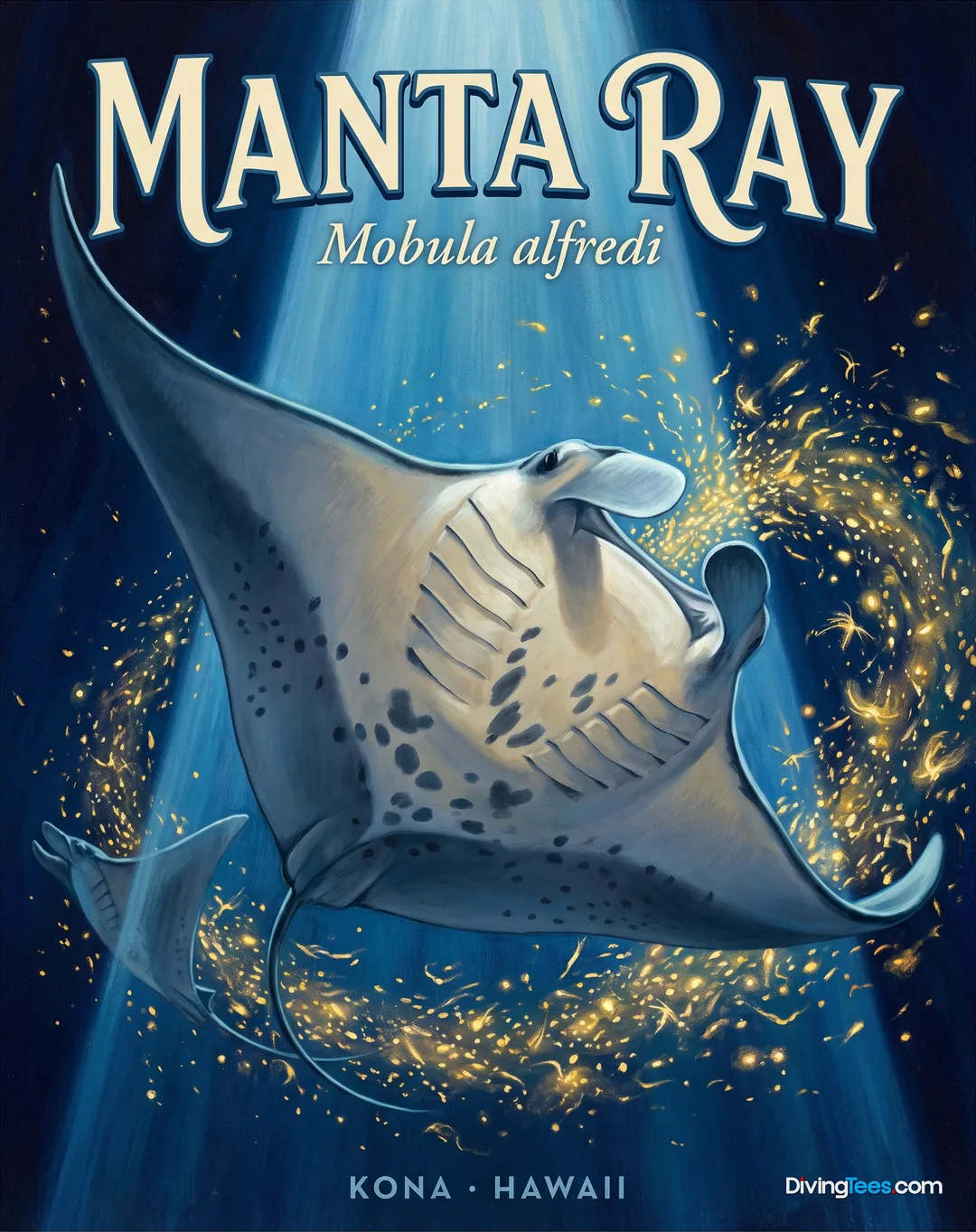
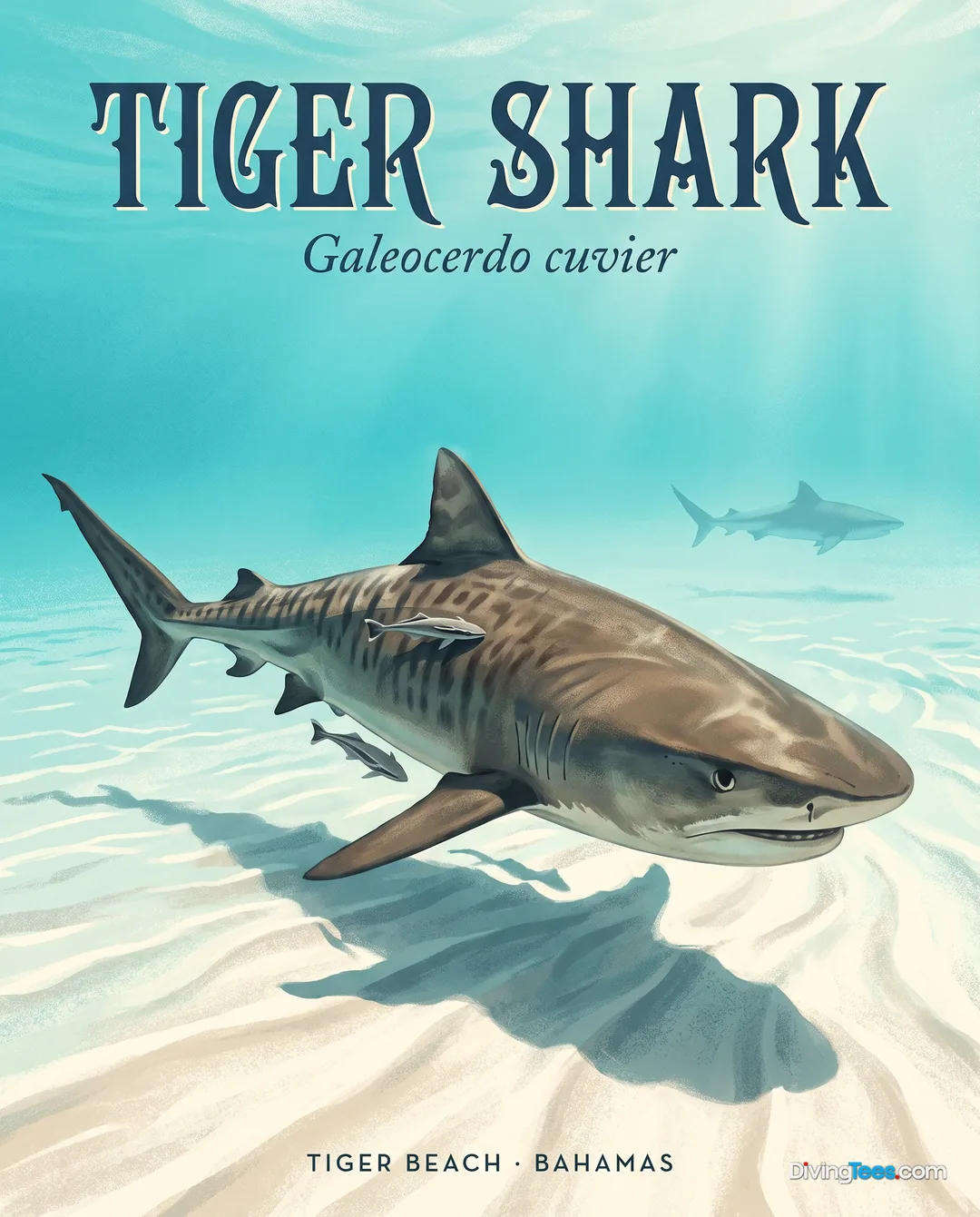
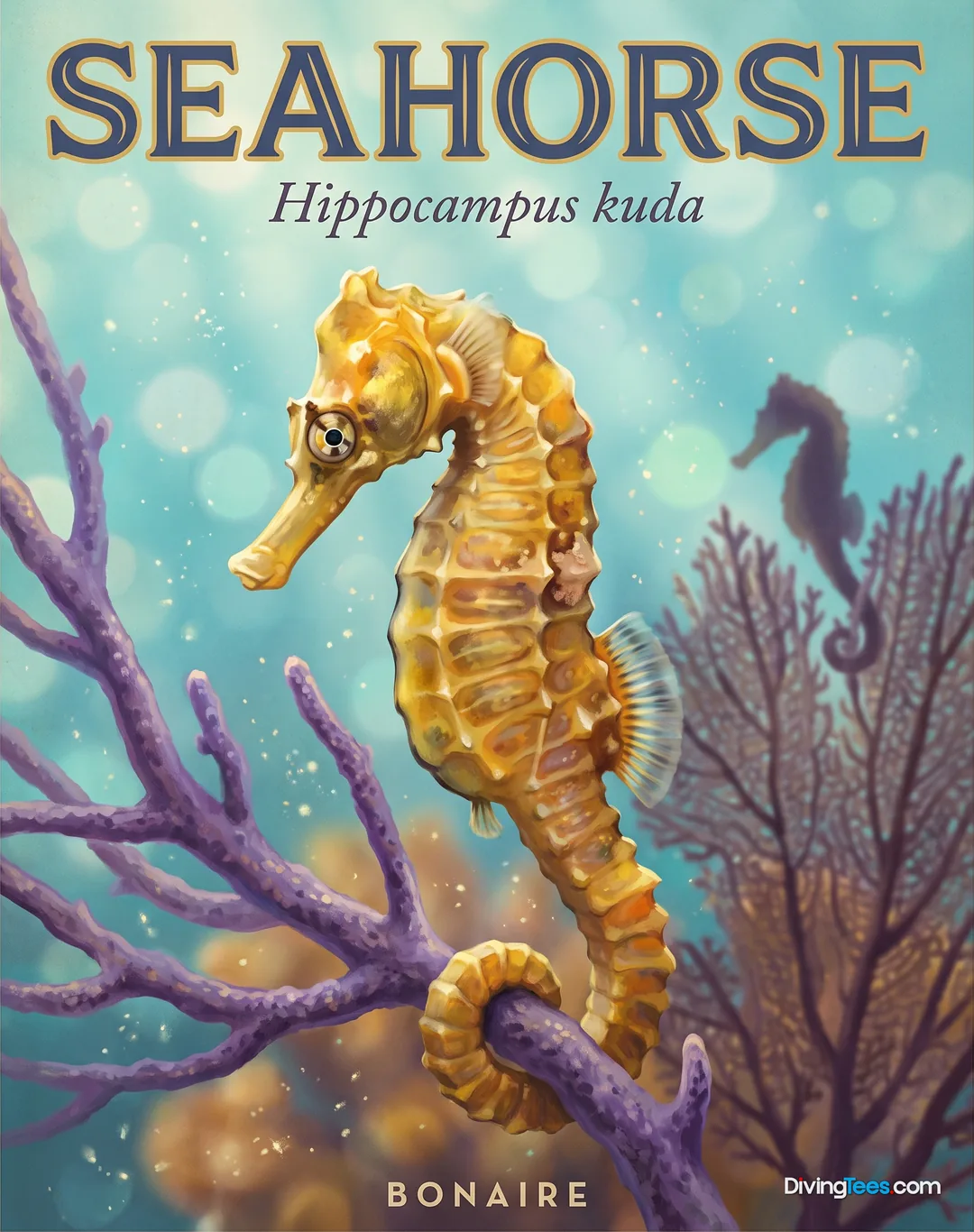
The route’s regular cast is broad: dolphins and sea turtles are recorded across seven sites, barracudas across six, and morays, Napoleon wrasse, reef sharks and nudibranchs appear repeatedly. Dugongs, manta rays, tuna, hammerheads, soft corals, octopuses, scorpionfish and trevallies add the larger encounters and the small searches between them. The site-specific animals are part of the reason to follow the itinerary rather than treat every reef as interchangeable. Elphinstone is the only recorded site for blacktip shark, tiger shark and fusilier. Brothers Islands are the only site listed for anemones. Marsa Mubarak is the only site for damselfish, while House Reef is the place associated with seahorses and trumpetfish. Shaab Umm Gamar is the sole listing for sweetlips and batfish; Shaab Claudio is the only site recorded for triggerfish. Abu Galawa Soghayar is the place to look for glassfish around the remains of a private sailboat. None of these sightings is guaranteed, but the route gives each one a clear reason to enter the water.
Who puts you in the water
Every dive starts with a briefing from the dive staff. The guides explain the site and the information needed for the dive, while the group system and rotation plan keep 26 passengers from arriving at the platform as one crowd. Dives are made in buddy teams of two or three; a staff member is not treated as a buddy unless that staff member and one guest are the only people in the dive. When diving directly from the yacht, at least one staff member may be in the water to assist, spot critters and support underwater photography or video, but divers are not required to follow that person. English is spoken by the crew. Advanced Open Water and Nitrox training can be arranged on board, subject to instructor availability and confirmation after arrival. No logged-dive minimum or guide-to-diver ratio is stated for this boat.
The dive deck and the gear
The dive platform is the centre of the boat’s operation. Standard diving uses 80-cubic-foot air tanks with K valves, and the Red Sea Aggressor IV accommodates both K and DIN connections, so a DIN diver does not need to build the trip around an adapter. Larger 100-cubic-foot or 15-litre tanks may be requested as an optional rental, subject to availability. Single-tank sidemount is accepted; rebreather diving is not supported. Rental equipment is available, as is snorkeling equipment. Nitrox is available as a paid extra at 32% for certified Nitrox divers, with proof of certification required. Divers must bring or arrange their own mask, fins, snorkel, BCD, regulator, pressure gauge and computer; an SMB and reel are recommended, and the boat’s general diving requirements make an SMB particularly important when tender procedures apply. The setup is practical, but the available information does not establish tender numbers, camera facilities or rinse-tank details.
Between dives
Between dives, the boat gives the day two different places to settle. The air-conditioned salon is the retreat when the sun and exposure have done enough, while the terrace and open deck keep the sea in view. The jacuzzis offer a deliberately idle option, useful after a demanding wall dive or a long surface interval. Non-divers and snorkelers are welcome, so the boat is not limited to a group in full scuba mode. Audio and video entertainment fill part of the evening, but the stronger use of the quiet hours is simple: dry equipment, eat, talk through the last dive and return to the platform when the next briefing starts. There is enough comfort to make the surface intervals restorative without disguising what the boat is for.
A day on board
A day begins with the dive briefing, then the boat moves through repeated cycles of entry, recovery, food and rest. The platform keeps the transition from cabin to water direct: equipment is prepared, the group is called, the dive is briefed and the surface interval starts as soon as divers return. Meals and snacks punctuate those intervals, while the salon, terrace and jacuzzis give tired divers somewhere to sit without abandoning the sea view. The boat’s rotation system matters most here, because a full passenger list can otherwise turn every dive into a queue. When the vessel is underway, the day opens out into the Red Sea; when it stops, the focus returns to the next site. The exact number and timing of dives depend on the itinerary and conditions, so the honest picture is a well-organised sequence rather than a fixed clock.
What you eat aboard
Food is one of the boat’s stronger points, with a score of 9.5 for food, and the offer is broader than standard liveaboard fare. The galley serves both Western and local cuisine, with full board, snacks, non-alcoholic drinks, tea and coffee included; beer is available as well. An à la carte dinner option gives the evening meal more shape than simply returning to the same buffet after every dive. The important part is timing: meals and snacks sit between dives, when a diver needs something substantial without losing the next briefing. A well-run table also changes the social side of the trip. After several hours underwater, food is where divers compare sightings, settle their plans for the next entry and decide whether the day has one more dive in it.
Nights at sea
The cabins are made for recovery rather than ceremony. Master and Deluxe Staterooms are air-conditioned, have private bathrooms and open onto the main or upper deck; the large glazed windows give the sea a much better presence than a dark lower-deck cabin. The useful luxury is what happens after a dive: a private shower, a towel waiting in the cabin and a cool room in which to sleep before the next briefing. Two jacuzzis change the character of the open deck when the diving is done, giving the boat a place to decompress without turning the evening into a formal event. The cabin categories are simple: Master Staterooms and Deluxe Staterooms. The choice is mainly about space, deck position and the view, not about choosing between radically different levels of service.
Master Staterooms
Deluxe Staterooms
What to know before boarding
The recorded departures and returns are from Marsa Alam, including the Brothers, Daedalus and Elphinstone route and the St. Johns and Daedalus route. Transfers are part of the trip arrangements rather than a detail described here. Arriving in Egypt the night before the liveaboard departure is the sensible way to protect the first day from travel delays.
Deck plan
- Length
- 35.1 m
- Beam
- 7 m
- Maximum number of passengers
- 26
- Number of cabins
- 13
- Cruising speed
- 10 knots
- Website
- aggressor.com ↗
Hello, I'm Marina, DivingDeal.com's AI assistant. I answer in detail about hotels, dive centres and liveaboards.

Thinking about the whole trip and the flights? Talk it over with Edith →
Marina is an AI. Some links are affiliate links: DivingDeal may earn a commission, at no extra cost to you. Bookings are made with the partner.