Liveaboards · Egypt
Royal Evolution — a purpose-built Red Sea dive vessel with a serious working deck
What makes this boat unique
- A 39-metre steel liveaboard for up to 24 divers in 12 en-suite cabins.
- The dive deck gives every guest a personal locker, with separate camera rinsing and charging areas.
- The boat supports recreational, technical, sidemount and rebreather diving, with DIN adapters and nitrox available.
- Three dive instructors work with a local and international crew speaking English, German, French and Swedish.
- Hurghada routes include Shaab Ruhr Umm Gamar, El Fanadir, Shaab Sabina, Shaab El Erg, El Fanous West and El Fanous East.
For subtitles in English: start the video firstthen click the gearat the top right of the video, select “Subtitles/CC”, then “Auto-translate” and choose “English”.
The invitation
Royal Evolution is built around the part of a liveaboard that matters most: getting divers into the water repeatedly, with their equipment organised and ready. The personal dive lockers, camera station, separate rinse areas and charging lockers remove much of the daily friction that makes a week at sea tiring. Technical divers and rebreather users are not treated as an afterthought either; the boat has the filling systems and deck arrangements to support them. Above the dive operation, there is enough room to step away from it: an air-conditioned saloon, outdoor decks, a photo workspace, a library and a jacuzzi. That balance explains the boat's profile. It is not chosen simply for a cabin and a meal, but by divers who want a properly equipped base for a full Red Sea itinerary, with comfort that serves the diving rather than replacing it.
Boarding
From the dock, Royal Evolution presents as a substantial steel vessel rather than a small day boat stretched into a liveaboard. Its heavy construction and soundproofing are intended to reduce the vibration and noise that usually follow a long engine room, while the four-deck layout separates cabins, meals, diving and open-air time. Inside, the impression is practical and spacious: a full lounge, a dining area arranged for the whole group, and room to read, log dives or work on images without sitting on top of the next diver. The crew gives a boat orientation and safety briefing on boarding, so the routes to the cabins, muster stations and working areas become clear before the first dive. It feels designed for a week in which equipment stays assembled and people move between deck, saloon and water without bottlenecks.
The atmosphere on board
Royal Evolution carries a large group, but the operation gives each diver a defined place for equipment and charging, which prevents the dive deck from becoming a pile of bags and cylinders. The crew's role is visible in the small repeated tasks: lockers are ready, cameras have a dedicated station, briefings happen before each dive, and the tenders and platform handle the water work. Three instructors lead the diving, while the wider local and international crew runs the boat, meals and cabins. In the evening, the saloon offers a screen, video library, cards, backgammon, chess and books; the outside decks and bar keep the social part less formal. Traveller scores reflect that balance: the crew and food score 9.7, while the boat itself scores 9.5. The point is not a flawless new hull, but a vessel whose people and working arrangements make a demanding diving week easier.
The sites you’ll dive
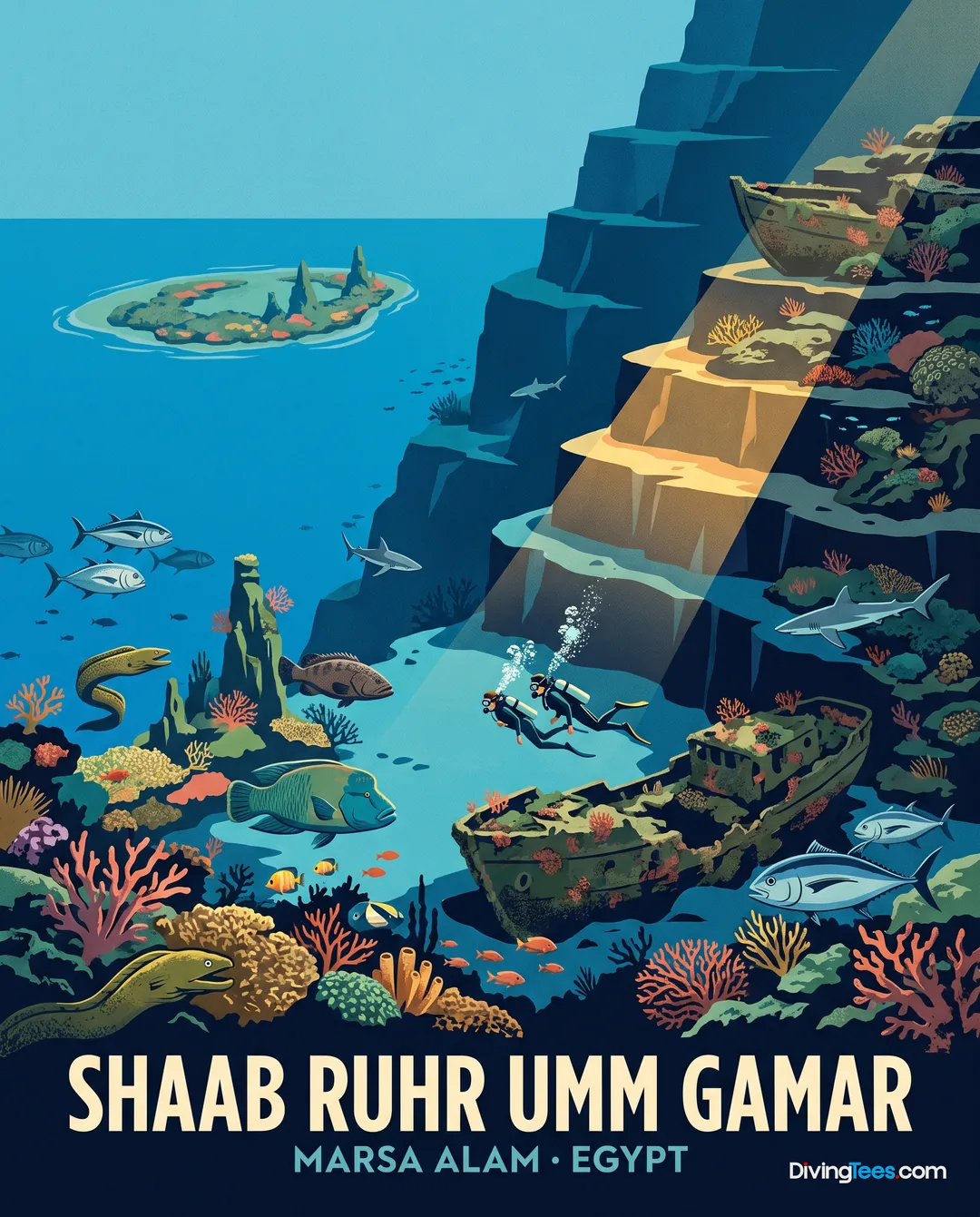
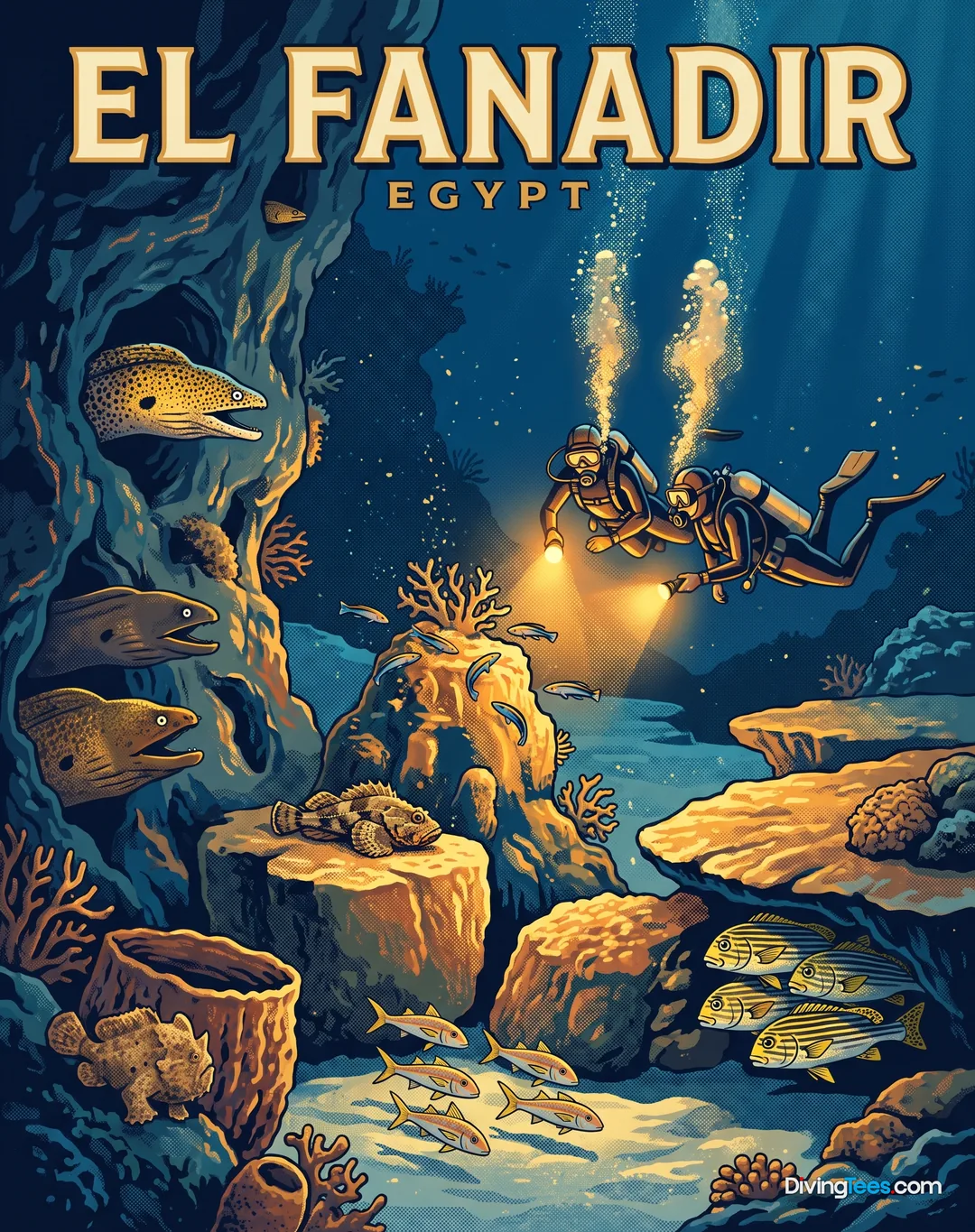
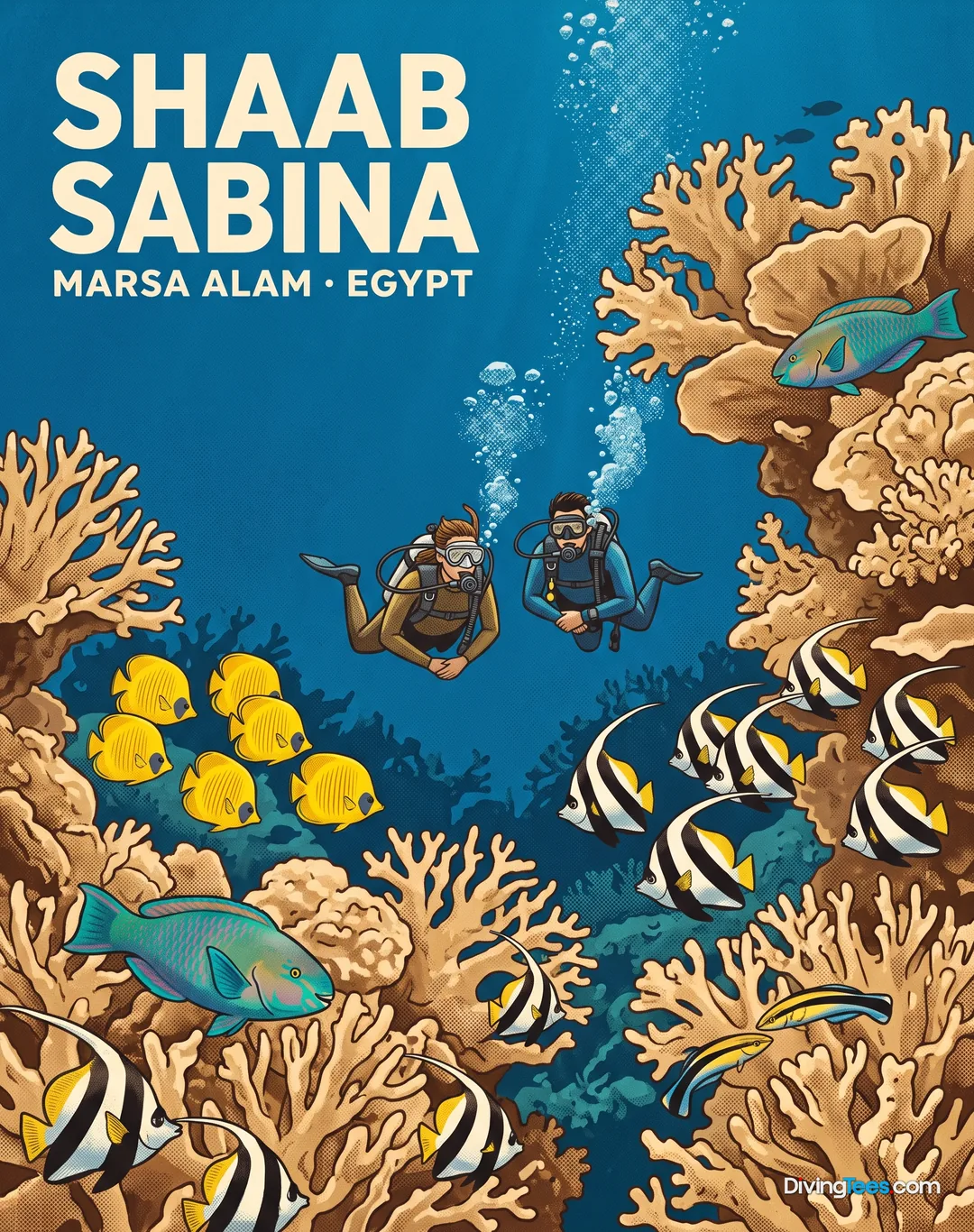
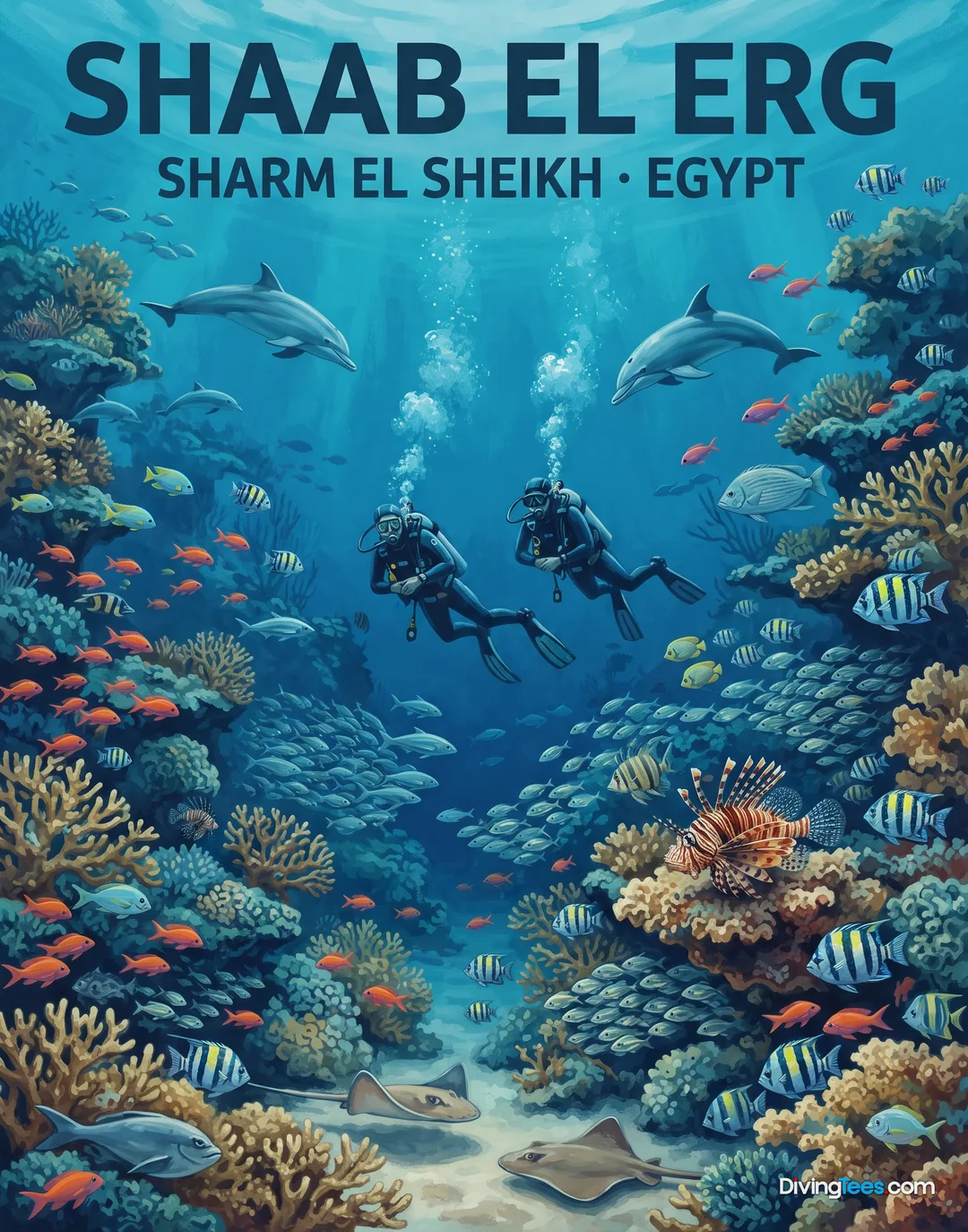
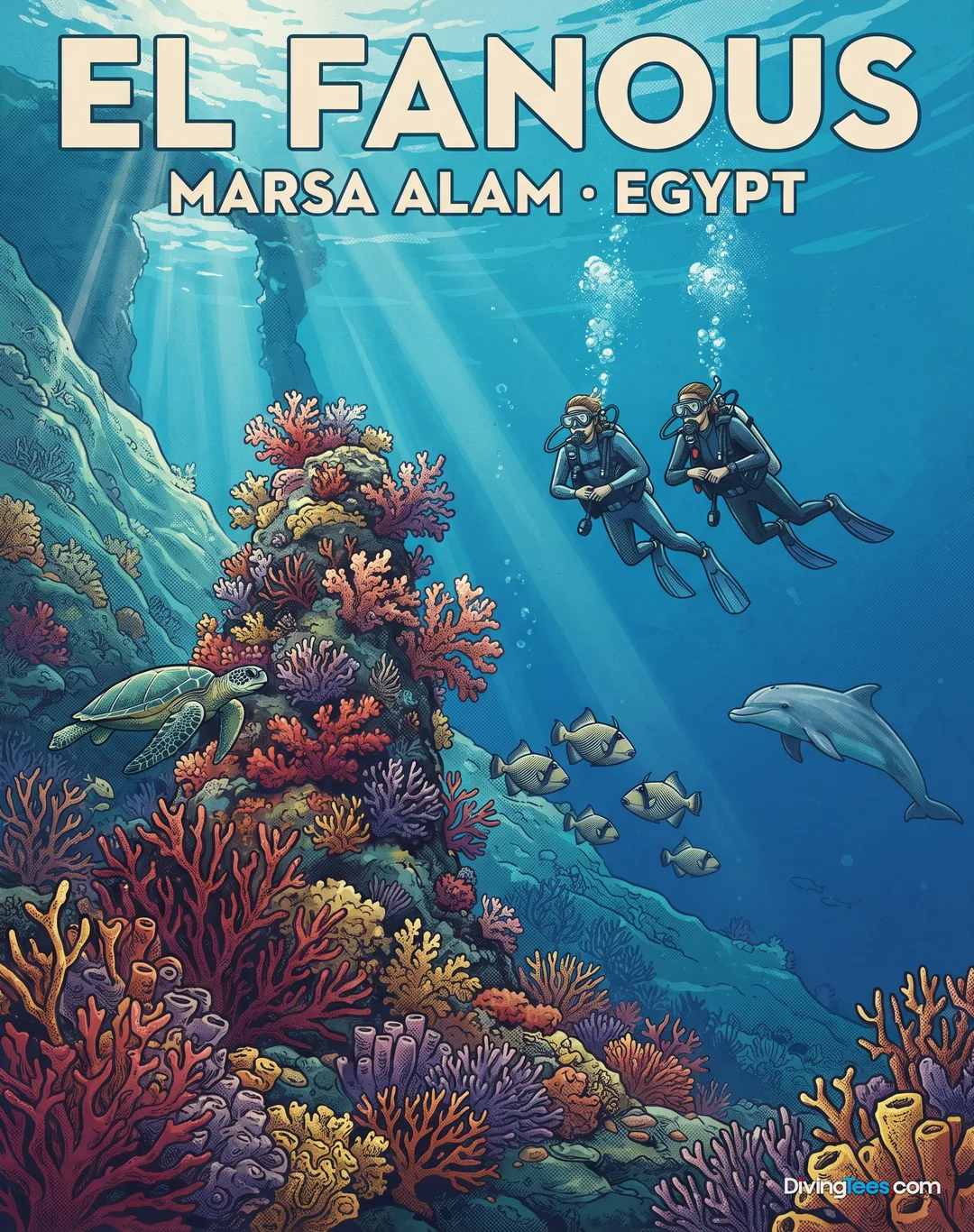
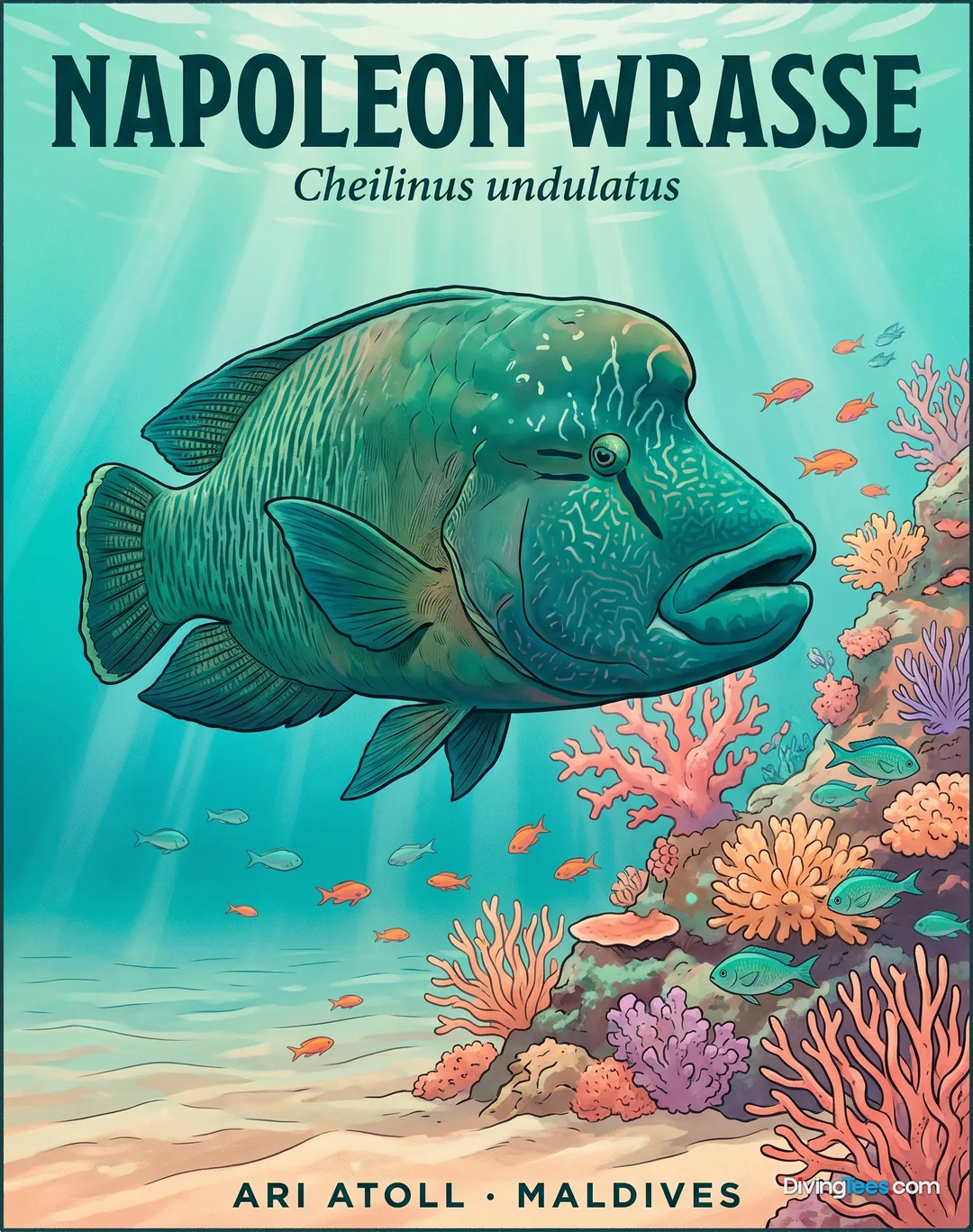
The Hurghada route moves through six very different Red Sea sites over 8 days and 7 nights. Shaab Ruhr Umm Gamar combines an oval reef, a fish-rich plateau, small pinnacles and the remains of at least three wrecks, reaching -40m; it is the place for larger reef life, with reef sharks, grey reef sharks, giant groupers, Napoleon wrasse, tuna and trevally among the recorded sightings. El Fanadir is a wall dive to -40m, with morays in the cavities and a cleaning station on a shallow coral pinnacle; groupers and scorpionfish add detail to the reef. Shaab Sabina stays shallow at -14m, where a broad maze of coral gardens fills the view with reef fish. Shaab El Erg brings the possibility of spinner dolphins, rays and barracuda around a classic reef. El Fanous West reaches -15m in a protected reef and lagoon, while El Fanous East slopes to -18m around two ergs rising from sand, a setting where dolphins are sometimes encountered. Other recorded Royal Evolution departures run from Hurghada or Port Ghalib for 8 days and 7 nights, including Special Wrecks and Deadalus & Elba Reef itineraries.
Itineraries, dates and prices
Prices per person. Each month shows its lowest price: click a month, or pick an itinerary.
Next departures · 41 departuresfrom £1,092$1,460€1,304
October 2026
November 2026
December 2026
See dates and prices
If you click these links and make a purchase on the partner site, DivingDeal may earn a commission, at no extra cost to you.
Dates and prices taken from Divebooker and liveaboard.com, updated 24 October 2026
What you’ll meet underwater
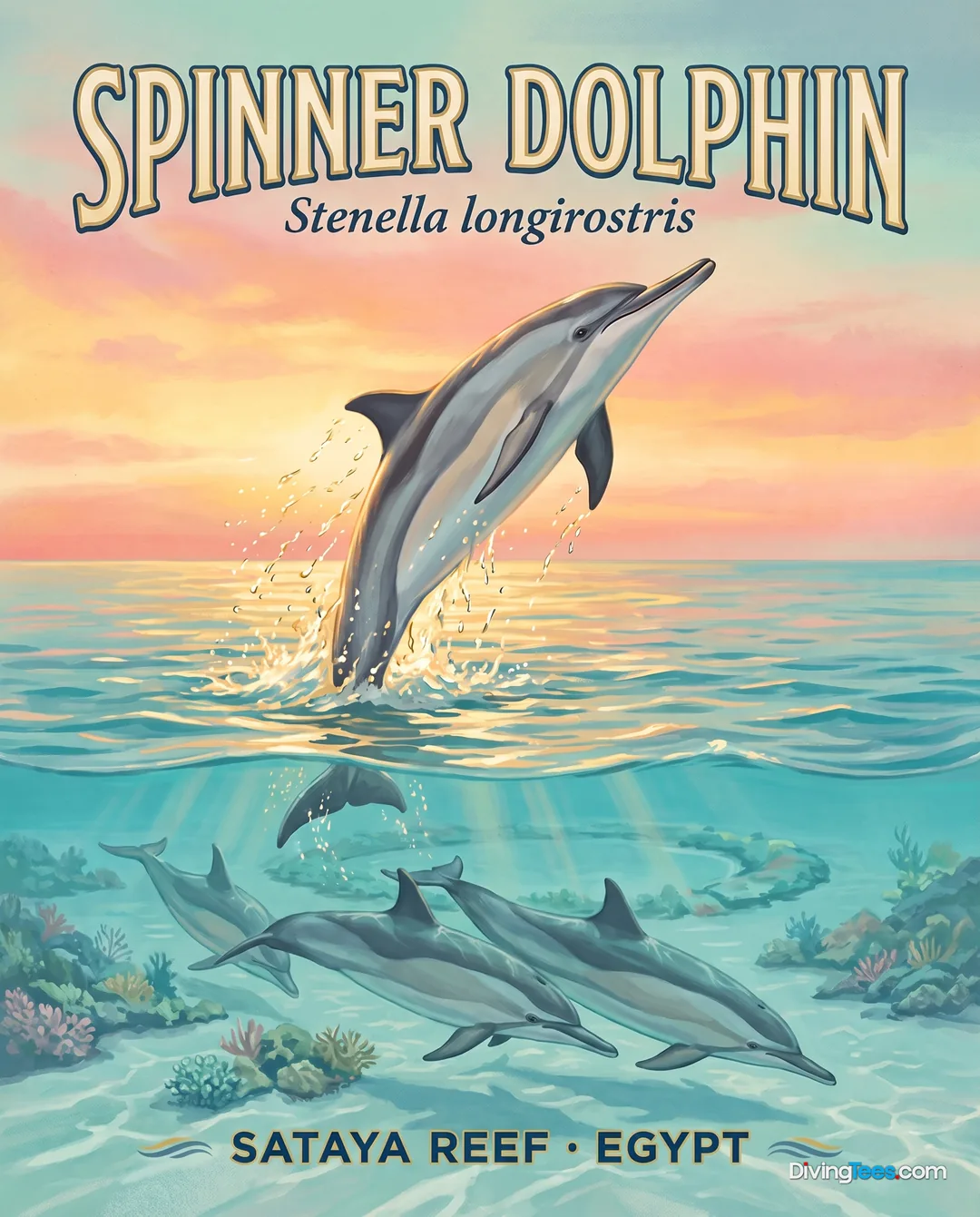
The common thread is the busy Red Sea reef: sea turtles, dolphins, anthias, giant morays, scorpionfish, butterflyfish and parrotfish are recorded across several sites, so the route offers both large movement and close-up reef life. The reason to stay alert is that the special encounters are not spread evenly. Shaab Ruhr Umm Gamar is the site associated with grey reef sharks, reef sharks, giant groupers, Napoleon wrasse, tuna and trevally, as well as groupers more generally. Shaab El Erg is the named site for barracuda and dolphins, where the open reef can change the scale of the dive. Shaab Sabina is the place for hard and soft coral, damselfish and small reef sharks in a shallow coral garden. At El Fanadir, the cleaning station on the pinnacle gives morays, scorpionfish and other reef fish a reason to gather in one small area. El Fanous West and East are protected, shallow dolphin and turtle territory, with rays recorded at both.
Who puts you in the water
Three dive instructors guide the programme, supported by a competent local and international crew. The crew speaks English, German, French and Swedish, making briefings accessible to a broad group, although a fixed guide-to-diver ratio is not given. After embarkation, the dive team gives a full safety briefing; before every dive, the dive master uses a whiteboard to draw the route, explain the site's strategy and point out what matters on that descent. The buddy system is mandatory, dive time is limited to 60 minutes, decompression dives are not permitted, and the maximum recreational depth is 40 metres. Royal Evolution supports technical and rebreather diving, but the Hurghada programme's sites and limits still govern the dive plan. Elba itineraries require at least 50 logged dives. Oxygen, DAN emergency kits, an AED, oxygen bank tanks and a Wenoll rebreather are carried on board. Every diver also receives an orange SMB, whistle, mirror and Nautilus Lifeline GPS/VHF locator attached to the BCD.
The dive deck and the gear
The dive deck is arranged for divers who bring real equipment. Each guest has an individual locker, and the area has 28 lockers in total, a camera station with three racks and air guns for drying, separate rinse tanks for dive gear and cameras, fresh-water showers, and charging lockers with 220V and 110V sockets. The regular cylinders are 12-litre aluminium tanks for air or nitrox, with DIN and INT valves; 15-litre aluminium tanks and 10-litre stage tanks can be rented, and adaptors are available. High-pressure compressors fill the tanks between dives, while dedicated nitrox compressors support mixes from 22% to 40%; technical facilities include booster support and Trimix and oxygen filling. Rental equipment is available, including complete sets, regulators, BCDs, wetsuits, masks, fins, computers, torches and 15-litre tanks. The water-level platform has hand-held showers and rinse tanks, and tenders support the dives.
Between dives
Between dives, the shaded dive area is the practical centre: equipment stays in its locker, cameras can be rinsed and dried, and batteries go to individual charging lockers rather than being left in cabins. The upper decks then give the day two different speeds. There is a shaded outdoor area for sitting in wet gear and a sundeck with a jacuzzi when the priority is simply heat, air and a place to stretch out. The air-conditioned saloon is better for editing images, reading or escaping the midday glare; it has a video library, games and books rather than only a bar and television. During sailing sections, that separation is valuable. A diver can remain close to the working deck, move indoors to cool down, or disappear upstairs for quiet without having to leave the boat.
A day on board
The day starts before the first descent, with the dive briefing and the equipment already waiting in each diver's locker. The first dive is followed by breakfast or a snack, then the boat and crew reset the deck for the next entry. Lunch, another surface interval and a third dive shape the middle of the day; depending on the itinerary, a fourth dive or a night dive follows after dinner. The exact order changes with the site, weather and sailing plan, but the working rhythm does not: brief, dive, rinse, eat, rest, repeat. During the longer surface intervals, divers move between the shaded deck, the saloon and the upper decks, while cameras dry and batteries charge. When the boat sails at night, the deck becomes quieter and the cabins matter more. A night dive, where the itinerary allows one, gives the day a final equipment check and a different reef before sleep.
What you eat aboard
Meals run as a full-board buffet with Western and local Egyptian dishes, snacks between meals and after dives, and non-alcoholic drinks, water, tea and coffee. The sample menus show the range more clearly than a label: omelettes, pancakes and oriental breakfast dishes in the morning; soups, salads, rice, vegetables, pasta, chicken, beef and fresh fish through the day; and desserts such as basbousa, kunafa, panna cotta and fruit tart. Pizza, calzone, sambousek and other snacks appear between dives, when a full plate would be too much but a diver still needs food. Vegetarian and vegan choices are available, as are wine with dinner and other alcoholic drinks separately. The table is built for 24 guests, which matters on a four-dive day: meals arrive as the practical reset between equipment checks, briefings and the next entry into the water.
Nights at sea
The 12 cabins are air-conditioned and have private bathrooms, so the night is more private than on a basic safari boat. Standard Twin Cabins are on the lower deck; the Double Suites and Twin Suites are on the main deck and have panoramic views. Each cabin has a desk and chair, storage, a bar fridge, a safe, a television and individual climate control, with towels and bathrobes in the bathroom. That is useful after a long day, when a diver wants to shut the door, dry out and sleep rather than remain in the saloon. The boat's soundproofing is meant to limit engine noise and vibration, but a liveaboard is still a working vessel: machinery, movement and night sailing remain part of the setting. Main-deck cabins give the more open outlook; the lower-deck standards keep the same en-suite arrangement at a different position in the boat.
Standard Twin Cabin
Double Suite
Twin Suite
What to know before boarding
Special Wrecks departures leave from Hurghada and return either to Hurghada or, on some trips, to Port Ghalib. Hotel transfers are included, while airport transfers are optional. Check the departure instructions for where and when to meet the boat. Arriving the night before is sensible for an early embarkation or a flight that could be delayed.
Deck plan
- Length
- 39 m
- Maximum number of passengers
- 24
- Number of cabins
- 12
- Number of bathrooms
- 12
- Engines
- 2 × CUMMINS KTA 38 – M1
- Cruising speed
- 12 knots
- Website
- royalevolution.com ↗
Hello, I'm Marina, DivingDeal.com's AI assistant. I answer in detail about hotels, dive centres and liveaboards.
Thinking about the whole trip and the flights? Talk it over with Edith →
Marina is an AI. Some links are affiliate links: DivingDeal may earn a commission, at no extra cost to you. Bookings are made with the partner.