
Cinderella Eldawley Diving Center
Google 4.9/5 (2,954 reviews)
less than 1 km away as the crow flies
Sharm El Sheikh · Egypt · Red Sea
Max. depth · 30 mDescend into the Red Sea's history at Amphoras, where a 15th-century Turkish wreck lies embedded in the reef, its anchor still holding firm at 25 metres.
For subtitles in English: start the video firstthen click the gearat the top right of the video, select “Subtitles/CC”, then “Auto-translate” and choose “English”.
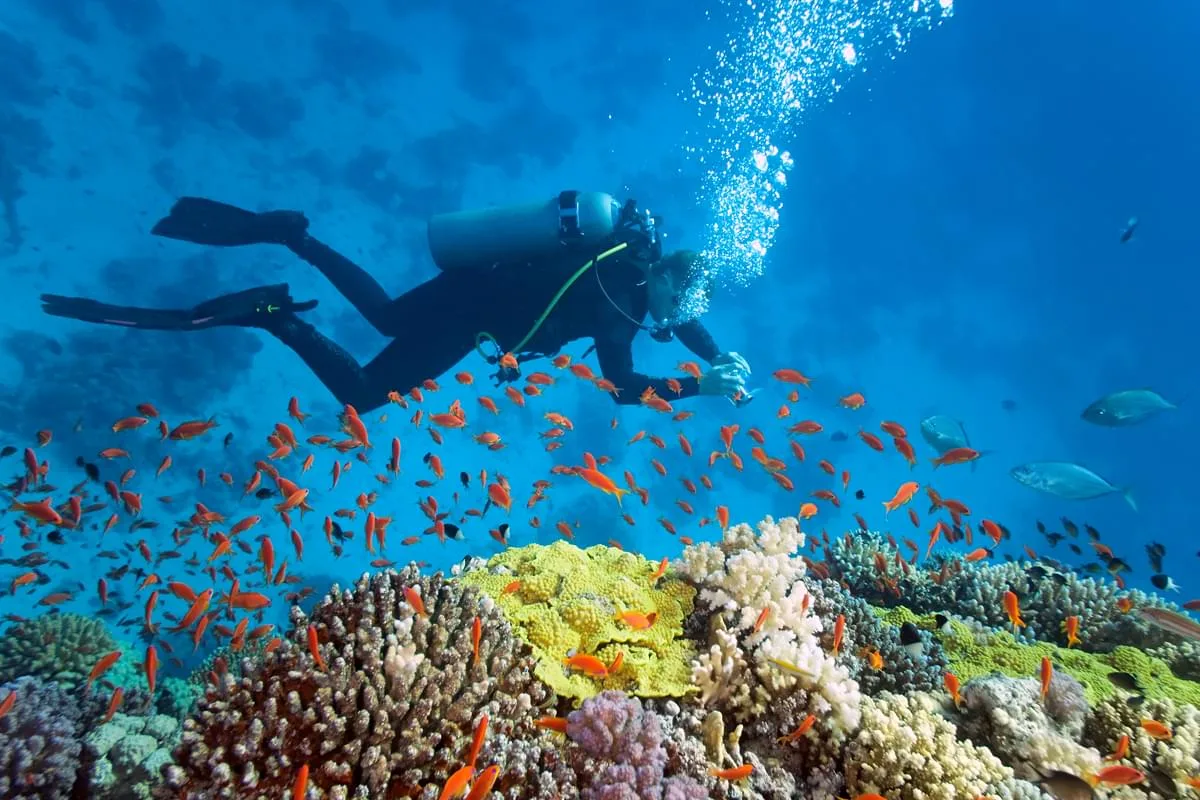
Diving Amphoras places you on a sandy slope that begins its gentle decline around 12 metres, located to the southwest of Tower. As you drift down, you'll find the slope punctuated by vibrant coral pinnacles, each a miniature ecosystem in itself. These formations are cloaked in diverse coral species, creating sheltered havens for resident marine life, particularly large schools of glassfish (Ambassidae), which shimmer and move as one among the branches.
The distinctive feature of this site, and what gives it its name, is a 15th-century Turkish shipwreck whose original anchor remains firmly lodged in the reef at approximately 25 metres. This ancient artifact serves as a tangible link to a bygone era of maritime trade, offering a unique focal point for your dive. The amphorae, cargo from this vessel, are scattered nearby, testament to the ship's final journey and now an integral part of the reef's topography.
Beyond the wreck, as you continue your exploration towards the south, the sandy slope begins to transition into a more dramatic drop-off. Here, the underwater landscape changes, revealing impressive formations of large gorgonian fans. These delicate filtering organisms cling to the deeper sections of the wall, their intricate structures swaying gently with any subtle water movement, adding a different dimension to the coral diversity found higher on the slope.
This site is accessible from Diver Level 2. The minimum depth for the site is 12 metres, with the ancient anchor visible at approximately 25 metres. The currents in the wider Sharm El Sheikh area can vary from weak to very strong depending on the specific site, though no specific current information is available for Amphoras itself.
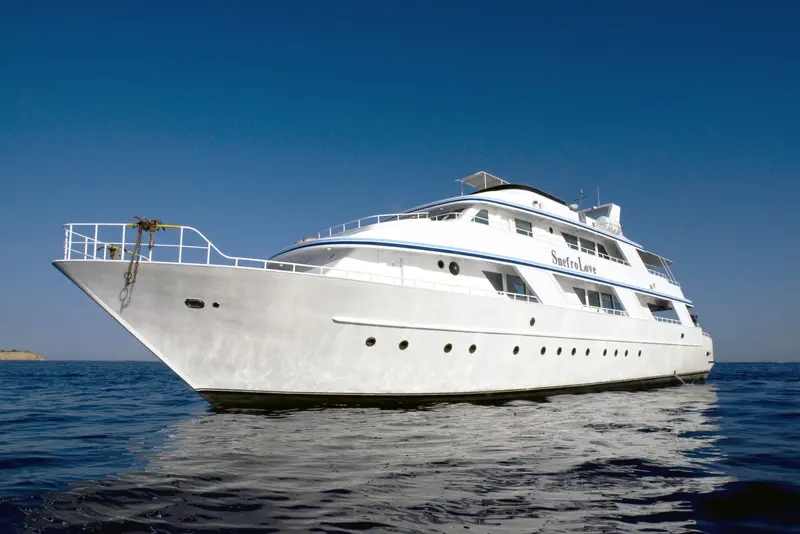
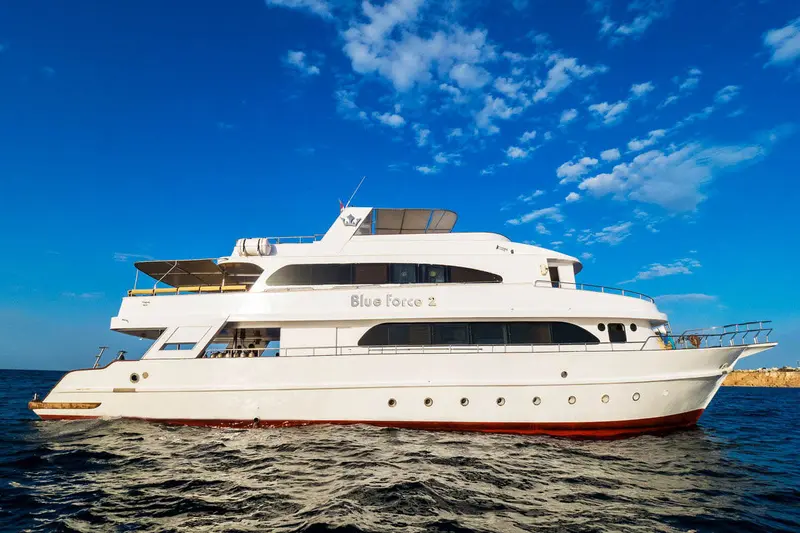
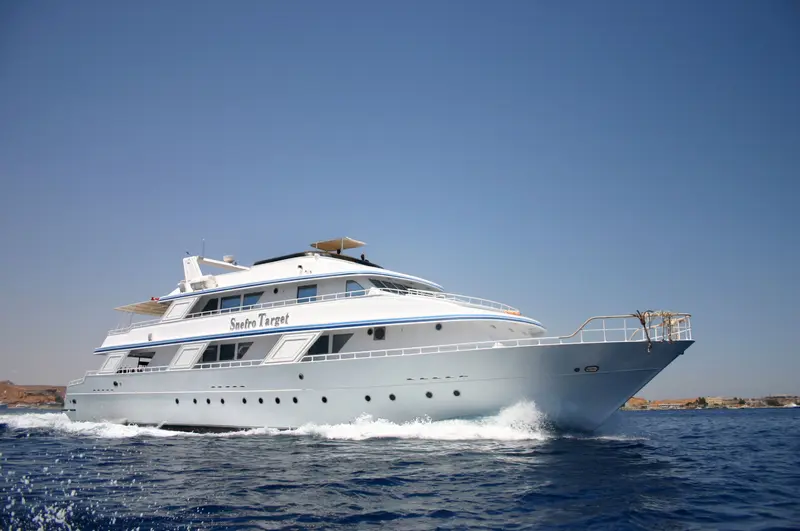
11 liveaboards depart from Sharm El Sheikh another way to explore the region, over several days at sea.
Amphoras is accessible from Diver Level 2, so you can consider it if you hold that qualification. The site starts at twelve metres on a sandy slope, while the ancient anchor lies around twenty-five metres. You can plan your route around the depth range and the features you want to explore.
At Amphoras, the sandy slope begins at twelve metres and the site reaches thirty metres. The original anchor from the fifteenth-century Turkish shipwreck is visible at approximately twenty-five metres. This gives you a choice between coral pinnacles on the slope and deeper wreck and drop-off features.
Currents around the wider Sharm El Sheikh area can vary from weak to very strong, depending on the specific site. At Amphoras, you should therefore be prepared for local conditions that may differ from other dives in the area, particularly while exploring the slope and southern drop-off.
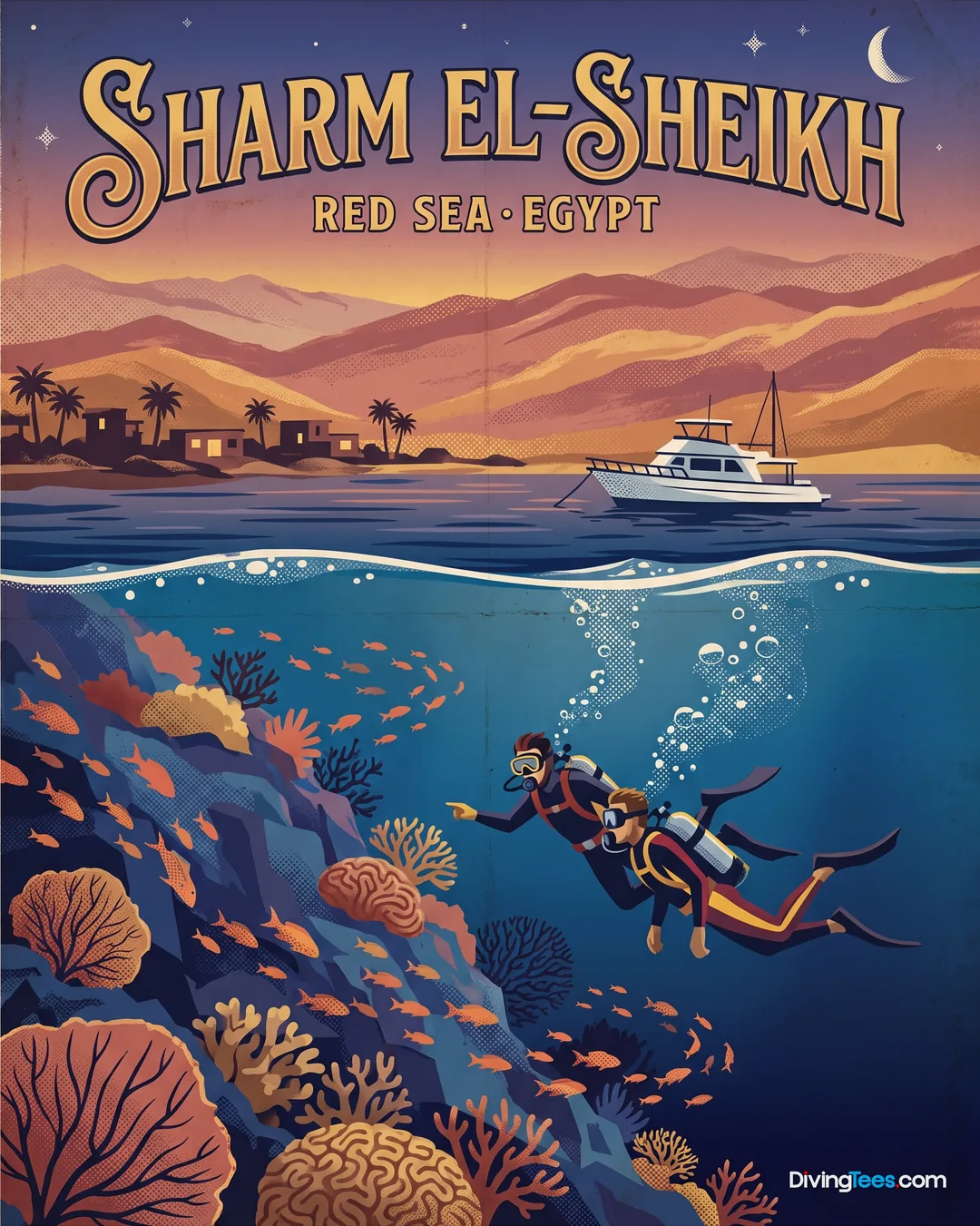
At Amphoras, you can explore coral pinnacles on a sandy slope, schools of glassfish sheltering among the corals, and remains of a fifteenth-century Turkish shipwreck. The original anchor rests around twenty-five metres, while large gorgonian fans appear on the southern drop-off.