
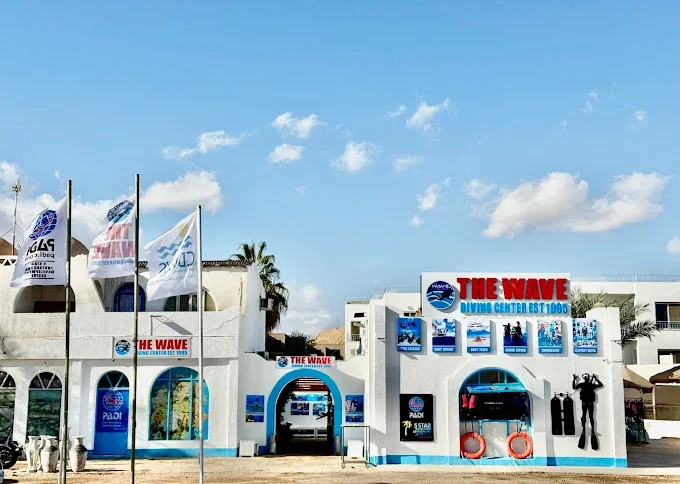

The Wave Diving Center
Google 4.9/5 (1,377 reviews)
25 km away as the crow flies
Sharm El Sheikh · Egypt · Red Sea
Max. depth · 30 mThe SS Dunraven offers a unique inverted wreck dive, blending historical exploration with a vibrant artificial reef and an adjacent natural coral wall.
For subtitles in English: start the video firstthen click the gearat the top right of the video, select “Subtitles/CC”, then “Auto-translate” and choose “English”.
The SS Dunraven is the remains of an 80-metre British merchant steamship, launched in 1873. It met its end in 1876, striking the reef at Beacon Rock due to a navigation error while traveling from Bombay to Liverpool. The wreck now rests upside down on a sloping seabed at a maximum depth of 30 metres, discovered in 1977. Its inverted position makes for a distinctive dive, allowing divers to readily access the internal structures through what would have been the ship's underside. The 79-meter hull is now so integrated with the surrounding reef that distinguishing between natural formation and wreck requires a closer look, presenting a unique diving profile for exploration.
Your descent to the SS Dunraven brings you onto the wreck’s upturned hull. The ship's bow invites entry, leading into cavernous spaces where light filters through the structure. Entry often begins with an inspection of its rudder and propeller, sitting exposed on the hull. These elements, along with the hull itself, are heavily encrusted with coral growth, blurring the line between the wreck and the natural reef and attracting diverse marine inhabitants. Inside, you will encounter dense schools of glassfish (Ambassidae), their shimmering bodies reflecting ambient light, often accompanied by batfish (Platax). The original cargo of Indian spices and cotton was lost upon sinking, but the large boilers remain as prominent features near the entry points, offering a glimpse into the ship's past propulsion.
Further into the wreck’s interior, you will observe the enormous boilers, still largely intact, serving as a stark reminder of the age of steam engines and the power that once propelled this ship. These large, cylindrical structures are now encrusted with coral, providing habitat for various smaller marine species. Swimming through the hull feels akin to entering a grand, submerged cathedral, where sunlight pierces through various openings, creating dramatic light beams within the structure. You may encounter remnants like old Hessian ropes and parts of wooden cargo boxes, offering tangible connections to its past life as a working vessel. The Dunraven’s accessible interior corridors, including the engine room, are relatively shallow, allowing you to explore its twisted metal and coral-covered beams.
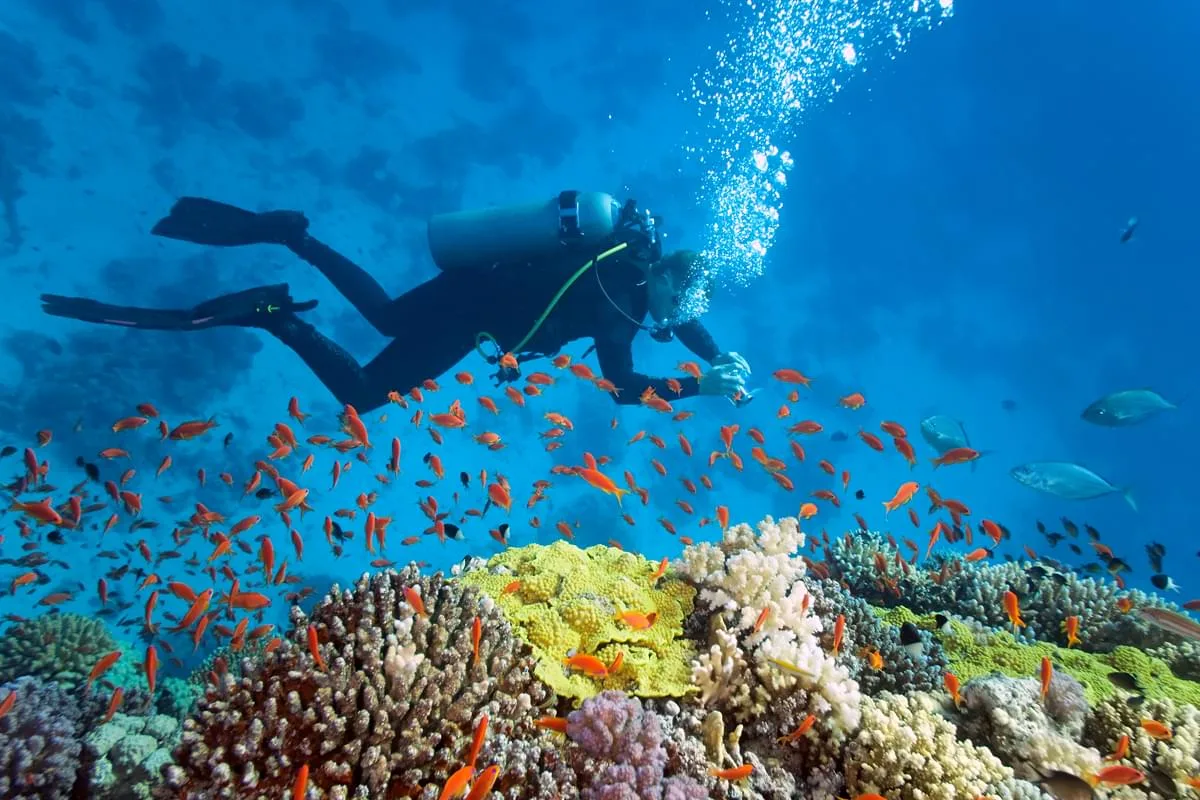
Moving towards the stern, the wreck transforms into a vibrant artificial reef. This section is entirely covered with soft corals, which have colonised the inverted metal hull over decades. These dense coral gardens provide shelter and feeding grounds for numerous smaller reef inhabitants, creating a stark contrast between the ship's industrial past and its current role as an ecosystem. The interaction of marine life with the ship's structure defines this part of the dive. As you explore the wreck, you will encounter schools of glassfish that shimmer within the more sheltered parts of the hull, creating dynamic living curtains. Look out for solitary barracudas patrolling the perimeter and the occasional crocodilefish camouflaged on the wreck's surfaces.
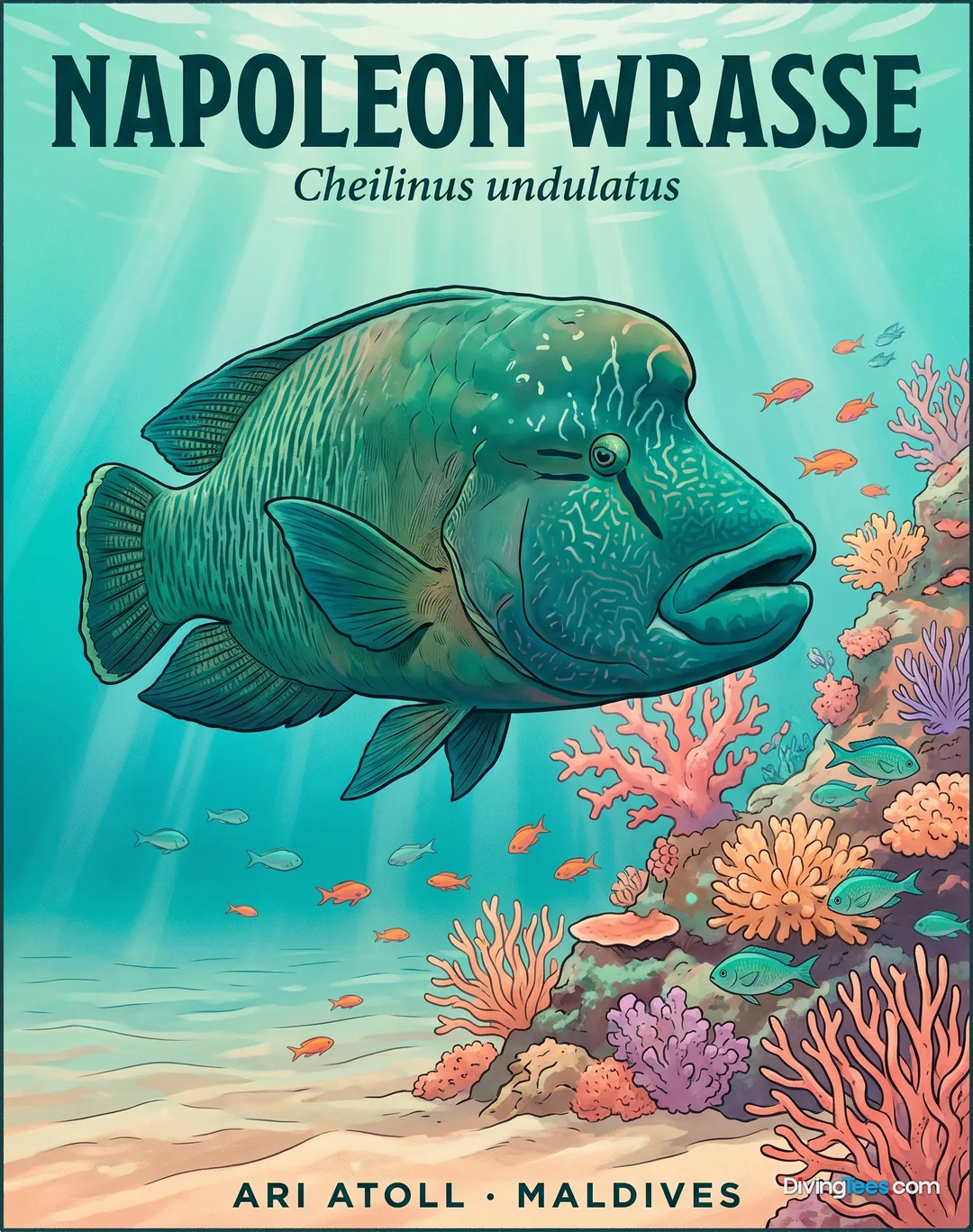
Scorpionfish are often perfectly blended with the encrusted metalwork, requiring keen eyes to spot them. The wreck’s transformation into a reef has attracted species like scorpionfish, often found camouflaged among the corals on the hull. Keep an eye out for Napoleon fish, recognizable by their distinctive forehead hump, and parrotfish, which are constantly grazing on the coral itself, contributing to the health of the reef system. Moray eels are also resident here, peering out from cracks and crevices within the wreck’s structure.
Beyond the wreck itself, the dive often continues to Beacon Rock, the very reef the Dunraven struck. This nearby coral wall is a healthy reef ecosystem in its own right. Here, you can observe a variety of marine life, including stonefish (Synanceia), which are masters of camouflage, blending seamlessly with the coral and rock formations. The combination of the wreck interior and the natural reef wall offers a varied dive profile within a single site. During your safety stop, typically performed on the shallow section of the reef, you can expect to encounter schooling yellow goatfish and groups of juvenile barracudas, along with stonefish.
The SS Dunraven is accessible from Open Water Diver level, with a maximum depth of 30 metres. However, the internal sections, particularly the engine room penetration and overhead environments, require appropriate training and experience for Advanced Open Water divers. Current conditions are generally mild, but currents in the Red Sea can vary, so always consult local dive guides. Visibility at the site is consistently good, often ranging from 15 to 25 metres, allowing for clear exploration of the wreck and its surrounding reef.
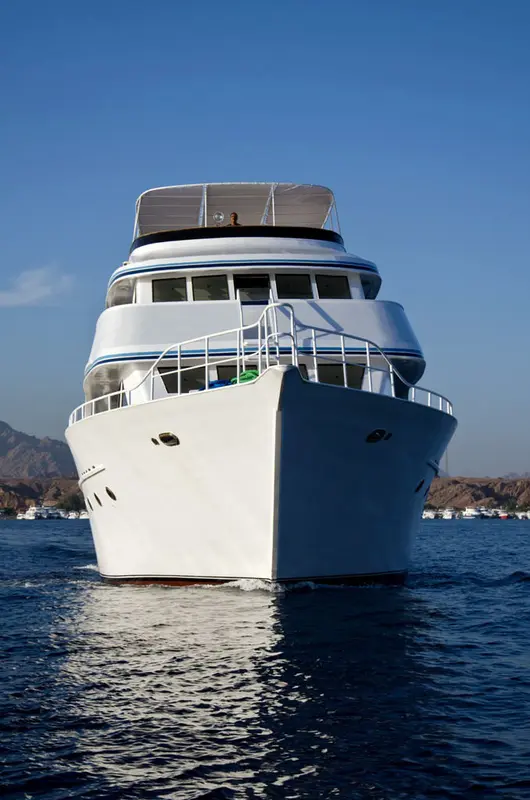
11 liveaboards depart from Sharm El Sheikh another way to explore the region, over several days at sea.
SS Dunraven is accessible to Open Water Divers. Exploring internal sections, especially the engine room penetration and overhead environments, requires appropriate training and experience for Advanced Open Water Divers. You should match your planned route to your certification, training, and experience before entering the wreck’s internal spaces.
SS Dunraven rests upside down on a sloping seabed, reaching a maximum depth of 30 metres. The wreck’s accessible interior corridors, including the engine room, are relatively shallow, while the site also includes the upturned hull, internal structures, and the nearby reef wall at Beacon Rock.
Conditions at SS Dunraven are generally mild, but currents in the Red Sea can vary. You should consult local dive guides before entering the water. Visibility is consistently good, often ranging from 15 to 25 metres, supporting clear exploration of the wreck and its surrounding reef.
At SS Dunraven, you can see intact steam engine boilers, coral-encrusted rudder and propeller, and large schools of glassfish and batfish inside the inverted wreck. The site also features soft corals, Napoleon fish, moray eels, barracudas, crocodilefish, scorpionfish, parrotfish, and stonefish near Beacon Rock.