
Sea Life Sharm Diving Center
Google 4.9/5 (1,615 reviews)
7.4 km away as the crow flies
Sharm El Sheikh · Egypt · Red Sea
Max. depth · 30 mThe Kormoran offers a compelling combination of wreck exploration and thriving reef ecology, making for a distinctive dive experience.
For subtitles in English: start the video firstthen click the gearat the top right of the video, select “Subtitles/CC”, then “Auto-translate” and choose “English”.
The Kormoran, a German cargo wreck built in 1963 in Rostock, met its end in August 1984 while transporting phosphate from Aqaba. An error in navigation caused it to collide with the Laguna Reef, part of Tiran Island. The impact was significant, tearing away much of its bow and opening large fissures along its port side, leaving the superstructure heavily damaged.
Today, the wreck lies on a sloping fringing reef plateau, making it accessible even in its shallower sections. The impact zone, with its damaged bow, begins at a depth of 3 meters. The vessel then slopes down, with parts of the hull becoming exposed further down the incline, reaching depths of 20 to 30 meters at its deepest points. Venturing along the wreck, you'll find parts of the hull still intact, with some areas offering accessible penetration. The excellent visibility here, often enhancing the sense of scale, allows light to penetrate many parts of the remaining structure. This combination creates a varied dive profile, moving from the shallower, heavily damaged sections to the deeper, more structurally complete areas.
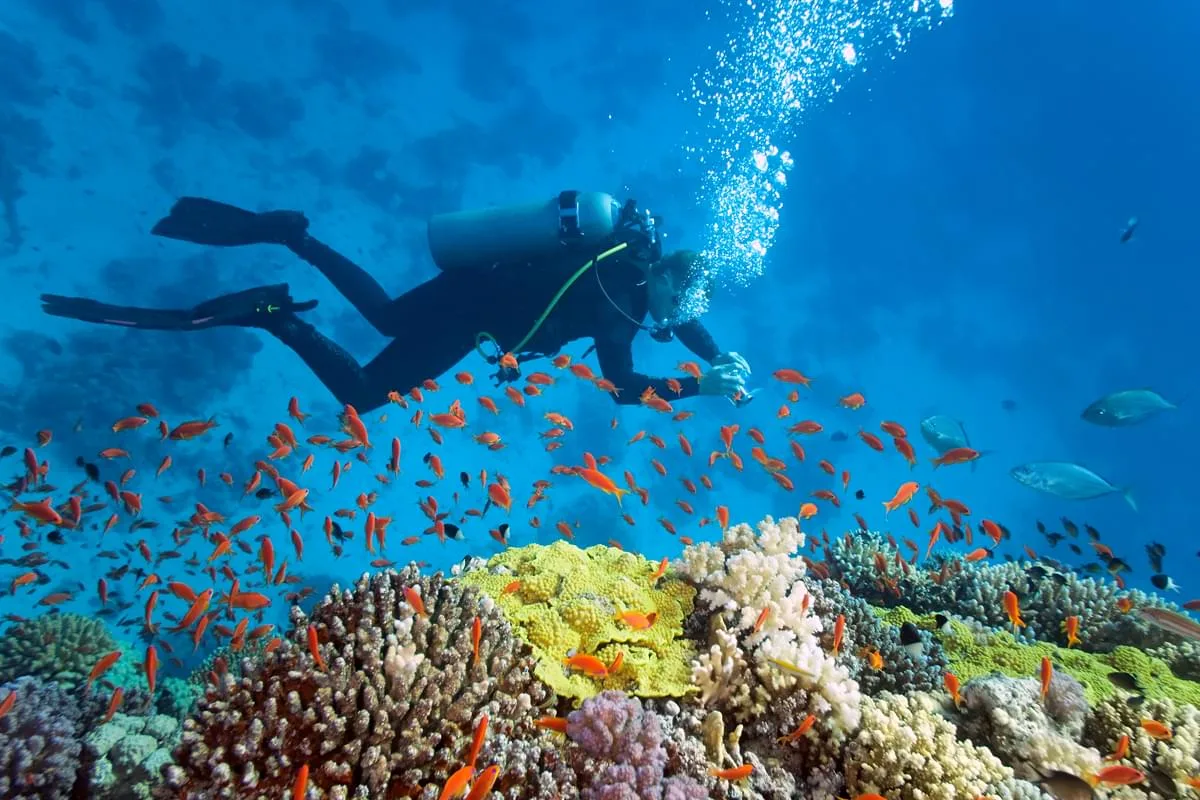
The Kormoran is set against a backdrop of a vibrant coral reef. Around the wreck, the surrounding seabed is covered with attractive coral formations, including extensive tabular corals on the shallower plateau. This living reef has integrated the wreck, with corals now growing directly on the metal, drawing in a diverse range of marine life.
Fish life around the Kormoran is consistent. You can expect to see large schools of fusiliers and snappers moving around the structure. Giant morays often hide within the wreck's crevices. Keep an eye out for scorpionfish camouflaged on the deck and barracudas, tuna, and other large pelagics patrolling the surrounding blue.
While the shallower sections offer calm conditions for exploring the coral-encrusted wreck, the site's exposed location means planning your dive during optimal weather is crucial. When conditions are favourable, the Kormoran offers a compelling combination of wreck exploration and thriving reef ecology, making for a distinctive dive experience. Unlike many of the deeper, more accessible wrecks in the region, the Kormoran demands calm seas for safe diving operations. Approaching the Kormoran, you'll immediately note its position within a zone known for potentially strong currents; navigating these water movements is part of the dive profile.
The structure of the wreck itself, while not as intact as some of the more famous Red Sea casualties, still offers intriguing sections to explore. You'll trace the outline of its hull, observing how the marine environment has begun its inexorable claim, slowly transforming steel into a vibrant habitat. The visibility around the Kormoran can be lower than typical for the Red Sea, adding an atmospheric layer to the dive. This reduced clarity, combined with the dynamics of the current, sculpts a more intimate experience of the wreck. You are forced to focus on the immediate details as you move along the structure, perhaps spotting subtle features that might be overlooked in gin-clear waters. The dive becomes an exercise in careful observation and current management.
Being situated in the northern shallows of Tiran, the Kormoran is a site less frequently visited than the more prominent reefs or deeper wrecks. This relative solitude can enhance the sense of discovery, offering a more personal encounter with the submerged history. The encounter with the Kormoran is less about piercing through intact cargo holds and more about appreciating the skeletal remains of a vessel that has surrendered to the sea, now hosting a nascent ecosystem.
The Kormoran Wreck is accessible from a minimum depth of 3 meters and reaches down to 30 meters, with the main exploration zone typically between 12 and 30 meters. Due to its exposed location, diving conditions are highly dependent on sea state, so it should only be dived when conditions are good and during calm sea conditions. It is approachable for intermediate divers, though reaching the deeper sections and attempting wreck penetration requires advanced certification. Diving the Kormoran requires a DIVER LEVEL 2 certification due to the variable and potentially strong currents that can be encountered. Divers should also be prepared for periods of lower visibility, which can add to the complexity of navigation around the wreck, though visibility is generally excellent.
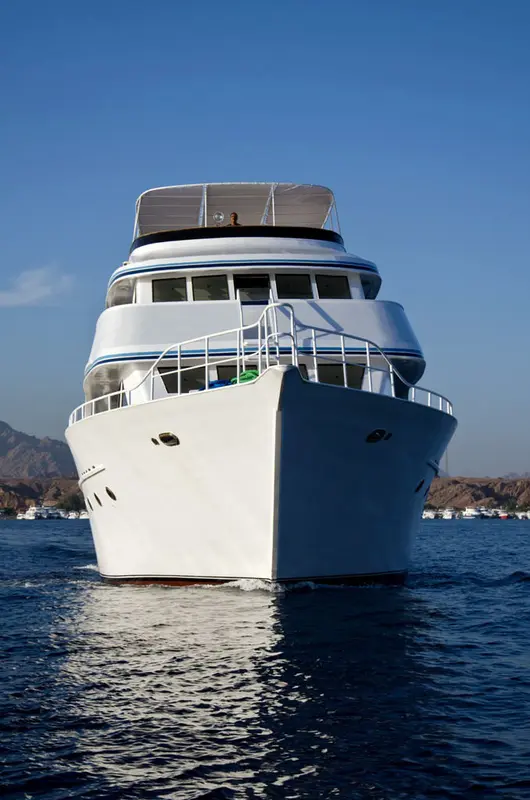
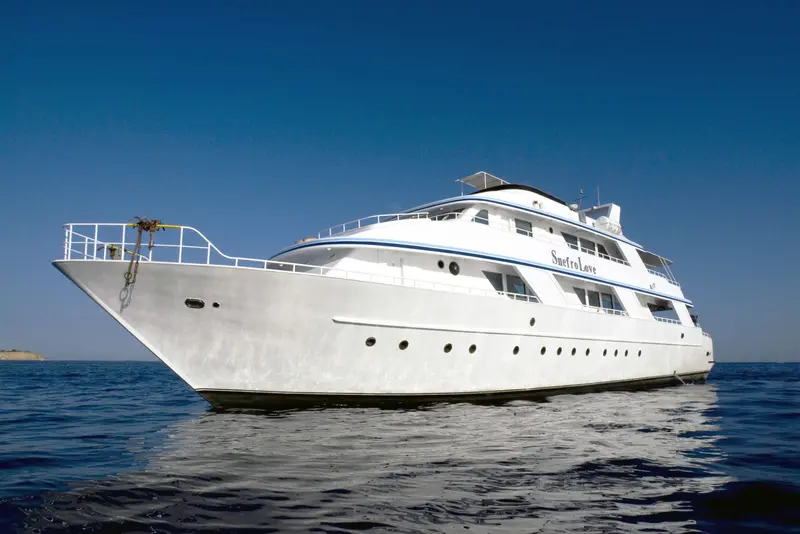
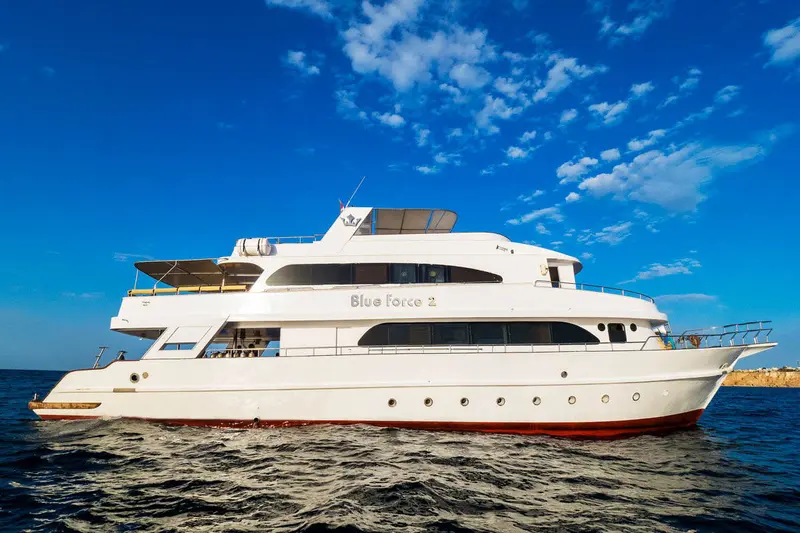
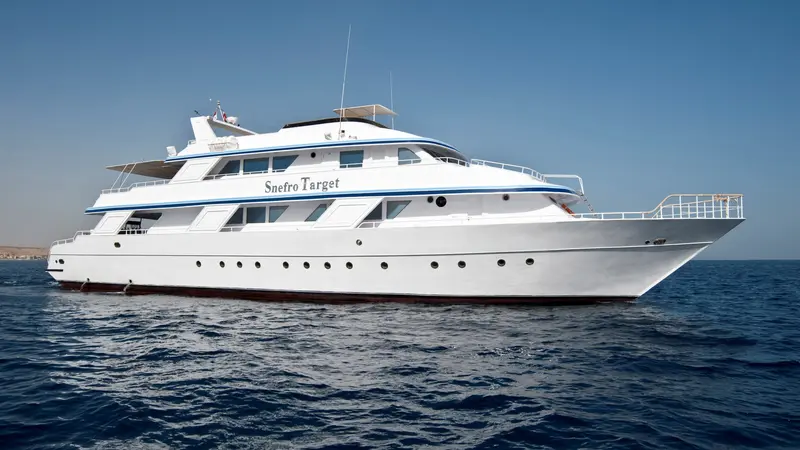
11 liveaboards depart from Sharm El Sheikh another way to explore the region, over several days at sea.
You should dive Kormoran Wreck only when sea conditions are good and the sea is calm. Its exposed location makes conditions important for planning. Visibility is generally excellent, although periods of lower visibility can occur and may make navigation around the wreck more complex.
Kormoran Wreck is approachable for intermediate divers with Diver Level 2 certification. The site begins at three metres and reaches thirty metres, with the main exploration zone between twelve and thirty metres. Reaching deeper sections and attempting the accessible wreck penetration areas require advanced certification.
At Kormoran Wreck, you can encounter variable and potentially strong currents because the site is exposed and lies in a zone known for water movement. You need to include current management in your dive, while periods of lower visibility can add further complexity when navigating around the structure.
At Kormoran Wreck, you can explore a German cargo wreck built in 1963, including its collision point at three metres, damaged bow, exposed hull and parts suitable for penetration. Coral formations cover the reef and metal, while fusiliers, snappers, giant morays, scorpionfish, barracudas and tuna inhabit the area.