

Sea Life Sharm Diving Center
Google 4.9/5 (1,615 reviews)
1.9 km away as the crow flies
Sharm El Sheikh · Egypt · Red Sea
Max. depth · 30 mDive into maritime history with the colossal Million Hope, the largest and one of the younger wrecks in the Egyptian Red Sea, offering an unparalleled wreck diving experience.
For subtitles in English: start the video firstthen click the gearat the top right of the video, select “Subtitles/CC”, then “Auto-translate” and choose “English”.
The Million Hope, a colossal Japanese cargo ship launched in 1972, offers an unparalleled wreck diving experience in the Egyptian Red Sea. Stretching over 170 meters, it is considered the largest and one of the younger wrecks in the region, having met its fate on June 19, 1996. En route from Aqaba to Taiwan with a cargo of potash and phosphorus, chemical nutrients intended for fertilizer production, she struck the reef at Nabq, just north of Sharm El Sheikh, where she now lies upright on the seabed. The sheer scale of this freighter dominates the underwater landscape, with its superstructure partially visible above the waterline, a testament to its structural integrity despite the collision.
Your descent leads directly to the wreck, allowing for clear orientation and an immediate appreciation of its immense size. The hull reaches a maximum depth of 30 meters, while the upper decks are much shallower, offering varied depth profiles and allowing for longer bottom times in certain sections. One of the initial points of interest is a significant impact crack towards the bow, the result of the vessel's collision with the reef. This fracture provides a notable entry point into the ship's empty cargo holds, which, now devoid of their original loads, offer an open and relatively clear environment for penetration. These areas provide a sense of scale within the ship's interior without being overtly complex.
Moving along the exterior, you will encounter the ship's massive single propeller, a common focal point for photographers, situated at the deepest point of the wreck at 30 meters. While the rudder is reportedly missing, the exposed propeller blades provide an excellent reference point for depth and a tangible sense of the vessel's propulsion system. From here, a complete circumnavigation of the wreck is possible, allowing a comprehensive view of its imposing structure. Above the propeller, the stern deck still retains much of its original equipment, including a large mooring winch. An open deck hatch nearby provides a secure route leading deeper into the ship, allowing access to the engine room for those prepared for inner exploration, requiring appropriate training and gas management.
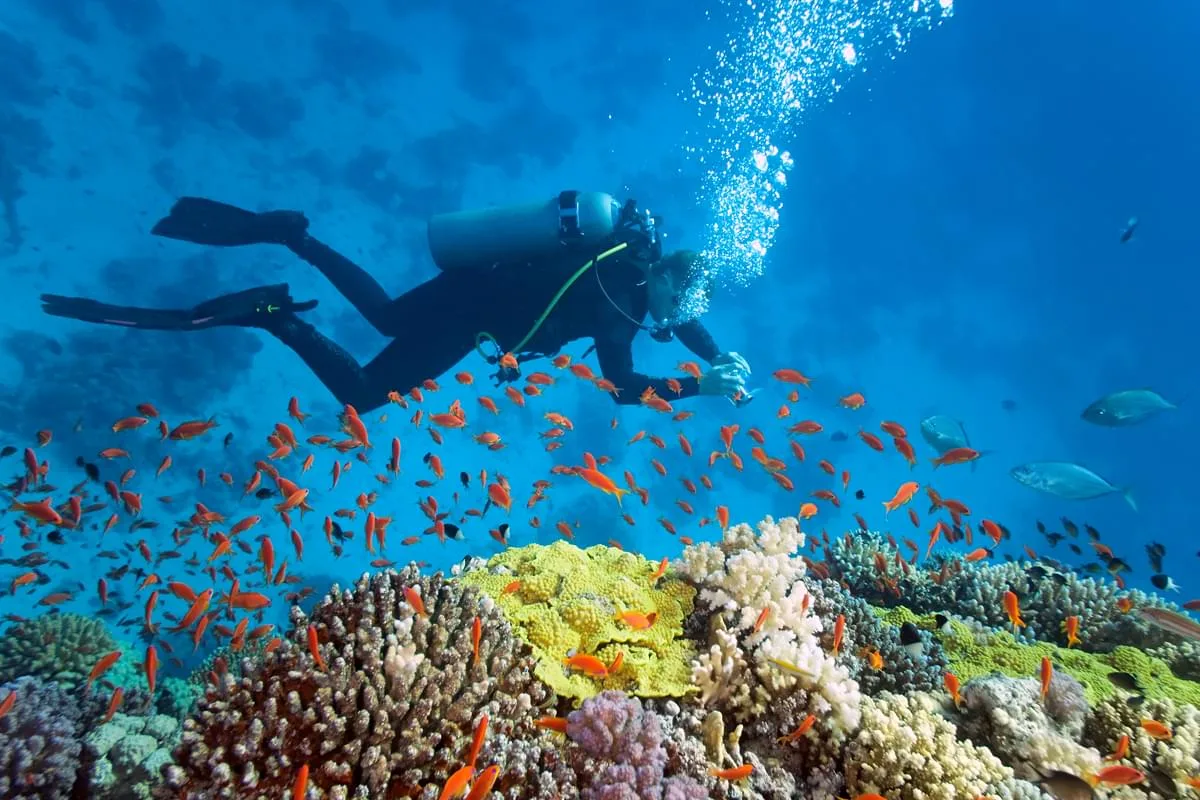
While the wreck's primary appeal is its structure and penetrable sections, marine life has begun to colonize it extensively. Groupers (Epinephelus spp.) take refuge in the deeper sections, their territorial nature evident as you approach. Schools of batfish (Platax orbicularis) often congregate around the upper decks, moving gracefully through the water column, adding a dynamic element to the static steel structure. Closer inspection of the structure reveals smaller, more intricate life. Glassfish (Ambassidae) are often found in dense schools within sheltered areas, their reflective scales catching the light. Lionfish (Pterois miles), with their distinctive venomous spines, are common inhabitants, often camouflaged against the wreck. Nudibranchs add splashes of color to the monochrome metal, their intricate forms a reward for a detail-oriented diver.
The journey to the Million Hope is often undertaken by specialized rigid-hulled inflatable boats (RIBs) due to its somewhat remote location near the Straits of Tiran, north of Tiran on the Nabq coast. This means fewer divers, offering a more intimate encounter with this sleeping giant. The Million Hope's exposed location means that weather and sea conditions significantly dictate dive accessibility. Its unprotected position can lead to periods where diving is not viable, making it a site with a less common dive schedule. When conditions are favorable, the wreck offers opportunities that are distinct from the more frequently dived sites in the region.
The Million Hope Wreck is accessible down to a maximum depth of 30 meters, with the propeller at 30m and the stern propeller at 24m. This dive requires an Advanced Open Water certification (or DIVER LEVEL 2) due to potential deeper sections and wreck penetration. Conditions are heavily dependent on weather and sea state, as the site's unprotected location can expose it to waves and surge. Visibility is generally good but can fluctuate with surface conditions.
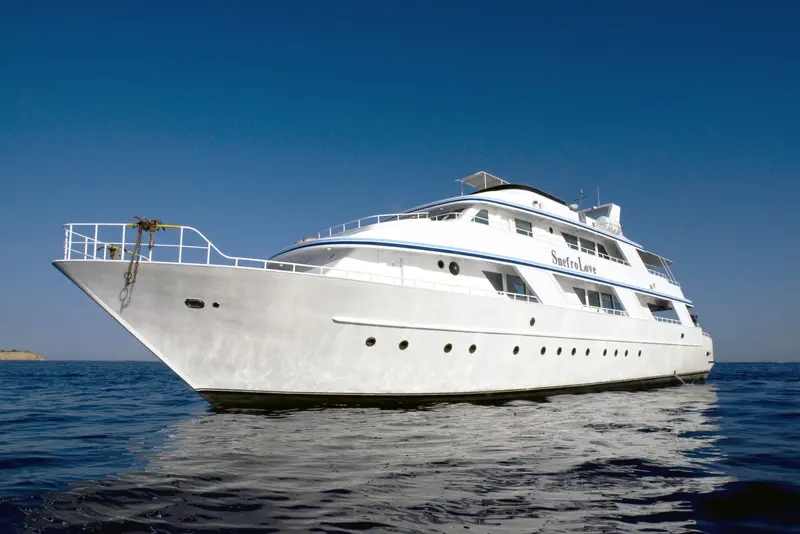
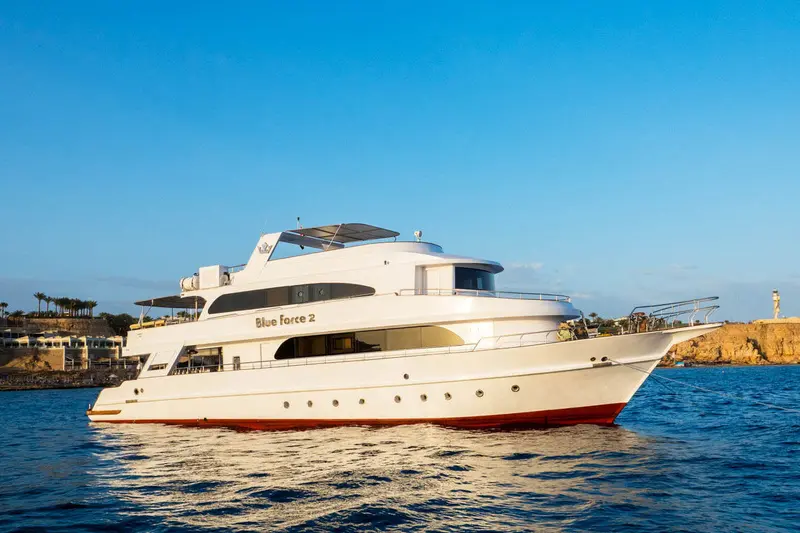
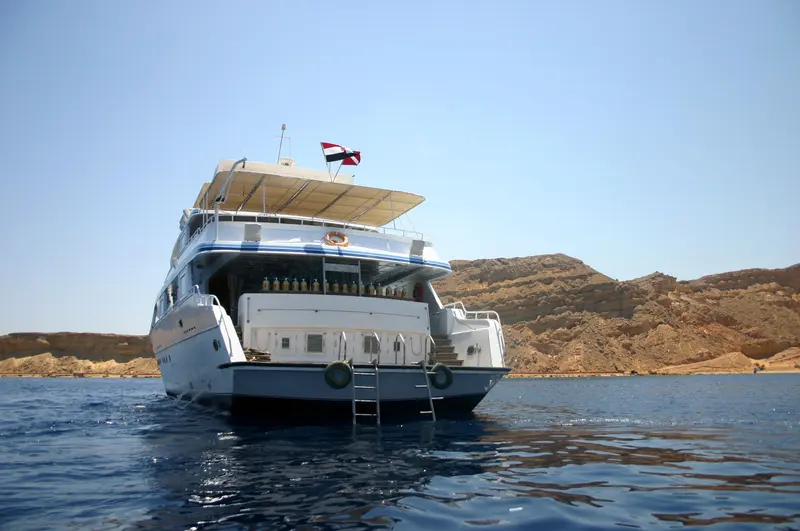
11 liveaboards depart from Sharm El Sheikh another way to explore the region, over several days at sea.
You can dive Million Hope Wreck when weather and sea conditions are favorable. Its unprotected location can bring waves and surge, and surface conditions may affect visibility. Because accessibility depends heavily on these conditions, the site has a less common dive schedule. Specialized RIBs often provide access from near the Straits of Tiran.
You need an Advanced Open Water certification or DIVER LEVEL 2 for Million Hope Wreck because parts of the site are deeper and the wreck offers penetration opportunities. Entering the engine room also requires appropriate training and gas management. The accessible cargo holds are reached through an impact crack and are relatively clear.
Million Hope Wreck reaches a maximum depth of 30 meters. The propeller is at 30 meters, while the stern propeller is at 24 meters. Upper decks are much shallower, creating varied depth profiles and allowing longer bottom times in some sections. The hull lies upright on the seabed.
At Million Hope Wreck, you can explore a Japanese cargo ship over 170 meters long, including empty cargo holds, the massive single propeller, a mooring winch, and the engine room for prepared divers. Marine life includes groupers, batfish, lionfish, glassfish, and nudibranchs around the wreck’s structure.