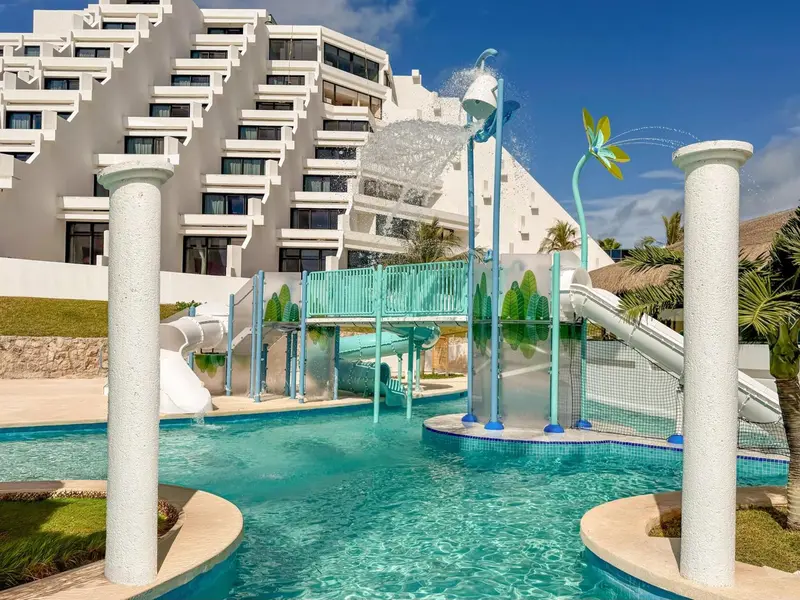
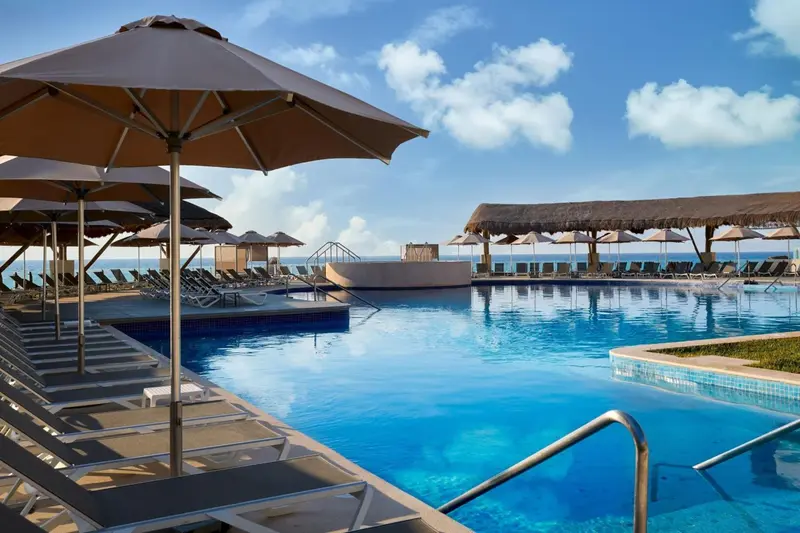
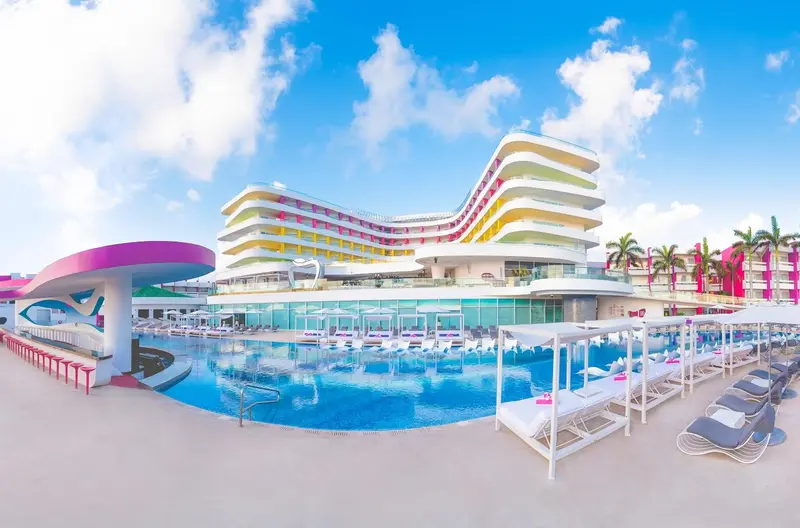
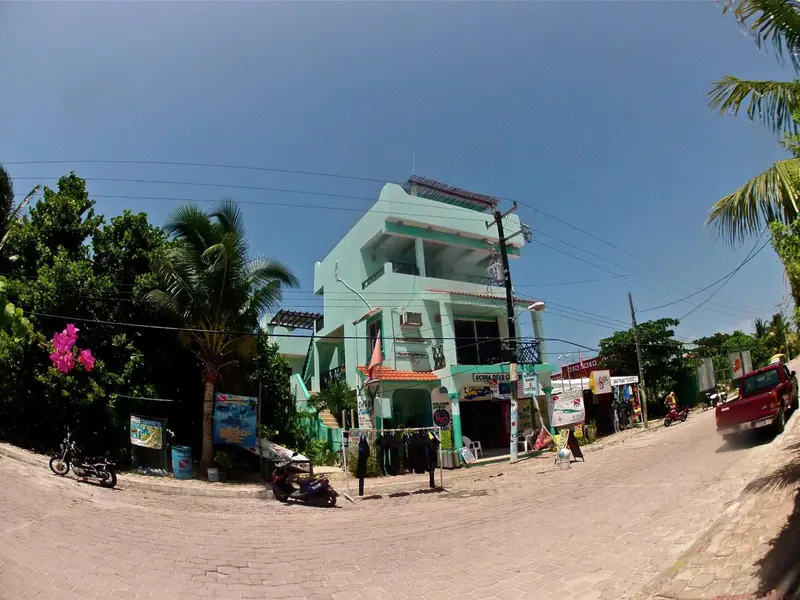
 Dive centre in the hotel
Sea Hawk Suites
Google 4.9/5 (775 reviews)
The dive centre
Sea Hawk Divers
PADI · SDI
Google 4.9/5 (804 reviews)
Dives: Manchones #1, Manchones #2, MUSA (Underwater Museum)
Mexico · Americas
MUSA sculptures, shallow Caribbean reefs, Isla Mujeres wrecks and seasonal whale-shark encounters make Cancún more than a beach holiday with a tank.
For subtitles in English: start the video firstthen click the gearat the top right of the video, select “Subtitles/CC”, then “Auto-translate” and choose “English”.
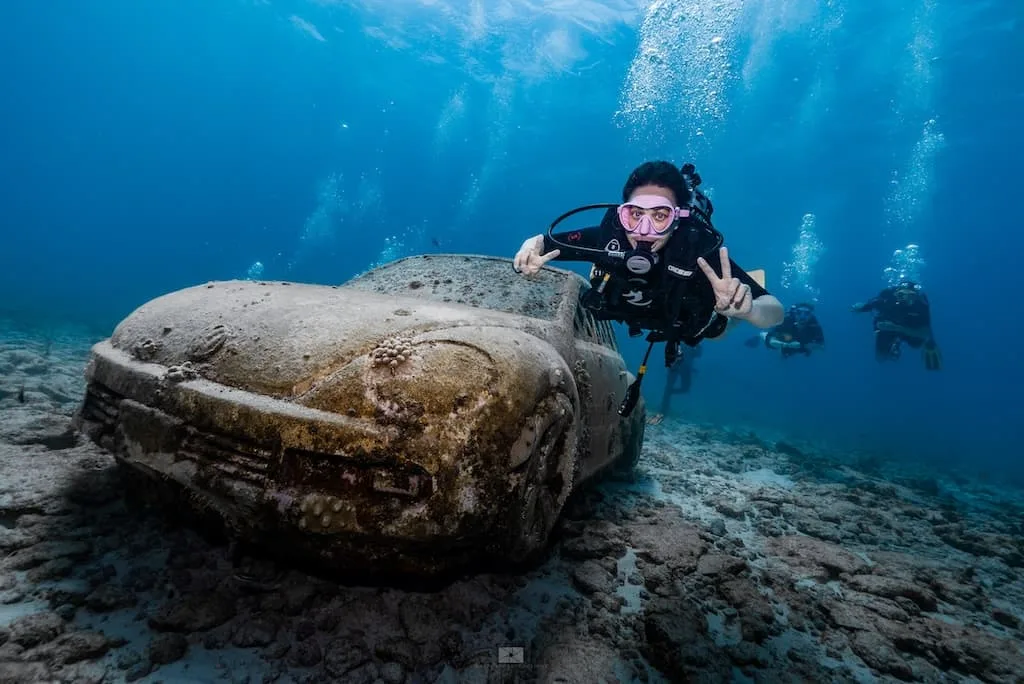
At MUSA, rows of submerged sculptures turn a shallow boat dive into an underwater gallery, while Punta Cancún, Punta Nizuc and Isla Mujeres provide natural reef terrain. Cancún suits divers who want several kinds of day out without changing base: straightforward reef profiles, a museum, wrecks and island diving all sit within reach of the same hotel area. It is also workable for mixed groups, with beaches, Isla Mujeres and cultural excursions keeping non-divers occupied.
Most diving starts from a boat and runs across shallow to moderately deep reefs near Cancún, the artificial structures of MUSA, wrecks and the reefs around Isla Mujeres. Punta Cancún and Punta Nizuc are convenient introductions, but the water is not automatically still because current changes around points, reef passages and exposed sites. Conditions are usually weak to moderate, with occasional dives becoming more demanding. Visibility commonly falls between 15 and 30 metres, although fronts, storms, swell and run-off can stir the sand. Isla Mujeres is a proper maritime outing rather than an extension of a local reef dive, with the crossing and channel conditions shaping the day. This is not Cozumel-style diving built around long drift dives along a dramatic wall. It is a succession of boat trips with different degrees of exposure, best judged on the morning.
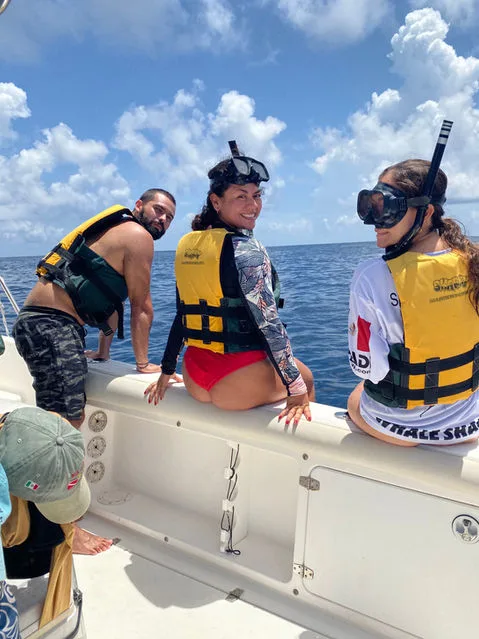
The underwater subjects here are as much built as geological. MUSA’s sculptures stand on the seabed in a marine setting, but they are an artificial museum, not a naturally healthy reef, and should be treated as artwork rather than handholds. Natural reef sections at Punta Cancún, Punta Nizuc and Isla Mujeres bring the living reef environment, while wrecks add enclosed edges, structure and a different route through the water. The standout seasonal encounter is the whale shark. From May to September, dedicated excursions head out for surface or snorkelling encounters, usually as a separate day from conventional scuba diving. Expect a boat-based wildlife trip, not a guaranteed whale-shark dive, and do not confuse it with the reef programme around Cancún.
November to April is generally the most settled window, with more regular winds and sea conditions for boat departures. Visibility is usually strongest from December to April, although a winter front can temporarily stir the sand. September and October are the awkward months because the cyclonic period, heavier rain and sudden storms can interrupt trips or make the sea less predictable. The late-summer rainy season is also when whale-shark excursions are available, mainly from May to September, so the choice is between steadier reef logistics in winter and a separate seasonal wildlife outing in warmer months.
Cancún works for newly qualified divers as well as experienced visitors, provided the guide matches the site to the day’s current and sea state. Start with a shallow reef or MUSA before moving to a wreck or a more exposed Isla Mujeres site. PADI, SSI and BSAC qualifications fit the ordinary marine diving here. Nitrox is useful on repeated boat-diving days. Cenotes are a different proposition altogether, requiring specialist guidance, planning and suitable training rather than simply adding a cavern trip to a Cancún itinerary.
From London Heathrow, London Gatwick or Manchester, allow roughly 12 to 16 hours overall to reach Cancún, depending on the connection and any onward road or ferry arrangements. The international airport connects by road with the hotel zone and central Cancún, where dive boats generally leave from marinas. Local transfers are normally by centre shuttle, taxi or road transfer, and Cancún’s spread means a short distance on the map can still take time. Isla Mujeres adds a separate maritime link: allow a ferry crossing of about 20 to 30 minutes from Cancún when the day is organised around the island. Check whether that crossing is included in the outing, because an Isla Mujeres dive day is not logistically identical to a local Cancún departure.
Treat Isla Mujeres as a full sea day, not a simple add-on. The ferry and the channel can determine whether the plan works even when the hotel area looks calm, so keep that day flexible and avoid building a tight onward connection around it. Book morning departures where possible: popular sites and MUSA are usually less busy, and the sea often has less wind disturbance early on. Do not select a site on visibility alone, since current can strengthen around points, wrecks and reef passages. Leave a weather buffer before flying if several boat days are planned, and never put the final dive on the day of departure. Start with MUSA or a sheltered shallow reef before an exposed site. Keep whale-shark excursions separate from the reef schedule, and remember that cenotes require a different plan. Bring sun protection accepted by the operator and park, especially for the long surface exposure around Isla Mujeres, and never touch the sculptures or use them for stability.
Plan five to seven days on land rather than a liveaboard. That allows several boat days around Cancún and Isla Mujeres, a reserve day for weather disruption and a final no-diving day before the flight. The hotel zone is practical for access, but transfers to marinas are normally by shuttle, taxi or road transfer rather than on foot. Non-divers have beaches, Isla Mujeres, cultural visits and natural excursions to fill the gaps, while MUSA can remain a fallback on a rough-weather day.
Hello, I'm Marina, DivingDeal.com's AI assistant. I guide you through destinations, areas and countries.
Thinking about the whole trip and the flights? Talk it over with Edith →
Marina is an AI. Some links are affiliate links: DivingDeal may earn a commission, at no extra cost to you. Bookings are made with the partner.
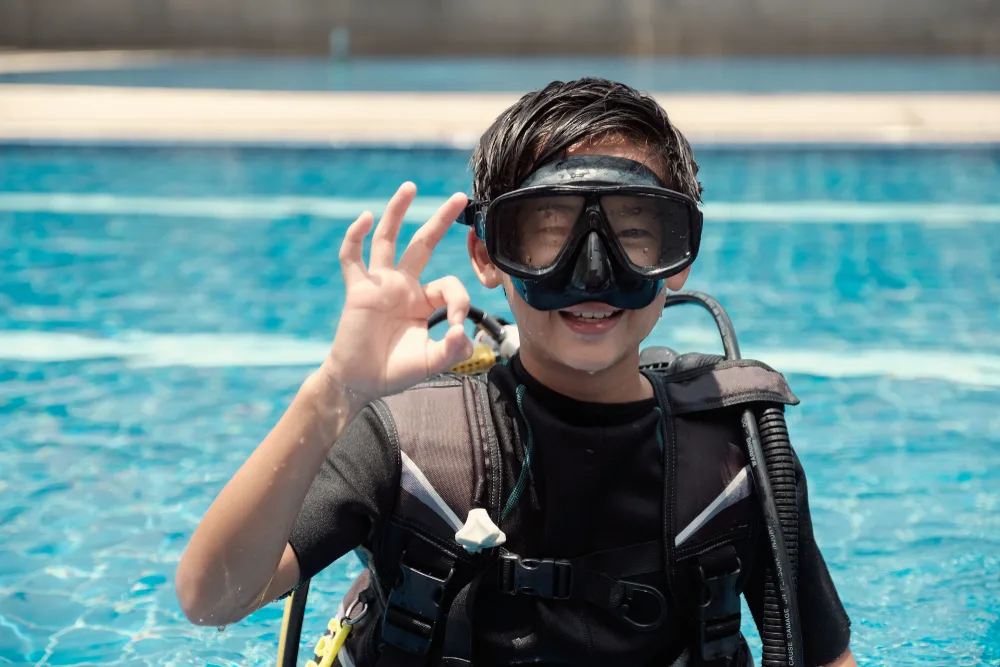
In each one, the dive centre is inside the hotel: step out of your room and go diving.
Dive centre in the hotelGoogle 4.9/5 (775 reviews)
The dive centre
Sea Hawk Divers
PADI · SDI
Google 4.9/5 (804 reviews)
Dives: Manchones #1, Manchones #2, MUSA (Underwater Museum)
November to April generally brings more settled winds and sea conditions for boat departures, with visibility usually strongest from December to April. September and October can bring heavier rain, sudden storms and interruptions. From May to September, you can add separate whale-shark excursions, though warm-season weather may be less predictable.
Cancun suits newly qualified divers as well as experienced visitors when guides match sites to the current and sea state. Begin with MUSA or a shallow reef before attempting a wreck or more exposed Isla Mujeres site. Cenotes require specialist guidance, suitable training and separate planning from ordinary marine diving.
You can explore MUSA’s submerged sculptures, natural reefs at Punta Cancun, Punta Nizuc and Isla Mujeres, plus wrecks with enclosed edges and different routes. Seasonal whale-shark excursions run from May to September as separate surface or snorkelling wildlife trips, rather than conventional scuba dives on the local reef programme.
Plan five to seven days on land for several boat trips, Isla Mujeres, a weather reserve and a final no-diving day before flying. Keep the island outing flexible because the ferry and channel affect logistics. Book morning departures where possible, separate whale-shark plans from reef diving and allow weather time between boat days.