
DeepDiveMexico
Google 5/5 (1,626 reviews)
22 km away as the crow flies
Playa del Carmen · Mexico · Americas
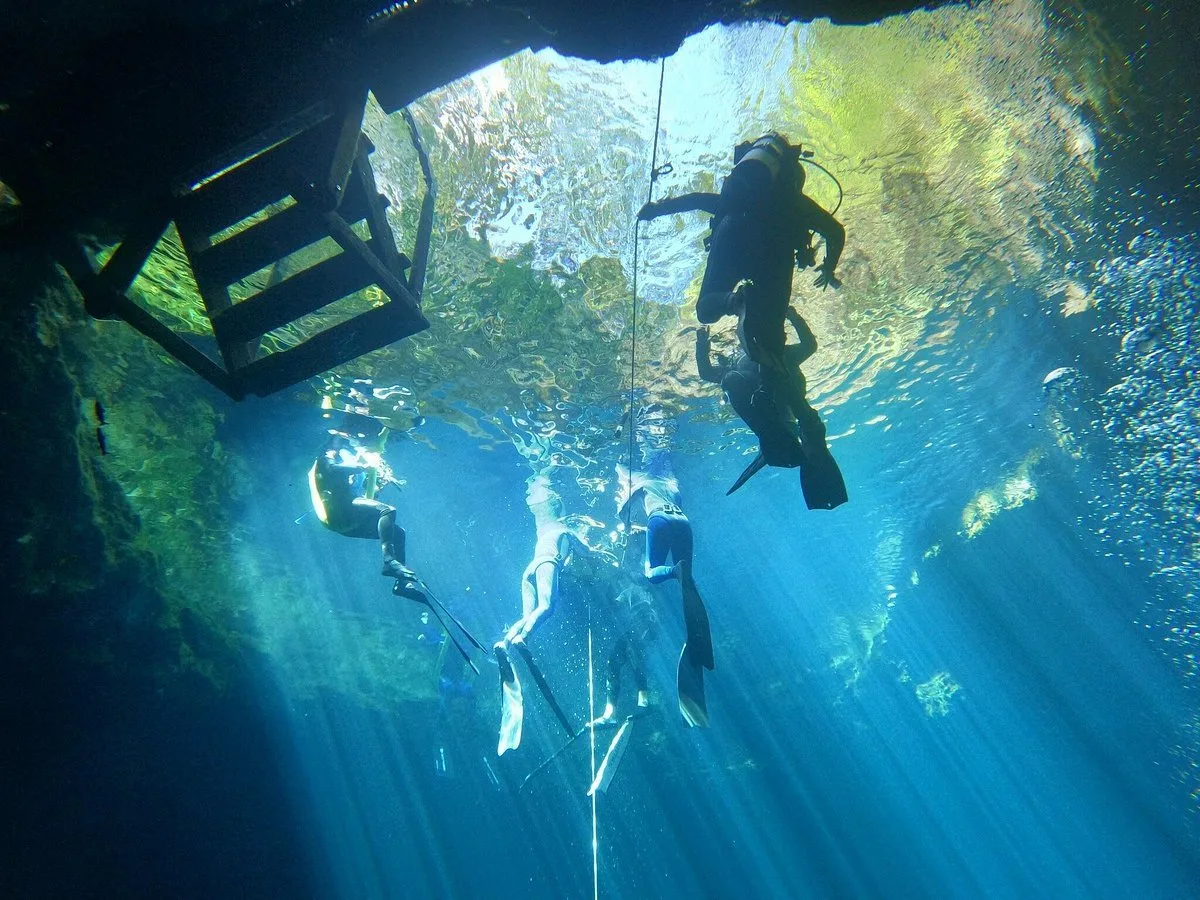
Max. depth · 15 mDescend into Kukulkan, where shafts of light cut through the cavern and a distinct halocline creates a surreal visual experience at 13 meters.
For subtitles in English: start the video firstthen click the gearat the top right of the video, select “Subtitles/CC”, then “Auto-translate” and choose “English”.
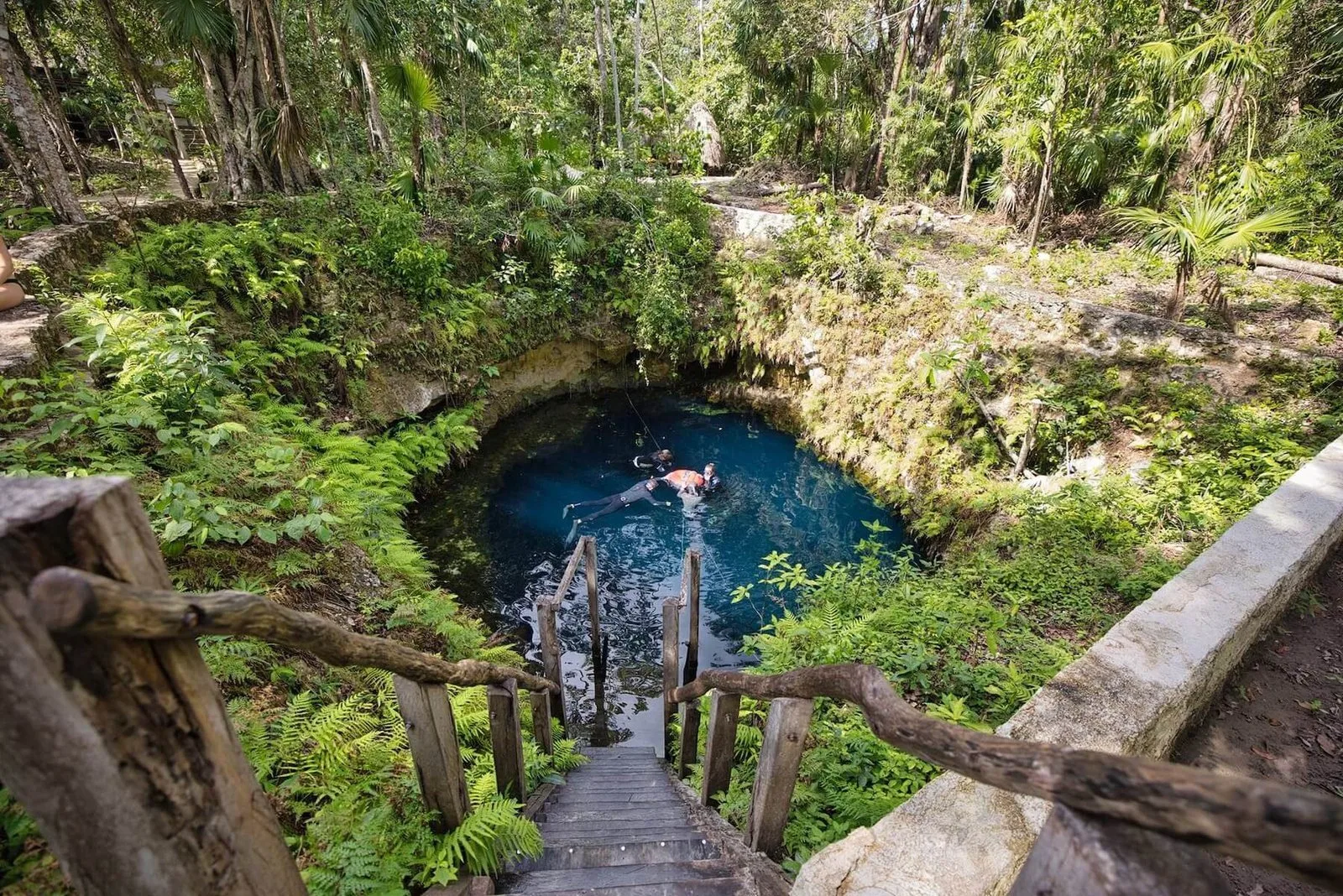
Kukulkan offers an accessible cavern dive experience in Playa del Carmen, distinguished by its natural light penetration and comfortable overhead environment. The vaulted ceiling structure of the cenote ensures that the open water surface remains visible throughout the dive, a feature that makes it particularly welcoming for divers new to cenote exploration. This constant visual reference helps alleviate the sense of enclosure often associated with overhead environments, allowing you to focus on the unique geological formations and light play.
Upon descent, you'll immediately notice how the white limestone walls amplify the natural illumination filtering down from the entrance. This bright environment is further enhanced by what divers call 'laser effects'—sharp, focused curtains of light that slice through the water, creating a dynamic visual spectacle. These light rays shift and dance with the sun's position, offering a different perspective depending on the time of day you enter the water.
A defining characteristic of Kukulkan is its prominent halocline, typically encountered around 13 meters. This distinct layer where fresh and salt water meet creates a shimmering, wavy distortion, blurring your vision as you pass through. It's a tangible boundary between two different aquatic environments, a phenomenon unique to many cenotes and a highlight of this particular dive.
Exploring the cavern, you'll encounter a variety of speleothems—the geological formations like stalactites and stalagmites that have formed over millennia. These structures, carved by ancient water flows, add to the otherworldly feel of the cenote. While Kukulkan is not known for its marine life, the focus here is squarely on the geological wonders, the play of light, and the unique sensation of the halocline itself.
The maximum depth of the dive is around 14 to 15 meters, making it well within the recreational dive limits and suitable for a relaxed exploration. The overall brightness of the cavern, combined with the clear water, provides an expansive feel, which is often appreciated by divers accustomed to open water conditions. This site is frequently paired with nearby 'Little Brother' for a double-tank dive, maximizing your time in the cenote system.
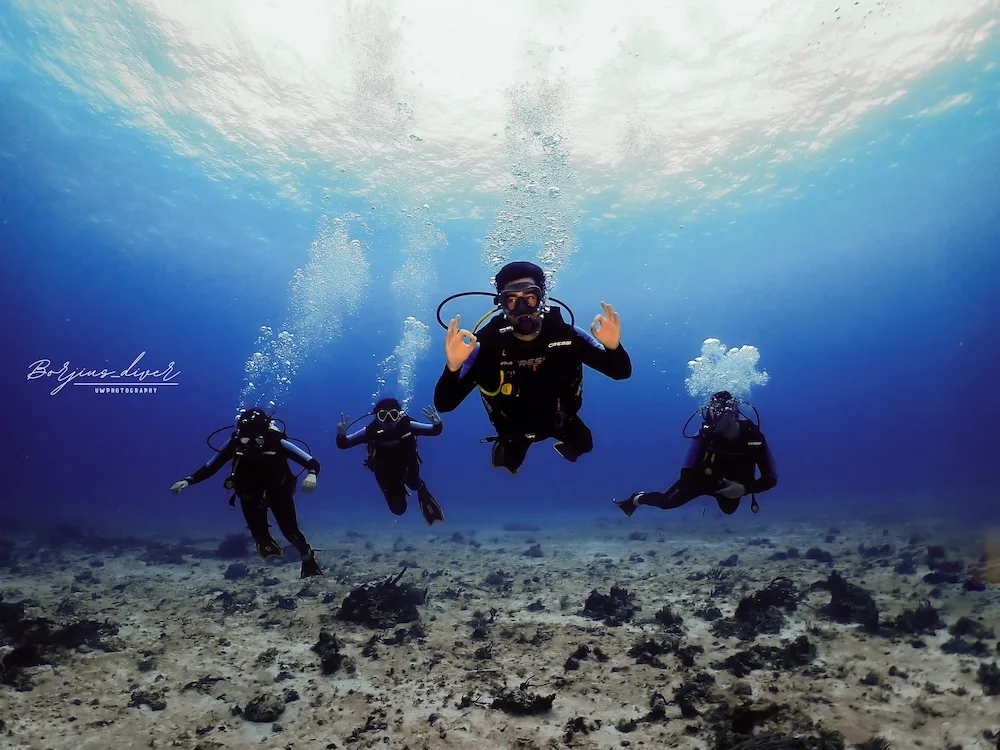
Kukulkan is accessible for Open Water Diver certified individuals, making it an excellent introduction to cenote diving. The maximum depth reached during the dive is approximately 15 meters. Visibility within the cenote is consistently high, often reaching 100 meters due to minimal particulate matter and effective light penetration. There is no discernible current within the cenote, ensuring a calm and controlled environment. Cenotes in this region are diveable year-round.
You can dive Kukulkan year-round. The cavern’s natural light creates sharp, focused curtains known as laser effects, which shift and move with the sun’s position. Entering the water at a different time of day can therefore change how the light plays across the bright limestone walls and surrounding cavern.
Kukulkan is accessible to Open Water Diver certified individuals and offers an introduction to cenote diving. The cavern has a vaulted ceiling with the open water surface visible throughout the dive, providing a constant visual reference. This bright, comfortable overhead environment can help you focus on the formations and light.
Kukulkan reaches a maximum depth of approximately 15 meters and has no discernible current, creating a calm and controlled environment. Around 13 meters, you encounter a distinct halocline where fresh and salt water meet. Passing through this layer can create a shimmering, wavy distortion that temporarily blurs your vision.
At Kukulkan, you can see bright limestone walls, dramatic light effects, and focused laser curtains filtering through the cavern. Visible speleothems, including stalactites and stalagmites, add geological interest. The open water surface remains visible, while the dive’s focus is on formations, light, and the halocline rather than marine life.