Liveaboards · Philippines
Marie-Inès — a diver-first liveaboard for the Philippine Visayas
What makes this boat unique
- The stern dive platform gives each guest an individual gear station, lockers, showers and direct access to the water.
- Dive groups are limited to one guide for every four guests.
- Eight air-conditioned cabins sleep up to 16 passengers, with private toilets and hot showers.
- The boat carries a dedicated camera station, separate camera rinse tanks and charging points.
- Seven-day, six-night departures include night dives, full board, transfers and guided diving.
The invitation
Marie-Inès suits divers who want the Philippine sites to take centre stage, without giving up a private cabin and a proper place for cameras. The boat is organised around the stern platform: gear stays assigned, the water is close, and the tender is used when the hull cannot reach a site. That matters over a week of repeated dives. There is less carrying, less repacking and less waiting for a large group to move. A guide looks after four divers, so the underwater part stays personal rather than becoming a procession. The choice is strongest for certified divers with at least 30 logged dives who want reefs, walls, macro life, turtles, sharks and the sardine run around Cebu and the Visayas. Non-divers can come too, with supervised snorkelling, kayaks and paddle equipment available between dives.
Boarding
Marie-Inès was launched in 2019 and has since been refurbished, with a steel hull and a layout built around diving rather than display. Boarding leads quickly to the practical parts of the boat: the stern platform, assigned equipment spaces, external showers and the low water-level entry platform. Above, the restaurant and lounge open onto a full sun deck, giving the boat a clear separation between wet work below and meals or rest above. The bridge carries the navigation and safety systems, with CCTV throughout the boat. Nothing here requires guests to guess where wet gear belongs or where a camera should be rinsed. The boat feels like a working dive platform with a comfortable upper level attached.
The atmosphere on board
Marie-Inès is run as a working dive boat, and the crew's role is clearest in the transitions: gear is kept in place, guests are moved to the tender when needed, meals appear around the dives and the boat remains easy to navigate. English, German and Filipino are spoken on board. The crew also handles airport or hotel transfers, which removes one of the awkward parts of arriving in Cebu. In the evening, the restaurant and lounge become the shared room, with food, television, music and charging points rather than a formal programme. The boat welcomes non-divers, so a week can include snorkellers and paddlers as well as people returning from a night dive. It is a sociable setup, but the individual gear stations give divers a little space of their own.
The sites you’ll dive
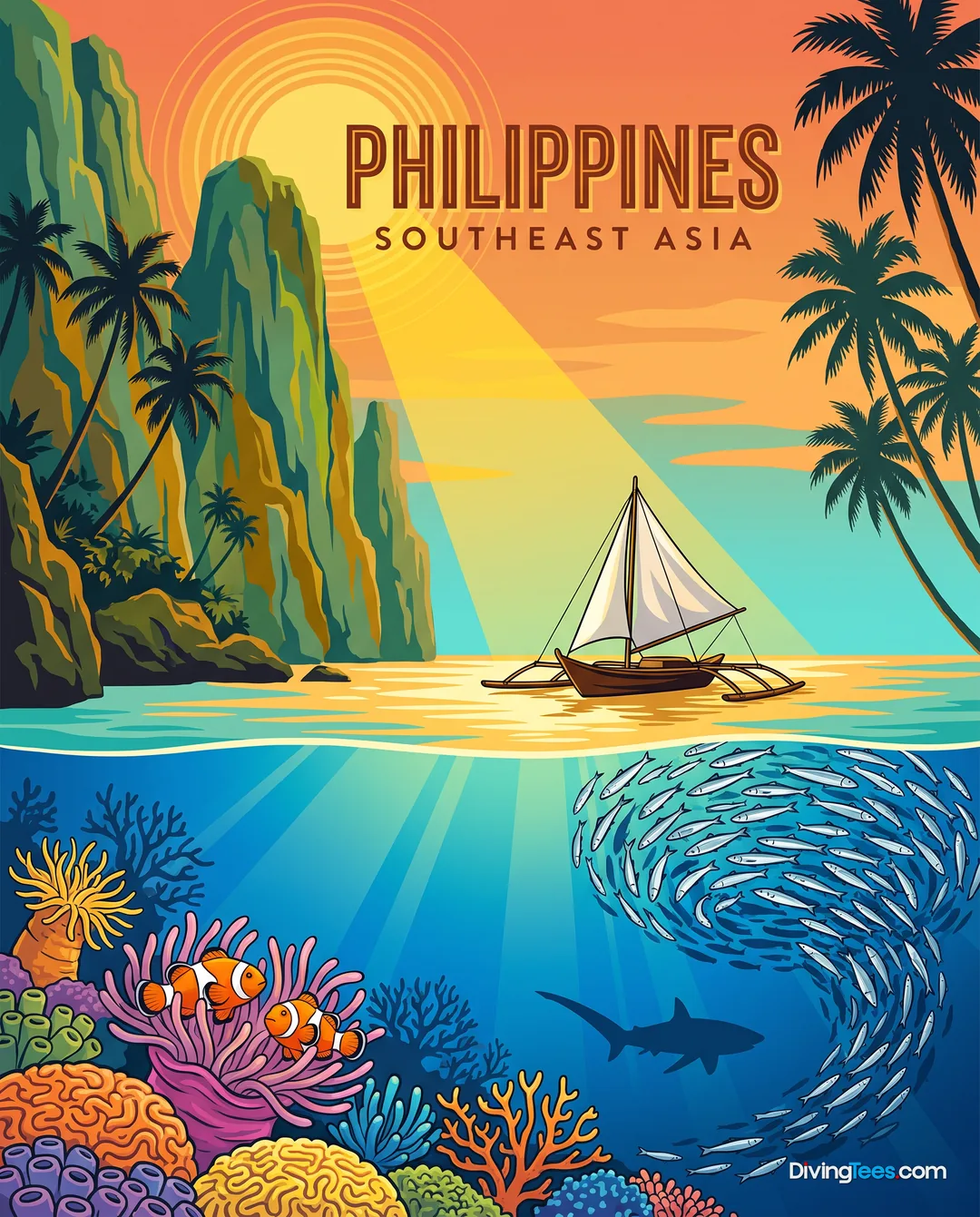
The recorded seven-day, six-night departures leave from Cebu and return to Cebu, with routes including repeated South Leyte trips and a Bohol–Apo Island–Siquijor itinerary. Apo Island is a protected marine area with healthy coral, garden eels, giant humphead parrotfish and approachable sea turtles. Around Cebu, Dolphin House Reef is shallow, reaching -12m, with green turtles; Tongo Point reaches -29m and combines a wall with macro life. Pescador Island drops from 12 to 33 metres on its southern slope and reaches -40m, with schooling jacks and deep walls. Marine Sanctuary reaches -35m and opens into a gorgonian forest. Copton Point reaches -50m, with an aircraft wreck at 20 metres. White Beach reaches -30m; Dolphin House -35m; Tuble Reef -30m; Kasai Point -37m; Panagsama Beach -30m, where sardines form bait balls; and Talisay Wall -30m, with barracuda and batfish. Sumilon Island and Gato Island add protected reefs, tunnels and possible whitetip reef sharks.
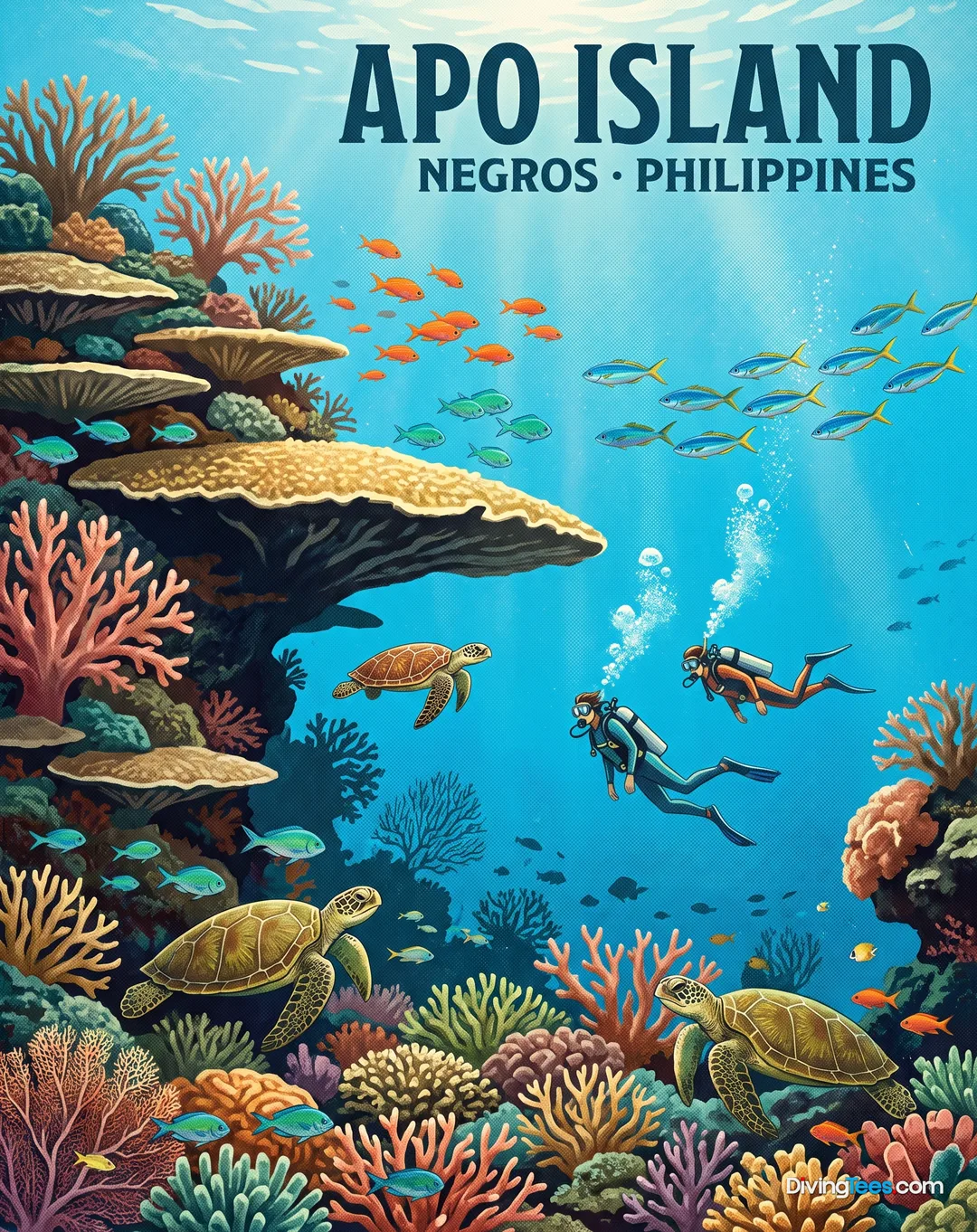
Apo Island →
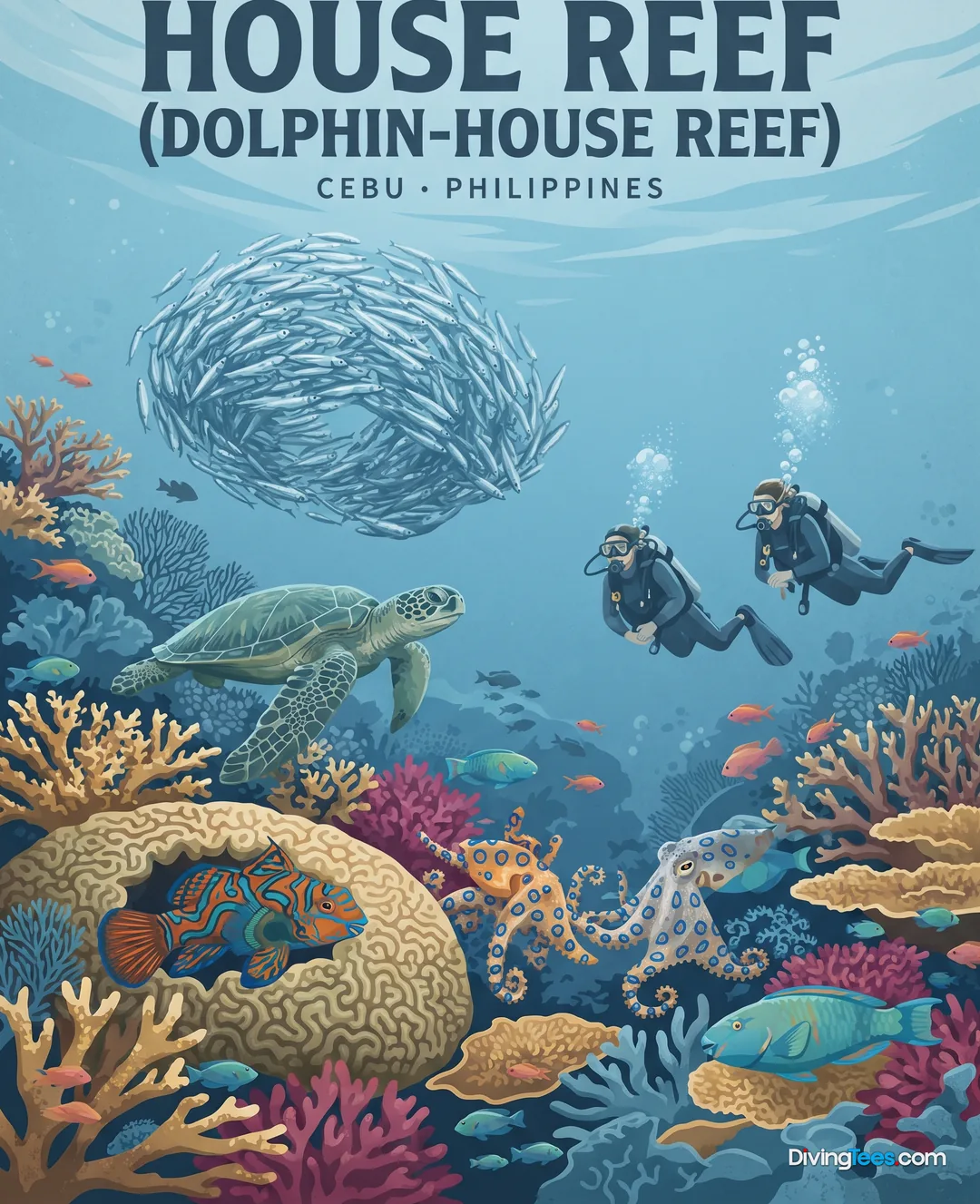
Dolphin House Reef →
Max. depth · 12 m
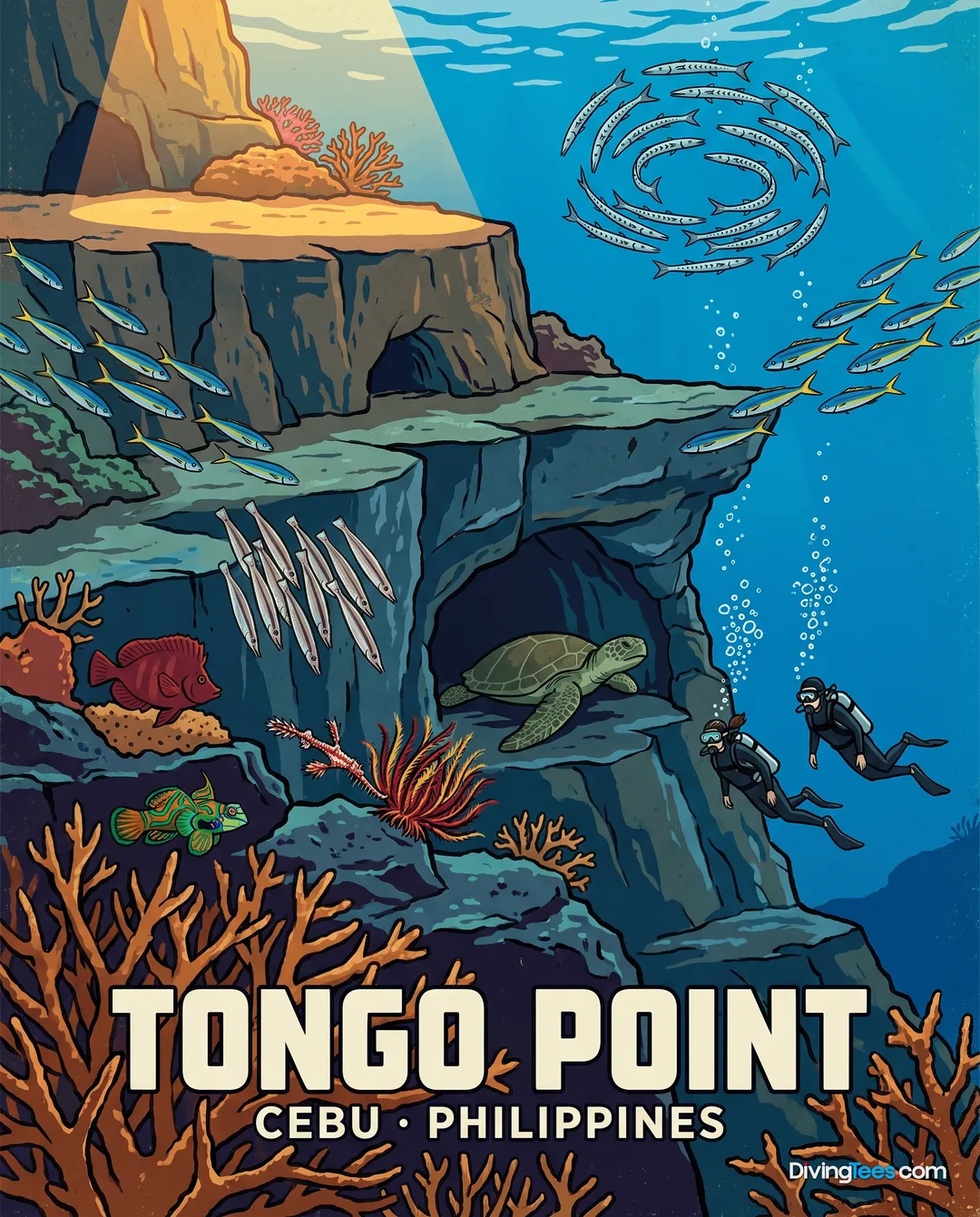
Tongo Point →
Max. depth · 29 m
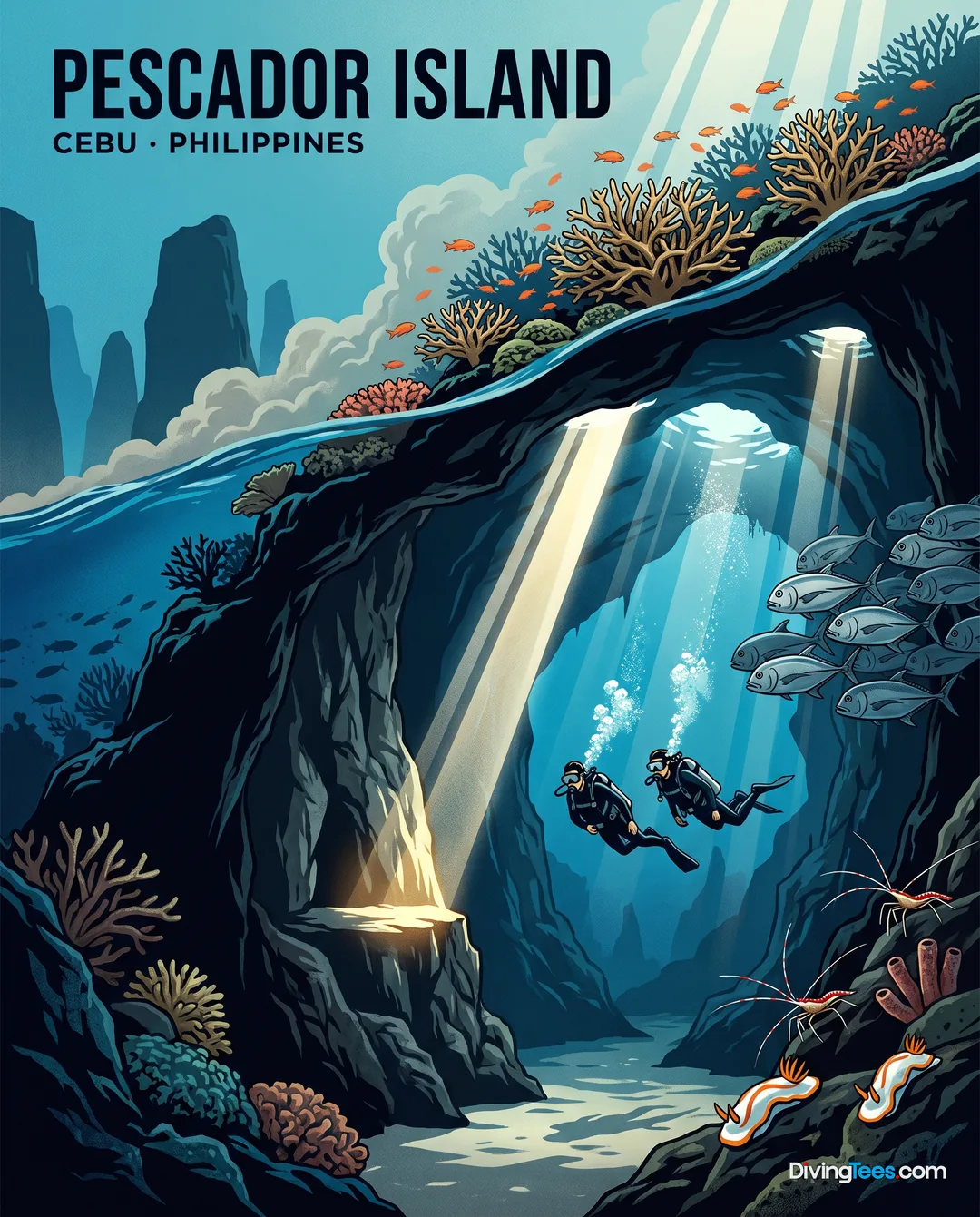
Pescador Island →
Max. depth · 40 m
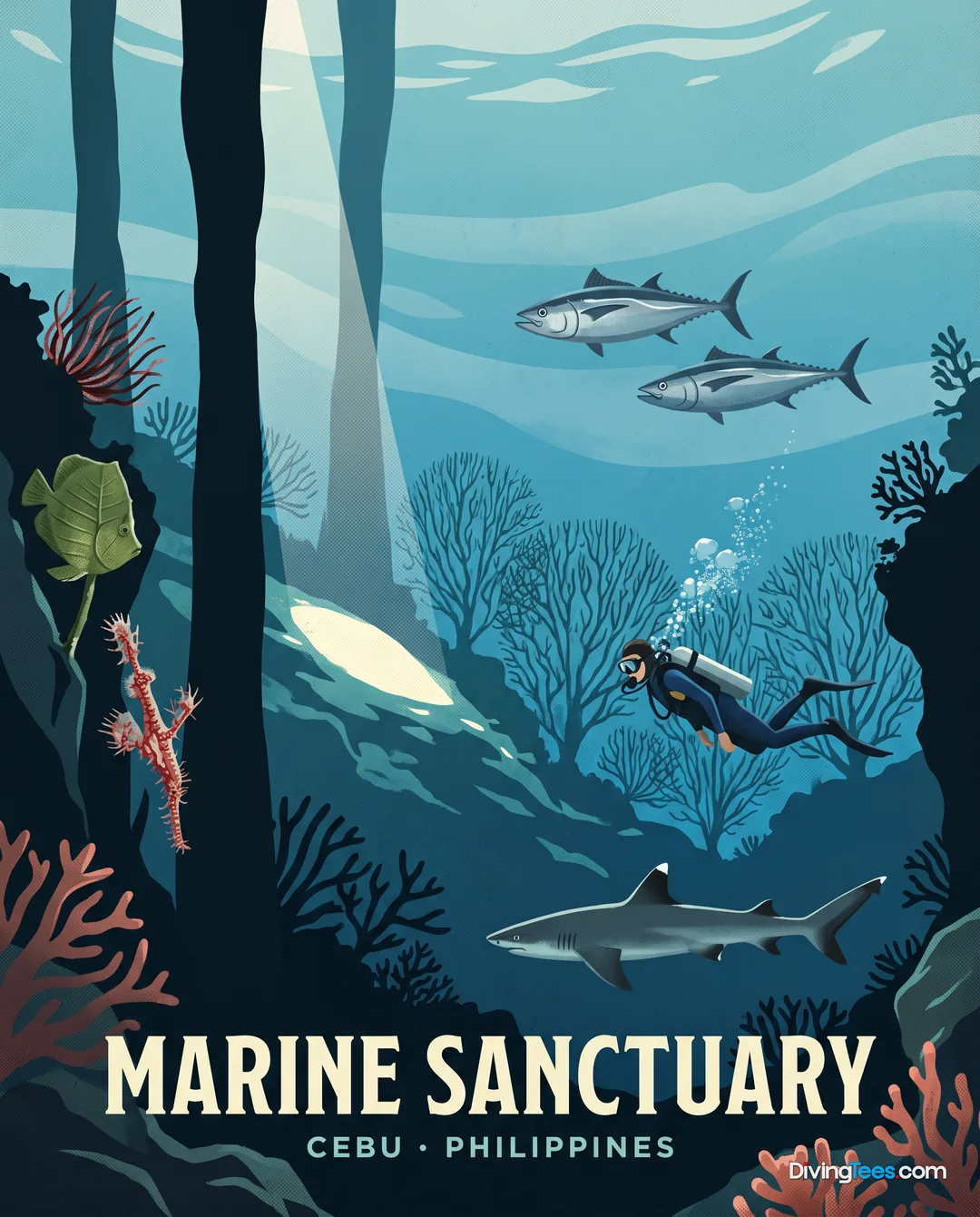
Marine Sanctuary →
Max. depth · 35 m
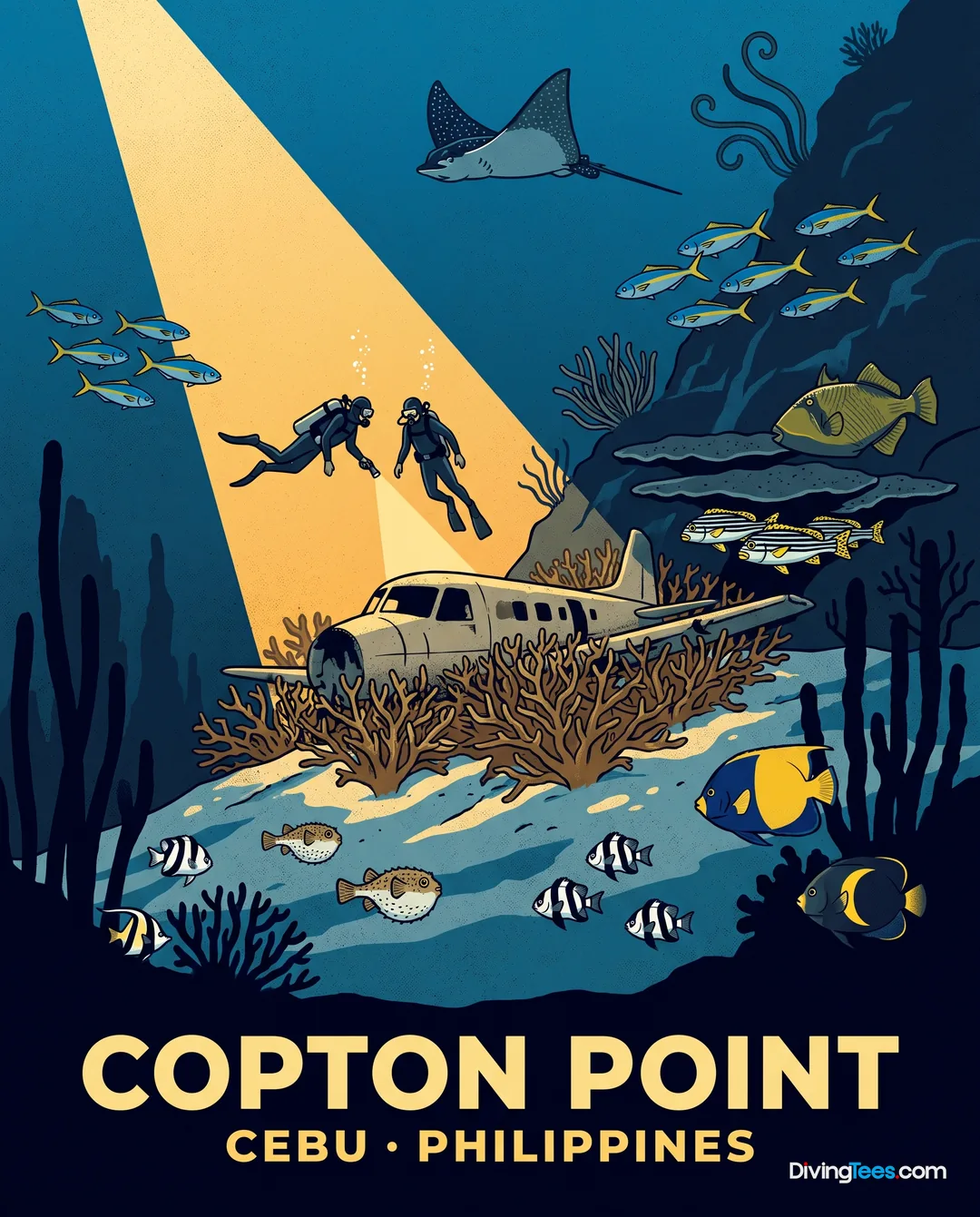
Copton Point →
Max. depth · 50 m
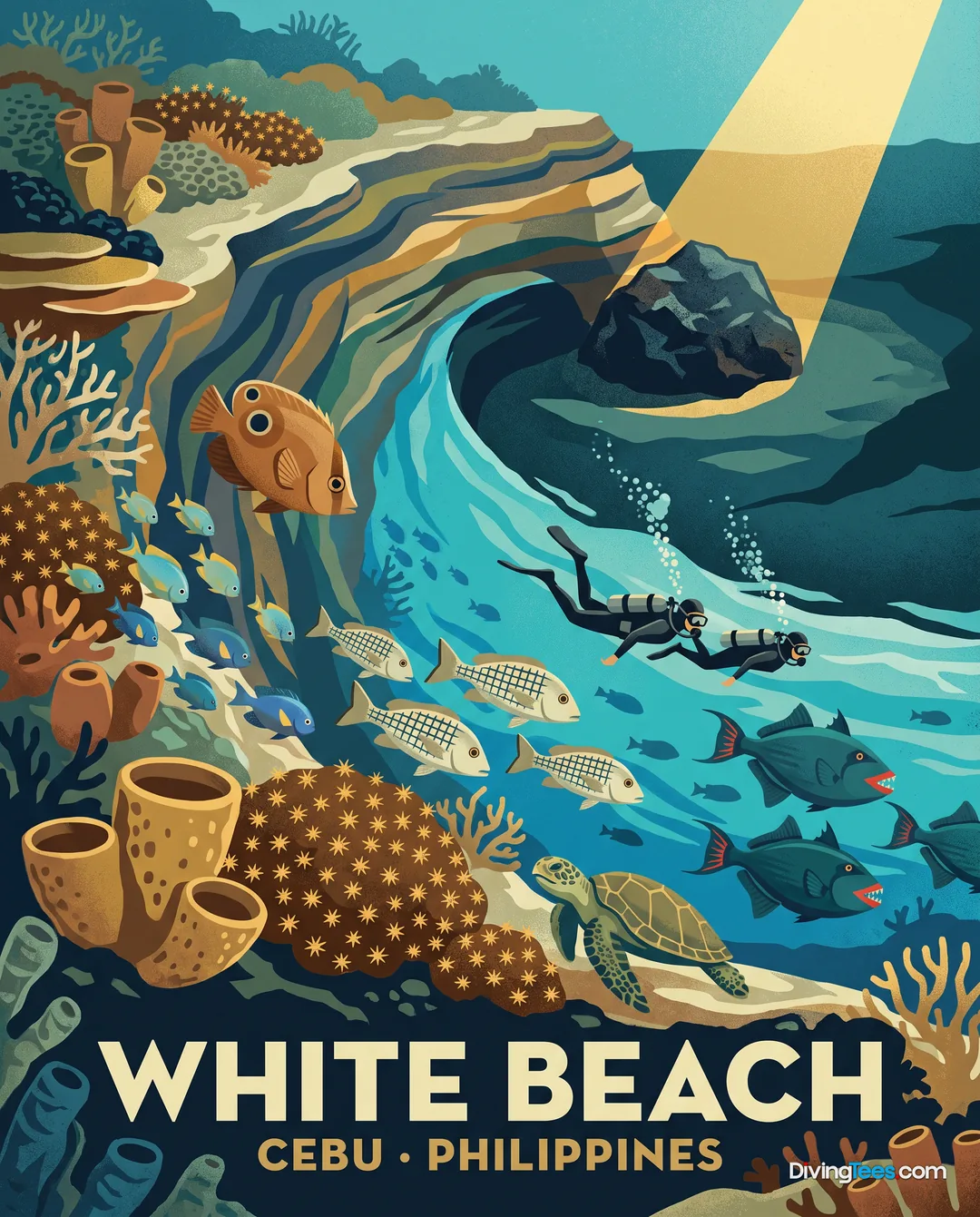
White Beach →
Max. depth · 30 m
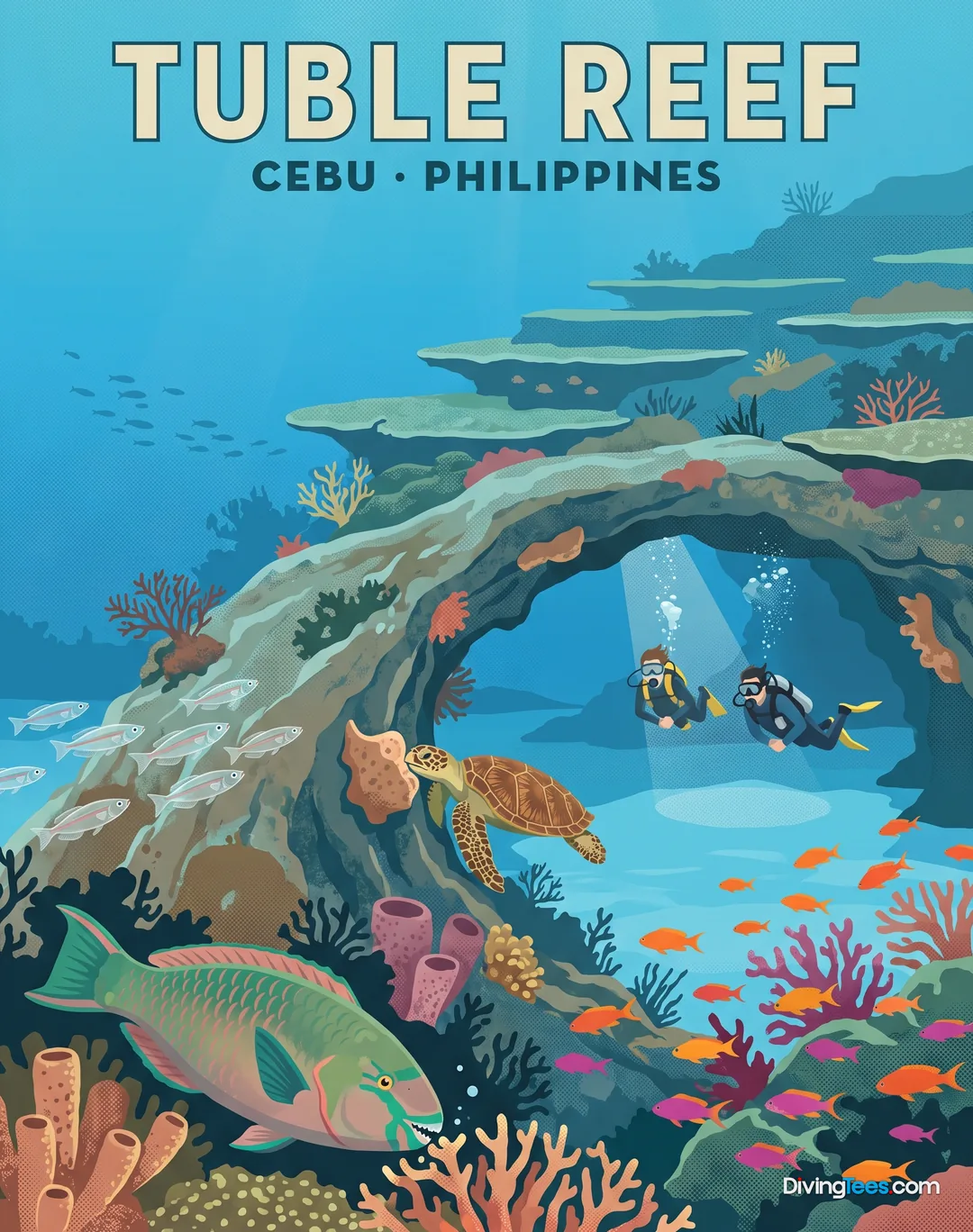
Tuble Reef →
Max. depth · 30 m
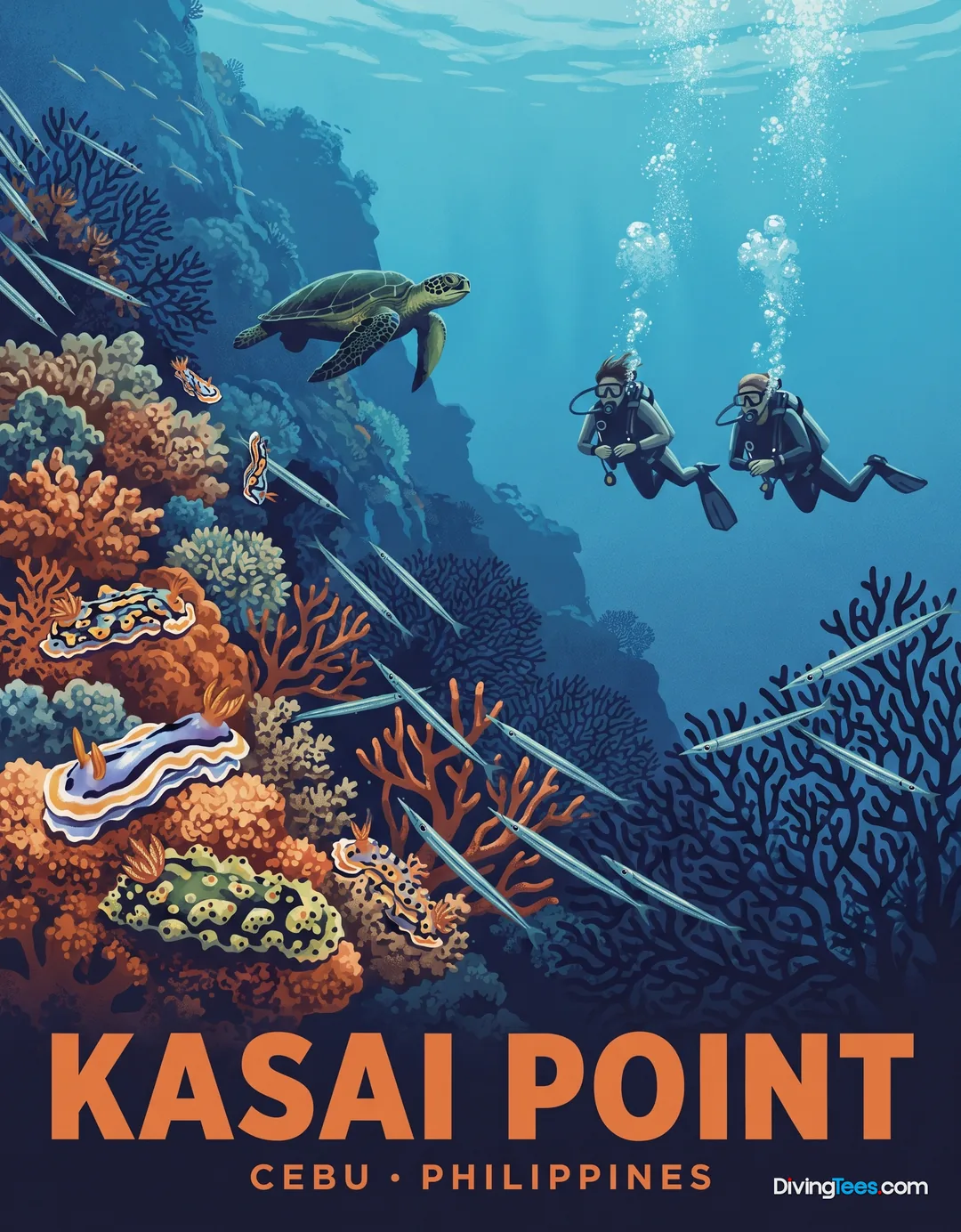
Kasai Point →
Max. depth · 37 m
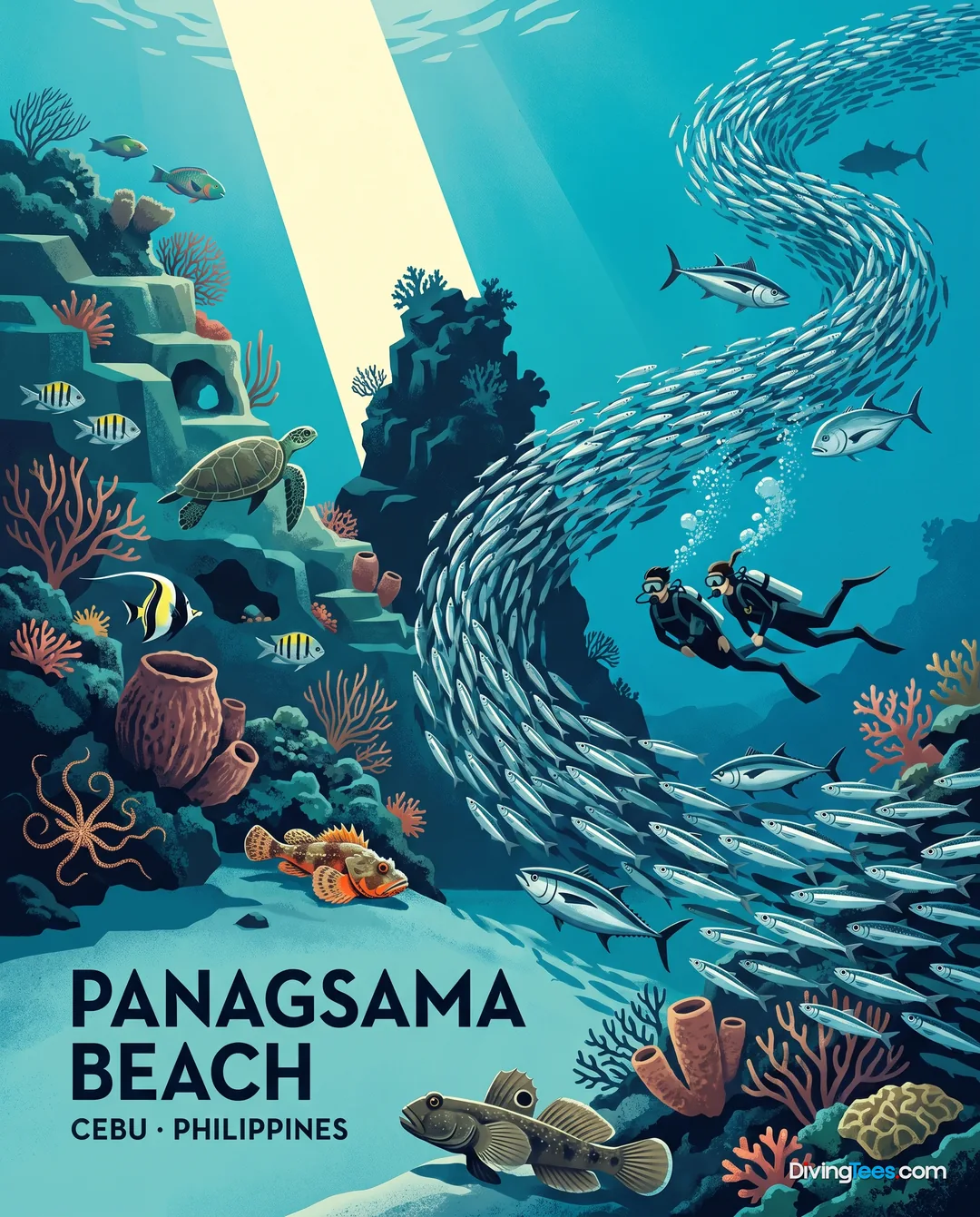
Panagsama Beach →
Max. depth · 30 m
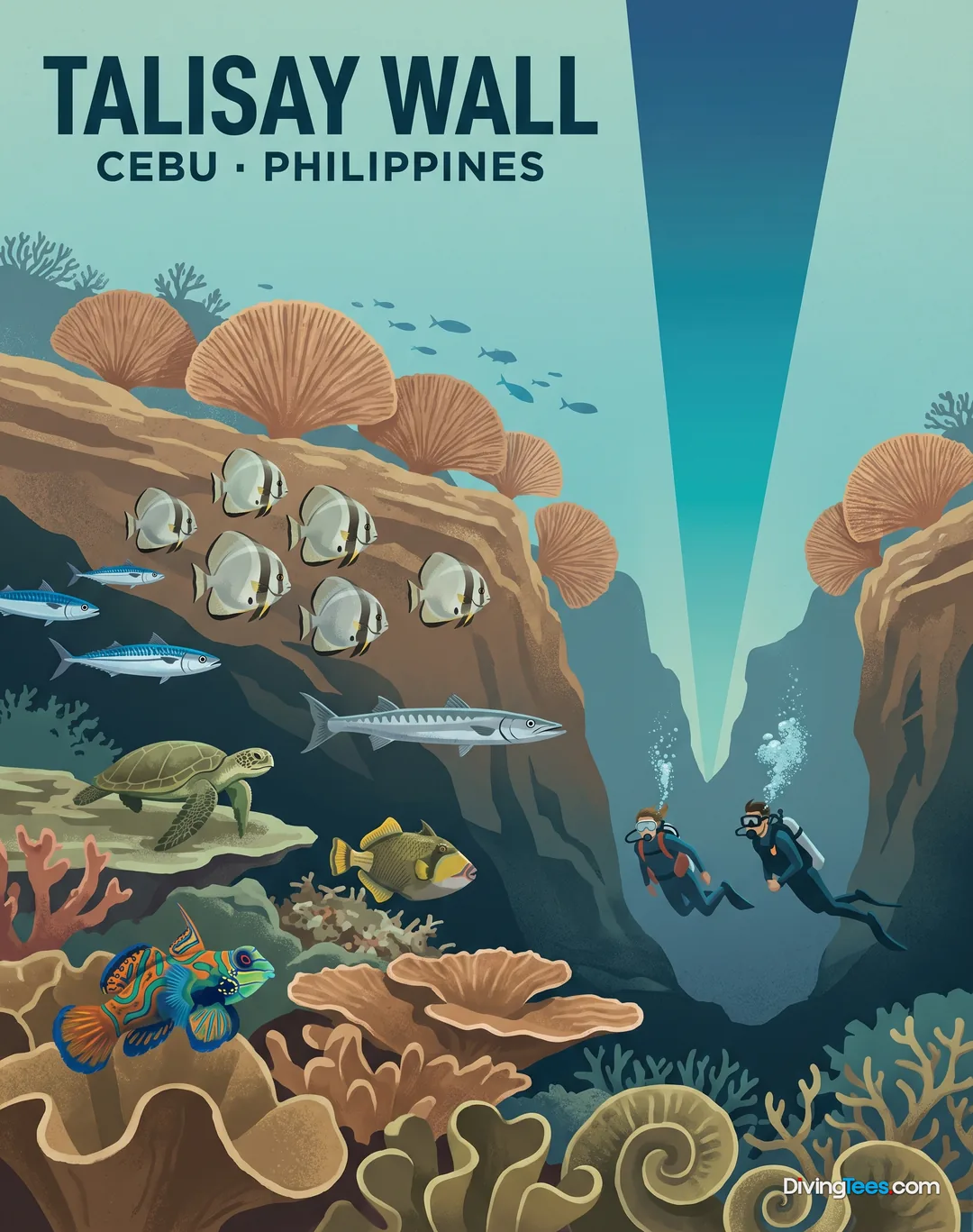
Talisay Wall →
Max. depth · 30 m
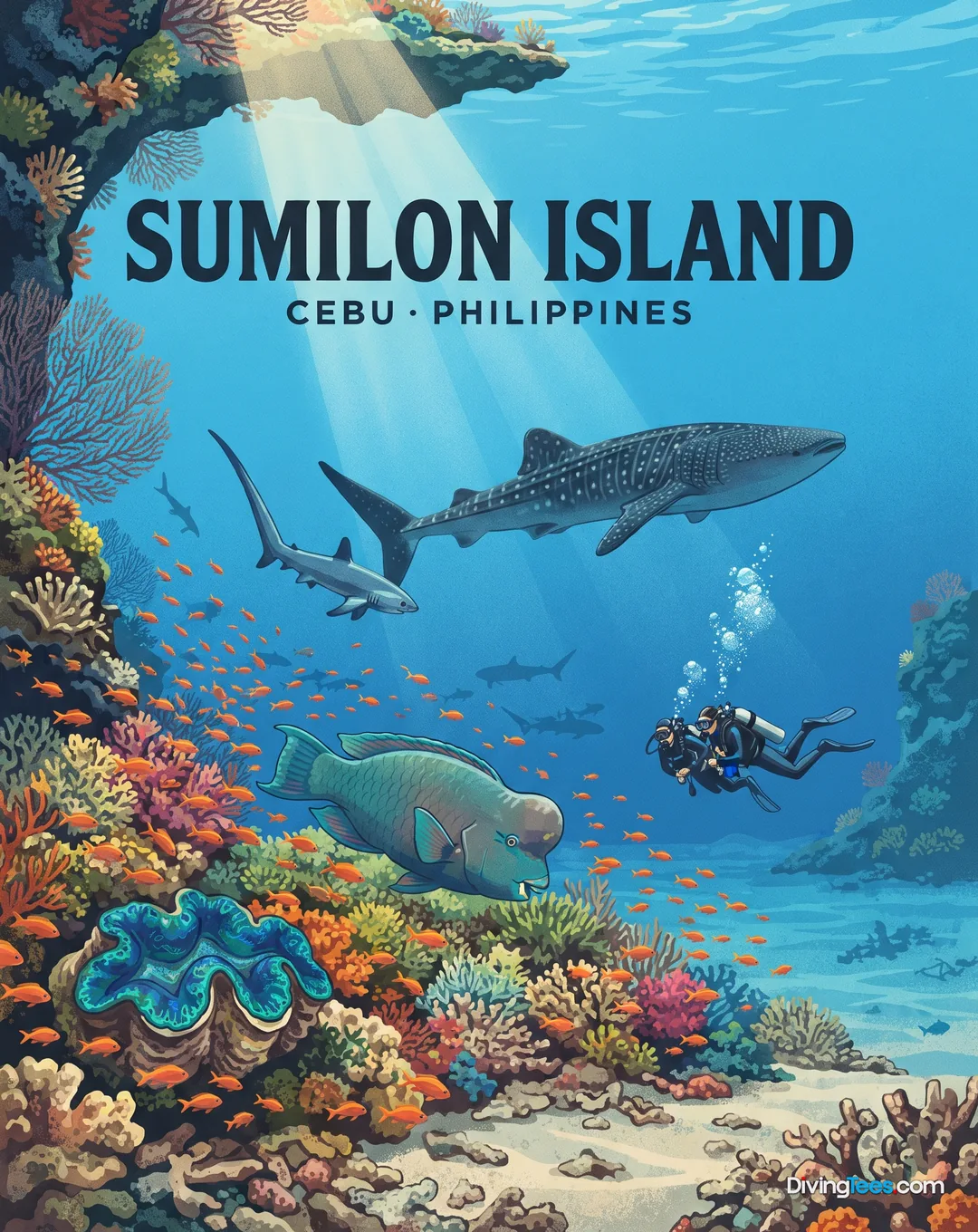
Sumilon Island →
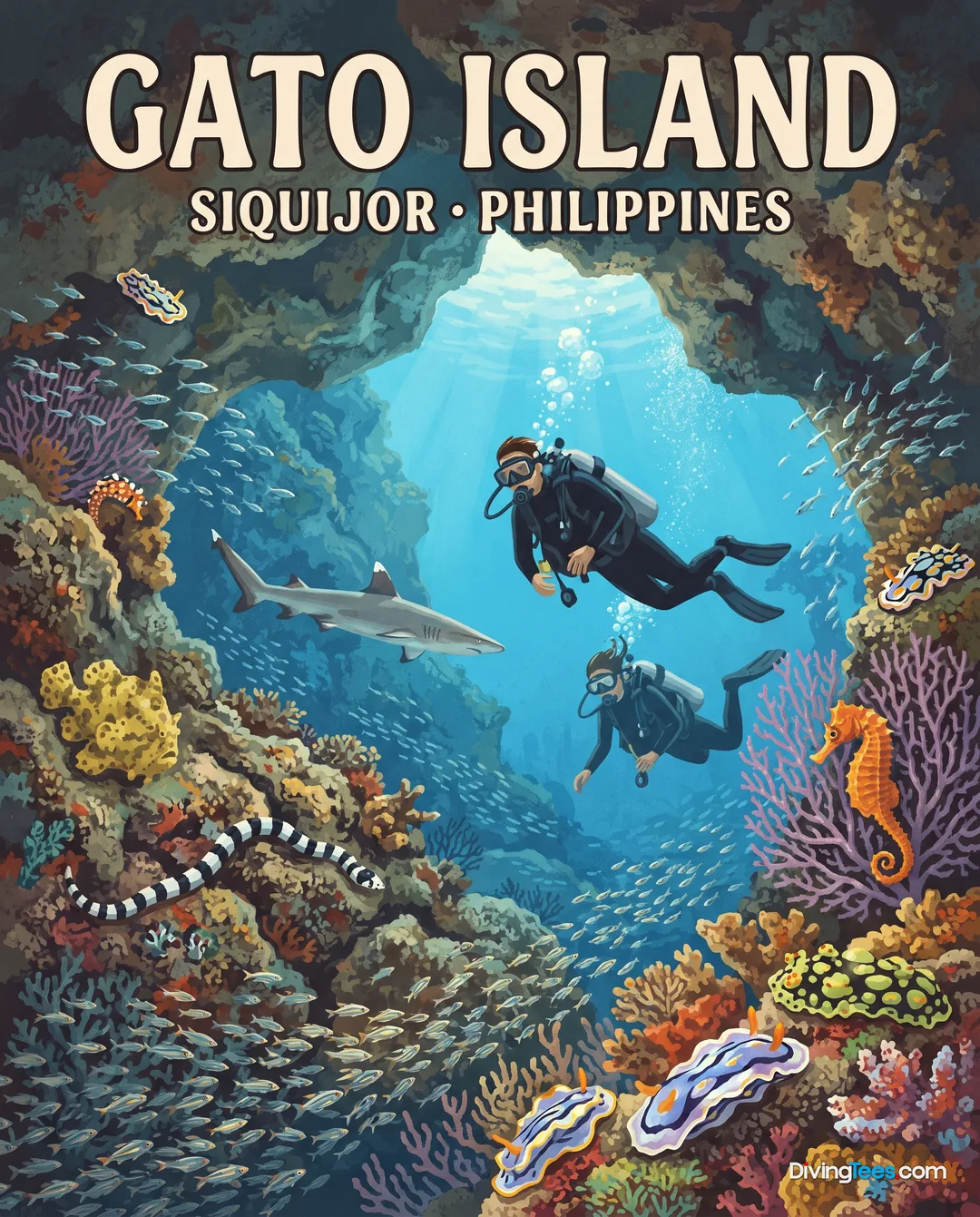
Gato Island →
What you’ll meet underwater
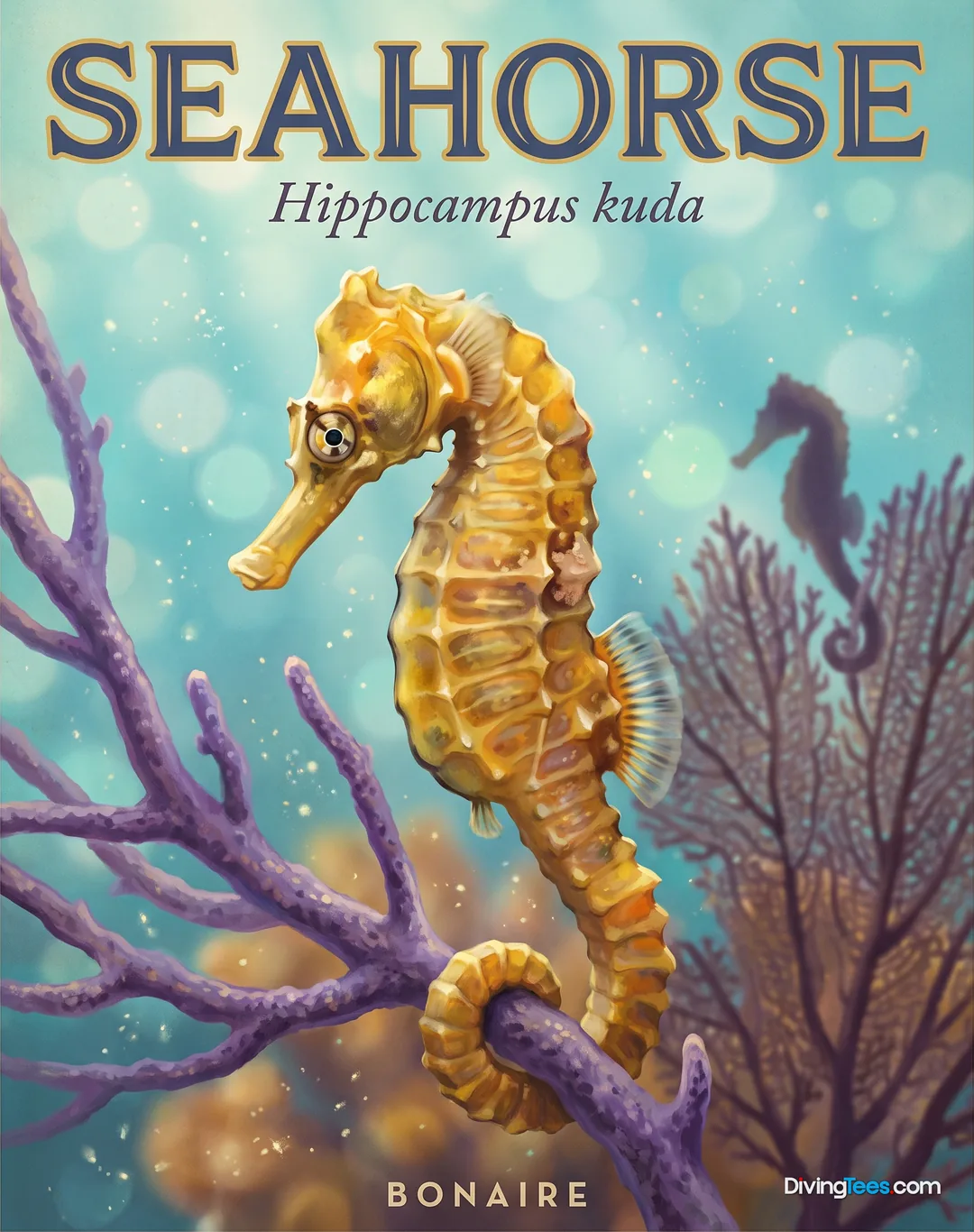
Turtles are the recurring sight on this route, with sea turtles recorded across many sites, alongside nudibranchs, frogfish, reef sharks, tuna, barracuda, jacks, hard and soft corals, gorgonians, filefish and scorpionfish. The spectacle changes from site to site. Panagsama Beach is the place for the dense sardine bait balls, with tuna and jacks pressing into them. Pescador Island brings schooling jacks and deep walls; Marine Sanctuary offers wide-angle views through gorgonian forest; and Kasai Point combines turtles, razorfish, canyons and small caves. Some encounters are tied to one named stop: garden eels and bigeye jacks at Apo Island, fusiliers and sweetlips at Tongo Point, groupers at Marine Sanctuary, gobies at Talisay Wall, and pygmy seahorses, seahorses, crabs and cleaner shrimp at Gato Island. Gato also offers the chance to look for whitetip reef sharks inside its tunnels.
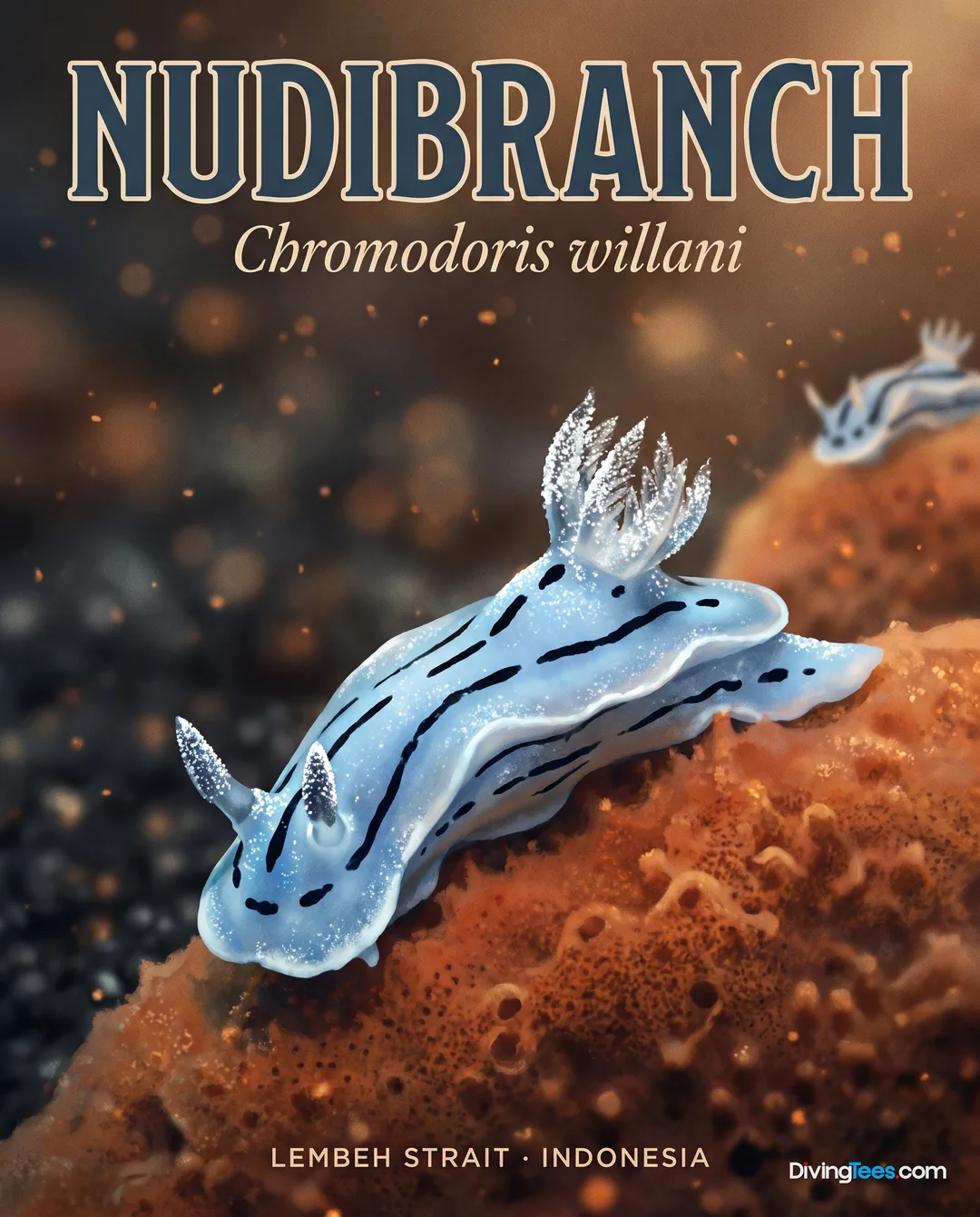
Who puts you in the water
Dive groups are kept to one guide for every four guests, with qualified instructors and divemasters supervising the dives. The crew speaks English, German and Filipino, and a PADI MSDT, SSI AIT, SDI IT and ISC Examiner is available on board for advice and training. The liveaboard asks for at least 30 logged dives and an Open Water certification or equivalent. Courses and refreshers can be run during the cruise, including Discover Scuba Diving, Open Water, Advanced Open Water, deep, night and nitrox training. Non-divers and snorkellers are supervised in the water. Safety equipment includes emergency oxygen, a first-aid kit, two life rafts, lifejackets, a lifebuoy, marine and satellite radios, AIS, visual and audio signalling equipment, and CCTV around the boat.
The dive deck and the gear
The stern platform is the strongest part of the boat. Each diver has an allocated gear station and locker, with two external showers and a large low platform for direct entry when Marie-Inès can reach the site. A single 5-metre fibreglass tender with a 25 HP Yamaha four-stroke carries divers to sites beyond the hull's reach. It can transport up to 14 people. Filling is handled by two Bauer Poseidon compressors; nitrox is available as a paid extra through the membrane system. Rental equipment is available as a package or in individual pieces, while every diver must have a computer. The deck has DIN adaptors, a camera table, a dedicated photography station, separate rinse tanks for underwater cameras, special camera storage and charging stations. Tank volume and tank material are not stated.
Between dives
Between dives, the boat gives guests three different places to settle. The air-conditioned restaurant and lounge are useful when the heat has caught up with a diver; the covered part of the sun deck gives shade without closing off the view; and the open deck offers sun loungers and the horizon. Kayaks and paddles are available when the boat is stopped somewhere worth exploring from the surface. Cameras can be charged in the lounge and kept moving through the dedicated rinse and storage areas below. When there is no dive immediately ahead, the practical choice is often simply to leave the wet deck, shower off and let the boat's upper level become the quiet part of the day.
A day on board
A day begins with coffee or tea and fruit before the first dive. The boat's working rhythm then follows the water: briefing, gear check, entry, return to the platform, shower and breakfast. Lunch comes later, with another dive period around it, and an afternoon snack follows the third dive. The gaps belong to the sun deck, the shaded upper seating, the lounge, a camera rinse or a kayak when the boat is stopped. Some sites are reached by tender, while others allow a direct entry from the low stern platform. The day ends with dinner and, when conditions and the itinerary allow, a night dive. There is no need to invent a timetable; the useful order is clear enough. Eat, dive, rinse, rest, then do it again.
What you eat aboard
The galley serves buffet-style meals built around local and international food, with fresh local products used alongside familiar dishes. Coffee or tea and seasonal fruit come first; after the first dive, breakfast brings choices such as toast, eggs, pancakes, fruit salad, sausages and bacon. Lunch and dinner change between local and international dishes, while an afternoon snack follows the third dive. Water, hot drinks, fruit juices and soft drinks are available throughout the trip, and dietary requirements can be arranged with advance notice, including vegetarian, vegan, gluten-free and non-dairy meals. This is the right format for a diving boat: guests can eat when they surface, choose what sits well before the next entry and return for more without waiting for a plated service.
Nights at sea
The eight cabins are on the main deck, close to the boat's central working areas. Six Deluxe Cabins have bunk-style twin beds; two Master Cabins have a double bed and more floor space. Every cabin has air conditioning controlled from inside, a private toilet, a hot shower, towels, fresh linen and storage. The cabins are practical rather than expansive, so the Master category makes more sense for couples or solo divers who want room to turn around after a long day in a wetsuit. Above them, the air-conditioned saloon provides another place to sleep off the dives, with seating and plentiful electrical outlets for chargers. At night, the important comforts are simple: a private shower, climate control and not having to leave the boat to reach either.
Deluxe Cabin
Master Cabin
What to know before boarding
Marie-Inès departs from and returns to the port of Cebu. Airport and hotel transfers are included, and the crew uses the arrival details on the reservation to collect guests from the airport or from a hotel if they arrive earlier. Arriving in Cebu the night before is the sensible choice, especially for an international flight, and the operator works with hotels near the office and boat.
- Year built
- 2019
- Length
- 25 m
- Beam
- 6.5 m
- Maximum number of passengers
- 16
- Number of cabins
- 8
- Engines
- 2 × 185 hp marine diesel
- Tenders
- 1 fiberglass 5 Mt, 25 hp Yamaha 4-stroke
- Website
- thenapoleondivers.com ↗
Hello, I'm Marina, DivingDeal.com's AI assistant. I answer in detail about hotels, dive centres and liveaboards.

Thinking about the whole trip and the flights? Talk it over with Edith →
Marina is an AI. Some links are affiliate links: DivingDeal may earn a commission, at no extra cost to you. Bookings are made with the partner.