Liveaboards · Philippines
Philippines Aggressor II — a new, service-led Cebu liveaboard
What makes this boat unique
- Built in 2024, the 140-foot Philippines Aggressor II carries up to 26 divers in 13 private cabins.
- The route runs from Cebu to Cebu for 8-day/7-night or 11-day/10-night cruises.
- Diving is supported by a dedicated platform, diver tenders, DIN adapters, sidemount with one cylinder, and nitrox.
- Balcony Suites and Deluxe Staterooms are air-conditioned and have private bathrooms; the cabins are on the lower deck with porthole windows.
- The boat combines a camera room, charging stations, a library, terrace, bar, and full-board dining with local, vegetarian, and vegan options.
For subtitles in English: start the video firstthen click the gearat the top right of the video, select “Subtitles/CC”, then “Auto-translate” and choose “English”.
The invitation
The Philippines Aggressor II suits divers who want Cebu's concentrated mix of walls, reefs, macro life, turtles, sardines, and larger animals without giving up the comforts of a new yacht. It is not an old working boat whose charm comes from patina and improvisation. Its appeal is more direct: a recent build, private bathrooms, air conditioning, a proper camera area, and a crew whose service is one of the reasons passengers remember the trip. The diving remains the point. Sumilon Island, Pescador Island, Moalboal's sardine run, and the walls around Tongo, Dolphin House, and Kasai give the itinerary enough variety for both wide-angle and patient critter hunting. Choose this boat when the week should feel well run above water as well as productive below it.
Boarding
Boarding in Cebu brings a recently built yacht rather than a vessel carrying decades of visible wear. The Philippines Aggressor II has the polished, organised feel expected from a new liveaboard: cabins are air-conditioned, bathrooms are private, and the common areas are arranged around diving, meals, and time outside. The size gives the boat a proper salon, terrace, bar, library, camera room, and charging stations instead of asking divers to make one table serve every purpose. The lower-deck cabins have portholes, while the Balcony Suite category adds access to a balcony. It is a boat built to remove small daily irritations—wet kit left in the wrong place, cameras without a safe working area, nowhere to sit between dives—so attention can stay on the route.
The atmosphere on board
The atmosphere is built around service rather than ceremony. The crew speaks English, and passenger feedback points to a staff that is both friendly and effective in the daily work of meals, briefings, equipment handling, and getting divers back aboard. With up to 26 guests, the group is large enough to bring different diving styles together but still small enough for the crew to learn who is shooting macro, who wants the wall, and who needs a quieter surface interval. Evenings can include varied audio and video entertainment, with a weekly adventure video bringing the group back together. The boat's weaker point is less likely to be the operation than the simple reality of a yacht: the crew can deliver attentive service, but no liveaboard makes a cabin larger than it is. Here, good people and good organisation repay the compromise.
The sites you’ll dive
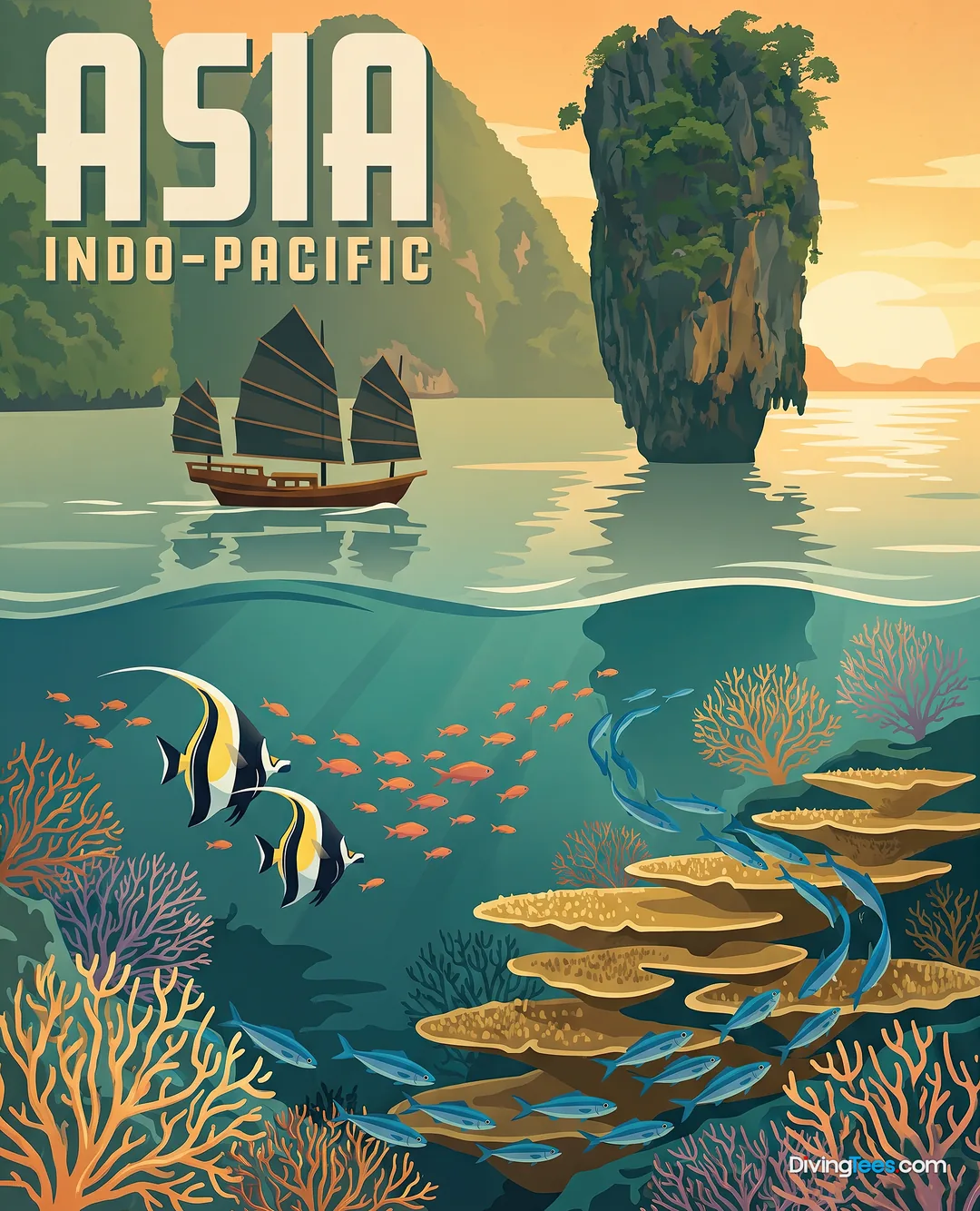
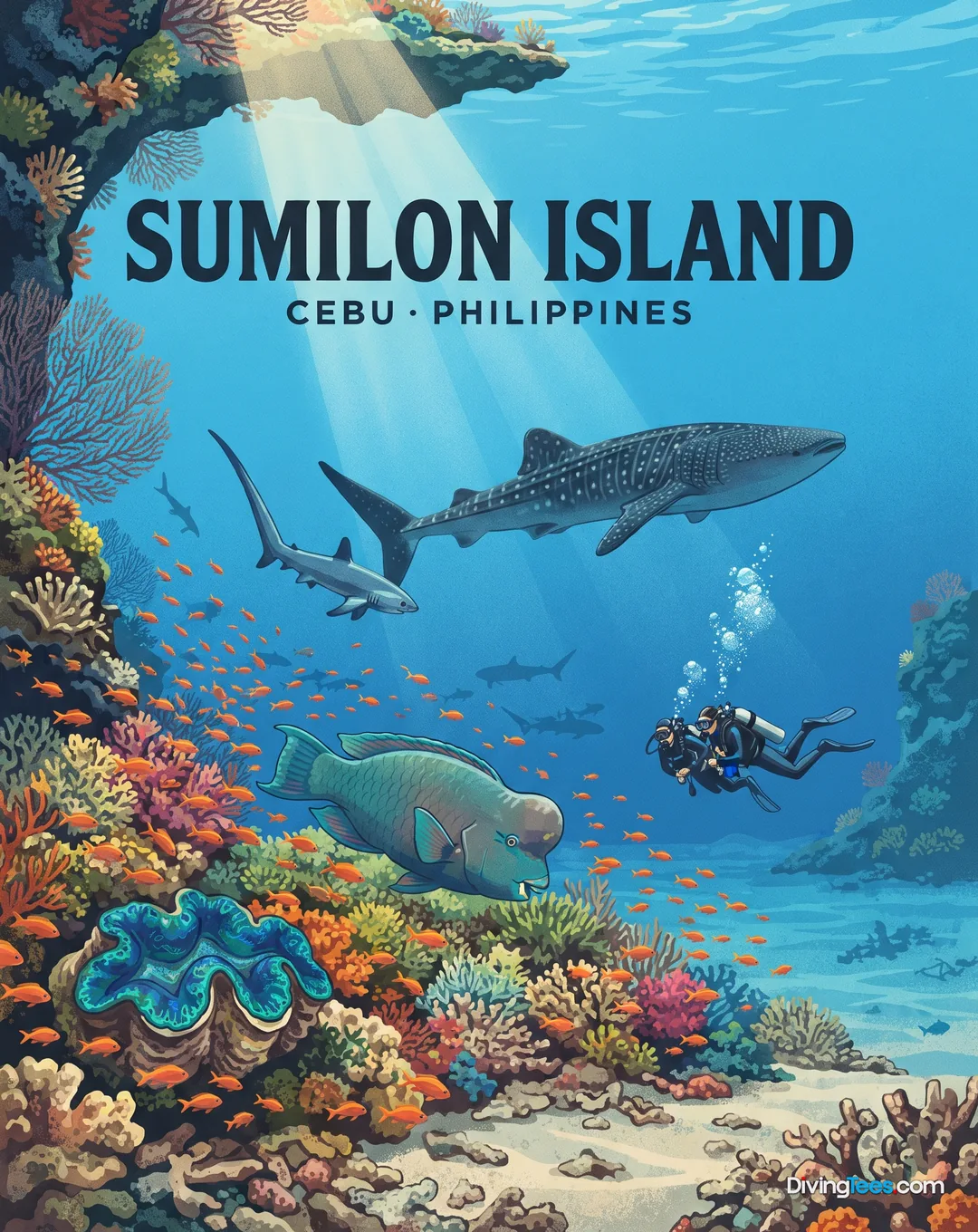
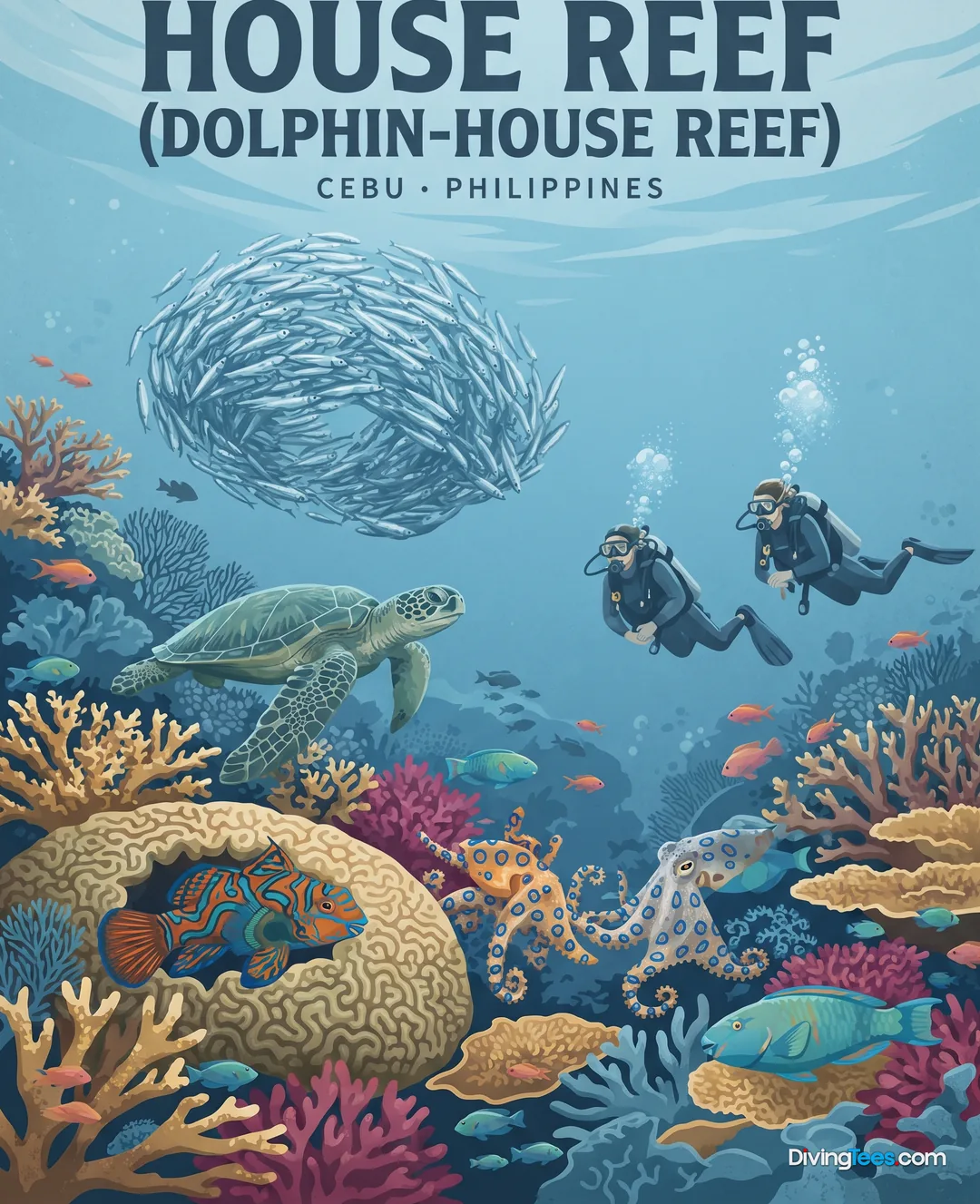
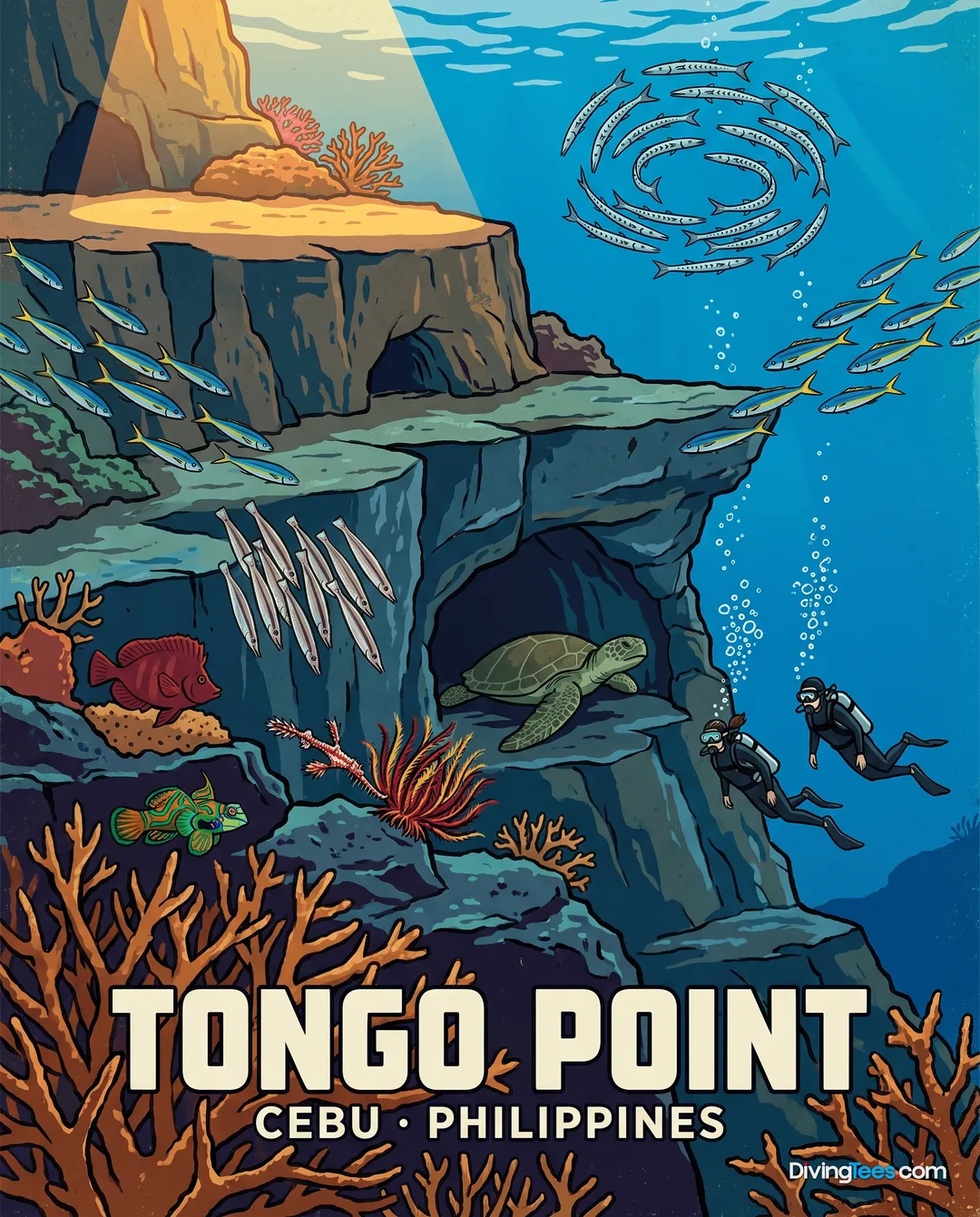
The 8-day/7-night and 11-day/10-night Best of Visayas cruises run Cebu to Cebu and stay largely around Cebu's protected reefs, walls, and marine sanctuaries. Sumilon Island brings healthy reef structure and the possibility of blacktip reef sharks, rays, nudibranchs, frogfish, and whale sharks. Dolphin House Reef is shallow, directly accessible from shore, and known for green turtles; its maximum depth is -12m. Tongo Point combines a wall with a marine sanctuary and reaches -29m, with razor fish, frogfish, mandarin fish, barracuda, and pelagic encounters. Pescador Island starts on a sheltered slope from 12 to 33 metres before dropping into deep walls and an underwater cathedral; its maximum depth is -40m, with schooling jacks, giant frogfish, leafy scorpionfish, and a possible white-tip reef shark. Marine Sanctuary reaches -35m and moves from busy reef to gorgonian forest. Copton Point reaches -50m and includes an aircraft wreck at 20m. White Beach, Dolphin House, Tuble Reef, Kasai Point, Panagsama Beach, and Talisay Wall add turtle-filled walls, caves, sardine bait balls, steep canyons, barracuda, and batfish.
Sumilon Island →
Dolphin House Reef →
Max. depth · 12 m
Tongo Point →
Max. depth · 29 m
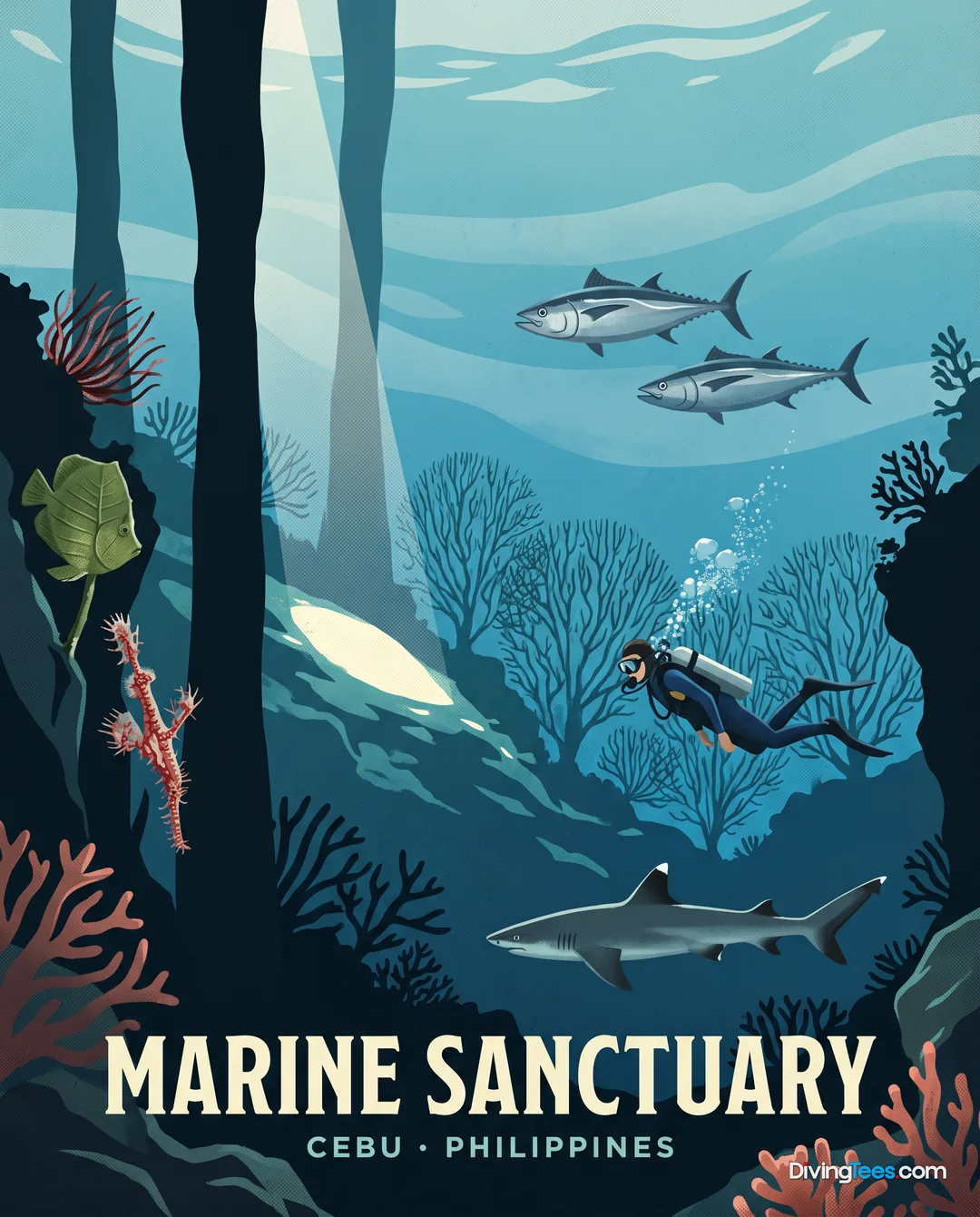
Marine Sanctuary →
Max. depth · 35 m
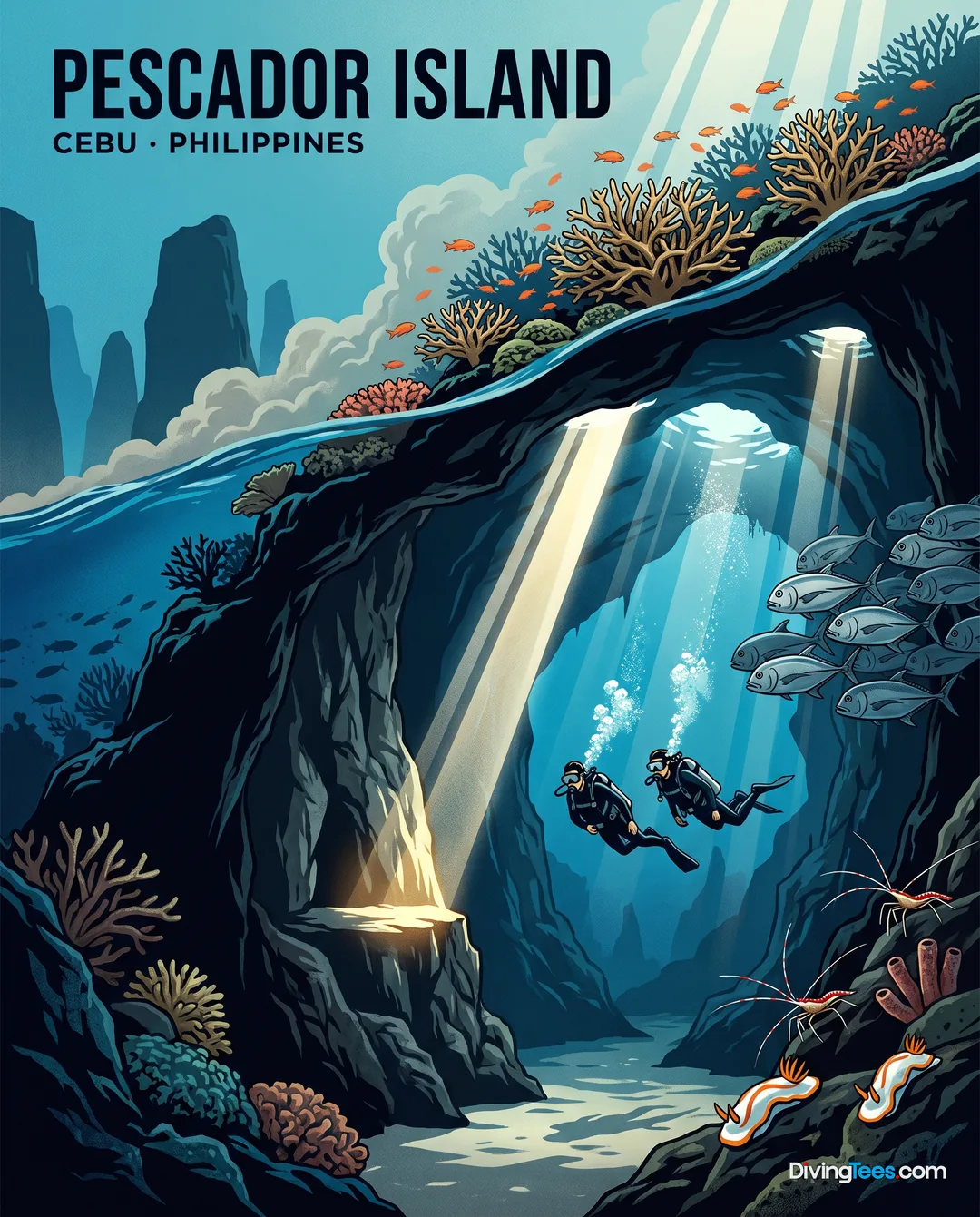
Pescador Island →
Max. depth · 40 m
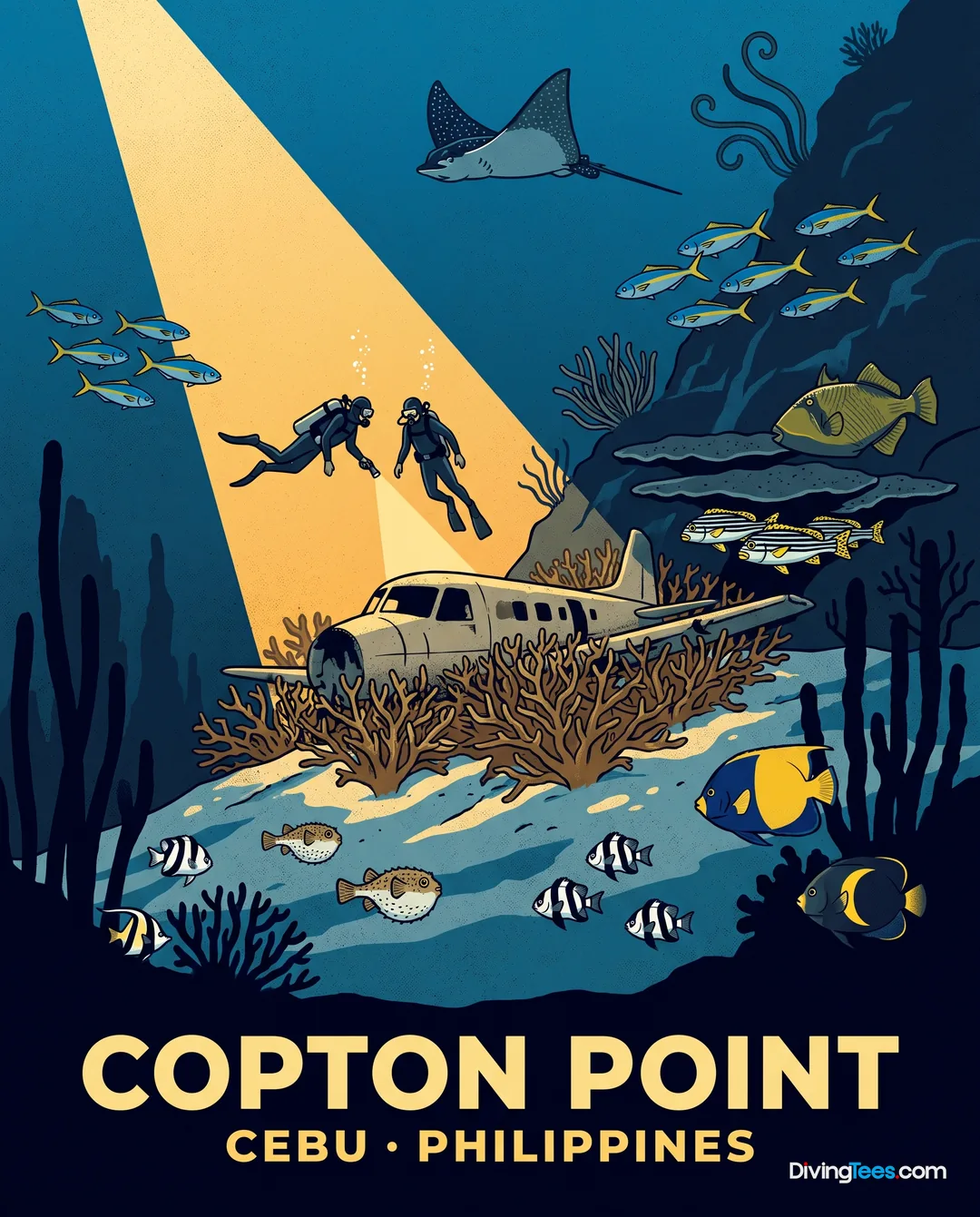
Copton Point →
Max. depth · 50 m
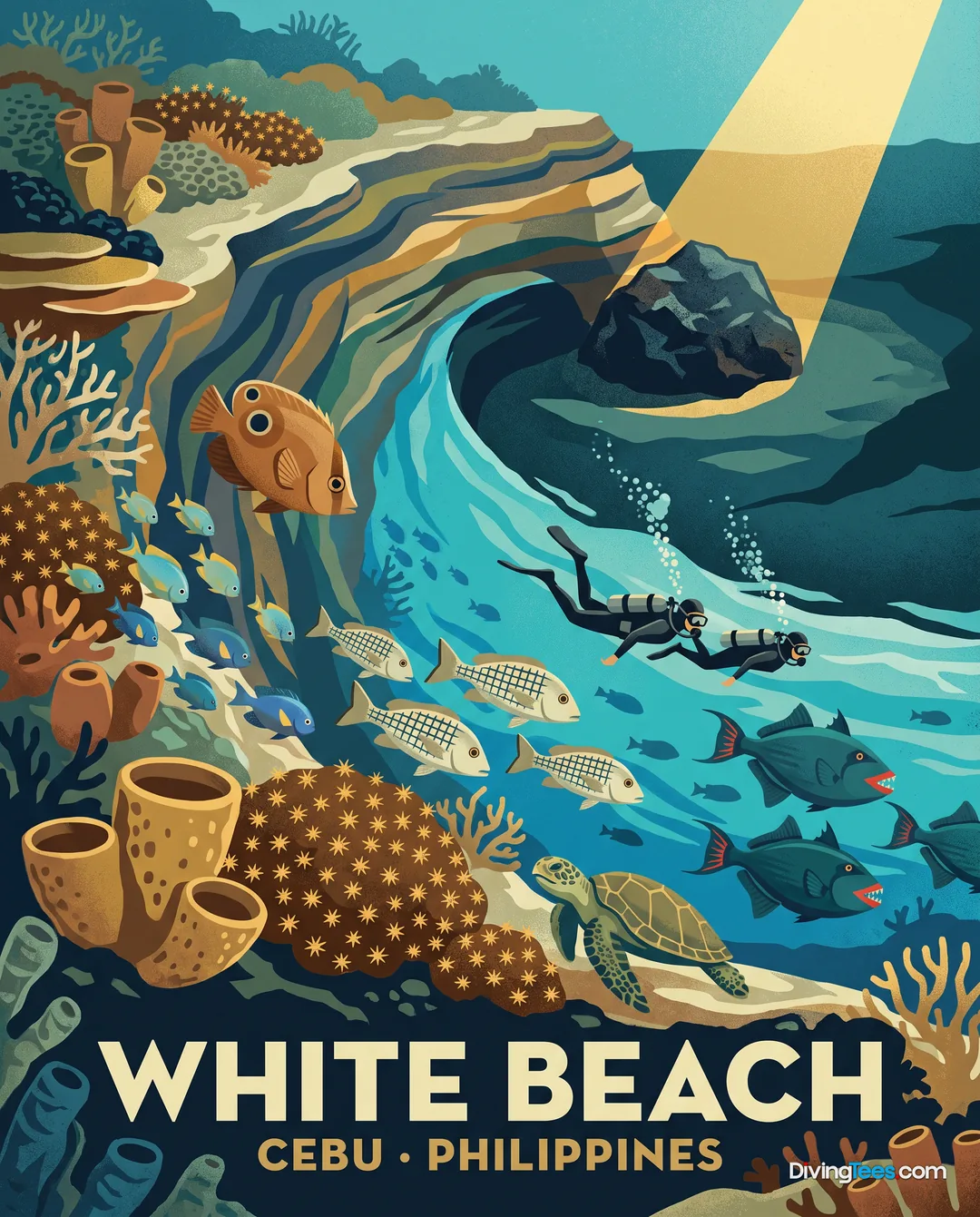
White Beach →
Max. depth · 30 m
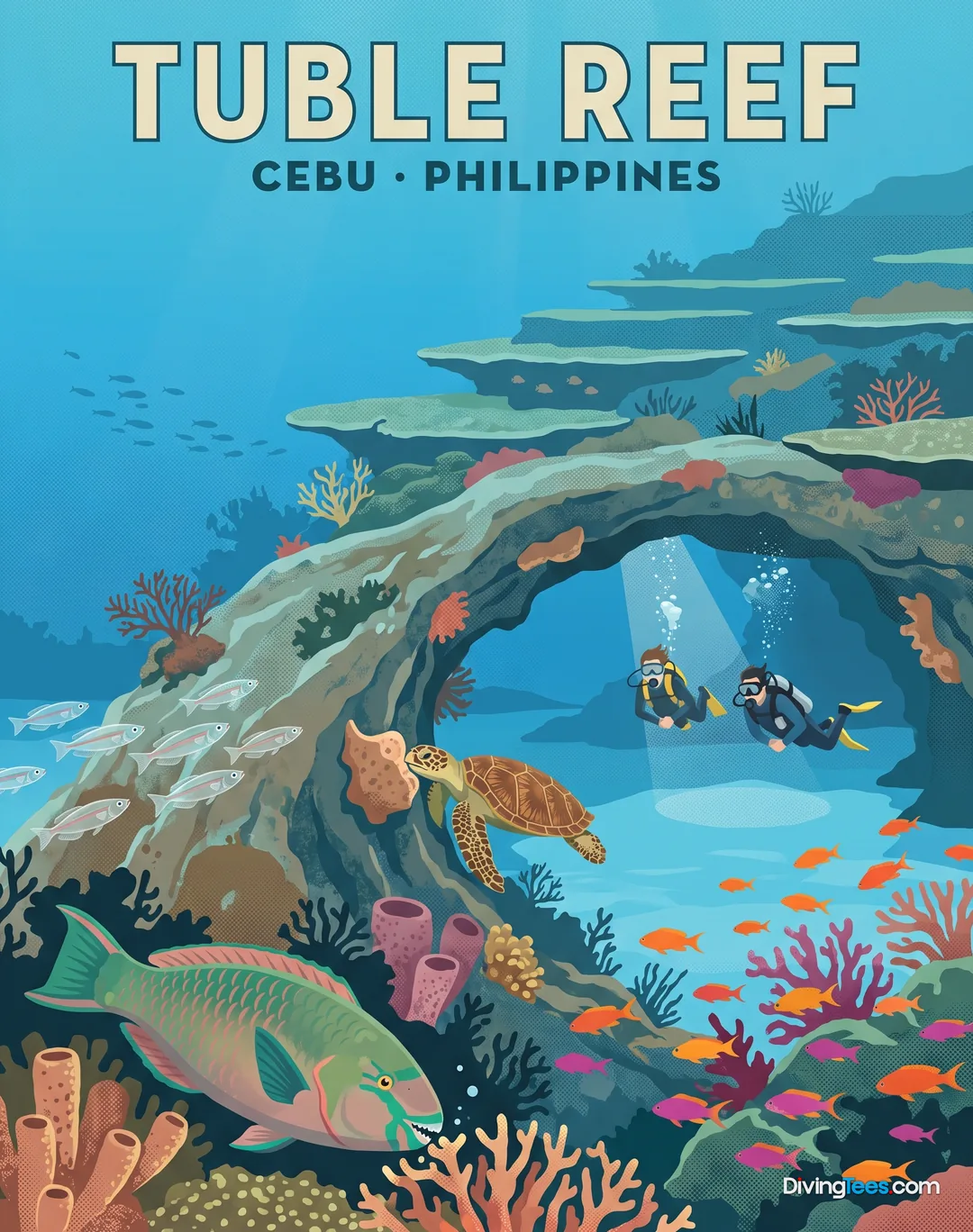
Tuble Reef →
Max. depth · 30 m
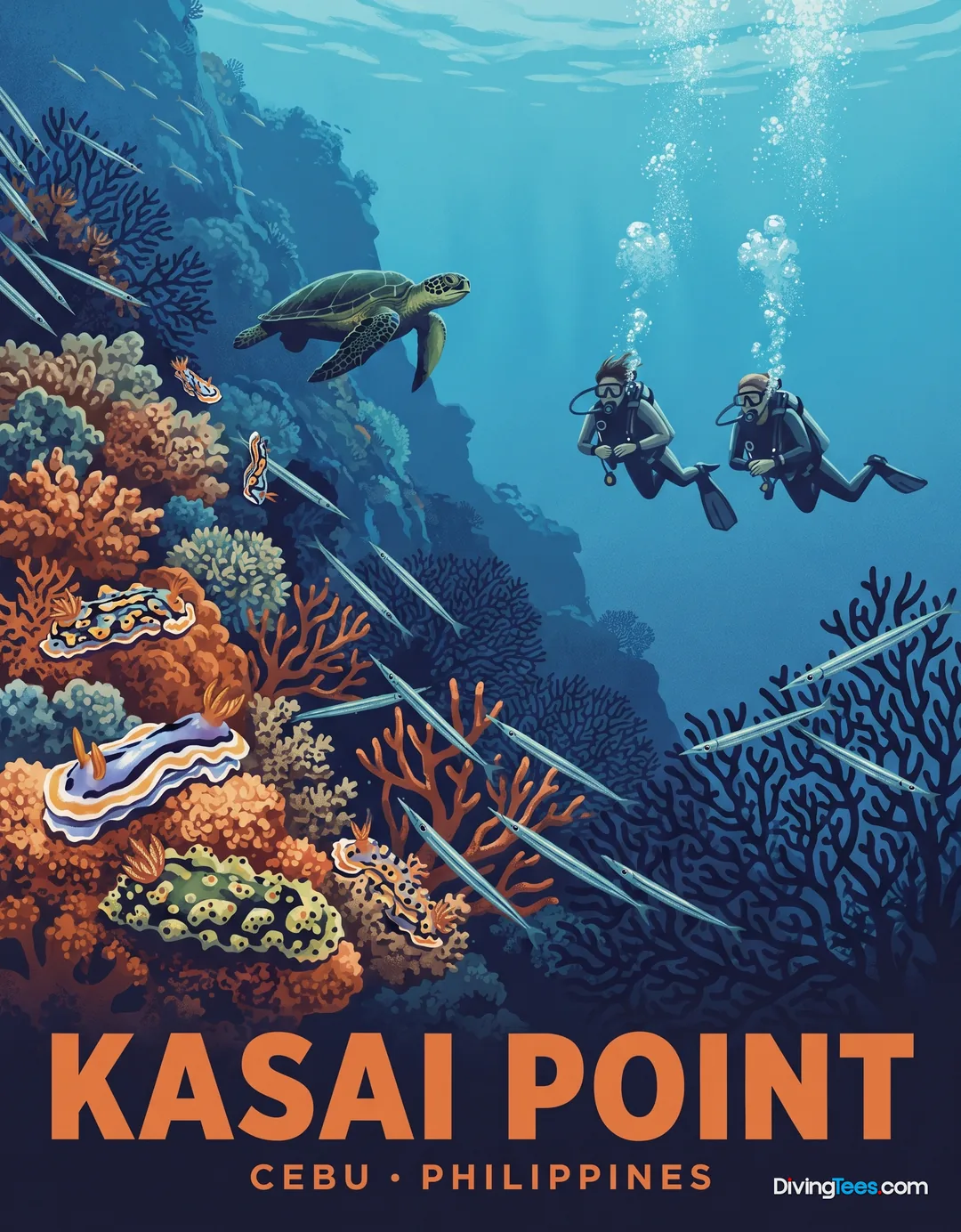
Kasai Point →
Max. depth · 37 m
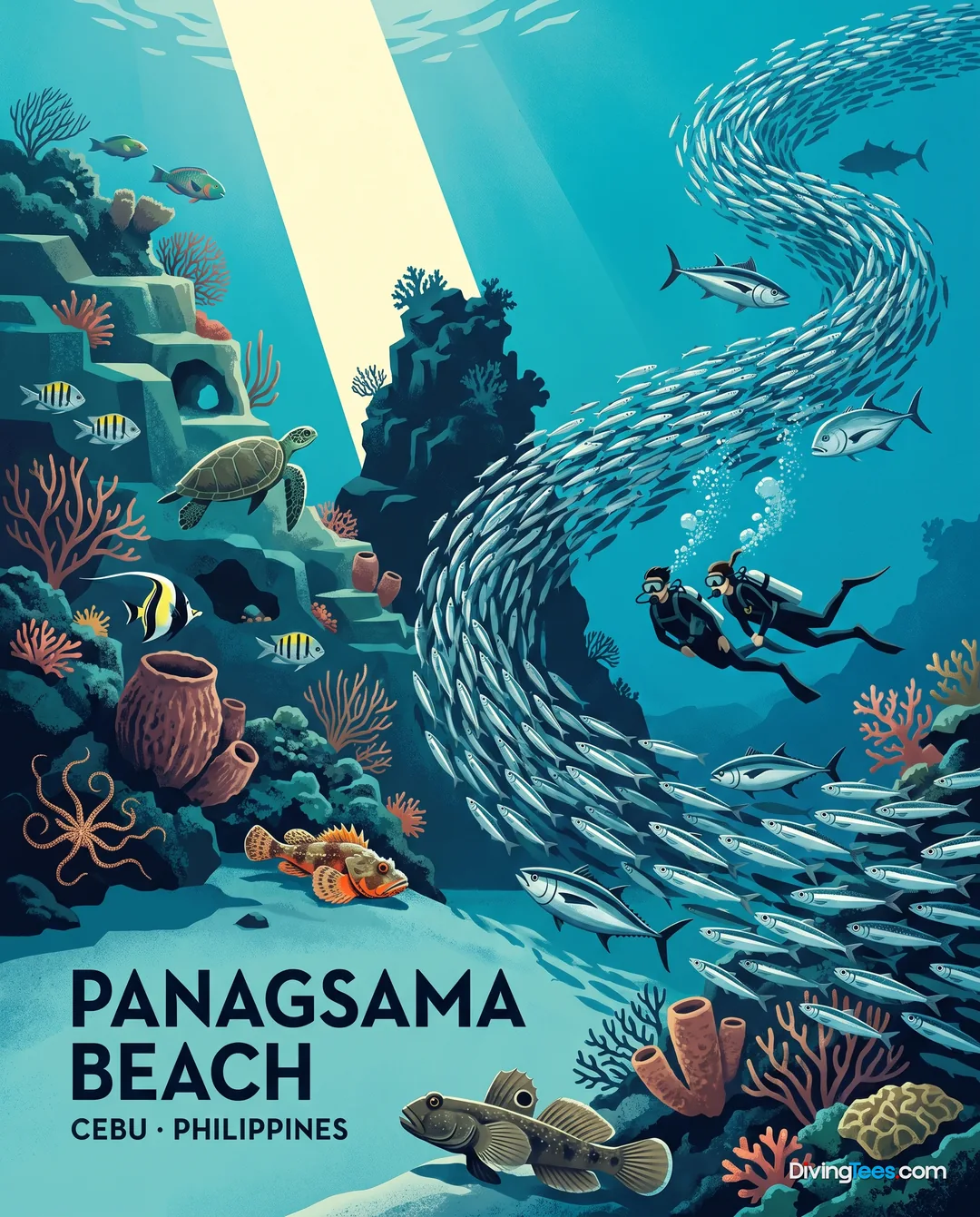
Panagsama Beach →
Max. depth · 30 m
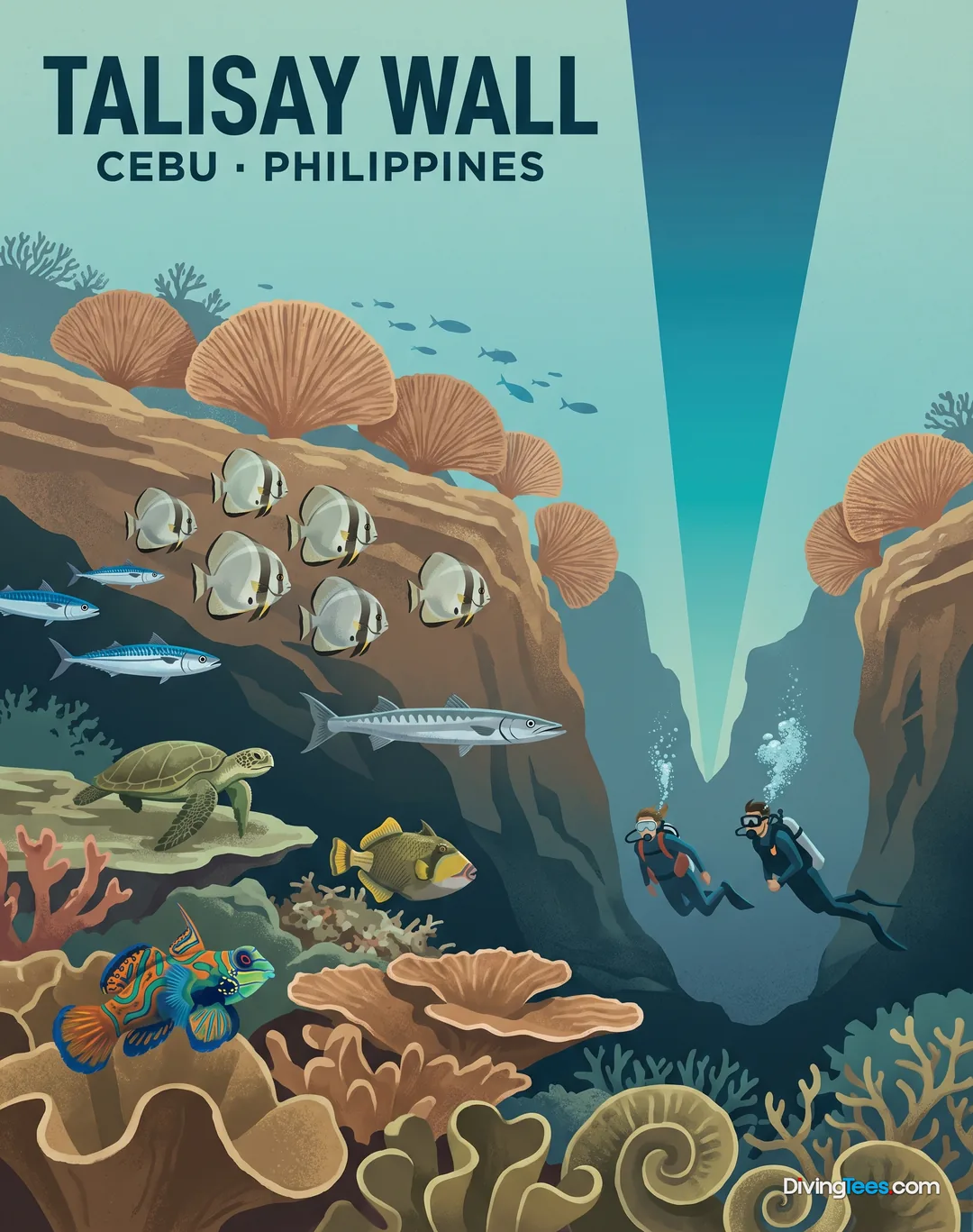
Talisay Wall →
Max. depth · 30 m
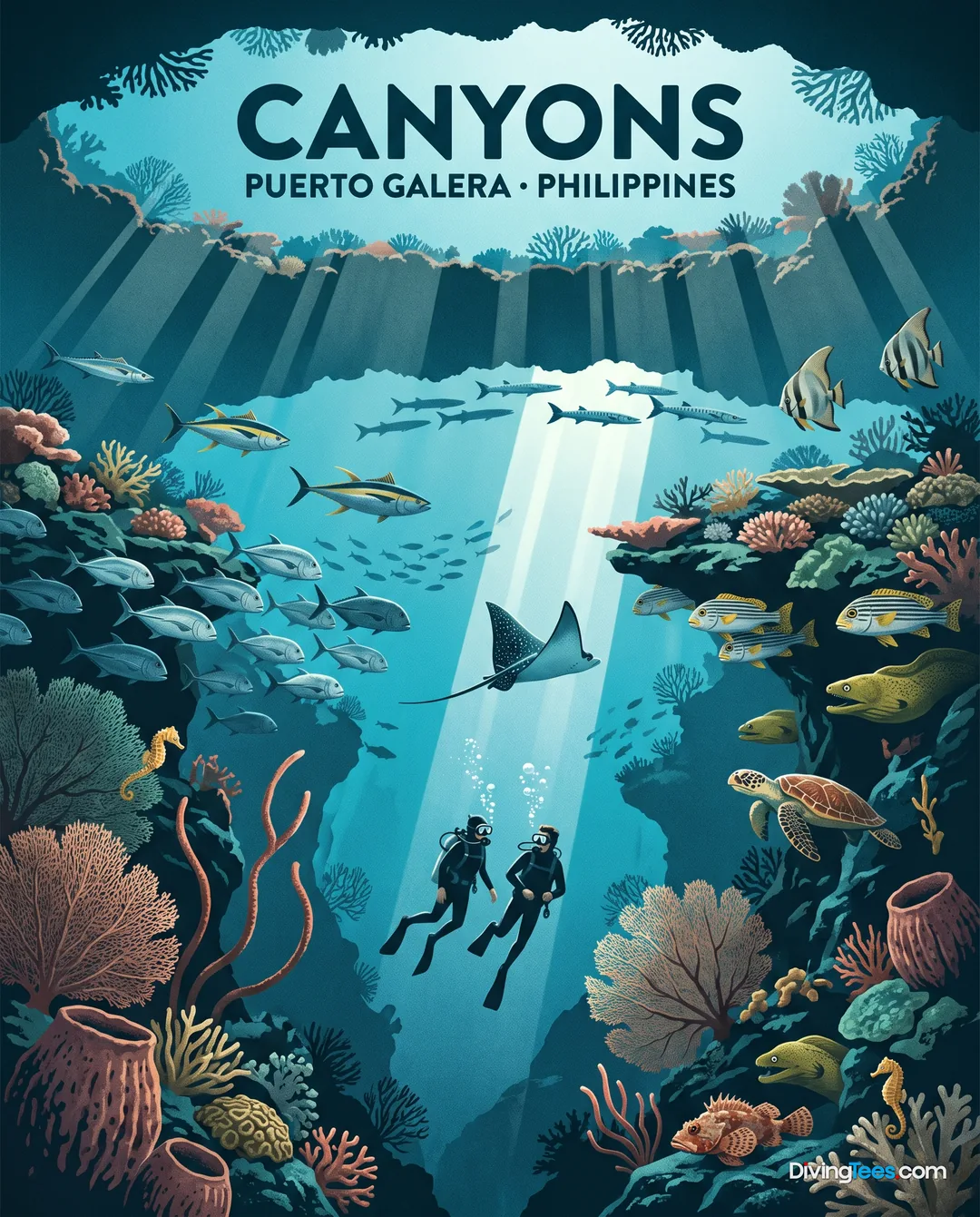
Canyons →
Max. depth · 35 m
What you’ll meet underwater
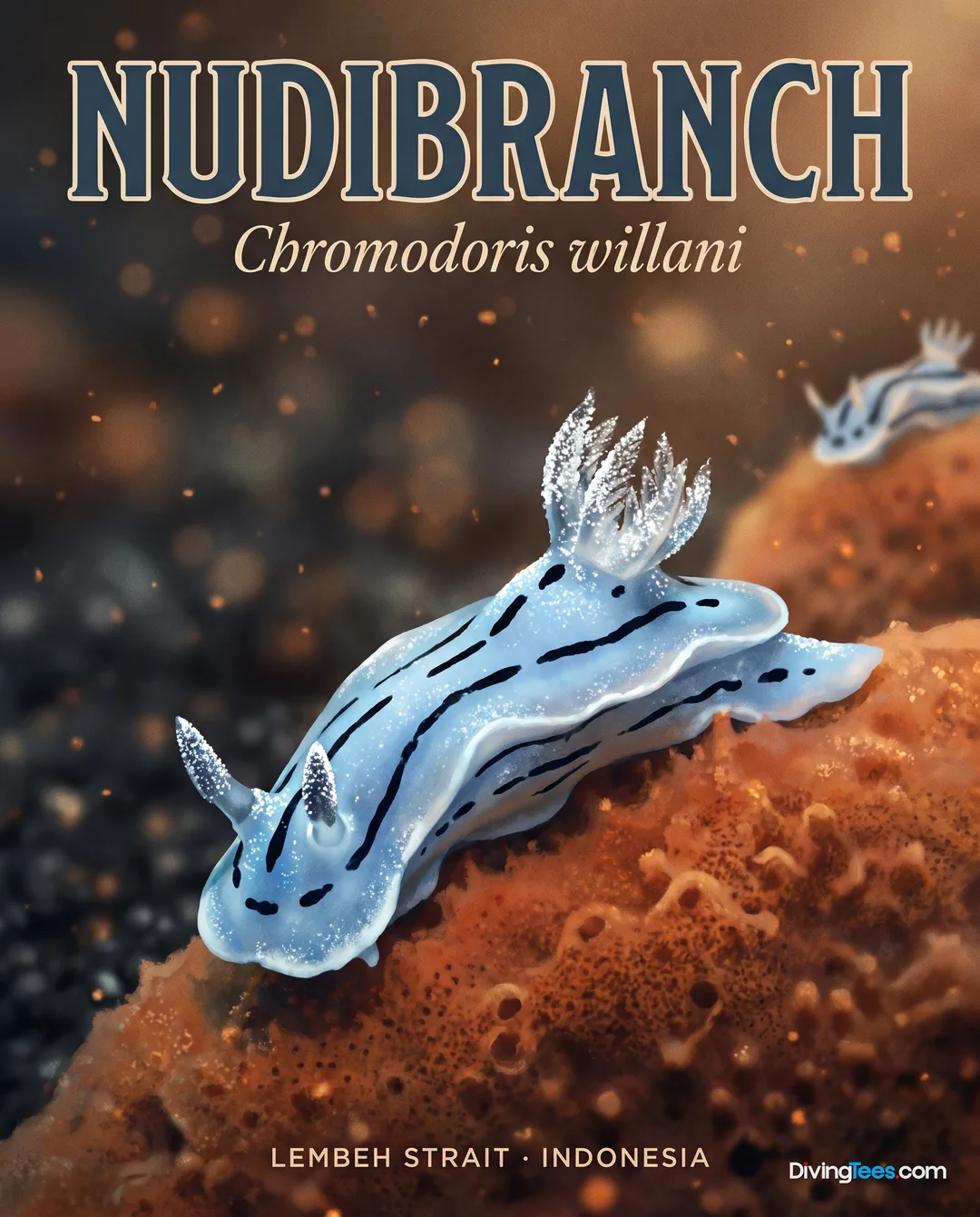
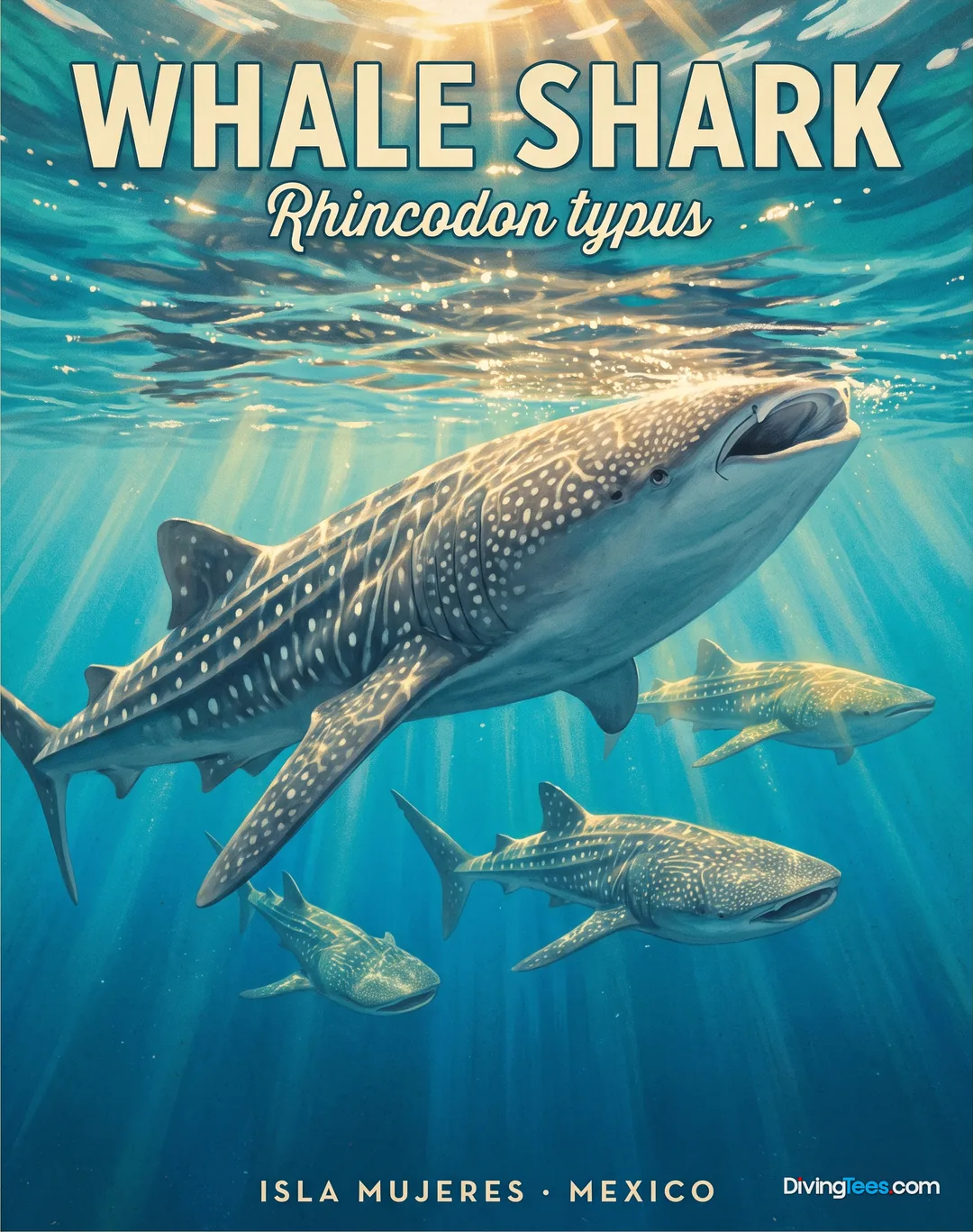
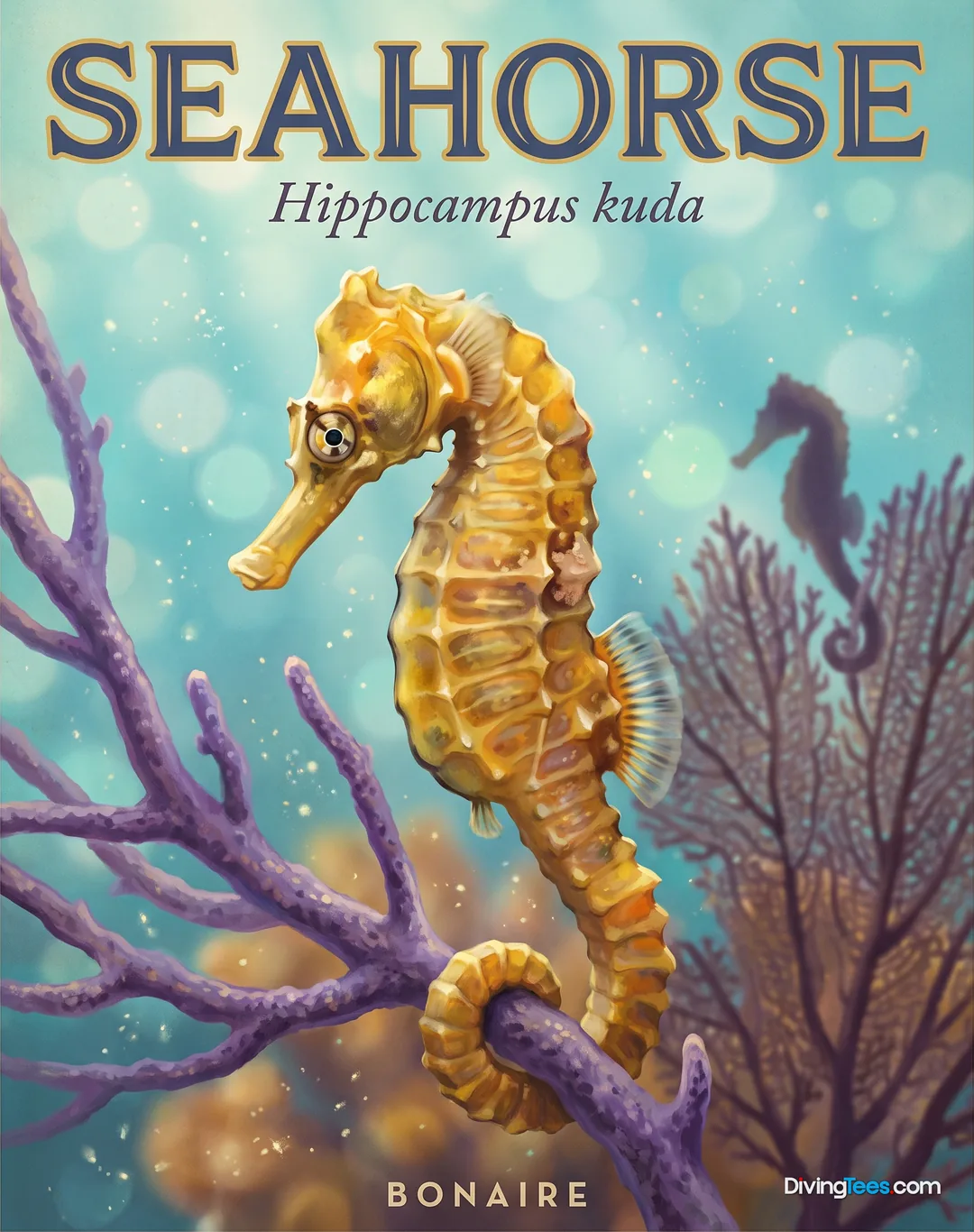
Sea turtles are the most consistent large-animal thread of this route, recorded at nine sites, while green turtles appear at four. Nudibranchs turn up across seven sites, and frogfish, tuna, whale sharks, gorgonians, and filefish recur often enough to keep both macro and wide-angle divers occupied. The site-specific sightings are what give the itinerary its edges: Marine Sanctuary is the place for grouper, Pescador Island for white-tip reef sharks and morays, and Dolphin House Reef for eels, seahorses, squid, and octopus. Dolphin House also has anthias, while White Beach is the named site for chromis. Tongo Point is where fusiliers and sweetlips stand out. At Panagsama Beach, thousands of sardines can gather into bait balls, with tuna and jacks driving through them. The encounter depends on the dive and the conditions, but the route gives animals a reason to return to several different kinds of reef rather than relying on one headline sighting.
Who puts you in the water
Every dive begins with a full briefing from the dive staff. When a dive leaves directly from the yacht, at least one staff member is in the water to help with photography, videography, and spotting; on tender dives, a staff member accompanies each tender group. That person is there to assist, not to lead every diver by force, and guests are not required to follow the staff member underwater. Dives are organised as buddy-team dives of two or three people, not as solo dives, and a staff member counts as a buddy only when the diver and that staff member are the only people in the dive. Advanced Open Water and nitrox training may be available aboard. The boat carries first-aid kits, fire alarms and extinguishers, radios, life jackets, rescue boats, and crew trained in first aid.
The dive deck and the gear
The dive platform is the working centre of the boat, with tenders available to carry divers to sites that are not entered directly from the yacht. The standard tank is an 80-cubic-foot aluminium tank filled with air and fitted with a K valve; the Philippines Aggressor II also accommodates DIN connections, so a DIN adapter is not needed. Larger 100-cubic-foot or 15-litre tanks may be requested for an additional charge, but availability is not guaranteed. Nitrox is available for certified divers as an optional extra, with 32% fills; a nitrox course can also be taken aboard. Rental equipment is available, and sidemount is accepted only with a single cylinder. A camera room and charging stations support photographers between dives. The setup does not support rebreathers, and underwater scooters or powered boards are not permitted.
Between dives
Between dives, the best places are the terrace, the salon, and the camera area. The terrace gives divers somewhere to dry off and watch the water; the salon offers shade, air conditioning, audio and video entertainment, and a bar. Photographers have dedicated camera space and charging stations, so a camera can be rinsed, checked, and prepared without taking over a dining table. The library is the quieter option when conversation has run its course. An afternoon without a dive can be spent outside or in the salon rather than confined to the cabin, and the boat also carries a barbecue area for time ashore. These are practical spaces for a dive-heavy week, not a resort programme competing with the reef.
A day on board
The day starts with the first dive briefing, then moves through repeated cycles of gearing up, entering the water, surfacing, eating, and getting dry before the next call. Tenders take groups to sites when the yacht is not the entry point; elsewhere, divers work from the platform with staff support in the water. Breakfast, lunch, dinner, and snacks divide the diving without turning the boat into a timetable of fixed hours. The quiet gaps belong to the terrace, the salon, camera preparation, or a short sleep in the cabin. As the day closes, the bar, library, and audio-video entertainment replace the equipment routine, and the weekly adventure video gives the group something shared to watch. Then the cameras are charged, tanks are checked, and the next briefing is waiting.
What you eat aboard
Meals are included throughout the trip, with gastronomic cooking shaped by local cuisine as well as familiar full-board service. Breakfast, lunch, and dinner are joined by snacks, non-alcoholic drinks, tea, coffee, water, beer, and wine. The galley also handles vegetarian and vegan options, while dinner can be ordered à la carte. A beach barbecue gives the route a change of setting when the itinerary allows it. On a boat making repeated dives, the table is part of the dive operation: food has to arrive without turning the gaps between entries and exits into a long interruption. The strong food feedback fits the range offered here—local dishes, barbecue, and chef-prepared meals rather than one fixed menu repeated for a week.
Nights at sea
The cabins are on the lower deck, with portholes and private bathrooms rather than hotel-style views over the sea. Balcony Suites and Deluxe Staterooms are both air-conditioned, and the cabin categories matter less for decoration than for how much of the day is spent outside them. After a dive, the useful luxury is a dry place to shower, cool down, and sleep before the next briefing. The balcony access gives the suite a more open retreat, while the rest of the boat carries the social life: salon, terrace, bar, and library. A small library is worth more than another television on a diving trip, especially when the legs are tired and the next equipment check is still ahead. The rooms are a base between dives, not the reason to stay aboard.
Balcony Suite
Deluxe Stateroom
What to know before boarding
The cruises depart from Cebu and return to Cebu. Airport and hotel transfers are included, with the arrangements communicated as part of the booking and arrival information. Arriving in Cebu the night before boarding is the sensible choice, leaving the trip less exposed to flight delays.
Deck plan
- Year built
- 2024
- Length
- 42.7 m
- Beam
- 8.5 m
- Maximum number of passengers
- 26
- Number of cabins
- 13
- Number of bathrooms
- 13
- Cruising speed
- 8 knots
- Website
- aggressor.com ↗
Hello, I'm Marina, DivingDeal.com's AI assistant. I answer in detail about hotels, dive centres and liveaboards.

Thinking about the whole trip and the flights? Talk it over with Edith →
Marina is an AI. Some links are affiliate links: DivingDeal may earn a commission, at no extra cost to you. Bookings are made with the partner.