Liveaboards · Thailand
The Junk — a historic wooden dive ship with a working-boat soul
What makes this boat unique
- A 33-metre Chinese-style junk built in 1962 and renovated in 1997.
- Six air-conditioned en-suite cabins accommodate up to 18 passengers.
- The shaded dive deck has personal storage, 12-litre aluminium tanks, DIN adapters and separate camera-rinse facilities.
- Routes run to the Similan and Surin Islands from Thap Lamu, on 5-day/4-night or 7-day/6-night trips.
- The boat appeared in The Man with the Golden Gun.
For subtitles in English: start the video firstthen click the gearat the top right of the video, select “Subtitles/CC”, then “Auto-translate” and choose “English”.
The invitation
The Junk is for divers who want the boat itself to be part of the trip. This is a working wooden vessel with a history, not a modern yacht designed to disappear behind polished finishes. She takes divers to the Similan and Surin Islands, Koh Bon and Koh Tachai, then gives them a place with enough character to make the crossings matter. The attraction is the combination: serious diving, a small group, Thai food, and a ship whose timber and proportions still belong to another era. The boat scores lower for hardware than for its crew, food and diving. That is the honest trade. The cabins are basic, but they are air-conditioned, en suite and reported to sleep well; the crew is where the experience gains its strength. Choose The Junk when a well-run dive week on an old wooden ship sounds better than a newer vessel with less to say.
Boarding
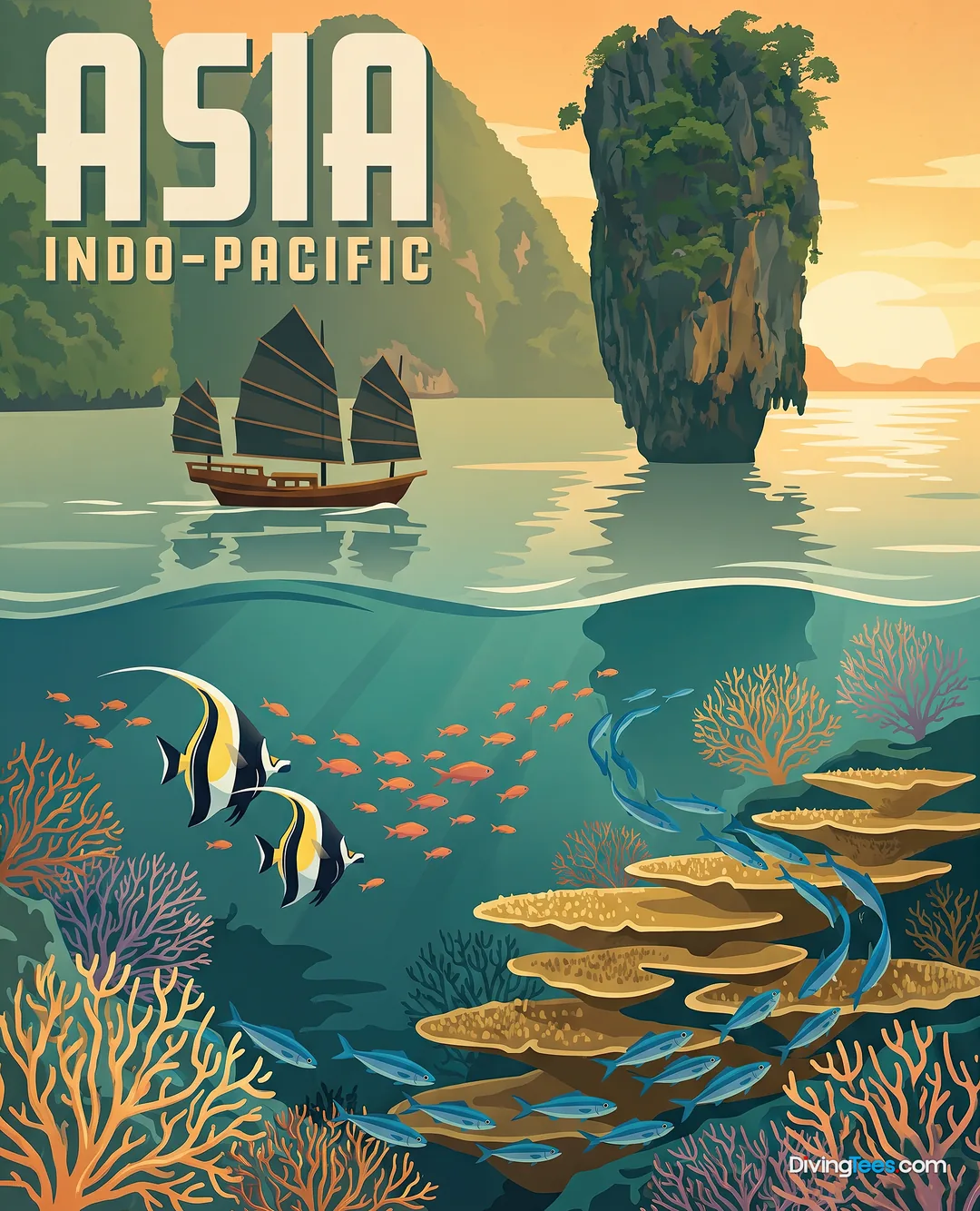
The Junk comes alongside with the presence of an old working boat: painted wood, broad lines and the visible signs of a vessel that has spent years at sea. She began life as a merchant ship hauling charcoal around Southeast Asia, and that past is easier to sense in the hull than in any piece of decoration. She also appeared in The Man with the Golden Gun, but the film connection is a footnote once divers step aboard. Inside, the saloon and covered dining areas lead naturally towards the shaded dive deck and the open deck above. One Hino engine drives the boat, so engine noise is part of the experience rather than something hidden behind yacht-style insulation. The reward is a boat with real identity: you know where you are, and why this vessel is different from the line of newer liveaboards at the pier.
The atmosphere on board
The atmosphere is shaped less by the boat’s age than by the people running it. The crew handles the difficult parts of diving without making them theatrical: moving equipment, helping divers in and out, keeping meals coming and staying alert to what the group needs next. Guides are organised and safety-focused, while the wider crew works as a team rather than as separate departments. That shows by the end of a trip. Divers who arrive as strangers tend to meet over the buffet, compare the day’s sightings and stay talking after dinner. Experienced guests bring stories to the table, and newer liveaboard divers have room to ask questions without being made to feel out of place. The result is sociable but not forced. The Junk’s strongest asset is the human one.
The sites you’ll dive
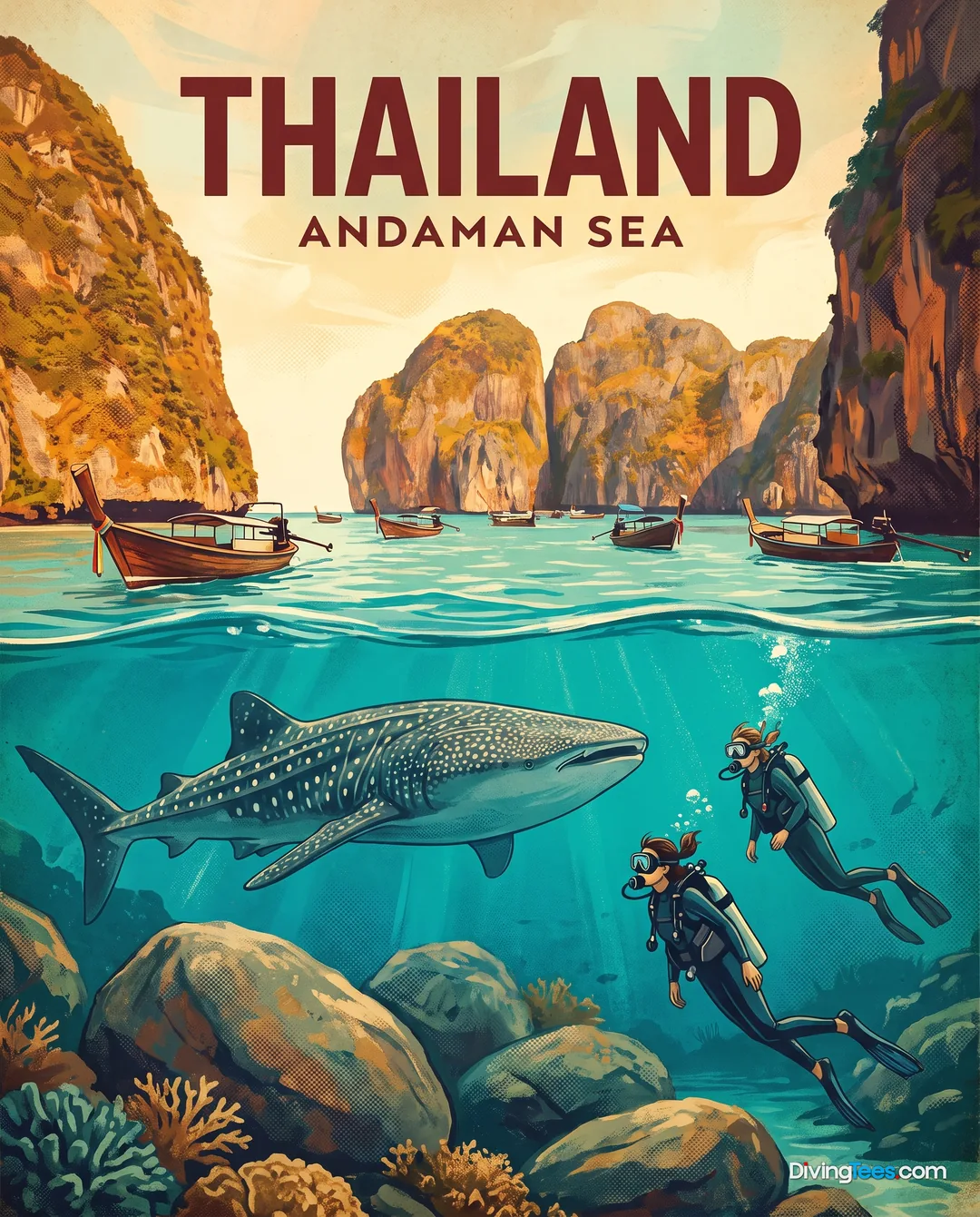
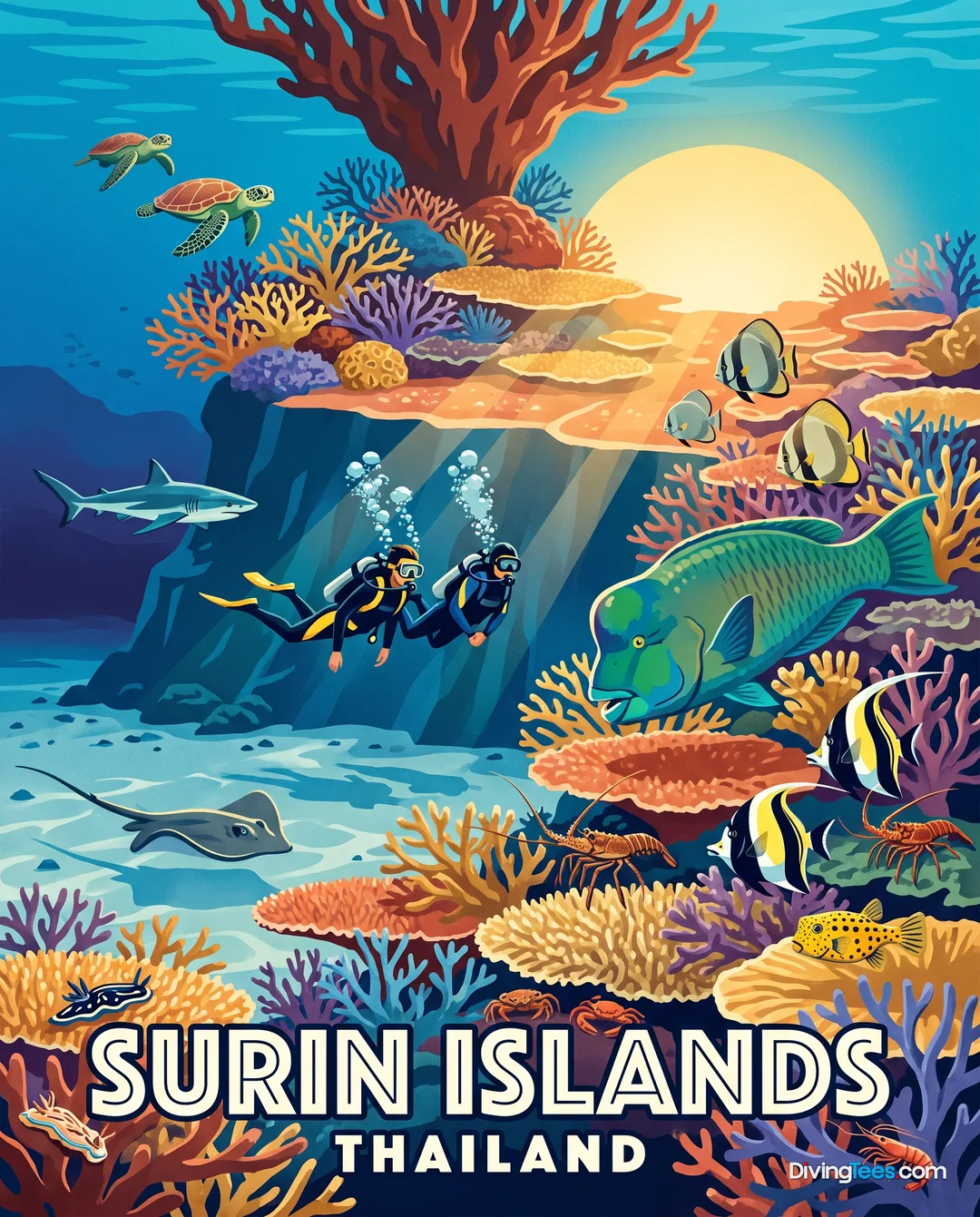
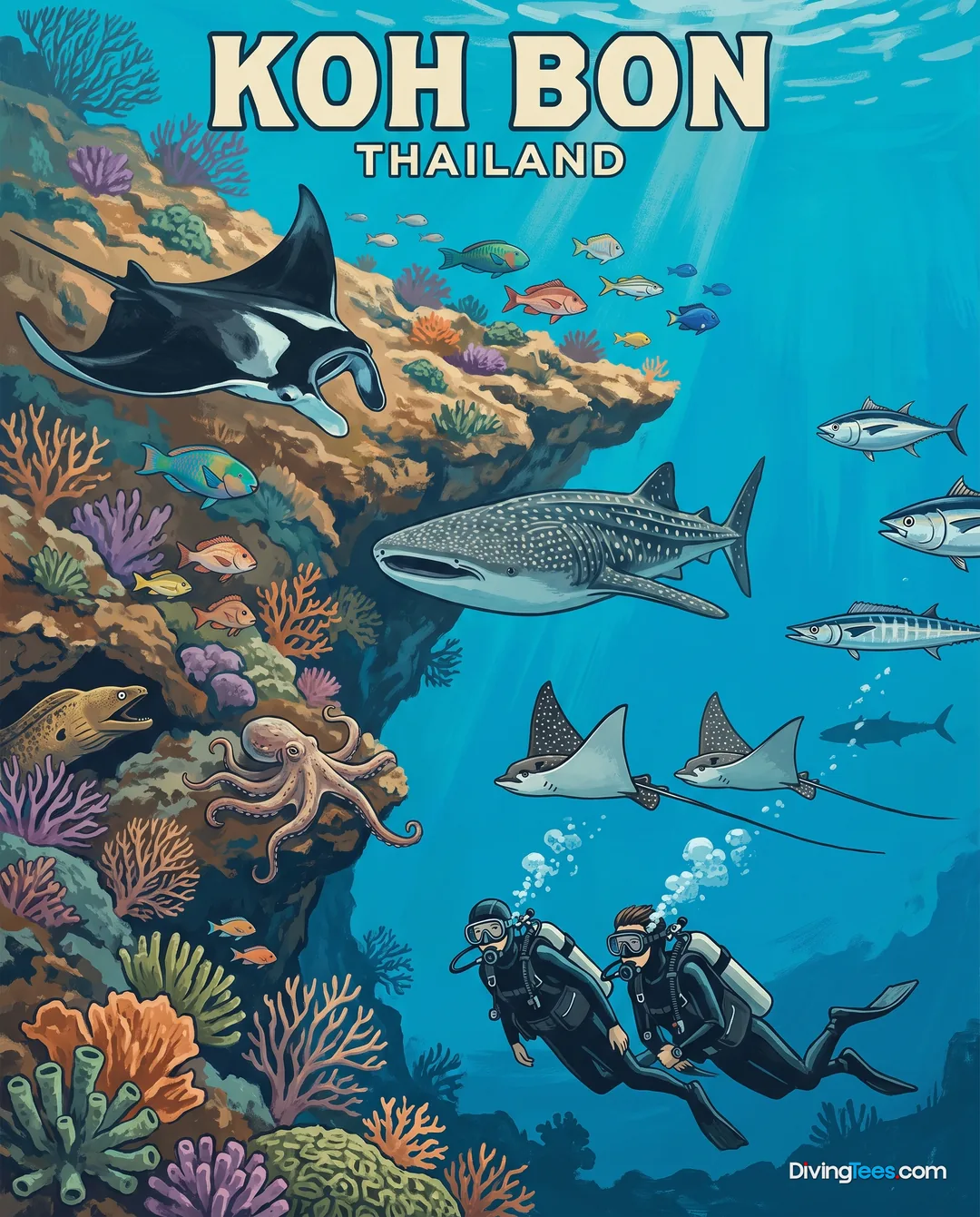
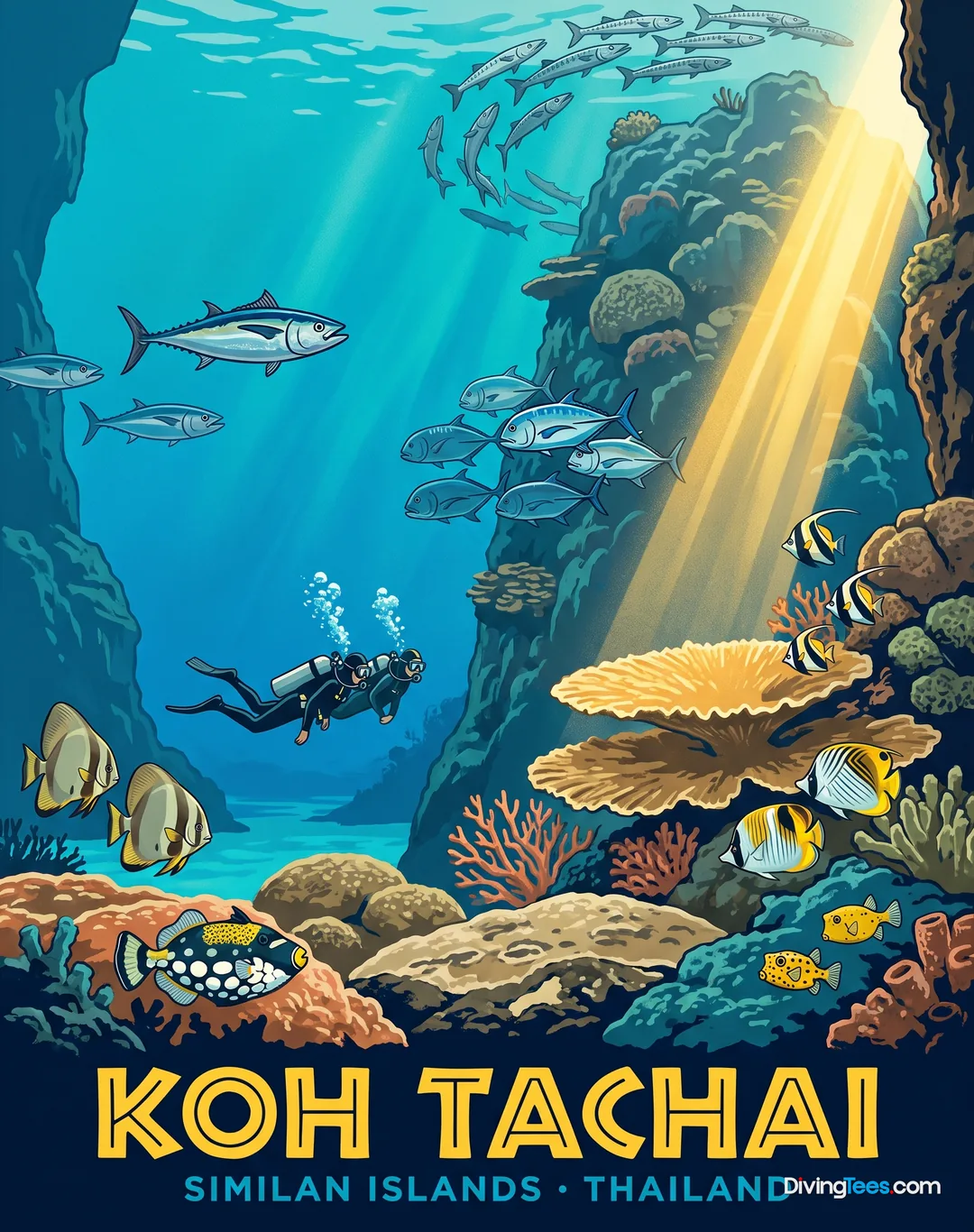
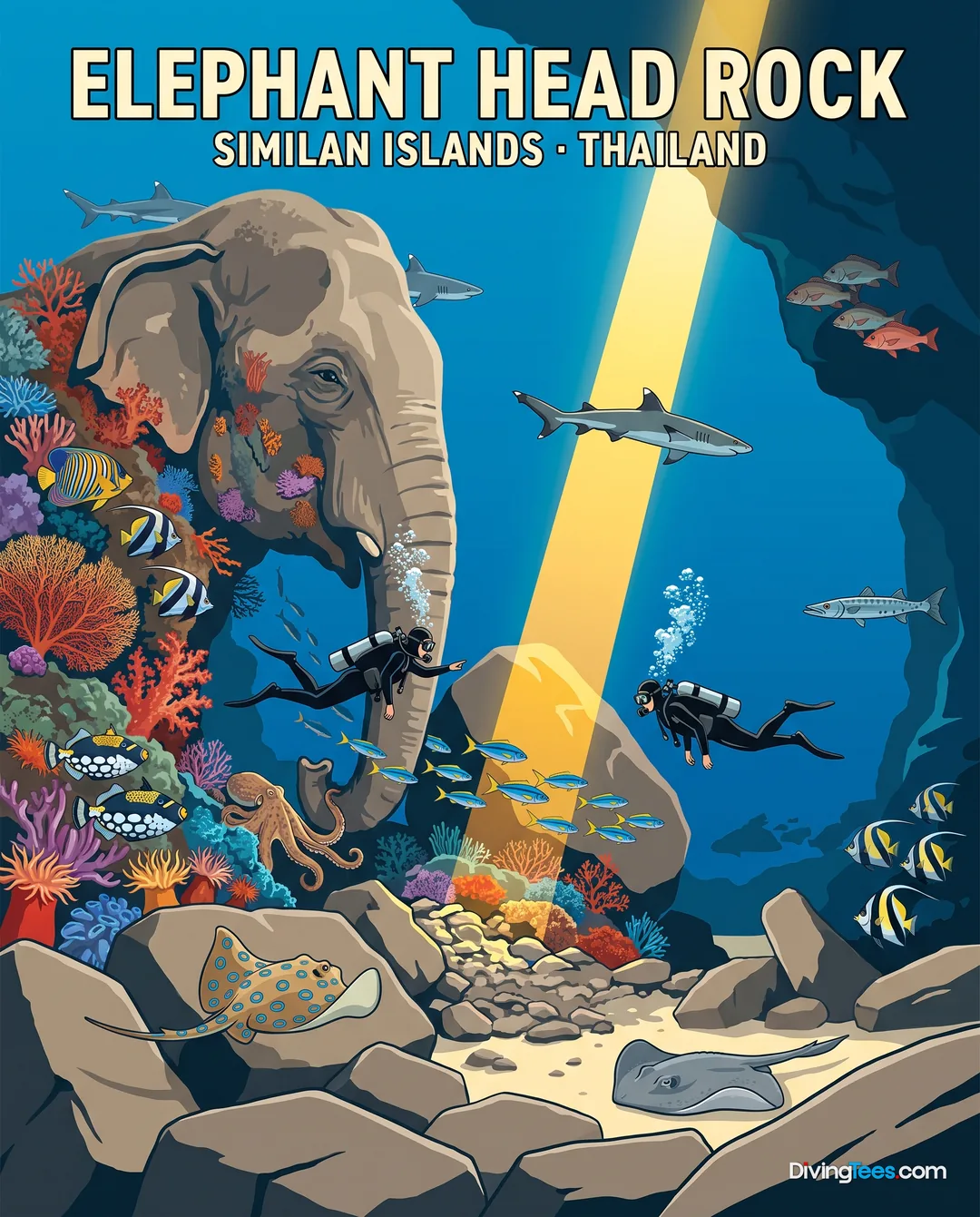
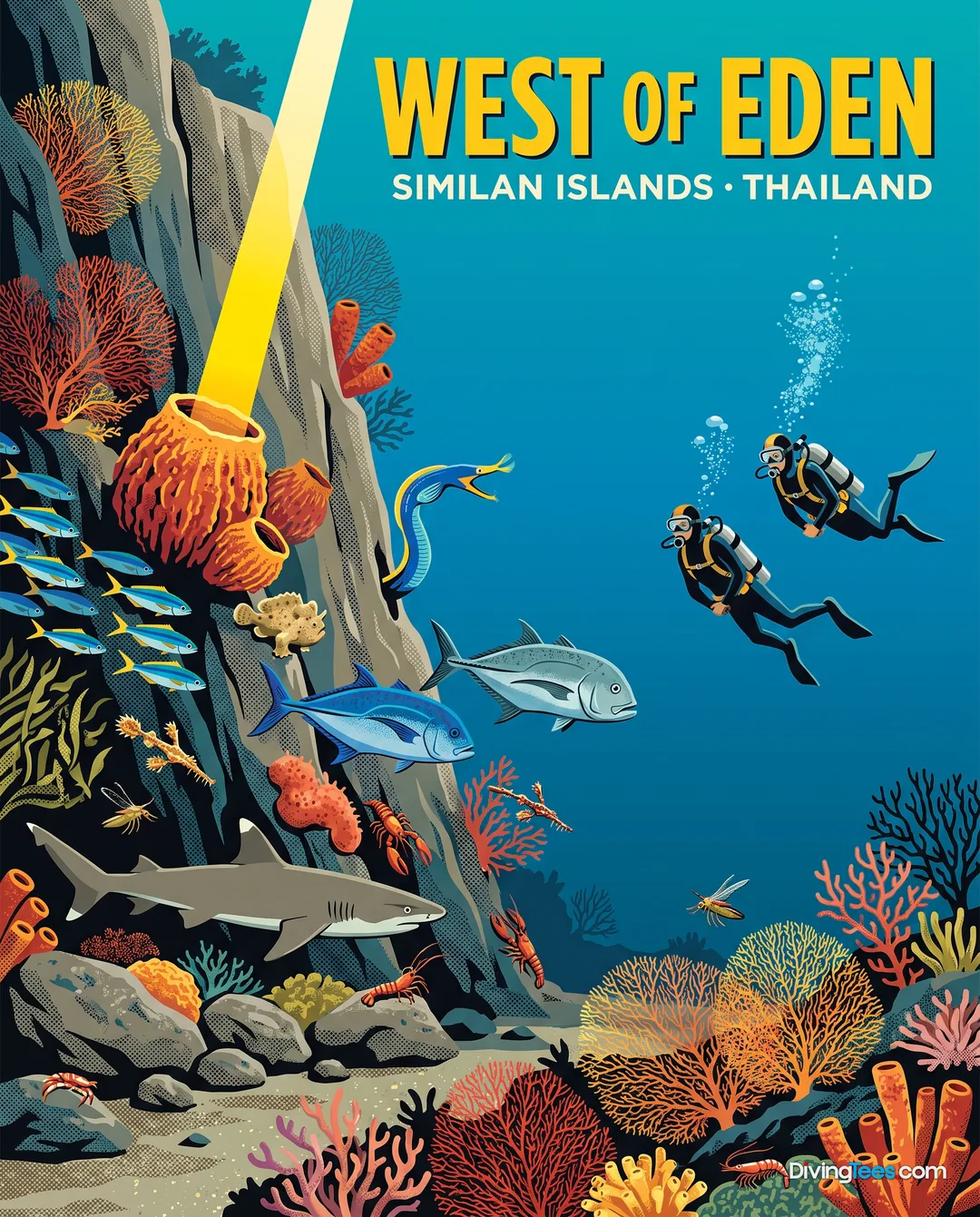
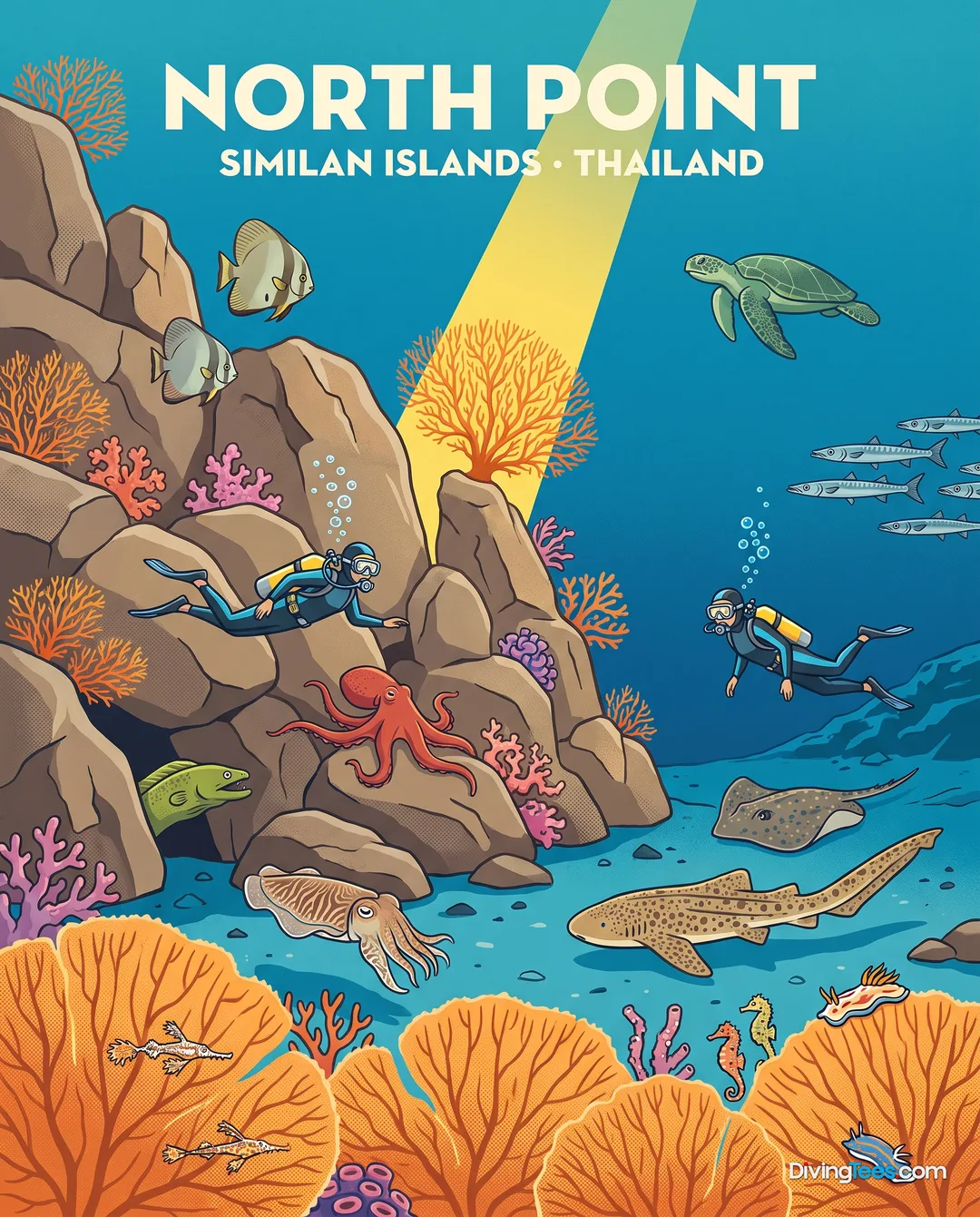
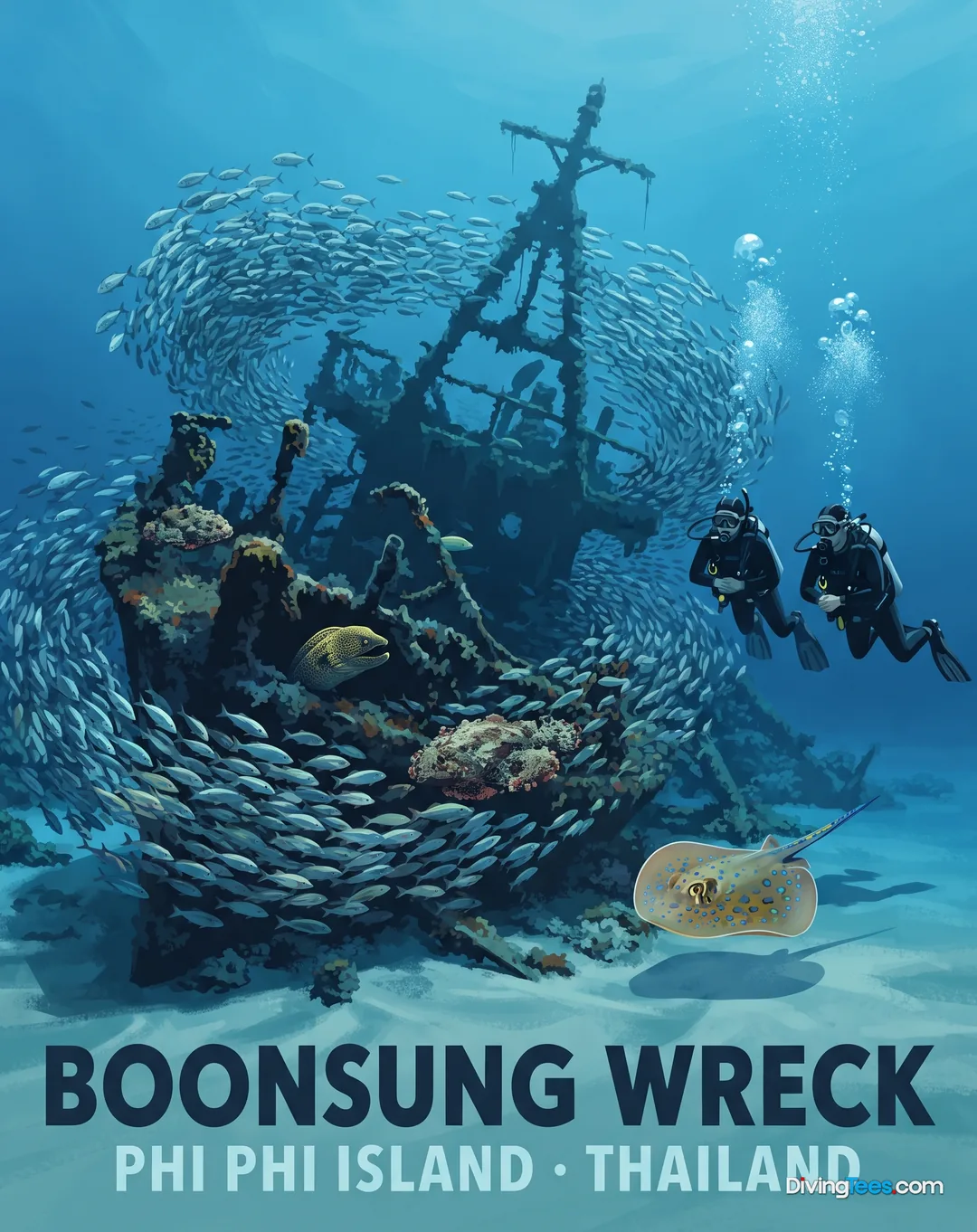
The 5-day/4-night and 7-day/6-night routes leave from and return to Thap Lamu, covering the Similan and Surin Islands and nearby sites in the Khao Lak zone. The Similans combine coral reefs with granite boulders and pelagic water, reaching -40m. Surin is shallower at -25m, with hard-coral gardens and granite outcrops. Koh Bon is the manta site: its walls and cleaning station give rays a reason to pass close. Koh Tachai brings submerged pinnacles and pelagic action to -40m, while Elephant Head Rock drops to -60m through arches, tunnels and caverns where reef sharks shelter. Anita’s Reef slopes gently to -35m over sand and coral gardens; West of Eden reaches -40m through granite canyons, soft corals and gorgonians; North Point reaches -35m through deep channels and coral-covered pinnacles. Boonsung Wreck is the shallowest highlight at -18m, an old tin dredger now dense with fish. The route works because the sites change character from one dive to the next.
What you’ll meet underwater
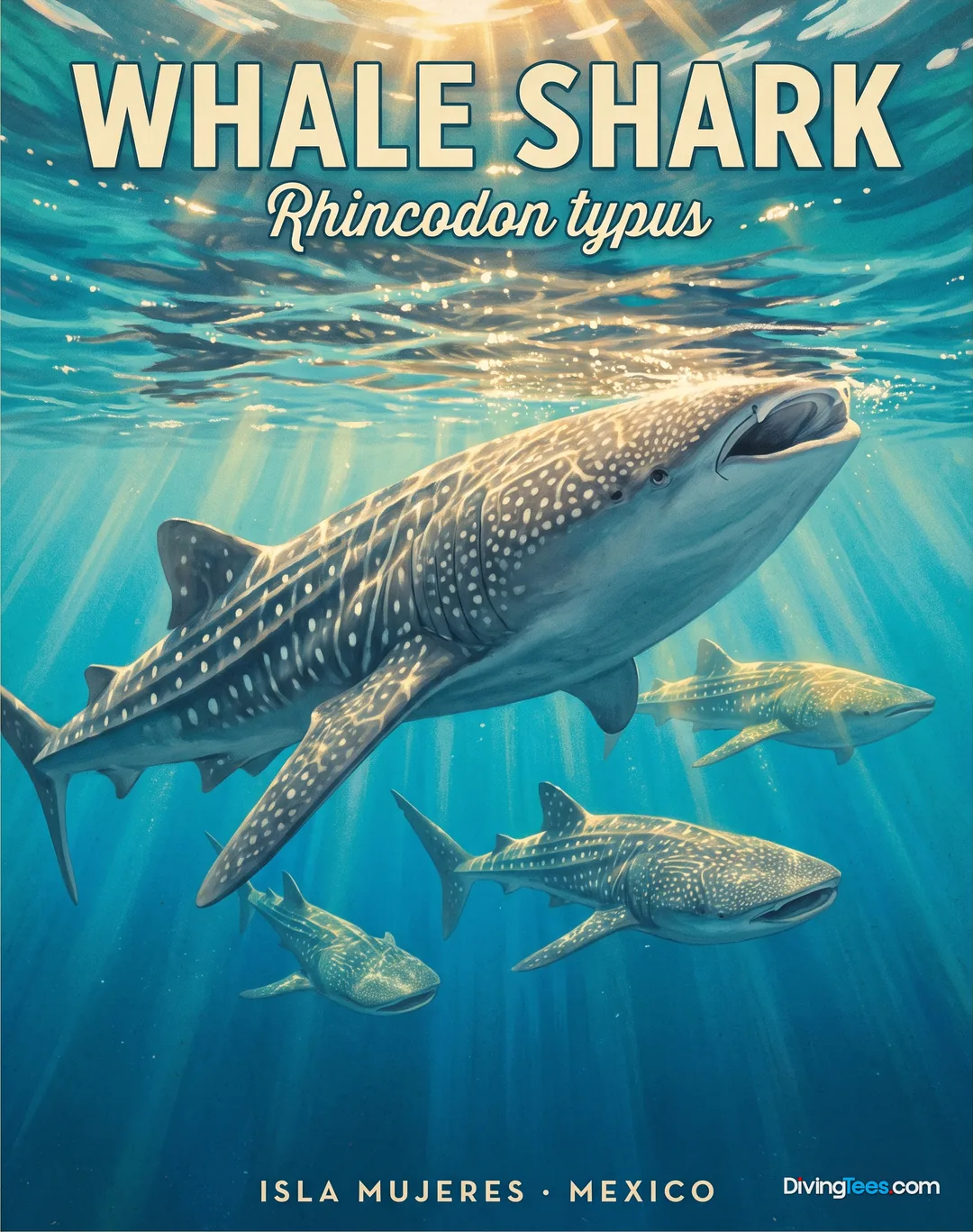
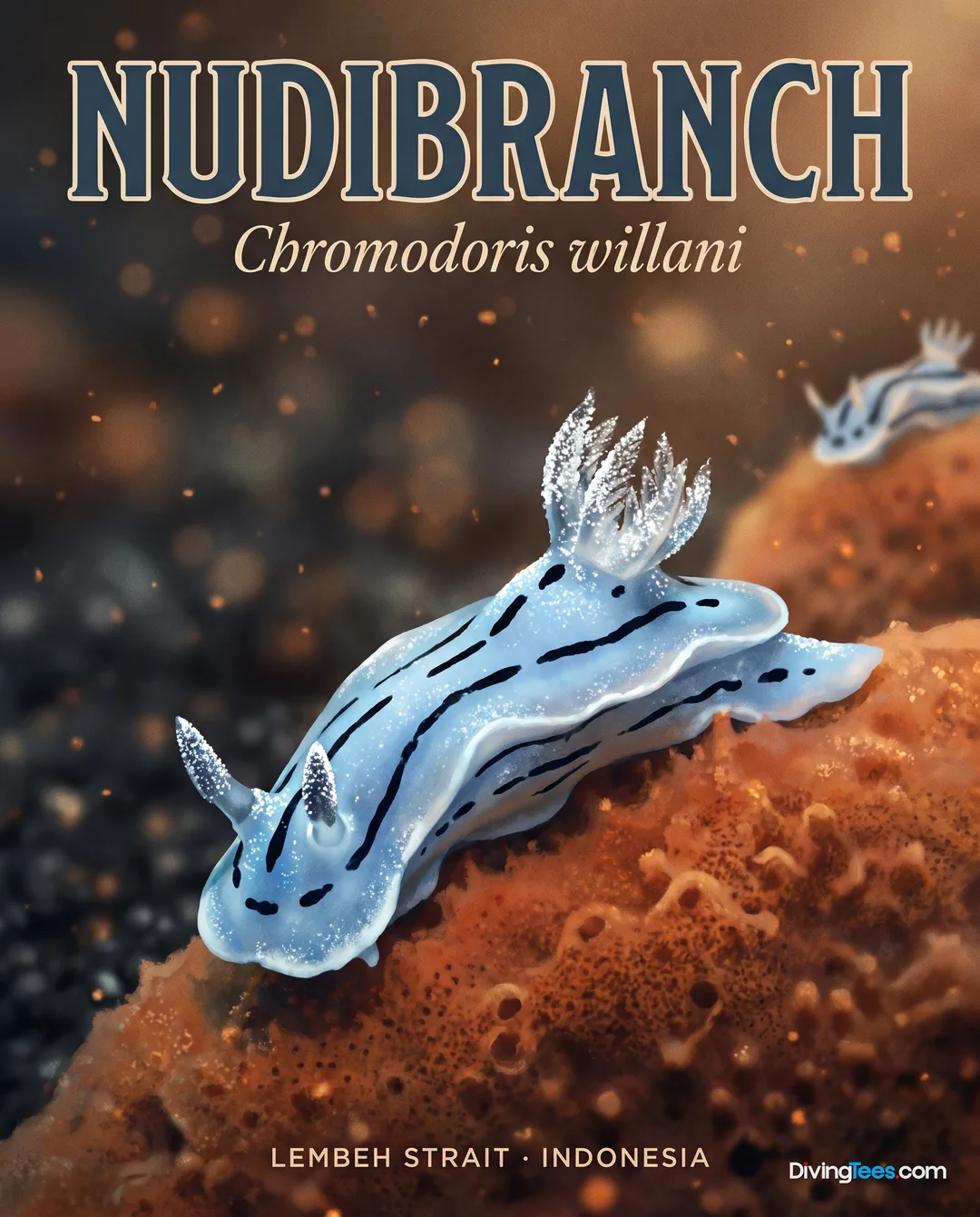
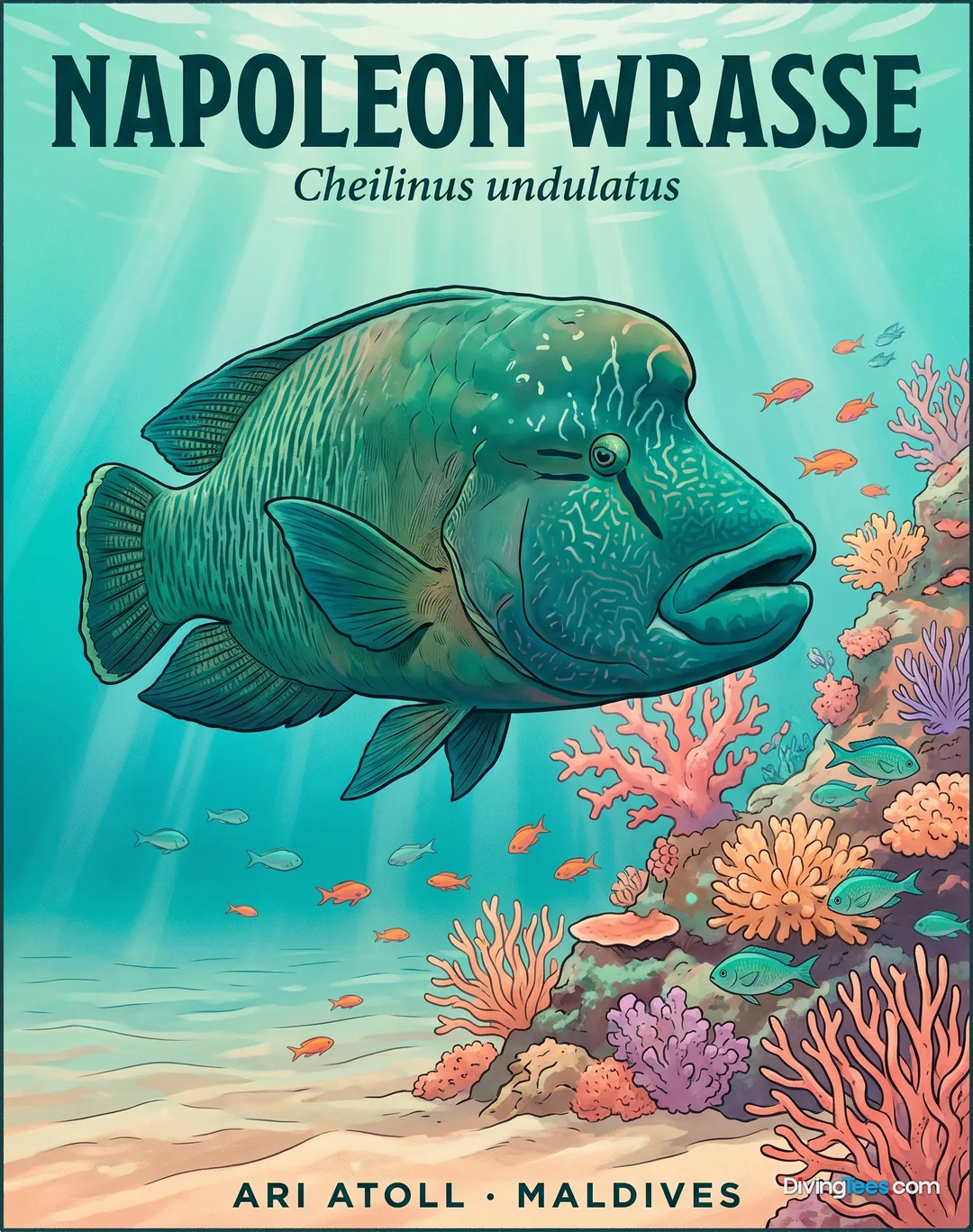
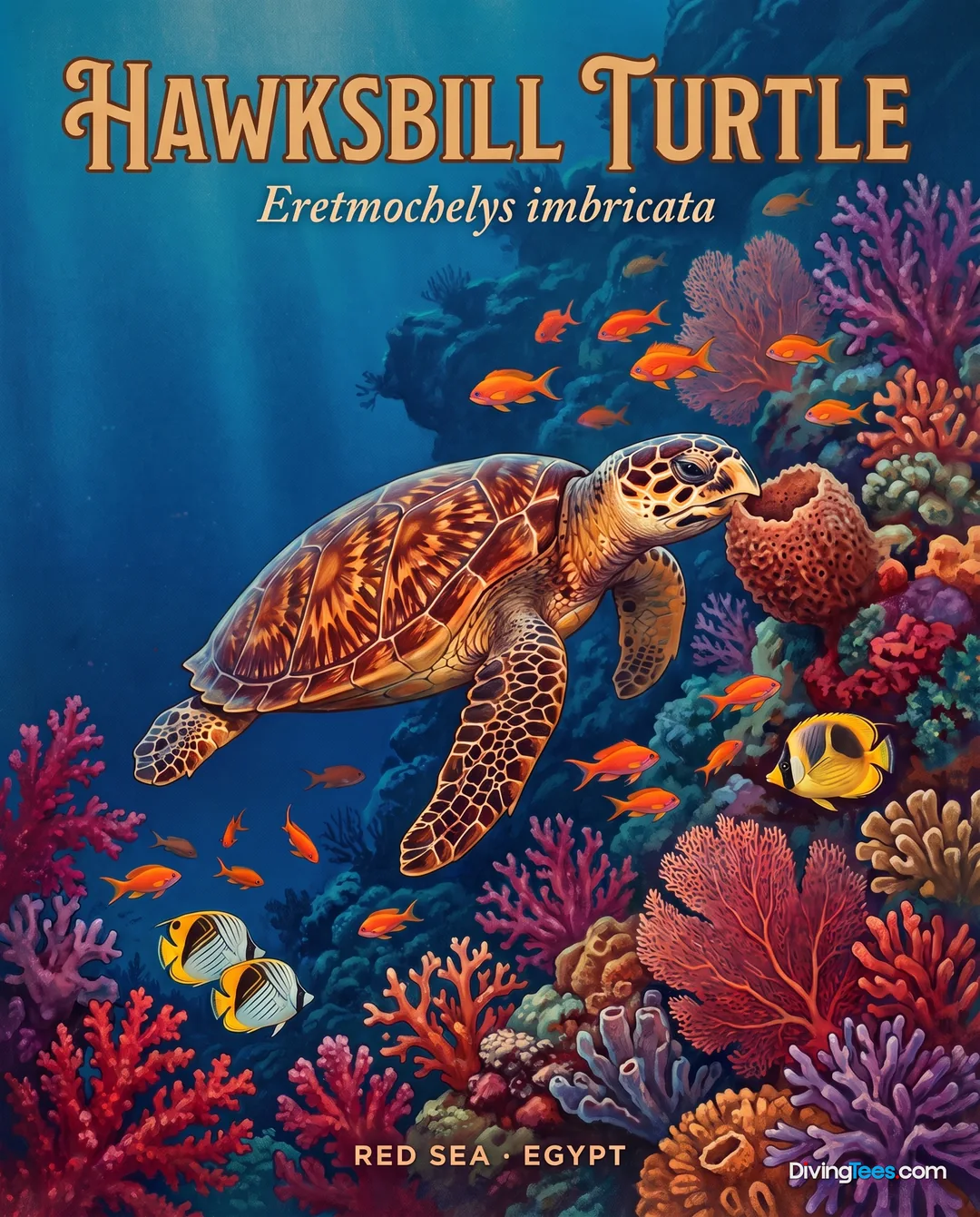
Barracuda, reef sharks, whitetip reef sharks, whale sharks, turtles, trevally, fusiliers, morays and nudibranchs recur across this route, with the larger animals most often tied to open water, current and cleaning stations rather than guaranteed sightings. Manta rays are recorded at several sites, with Koh Bon the clearest reason to wait beside a cleaning station; whale sharks may also pass through the Similan, Surin, Koh Bon and Koh Tachai areas. Leopard sharks, Napoleon wrasse and tuna add scale to the reef scenes, while nudibranchs and morays reward slower searches. The site-specific animals give the itinerary its detail: the humphead parrotfish is recorded at Surin Islands; the stonefish and porcupinefish at Boonsung Wreck; hawksbill turtle and flatworms at Koh Tachai; and triggerfish at Elephant Head Rock. Gorgonians are singled out at Koh Tachai, where the pinnacles create the structure for the reef life around them.

Who puts you in the water
The dive team speaks English and organises groups around a target of four to five divers per dive leader. Before each entry, the briefing covers the site, planned depth, current, separation and emergency procedures; buddy checks and controlled ascents are treated as part of the job, not as optional ceremony. The Thailand itineraries accept Open Water certification with at least 10 logged dives, although the crew may ask a diver to sit out a dive if their experience does not match the conditions. Advanced Open Water and Nitrox courses can be completed on board, with the theory completed before the trip and the practical work taught during the cruise. Emergency oxygen and an AED are available while diving is in progress, alongside first-aid equipment and trained emergency responders. The approach suits divers who want guidance without being shepherded through every fin kick.
The dive deck and the gear
The shaded dive deck gives each diver a personal set-up area and storage crate. Standard equipment includes 12-litre aluminium tanks, weights and belt; 15-litre aluminium tanks are available as a paid extra. DIN adapters are carried, and nitrox is available as a paid option. Rental equipment is available, including BCDs, regulators, wetsuits, masks, fins, dive computers and underwater lights. Divers can use SMBs during the trip, and a separate rinse area is provided for cameras. Two support RIBs handle transfers to the sites and diver pick-up, so the main boat does not need to sit directly over every descent. Divers enter from the dive platform and return to the tender or platform according to the site and operation. The deck is built for repeated diving rather than display: set up once, keep equipment organised and get back in without moving your whole life around the boat.
Between dives
Between dives, most people move between the shaded outdoor dining area, the air-conditioned saloon and the sundeck. The saloon has books, games and films, while the open deck gives divers a place to dry off, read or watch the islands slide past during a crossing. The deck is not arranged like a resort pool area; it feels more like a working boat adapted for long days underwater. Tea, coffee, soft drinks, fruit and snacks keep the gaps simple. Kayaks and island visits provide an alternative when a route allows time ashore. For non-divers, snorkelling is welcome, with the tenders providing access to the same coastline and reefs without needing a tank.
A day on board
The day starts with something small to eat before the first briefing and dive. After that entry, divers return to a fuller breakfast, rinse gear, compare notes and prepare for the next site. Lunch follows the second dive, then the boat may move between islands while people rest in the shade, read in the saloon or watch the sea from the sundeck. Further dives follow as the route and conditions allow, with dinner around 18:00 before the night dive. The night entry is planned well after sundown, when the nocturnal animals are active; afterwards, a sweet snack waits on deck. This is the useful rhythm of a liveaboard: briefing, dive, food, surface interval, dive, food again, then a final descent in the dark. The boat’s job is to make those transitions easy so the diver’s attention stays below the surface.
What you eat aboard
The galley serves buffet meals built around Thai dishes and familiar Western food. Breakfast comes in two stages: something simple before the first dive, then a fuller spread afterwards with bread, eggs, fruit, yoghurt and, on some mornings, pancakes, croissants or rice soup. Lunch follows the second dive with rice, noodles, vegetables, salads and several meat, seafood or vegetarian dishes. Dinner is served around 18:00, before the night dive, and brings a broader selection of Asian dishes alongside options such as pasta, steak, fries, Mexican food or goulash. Fresh fruit, biscuits and other snacks remain available between meals, with something sweet after the night dive. Vegan and vegetarian meals can be arranged. The food matters on this boat because four dives leave no room for a thin buffet; passengers come back to actual meals, not just something to fill the interval.
Nights at sea
The cabins are practical rather than large, with the choice of twin/double, triple and four-berth layouts. All six have individual air-conditioning, a porthole, an en-suite bathroom with hot shower, an overhead reading light and cabin towels. The basic finish suits the boat better than an attempt at false luxury would. After diving, the cabin gives enough privacy to sleep, shower and reset before the next briefing; it is not a room built for spending the whole day indoors. The wooden hull and single engine remain part of the night’s soundscape. For many divers, that is the point: The Junk feels like a vessel first and accommodation second. A triple cabin can sometimes be arranged as a twin or double, subject to availability.
Quad Cabins
Triple Cabin
Double/Twin Cabins
What to know before boarding
The Similan and Surin trips depart from and return to Thap Lamu. Shared transfers from Phuket Airport, Phuket hotels and Khao Lak hotels are included for the relevant itinerary. The exact pick-up time is communicated at least 48 hours before embarkation. Arriving in Phuket the night before is recommended, leaving a buffer for international travel and delays.
Deck plan
- Year built
- 1962
- Year renovated
- 1997
- Length
- 33 m
- Beam
- 8.5 m
- Maximum number of passengers
- 18
- Number of cabins
- 6
- Number of bathrooms
- 7
- Engines
- 1 × Hino 380 hp
- Cruising speed
- 8 knots
- Tenders
- 1 × 40 hp 4.2 m 1 × 115 hp 5.8 m
- Website
- thejunk.com ↗
Hello, I'm Marina, DivingDeal.com's AI assistant. I answer in detail about hotels, dive centres and liveaboards.

Thinking about the whole trip and the flights? Talk it over with Edith →
Marina is an AI. Some links are affiliate links: DivingDeal may earn a commission, at no extra cost to you. Bookings are made with the partner.