
Khao Lak Scuba Adventures
Google 4.9/5 (1,486 reviews)
68 km away as the crow flies
Khao Lak · Thailand · Asia
Max. depth · 40 mDescend into West of Eden's granite canyons and explore walls adorned with soft corals and gorgonians, where schooling fish actively patrol the reef.
For subtitles in English: start the video firstthen click the gearat the top right of the video, select “Subtitles/CC”, then “Auto-translate” and choose “English”.
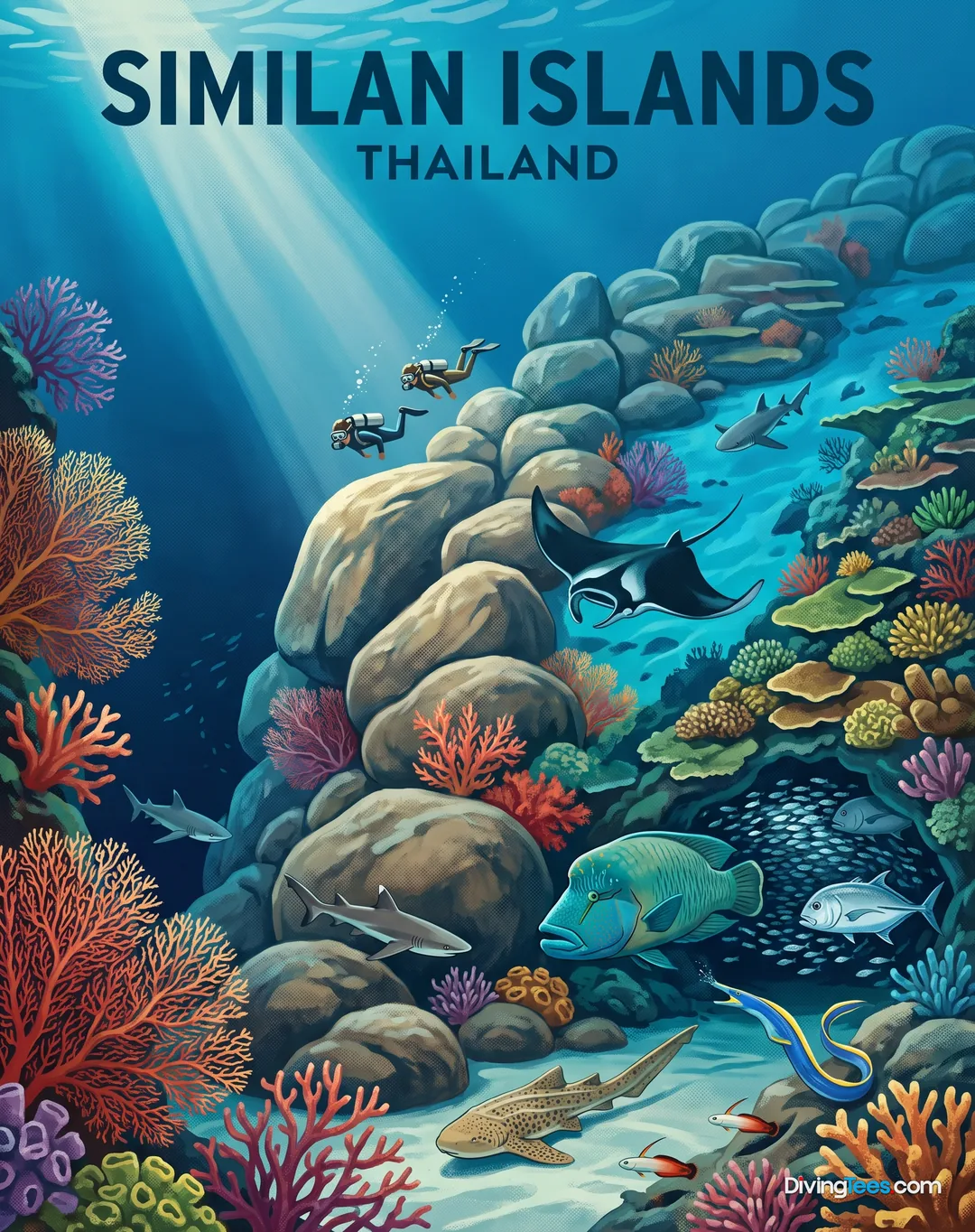
West of Eden is defined by massive granite boulders that form a series of impressive canyons, creating a unique topography. As you descend, these formations transition into walls blanketed with soft corals and giant gorgonians, painting a colourful underwater landscape. The site is situated off the west side of Koh Pa-Yu, Similan Island #7, offering varied underwater scenery from its shallow reef to a deeper sand slope.
The dive here often involves navigating through these canyons, where light filters in, highlighting the diverse invertebrate life. The deeper sections of the site feature a sand slope that extends down to approximately 35 to 40 meters. This transition from hard rock formations to soft debris areas creates distinct habitats, attracting different species of marine life seeking refuge or hunting grounds.
Along the walls and within the rock formations, the site hosts a rich macro environment. Keep an eye out for Ribbon Eels (Rhinomuraena quaesita) emerging from crevices and the well-camouflaged Frogfish (Antennariidae) blending into the coral. Ghost Pipefish (Solenostomidae) are also found here, often swaying gently alongside feather stars, providing excellent opportunities for focused observation.
Beyond the macro life, the topography at West of Eden encourages pelagic activity, especially during stronger currents. Schools of Bluefin Trevally (Carangoides ferdau) and Giant Trevally (Caranx ignobilis) are common, along with Fusiliers (Caesionidae), often seen darting through the water column. White-tip Reef Sharks (Triaenodon obesus) cruise the perimeters, particularly when the water flow increases.
The shallow fringing reef offers a different experience, dominated by stacked granite boulders and extensive fields of hard corals. This area is vibrant with numerous reef fish and studded with a variety of soft corals, sea fans, and crinoids, creating a thriving ecosystem. It's a prime spot for new divers to acclimate to the environment or for experienced divers to extend their bottom time searching for hiding creatures.
Visibility at West of Eden typically ranges between 15 and 30 meters, often allowing for clear views of the expansive canyons and walls. While the current here is generally moderate, it can intensify, particularly during tide changes. This site is also home to a variety of crustacean life, including Crabs, Shrimps, and Lobsters, often found tucked into the many rock fissures and under ledges.
This site is accessible for divers from Intermediate to Advanced levels. Depths at West of Eden range from a minimum of 12 meters down to 40 meters on the sand slope, requiring careful depth management. Current is typically moderate but can be strong, especially with tidal changes, and divers should be prepared for varying conditions. Visibility generally holds between 15 meters and 30 meters. The best period to dive West of Eden aligns with the Similan National Park's open season, running from October to May, with January through March offering optimal sea conditions and visibility.
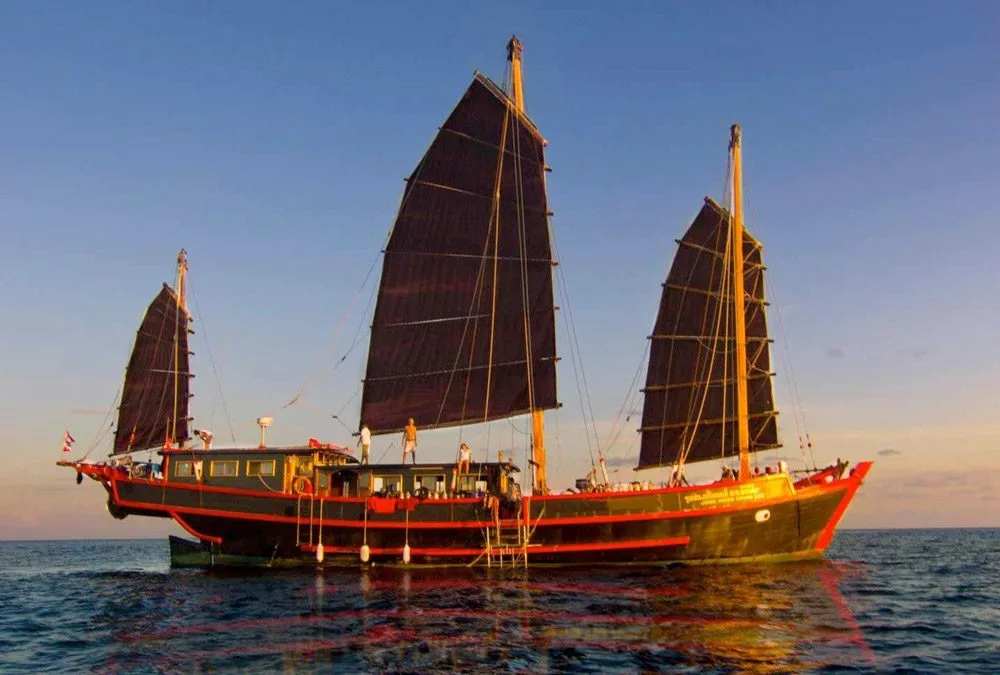
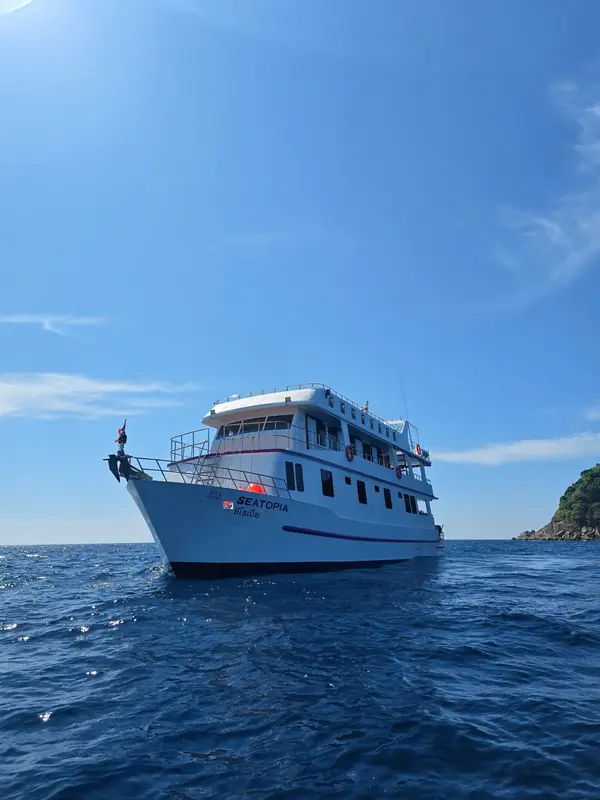
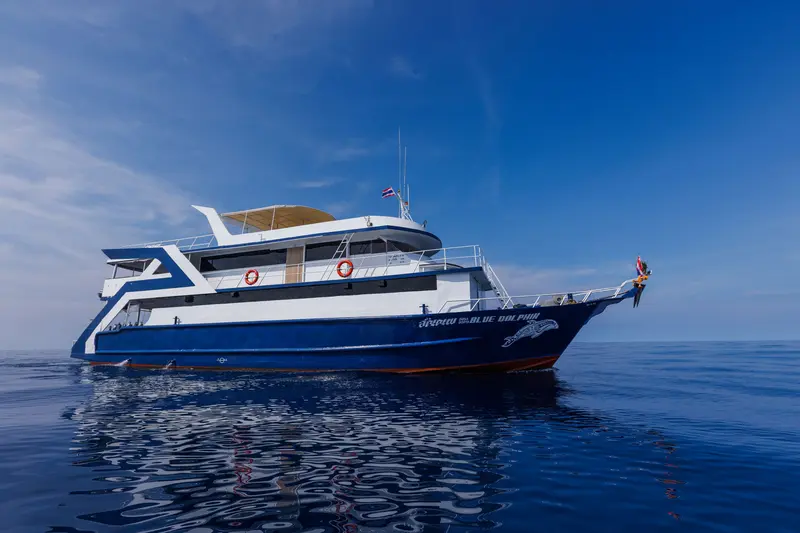
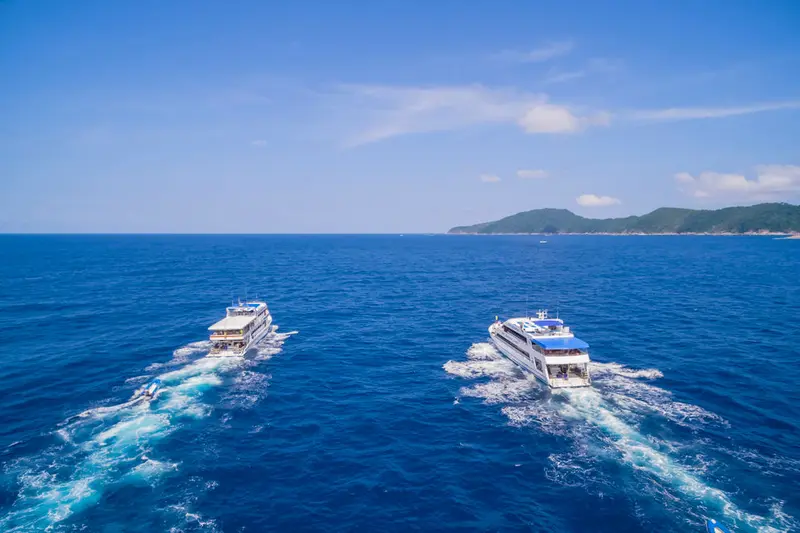
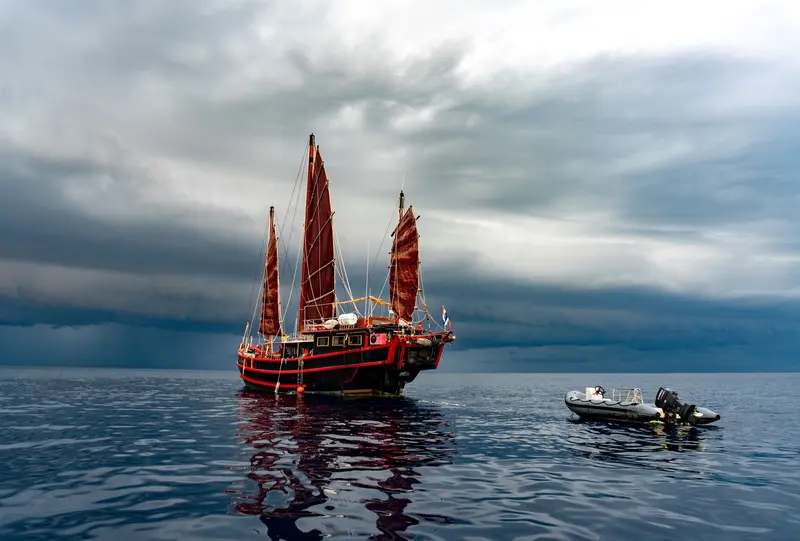
23 liveaboards depart from Khao Lak another way to explore the region, over several days at sea.
West of Eden is open during the Similan National Park’s season from October to May. January through March generally brings optimal sea conditions and visibility, making this period especially suitable if you want clearer views of the canyons and walls.
West of Eden is accessible to intermediate and advanced divers. You should be comfortable with varied conditions, because the current is typically moderate but can become strong, particularly during tidal changes. Careful depth management is also required as the site descends from shallow reef areas toward deeper sections.
At West of Eden, depths range from 12 meters to 40 meters, with the deepest area on the sand slope. The current is typically moderate but may become strong during tidal changes, so you should be prepared for varying conditions and manage your depth carefully throughout the dive.
You can explore granite-boulder canyons, soft-coral and gorgonian-covered walls, and a shallow reef with hard corals, reef fish, sea fans, and crinoids. Look for frogfish, ghost pipefish, ribbon eels, crabs, shrimps, lobsters, white-tip reef sharks, and schools of trevally and fusiliers.