

Big Blue Diving, Koh Tao
Google 5/5 (5,713 reviews)
2.8 km away as the crow flies
Koh Tao · Thailand · Asia
Max. depth · 30 mHin Pee Wee offers a deep, quiet exploration around a scattering of rock formations, bustling with life, easily navigable and always rewarding.
For subtitles in English: start the video firstthen click the gearat the top right of the video, select “Subtitles/CC”, then “Auto-translate” and choose “English”.
Diving Hin Pee Wee places you about 25 minutes north of Chalok Bay, a site often paired with the nearby HTMS Sattakut wreck or White Rock. The dive unfolds around three main pinnacles, forming a modest yet vibrant deep reef. Entering the water, you're immediately oriented to a distinctive top-out depth of around 8 metres, allowing a gradual descent into the deeper sections. The structure provides immediate reference points, making the initial orientation straightforward, even for divers new to complex topography.
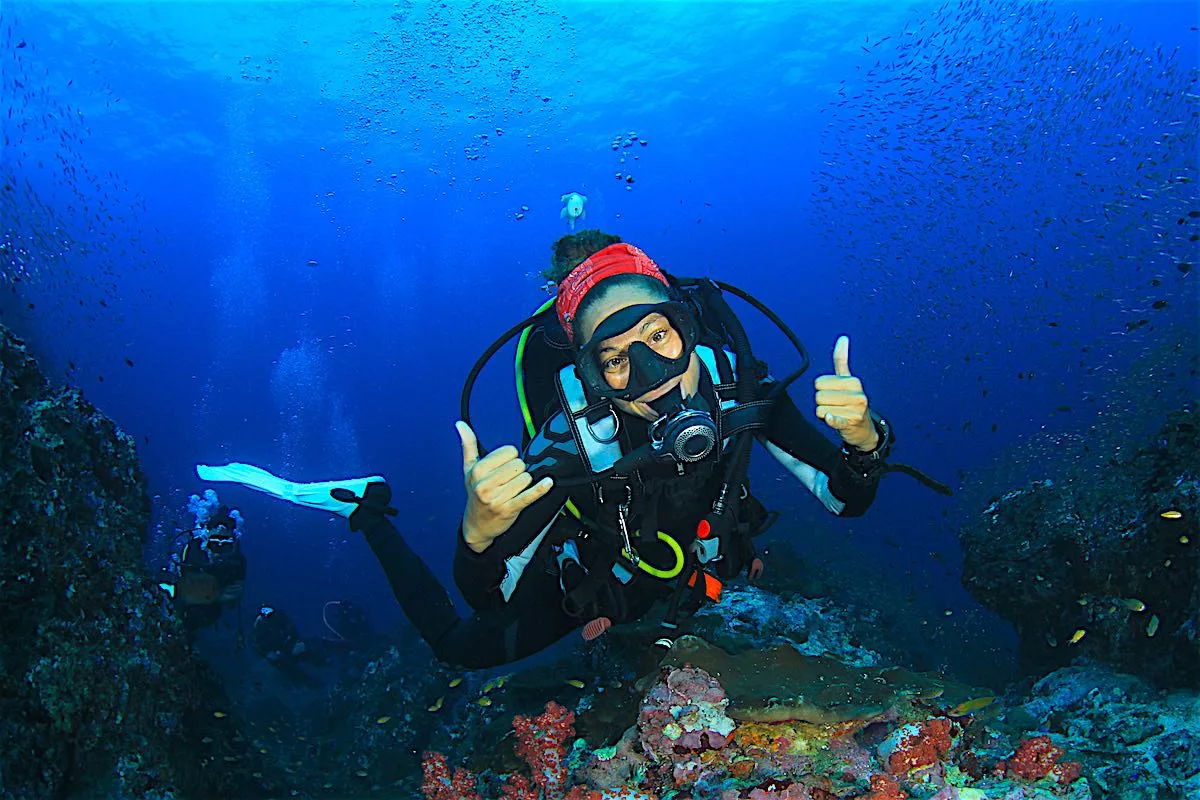
As you descend, the rock formations sculpt the underwater landscape, creating ledges and overhangs that serve as shelter for resident marine life. The maximum depth of 28 metres ensures adequate bottom time for thorough exploration, while also offering the option for deeper dives to the sand flats surrounding the main structure if certification and gas limits allow. The natural landmarks here are well-defined, providing excellent opportunities to practice your navigation skills, moving from one pinnacle to the next while observing the resident species.
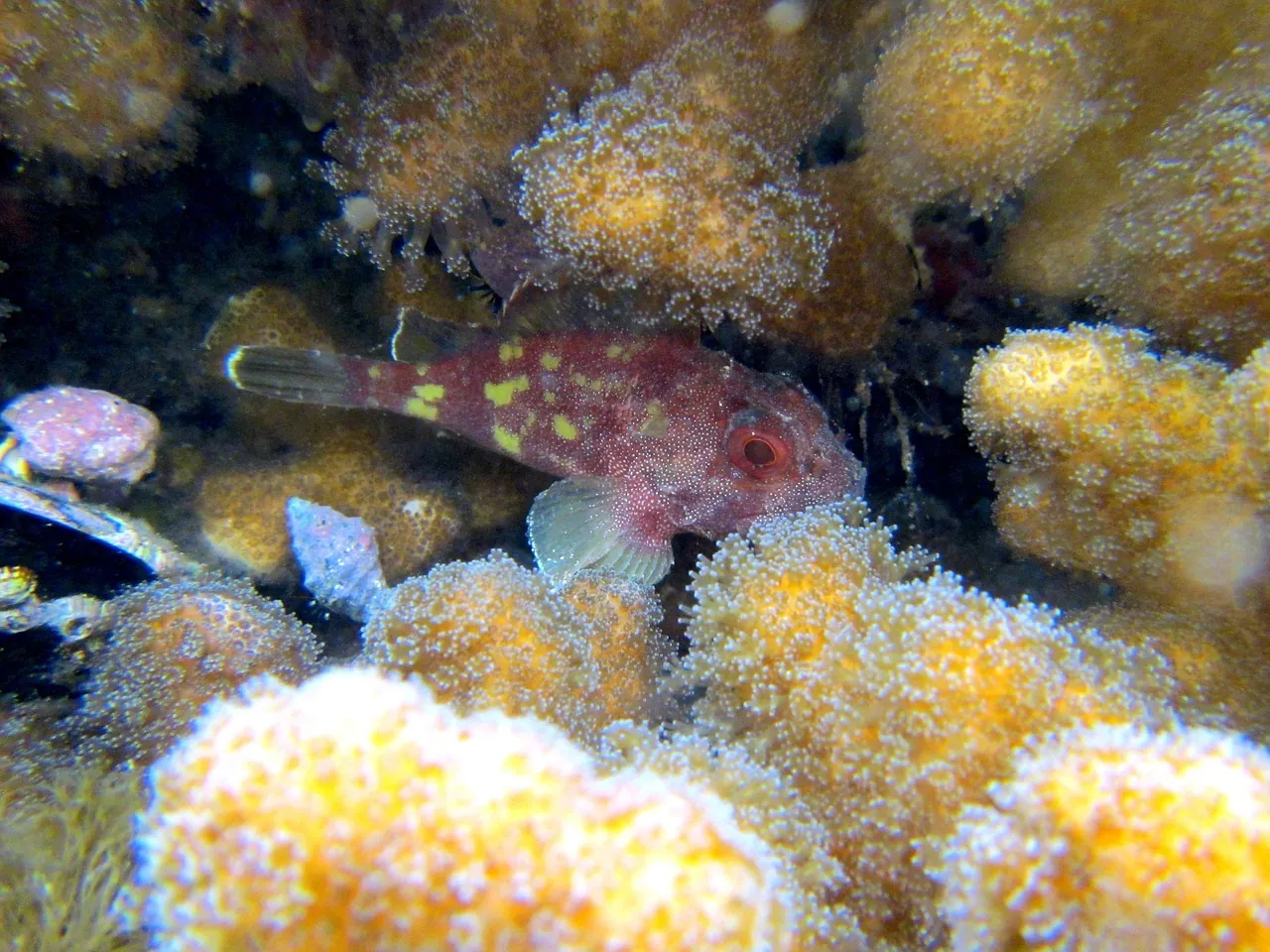
The rocky surfaces at Hin Pee Wee are covered in whip corals and various sponges, establishing a complex micro-habitat. Look closely, and you'll find white-eyed moray eels nestled in crevices, and harlequin sweetlips (Plectorhinchus chaetodonoides) patrolling the ledges. Bearded scorpionfish often blend into the reef, requiring a keen eye to spot them, demonstrating the density of life packed into these formations. These stationary residents are a constant feature, allowing for close observation.
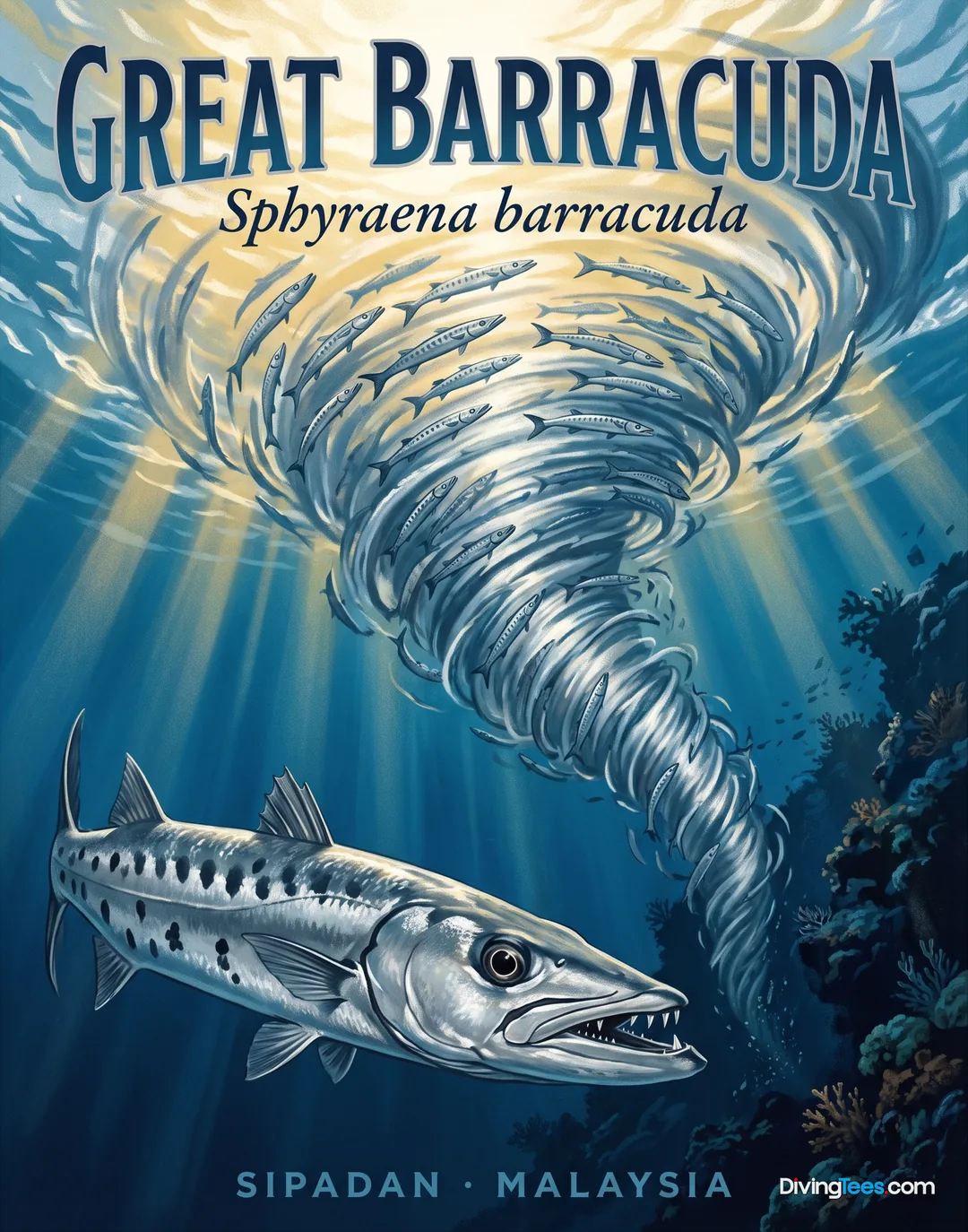
Hin Pee Wee is also a transit point for pelagic species. Shoals of fusiliers (Caesionidae) are a common sight, moving swiftly across the pinnacles, often pursued by schools of trevally (Carangidae). Barracudas (Sphyraenidae) are frequently seen cruising the deeper edges, or hanging just off the rock formations, their presence adding a dynamic element to the site. These passing predators highlight the site's role as part of a larger marine ecosystem, even for its relatively compact size.
The site caters to a range of experience levels, with depths that allow for extended bottom times at recreational limits, yet enough contour and varied marine life to hold the interest of more experienced divers. Titan triggerfish (Balistoides viridescens) are a common sight, often seen foraging on the coral, their territorial nature adding a certain energy to the shallower areas. Blue-spotted rays (Taeniura lymma) can be found resting on or near the sandy bottom around the base of the pinnacles, adding to the diversity of the benthos.
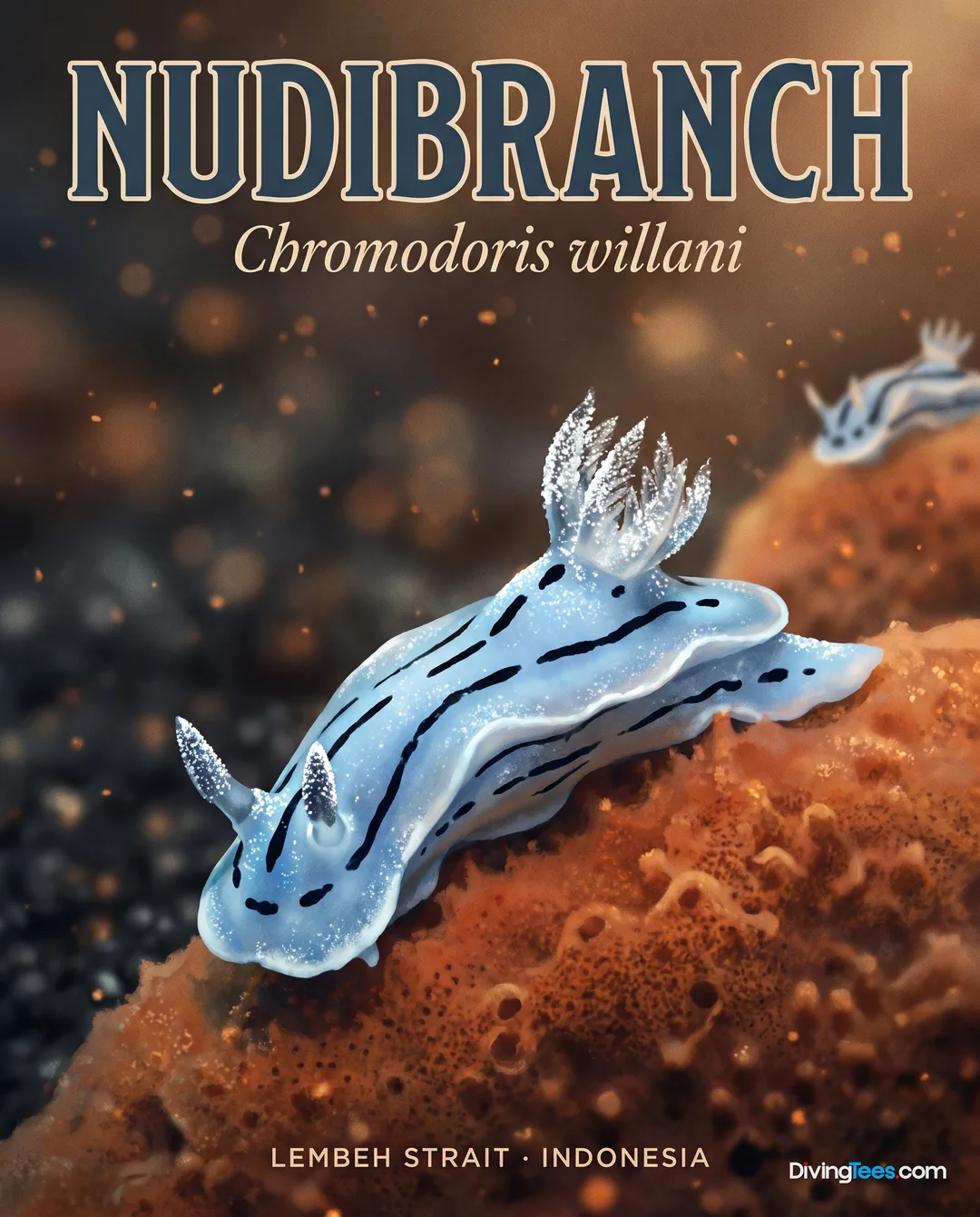
Beyond the fixed reef structure, the site offers opportunities to observe the smaller details. Nudibranchs (Nudibranchia) are usually found adorned on the corals and rocks, showcasing their vibrant colours and intricate patterns. Angelfish (Pomacanthidae) and butterflyfish (Chaetodontidae) are also common, often seen picking at the reef, their presence indicating a healthy coral environment. The density of marine interactions makes even a small area engaging, encouraging slower, more observant diving practices.
For divers looking to combine a rich macro environment with occasional pelagic encounters, Hin Pee Wee provides a consistently rewarding dive without the necessity of extreme depths or complex currents. It's a site that allows you to settle in, explore at your own pace, and appreciate the concentrated biodiversity of a healthy reef system. The clear visibility typical of the area further enhances the experience, allowing for uninterrupted views of the busy marine life.
Hin Pee Wee is accessible from an Intermediate level, offering a depth range between 8 and 28 metres. Visibility routinely sits between 10 to 30 metres, often closer to the higher end during the best season. The best time to dive here is between March and October.
You can dive Hin Pee Wee between March and October, the site’s best season. Visibility routinely ranges from 10 to 30 metres and is often nearer the higher end during this period, giving you clear views around the three pinnacles and supporting straightforward navigation while you explore the reef.
Hin Pee Wee is accessible to you as an intermediate diver, with an overall depth range of 8 to 28 metres. The site begins around 8 metres, then descends gradually toward deeper sections and surrounding sand flats, allowing varied exploration while staying within recreational limits when your certification and gas limits allow.
At Hin Pee Wee, you can look for white-eyed moray eels, harlequin sweetlips, bearded scorpionfish, nudibranchs, angelfish, butterflyfish, and titan triggerfish among the corals and rocks. Blue-spotted rays rest near the sandy bottom, while fusiliers, trevally, and barracudas add moving pelagic encounters around the pinnacles.
Hin Pee Wee consists of three distinct pinnacles forming a compact reef with ledges, overhangs, whip corals, and sponges. Clearly defined landmarks help you move from one pinnacle to the next and practise navigation, while the top-out around 8 metres provides an immediate reference point when you enter the water.