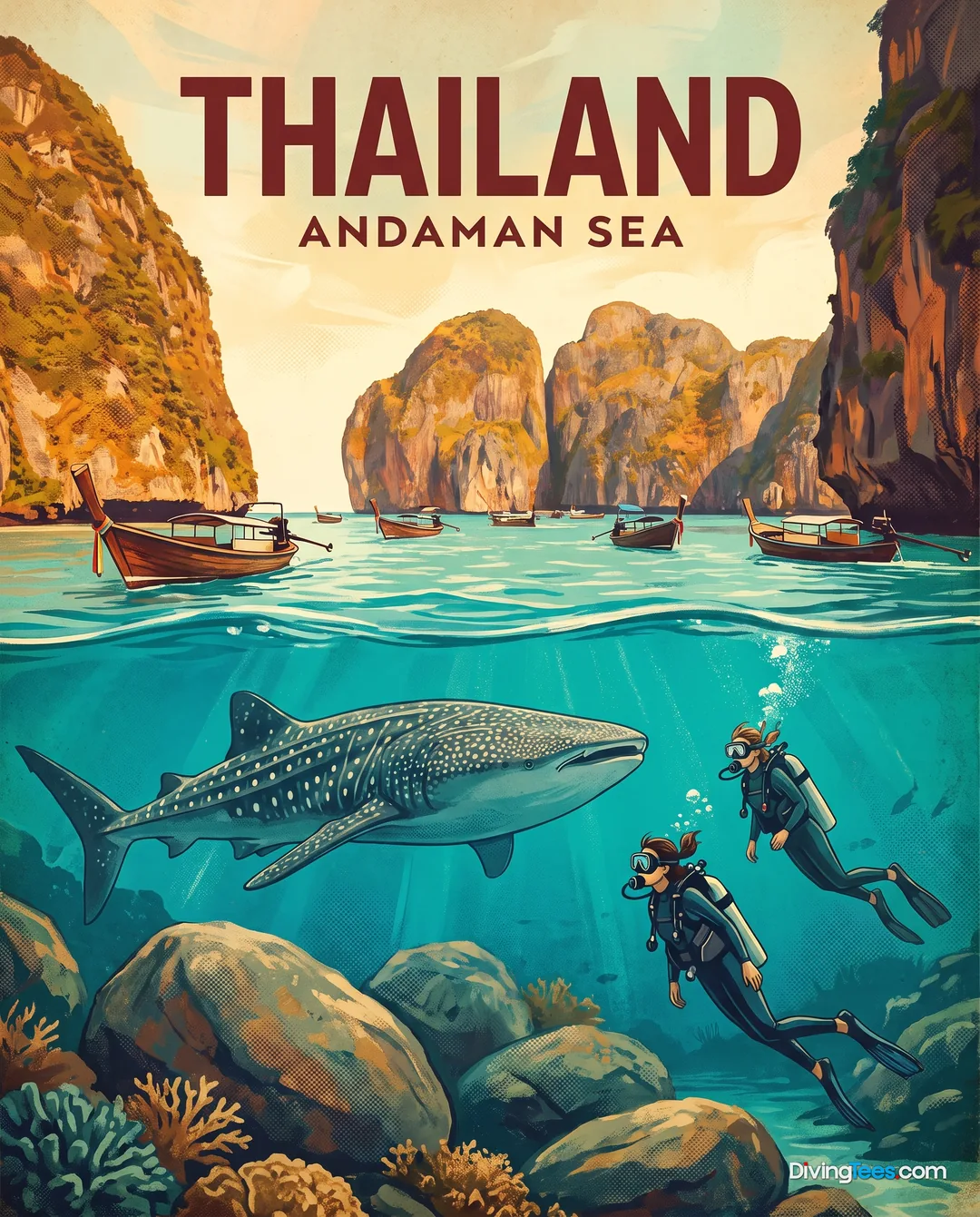
Liveaboards · Thailand
Explorer — a working wooden liveaboard for serious Andaman diving
What makes this boat unique
- The 25-metre wooden-hulled Explorer was renovated in 2024 and carries up to 16 guests in eight air-conditioned cabins.
- Every cabin has a sea-view window; six have private ensuite bathrooms, while two are standard double cabins.
- The dive programme covers the Similan and Surin Islands, Koh Bon, Koh Tachai and Richelieu Rock, with routes from four to fourteen days.
- Nitrox, DIN adapters, technical diving and sidemount diving are available, with night dives included on the recorded packages.
- Food, diving and crew receive stronger feedback than the boat itself, which points to an older hull carried by a very capable operation.
The invitation
Explorer is for divers who want to spend the trip in the Andaman Sea rather than commute to it. The boat reaches the Similan and Surin Islands, Koh Bon, Koh Tachai and Richelieu Rock, with shorter northern routes and longer south-to-north itineraries that keep the best sites within reach. A four-day option covers Surin, Koh Tachai and Richelieu; longer departures link the Similans with the northern pinnacles and reefs. The reason to choose Explorer is the combination: a compact 16-guest boat, direct access to Thailand’s main liveaboard sites, and enough route length to repeat the places that deserve more than one dive. It is not the choice for someone judging a boat purely by polish. It suits the diver who values food, guides and time underwater first, with a recently renovated wooden vessel as the base.
Boarding
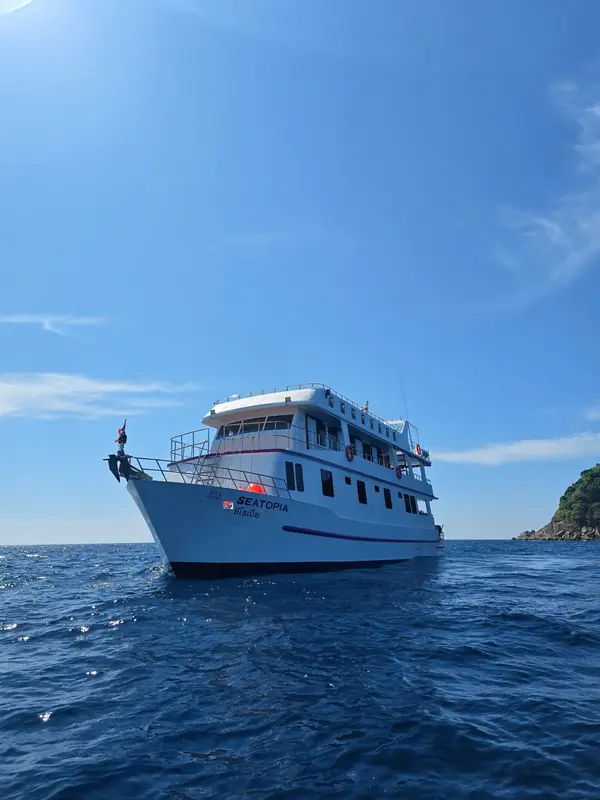
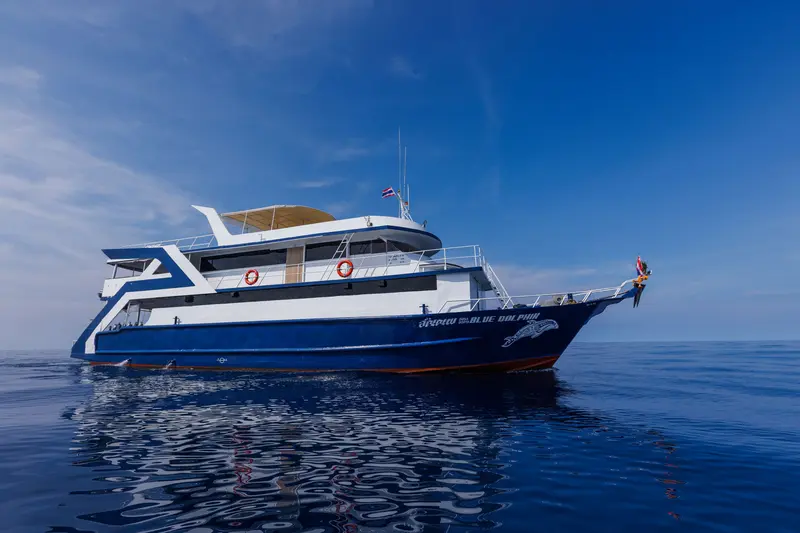
Explorer makes the impression of a working dive boat rather than a floating resort. Its wooden hull dates from 2001, and the 2024 renovation gives the boat a newer working life without changing what it is. Boarding leads quickly to the practical parts of the vessel: dive equipment moves towards the platform, luggage goes into the cabin, and the boat’s compact scale makes the layout easy to learn. There is one tender for transfers between the boat and dive sites, while the main vessel carries the living spaces, shaded dive area and upper observation areas. With only 16 guests, the boat does not create the anonymity of a large liveaboard. By the second day, the faces around the table and on the dive deck are familiar. That matters when four dives a day turn small delays into lost water time.
The atmosphere on board
The atmosphere is shaped more by the crew than by the age of the hull. Crew feedback is markedly stronger than the boat score, and the same pattern appears in the diving and food scores: the people running the trip are the reason the vessel works so well. English, German, Thai and French are spoken, which helps mixed groups settle into briefings and meals without making language a daily obstacle. The crew are local and international, and their role is visible in the practical transitions—equipment moved ahead to the boat, cabins turned around between back-to-back trips, and divers guided through the next entry. Evenings are low-key rather than theatrical. After dinner, some guests will review photographs or sit on deck; others will sleep early because the next dive matters more than staying up. Explorer’s character is human-scale: the crew carries the experience, while the older boat stays in the background.
The sites you’ll dive
The core route runs from the Similan Islands north through Koh Bon, Koh Tachai and Surin to Richelieu Rock. Similan dives reach a maximum of -40m, moving from coral reefs into granite boulders; Koh Bon is the wall-and-cleaning-station dive where manta rays may arrive for maintenance. Koh Tachai and Koh Tachai Pinnacle reach -40m, with submerged rock, coral and current-swept pelagic encounters. Surin is shallower at -25m, with hard-coral gardens and granite outcrops. The shorter northern route also includes North Point to -35m and the deeper channels where oceanic sharks patrol near sand. Recorded departures run from four days and three nights to six days and five nights, nine days and eight nights, and fourteen days and thirteen nights. Other listed sites extend the programme: Sail Rock reaches -42m, South Tip -70m, King Cruiser Wreck -35m, Sattakut Wreck -30m and Boonsung Wreck -18m. Each adds a different reason to enter: pinnacle, wall, current or wreck.
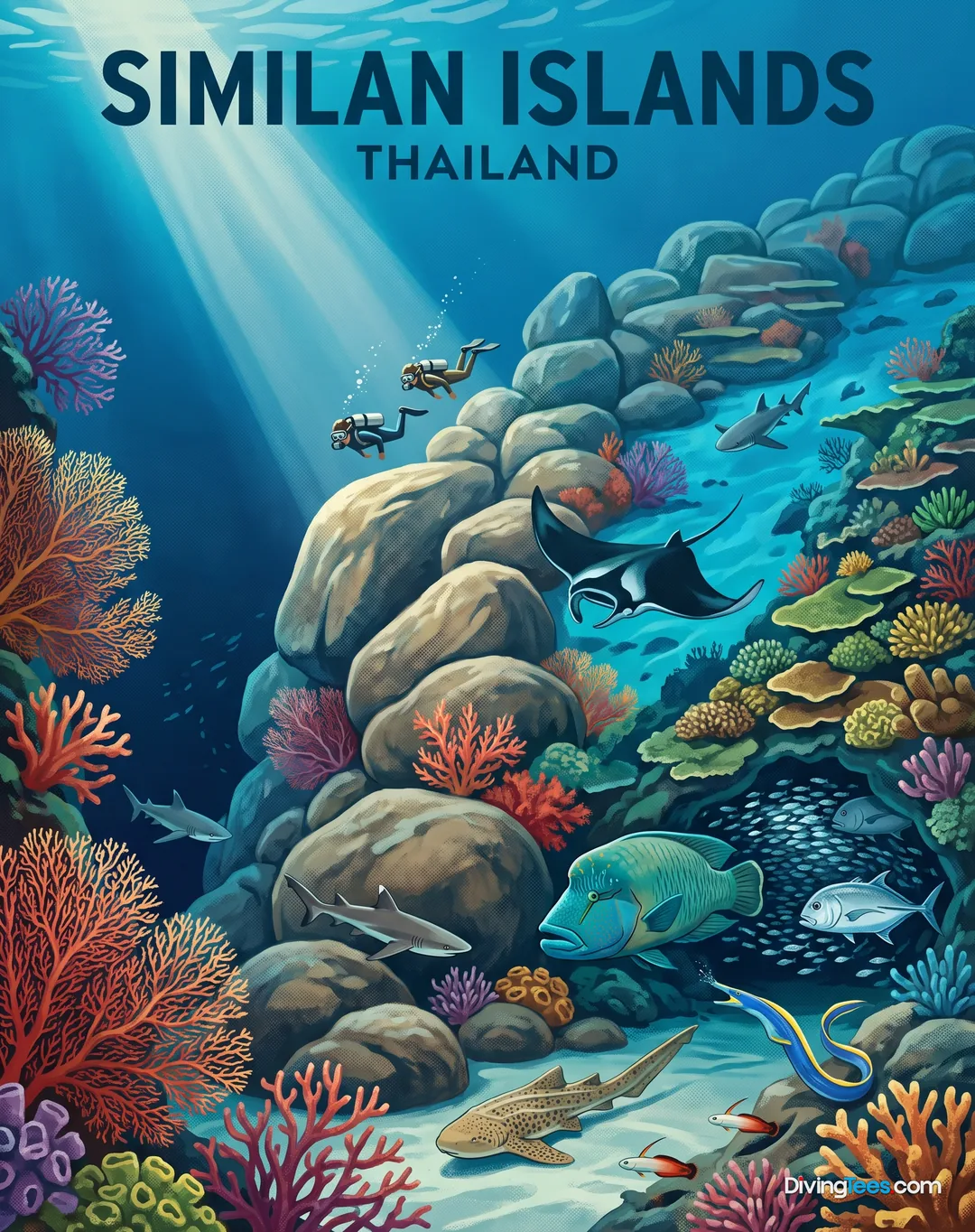
Similan Islands →
Max. depth · 40 m
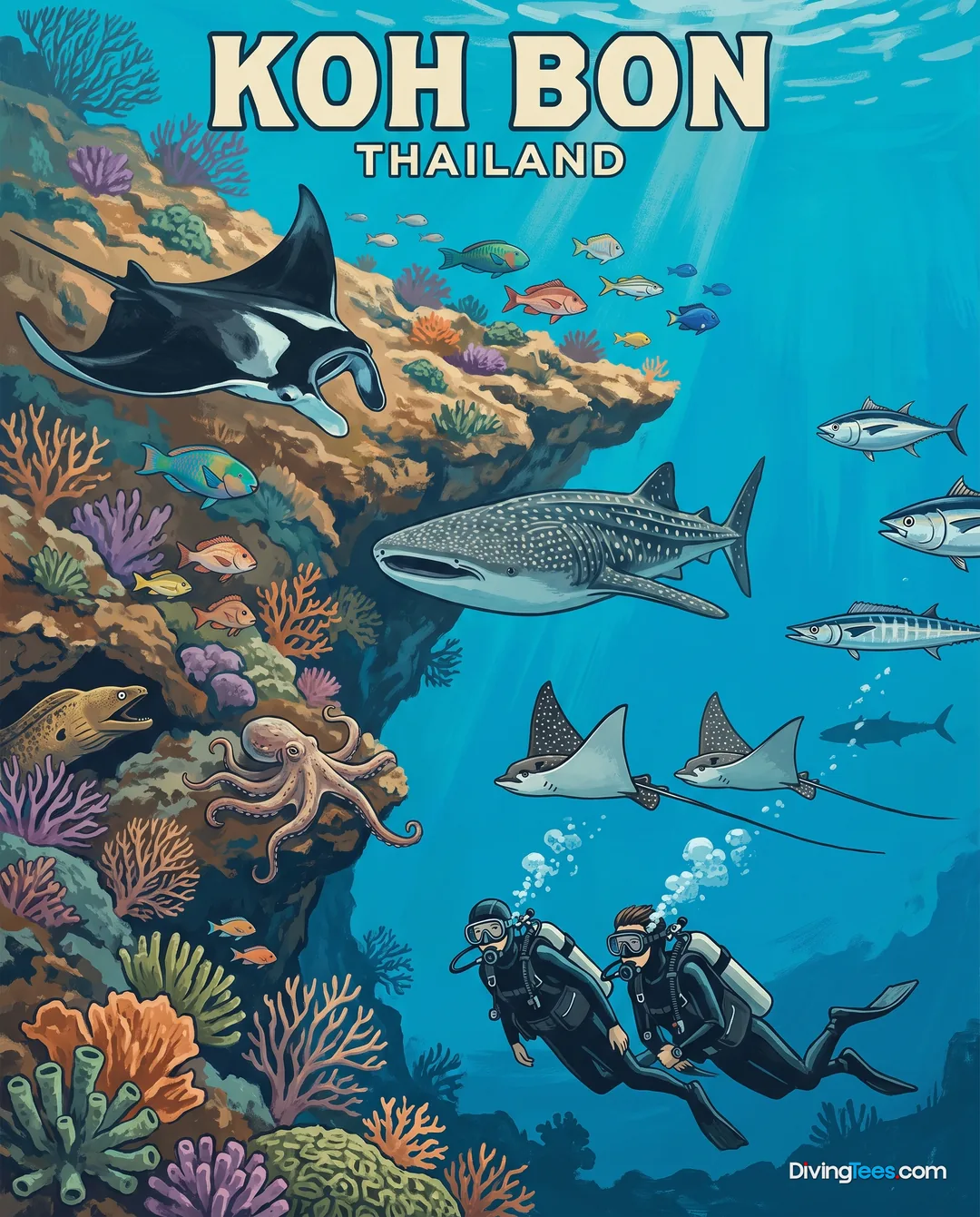
Koh Bon →
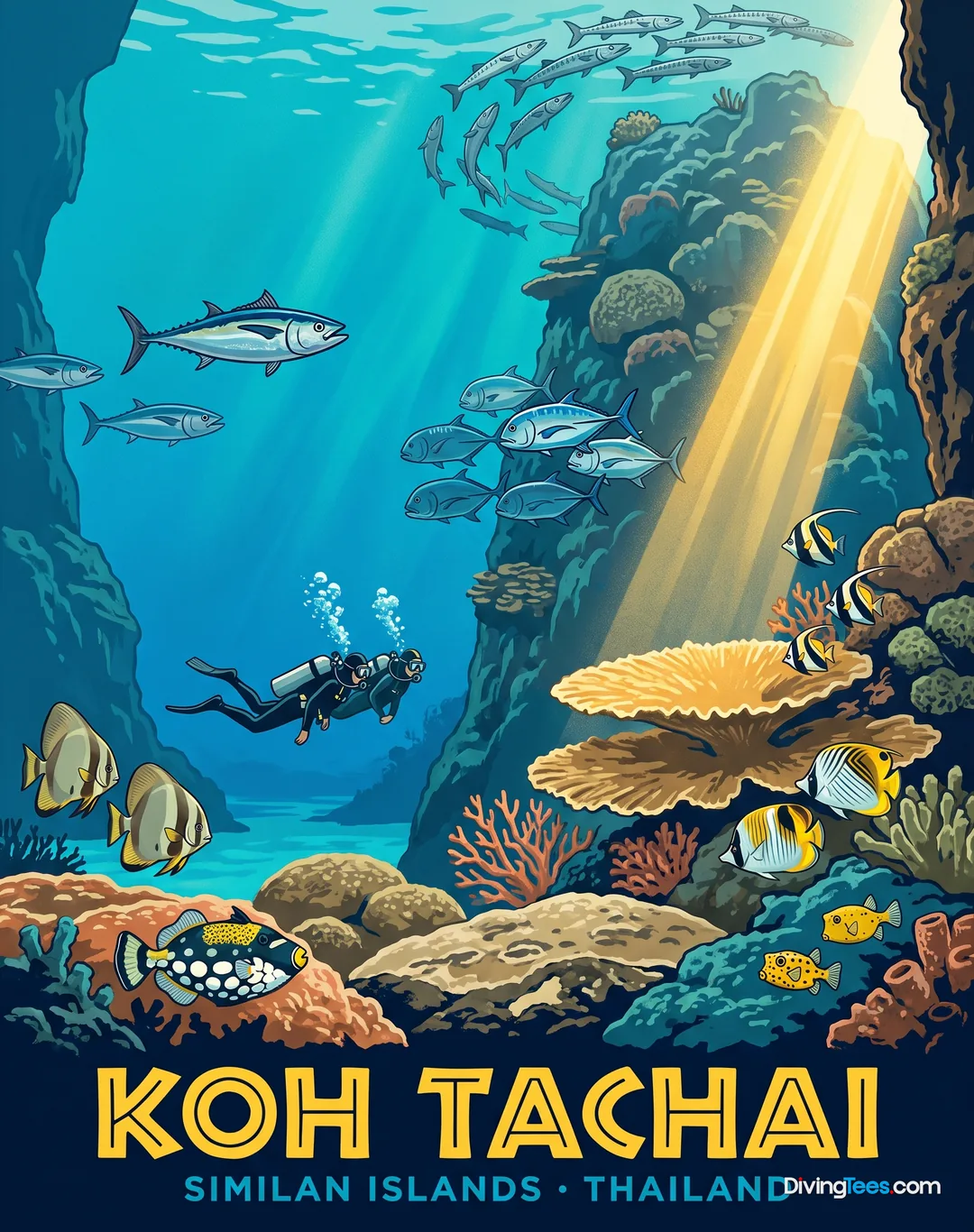
Koh Tachai →
Max. depth · 40 m
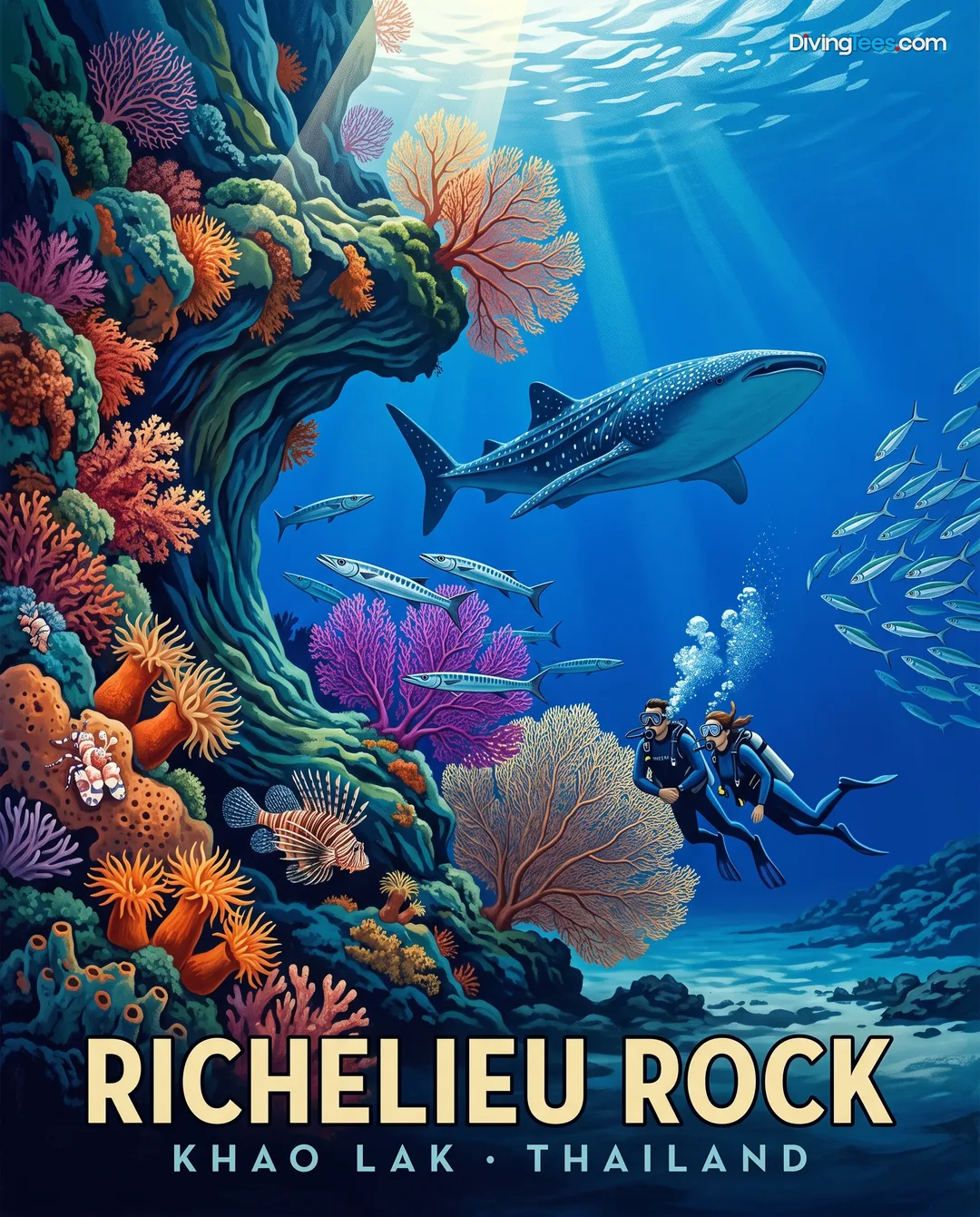
Richelieu Rock →
Max. depth · 35 m
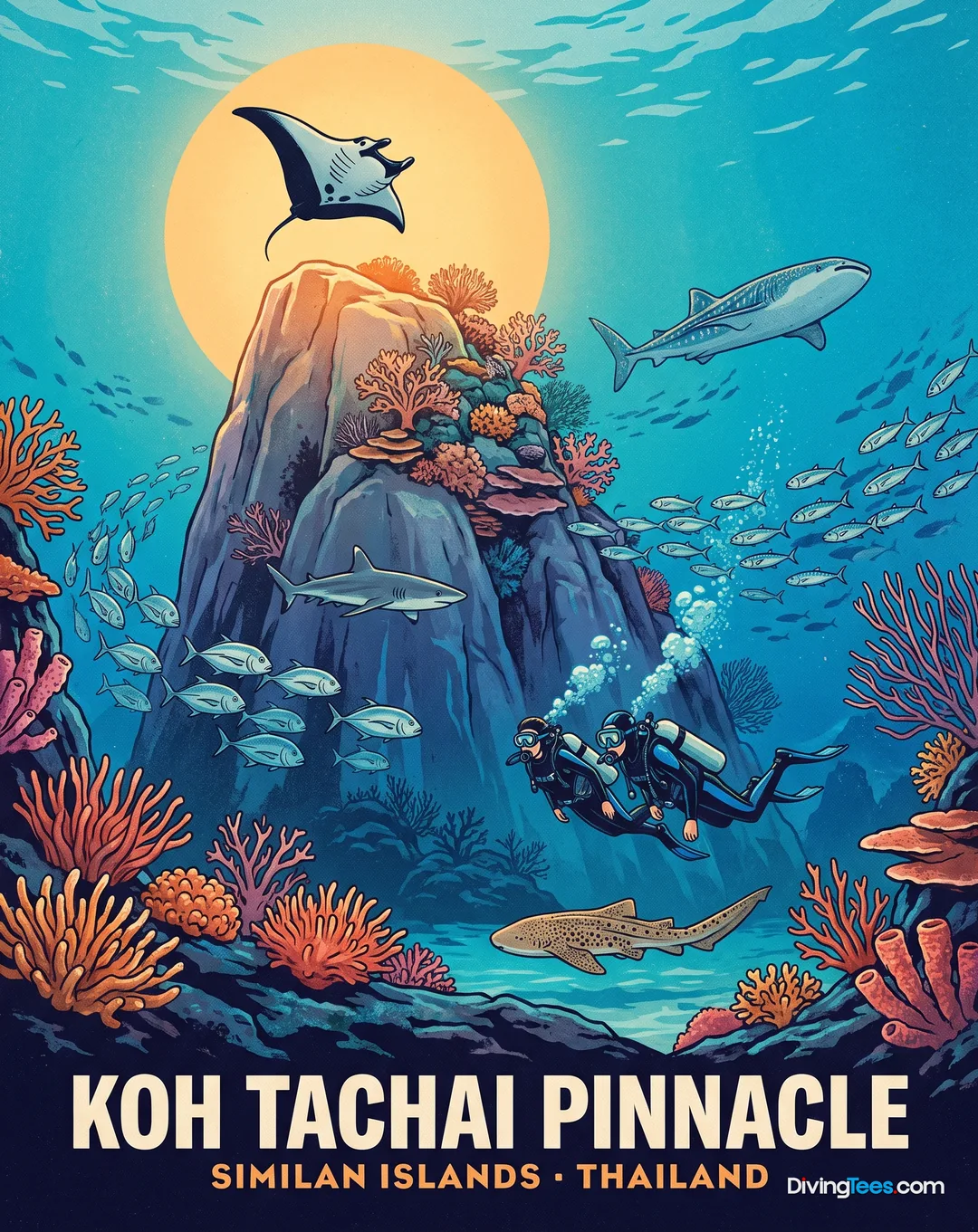
Koh Tachai Pinnacle →
Max. depth · 40 m
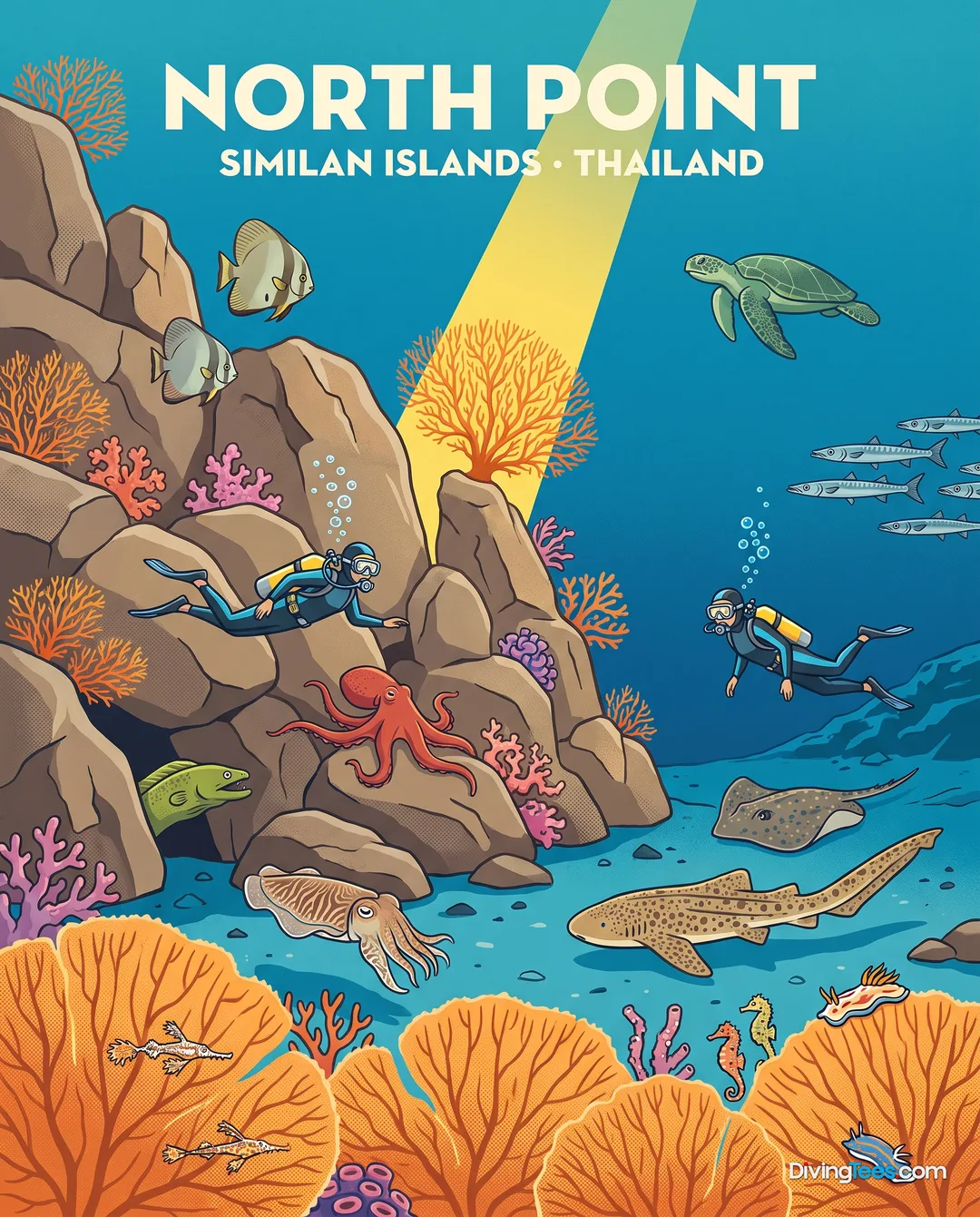
North Point →
Max. depth · 35 m
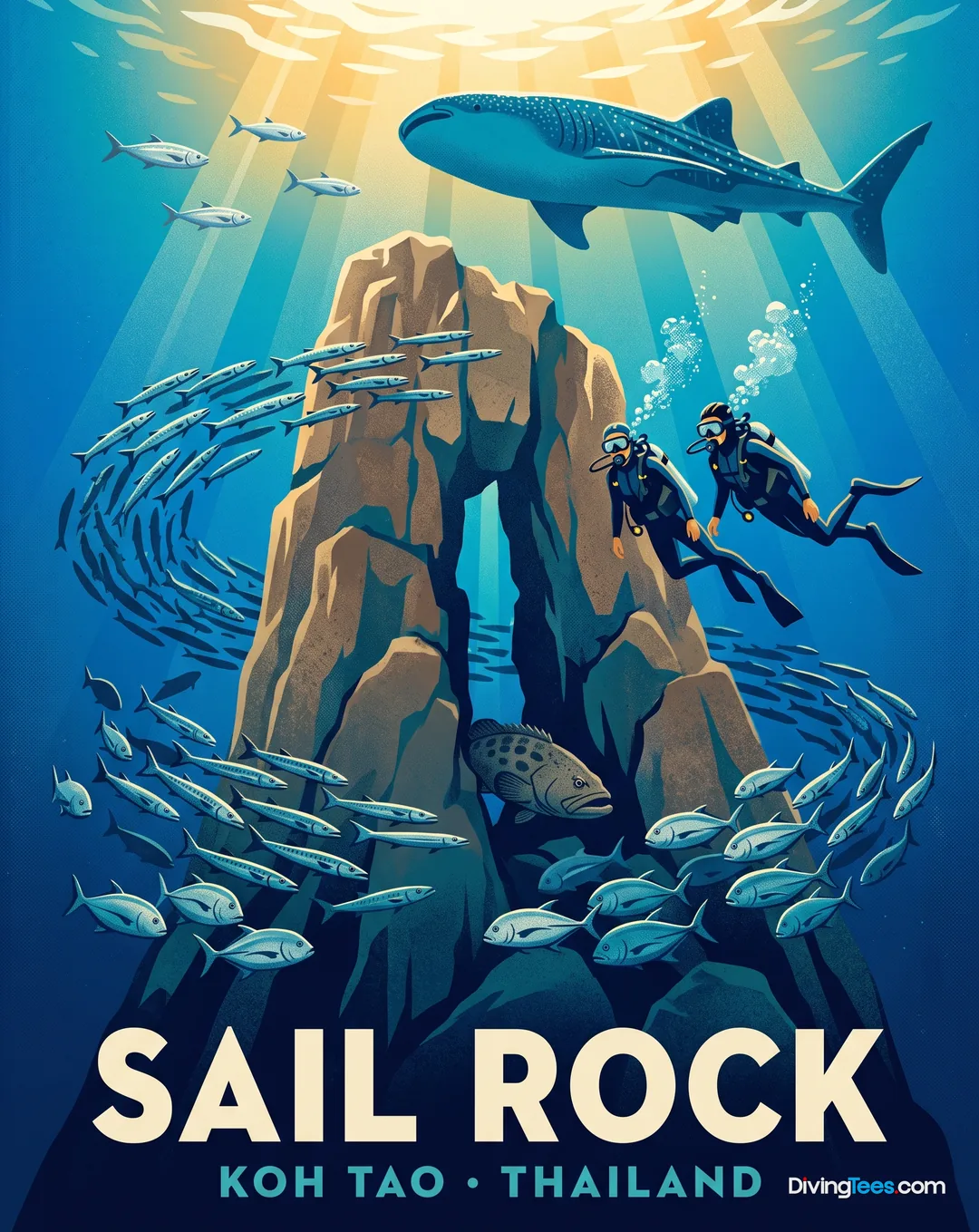
Sail Rock →
Max. depth · 42 m
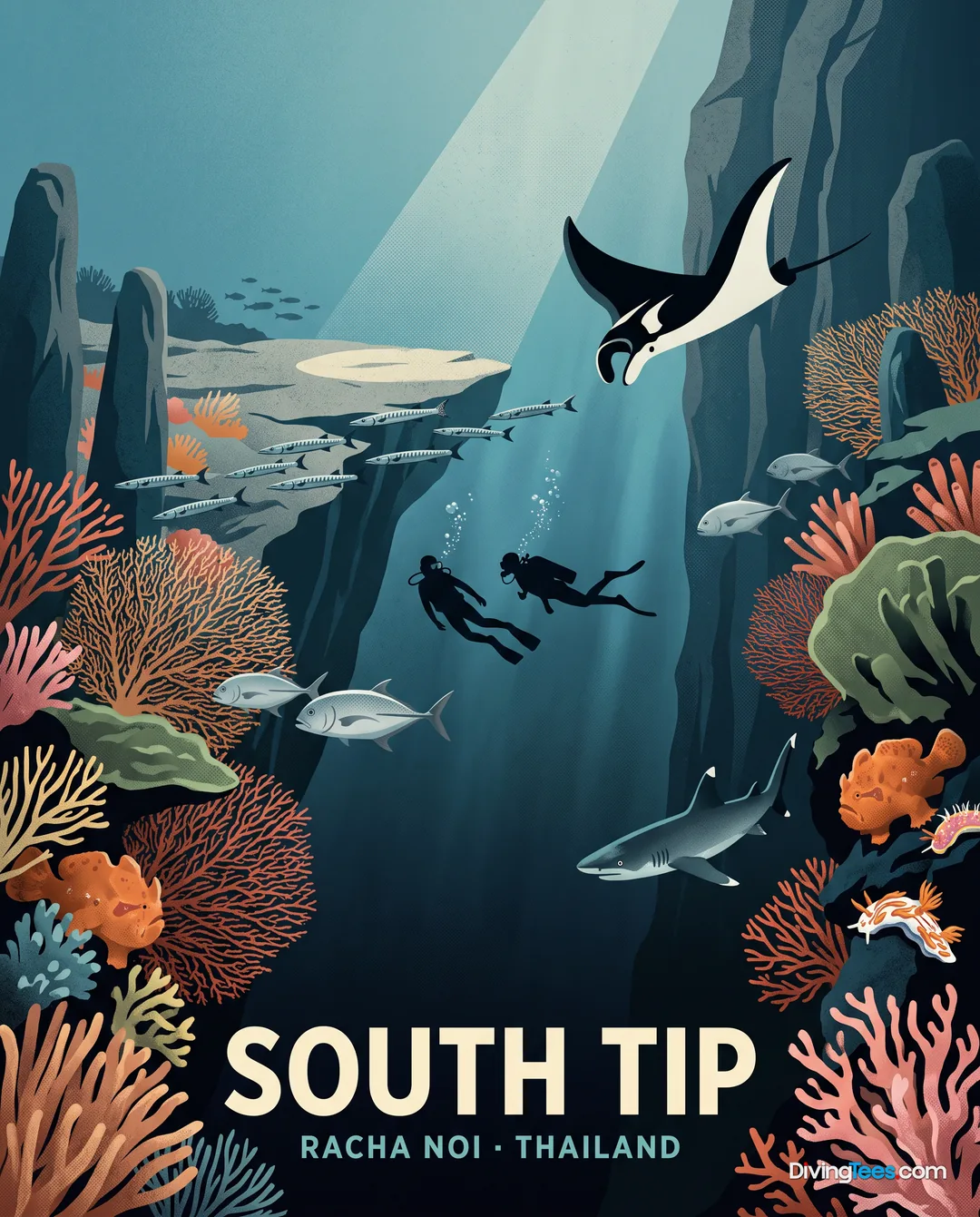
South Tip →
Max. depth · 70 m
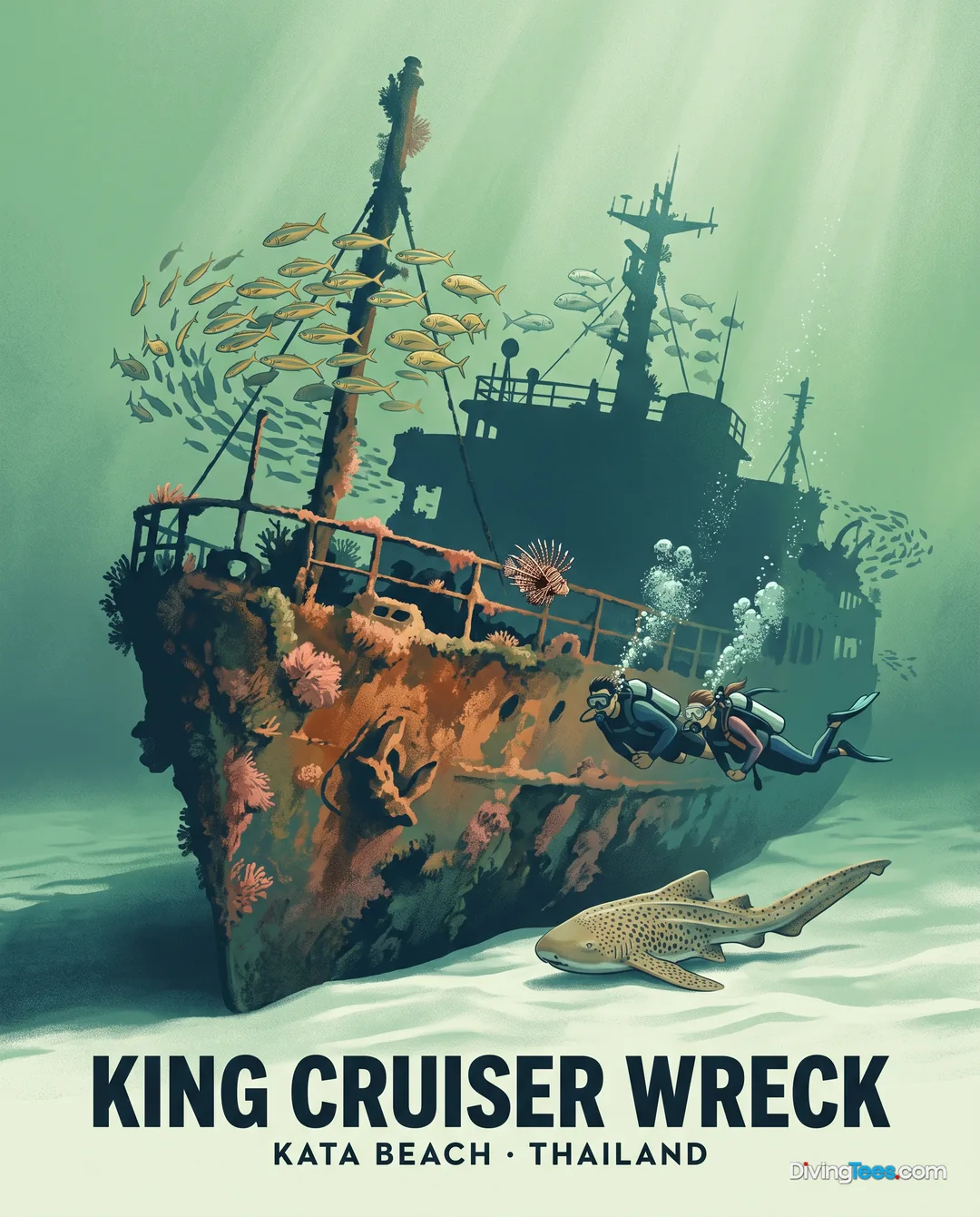
King Cruiser Wreck →
Max. depth · 35 m
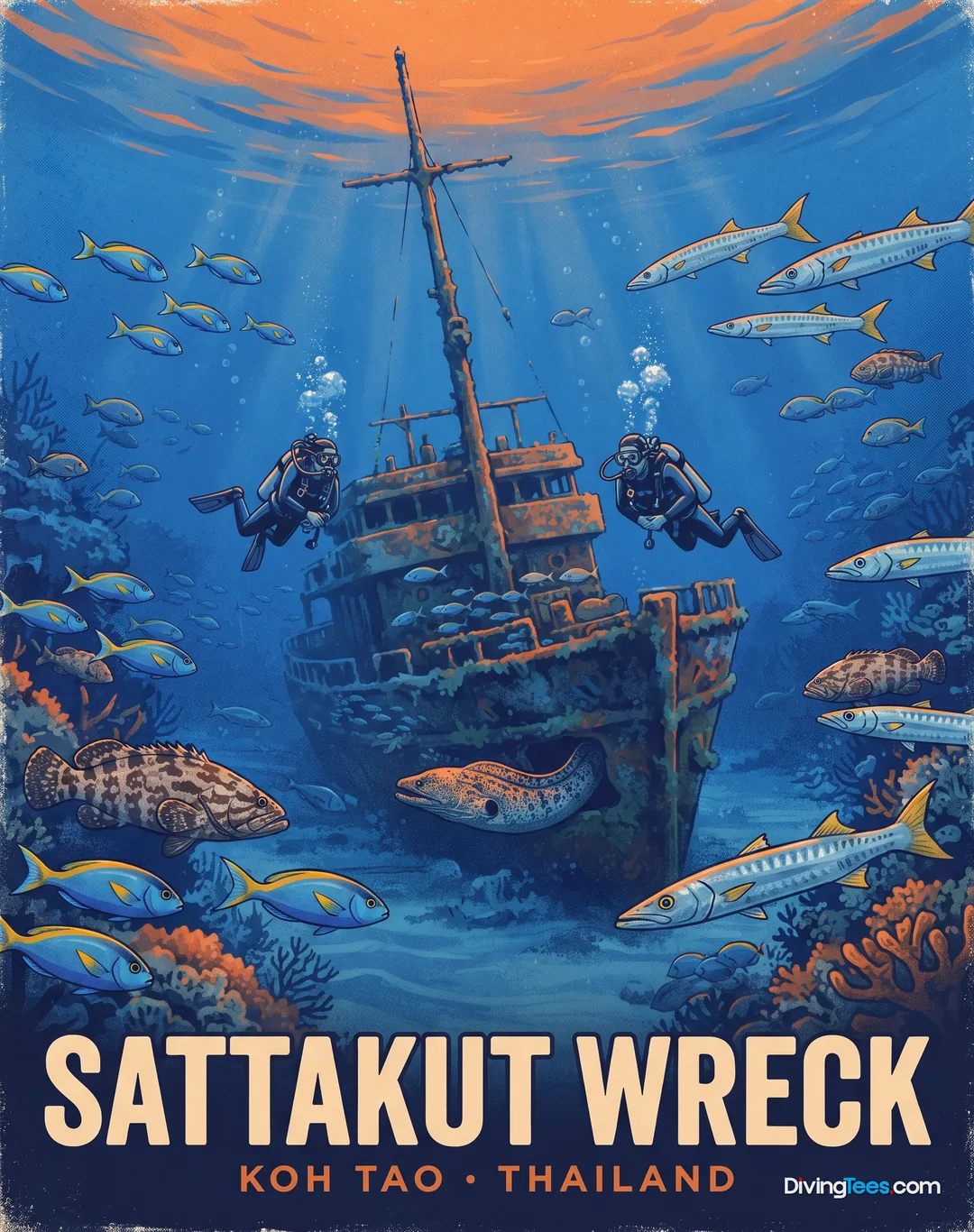
Sattakut Wreck →
Max. depth · 30 m
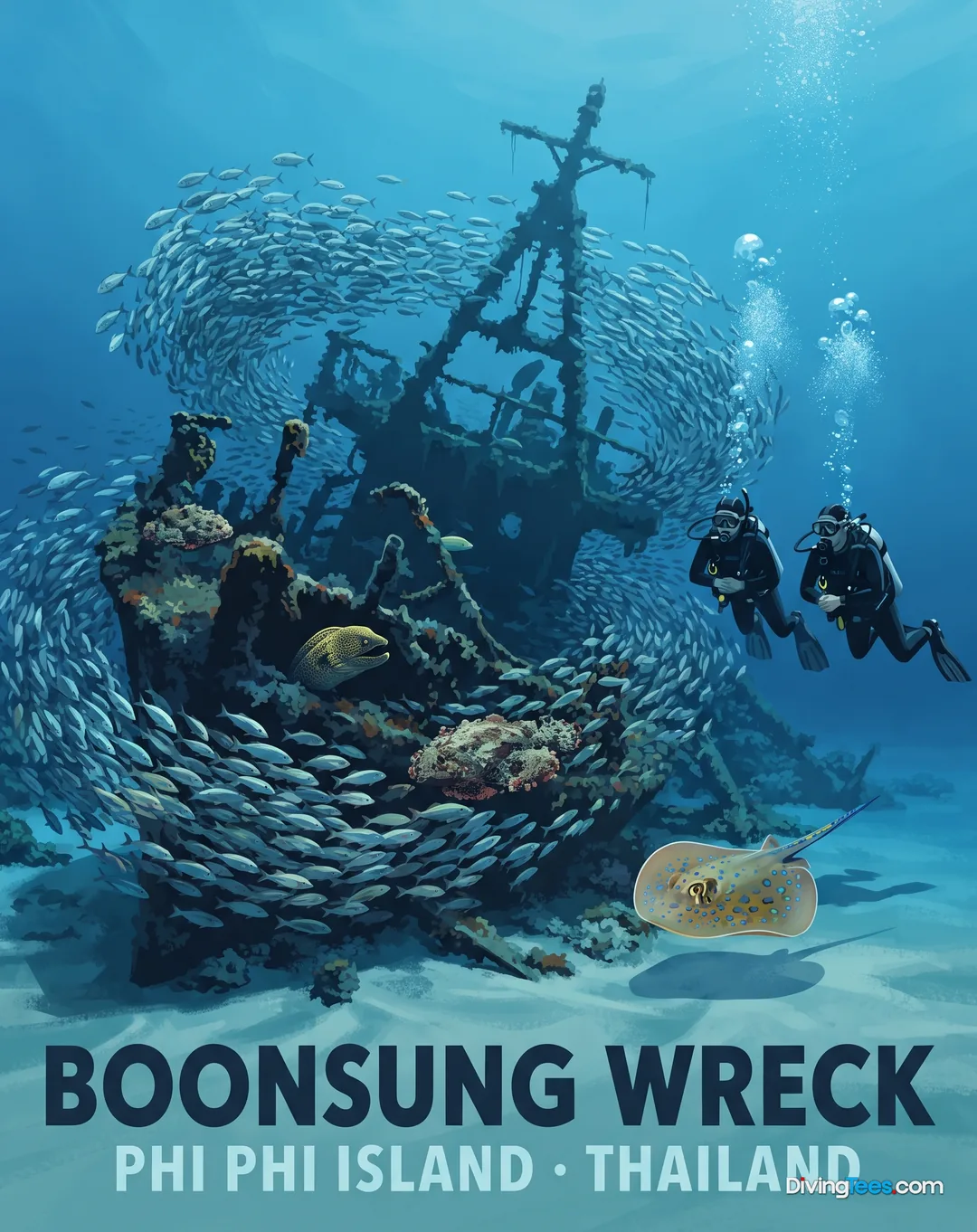
Boonsung Wreck →
Max. depth · 18 m
Itineraries, dates and prices
Prices per person. Each month shows its lowest price: click a month, or pick an itinerary.
Next departures · 78 departuresfrom £555$742€663
November 2026
December 2026
January 2027
See dates and prices
If you click these links and make a purchase on the partner site, DivingDeal may earn a commission, at no extra cost to you.
Dates and prices taken from liveaboard.com, updated 23 October 2026
What you’ll meet underwater
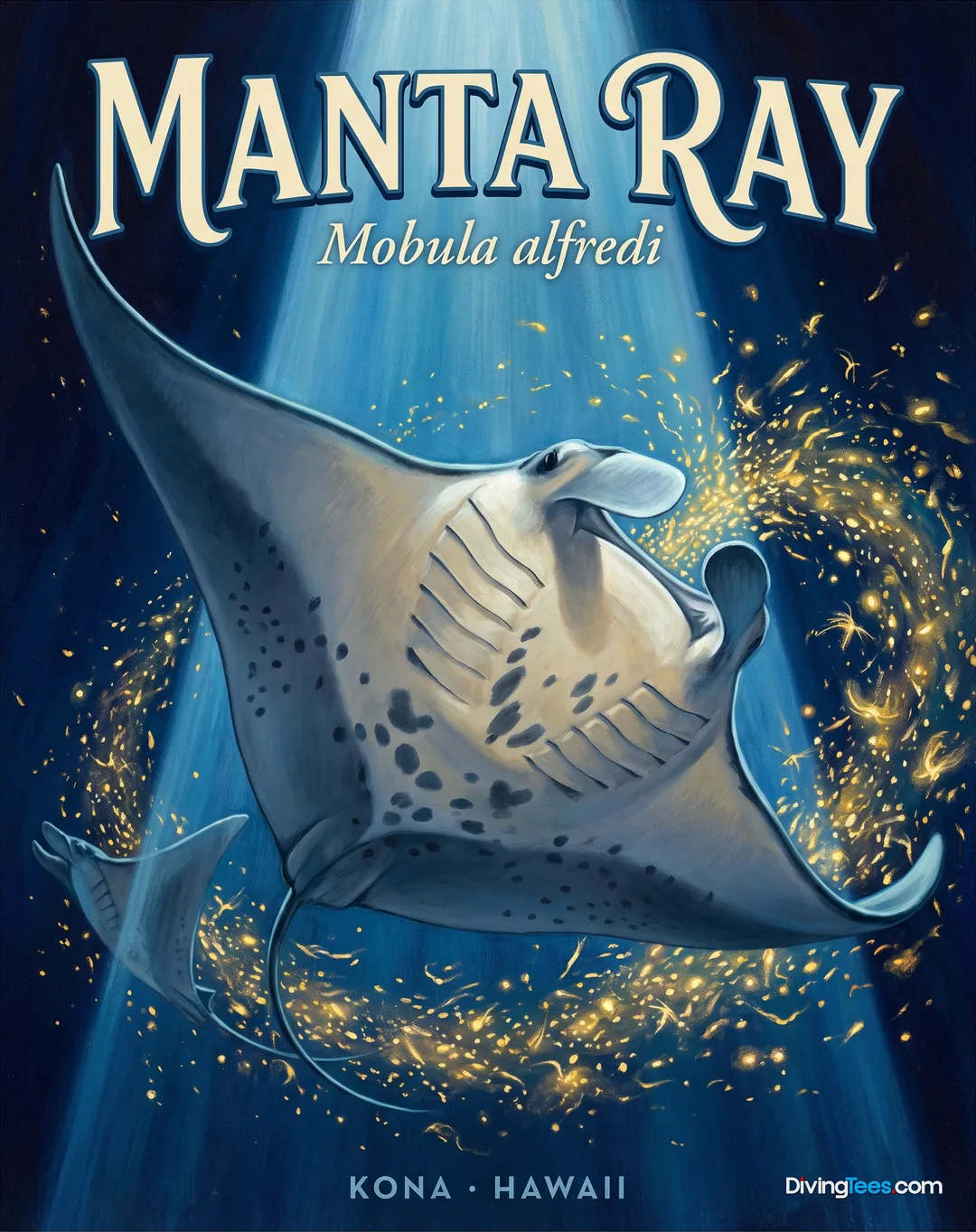
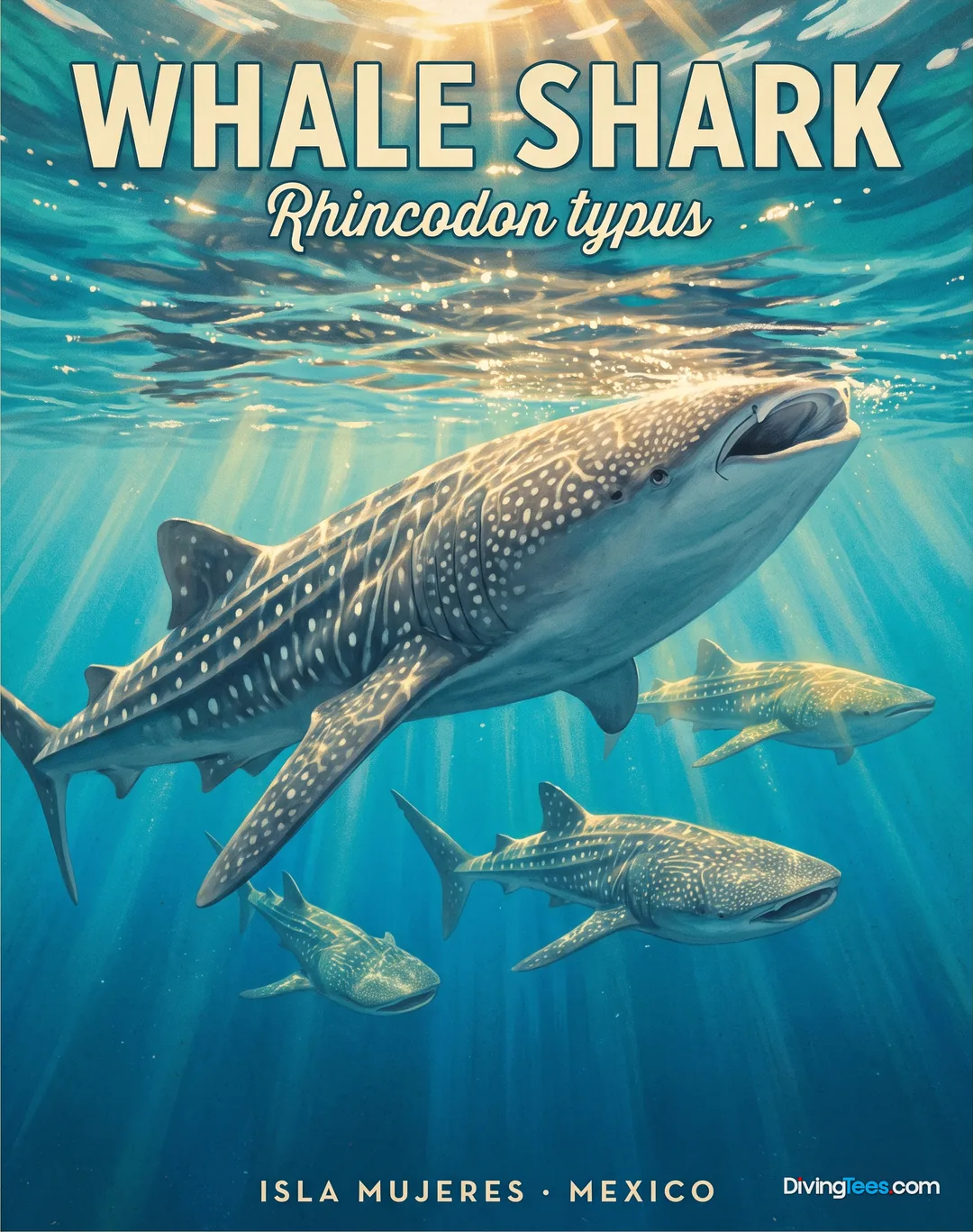
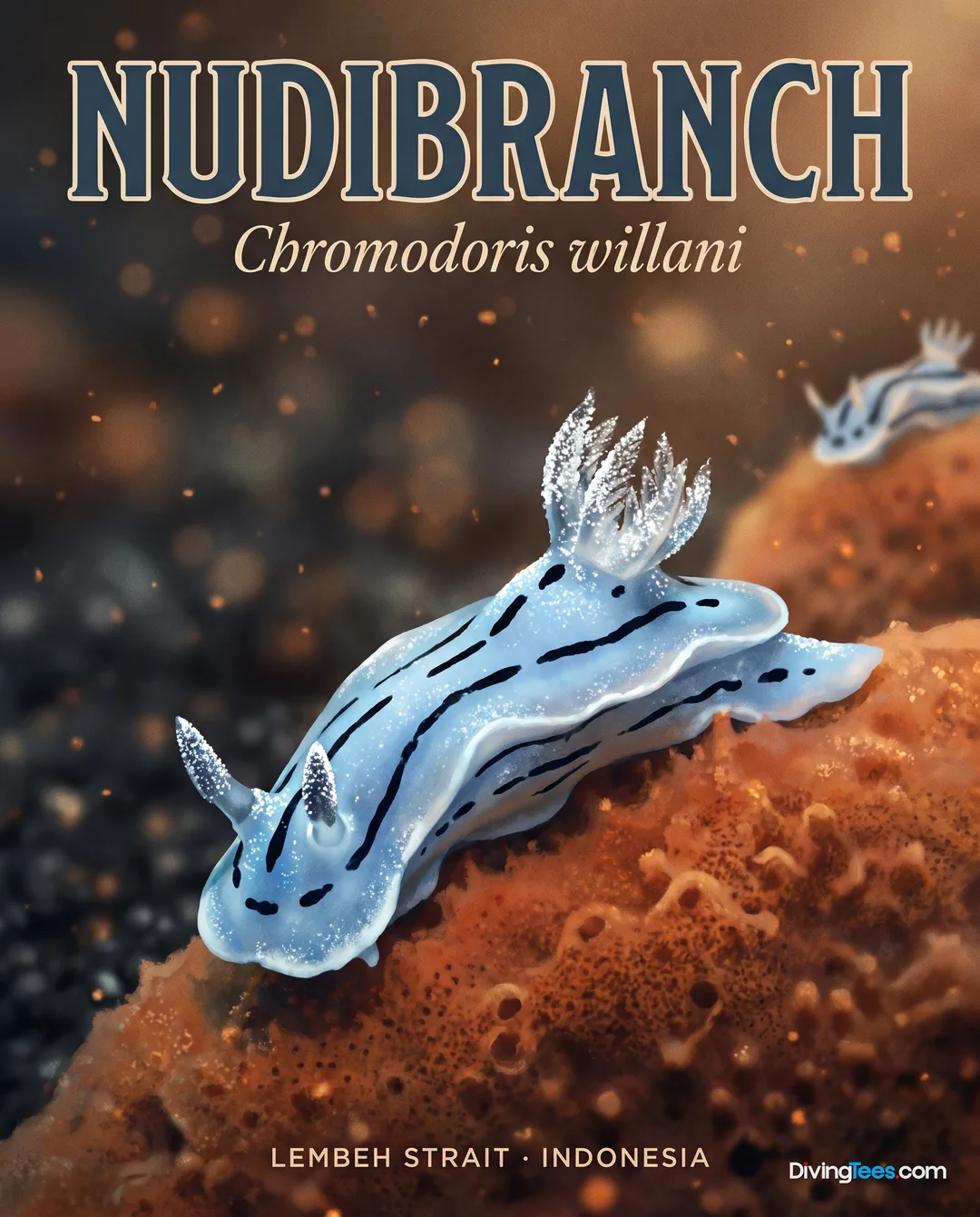
Across this route, barracuda, whale sharks, leopard sharks, groupers, manta rays, reef sharks, tuna, turtles, nudibranchs, morays, trevallies and fusiliers form the recurring cast. The large animals are never a contract, but the sites give them reasons to pass: currents sweep over pinnacles, and Koh Bon’s cleaning station draws manta rays when they come in for maintenance. The Similans combine reef life with granite boulder country, while wrecks concentrate fish over otherwise open sand. Some sightings are tied to one place. Racha Noi is the only listed site for grey reef sharks and garden eels. South Tip is the place for triggerfish and unicornfish. Southwest Pinnacle is where a squid is recorded, Surin Islands for lobster and humphead parrotfish, and Boonsung Wreck for porcupinefish. Sail Rock is the specialist stop for damselfish, Spanish mackerel and dogtooth tuna. Those are good reasons to care which route is booked, not just how many nights it lasts.
Who puts you in the water
Guiding is available in English, German, Thai and French, and the crew combines local and international staff. The operation is also a PADI 5-Star IDC centre, with training from beginner level through Divemaster and Instructor courses; an Advanced Open Water course can be completed as part of a liveaboard trip. The boat welcomes certified divers, freedivers, snorkellers and non-diving companions, but the liveaboard requires divers to have been in the water within the previous year. Rental gear is set up before boarding, but each diver must check it carefully after the boat briefing. Oxygen, first-aid kits, radio, GPS, radar, sonar, alarms and fire extinguishers are carried for emergencies.
The dive deck and the gear
The dive setup is built for different kinds of divers. The shaded dive space has a platform, tank racks and rinse tanks, with a separate rinse for cameras and a photo area for handling equipment after the dive. DIN adapters are available. Nitrox is available as an optional extra, and the boat supports technical and sidemount diving. Rental equipment is available, while 15-litre tanks are an extra-cost option and long wetsuits and X-Deep wings have limited availability. The single tender collects divers from the water and brings them back to the liveaboard, while the main platform handles entries and exits. The safety equipment includes oxygen and first-aid kits.
Between dives
Between dives, the shaded dive area is the practical refuge from the Thai sun. The terrace and observation deck provide a change of level when divers want air, a view and less conversation about bottom time. Snorkelling from the boat is possible, and the dinghy can take guests to a beach when conditions and access allow it. Those beach visits matter on the longer Similan and Surin routes: they break up repeated entries without turning the trip into a land excursion. The boat also has a dedicated photo area and separate camera rinse, so photographers can move from water to maintenance without competing with general equipment. There is no need to invent activities for the quiet hours. On Explorer, the useful gap is shade, food, a camera, a mask and the next site briefing.
A day on board
A day on Explorer is organised around the water, with food fitted into the spaces between dives. The shorter three-day trip carries nine dives including one night dive; the five-day route carries 16, and the eight-day route 25 with three night dives. The first briefing comes before the first entry, followed by the dive, recovery, food and preparation for the next site. Later dives may move from reef to pinnacle or wreck, while the night dive changes the same seascape into a search for different movement and behaviour. Between entries, divers sit in the shade, rinse cameras, snorkel from the boat or go ashore when a beach visit is possible. Longer back-to-back packages reach 41 dives, so the daily rhythm is not decorative: sleep, eat, check the kit, listen to the briefing, and get back in. The boat’s most important luxury is the next dive already waiting.
What you eat aboard
Meals are served as a full-board buffet built around local cooking, with vegetarian and vegan options available. Non-alcoholic drinks, drinking water, tea, coffee and snacks are provided; beer and wine are available separately. The important meal is the one that follows a dive: food arrives when divers are hungry, not as a formal event that asks everyone to dress up or wait. On a multi-dive day, a buffet also works better than a fixed plate because appetite changes with depth, current and the last hour spent on the tender. The galley’s local emphasis gives the trip a Thai centre instead of reproducing resort food at sea. Passenger feedback is strongest for the food, and that is easy to understand on a boat where meals punctuate the recovery between dives.
Nights at sea
The cabins are on the main deck, and every one has air conditioning and a standard sea-view window. Cabins 1 and 2 are double ensuite rooms; cabins 3 to 6 can be arranged as double or twin ensuite rooms. Cabins 7 and 8 are standard doubles, without the ensuite category. Nine bathrooms serve the eight cabins, so the distinction between room types is clear rather than cosmetic. At night, the useful part is simple: a cooled room, a window showing the sea, and a place to put wet thoughts away after the last dive. The wooden boat and its working systems remain part of the setting; this is not a silent hotel room. Choose an ensuite twin or double if easy access to a private bathroom matters after repeated saltwater entries. Choose a standard double if the route and dive schedule matter more than cabin finish.
Cabin #1 DBL Ensuite
Cabin #2 DBL Ensuite
Cabin #3 DBL / Twin Ensuite
Cabin #4 DBL / Twin Ensuite
Cabin #5 DBL / Twin Ensuite
Cabin #6 DBL / Twin Ensuite
Cabin #7 Standard DBL
Cabin #8 Standard DBL
What to know before boarding
Departures and returns use Thap Lamu and Khuraburi, depending on the route and direction of travel. An airport transfer can be arranged as an optional service; the available transfer is from the airport to the departure point rather than a general hotel shuttle. Guests should arrive in the area the night before, especially when joining a route from a different port, so a delayed flight does not become a missed boat. The exact harbour and transfer arrangement should be fixed before travel.
Deck plan
- Year built
- 2001
- Year renovated
- 2024
- Length
- 25 m
- Beam
- 7 m
- Maximum number of passengers
- 16
- Number of cabins
- 8
- Number of bathrooms
- 9
- Engines
- 1
- Cruising speed
- 8 knots
- Tenders
- 1
- Website
- seadragondivecenter.com ↗
Hello, I'm Marina, DivingDeal.com's AI assistant. I answer in detail about hotels, dive centres and liveaboards.
Thinking about the whole trip and the flights? Talk it over with Edith →
Marina is an AI. Some links are affiliate links: DivingDeal may earn a commission, at no extra cost to you. Bookings are made with the partner.