


Mojo Dive - Tu centro de buceo en Lanzarote
Google 5/5 (1,728 reviews)
41 km away as the crow flies
Lanzarote · Canary Islands · Atlantic
Max. depth · 40 mExplore a unique volcanic formation where basaltic finger-like ridges cut through sand to create dramatic underwater relief.
For subtitles in English: start the video firstthen click the gearat the top right of the video, select “Subtitles/CC”, then “Auto-translate” and choose “English”.
The topography of Los Dedos is defined by its unique volcanic geology, which gives the site its name. Dark basaltic ridges extend outward from the main reef structure like elongated fingers, creating a series of striking underwater formations. These volcanic 'fingers' are interspersed with tongues of sand that penetrate the rock, forming a complex landscape of ridges and sandy corridors. As you descend, you will notice the terrain is typically stepped rather than a sheer vertical drop, providing a diverse range of habitats within a relatively compact area.
Navigating the site involves moving between these rocky fingers and the sandy patches that separate them. The relief is dramatic, with the basaltic structures creating small walls and ridges that rise from the floor. In certain sections where the volcanic formations approach one another, you can find occasional swim-throughs that add a sense of depth to the exploration. This combination of hard volcanic substrate and soft sand creates a high-contrast environment that is characteristic of the La Graciosa coastline.
The depth profile at Los Dedos varies from 10 to 40 metres, allowing for different types of reef exploration. The shallower sections offer a clearer view of the intricate geological shapes and the interplay between the sand and the rock. As you move toward the deeper edges of the ridges, the relief becomes more pronounced. This depth range ensures that the site can accommodate a variety of reef profiles, from plateau-like areas to more structured, stepped descent lines.
Marine life at this site is heavily influenced by the way the currents and the geology interact. The sandy corridors between the basaltic fingers act as natural channels that concentrate both resident and passing species. You will frequently encounter schools of sardines and barracuda moving through these areas, often using the structure of the ridges for cover. The presence of these schooling fish provides a dynamic element to the dive, as their movements can change the light and visibility as they pass through the water column.
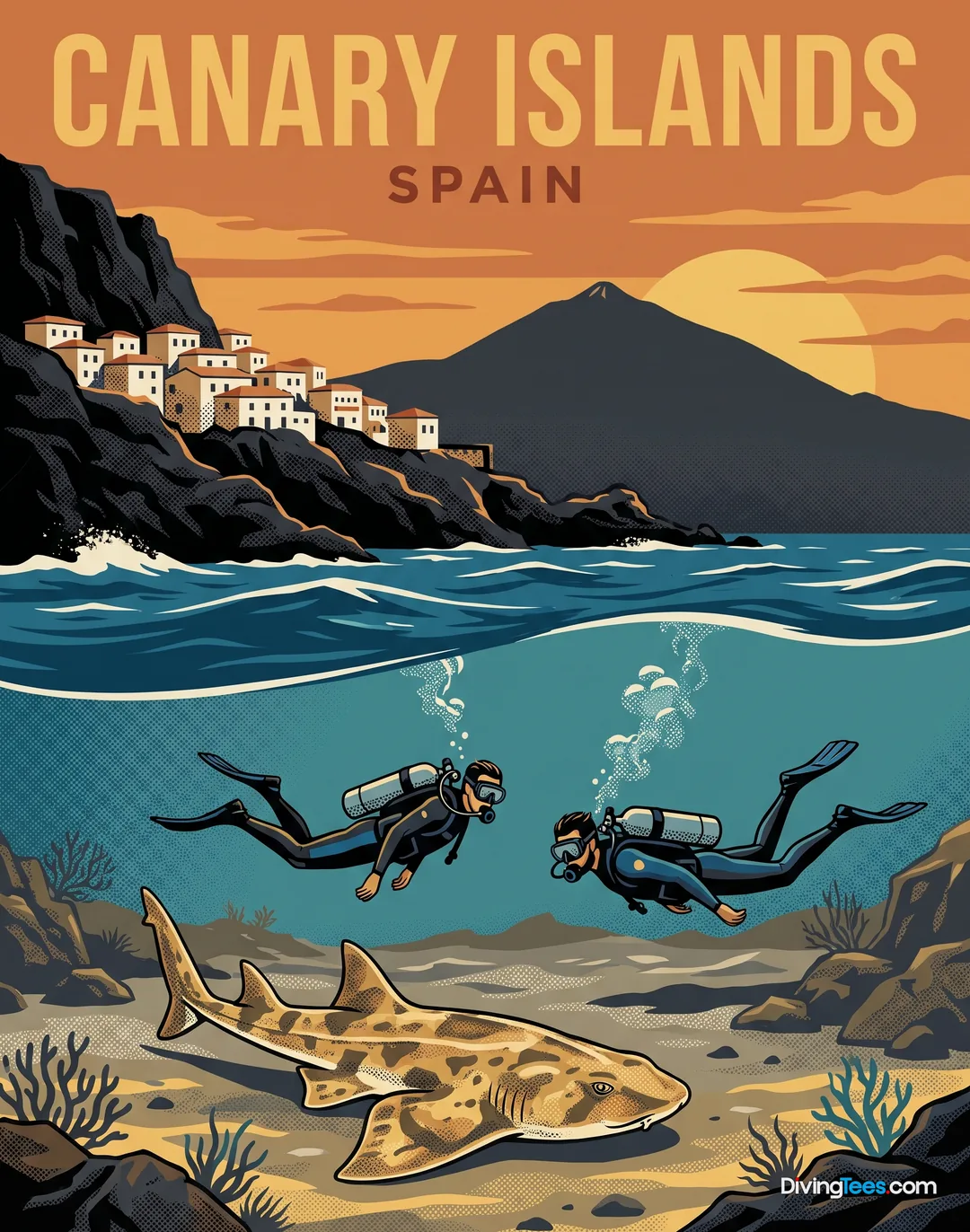
One of the most significant draws of Los Dedos is the presence of the Atlantic angel shark. These sharks are often found resting on the sandy patches that sit between the volcanic ridges. Because they tend to remain still on the bottom, spotting them requires a careful scan of the sandy corridors. Finding an Atlantic angel shark in its natural habitat among the finger-like formations is a defining experience of this specific dive site.
Beyond the larger species, the reef structure supports a variety of resident fauna that inhabit the basaltic cracks and sandy edges. You can observe moray eels patrolling the crevices of the volcanic rock and dusky groupers hovering near the more substantial structures. Stingrays are also common, frequently seen partially buried in the sand or gliding near the edges of the ridges. The diversity of the substrate ensures that there is almost always something to observe in the transition zones between the rock and the sand.
Conditions at the site are heavily influenced by the Atlantic swell and local weather patterns. The currents can vary significantly depending on the tide and the wind, particularly along the more exposed ridges. While the site can be quite calm, the water movement can increase quickly if the swell rises or the tide shifts. Understanding the relationship between the volcanic structure and the current is essential for maintaining good buoyancy and position when navigating the narrow corridors between the fingers.
Depths range from 10 to 40 metres. The site is accessible for Open Water Divers who are comfortable in moderate Atlantic conditions and have basic experience on reefs at depths of 20-30 metres. Visibility typically ranges between 15 and 30 metres. Currents are variable and influenced by Atlantic swell, tides, and wind; expect more noticeable movement along the exposed ridges. The best time to dive is from late spring to early autumn for warmer water and calmer seas, though winter can provide high visibility at the cost of cooler temperatures and increased swell.
You can dive Los Dedos from late spring to early autumn for warmer water and calmer seas. Winter may offer high visibility, but temperatures are cooler and swell is increased. Conditions remain influenced by Atlantic weather, so the balance between warmth, sea state, and visibility can change with the season.
Los Dedos is accessible to Open Water Divers who are comfortable in moderate Atlantic conditions and have basic experience on reefs at depths of 20 to 30 metres. You should also be prepared to manage buoyancy and position while navigating volcanic ridges, sandy corridors, and occasional swim-throughs.
Los Dedos ranges from 10 to 40 metres, with shallower sections, stepped descent lines, and deeper ridge edges. Currents are variable and affected by Atlantic swell, tides, and wind. Movement is more noticeable along exposed ridges and can increase quickly when swell rises or the tide shifts.
You can explore dark basaltic, finger-like ridges separated by sand tongues, with small walls, sandy corridors, and occasional swim-throughs. Atlantic angel sharks often rest on the sand, while barracuda and sardines move through the channels. Moray eels, dusky groupers, and stingrays also inhabit the rock and sand.