

Centro Buceo Lanzarote
Google 5/5 (1,567 reviews)
3.4 km away as the crow flies
Lanzarote · Canary Islands · Atlantic
Max. depth · 15 mExplore a large-scale contemporary art installation specifically engineered to serve as an artificial reef in the bay of Playa Blanca.
For subtitles in English: start the video firstthen click the gearat the top right of the video, select “Subtitles/CC”, then “Auto-translate” and choose “English”.
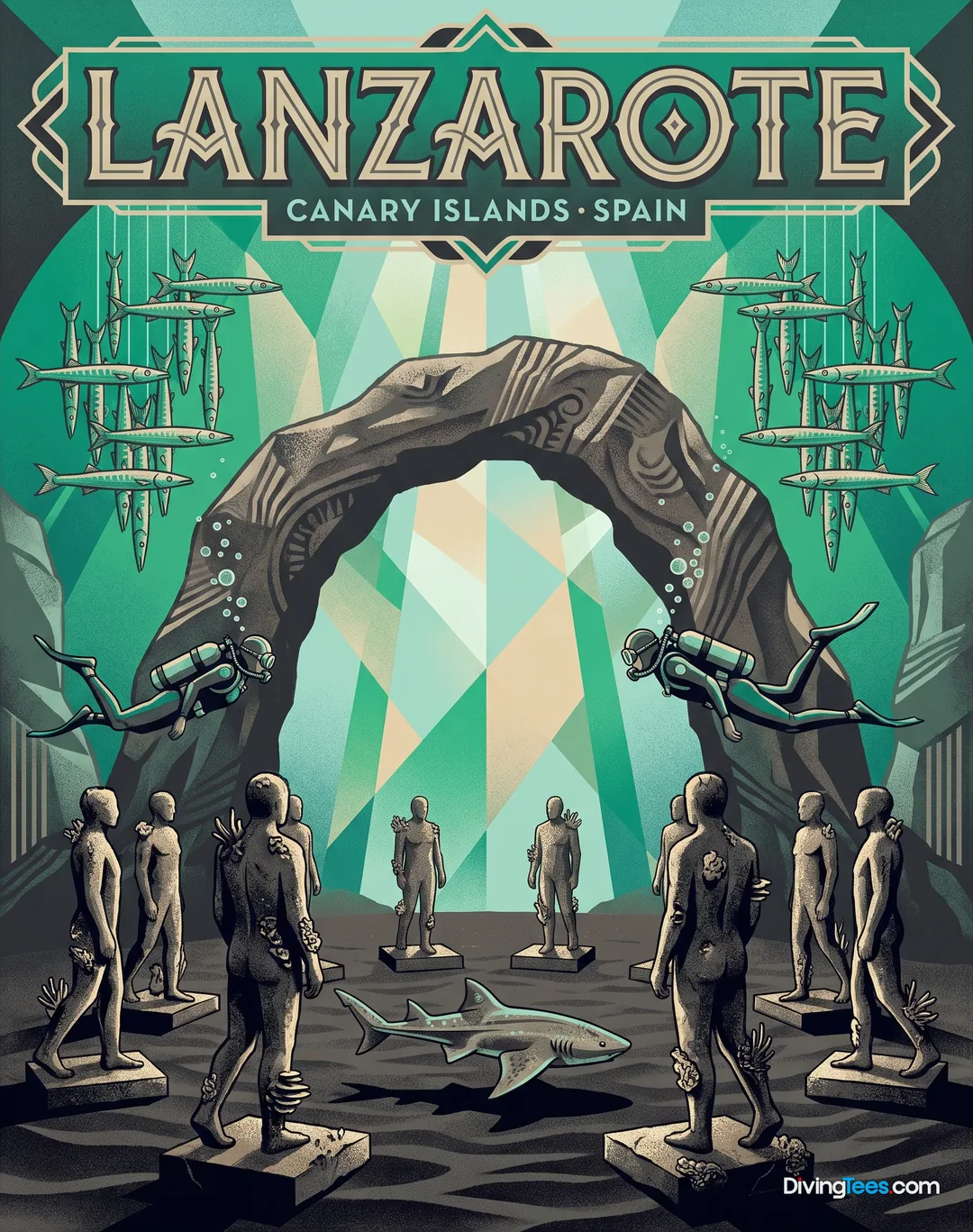
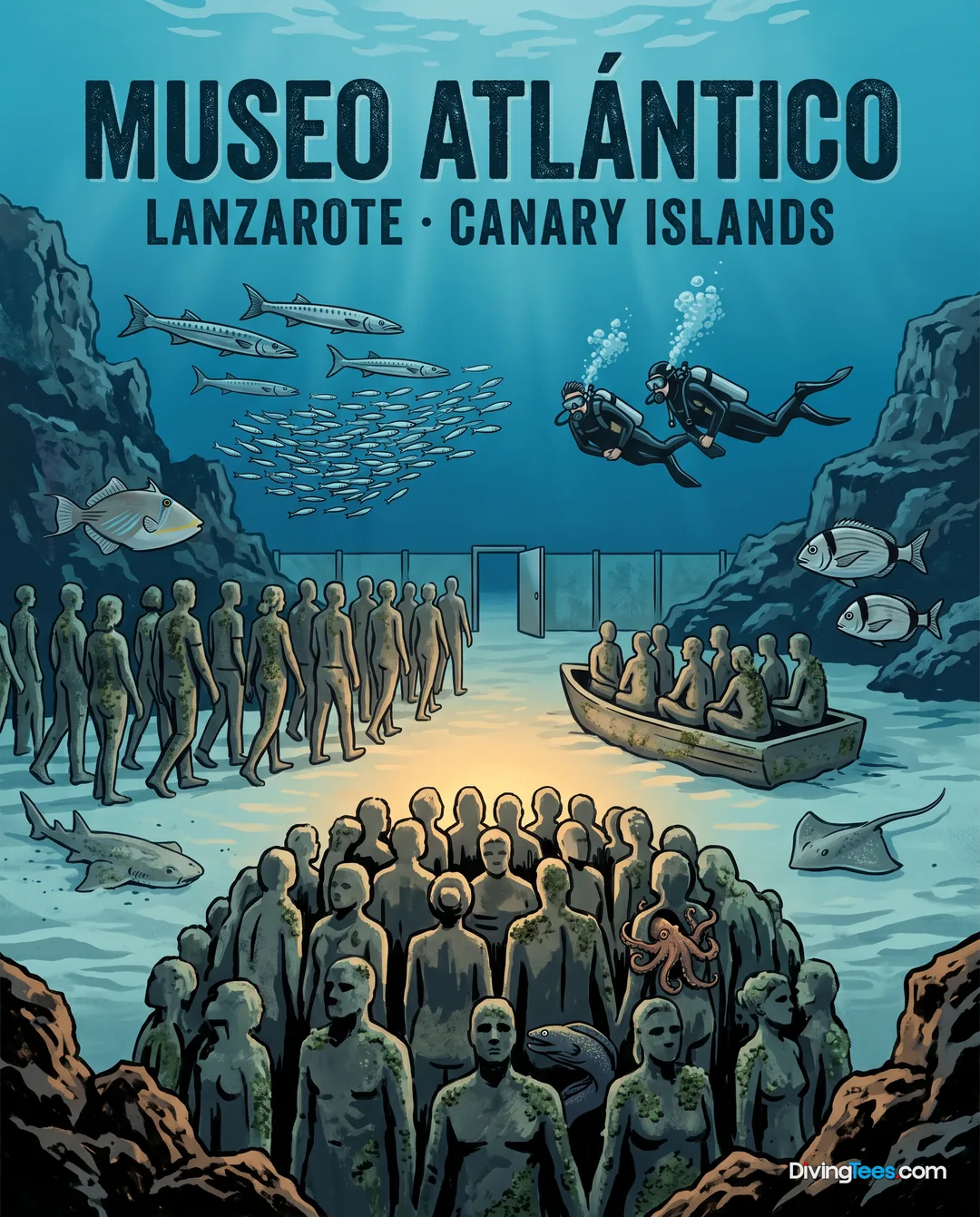
The Museo Atlantico is not a natural reef but a deliberate underwater contemporary art museum. Spread over approximately 2,500 square metres in the bay of Las Coloradas, the site consists of multiple life-size sculpture installations. These pieces are laid out in specific groupings and corridors across the seabed. This layout turns the site into a hybrid environment where human art and marine biology intersect. You are not just diving a site; you are navigating through a submerged gallery.
The topography of the site is defined by a gently sloping sandy seabed that provides a clean canvas for the sculptures. These low-relief structures rise from the sand, creating an artificial reef system. Interspersed between the various art installations are isolated patches of natural rock. This combination of man-made structures and natural substrate provides a complex habitat for various species. The gradient of the bottom remains relatively shallow throughout the museum area.
Because the sculptures were designed to function as an artificial reef, the primary focus for many divers is observing how marine life colonises the art. You will notice how various organisms have begun to claim the surfaces of the sculptures as their own. This process creates a dynamic ecosystem that changes as the structures age. Moving slowly through the corridors between the pieces allows you to see these small-scale ecological developments. It is a site for observing the transition from art to living reef.
The site is easily accessible via boat from Playa Blanca, located about 900 metres offshore in the bay. Most dives begin with a descent along a fixed line to ensure precise positioning within the sculpture field. Once you reach the bottom, the layout encourages a methodical approach. You can drift calmly through the corridors or hover to inspect the fine details of the installations. The shallow depth makes the site highly accessible for various skill levels.
Marine life at the museum is a direct result of the structures providing new surfaces for colonization. You can find various species hiding within the crevices of the sculptures or moving across the sandy floor. This includes sightings of moray eels and octopus that use the structures for cover. Smaller inhabitants like cleaner shrimp and anemones are frequently found on the artificial surfaces. The presence of these species confirms the success of the site as an ecological addition to the bay.
The local fauna also includes several species of rays and larger fish that navigate the artificial corridors. You may encounter butterfly rays or stingrays patrolling the sandy patches between the sculptures. Schools of sardines and sea bass are common in the water column above the installations. Larger predators like barracuda also utilize the site. The combination of structure and sand makes it a high-activity area for these resident species.
Conditions at the museum are generally sheltered due to its location within the bay. Most days provide light or negligible currents, making it an easy site for maintaining buoyancy while observing the art. However, visibility can be affected by wind or swell, which may occasionally create a mild drift along the sculpture field. In such cases, the visibility typically ranges between 10 and 20 metres. Planning your dive based on recent surface weather is recommended to ensure optimal clarity.
Depth ranges from 12 to 15 metres. This site is suitable for Open Water divers with good buoyancy control, and it is also appropriate for beginners following a supervised introductory dive. Expect visibility between 10 and 20 metres. While most days are calm with light currents, swell or wind can occasionally cause a mild drift.
Choose Museo Atlantico after checking recent surface weather. The bay is generally sheltered, and most days have light or negligible currents. Wind or swell can affect visibility and may create a mild drift along the sculpture field, with visibility typically ranging between 10 and 20 metres.
Museo Atlantico suits Open Water divers who have good buoyancy control. Beginners can also visit the site on a supervised introductory dive. The sheltered bay, gently sloping sandy seabed, and shallow museum area support a calm approach while you navigate between the underwater contemporary art installations.
Museo Atlantico lies between 12 and 15 metres deep. The seabed slopes gently through the museum area, with low-relief sculptures rising from the sand and isolated patches of natural rock nearby. Most dives begin with a descent along a fixed line for precise positioning within the sculpture field.
At Museo Atlantico, you can explore life-size contemporary sculptures arranged in groupings and corridors across an artificial reef. Marine life includes moray eels, octopus, cleaner shrimp, anemones, butterfly rays, stingrays, sardines, sea bass, and barracuda, with organisms colonising the sculptures and using their crevices for cover.