

Diving Atlantis
Google 4.9/5 (2,723 reviews)
2 km away as the crow flies
Tenerife · Canary Islands · Atlantic
Max. depth · 32 mDescend the Palm Mar Wall to encounter resident turtles, vast schools of fish, and a variety of rays cruising the sandy bottom.
For subtitles in English: start the video firstthen click the gearat the top right of the video, select “Subtitles/CC”, then “Auto-translate” and choose “English”.
Diving the Palm Mar Wall begins with a boat entry, typically a short journey to the site. From the surface, you'll gear up and drop onto an impressive vertical wall that defines this site. The topography transitions from the wall itself to a vast sandy bottom where much of the significant marine life congregates. This layout allows for varied dive profiles, from shallow explorations to deeper excursions along the drop-off.
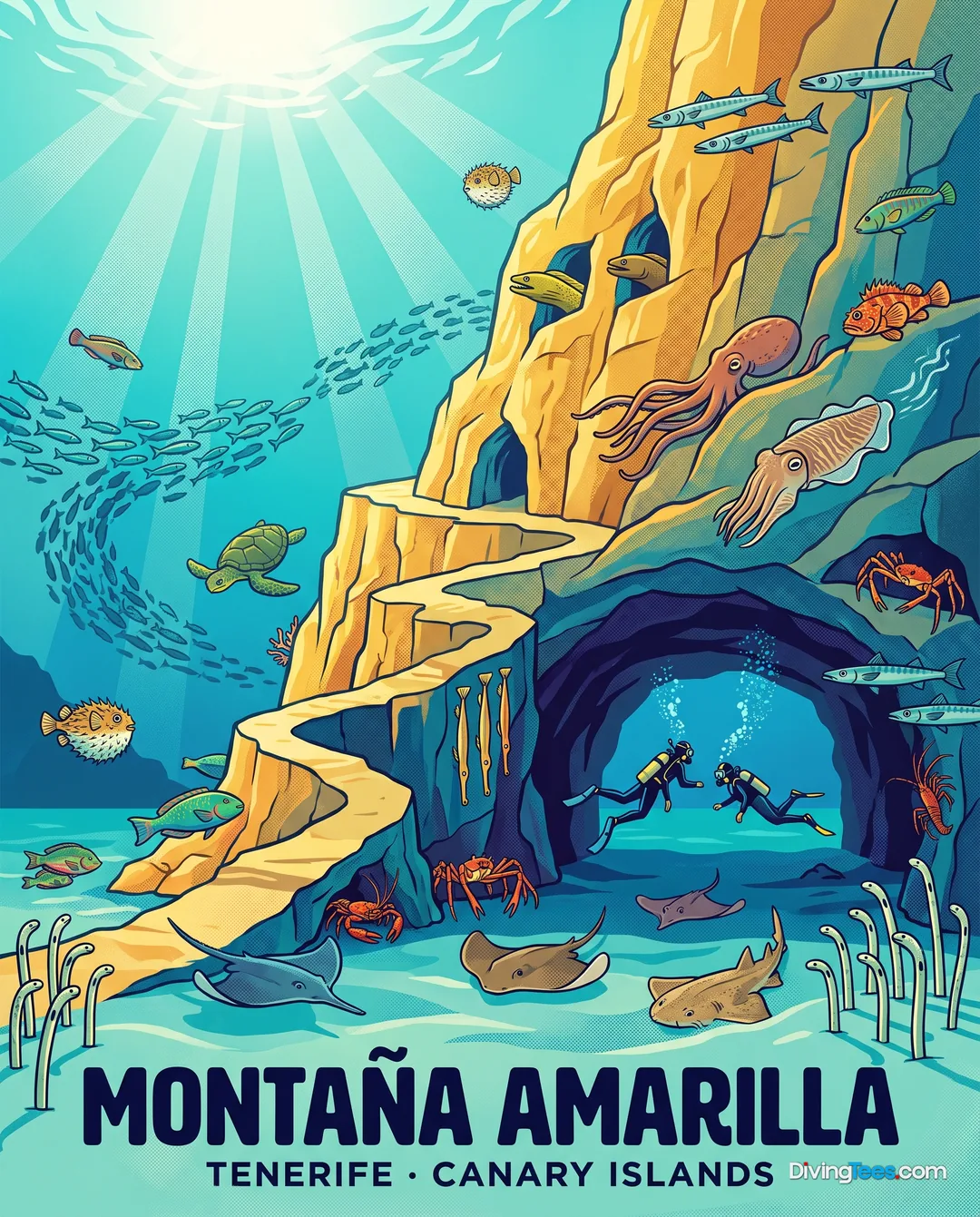
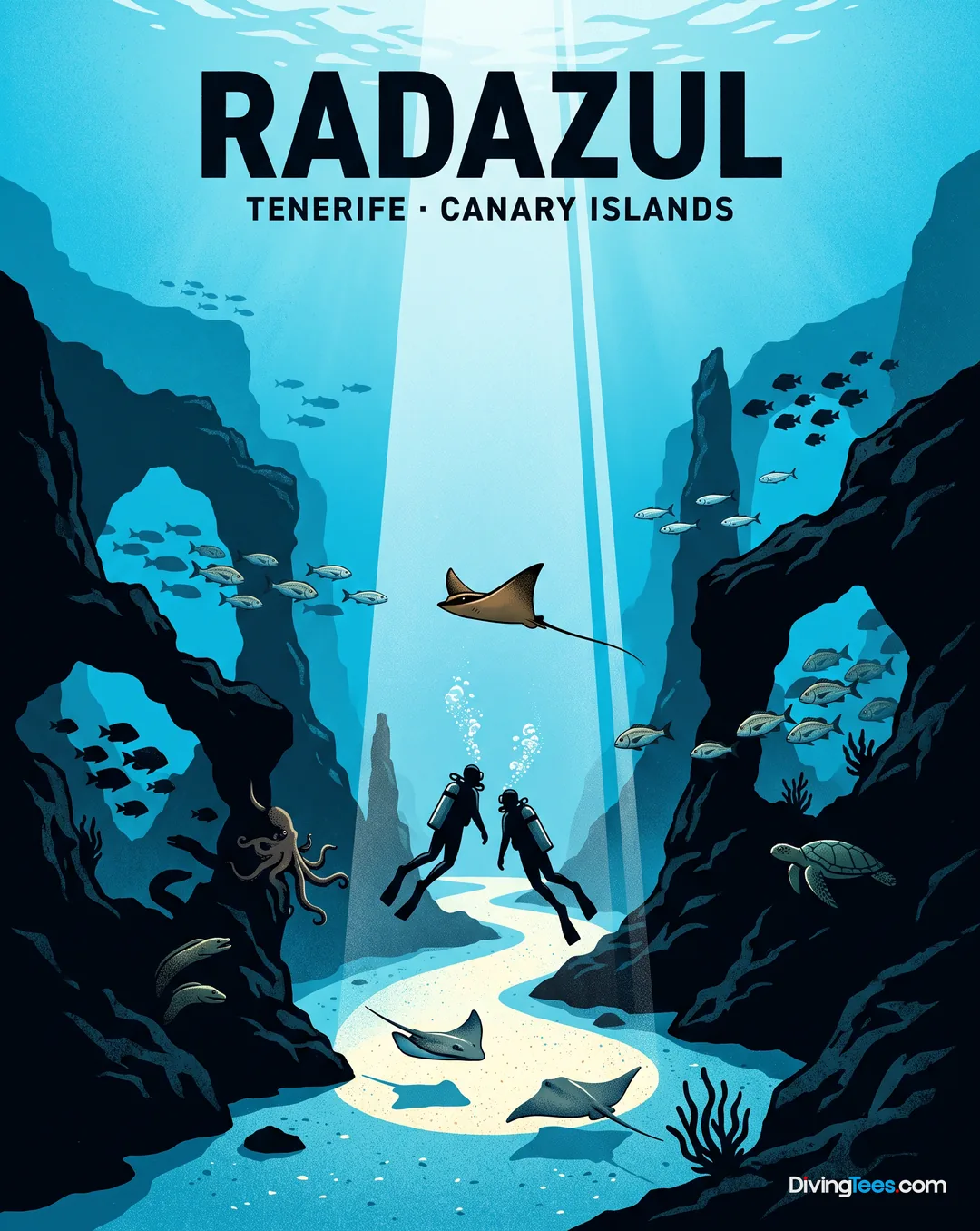
As you descend along the wall, schools of fish are a constant presence. These large aggregations often move in unison, creating dynamic patterns against the dark volcanic rock. Keep an eye on the ledges and crevices of the wall for moray eels. The sheer face of the wall is active with smaller reef inhabitants, offering plenty for divers who prefer a slower pace and closer examination.
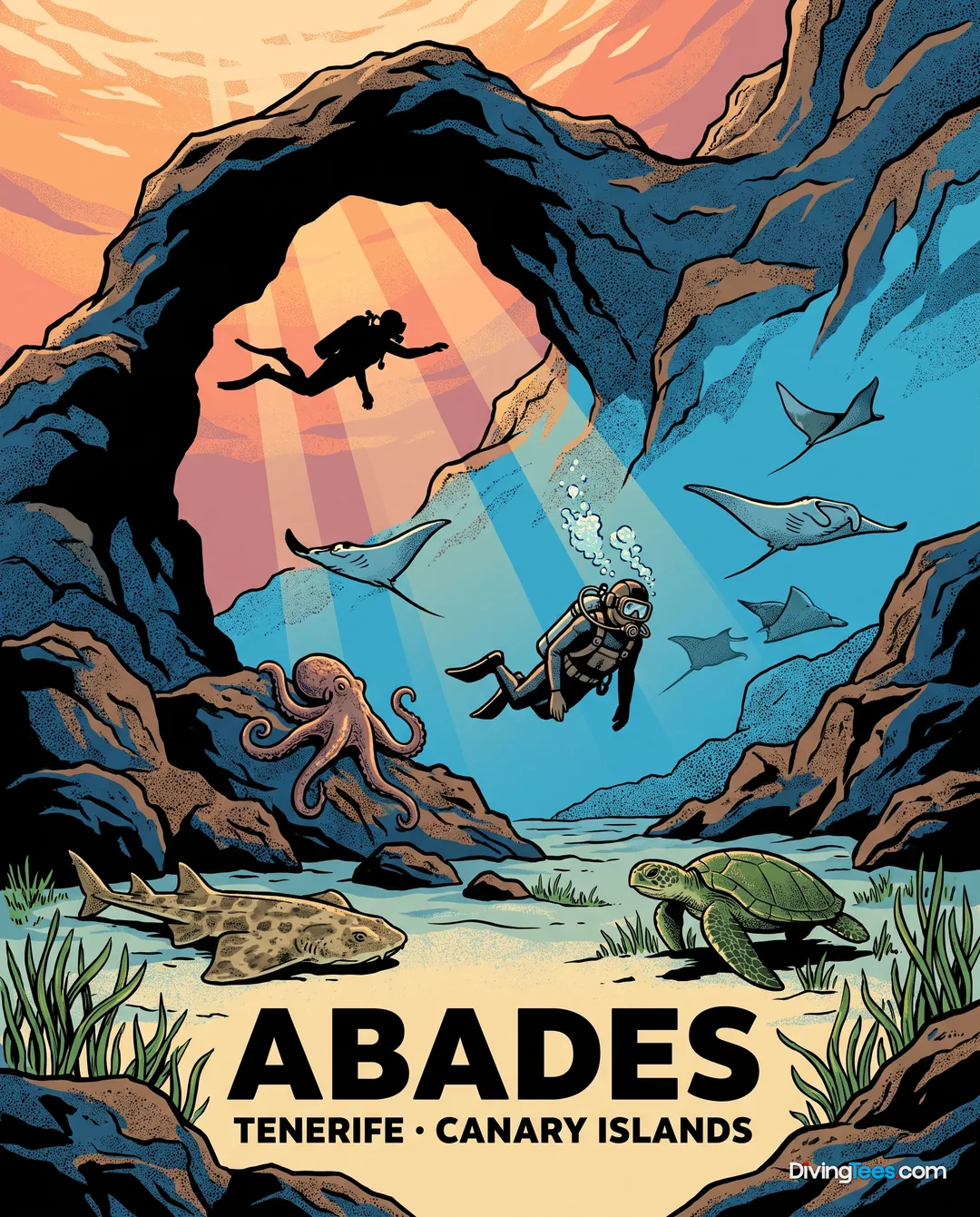
The sand bottom below the main wall is a key area for larger benthic species. This is where you will frequently encounter various ray species, including impressive stingrays and eagle rays. These rays often cruise gracefully over the sandy expanse, sometimes resting partially buried. Observing them as they navigate their habitat provides a unique interaction, emphasizing the scale of the environment.
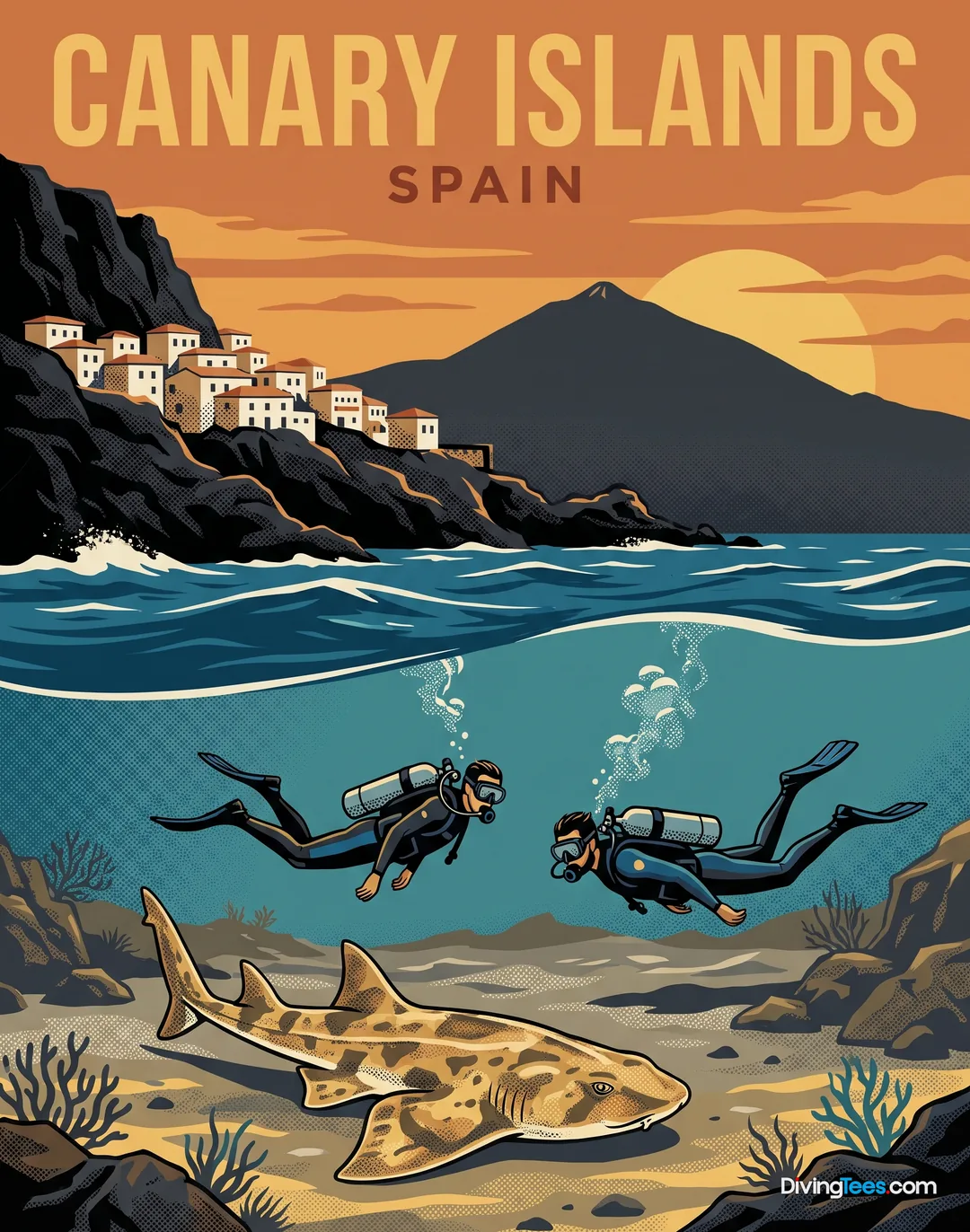
During the winter months, specifically from December to March, the sandy areas at around 25 metres become a prime location for spotting angelsharks (Squatina squatina). These bottom-dwelling sharks are masters of camouflage, often found partially buried, waiting for prey. Patience and a keen eye are essential to spot them, but the reward of observing these unique sharks in their natural state is significant.
While exploring the Palm Mar Wall, you'll also encounter the site's resident turtles. These gentle creatures are often seen foraging along the wall or resting near its base, providing excellent opportunities for observation. Their consistent presence adds another layer of reliable marine life encounters to the dive, making it a favorite for many.
The site benefits from generally calm conditions, with good visibility, which enhances the overall dive experience. This clarity allows for expansive views of the wall's structure and the activity on the sandy bottom. While the conditions are generally benign, understanding the topography and potential for deeper exploration is key to planning your dive profile safely and effectively.
This site offers diving depths from 12 metres down to 32 metres, making it accessible to a range of certifications. The main action with angelsharks and larger rays is typically observed around 25 metres. While often calm, the site is best suited for Advanced Open Water Divers due to areas of interest at deeper depths. Visibility is consistently excellent.
Palm Mar Wall is particularly worth considering from December to March, when angelsharks are found in the sandy areas around 25 metres. The site generally has calm conditions and consistently excellent visibility, so you can focus on the wall, sandy bottom and marine life during a winter dive.
Palm Mar Wall is accessible to a range of certifications because its dives run from 12 to 32 metres. However, the site is best suited to Advanced Open Water Divers, since areas of interest lie deeper, including the action around 25 metres. Conditions are often calm, with excellent visibility.
At Palm Mar Wall, you can choose profiles from shallow exploration at 12 metres to deeper excursions along a vertical drop-off reaching 32 metres. The sandy bottom is especially significant around 25 metres, where larger rays and, in winter, angelsharks are typically observed.
At Palm Mar Wall, you can see resident turtles along the wall and near its base, large schools of fish against volcanic rock, moray eels in ledges and crevices, and stingrays and eagle rays over the sandy bottom. Winter dives may also reveal partially buried angelsharks around 25 metres.