Taj Exotica Resort & Spa, Andamans
★★★★★
★ 9.4/10 (108 reviews)
7.1 km away as the crow flies
Dive centre · Havelock · India
4.93,612 Google reviewsExplore the diverse reefs of Havelock Island with a PADI 5 Star Dive Resort and dedicated 1-to-1 guide ratios.
The Dive Master is a PADI 5 Star Dive Resort situated on Havelock Island (Swaraj Dweep) in the Andaman Islands. It serves as a base for exploring the archipelago's varied underwater topography, ranging from calm reef flats to dramatic vertical walls.
To reach the centre, you will fly into Port Blair and take a two-hour ferry to Havelock Island. Once you arrive, the centre provides a complimentary shuttle service for any divers staying within a 3-4 km radius of the facility.
The centre operates with a professional team of PADI certified instructors focused on safety and reef conservation. All instruction is conducted in English, ensuring clear communication for international divers.
A key feature of their service is the high level of attention provided during dives, with a ratio of one guide per diver. This ensures that whether you are a beginner or an advanced diver, you have dedicated supervision and guidance throughout your session.
The training programme is extensive, covering the full spectrum of PADI certifications. Beginners can start with Discover Scuba Diving or the PADI Open Water Diver course, progressing through the PADI Scuba Diver and PADI Adventure Diver levels.
For those looking to advance their skills, the centre offers PADI Advanced Open Water, PADI Deep Diver Specialty, and PADI Wreck Specialty courses. They also provide the PADI Rescue Diver and PADI Divemaster programmes for those pursuing professional paths.
Beyond standard scuba, the centre offers PADI Freediver and Advanced Freediver courses. For those interested in technical aspects or specific skills, they provide Nitrox and underwater photography training.
Dives are conducted using high-power engine speed boats, which allow for efficient transit to the various offshore sites. These vessels carry you to reefs, walls, and wrecks across the Havelock area.
On board, you will find water and snacks provided to keep you hydrated and fuelled between dives. The centre also uses these boats for night dives, allowing you to experience the reef after dark.
The Dive Master provides a full range of equipment for hire, so you do not need to carry your own heavy kit. This includes everything from regulators to wetsuits and fins.
Nitrox is available for divers looking to extend their bottom time. The centre is also equipped to handle underwater photography and videography, often providing these media as a complimentary part of your course or dive experience.
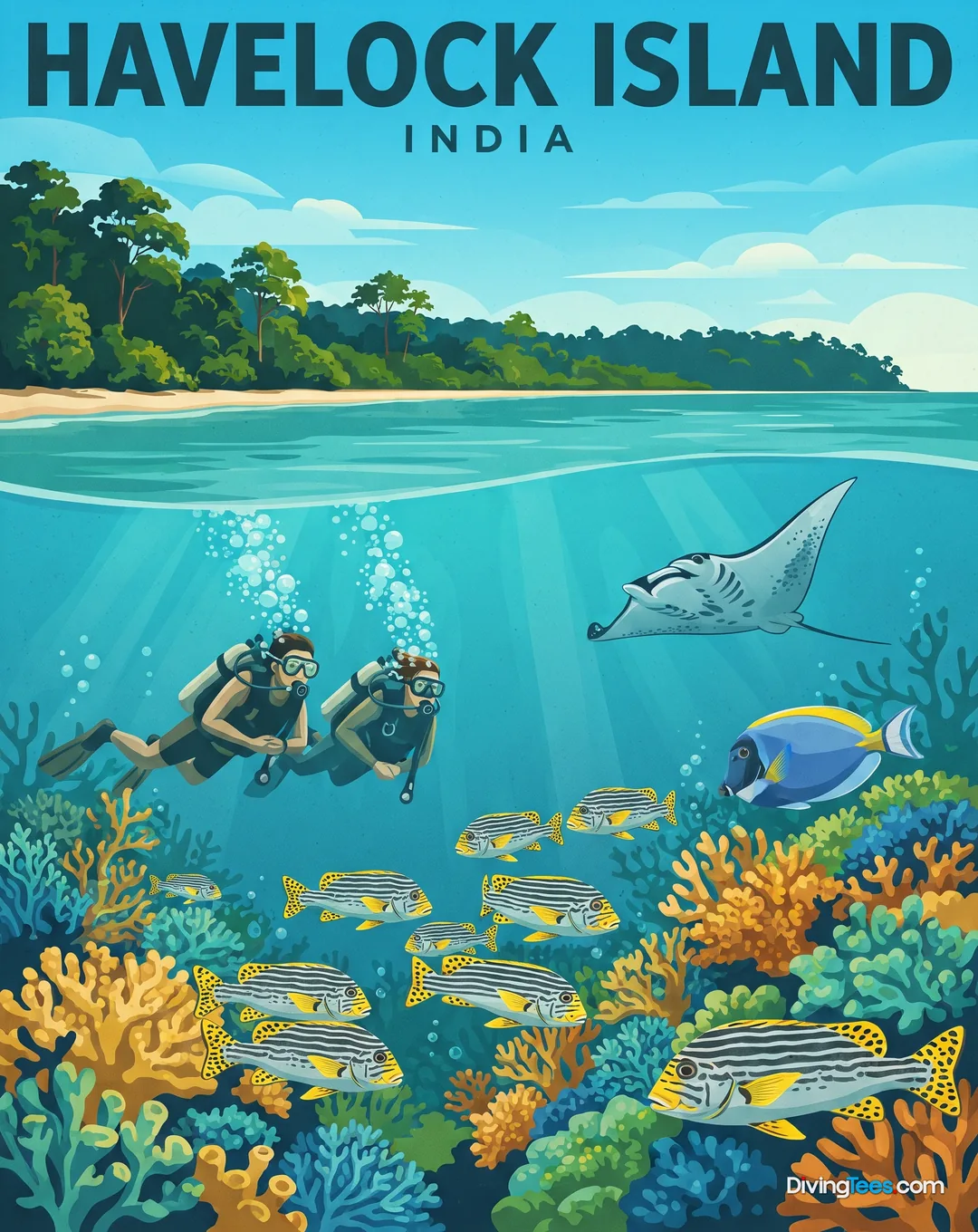
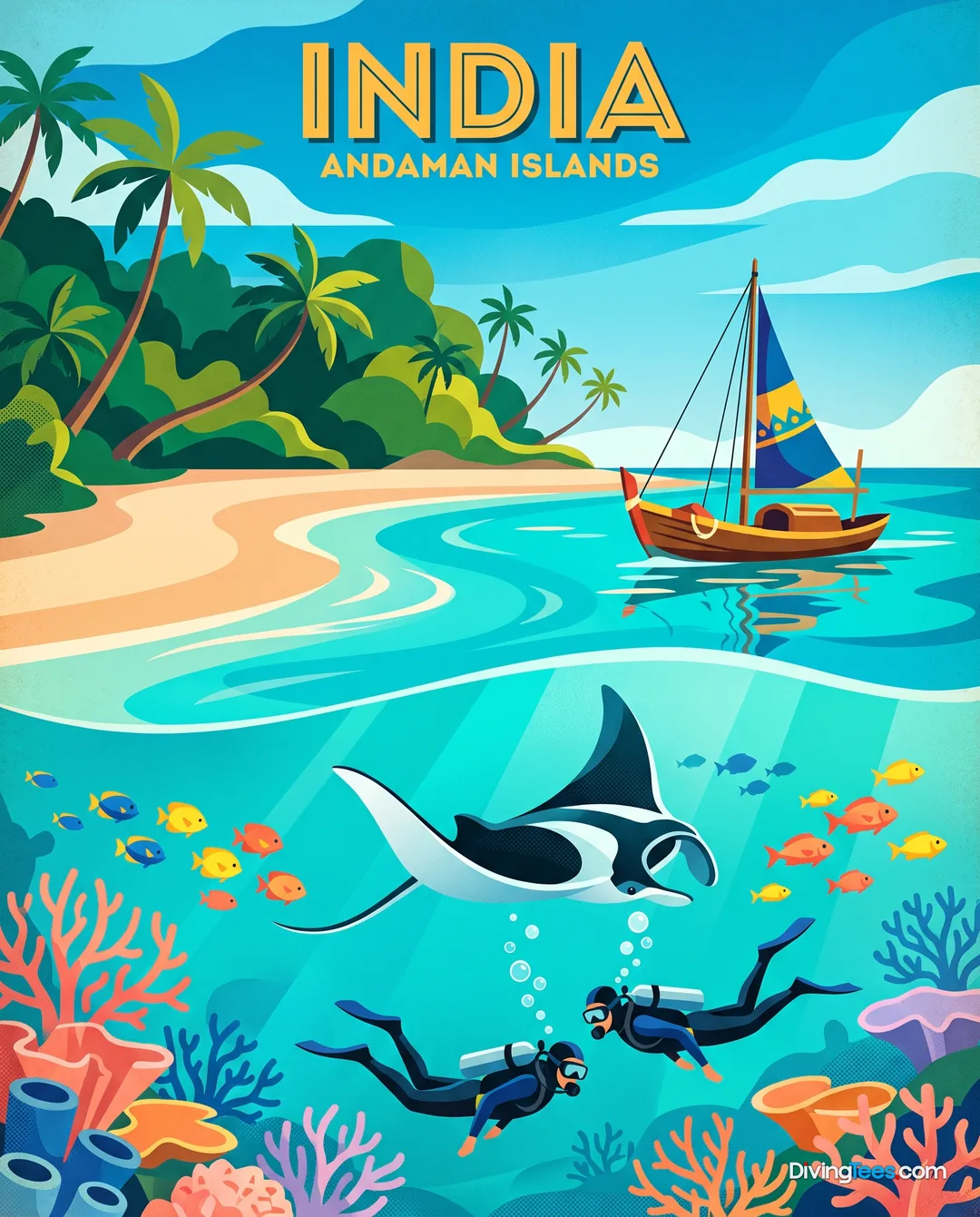
The Wall is a spectacular vertical drop reaching depths of 50 metres. It is an advanced site where you can encounter manta rays, turtles, and large schools of tropical fish along the reef face.
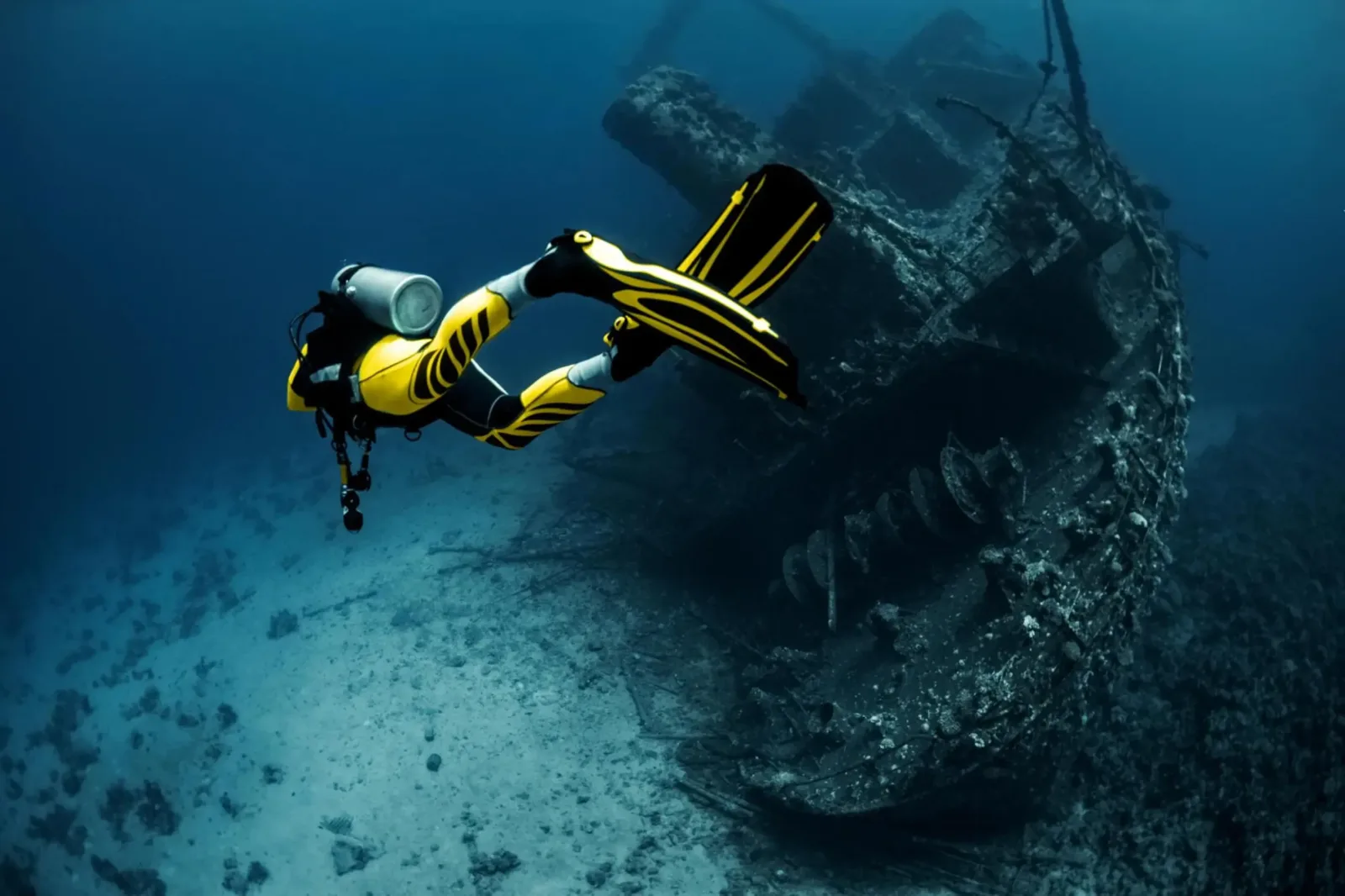
Inchkeith Wreck offers a dive onto a historic 1955 cargo ship. Located at depths between 18 and 24 metres, this advanced site is home to giant groupers, barracudas, and plates of silver fish.
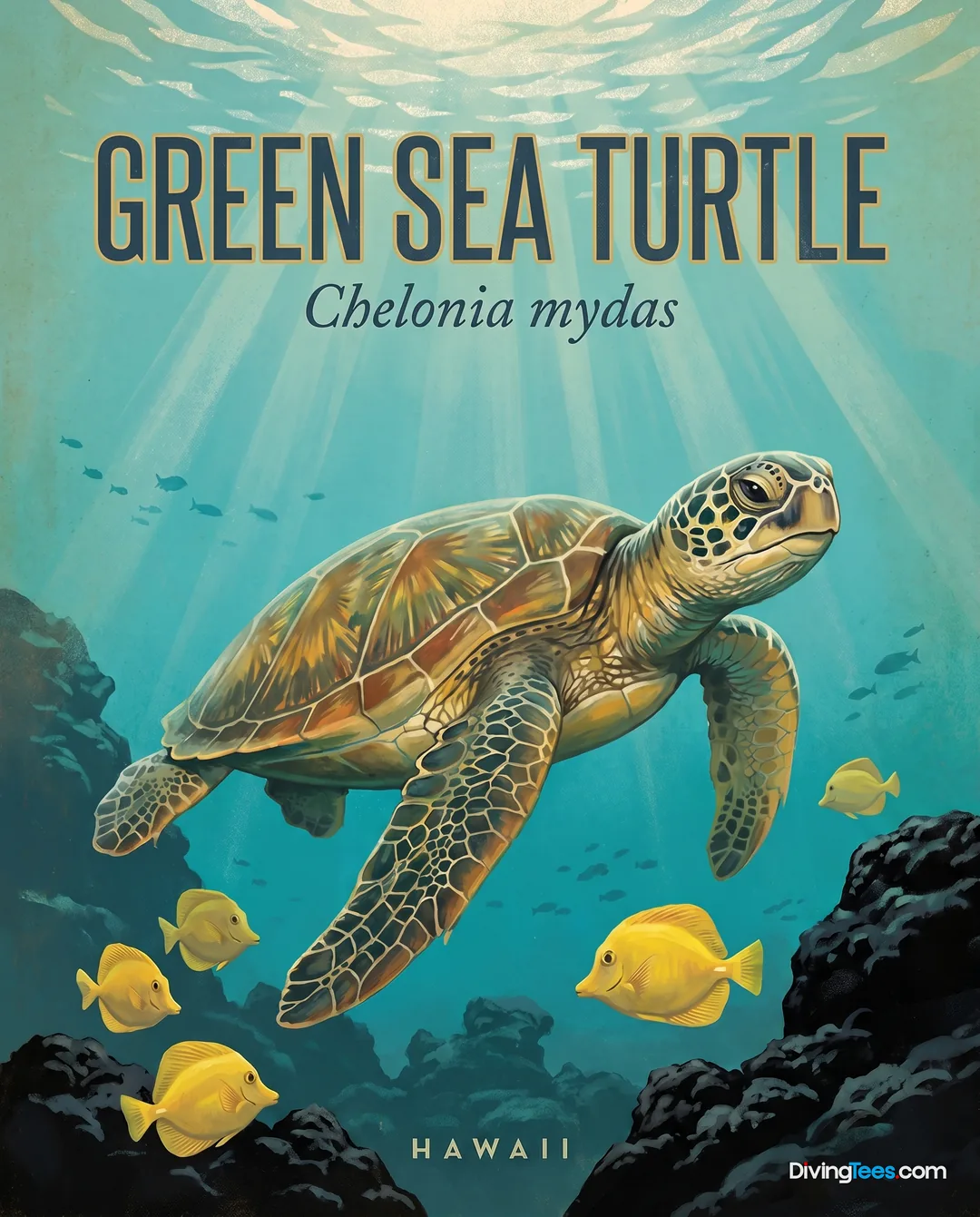
Turtle Bay is an ideal location for beginner to intermediate divers, with depths ranging from 8 to 20 metres. The site is named for its resident population of Green sea turtles (Chelonia mydas) and Hawksbill turtles (Eretmochelys imbricata).
Seduction Point is a shallow reef site between 7 and 15 metres, perfect for beginners and photographers. You will find dense staghorn coral formations and frequent sightings of the Napoleon wrasse (Cheilinus undulatus).
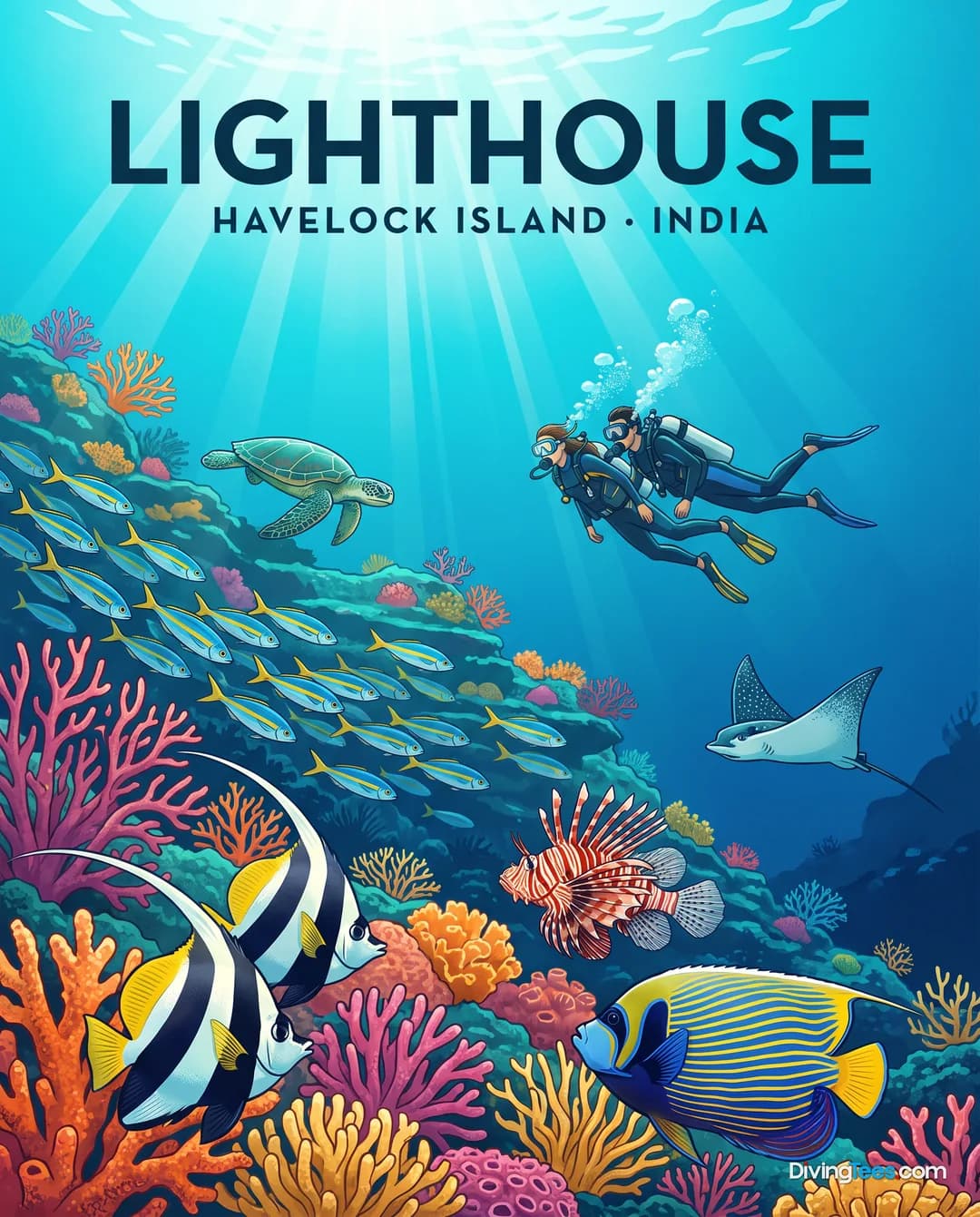
down to 25 m
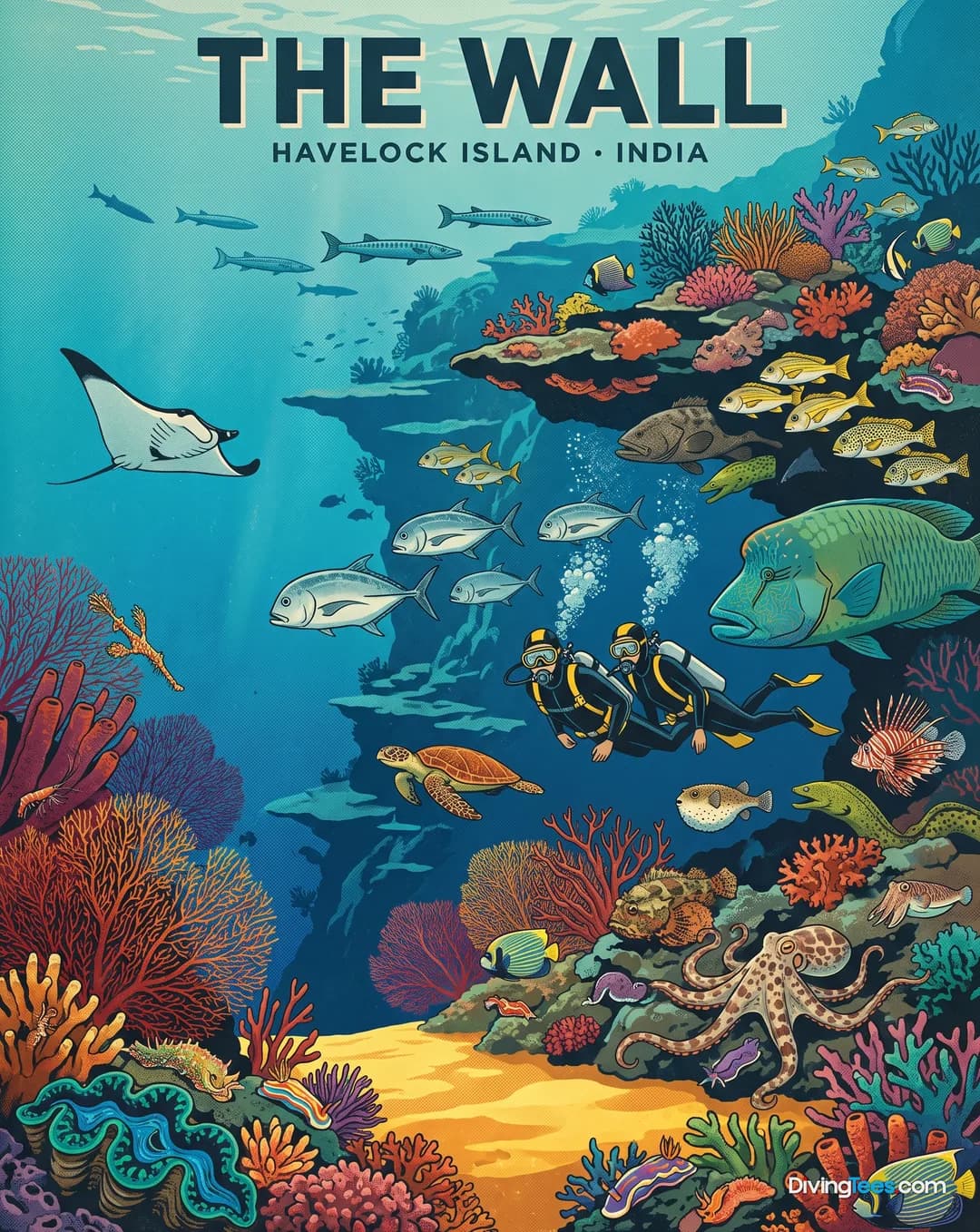
down to 55 m
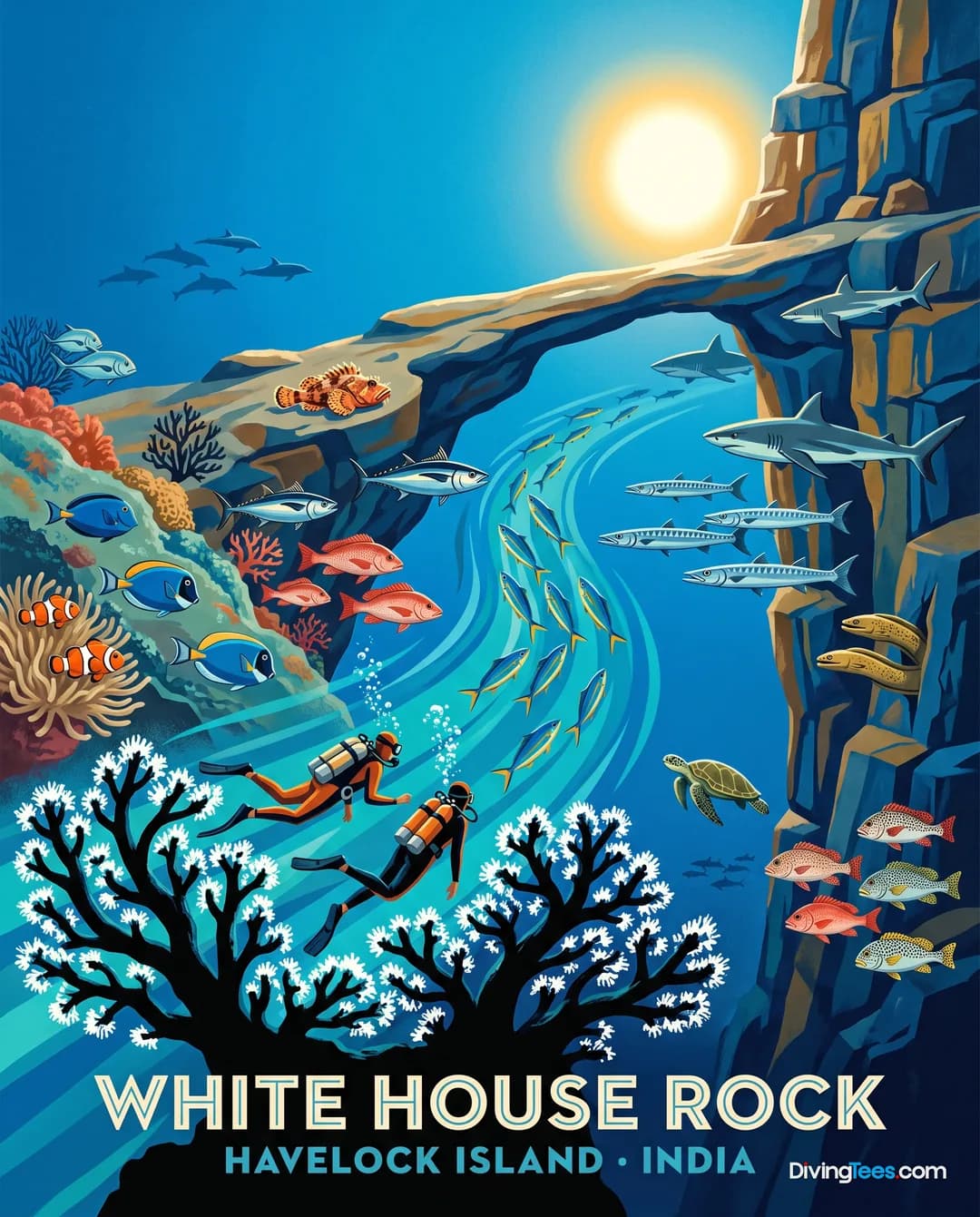
down to 50 m
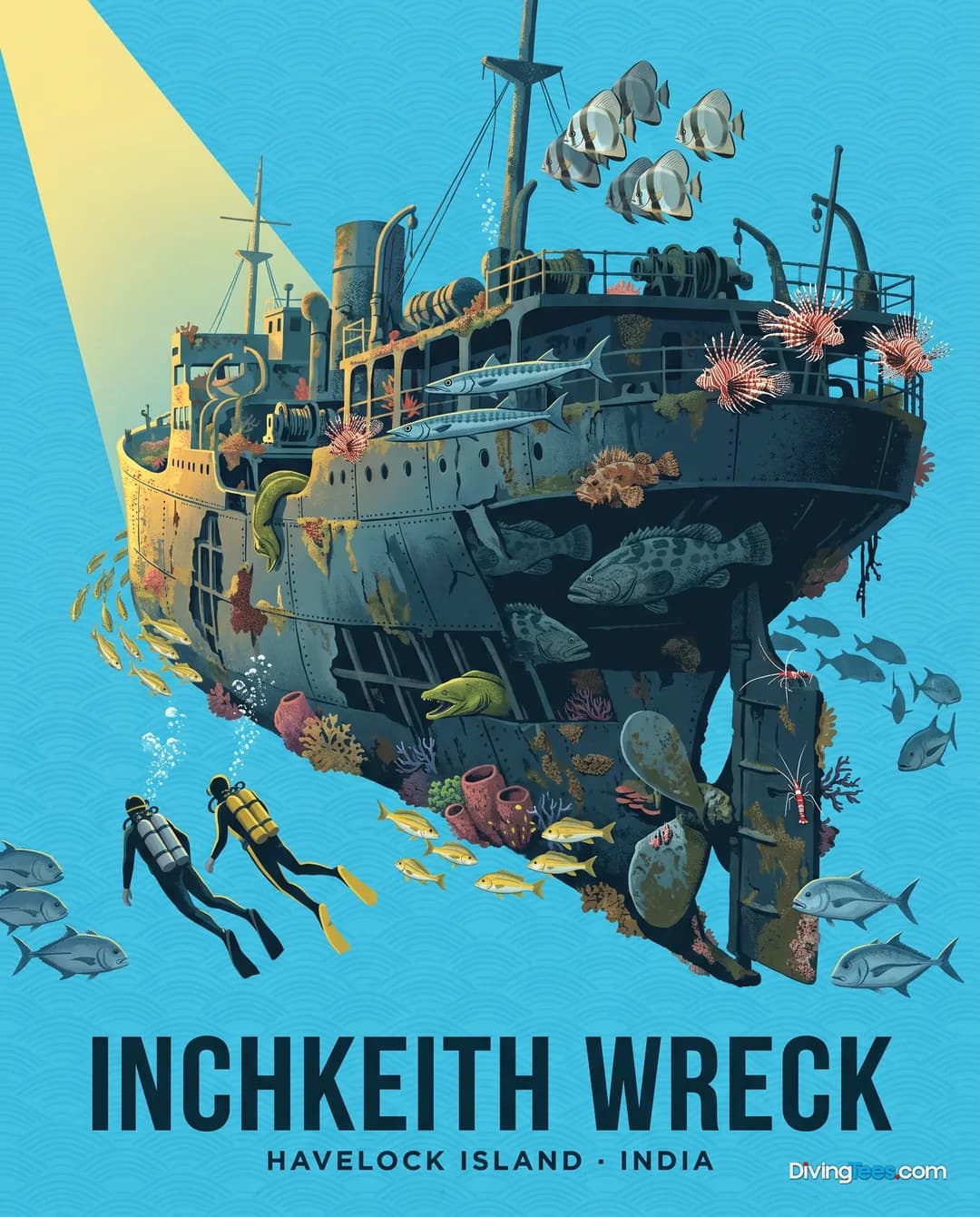
down to 27 m
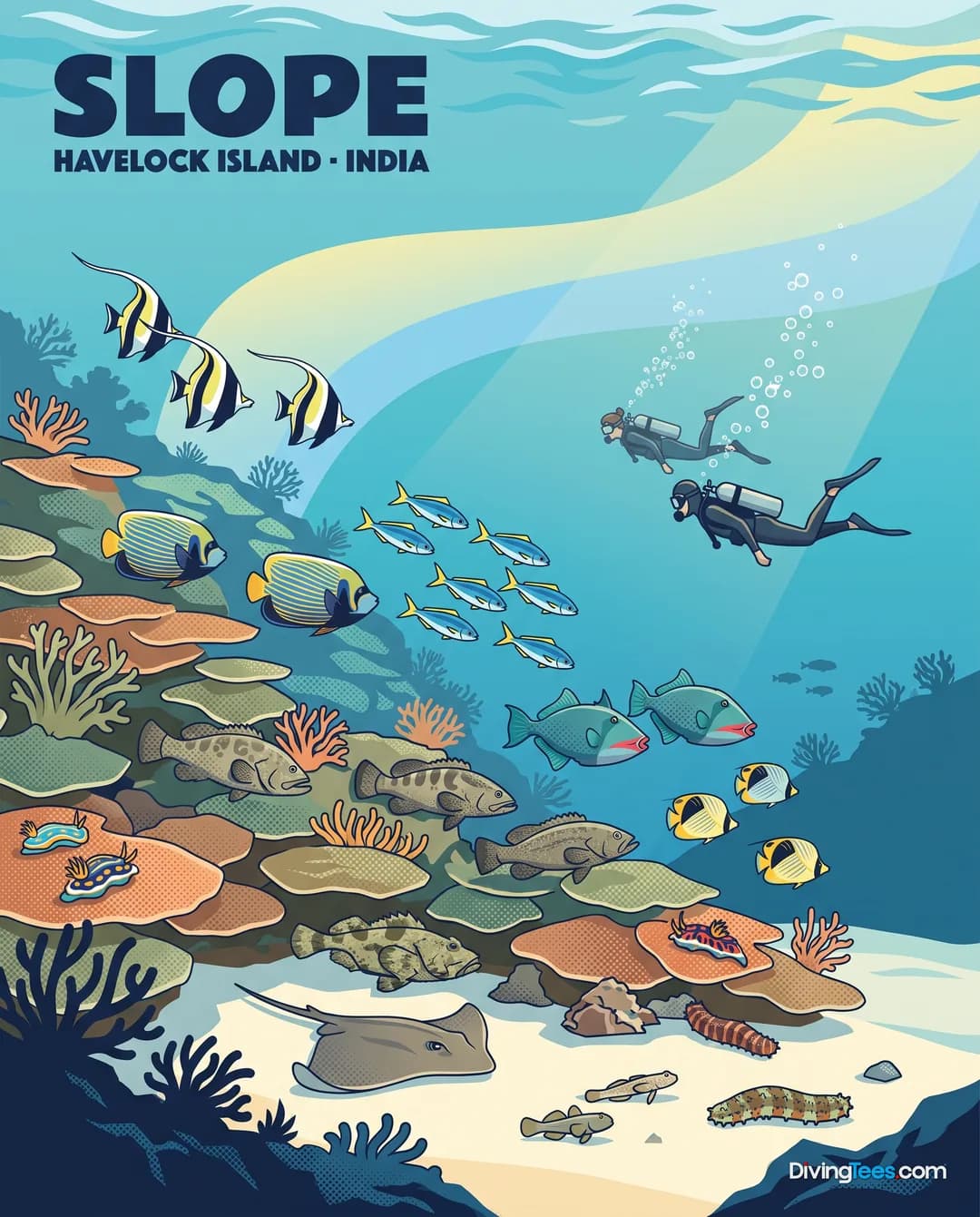
down to 24 m
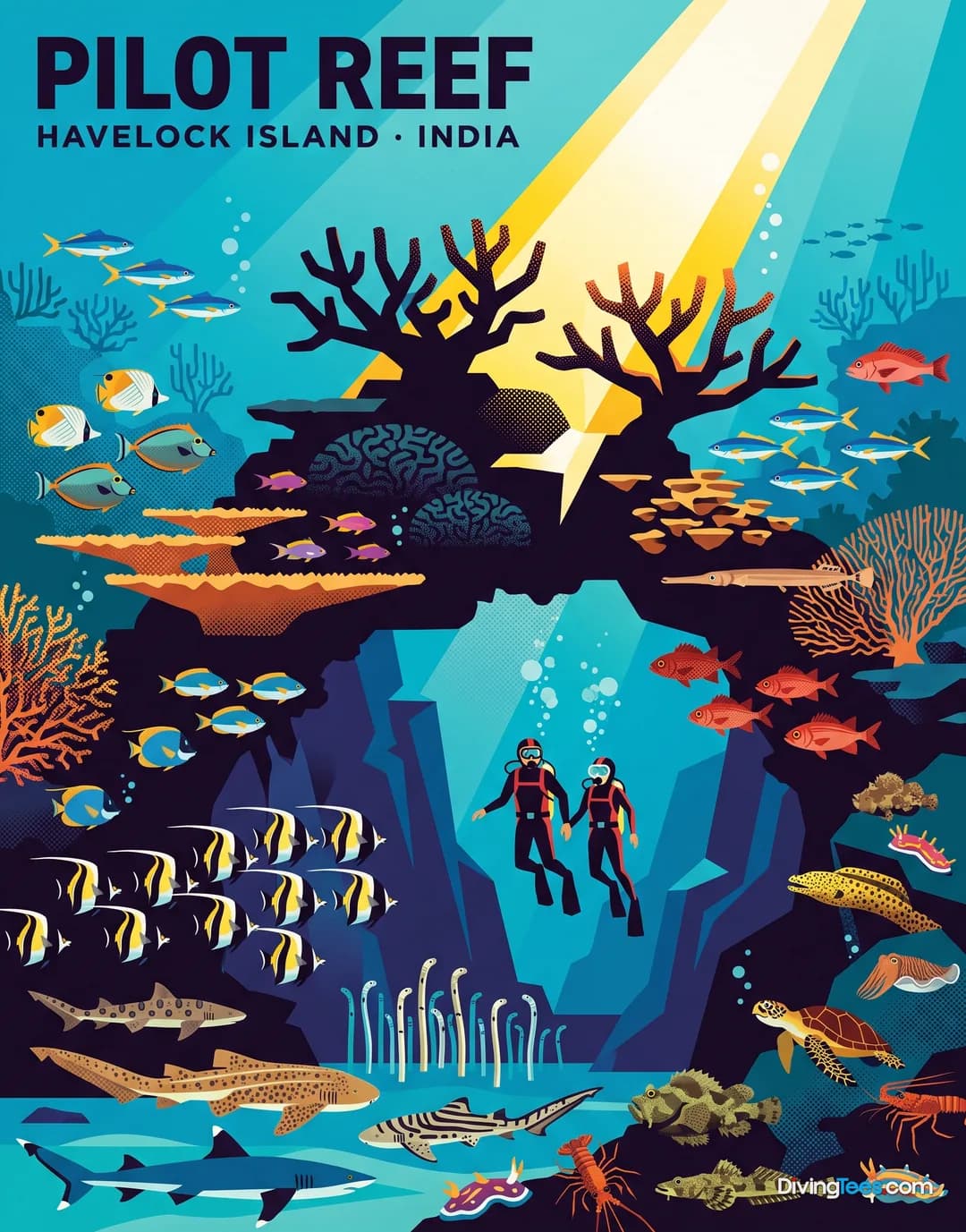
down to 40 m
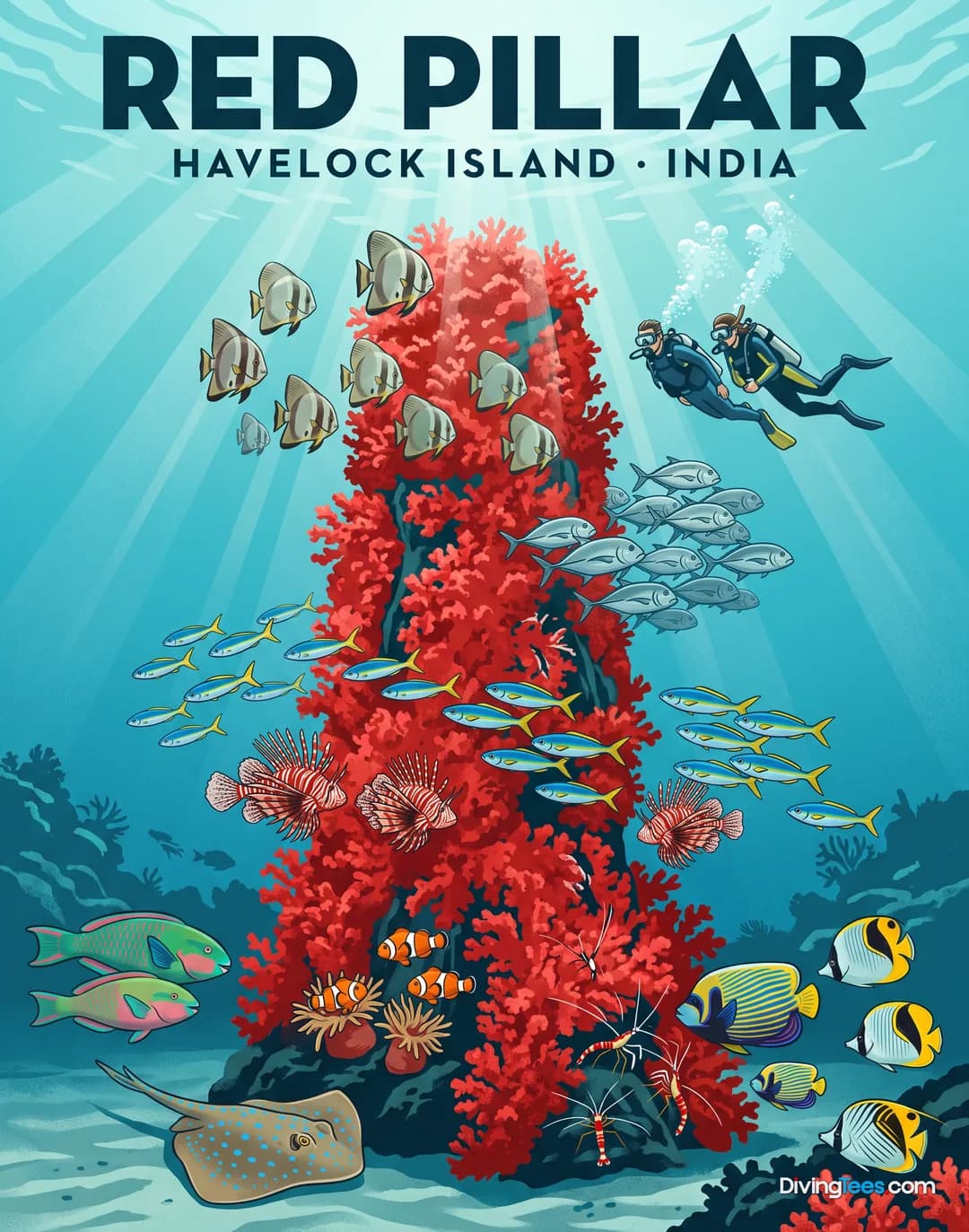
down to 25 m
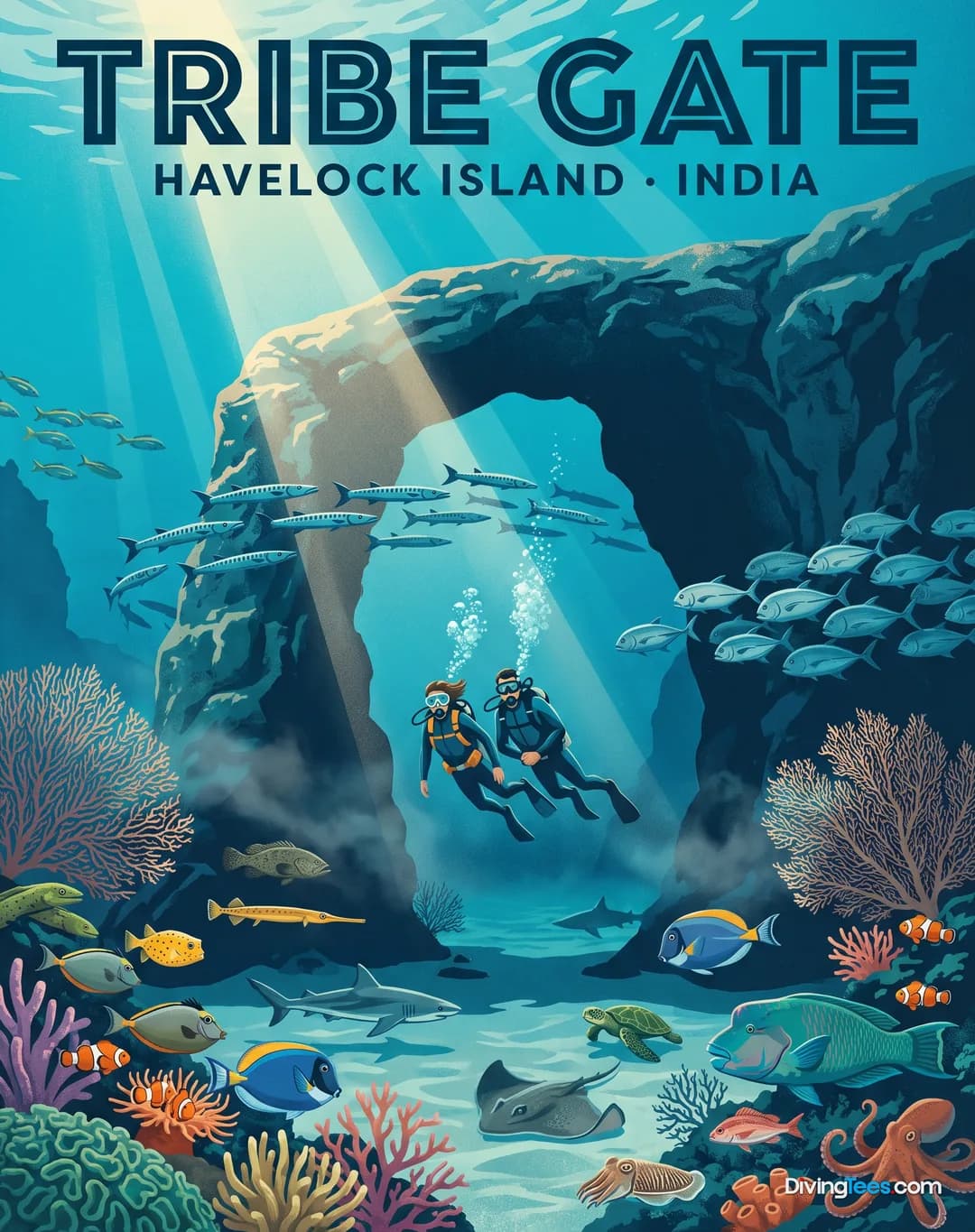
down to 23 m
down to 22 m
And some of the dive sites the centre runs.
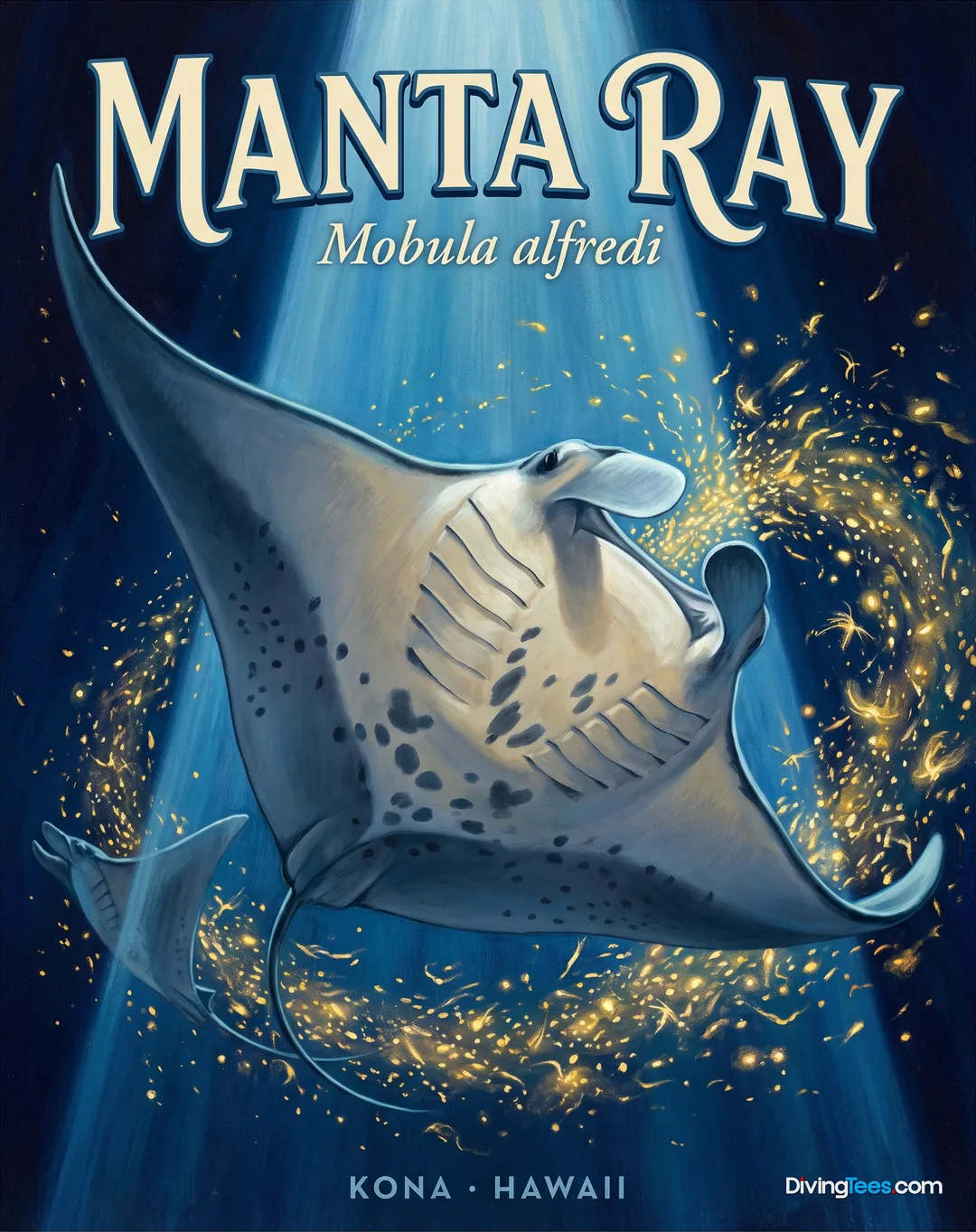
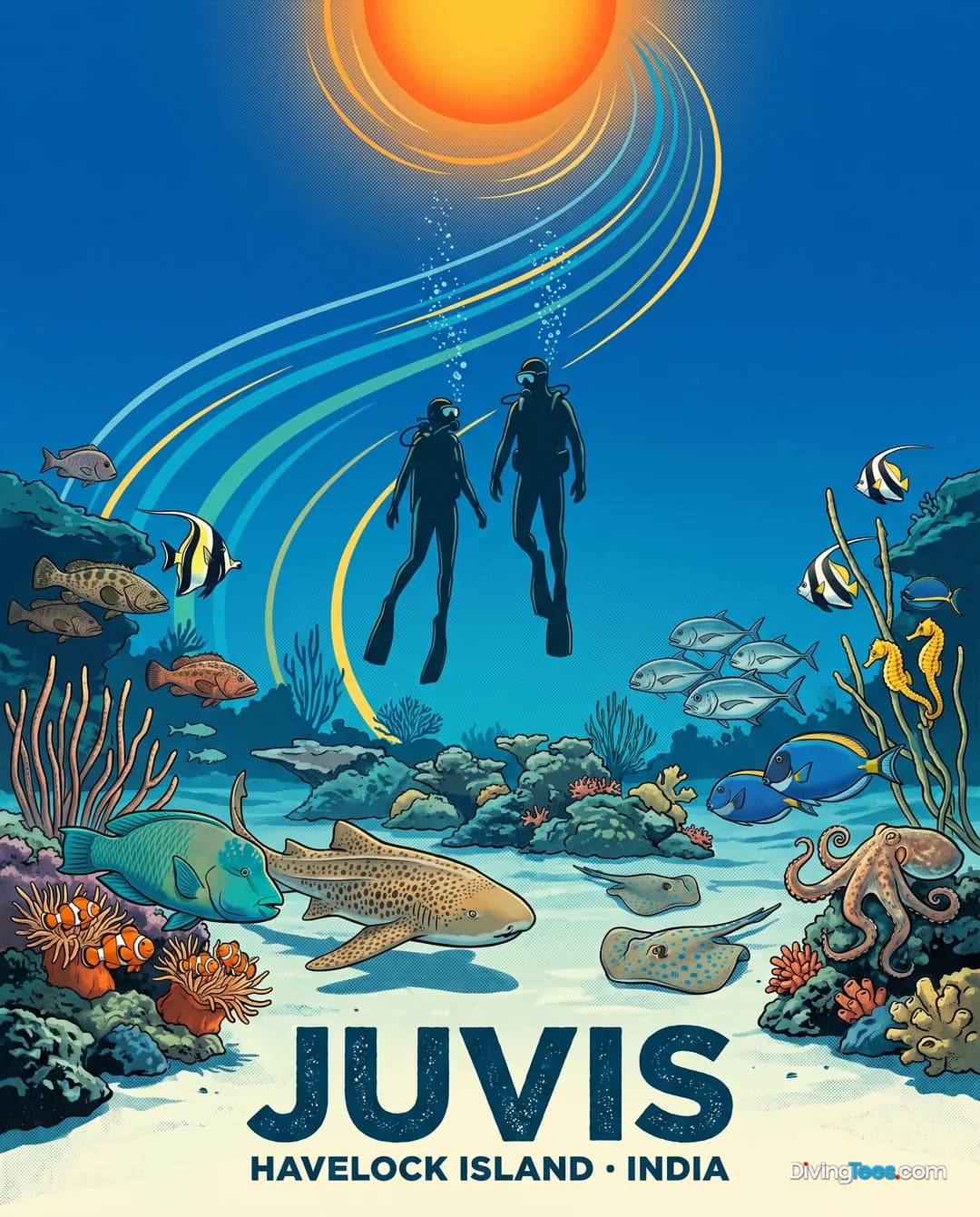
The reefs around Havelock are teeming with large pelagics and reef fish. You can regularly encounter Manta ray (Mobula alfredi), Eagle ray (Aetobatus), and various species of sharks, including Whitetip reef shark (Triaenodon obesus), Blacktip sharks, and Leopard shark (Triakis semifasciata).
Sea turtles are a constant presence, particularly the Green sea turtle (Chelonia mydas) and Hawksbill turtle (Eretmochelys imbricata). You will also see large predatory fish such as Great barracuda (Sphyraena barracuda), various groupers (Epinephelus), and Tuna (Thunnus) patrolling the currents.
The reef architecture is built from vibrant hard corals (Scleractinia) and soft corals (Alcyonacea), including staghorn coral and various gorgonians. These structures host an abundance of colourful reef fish, such as Angelfish (Pomacanthidae), Butterflyfish (Chaetodon), and Parrotfish (Calotomus).
For macro enthusiasts, the area offers plenty of smaller life to observe. Look out for the Ornate ghost pipefish (Solenostomus paradoxus), various species of Octopus (Octopus vulgaris), Seahorse (Hippocampus kuda), and many types of shrimp (Caridea) hiding within the coral crevices.
The best time to dive in this region is between October and May, when the seas are generally calm. During this high season, you can expect excellent visibility, often reaching between 20 and 30 metres.
While many sites feature gentle currents that are ideal for both learning and exploration, divers should always be prepared for the specific conditions at a site. The water temperatures remain warm throughout the year, typically ranging between 27 and 30°C.
Hello, I'm Marina, DivingDeal.com's AI assistant. I answer in detail about hotels, dive centres and liveaboards.

Thinking about the whole trip and the flights? Talk it over with Edith →
Marina is an AI. Some links are affiliate links: DivingDeal may earn a commission, at no extra cost to you. Bookings are made with the partner.