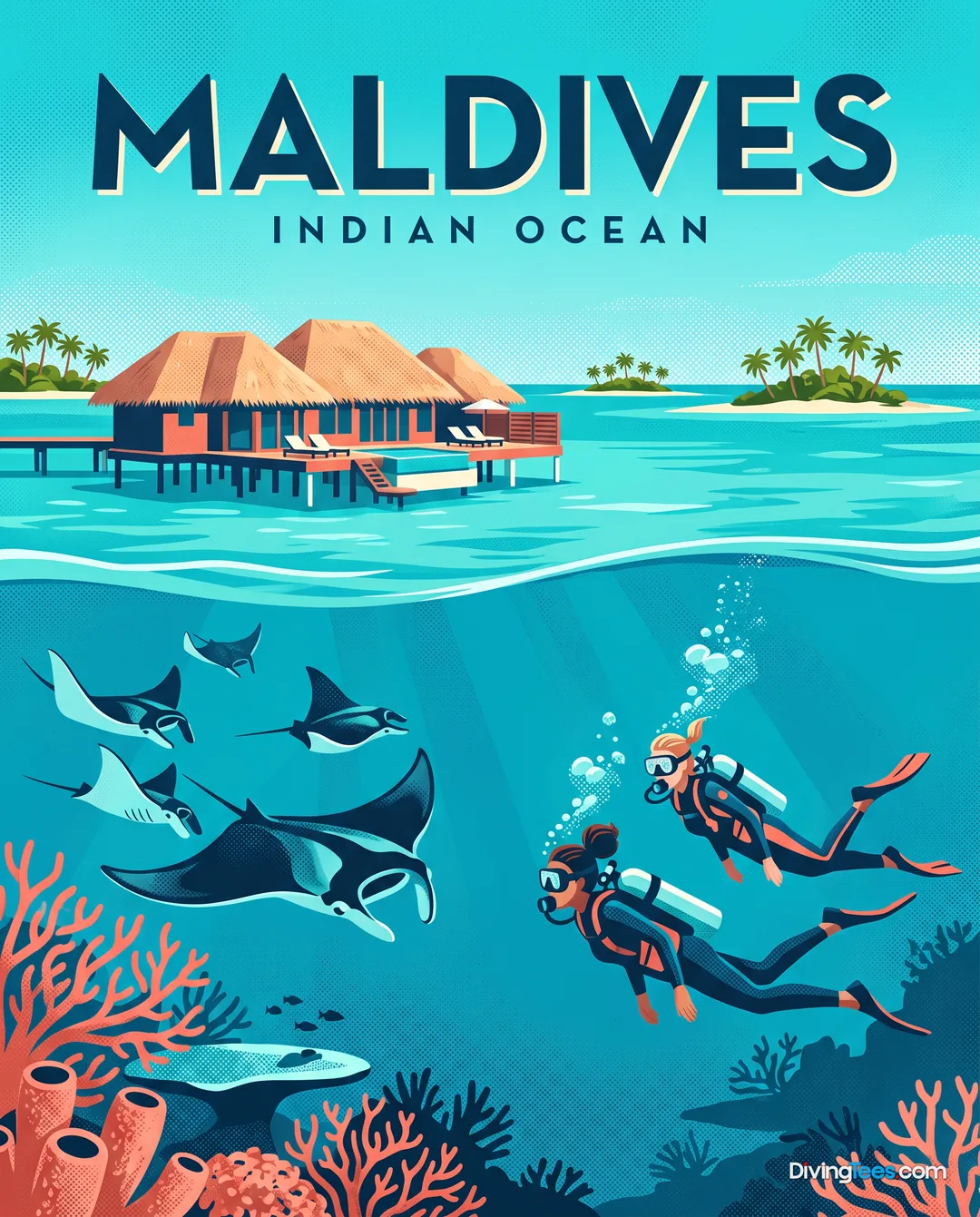
Liveaboards · Maldives
Princess Rani: a wooden Maldivian liveaboard built around serious diving
What makes this boat unique
- Princess Rani is a 35-metre wooden motoryacht built in Maldivian style in 2008, with 11 cabins for up to 22 passengers.
- The diving setup combines a dedicated dhoni, a separate dive tender, steel tanks with INT/DIN fittings, shaded working space and camera rinse facilities.
- Classic departures run for 8 days and 7 nights from Malé to Malé, across Rasdhoo, North Ari, South Ari, North Felidu and South Malé.
- The onboard kitchen follows an Italian direction, with full-board meals, vegetarian and vegan options, wine, beer and outdoor dining.
- Tiger-shark itineraries are part of the wider Princess Rani programme, while the recorded departures are Classic Maldives cruises.
For subtitles in English: start the video firstthen click the gearat the top right of the video, select “Subtitles/CC”, then “Auto-translate” and choose “English”.
The invitation
Princess Rani suits divers who want the Maldives for its channels, pinnacles, manta cleaning stations and large pelagics rather than for a resort stay. The boat follows a classic circuit through Rasdhoo, Ari, Felidu and South Malé, with the dhoni taking the practical work of diving away from the main hull. That matters over seven nights: tanks stay where they belong, entries are handled from the support boat, and the living spaces remain a place to eat, sleep and recover. The draw is the range. One dive may put a group of grey reef sharks into the current; another may slow down over a cleaning station or a coral pinnacle. Princess Rani is not the newest boat in the fleet, but its crew scores more strongly than the hull, food and diving score especially well. Choose it for the people running the week and for a route that keeps the emphasis below the surface.
Boarding
Princess Rani comes alongside as a broad wooden Maldivian motoryacht, with the purposeful look of a vessel that has spent its life moving divers between atolls. The 2008 build gives it a more established character than a new launch: the appeal is in the traditional construction and the working layout, not in a showroom finish. Boarding leads into an interior salon, with dining available inside or outside and three sun decks above. Movement between the main boat and the dhoni becomes part of the first impression; the dhoni is the boat used for diving, excursions and snorkeling, while a separate tender handles additional support. The engine room is part of any liveaboard's reality, but the boat's wide beam gives the common areas room to spread out rather than forcing the group into one narrow lounge. It feels like a diving vessel first, dressed for a week in the atolls.
The atmosphere on board
Princess Rani is at its best when the crew's organisation carries the day without making itself the subject of it. Passengers describe guides who know the sites, a dive team that stays present without hovering, and staff who handle practical problems quickly. The crew speaks English, French, Spanish and Italian, which helps a mixed group move through briefings, meals and shore visits without friction. A close crew-to-passenger ratio gives the operation a personal scale even with a full boat. By the middle of the week, the group usually has its own small habits: the same people comparing sightings after a channel dive, someone checking the camera rinse, another heading for the shaded deck before lunch. Evenings centre on food, drinks and the day's animals rather than formal entertainment. The strongest argument for Princess Rani is simple: the crew makes an older working boat easier to live on.
The sites you’ll dive
The recorded Princess Rani departures are Classic Maldives trips: 8 days and 7 nights, starting and ending in Malé, with Rasdhoo, North Ari, South Ari, North Felidu and South Malé on the circuit. The site list ranges from compact reef structure to current-fed channels. Barracuda Giri drops to a maximum of -30m across three submerged pinnacles, where current gathers barracudas and pelagic fish. Mushimasmigili Marine Reserve reaches -30m at an isolated pinnacle known for grey reef sharks on the up-current side. Dhonkalo, to -25m, is a sandy-channel cleaning station for manta rays. In South Ari, Maamigili and Maamigili Beiyru both reach -30m and are used for whale-shark and manta encounters. Kudarah Thila Marine Reserve, also to -30m, is cut by clefts, overhangs and caves, with batfish schooling around the pinnacle. Myaru Kandu Marine Reserve is the shark channel, to -30m, while Foththeyo Kandu reaches -40m, combining strong current, caves covered in yellow soft coral and open-ocean pelagics. Other listed sites include Banana Reef, Guraidhoo Marine Reserve, Dhigalhi Haa, Dhonfanu, Dhigu Thila and Fushifaru Thila Marine Reserve, where reef mantas use cleaning stations to a maximum of -35m.
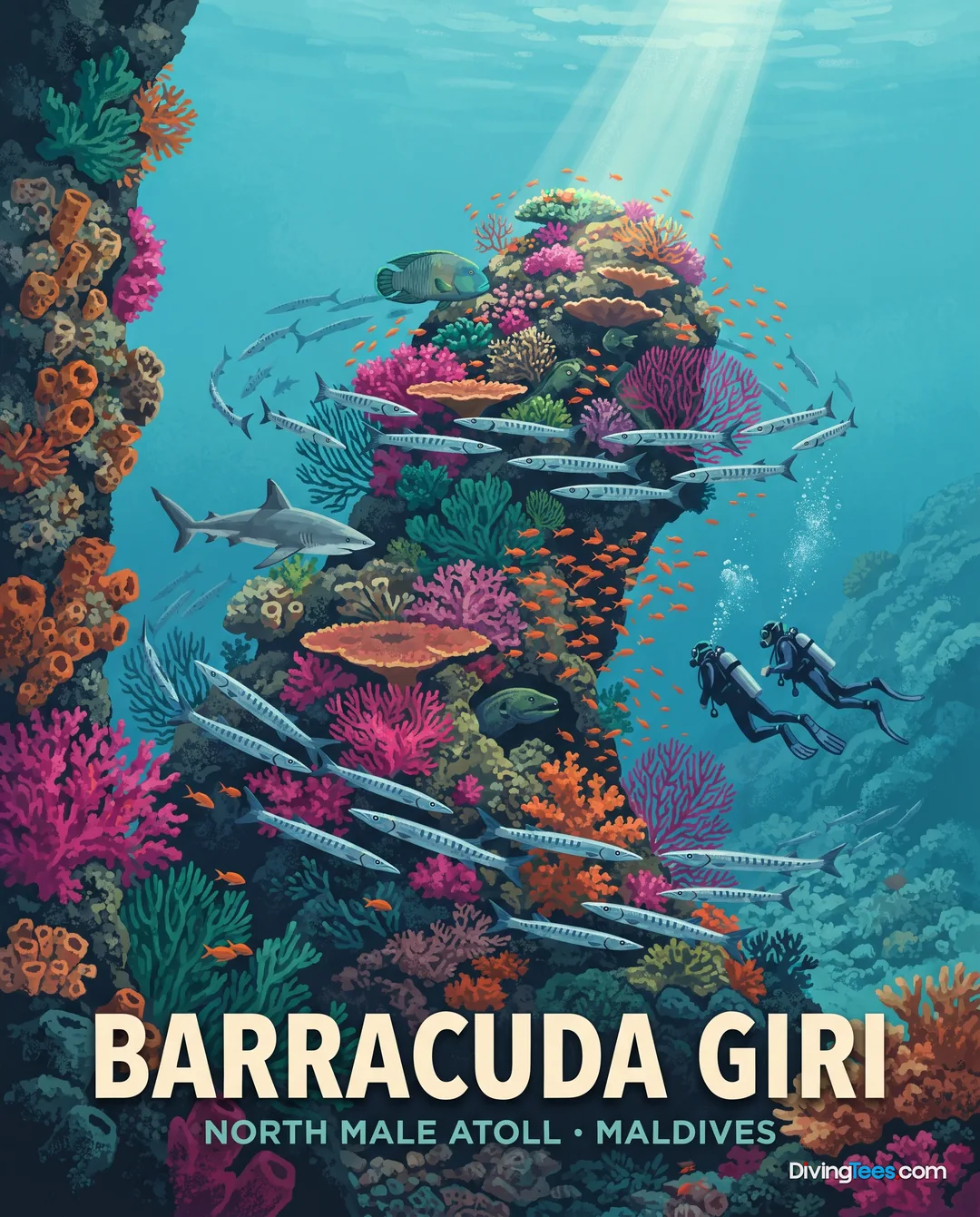
Barracuda Giri →
Max. depth · 30 m
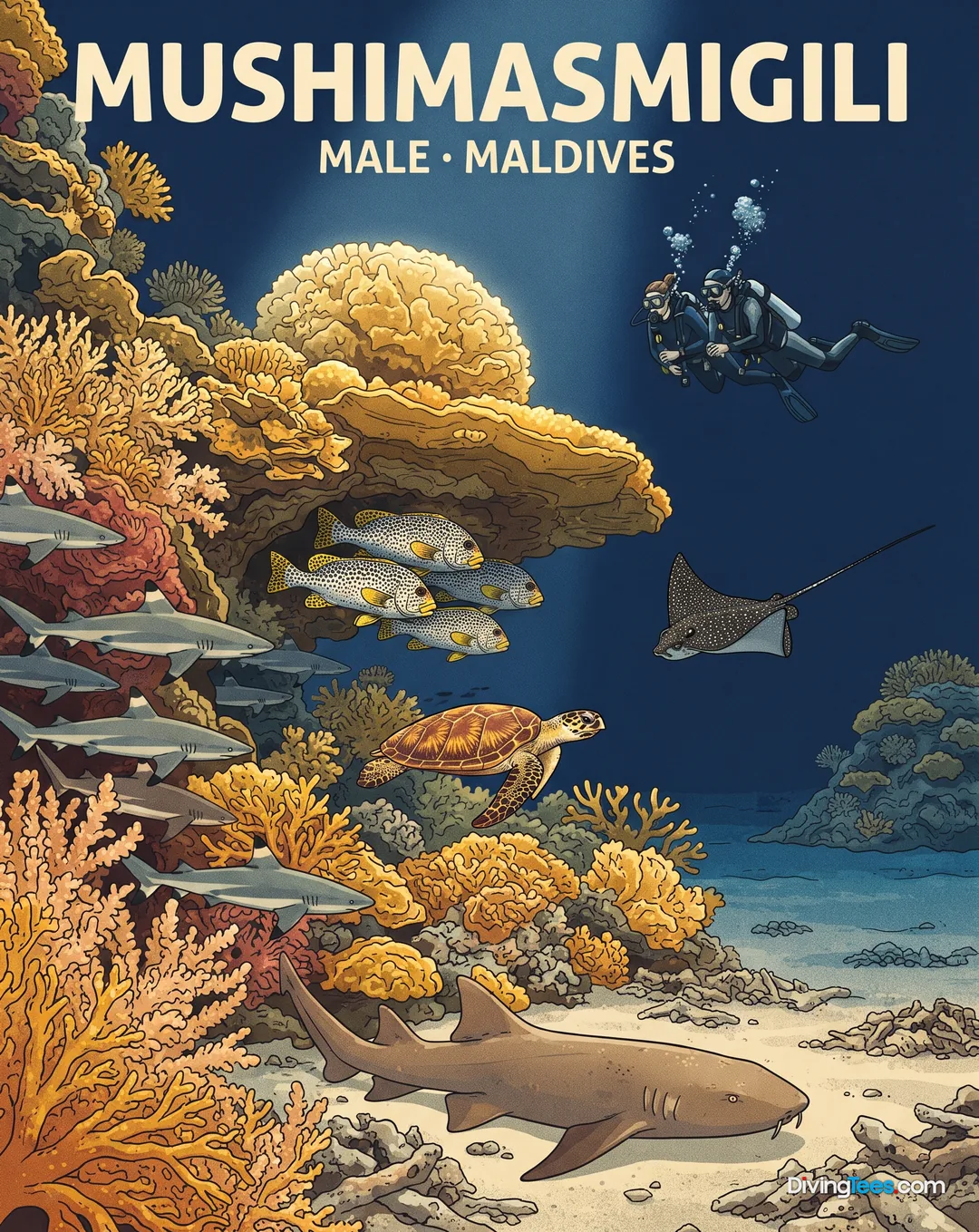
Mushimasmigili Marine Reserve →
Max. depth · 30 m
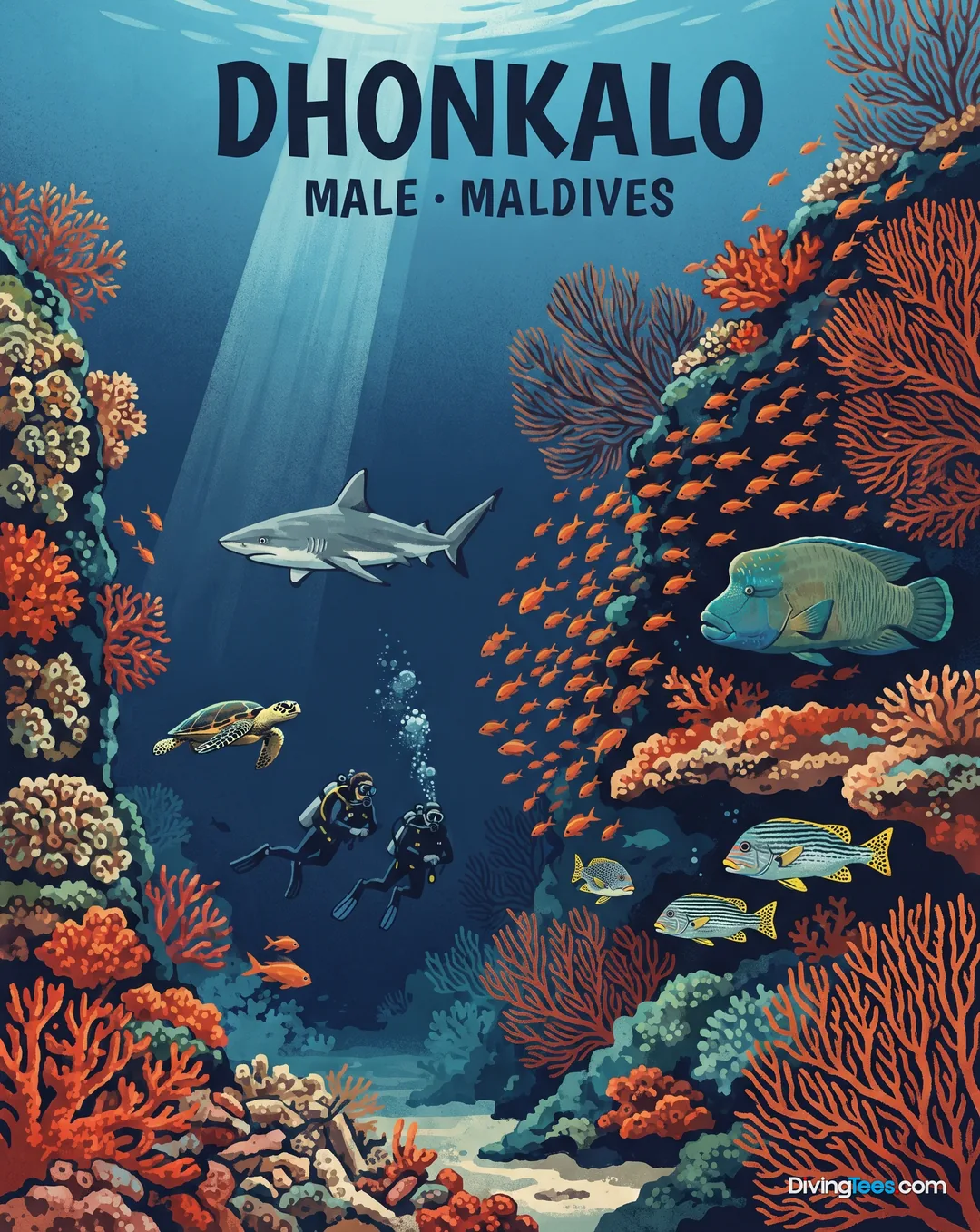
Dhonkalo →
Max. depth · 25 m
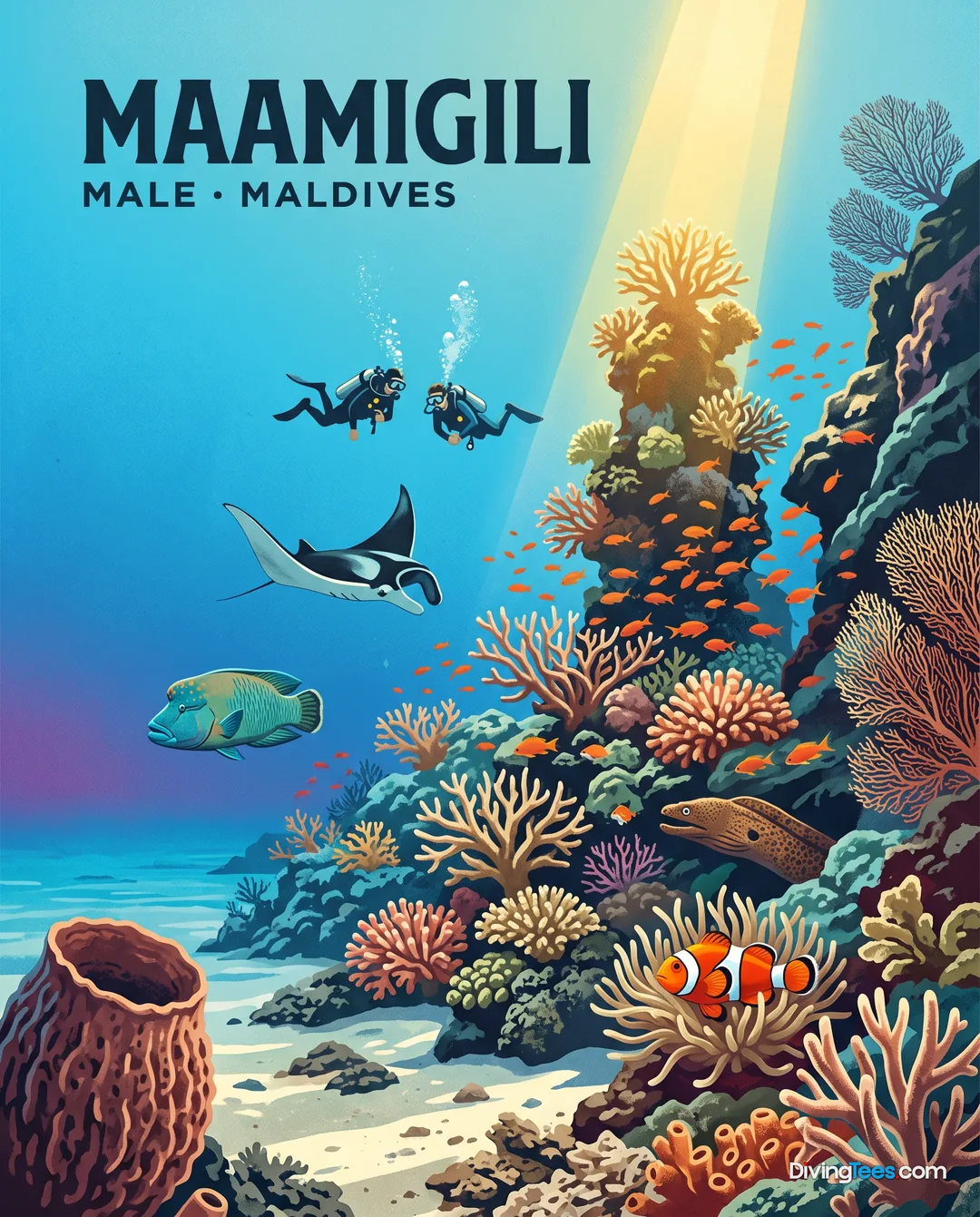
Maamigili →
Max. depth · 30 m
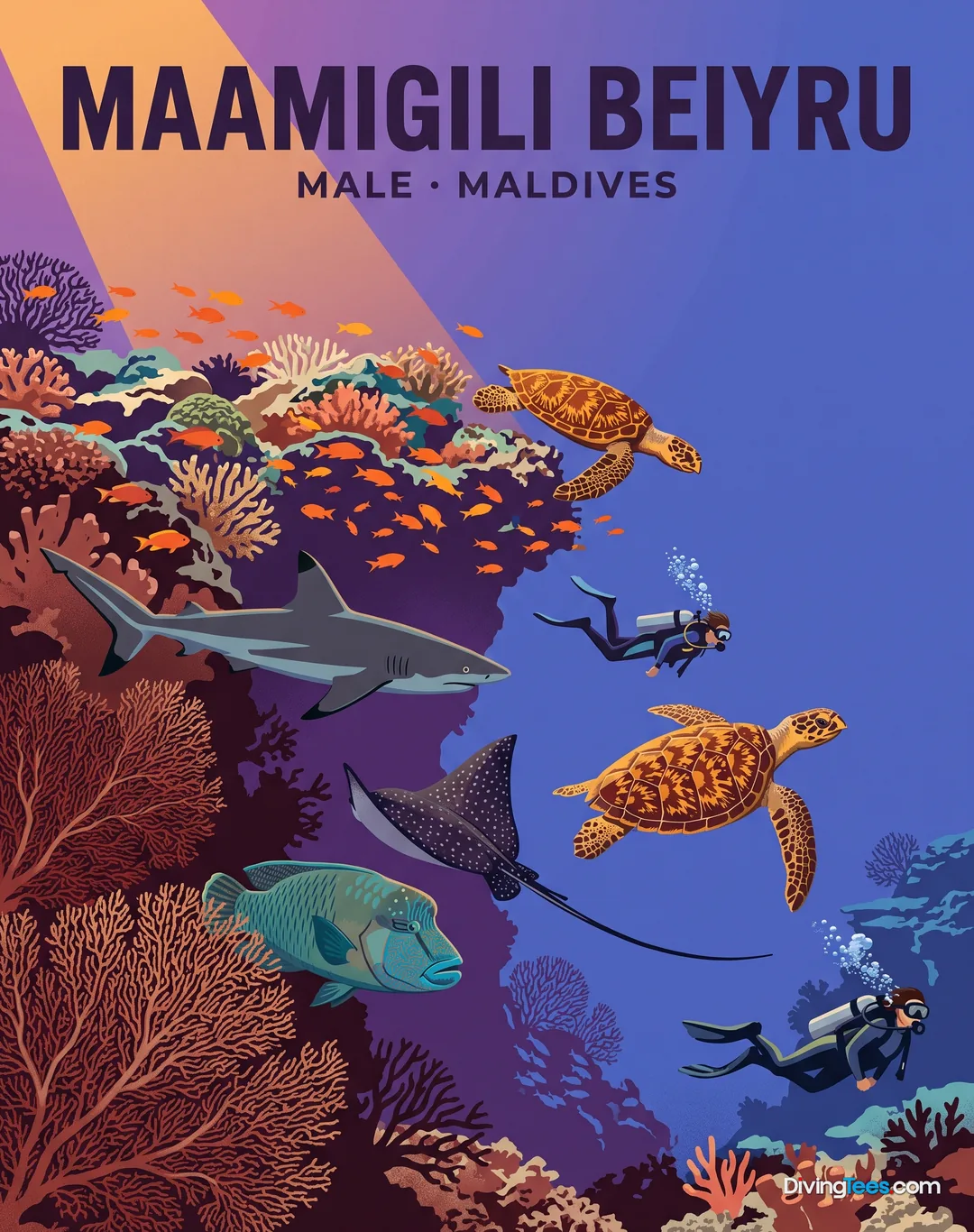
Maamigili Beiyru →
Max. depth · 30 m
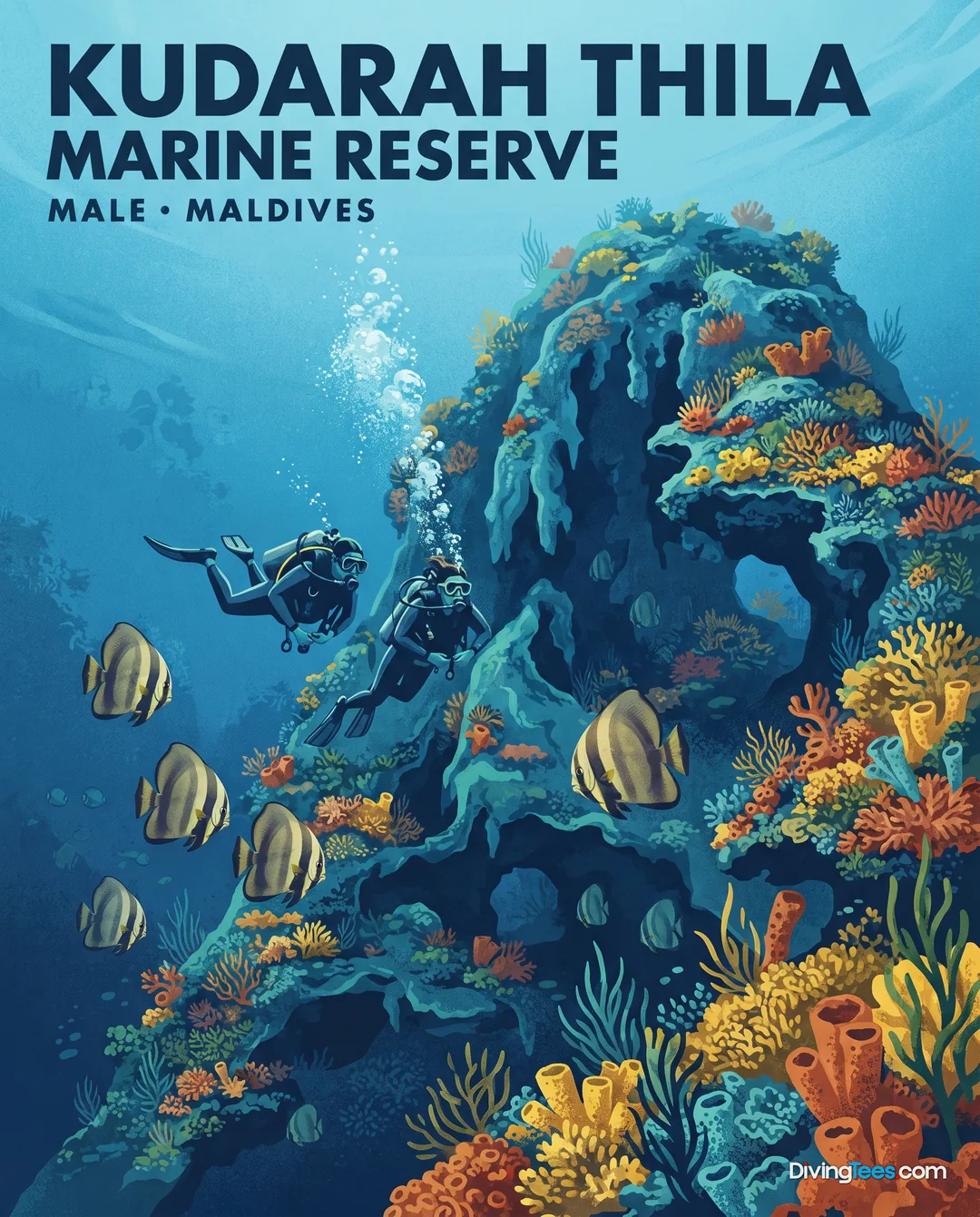
Kudarah Thila Marine Reserve →
Max. depth · 30 m
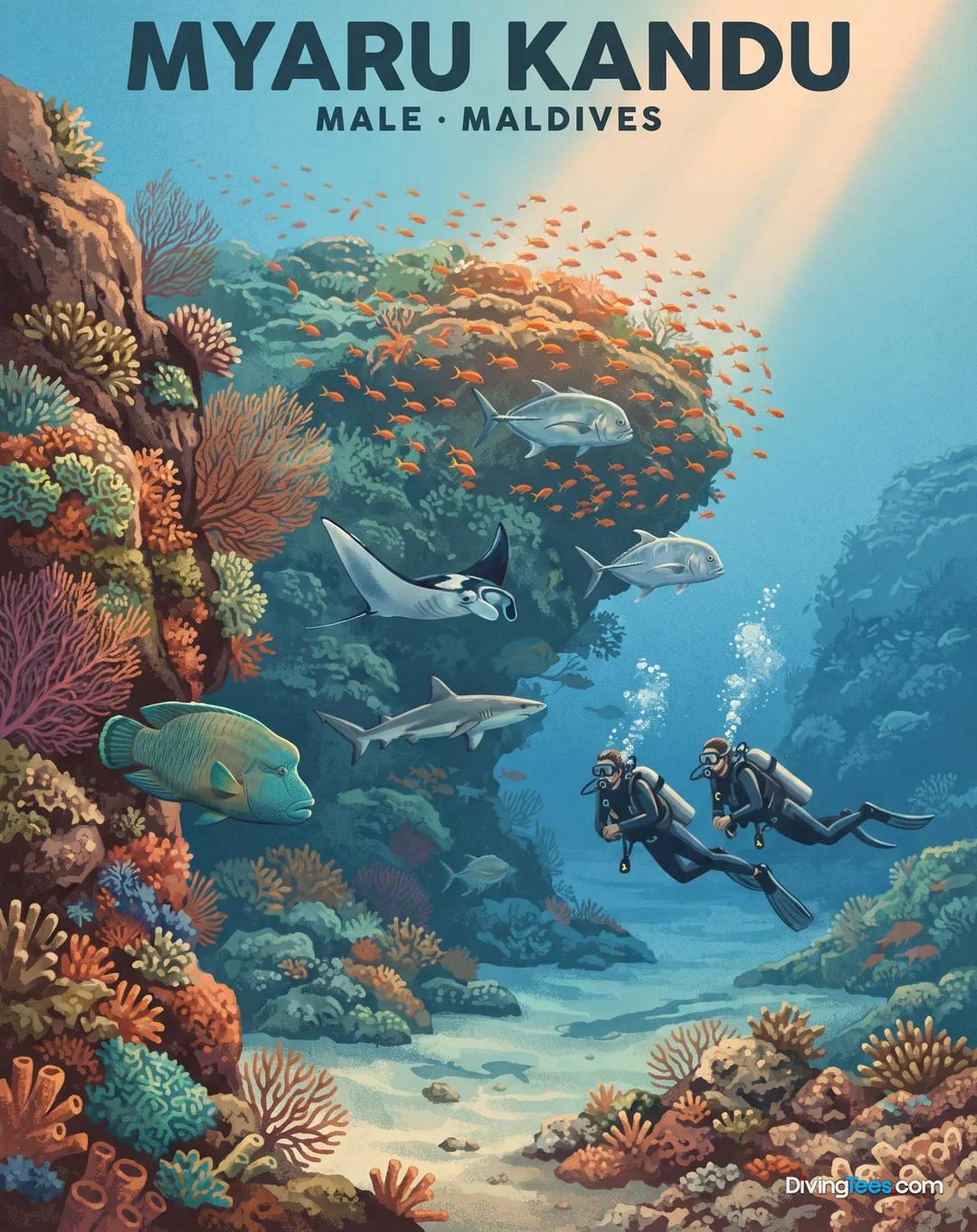
Myaru Kandu Marine Reserve →
Max. depth · 30 m
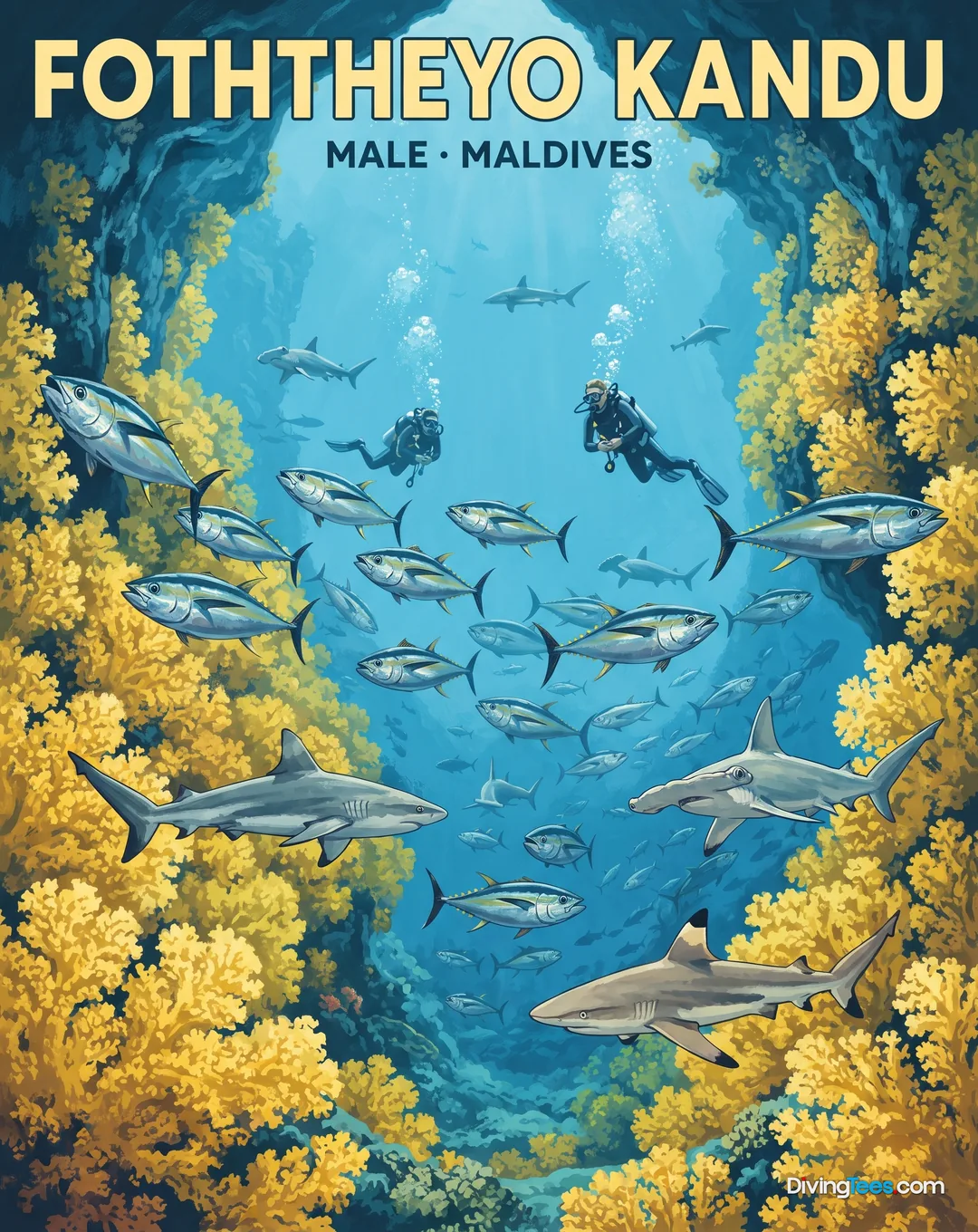
Foththeyo Kandu →
Max. depth · 40 m
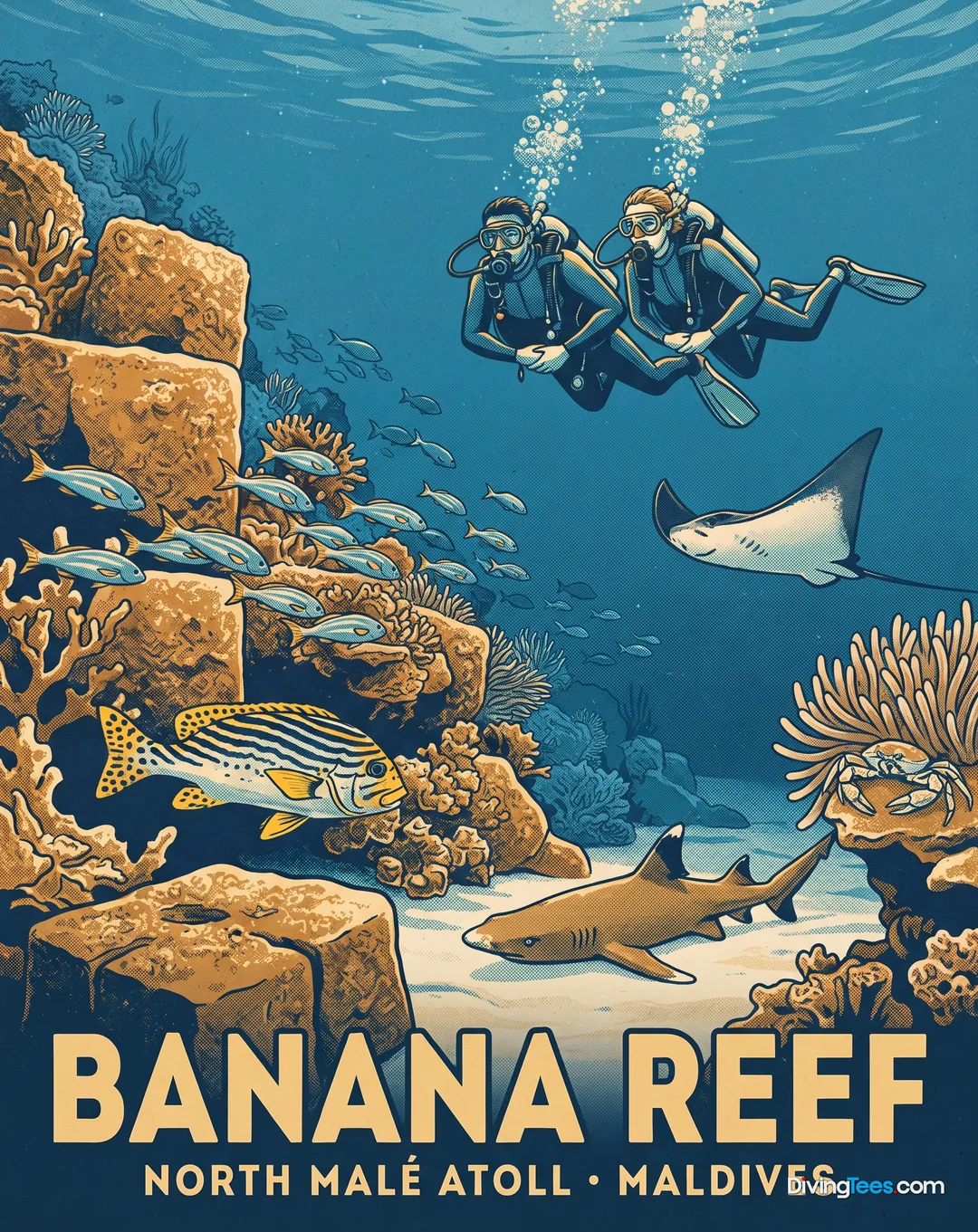
Banana Reef →
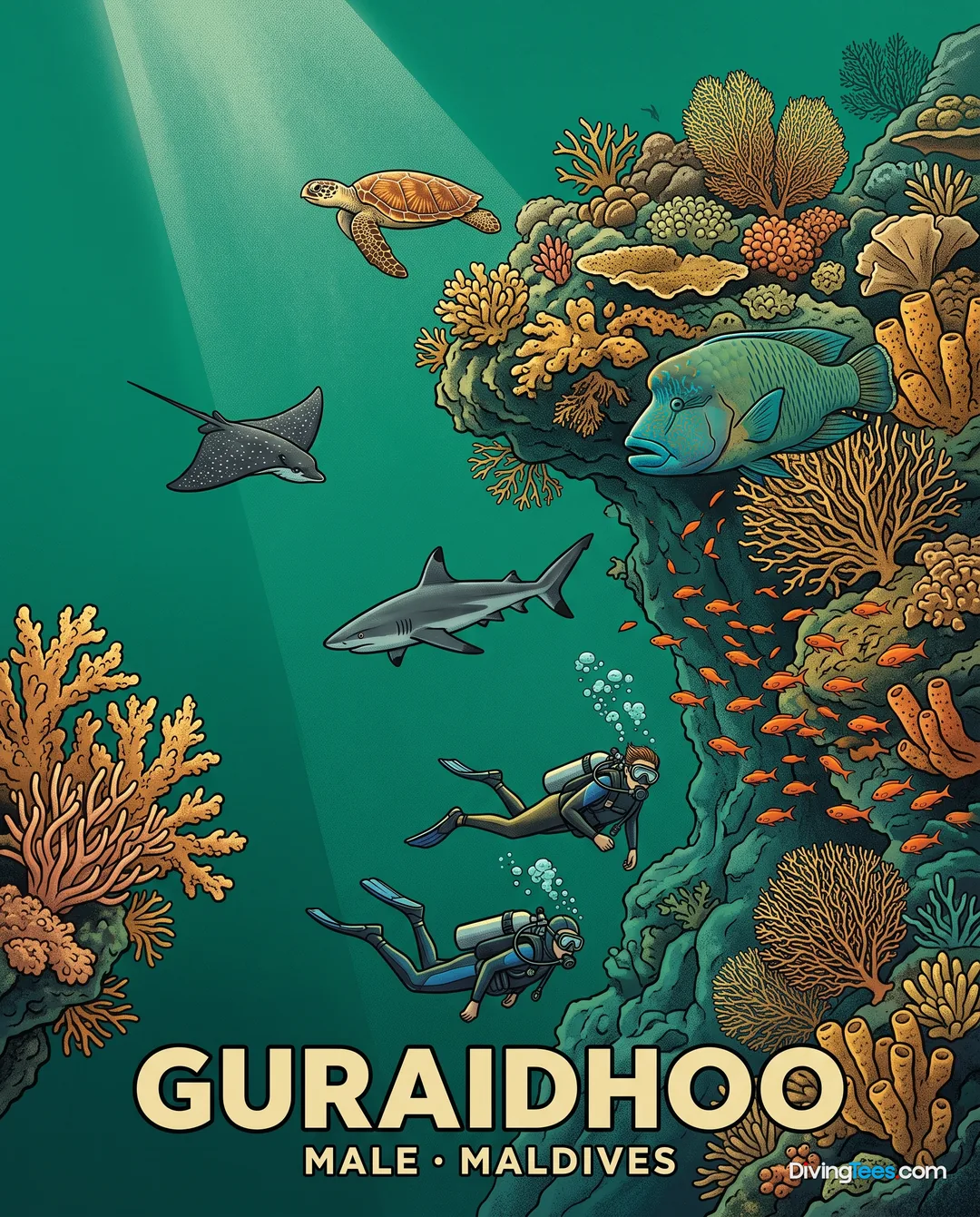
Guraidhoo Marine Reserve →
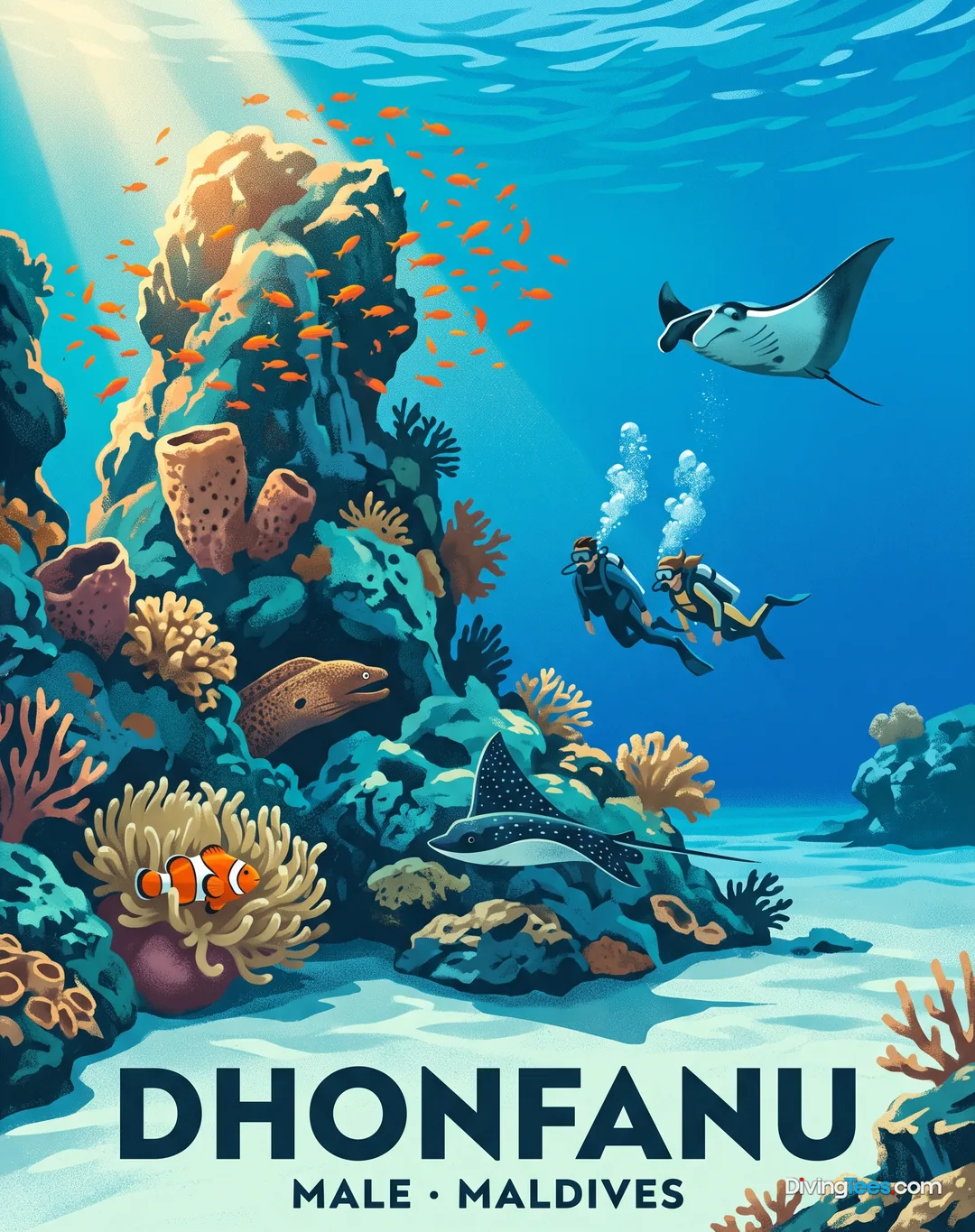
Dhonfanu →
Max. depth · 30 m
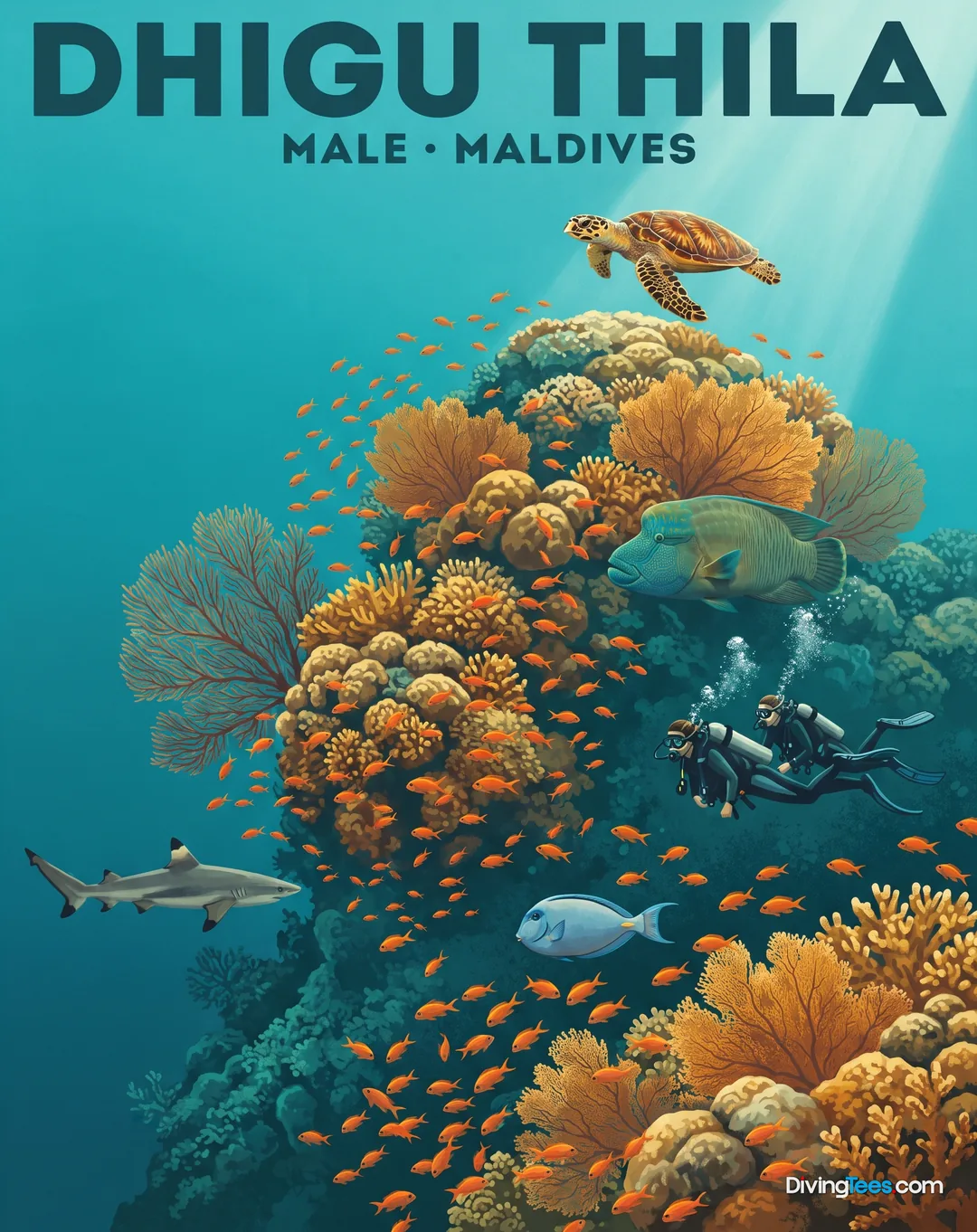
Dhigu Thila →
Max. depth · 30 m
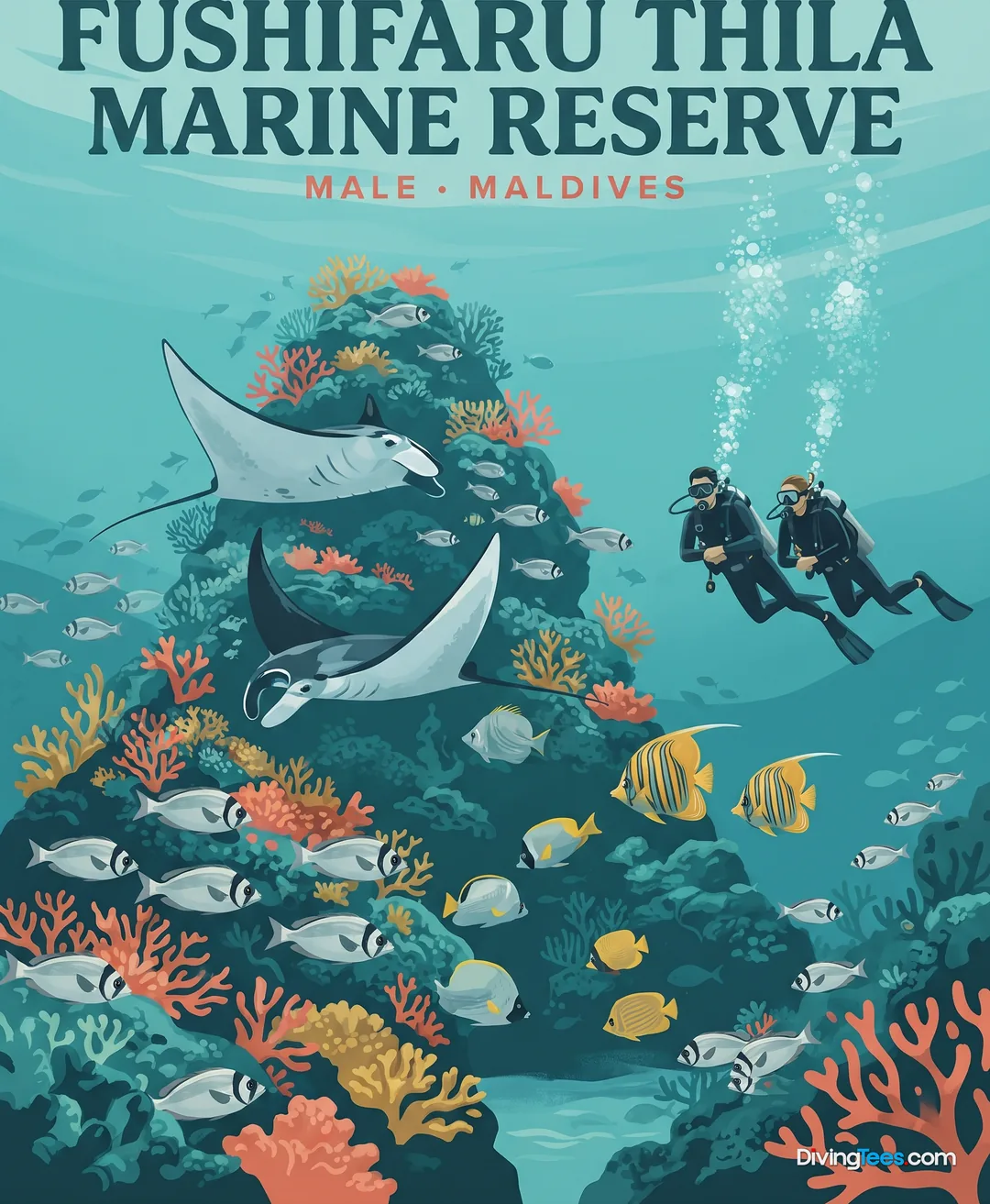
Fushifaru Thila Marine Reserve →
Max. depth · 35 m
What you’ll meet underwater
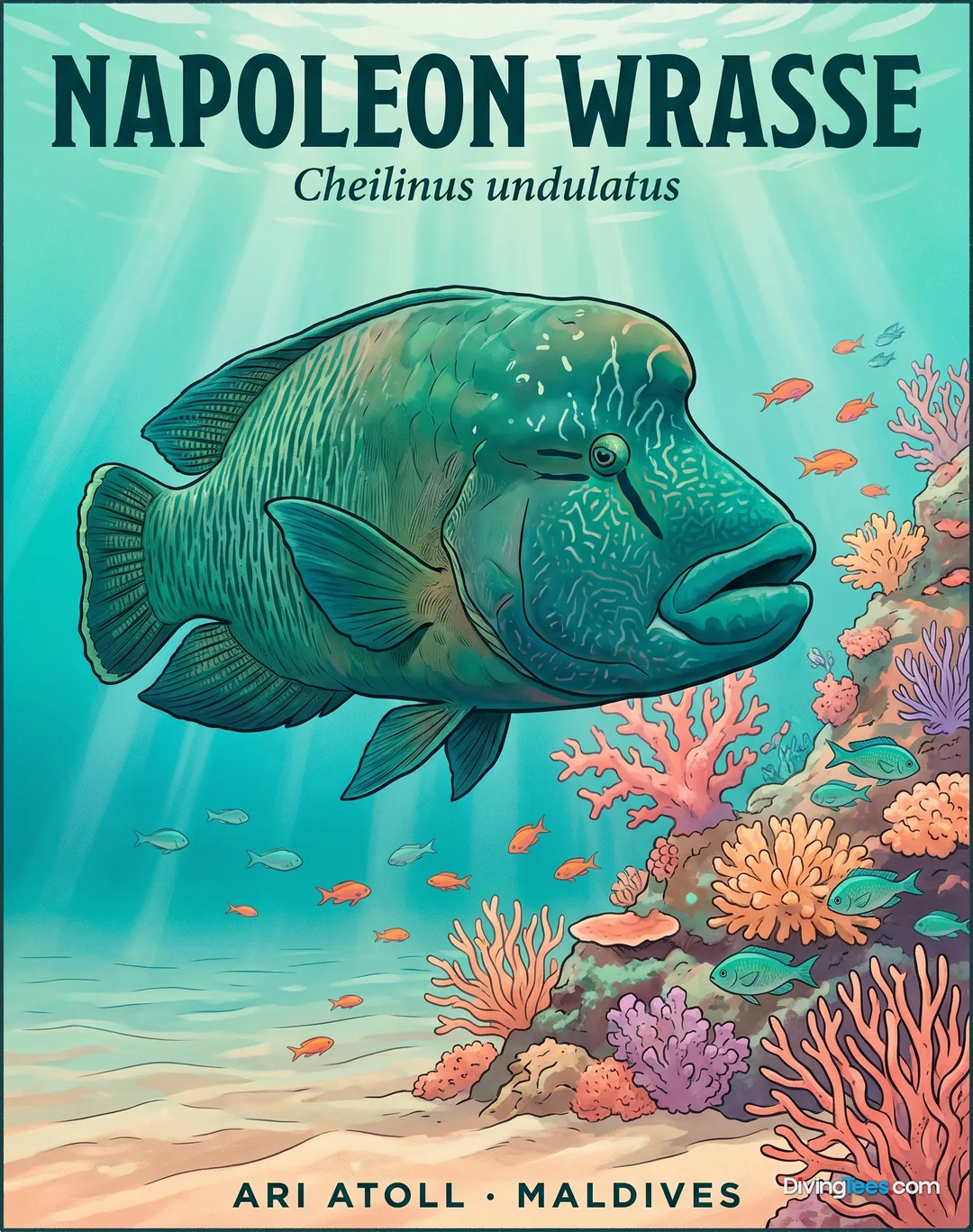
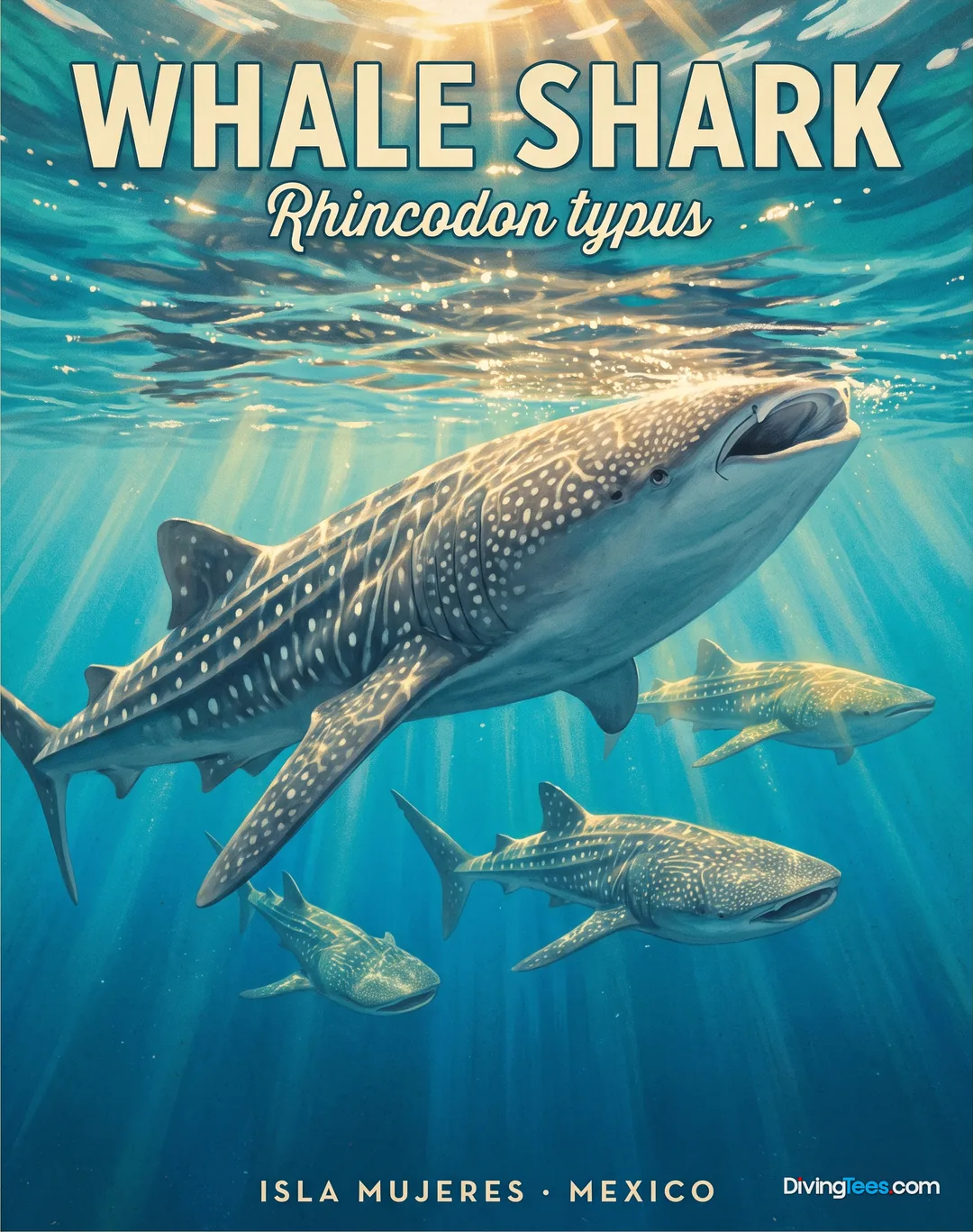
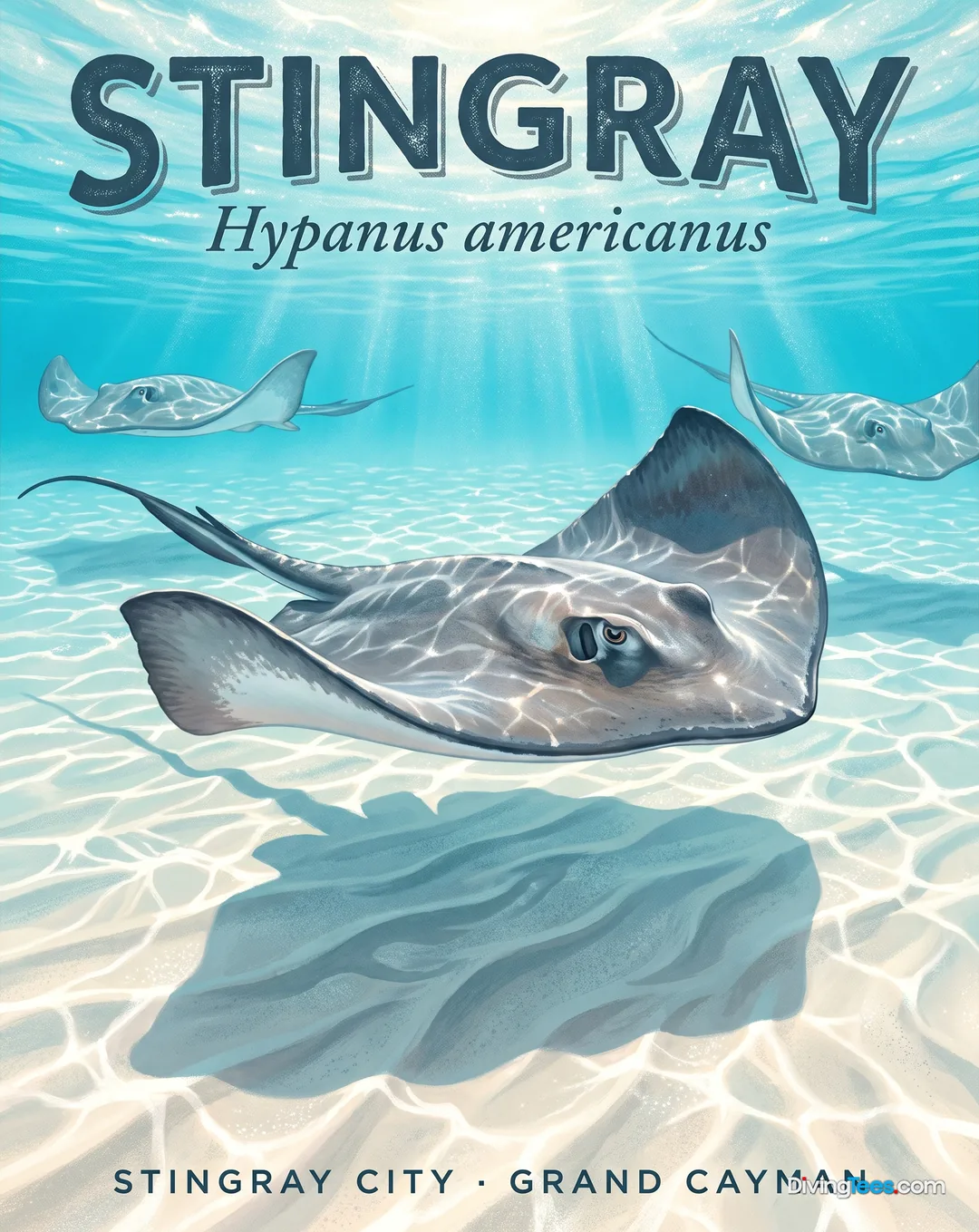
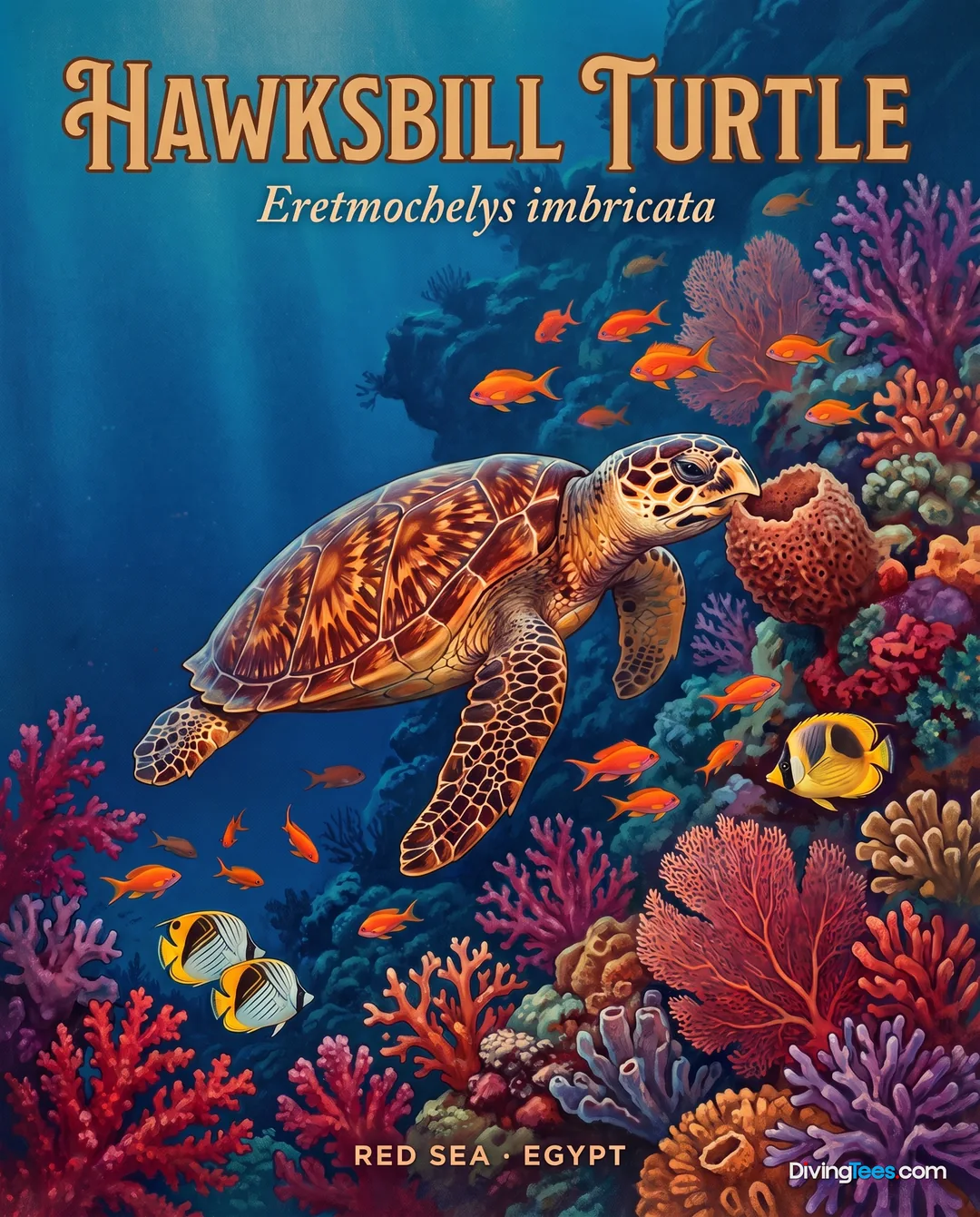
The route is built around animals that use Maldivian current and reef structure. Napoleon wrasse and fusiliers are recorded across nine sites, grey reef sharks across nine, sea turtles across eight, and eagle rays across eight. Barracudas, manta rays and tuna recur through much of the route, while whitetip reef sharks, reef sharks, whale sharks, green turtles, jacks, trevally, moray eels and batfish also appear at several sites. The reason to remember individual dives lies in the exceptions. Barracuda Giri is the listed site for groupers and anthias; Banana Reef adds anemones. Dhigalhi Haa Marine Reserve is where soft coral and sea fans stand out, while Maamigili is the site associated with sweetlips and porcupinefish. Fushifaru Thila Marine Reserve is the listed site for stingrays, and Dhigu Thila for hawksbill turtles. At Dhonkalo, manta rays gather at a cleaning station; at Maamigili and Maamigili Beiyru, whale sharks and mantas are the attraction. None of these encounters is guaranteed, but the sites give the animals a reason to be there.
Who puts you in the water
Naturalist guides and dive guides lead the operation, with the wider crew speaking English, French, Spanish and Italian. The guides are valued for site knowledge, marine-life awareness and clear organisation, but the available information does not give a fixed guide-to-diver ratio, qualification list, minimum logged-dive requirement or a course programme. That matters on a Maldivian route where current can turn a straightforward reef into a demanding drift. Briefings should be treated as operational information, not ceremony: current direction, entry point, exit plan and the tender's position determine how the dive works. Safety equipment includes oxygen, first-aid kits, fire alarms and extinguishers, life jackets, radar, GPS and VHF/DSC/SSB radio. The crew is trained in first aid, and mobile and satellite phones are carried. The route can suit divers looking for current passes and pelagics, provided their experience matches the conditions described at each briefing.
The dive deck and the gear
The diving operation is built around a dhoni and a separate dive tender, so entries and exits happen away from the main hull. The dhoni carries the diving work, while the tender provides additional support for divers and surface movements. The deck has shade, tank rinse areas and a separate rinse tank for cameras, with outdoor showers available after a dive. Tanks are steel, dual-fitting, and available in 10, 12, 15 and 18 litres with INT/DIN connections; rental equipment can be arranged. Three Coltri compressors fill the tanks at 16 cubic metres per hour each. Nitrox is available, but the blend and its conditions should be checked when booking rather than assumed to be included. The setup is practical for repeated channel and reef dives: gear stays organised on the support boat, cameras have their own rinse, and the tender can collect divers where they surface instead of making every return a swim to the main vessel.
Between dives
Between dives, Princess Rani gives passengers three open sun decks and an outdoor dining area rather than one single place where everyone must sit. The shaded dive space is on the working side of the boat; the upper decks are where wet kit, cameras and conversation give way to a book, a drink or a view across the atolls. A library and audio-video entertainment are available inside for the hours when the sun is too direct. Landings break up the water time with deserted islands, sandbanks and visits to fishermen's islands, while snorkeling and naturalist excursions give non-divers a reason to stay aboard. The route is not built around constant passage-making. The boat moves between channels, reefs and islands, then the dhoni takes over for the dive. That separation keeps the main deck calmer while the diving operation is active.
A day on board
A day on Princess Rani begins with the dive operation rather than with a long breakfast. The first briefing comes before the first entry, then the dhoni carries the group to a reef, pinnacle or channel while the main boat remains the place to return to between dives. After the first dive comes food, a surface interval and the next briefing; later dives follow the same practical pattern, with snacks keeping the gaps short. The route can include drift dives through ocean passes, reef dives, manta points and naturalist excursions, so not every day has the same underwater shape. Between entries, passengers move from the shaded dive area to the salon, dining space or sun decks, and the boat gets underway between atolls and islands. Beach barbecues, sandbanks and fishermen's islands break up the repeated gear cycle. A night dive may form part of the programme where the site and conditions allow. Then dinner, a final check of cameras and an air-conditioned cabin set up the next day.
What you eat aboard
Food is one of Princess Rani's strongest points. The kitchen takes an Italian direction, with Western dishes, à la carte choices, full-board meals, snacks through the day and dinner served outside when conditions allow. Vegetarian and vegan options are available, and the drinks side includes wine, beer, cocktails and a selection of wines. A barbecue on the beach is part of the trip, not an afterthought between dives. That matters on a diving week: meals have to arrive without turning the surface interval into a long wait, and snacks need to be within reach when a group returns hungry from a current dive. The table also gives the mixed group a common language after briefings and gear checks. Expect Italian influence rather than a strictly local Maldivian menu, with the setting and the island barbecue supplying the regional connection.
Nights at sea
The 11 cabins are on the lower deck, with portholes, private bathrooms, hot and cold water and air conditioning. The choice is between double, twin and triple cabins, so the right category matters more here than a promise of hotel-style space. A porthole gives a cabin a working connection to the sea, but it does not turn a lower-deck room into an observation lounge. The boat's shared areas carry the daylight: the indoor salon, outdoor dining area and three sun decks give passengers somewhere to leave wet gear and conversation behind before turning in. At night, the practical comfort is clear—air conditioning, private facilities and daily housekeeping—while the boat remains a boat, with machinery and movement never entirely absent from the experience. Cabins are non-smoking. Anyone who sleeps lightly should choose with the vessel's working character in mind rather than expecting silent land-based accommodation.
Triple Cabins
Double Cabins
Twin Cabins
What to know before boarding
Princess Rani departures begin and end in Malé, at Velana International Airport. Airport transfer is included. Guests should arrive in Malé the night before boarding so an airline delay does not place the cruise at risk. The return is also to Malé, making the route practical for international flights arranged around the cruise.
Deck plan
- Year built
- 2008
- Length
- 35 m
- Beam
- 11 m
- Maximum number of passengers
- 22
- Number of cabins
- 11
- Number of bathrooms
- 10
- Engines
- 1000 hp Daewoo
- Cruising speed
- 11 knots
- Tenders
- 1 Dhoni and 1 dive tender
- Website
- macanamaldives.com ↗
Hello, I'm Marina, DivingDeal.com's AI assistant. I answer in detail about hotels, dive centres and liveaboards.

Thinking about the whole trip and the flights? Talk it over with Edith →
Marina is an AI. Some links are affiliate links: DivingDeal may earn a commission, at no extra cost to you. Bookings are made with the partner.