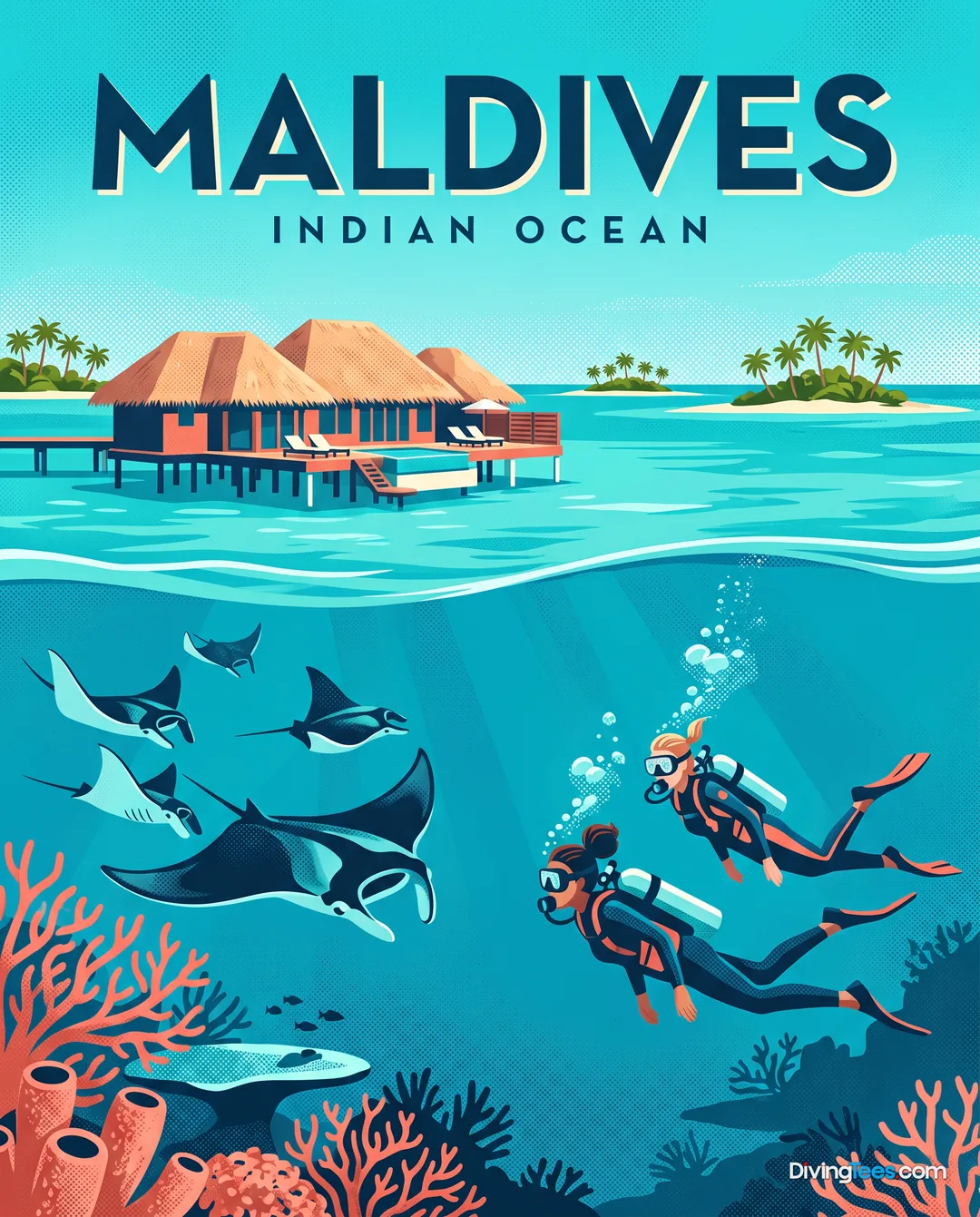
Liveaboards · Maldives
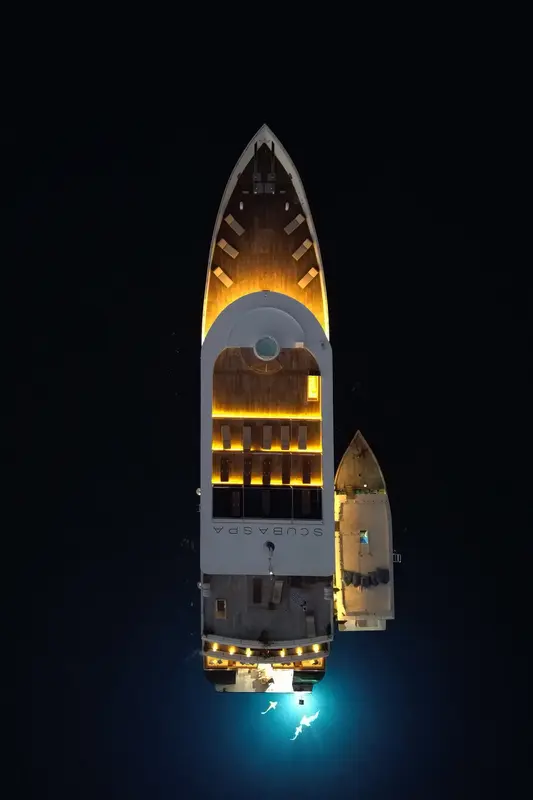
Carpe Diem — a refitted Maldivian dive yacht built around the diving
For subtitles in English: start the video firstthen click the gearat the top right of the video, select “Subtitles/CC”, then “Auto-translate” and choose “English”.
The invitation
Carpe Diem suits divers who want the Maldives as a working dive trip rather than a resort stay. The separate dive dhoni carries the diving operation away from the main yacht, so tanks, wet kit and post-dive noise stay where they belong while the upper decks remain available for food, shade and conversation. Its routes range across the Maldives instead of being tied to one atoll: Baa for mantas, Ari for whale sharks and cleaning stations, and the central and southern channels for sharks and current dives. The boat was built in 2008 and refitted in 2025, a useful combination here: it has an established Maldivian operating history without presenting itself as an untouched old coaster. The strongest reasons to choose it are the dive-site access, the chef-led food and a crew whose attentiveness matters when the week contains three dives a day.
Boarding
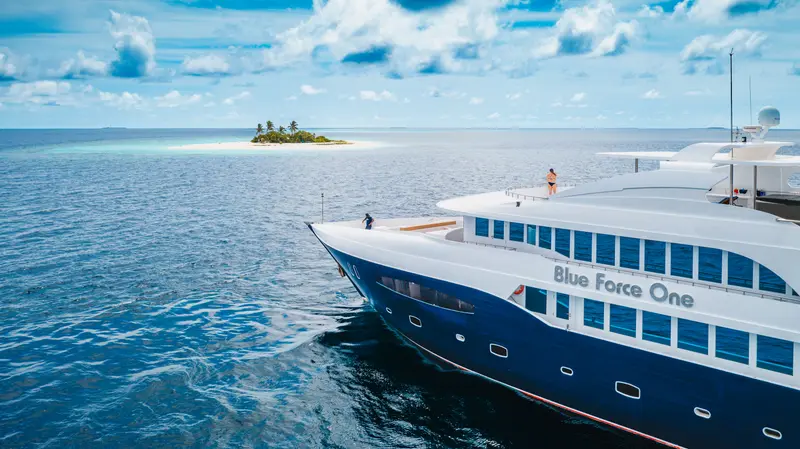
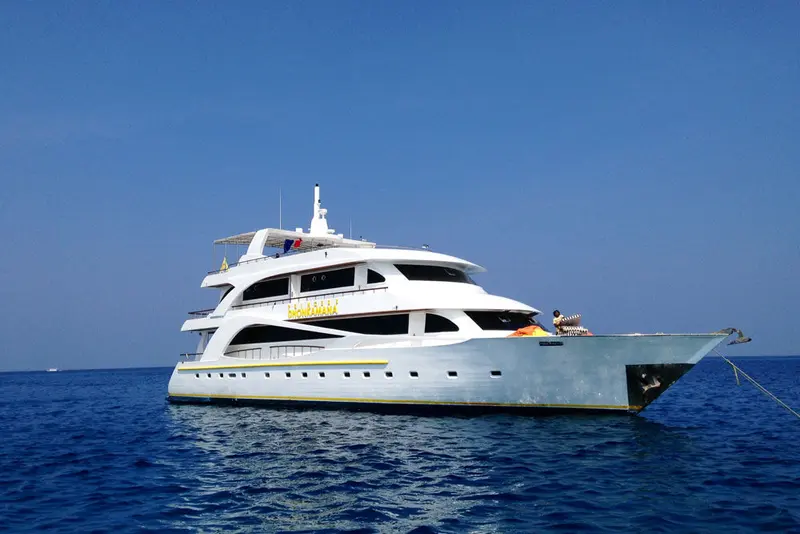
Carpe Diem arrives as a broad motor yacht rather than a compact sailing vessel, with enough separation between the diving operation and the living spaces to keep the practical work out of the lounge. Once aboard, the route is explained, safety and boat procedures are covered, and the crew helps get dive equipment ready before the first check dive. The open-air restaurant and bar sit above the main accommodation, with an indoor air-conditioned lounge and briefing area for hotter or wetter periods. The layout is straightforward: cabins occupy the lower and main levels, while the upper areas open onto the restaurant and sundeck. It is a boat designed to move divers efficiently between atolls, then give them somewhere easy to sit, eat and dry out between dives. The 2025 renovation matters less as a date than as a sign that this older hull has been brought forward rather than simply kept running.
The atmosphere on board
Carpe Diem's atmosphere is built more by the crew than by the yacht's age. The staff speak English and are described as friendly, efficient and open, with the dive team taking responsibility for keeping guests comfortable both on deck and underwater. That changes the week in small, practical ways: equipment is dealt with before it becomes a problem, cabins and shared areas are cleaned daily, and the chef keeps the meals strong enough to become part of the trip's identity. Captain Issey and dive team leader Munkko are the named leads on Carpe Diem. The group usually meets first around the safety briefing, then again after dives over food, snacks or a drink at the outdoor bar. Evenings can include a night dive, a beach barbecue or simply the quiet that follows a full day underwater. The boat earns its warmth through the work being done, not through staged entertainment.
The sites you’ll dive
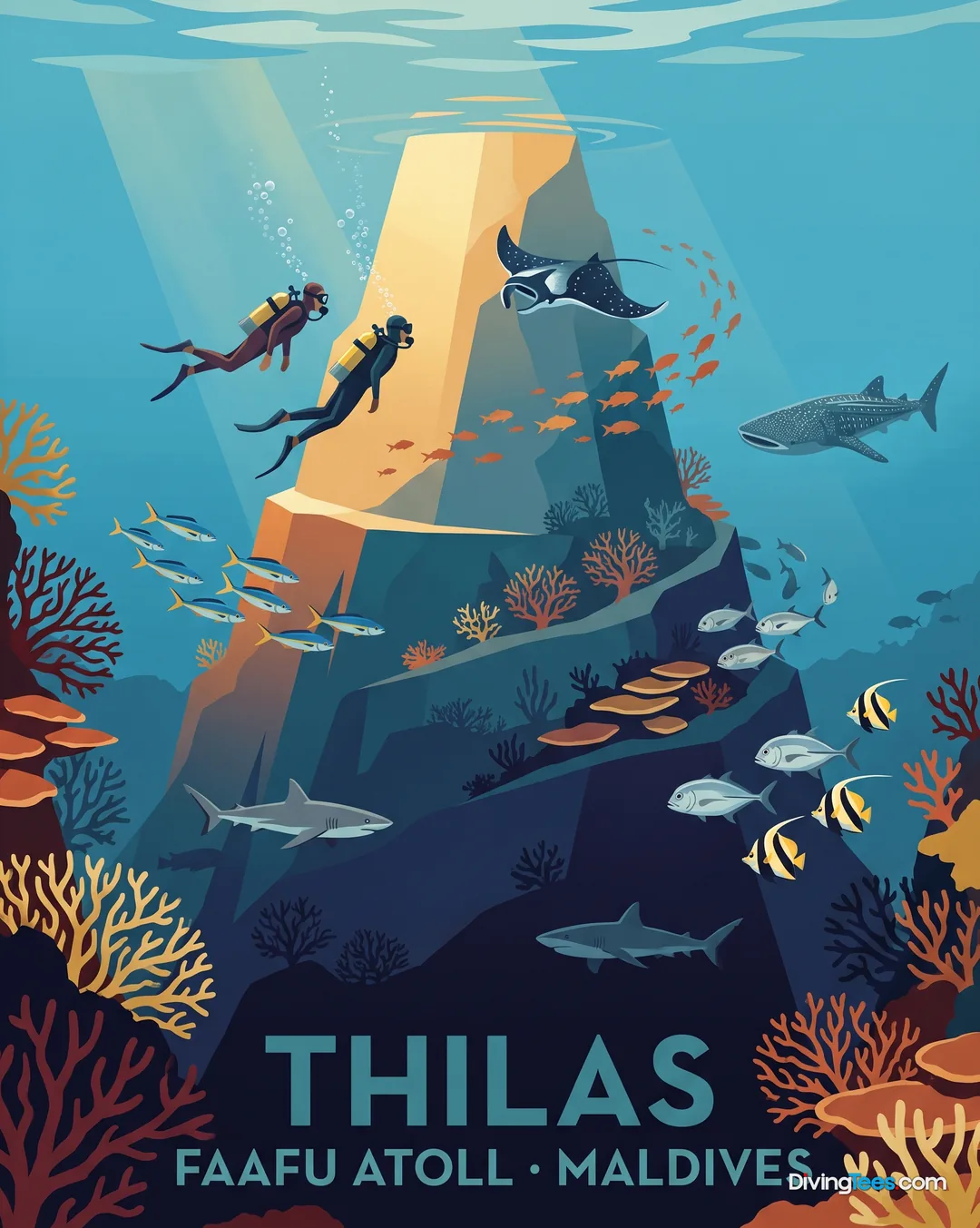
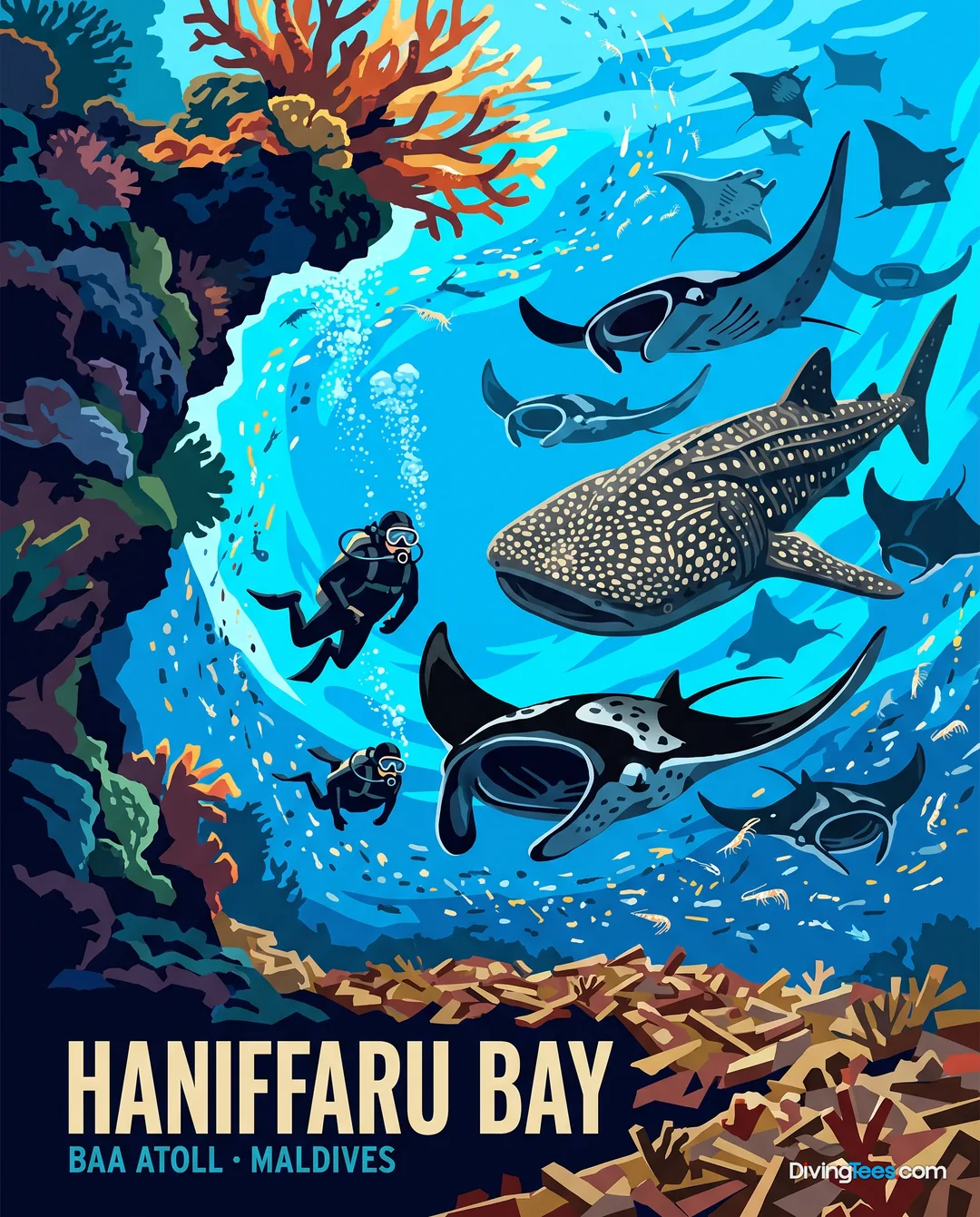
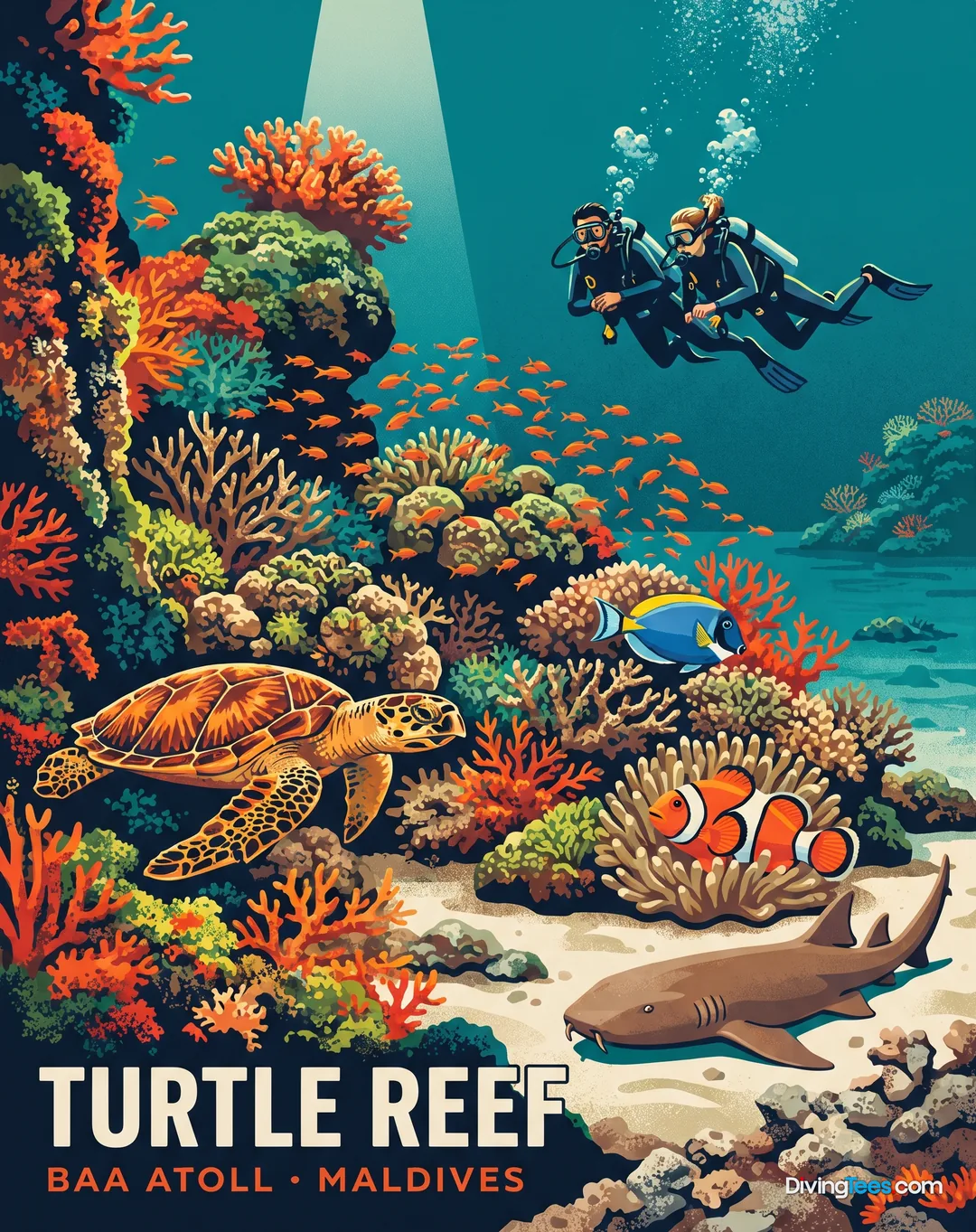
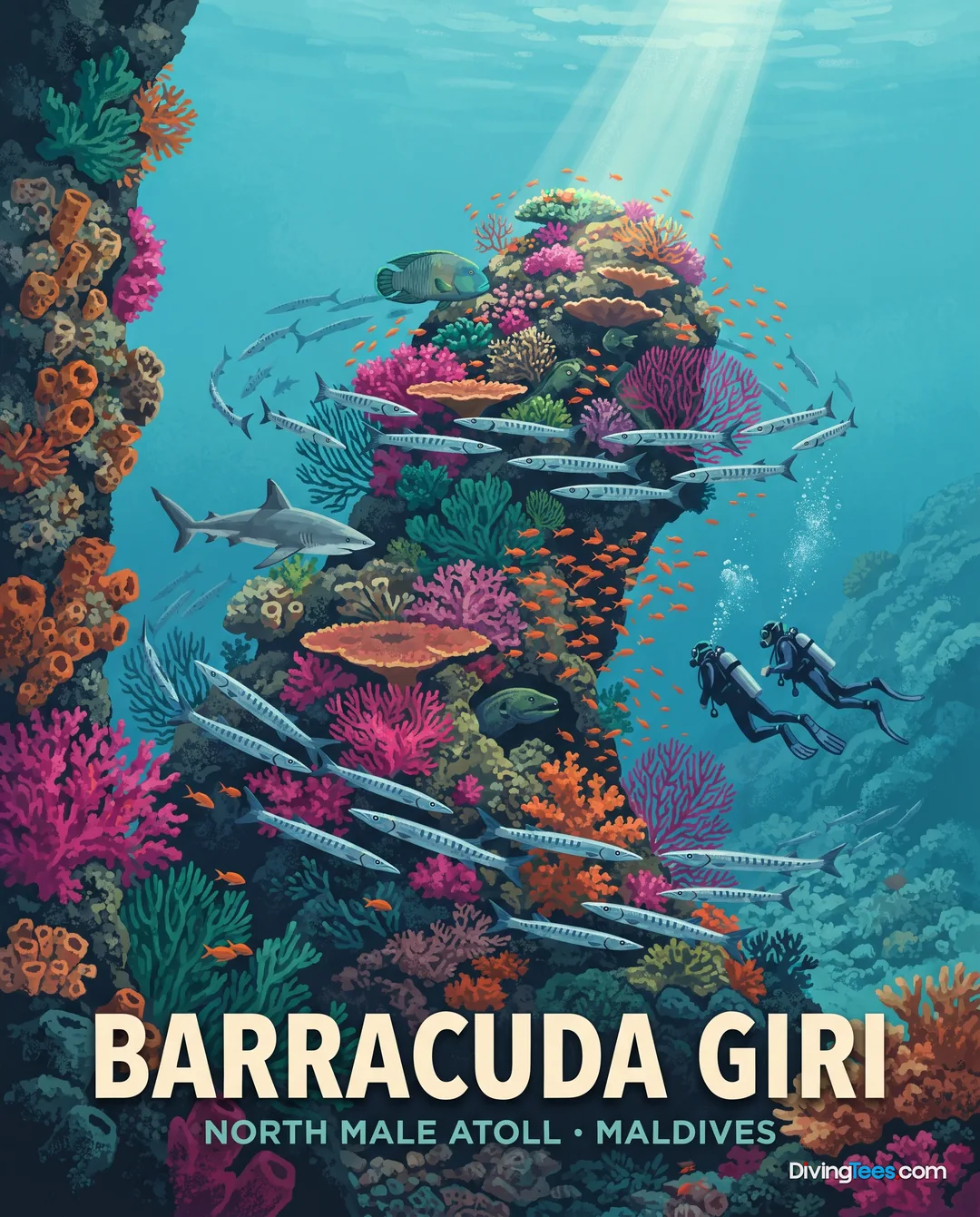
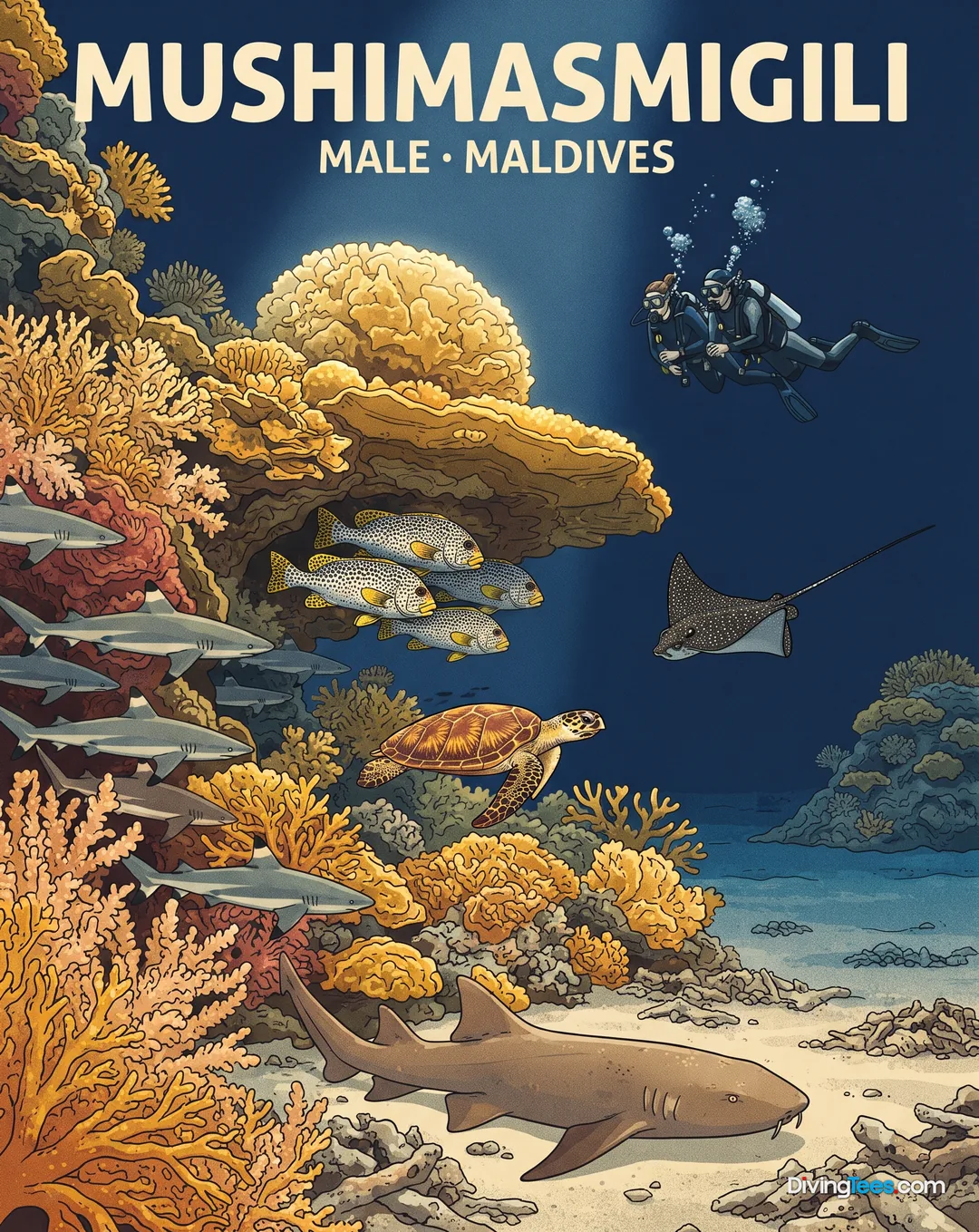
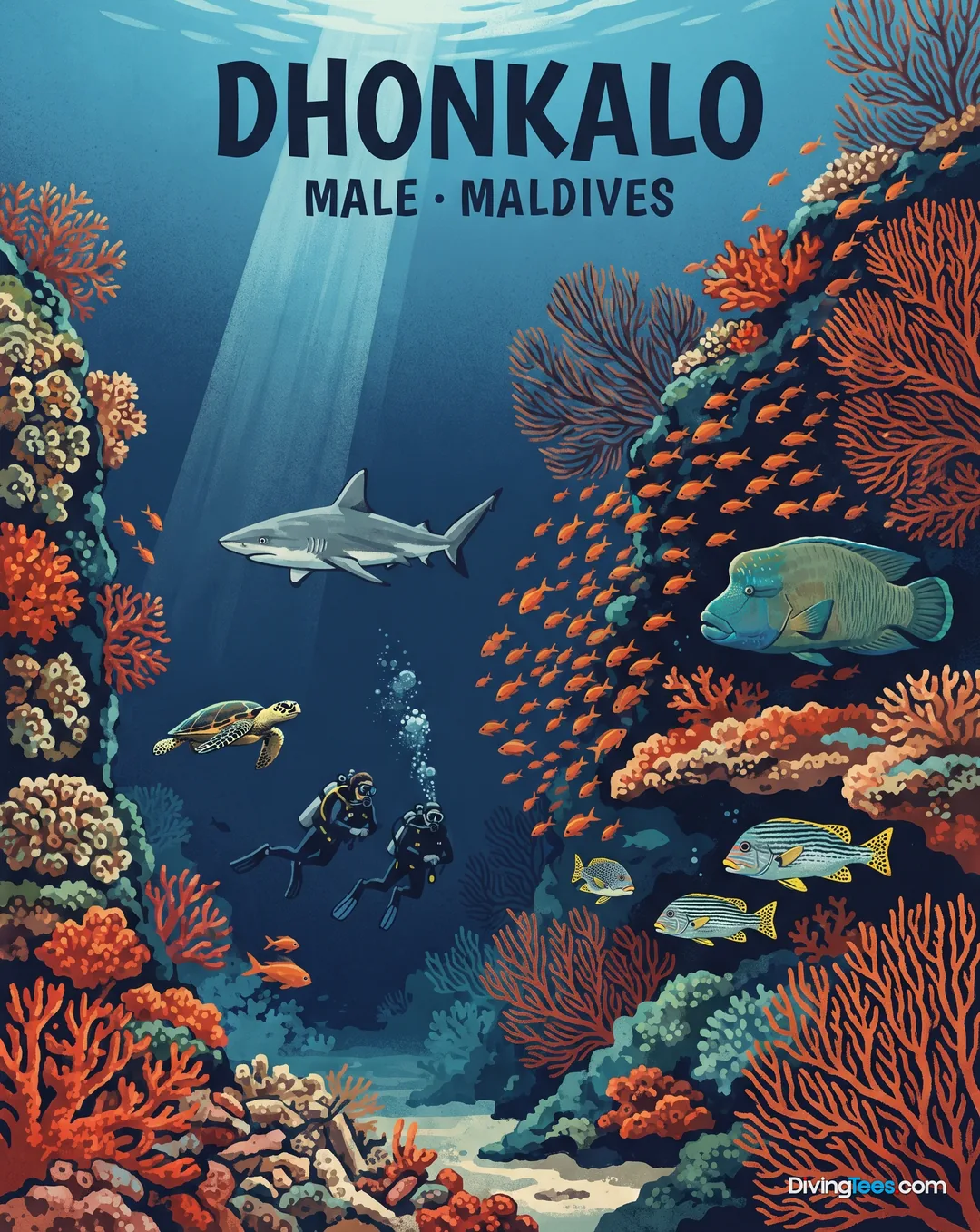
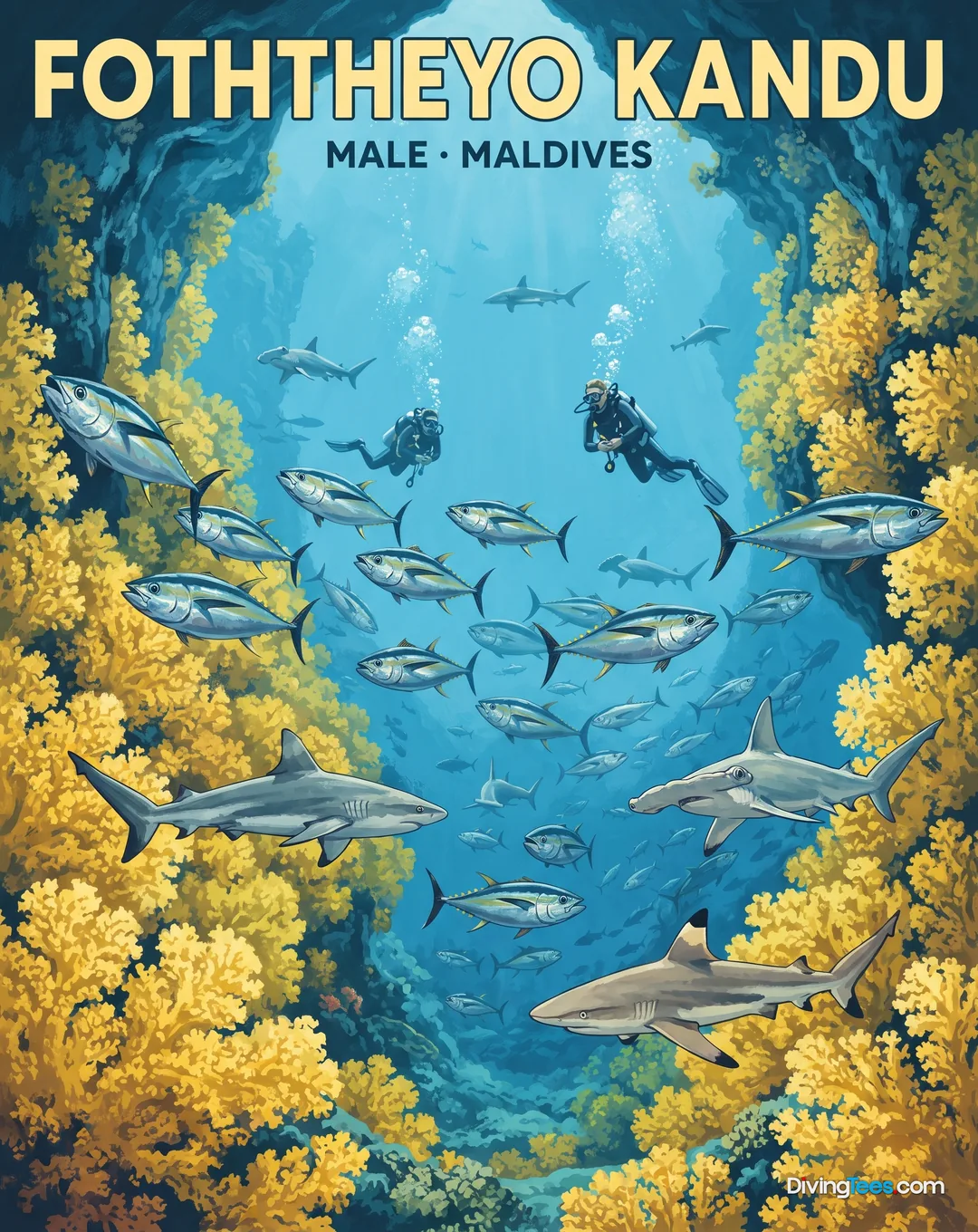
The routes are built around channels, thilas, pinnacles and cleaning stations rather than one fixed reef. A 6-day/5-night Reef, Rays & Hanifaru Bay trip links Dharavandhoo and Malé, with Baa and Raa in the plan; 7- or 10-night Best of Ari and Best of Maldives routes run through Malé, Rasdhoo, North Ari, South Ari, Vaavu and South Malé. On the longer northern departures, Deep North combines Baa, Raa, Haa Dhaalu, Haa Alif, Shaviyani, Noonu and Lhaviyani over 11 days/10 nights. Turtle Reef slopes to a maximum of -22m through hard coral where green and hawksbill turtles forage. Barracuda Giri reaches -30m across three submerged pinnacles, where current draws in barracudas and pelagic fish. Mushimasmigili Marine Reserve also reaches -30m and is known for grey reef sharks at its up-current pinnacle. At Dhonkalo, a -25m cleaning station in a sandy channel brings manta rays close. Foththeyo Kandu is the serious one: a narrow channel with caves covered in yellow soft corals and a maximum of -40m. Hanifaru Bay is different: diving is not permitted there, but a ranger-coordinated snorkel may place guests among feeding mantas and whale sharks when conditions and animals allow.
Itineraries, dates and prices
Prices per person. Each month shows its lowest price: click a month, or pick an itinerary.
Next departures · 48 departuresfrom £1,444$1,931€1,725
November 2026
December 2026
January 2027
See dates and prices
If you click these links and make a purchase on the partner site, DivingDeal may earn a commission, at no extra cost to you.
Dates and prices taken from Divebooker and liveaboard.com, updated 21 October 2026
What you’ll meet underwater
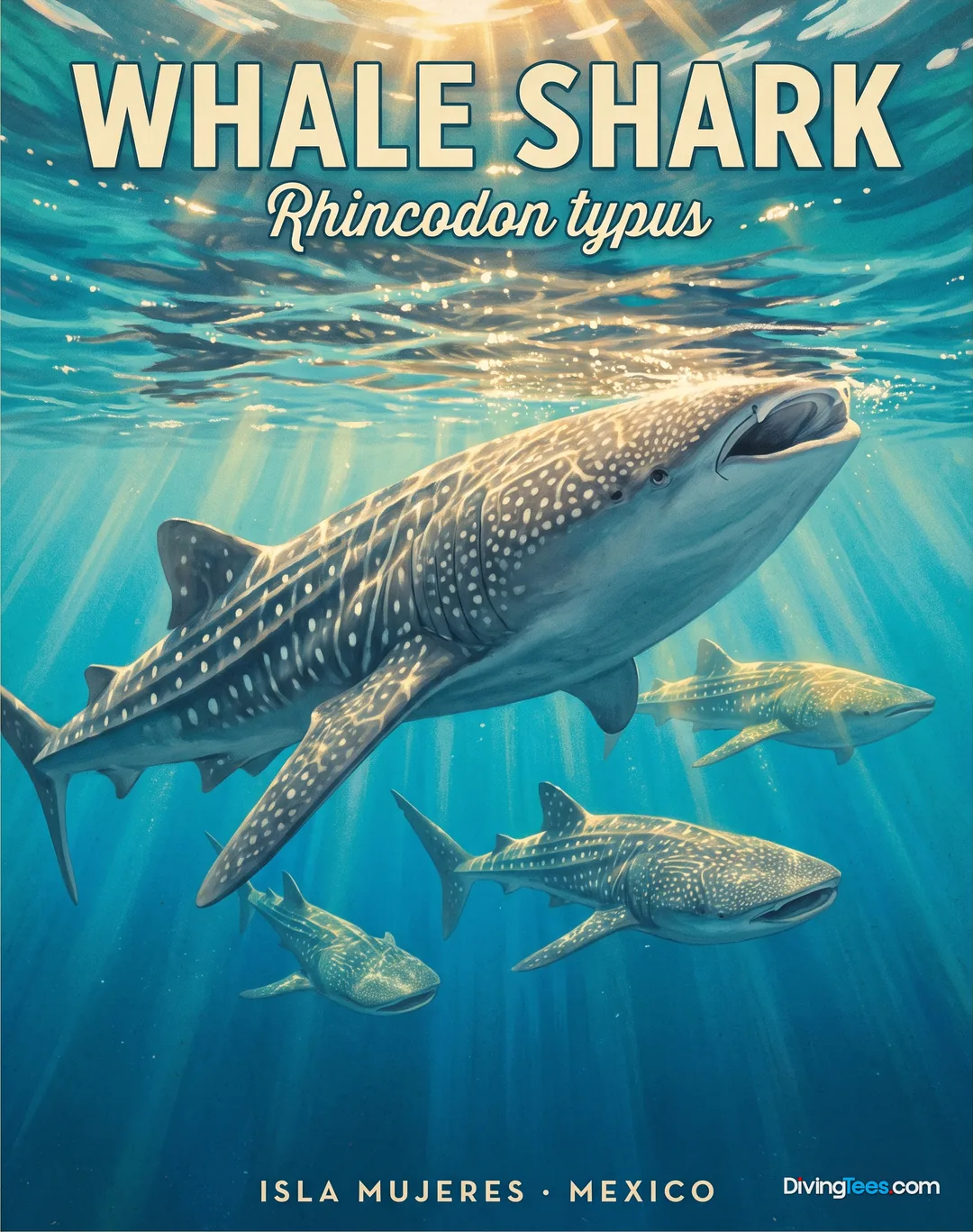
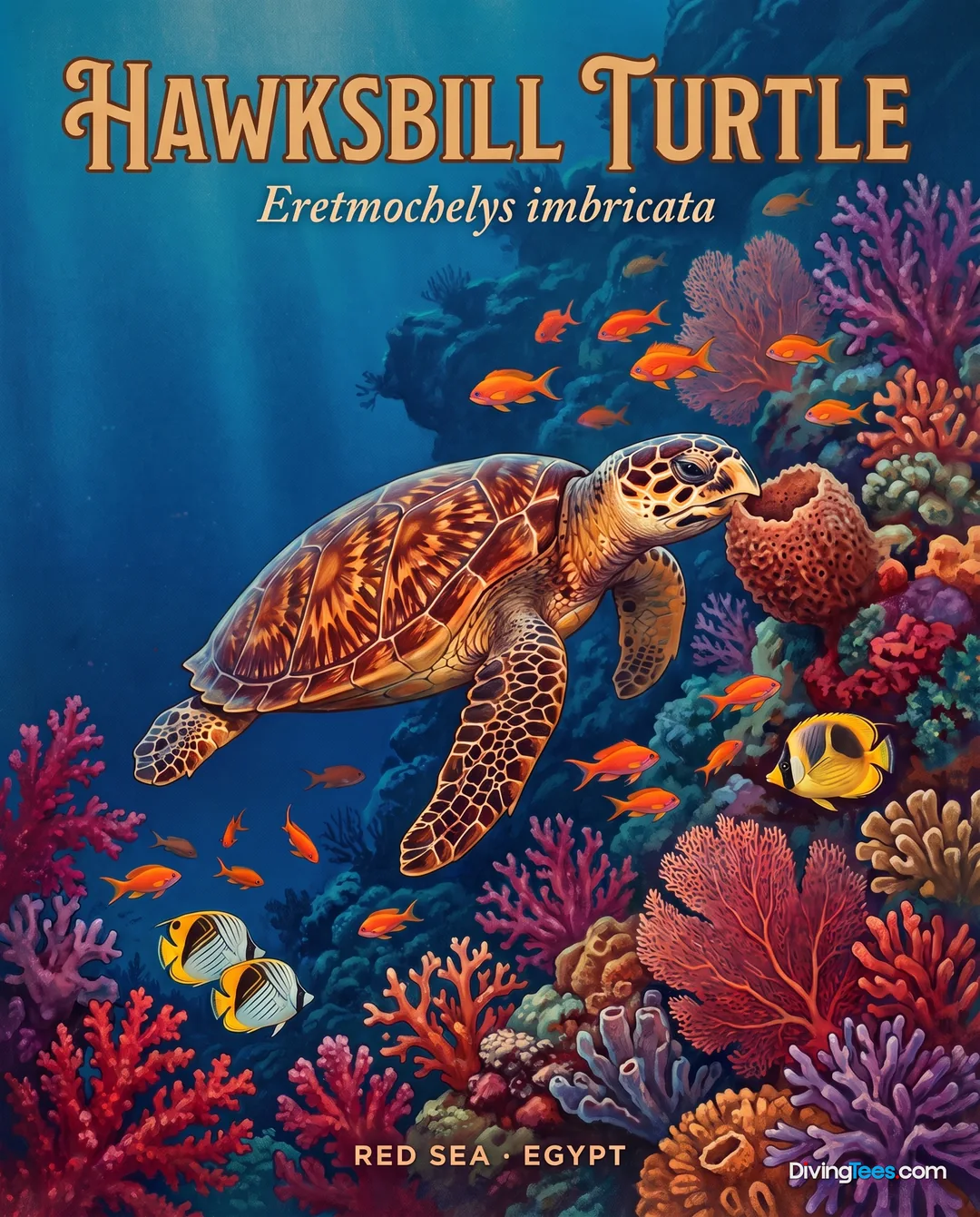
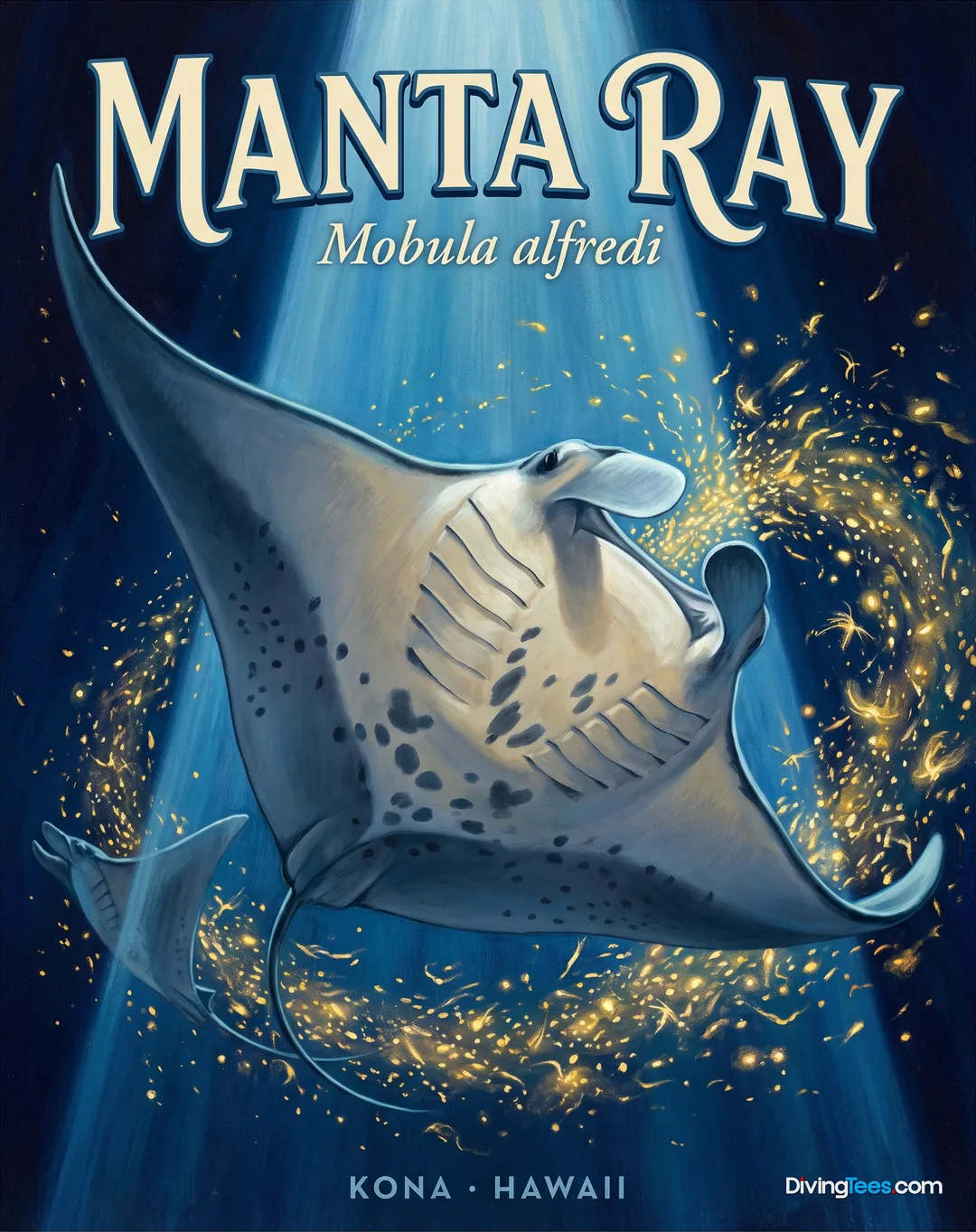
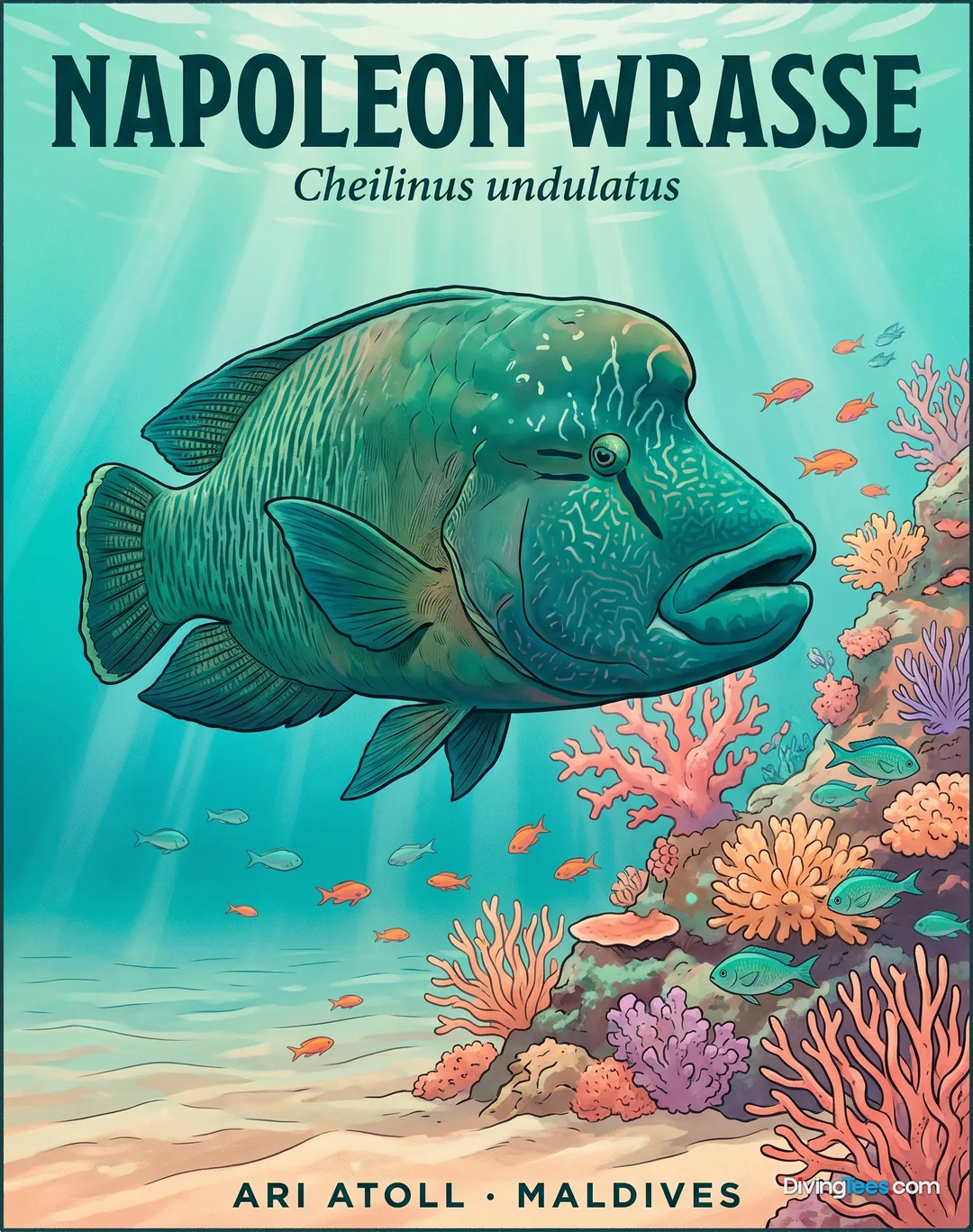
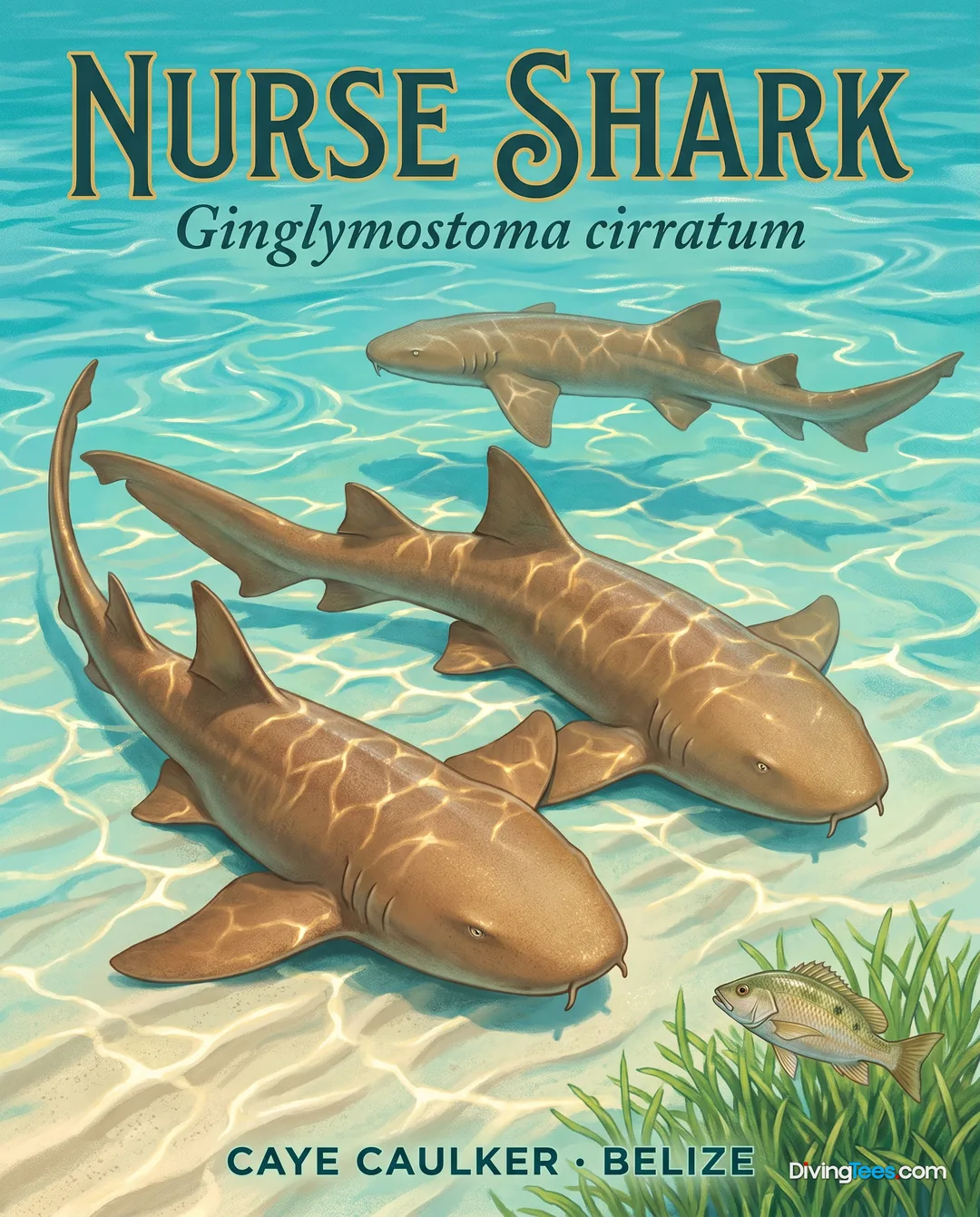
Napoleon wrasse, fusiliers, grey reef sharks, tuna, manta rays, turtles, eagle rays, batfish and jacks recur across this route, but the Maldives does not deliver them from a conveyor belt. Currents at channels and pinnacles are what bring much of the larger life into view: Barracuda Giri can gather barracudas and tunas, while Myaru Kandu, the Shark Channel, is known for grey reef and whitetip sharks and can also produce eagle rays or hammerheads. South Ari's Maamigili and Maamigili Beiyru sit inside a protected marine area where whale sharks and mantas are the reason for the dive. At Dhonkalo, mantas use the sandy channel as a cleaning station. Turtle Reef is the place for green turtles and, more locally, hawksbill turtles. A grouper and anthias are recorded specifically at Barracuda Giri; an anemone at Banana Reef; a porcupinefish at Maamigili; and a nurse shark at Guraidhoo Marine Reserve. Dhigalhi Haa Marine Reserve is the site for soft coral and gorgonians. Hanifaru Bay's mass manta encounters are seasonal and viewed by snorkel, not scuba.
Who puts you in the water
The dive team is local, English-speaking and experienced, with dives led by professional guides and instructors. Briefings cover the boat, the dive registration and the conditions expected at the site; the captain and dive team leader adjust the plan for weather, current and visibility rather than treating the route as fixed. The standard Best of Maldives and Best of Ari routes ask for Advanced Open Water certification and around 35 logged dives. Open Water divers can join, but some deeper sites are not available to them and a private guide is required. Reef, Rays & Hanifaru Bay is less demanding at Open Water level with a minimum of 15 dives, while Deep North asks for Advanced Open Water and around 50 dives. PADI Open Water, Advanced Open Water and nitrox courses run on board. Oxygen, first-aid kits and fire equipment are carried, and the crew is trained in first aid.
The dive deck and the gear
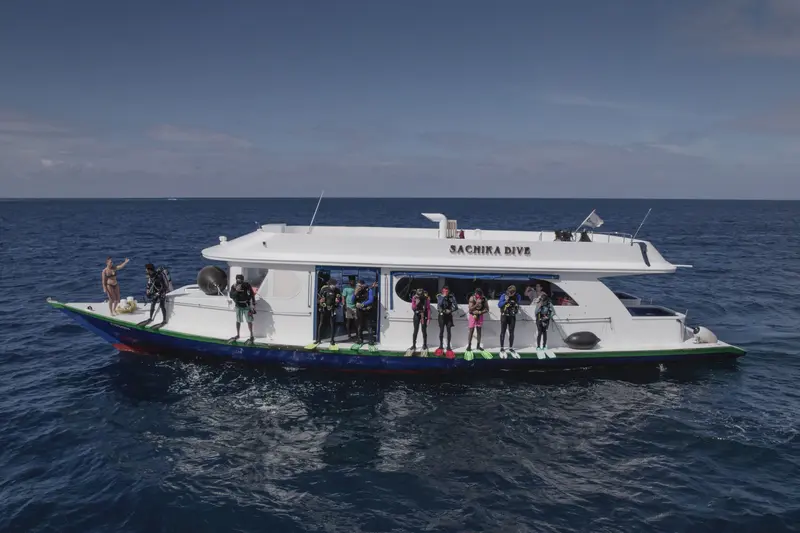
The diving is centred on a separate dive dhoni, with the main yacht left clear for living. The dhoni carries the dive equipment and takes divers to the reef, so entries and exits happen from the vessel already positioned at the site rather than from the accommodation deck. Tanks are aluminium, with 11.5-litre and 13.5-litre options in DIN or yoke configuration; nitrox and normal air are available, and nitrox is included. A nitrox compressor is carried with the dive operation. Weights and belts, reef hooks and one SMB per buddy team are provided. Rental equipment is available as an extra. Photographers get a dedicated area and a separate camera rinse, and there is a shaded dive space for kit preparation. A small speedboat accompanies the dhoni, adding support around the main tender operation.
Between dives
Between dives, the upper decks are the natural place to settle. The open-air restaurant and bar provide shade for a drink or a meal, while the sundeck offers loungers and open sun when the weather is kind. The air-conditioned lounge gives photographers and tired divers somewhere cooler for a briefing, a film or a quiet hour with a book. A dedicated photo area and separate camera rinse facilities mean cameras do not have to compete with masks and fins for every piece of space. The boat also carries a barbecue setup, and beach barbecues are planned when weather and local conditions allow. On routes that include a local island visit or night fishing, the gap between dives has a purpose beyond waiting for the next tank. Otherwise, it is the useful liveaboard pause: dry off, eat, charge a battery and be ready again.
A day on board
A full diving day is shaped by three dives, with food arriving between them: breakfast before the first briefing, lunch after the earlier work in the water, snacks during the long middle pause and dinner once the day's main diving is finished. The exact sites and order are set by the captain and dive team around current, weather and visibility, so the useful certainty is the sequence rather than a clock. The check dive takes place after boarding unless late arrivals require it to move to the following day. On 7-night trips, one night dive and a beach barbecue are planned; 10-night trips include two night dives, subject to weather. The final diving day may contain one or two morning dives, depending on the flight schedule and the dives already completed. After that come the last meal, equipment packing and the journey back to port. Then the boat starts again with another group.
What you eat aboard
The chef is one of the boat's real reasons to book. Meals are prepared as full board, with breakfast, lunch, afternoon snacks and dinner arranged around the dives rather than treated as one formal evening service. The food combines Western and local cooking, with buffet service, vegetarian options, beer and wine available, and an outdoor restaurant where the sea remains part of the setting. Guests returning from a dive can eat without turning the whole day into a long restaurant break; the next briefing and the next entry into the water are always close behind. On a week of repeated dives, that matters. Good food is not decoration when the body is working three times a day. It is the part of the operation that restores divers quickly and gives the group a reason to stay at the table after the plates are cleared.
Nights at sea
The cabin choice changes the feel of a week more than the furniture does. Standard cabins are on the lower deck, while Double cabins sit on the main deck and Deluxe cabins and the Suite occupy the upper deck; a bunk-style Standard option is also available. Every cabin has private bathroom facilities, individual air-conditioning, a safe, life jackets and a television connected to the central media system. Portholes provide the outside view in the lower cabins, while some categories offer sea views. The lower deck is the practical choice for divers who spend most of the day in wet kit and want to keep the cabin budget focused on the diving; the upper cabins give more daylight and a stronger sense of separation from the equipment routine. Daily cleaning keeps the spaces in order, but these are liveaboard cabins, not oversized hotel rooms. A collapsible bag is the sensible way to arrive.
Standard - Lower Deck
Double - Main Deck
Deluxe - Upper Deck
Suite - Upper Deck
Standard Bunk Style - Lower Deck
What to know before boarding
Carpe Diem departures and returns use Malé, with some itineraries starting or ending at Dharavandhoo in Baa Atoll; the exact port is shown by the route. Airport transfers to the boat are included, and a representative meets arriving guests at counter D17 in Terminal 2 at Velana International Airport. Dharavandhoo itineraries require a domestic flight connection, which is not included and can be arranged separately. Arriving in Malé the night before is the sensible choice, especially when a missed connection would mean missing the vessel's transfer.
Deck plan
- Year built
- 2008
- Year renovated
- 2025
- Length
- 35 m
- Beam
- 10 m
- Maximum number of passengers
- 20
- Number of cabins
- 10
- Number of bathrooms
- 13
- Engines
- Doosan Daewoo Diesel 650 hp
- Tenders
- Diving Dhoni
Hello, I'm Marina, DivingDeal.com's AI assistant. I answer in detail about hotels, dive centres and liveaboards.
Thinking about the whole trip and the flights? Talk it over with Edith →
Marina is an AI. Some links are affiliate links: DivingDeal may earn a commission, at no extra cost to you. Bookings are made with the partner.