Liveaboards · Maldives
Emperor Voyager — a comfortable diver’s boat with a serious Maldives route
What makes this boat unique
- Emperor Voyager carries up to 20 guests in 10 air-conditioned ensuite cabins, with twin and double options across the lower, main and upper decks.
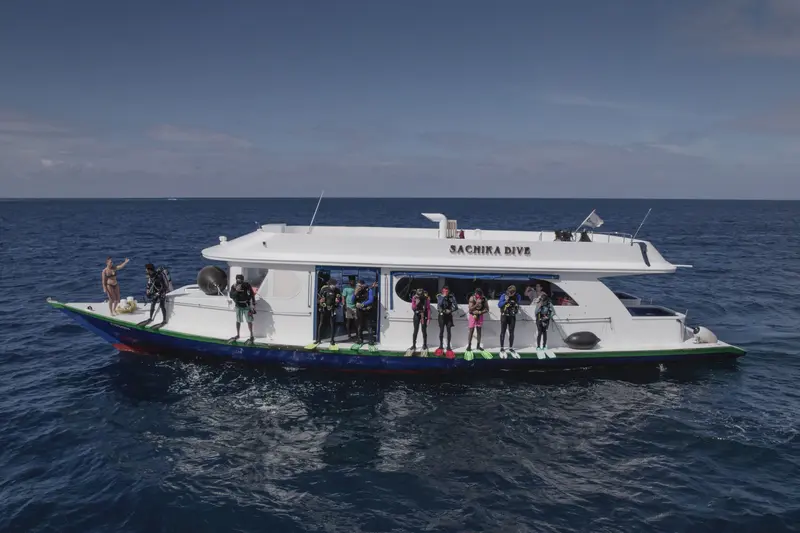
- A separate, fully equipped diving dhoni handles the diving, with three dive guides and free nitrox for certified divers.
- The routes cover North and South Malé, North and South Ari, Rasdhoo and Vaavu Atolls on eight-day, seven-night cruises.
- Park fees, port fees, fuel surcharges, airport transfer, full board, the diving package and nitrox are included.
For subtitles in English: start the video firstthen click the gearat the top right of the video, select “Subtitles/CC”, then “Auto-translate” and choose “English”.
The invitation
Emperor Voyager suits divers who want the Maldives’ big animals without paying for a new flagship. The boat is a practical, spacious base for a week of current-swept thilas, shark channels, manta cleaning stations and South Ari whale-shark sites, with a separate dhoni doing the working end of the trip. That separation matters: the main vessel stays a place to eat, sleep and dry out while the dive crew prepares the next entry elsewhere. Non-divers are welcome too, with snorkeling, beach excursions and deserted-island barbecues built into the experience. The choice is straightforward. Come here for the route, the diving atmosphere and a crew that makes the daily mechanics easy, rather than for the newest hull in the fleet.
Boarding
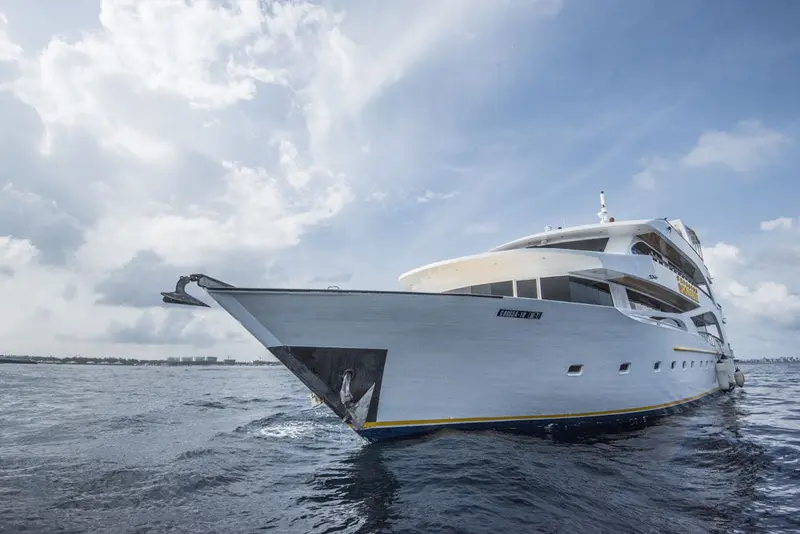
Voyager makes a solid first impression: a modern liveaboard with enough room to avoid feeling like a narrow sleeping platform, but without the scale of a resort ship. Built in 2004 and renovated in 2014, she belongs to an earlier generation of Maldives boats rather than the newest fleet. That is visible in the straightforward layout and practical character. The main vessel is a wooden-hulled, four-deck boat, with the lounge and dining area inside and open seating above. Boarding leads quickly from the social spaces to the cabins below, while the diving happens from the separate dhoni. The arrangement keeps wet gear, compressors and dive traffic away from the rooms. It also gives the crew a clear working base and lets guests return to a quieter boat after each dive.
The atmosphere on board
Voyager’s atmosphere is built less by design than by the way the crew keeps the machinery of a dive trip moving. The dhoni crew helps with kitting up, and assistance remains available without turning every small task into a request. That matters when current dives demand a quick, clean entry and an equally organised return. Guests tend to form a compact group quickly: the same faces at the briefing, on the camera table, over dinner and back on deck after the last dive. The crew speaks English, French and Spanish. In the evening, the bar and outdoor dining area carry the conversation, with the happy hour before dinner on most nights. Voyager is not presented as the newest boat, and its boat score sits below its food and diving scores; the gain is a crew-led operation that makes an older platform feel easier to live on.
The sites you’ll dive
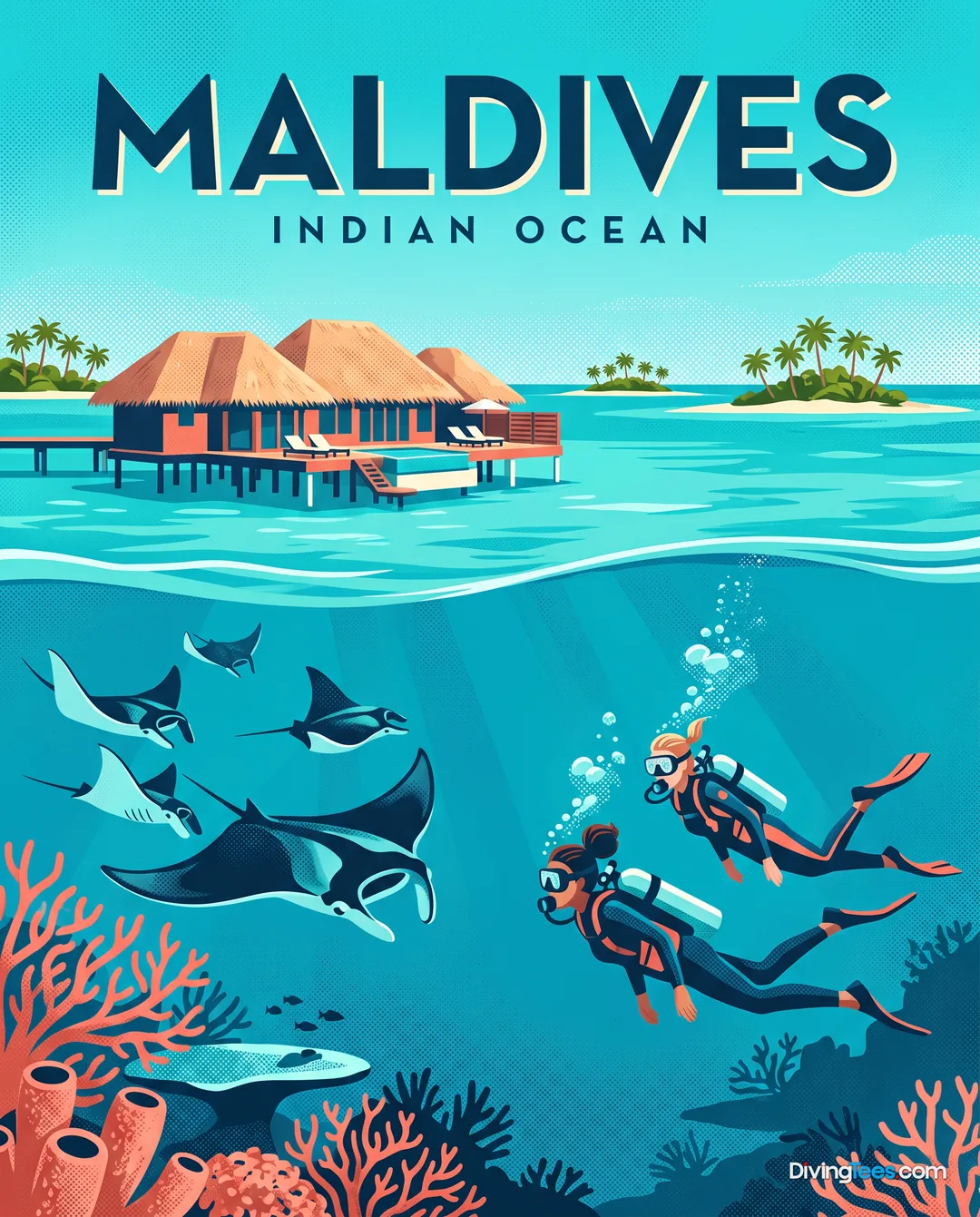
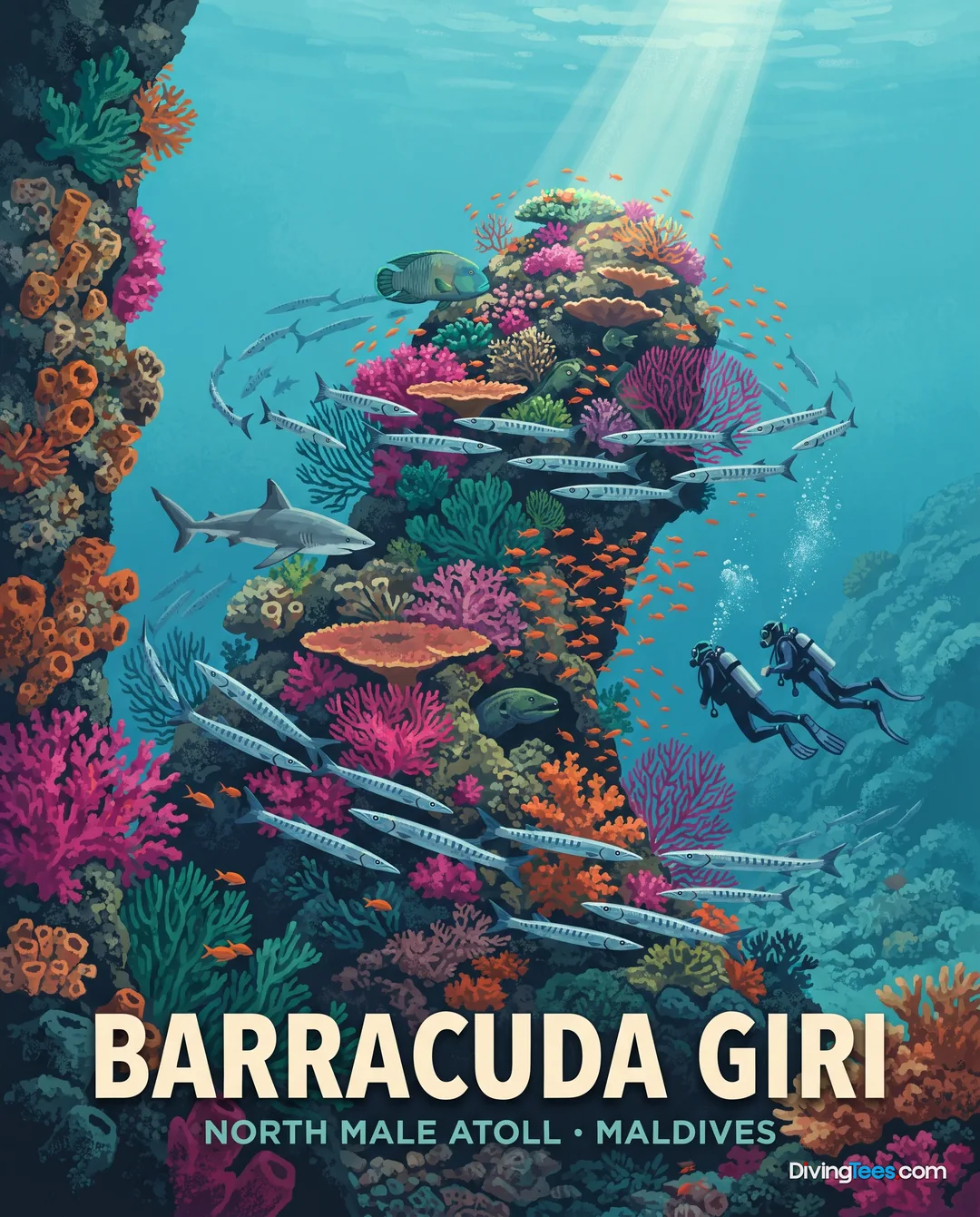
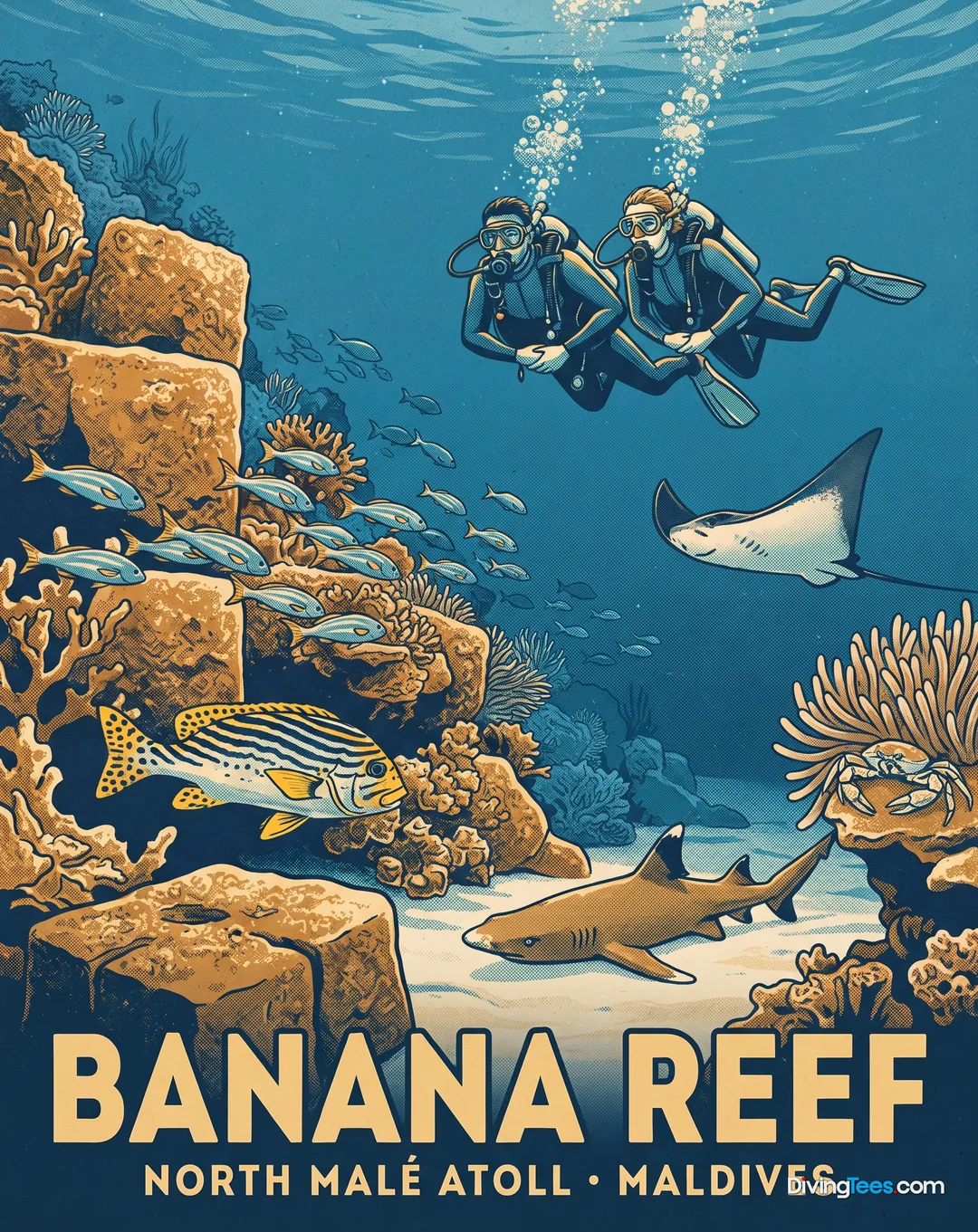
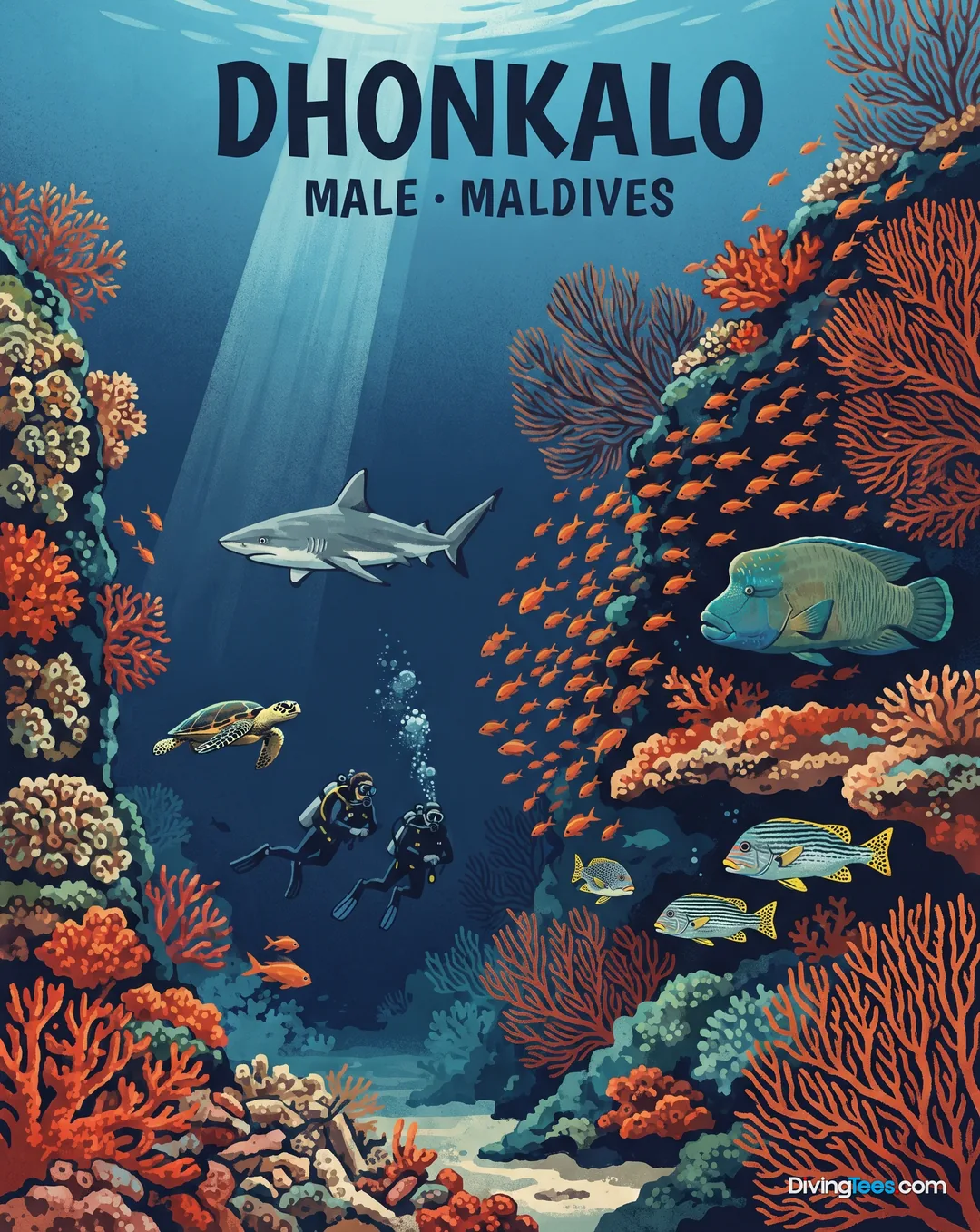
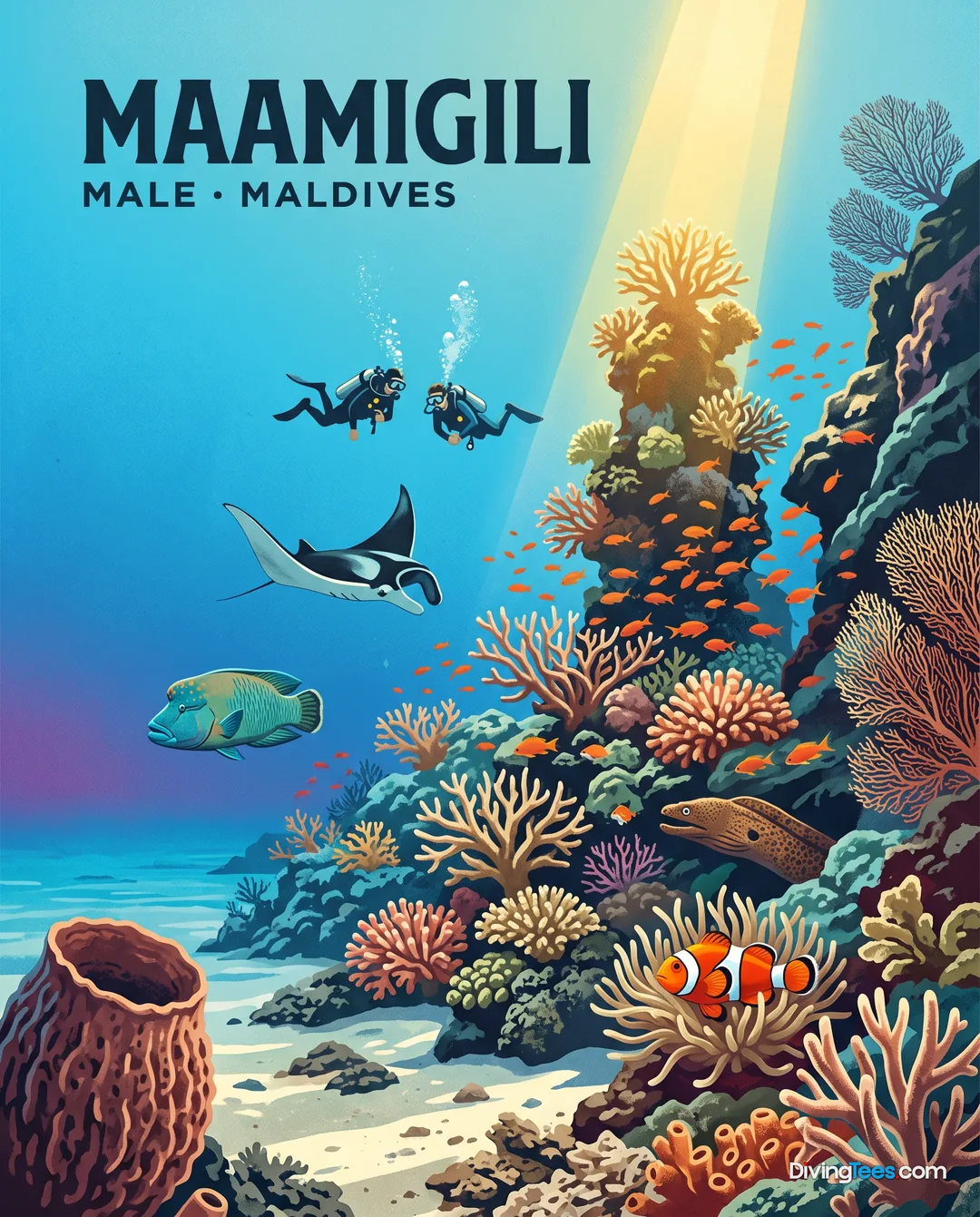
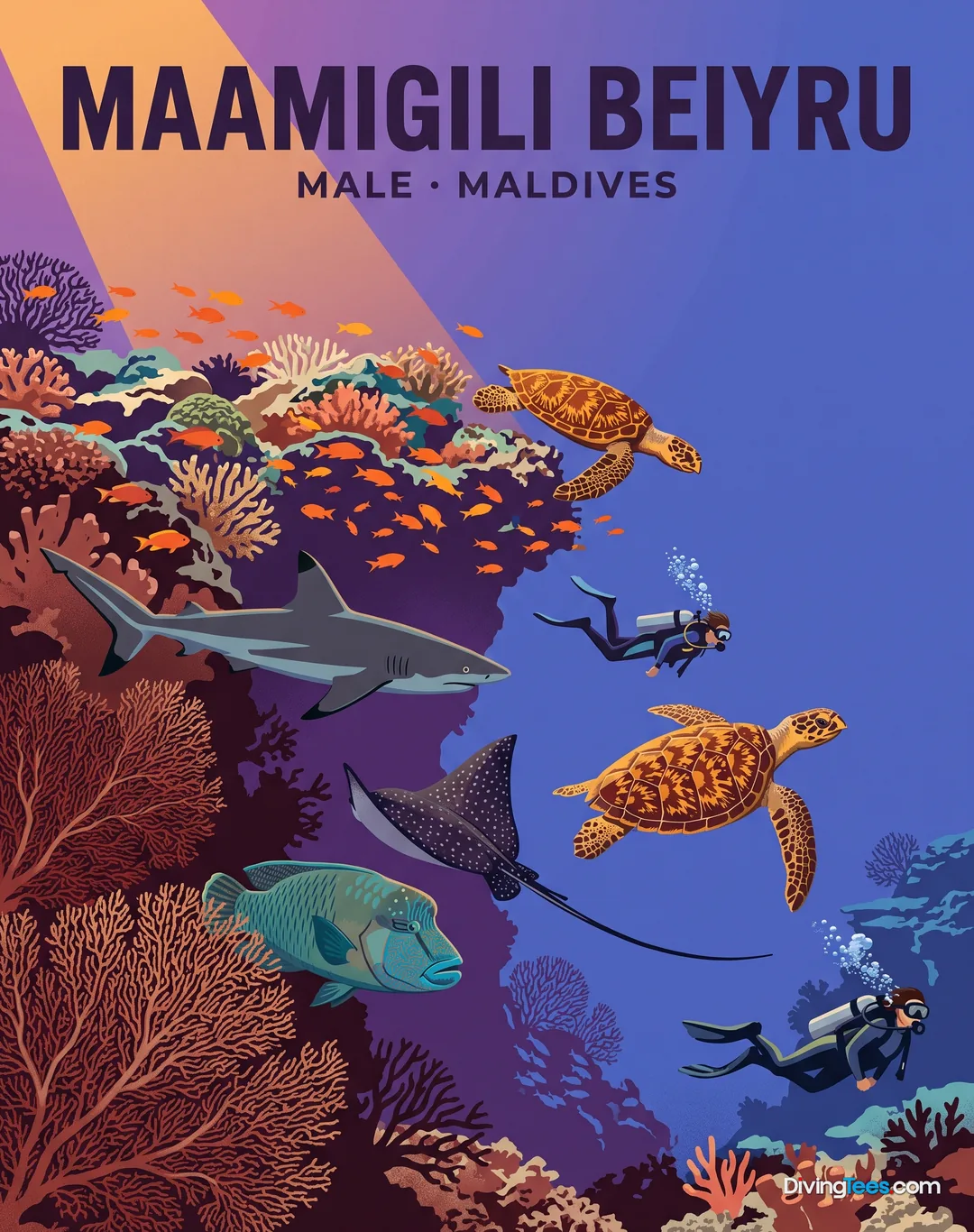
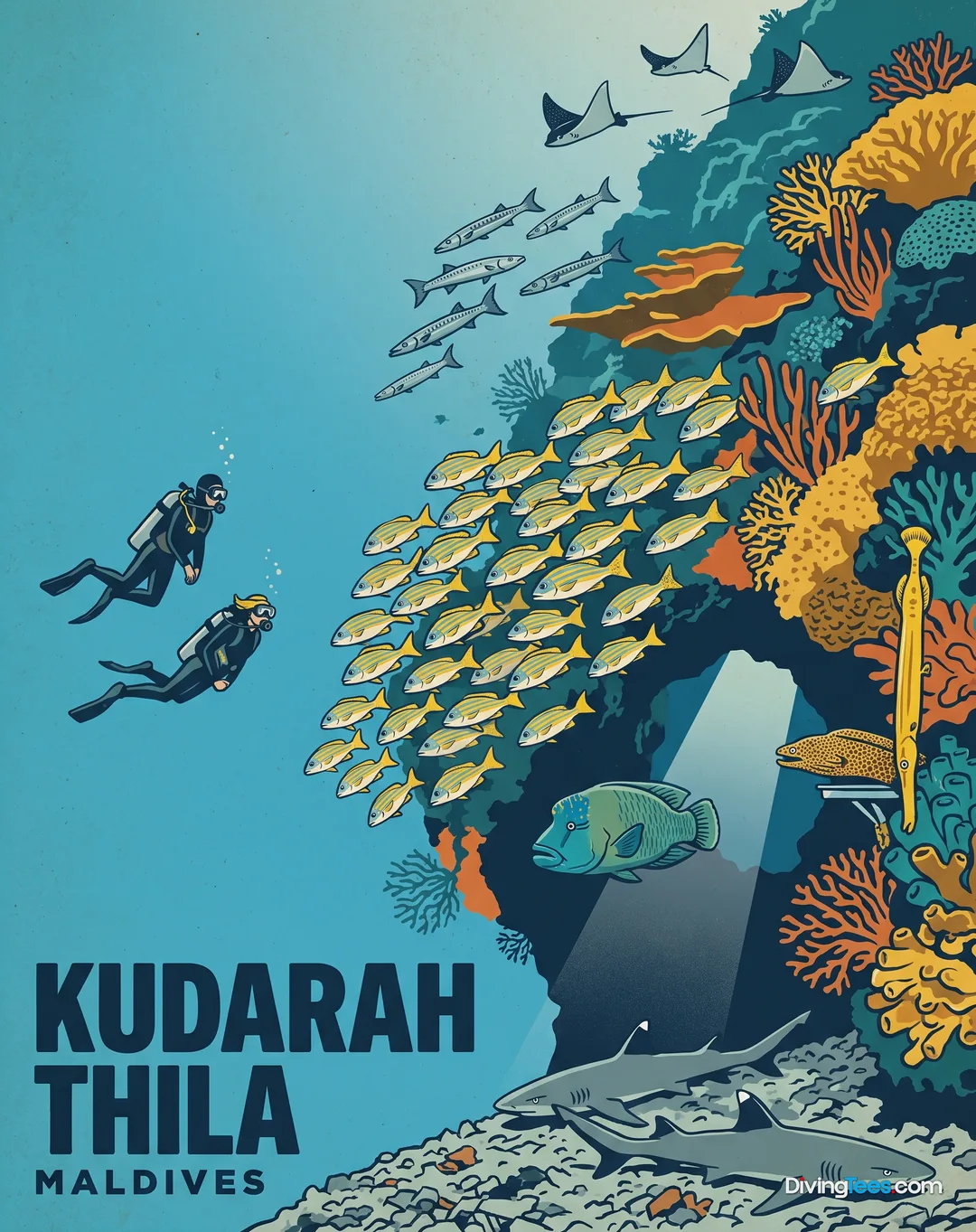
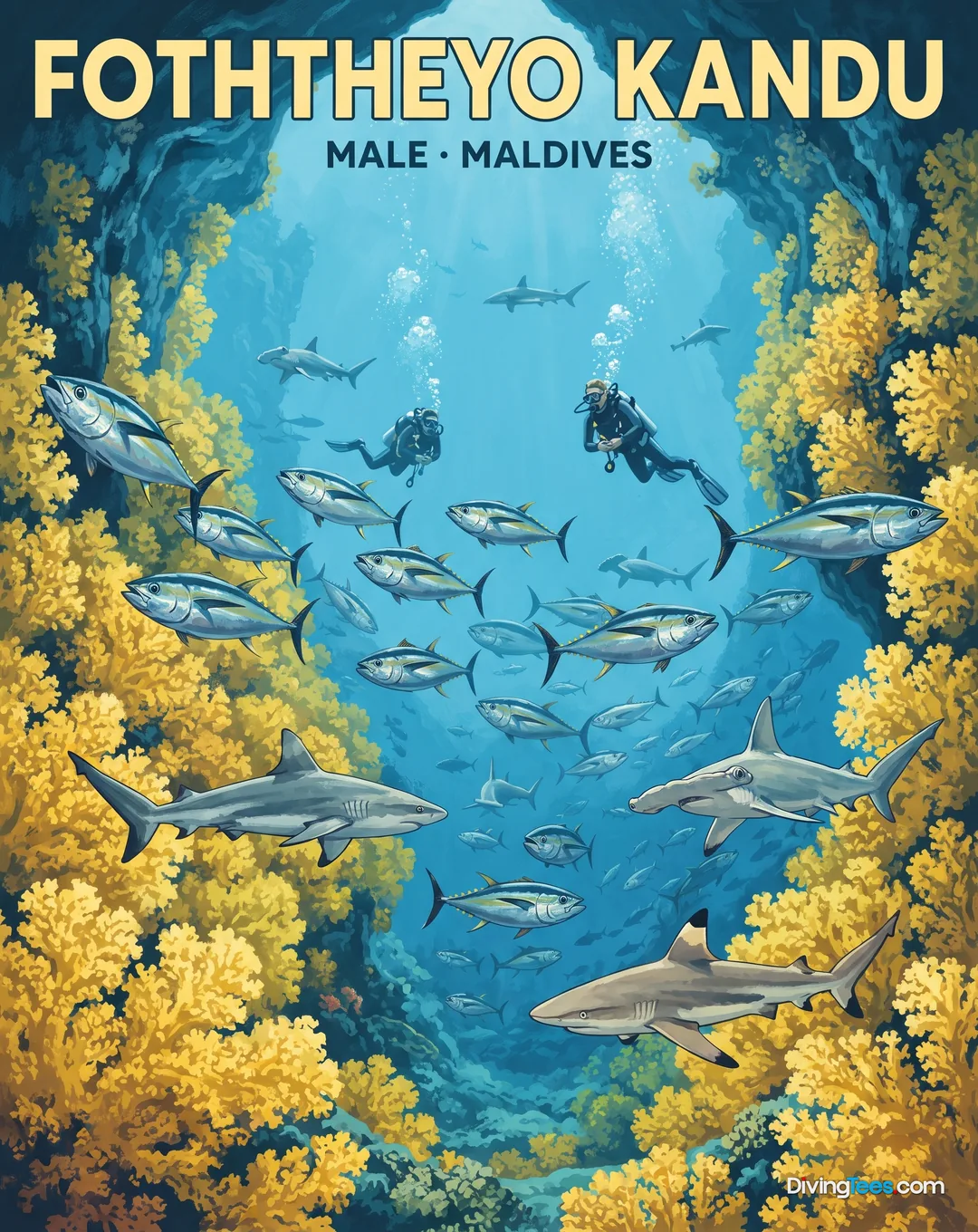
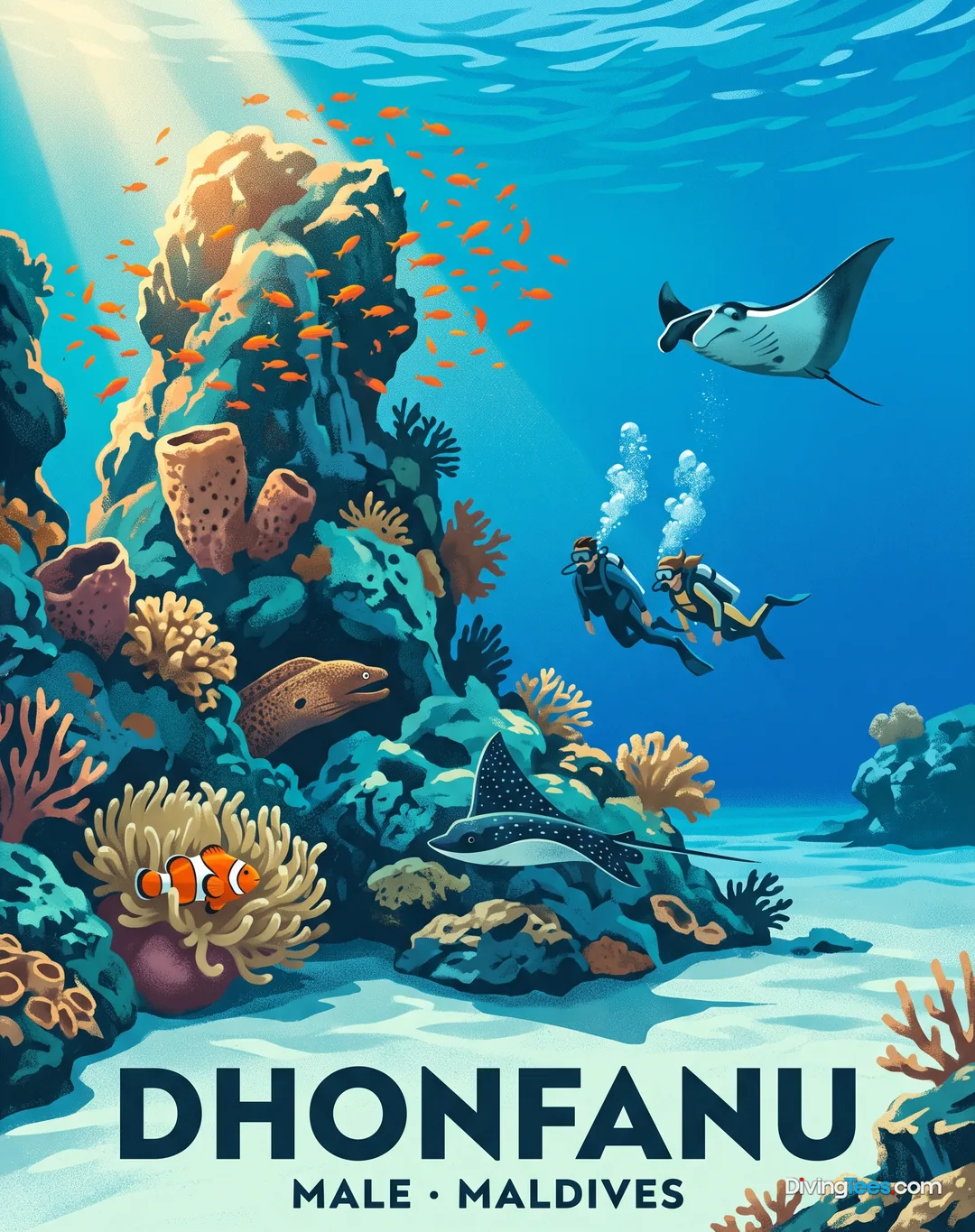
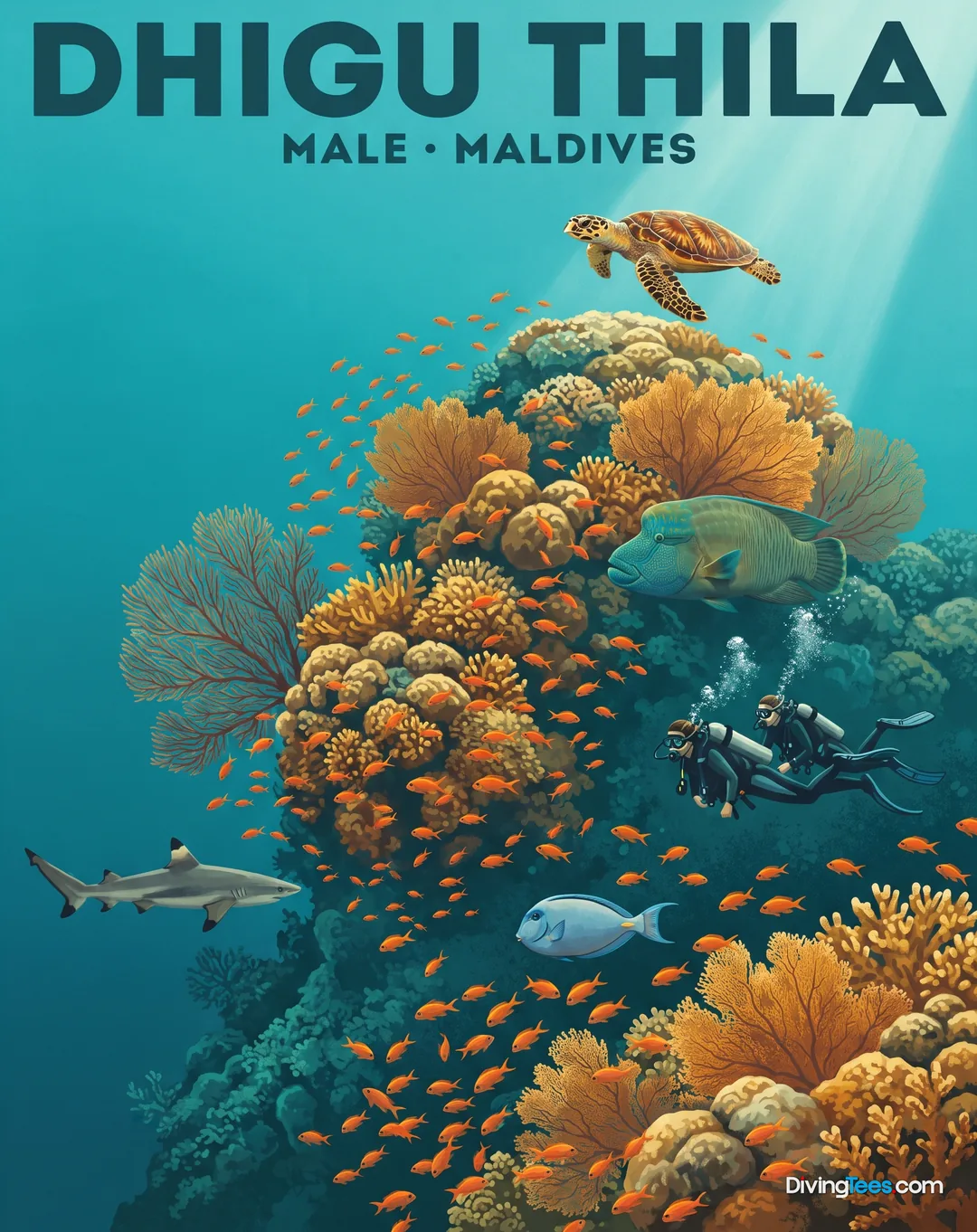
These eight-day, seven-night Male-to-Male cruises use the Best of Maldives route through Rasdhoo, North and South Ari, Vaavu and North and South Malé Atolls. Near Malé, Barracuda Giri drops onto three pinnacles to -30m, where current brings barracudas and pelagic fish; Banana Reef adds a lively reef ecosystem near Thulhagiri. Mushimasmigili Thila reaches -30m and places its up-current pinnacle in the path of grey reef sharks, while Dhonkalo is a manta cleaning station in a sandy channel. South Ari brings the large-animal focus: Maamigili and Maamigili Beiyru reach -30m and sit within the marine protected area used by whale sharks and mantas. Kudarah Thila, also to -30m, is a cleft-and-cave pinnacle crowded with batfish. Guraidhoo and Myaru Kandu are current channels built around shark encounters; Myaru Kandu reaches -30m. Foththeyo Kandu is the deepest named site at -40m, with caves covered in yellow soft coral and open-ocean pelagics. Northern itineraries may include Dhigalhi Haa and Dhonfanu in Baa Atoll, Dhigu Thila to -30m and Fushifaru Thila to -35m, where mantas use dedicated cleaning stations.
Itineraries, dates and prices
Prices per person. Each month shows its lowest price: click a month, or pick an itinerary.
Next departures · 59 departuresfrom £1,917$2,563€2,290
October 2026
November 2026
December 2026
See dates and prices
If you click these links and make a purchase on the partner site, DivingDeal may earn a commission, at no extra cost to you.
Dates and prices taken from Divebooker and liveaboard.com, updated 24 October 2026
What you’ll meet underwater
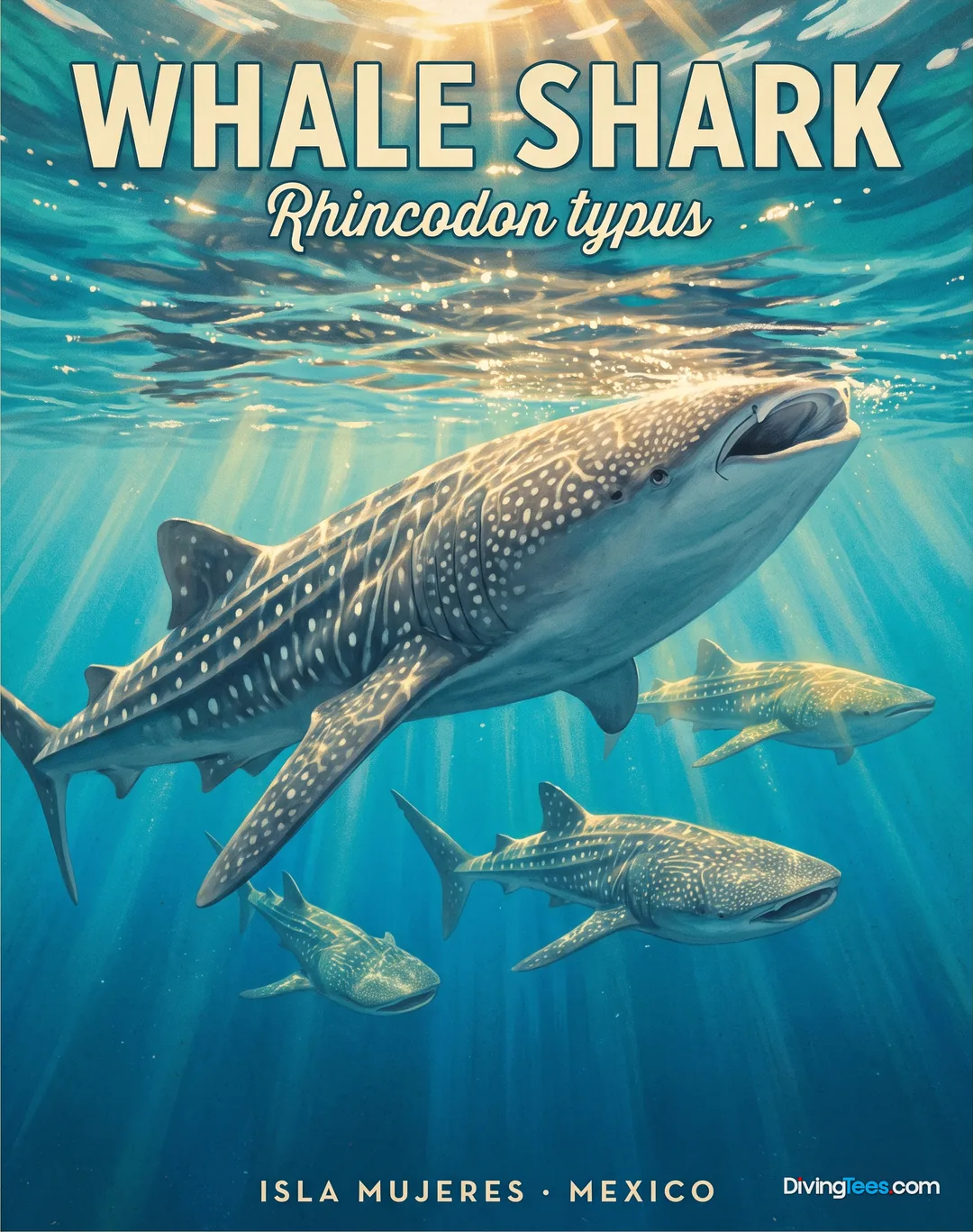
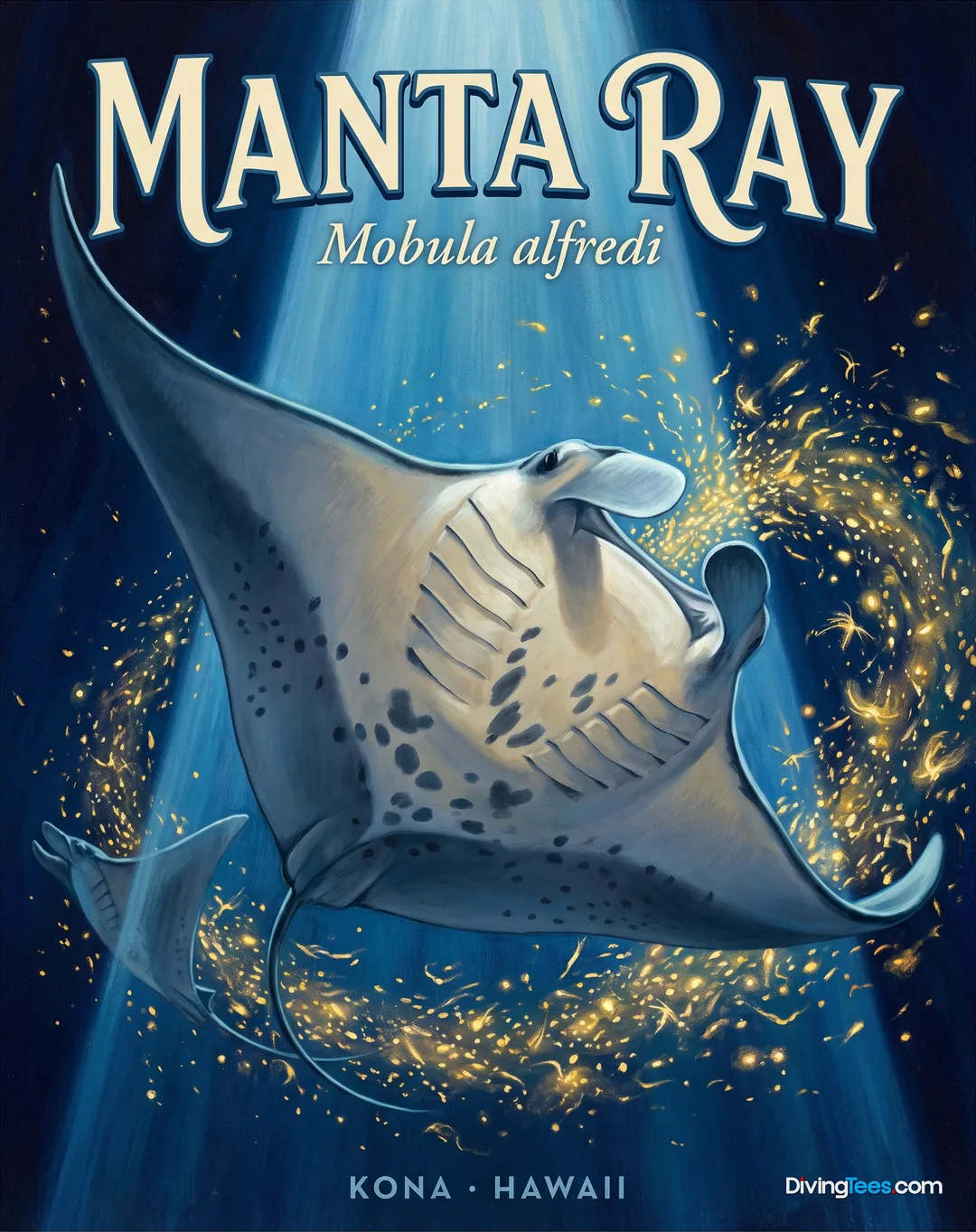
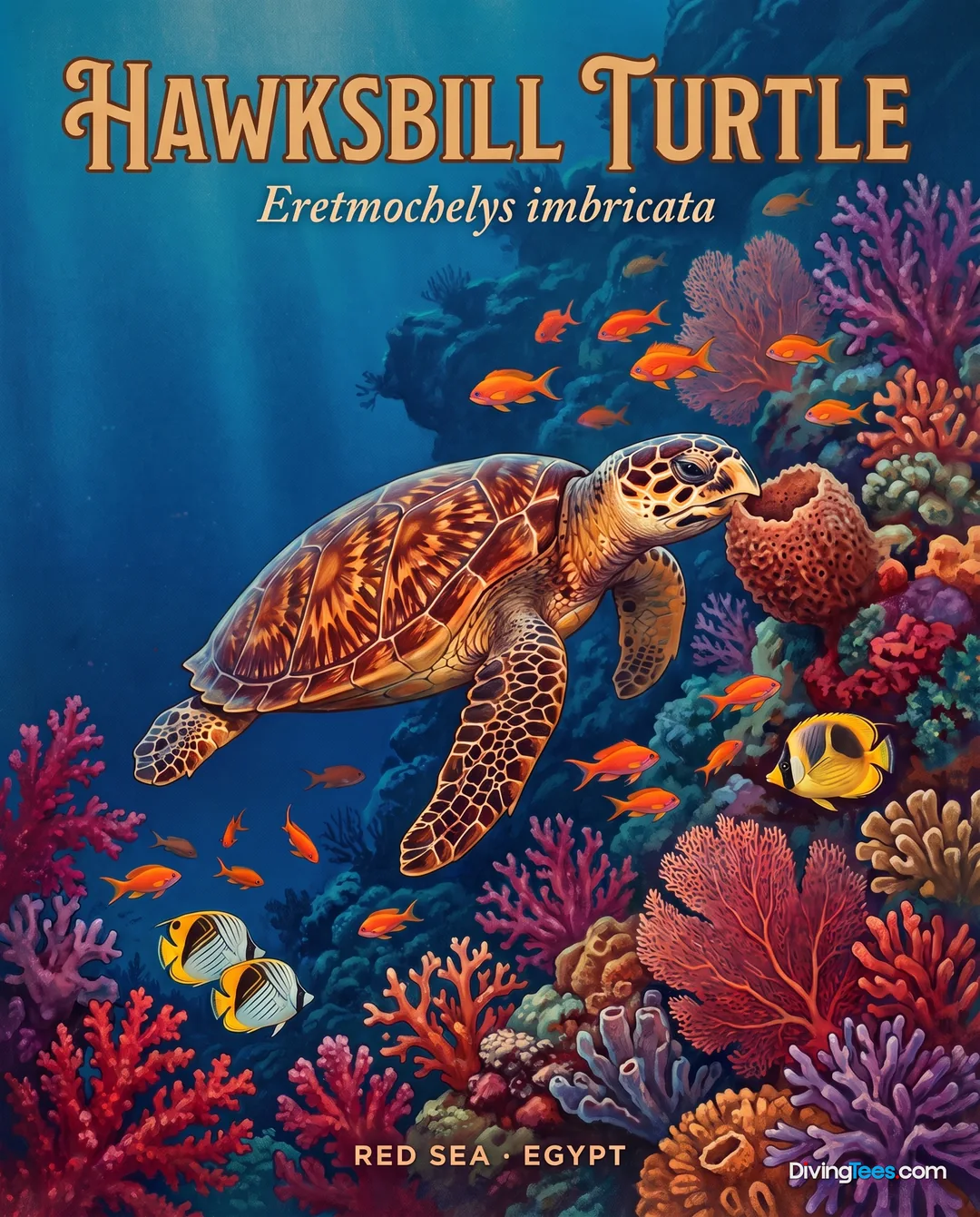
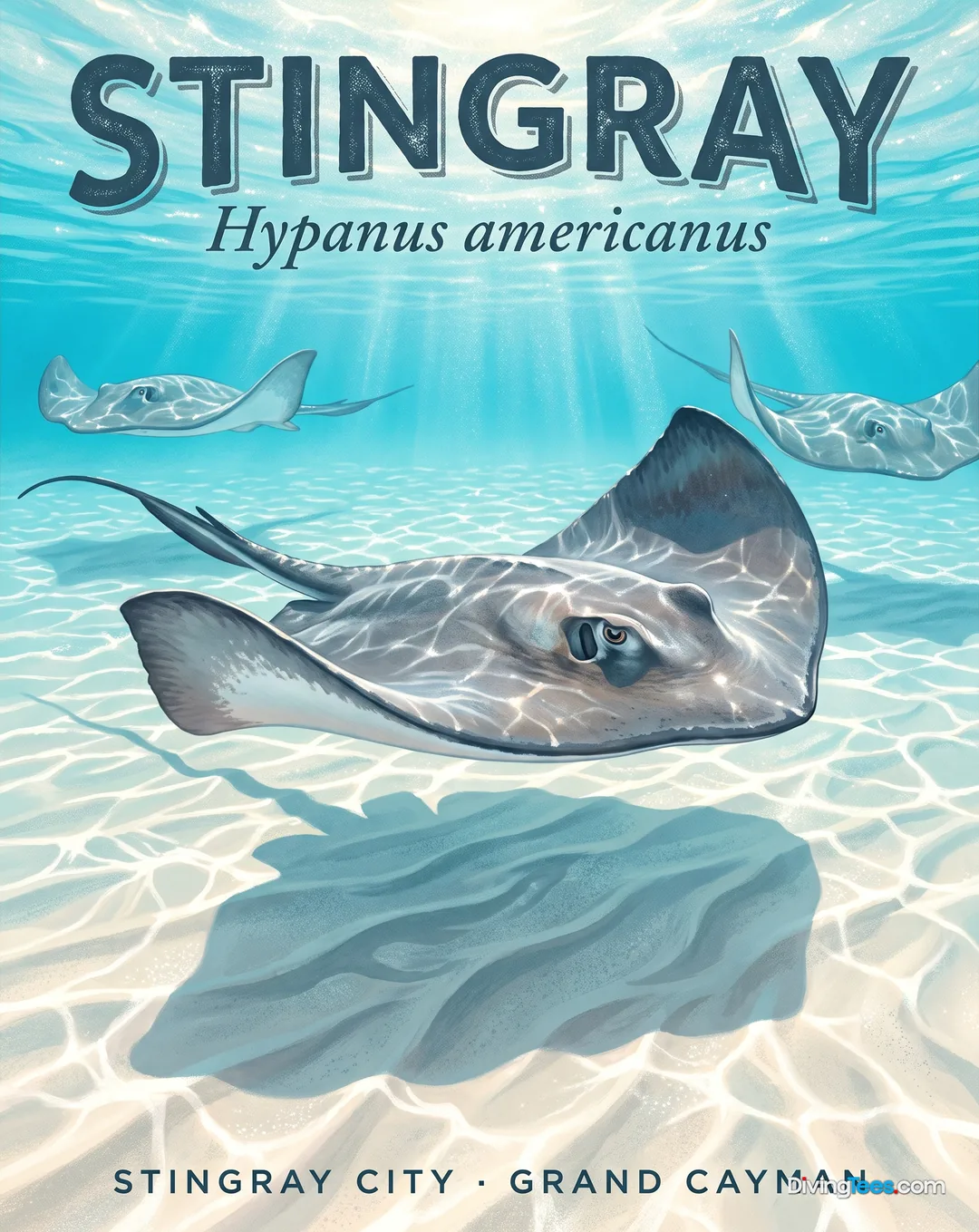
Across this route, the recurring spectacle is made of Napoleons, grey reef sharks, fusiliers, turtles, barracudas, manta rays, tuna, eagle rays, jacks, trevally and moray eels. Current is part of the reason: when water funnels through a channel or pushes against a thila, sharks, trevally and schooling fish gather where divers can hold position. Cleaning stations give the route its close-encounter sites, especially the manta stations at Dhonkalo and Fushifaru Thila Marine Reserve. Whale sharks and mantas are recorded at Maamigili and Maamigili Beiyru, both within South Ari’s protected waters. The rarer details give certain dives their own reason to exist: grouper and anthias at Barracuda Giri, anemones at Banana Reef, soft coral and gorgonians at Dhigalhi Haa, and hawksbill turtles at Dhigu Thila. Fushifaru Thila is the named site for stingrays; Maamigili for porcupinefish and sweetlips.
Who puts you in the water
Three dive guides support the operation, and the crew speaks English, French and Spanish. There is no published guide-to-diver ratio, so groups are organised on board around the site, conditions and diver level rather than promised as a fixed number. Every diver completes a check dive before normal diving begins, including experienced divers; it is used to settle equipment, buoyancy and local conditions. Maldives diving requires a PADI Open Water qualification or equivalent for buddy diving, and Advanced Open Water or Deep Diver training is advisable for sites with deeper sections and stronger current. The maximum diving depth with an equally qualified buddy is 30 metres. Decompression, solo and technical diving are prohibited. Advanced Open Water, Adventure Dives and specialties can be completed on board. Oxygen, first-aid equipment and an AED are carried on the dhoni and main vessel.
The dive deck and the gear
The working dive platform is the separate 20-metre dhoni, fully equipped with compressors, oxygen, first-aid equipment and diving towels. Three staff work there, and the crew helps divers get kitted up before the tender takes them to the site and collects them after the dive. Standard tanks are 11.1-litre S80 aluminium tanks; 13.2-litre C100 tanks can be requested. DIN adapters are available. Free nitrox is produced through a membrane system, up to 32%, for certified nitrox divers. Rental equipment is available as an optional extra and must be arranged before arrival. Divers are expected to use a dive computer, SMB and reef hook on every dive, with a torch for night dives. Photographers have charging stations, an air gun, rinse tanks and a camera table. Rebreather diving is listed among the facilities, without further configuration details.
Between dives
Between dives, the useful places are the shaded lounge, the upper-deck seating and the sun deck. The main saloon has sofas, a bar, dining space, books, films, music and board games; outside, tables and deckchairs give wet gear and wet people room to separate. The boat also welcomes snorkelers and non-divers, so a surface interval does not have to mean waiting beside dive equipment. Excursions ashore, snorkeling and a barbecue on a deserted beach break up the diving when the route allows. A photo area and charging stations serve the people who return with cameras full of current shots and mantas. The gaps are not dressed up as entertainment. They are for eating, rinsing salt away, checking the next site and finding a quiet corner before the dhoni calls again.
A day on board
A day starts with the first briefing, followed by the first entry from the dhoni. After surfacing, divers return to Voyager for food, showers, drying time and the next site briefing while the dhoni and crew reset the equipment. The pattern repeats through the day, with meals and snacks placed between dives rather than around a fixed hotel timetable. When the route and conditions allow, a night dive adds a different use for the same reef, with torches required for the dive. The main boat may move while guests are eating or resting, positioning the dhoni for the next site. Later, the pace shifts to the upper deck, outdoor dinner and the bar. Then the boat goes quiet enough for sleep before the next briefing begins the cycle again.
What you eat aboard
Meals are full board, with buffet service combining Western and local cooking. Food can be taken outside, which is the better setting when the sea is calm: plates, wind and the next dive conversation all share the same table. Wine with dinner, tea, coffee, snacks and a special dinner are included; beer and other alcoholic drinks are available separately. The galley has to feed divers repeatedly without turning every meal into an event, and that is where Voyager’s strong food reputation matters. Breakfast follows the early dive rhythm, later meals replace calories used in the water, and dinner closes the working part of the day. On selected evenings, a two-for-one happy hour comes before dinner. A beach barbecue adds a change of setting rather than another formal service.
Nights at sea
The cabin choice is mainly about deck position and bed arrangement: lower-deck twin and double cabins, main-deck cabins and upper-deck cabins. Lower-deck cabins have portholes, individually controlled air-conditioning, a private bathroom with hot-water shower and a fan as well as air-conditioning. The portholes keep expectations realistic: these are sleeping cabins, not panoramic suites. After a day of current dives, that is usually the useful distinction. The main boat offers a lounge, library, music and film collection, bar and indoor dining area, with open seating and sunbeds above for air and daylight. Cabin towels and deck towels are supplied. The rooms are compact liveaboard rooms, but each has its own bathroom and climate control, so the night is private and simple rather than improvised.
Lower Deck Twin Cabins
Main Deck Cabins
Upper Deck Cabins
Lower Deck Double Cabins
What to know before boarding
Emperor Voyager departs from and returns to Malé on the Male-to-Male itineraries. Airport transfer is included. Arriving in Malé the night before is sensible, leaving room for an overnight connection or travel disruption before boarding.
Deck plan
- Year built
- 2004
- Year renovated
- 2014
- Length
- 30 m
- Beam
- 9 m
- Maximum number of passengers
- 20
- Number of cabins
- 10
- Number of bathrooms
- 10
- Engines
- 360 hp Doosan Daewoo
- Tenders
- Large fully equipped diving dhoni
- Website
- emperordivers.com ↗
Hello, I'm Marina, DivingDeal.com's AI assistant. I answer in detail about hotels, dive centres and liveaboards.
Thinking about the whole trip and the flights? Talk it over with Edith →
Marina is an AI. Some links are affiliate links: DivingDeal may earn a commission, at no extra cost to you. Bookings are made with the partner.