Liveaboards · Maldives
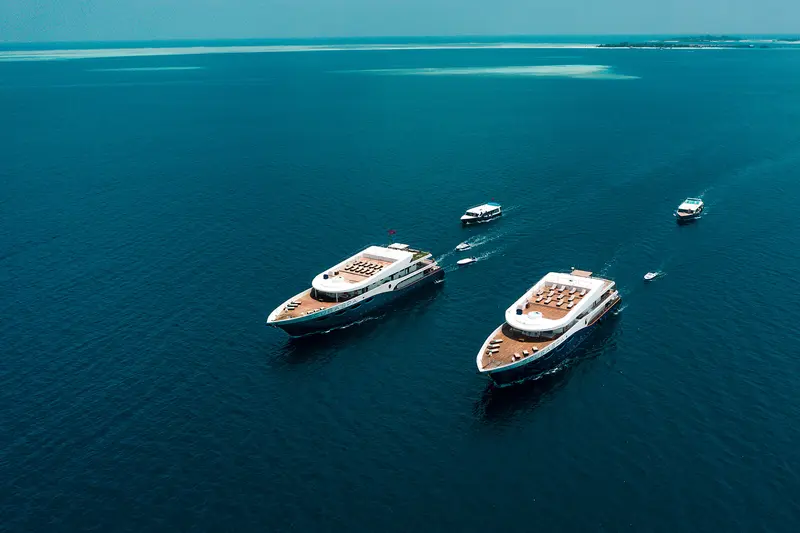
Legend X — a newly refitted Maldivian liveaboard built around big-fish diving
What makes this boat unique
- Legend X carries up to 26 divers in 13 cabins, with VIP Suites, Seaview Suites, Junior Suites, Double Cabins and Triple Cabins.
- The boat offers four decks, a shaded dive area, a jacuzzi, spa treatments and several outdoor spaces between dives.
- Its diving setup includes nitrox, DIN adapters, sidemount diving with one tank, rebreather support, camera rinse facilities and six tenders.
- The eight-day, seven-night departures return to Malé and include 17 dives, with one or two night dives on the listed itineraries.
For subtitles in English: start the video firstthen click the gearat the top right of the video, select “Subtitles/CC”, then “Auto-translate” and choose “English”.
The invitation
Legend X is for divers who want the Maldives' large animals without giving up space above the water. The boat combines a purpose-built dive operation with the finish of a recently refitted yacht: upper-deck Seaview Suites, main-deck VIP Suites, a proper saloon and a jacuzzi on the sun deck. The reason to choose it over a smaller liveaboard is simple. There is room to spread out after a current-heavy dive, while the itinerary reaches the channels, pinnacles and cleaning stations where sharks, mantas, tuna and whale sharks gather. Hanifaru Bay adds another kind of encounter: scuba diving is prohibited inside the protected bay, but snorkelling can put guests above large groups of feeding manta rays. Legend X suits a mixed group particularly well, because non-divers and snorkellers have a full place on board rather than being left to wait for the divers.
Boarding
From the dock, Legend X presents as a large, recently refitted vessel with the polished, deliberate feel of a boat designed for long days at sea. The interior work was carried out in 2024, and the layout is spread across four decks rather than compressed into one shared living area. The main deck brings together the saloon, restaurant and bar; above it, the upper deck and sun deck open the boat to the sea, with loungers, shaded areas and a jacuzzi. Movement between the living spaces and the dive operation is straightforward, while six tenders handle the transfers to sites. The boat is not trying to imitate a small expedition vessel. It is a spacious Maldivian liveaboard for a full group, with enough separate areas that a quiet hour does not require hiding in a cabin.
The atmosphere on board
Legend X has the atmosphere of a sizeable group boat that still leaves room for separate conversations. The local crew speaks English, and the operation is built around a dive team, dhoni crews, dining service and the people who keep cabins and equipment moving. That division matters after several dives: the diver can return from the water, hand over the routine tasks and get on with drying kit, eating or sitting in the shade. The saloon and bar bring everyone together in the evening, while the upper decks let smaller groups break away. A week on board also includes non-divers and snorkellers, so the social life is not limited to post-dive debriefs. It is a polished, active boat rather than a quiet research platform, with the jacuzzi, spa and water activities adding options when someone wants the Maldives above the reef as well as below it.
The sites you’ll dive
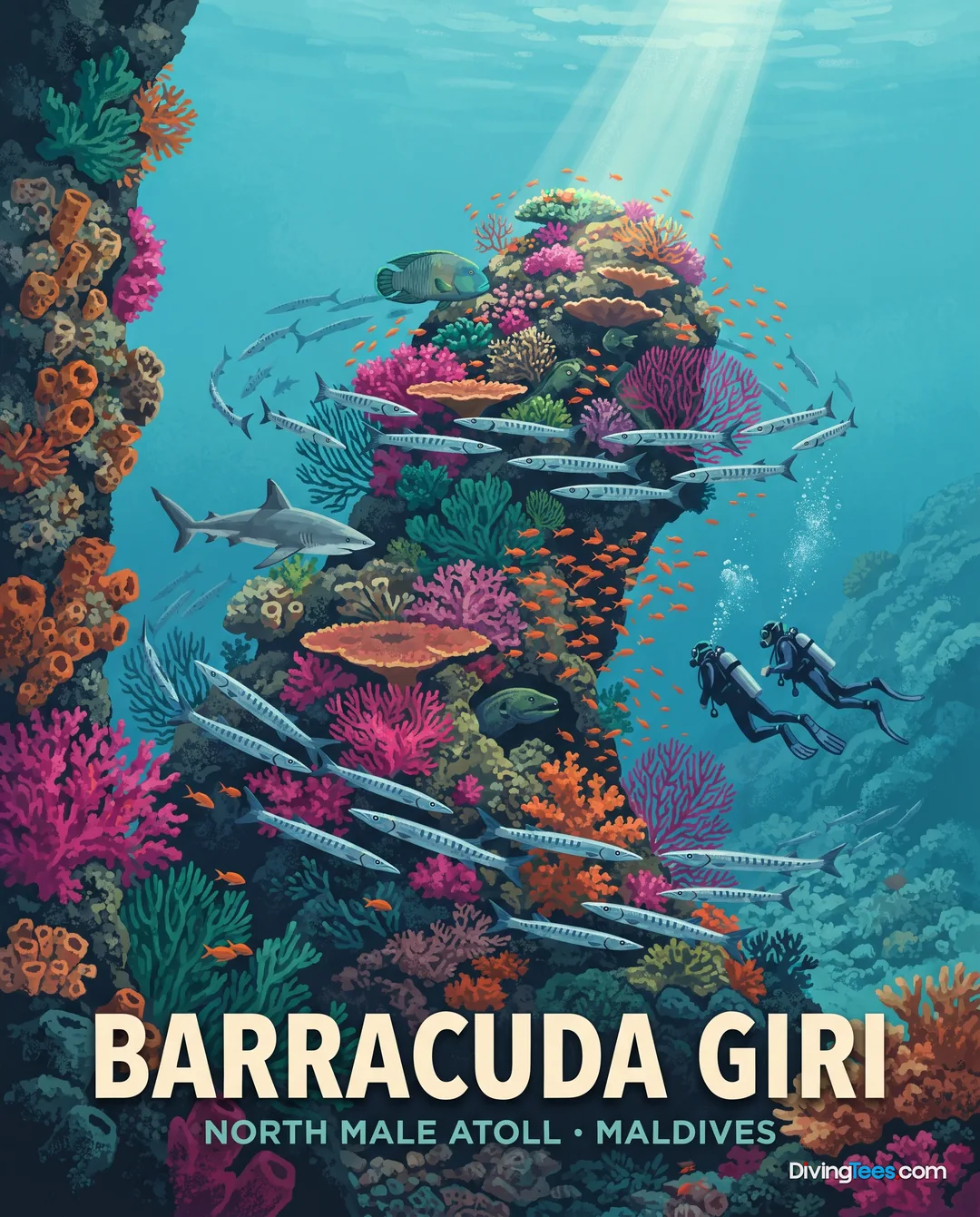
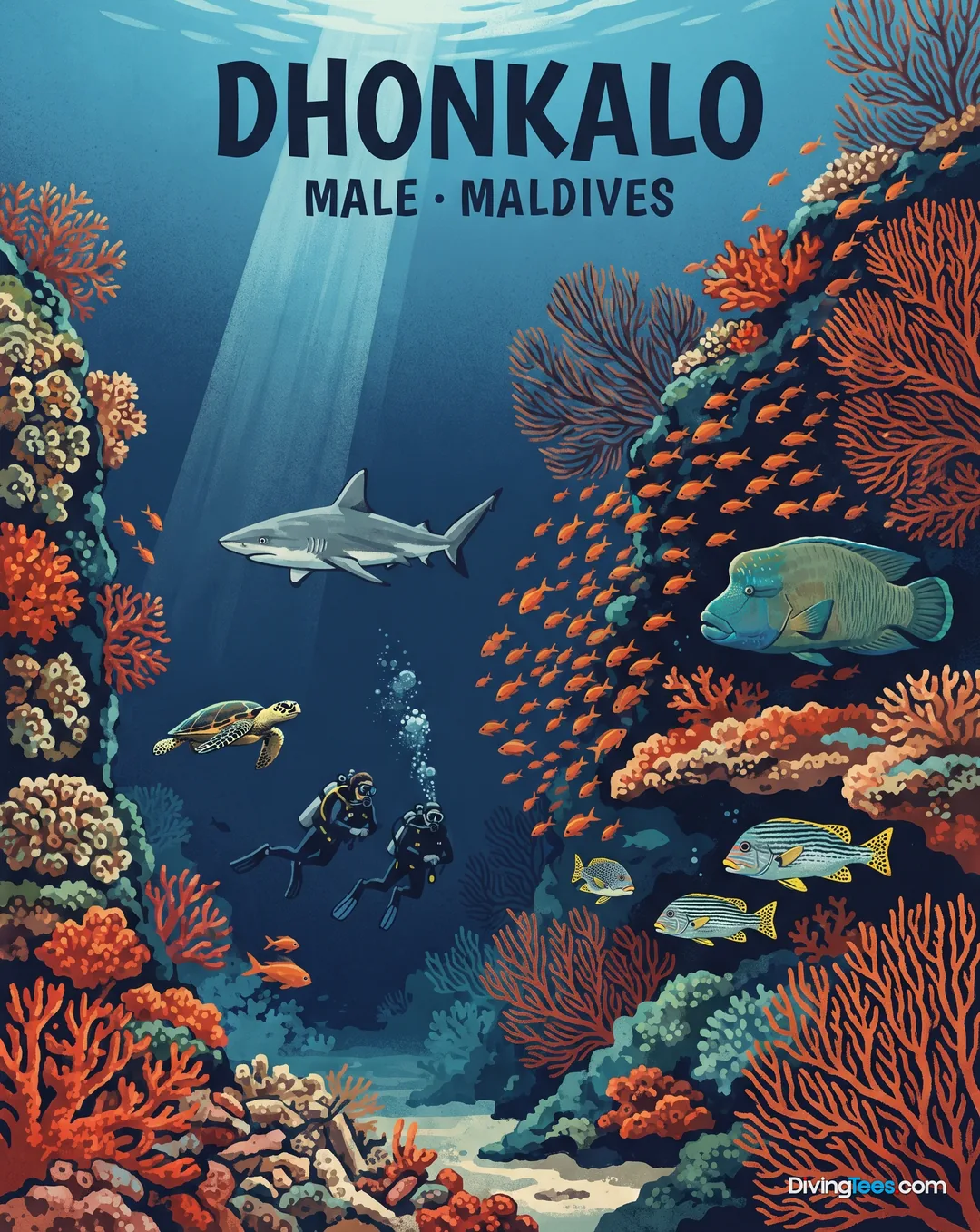
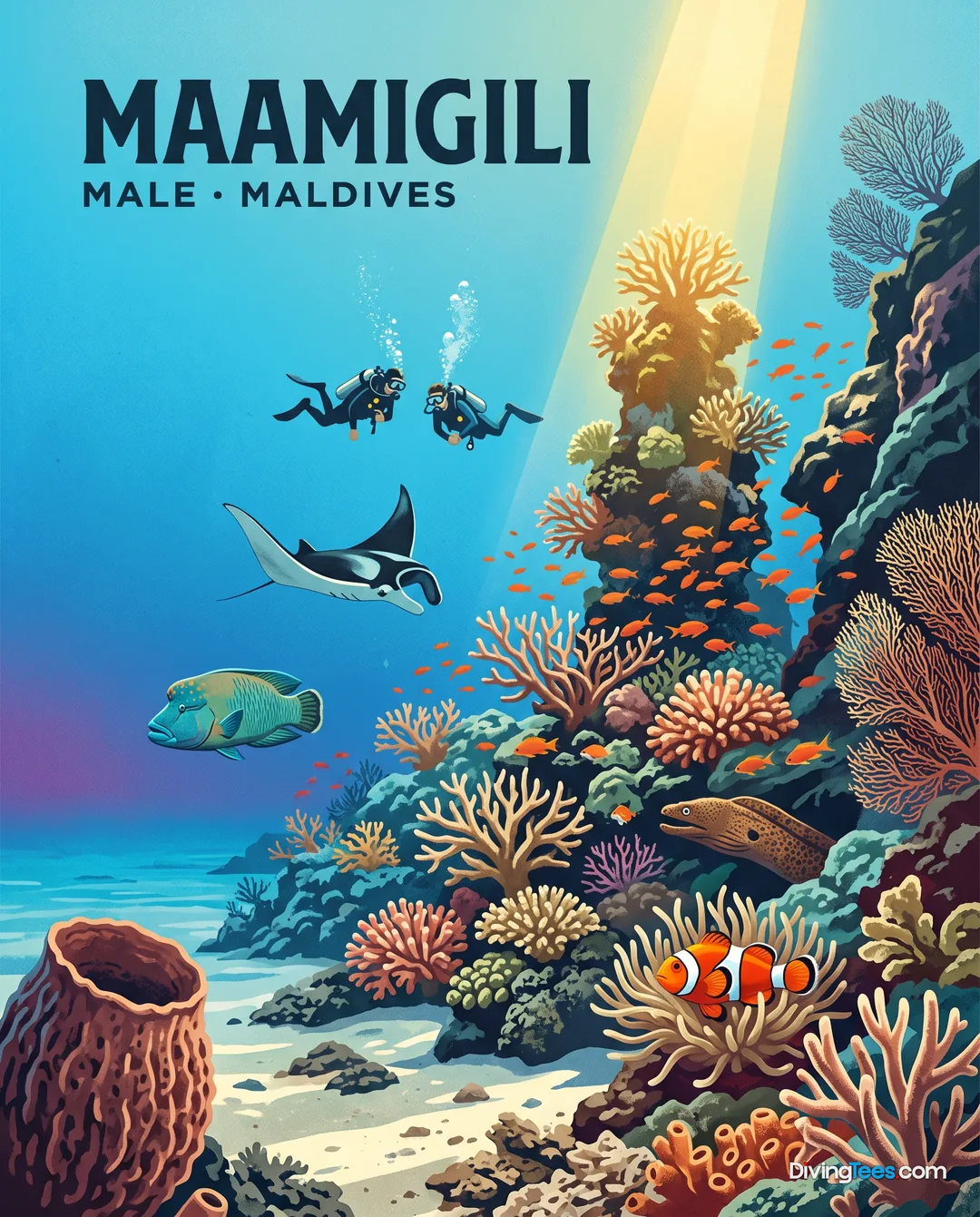
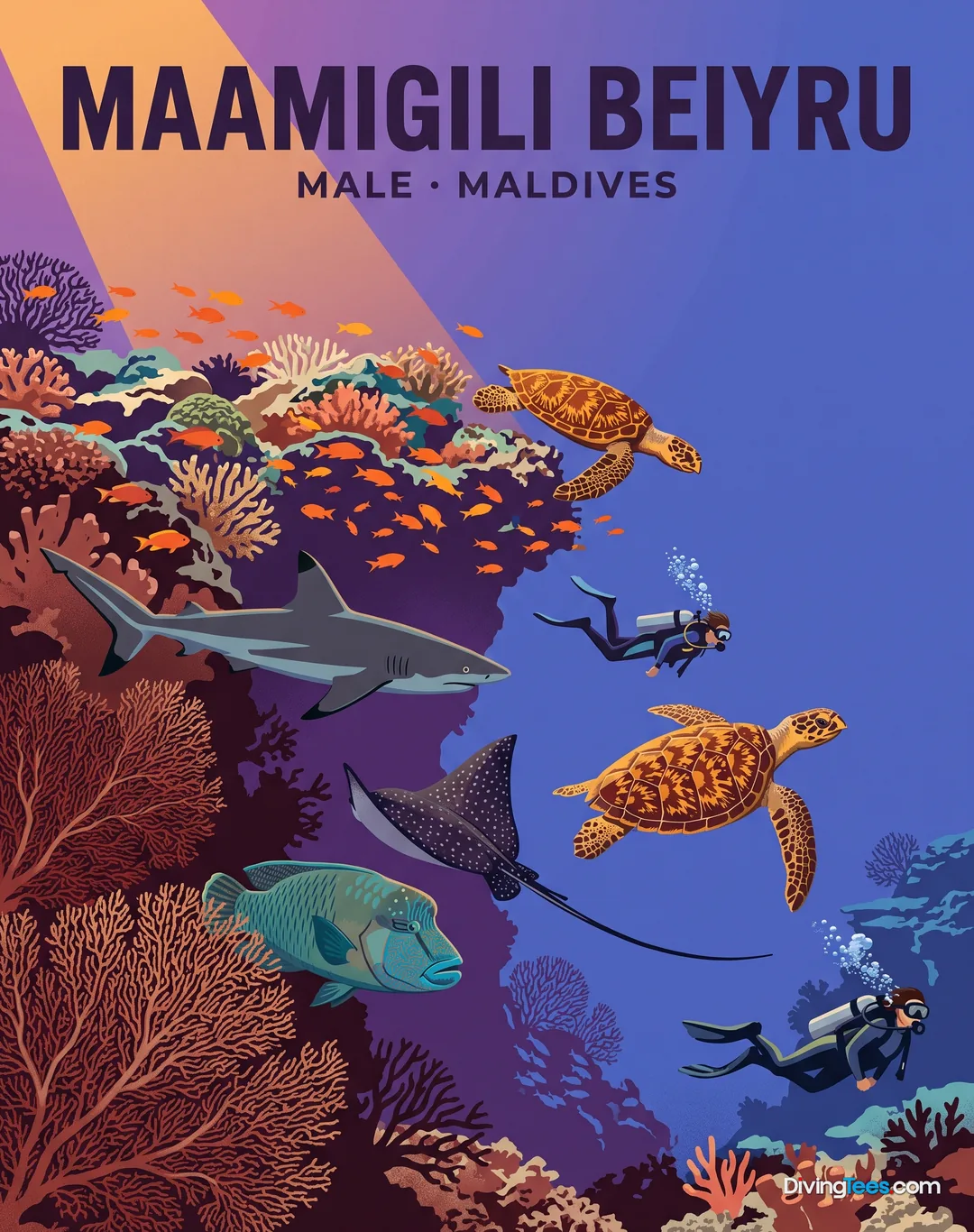
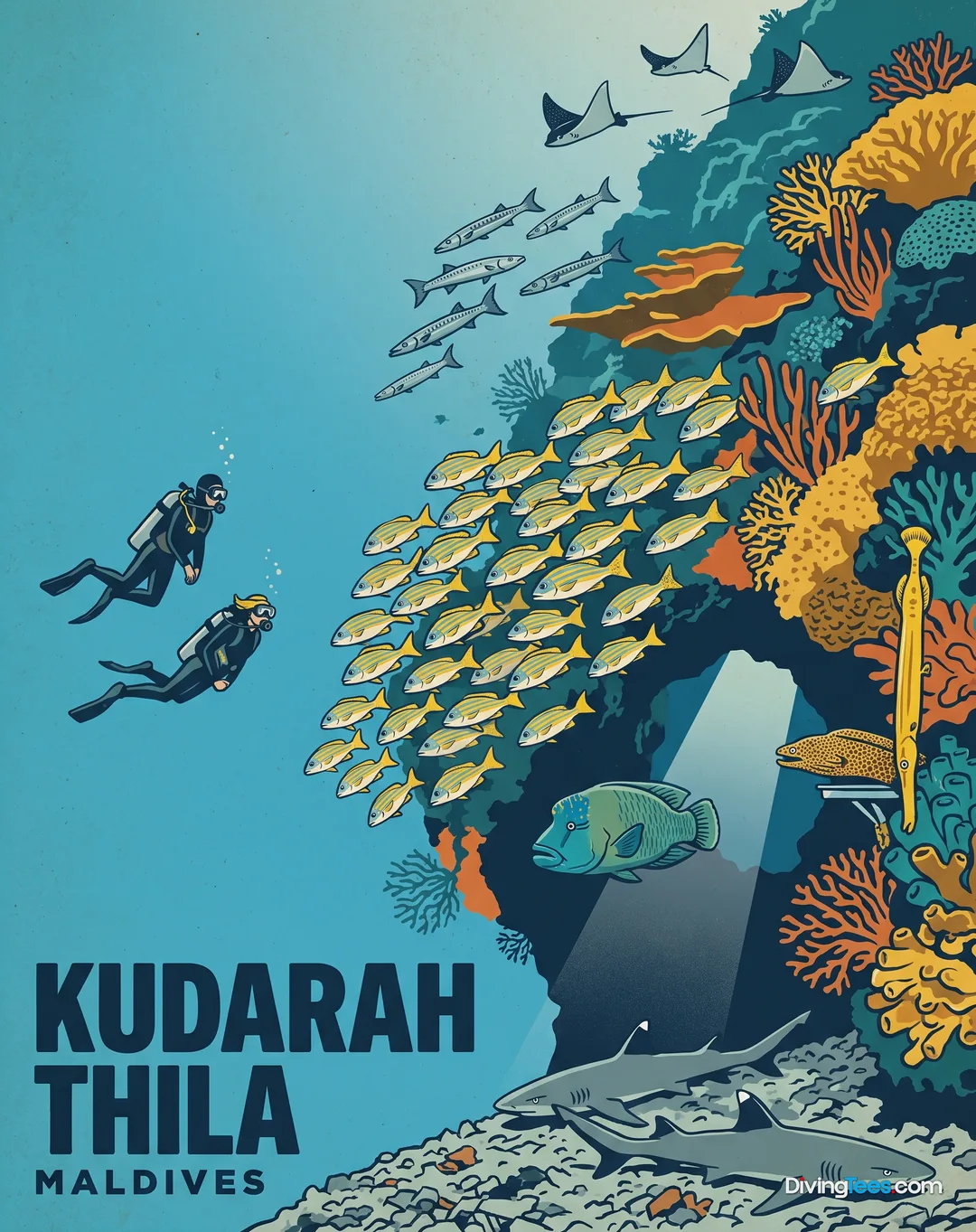
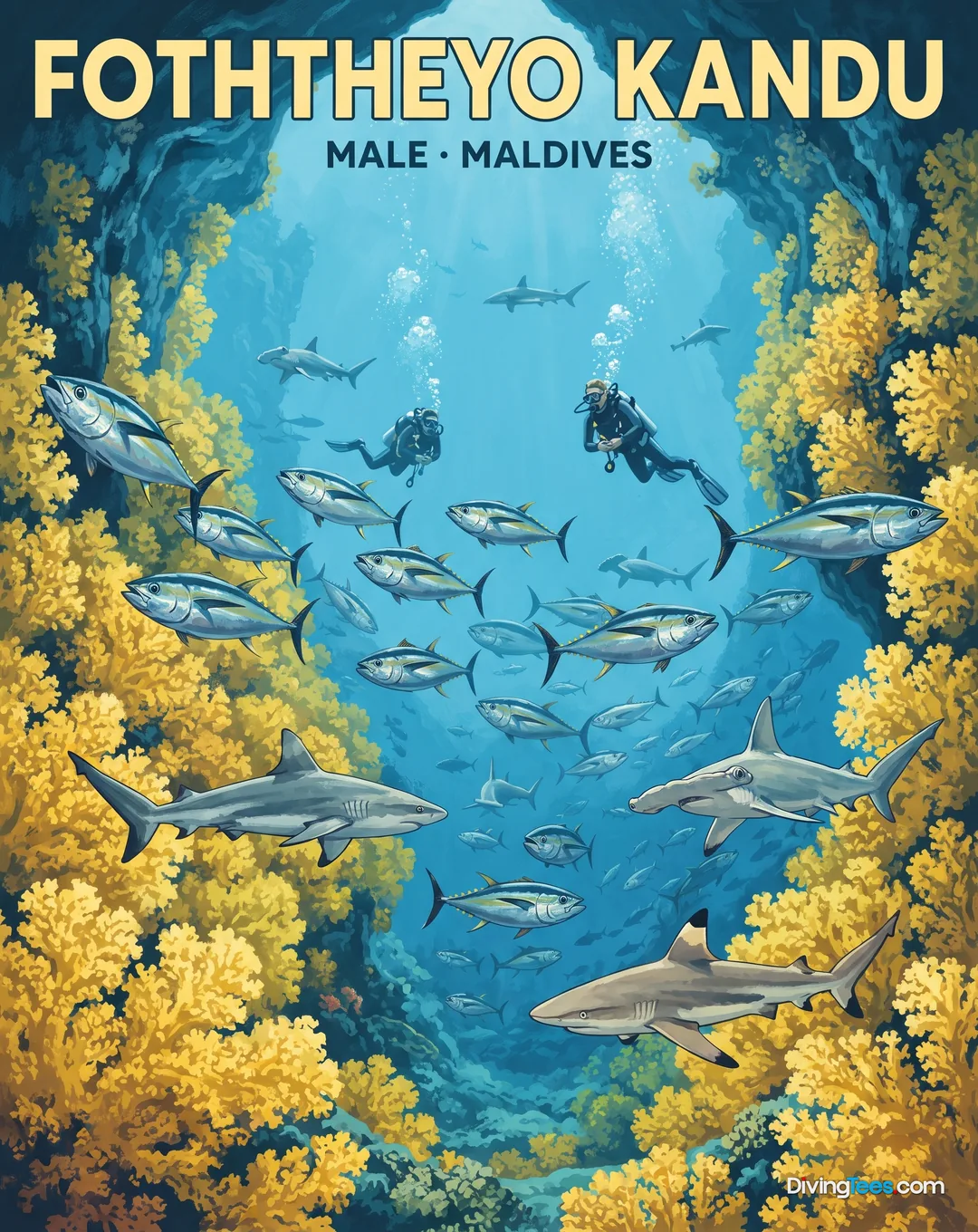
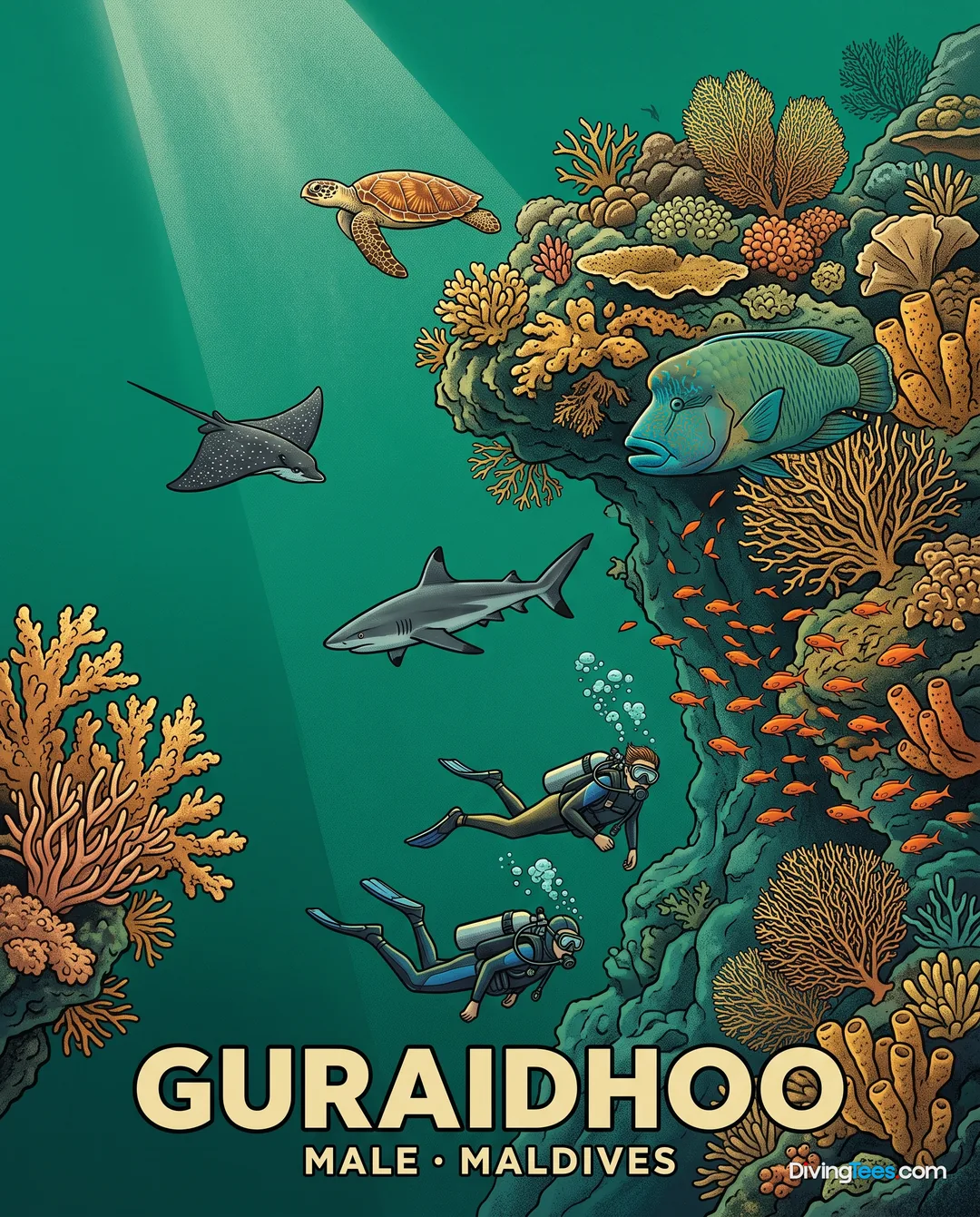
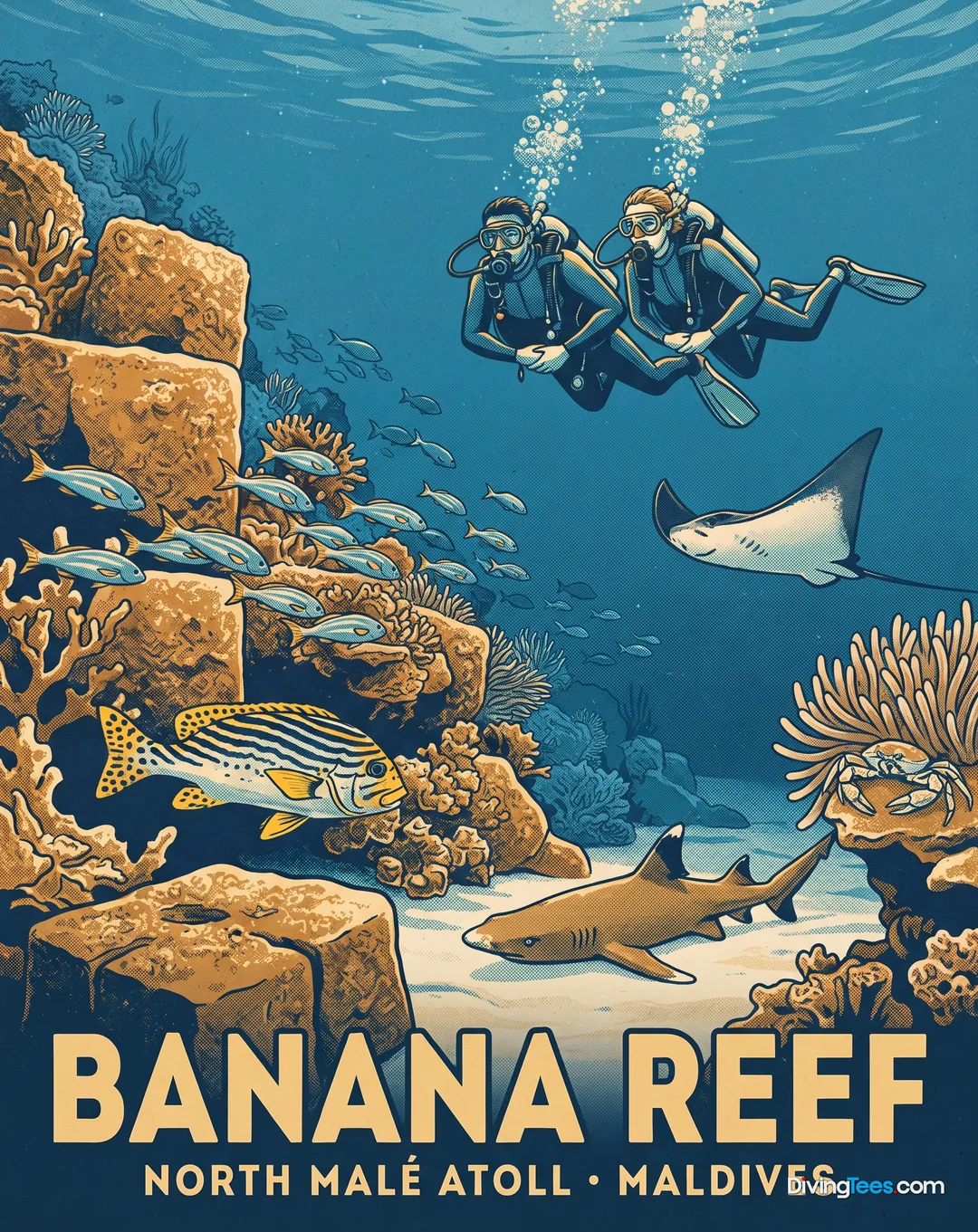
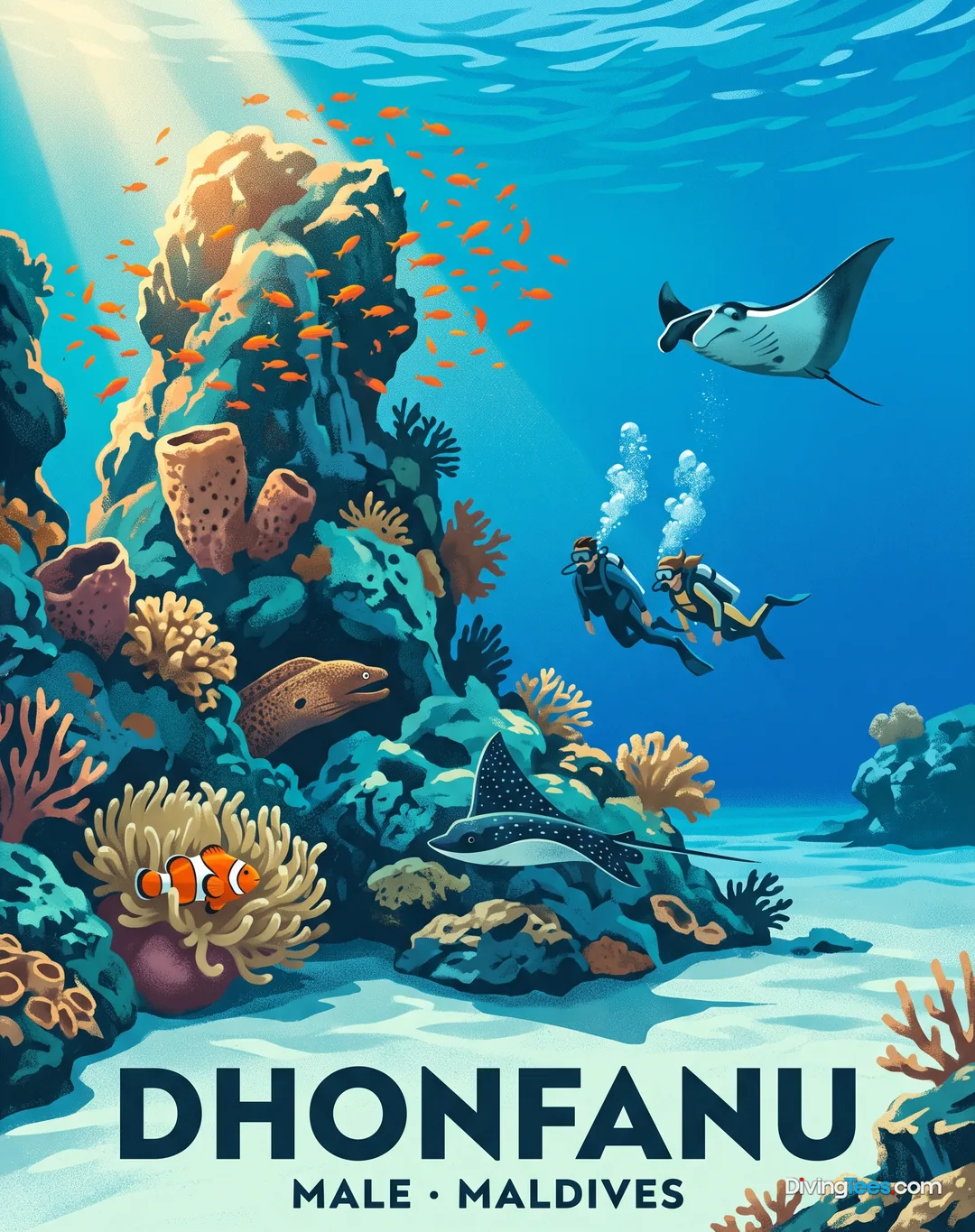
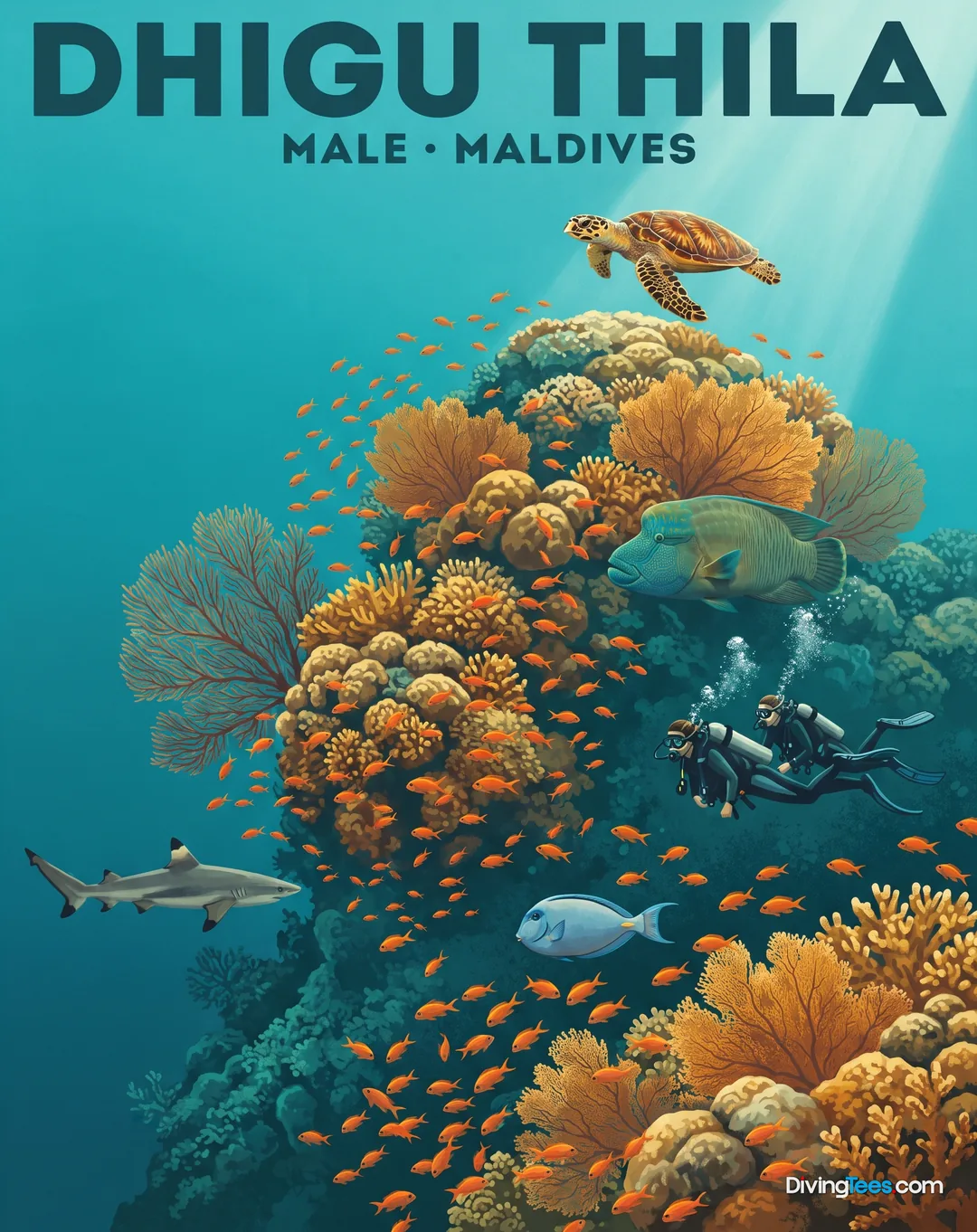
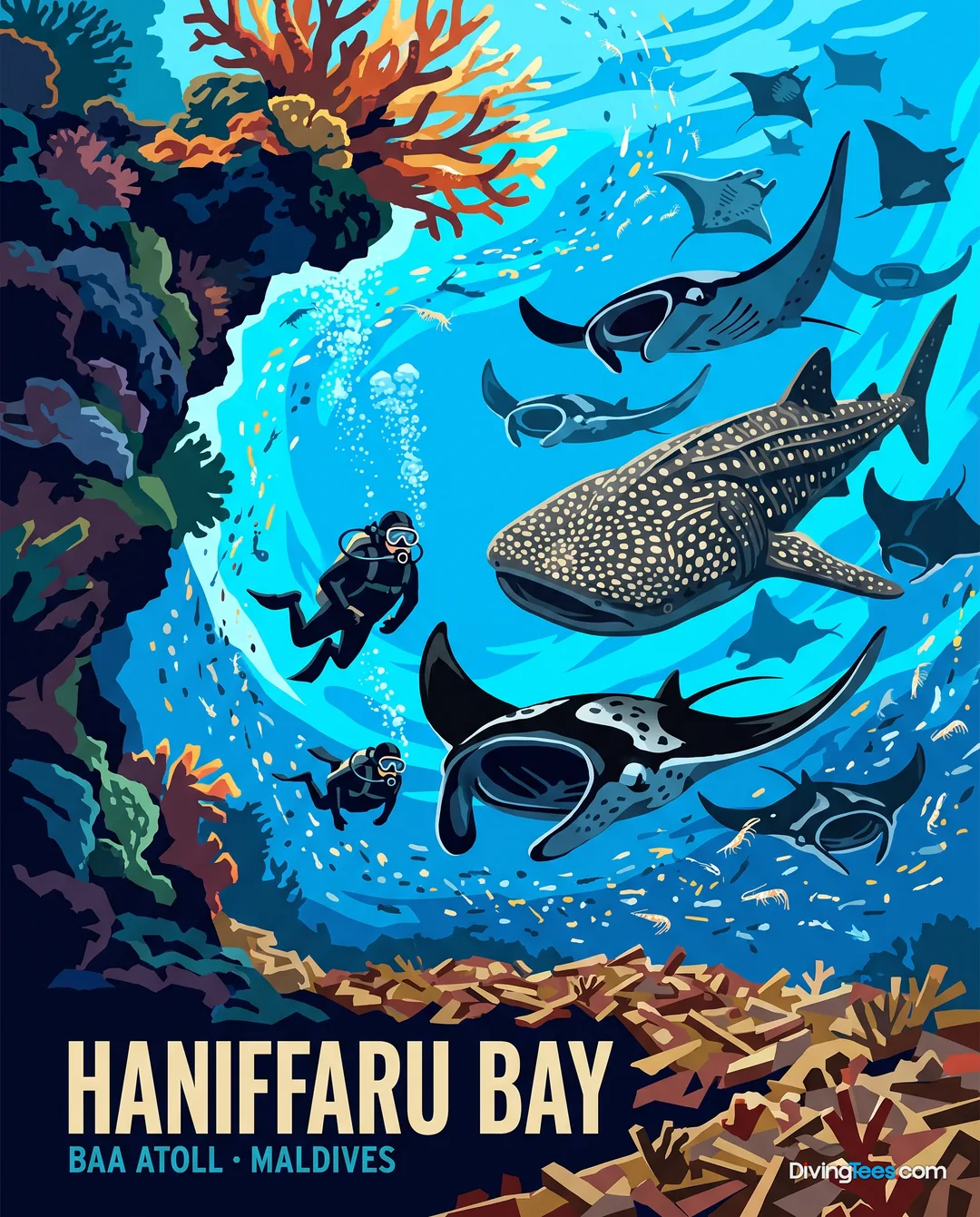
The listed cruises run for eight days and seven nights, from Malé to Malé, with 17 dives including one or two night dives. The site mix is built around Maldivian current work: Barracuda Giri drops onto three submerged pinnacles to a maximum of -30m, where barracudas and pelagic fish school; Mushimasmigili Thila reaches -30m and brings grey reef sharks to its up-current pinnacle; Dhonkalo is a manta cleaning station in a sandy channel, to -25m. Maamigili, Maamigili Beiyru and Kudarah Thila, all to -30m, sit in the South Ari whale-shark and manta area, with Kudarah adding clefts, overhangs and caves. Myaru Kandu, the Shark Channel, reaches -30m; Foththeyo Kandu reaches -40m, with caves covered in yellow soft coral and strong current. Guraidhoo Marine Reserve, Banana Reef, Dhigalhi Haa, Dhonfanu, Dhigu Thila and Hanifaru Bay complete the route network. Hanifaru is snorkelling only.
Itineraries, dates and prices
Prices per person. Each month shows its lowest price: click a month, or pick an itinerary.
Next departures · 23 departuresfrom £1,886$2,522€2,253
December 2026
January 2027
May 2027
July 2027
See dates and prices
If you click these links and make a purchase on the partner site, DivingDeal may earn a commission, at no extra cost to you.
Dates and prices taken from Divebooker and liveaboard.com, updated 21 October 2026
What you’ll meet underwater
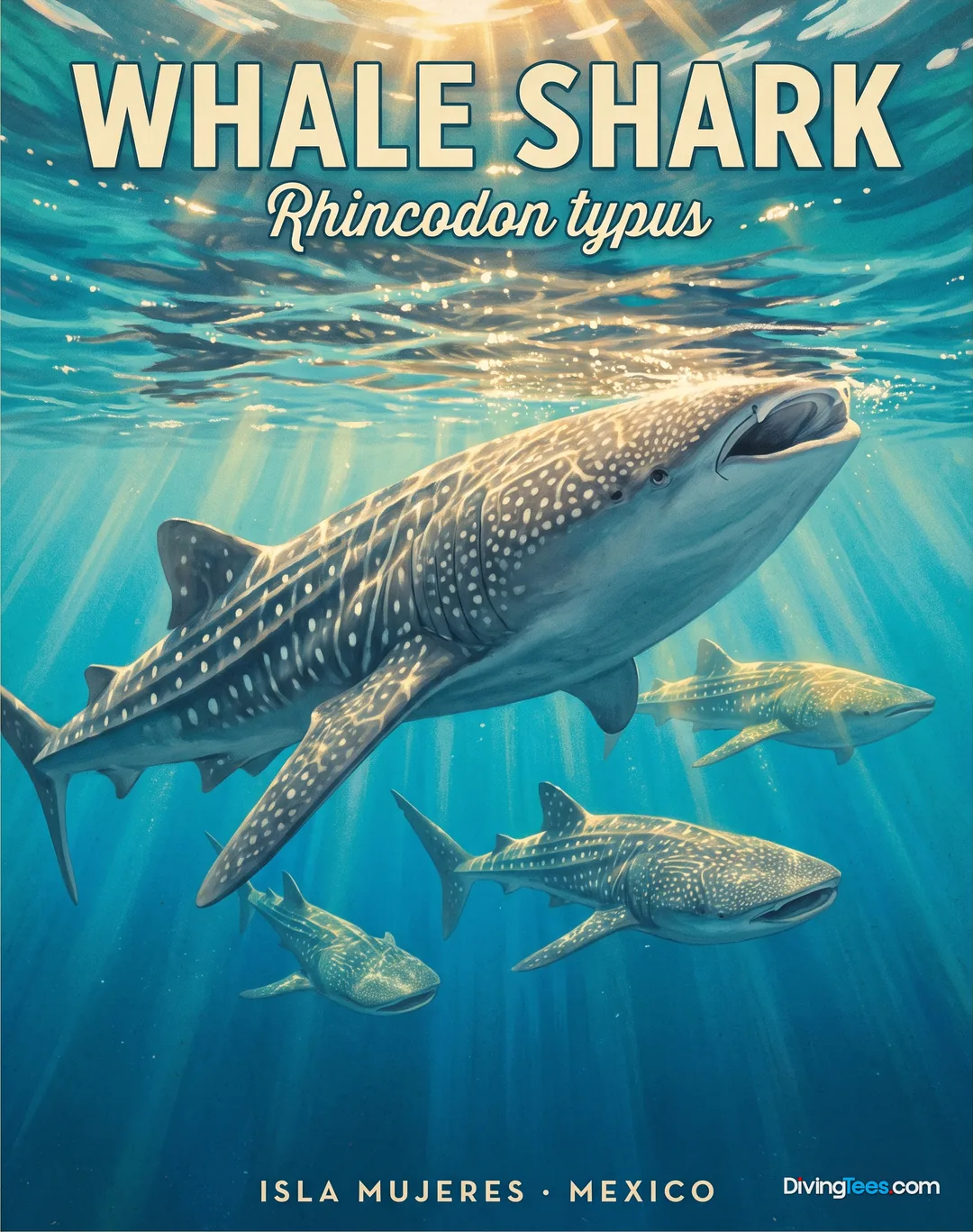
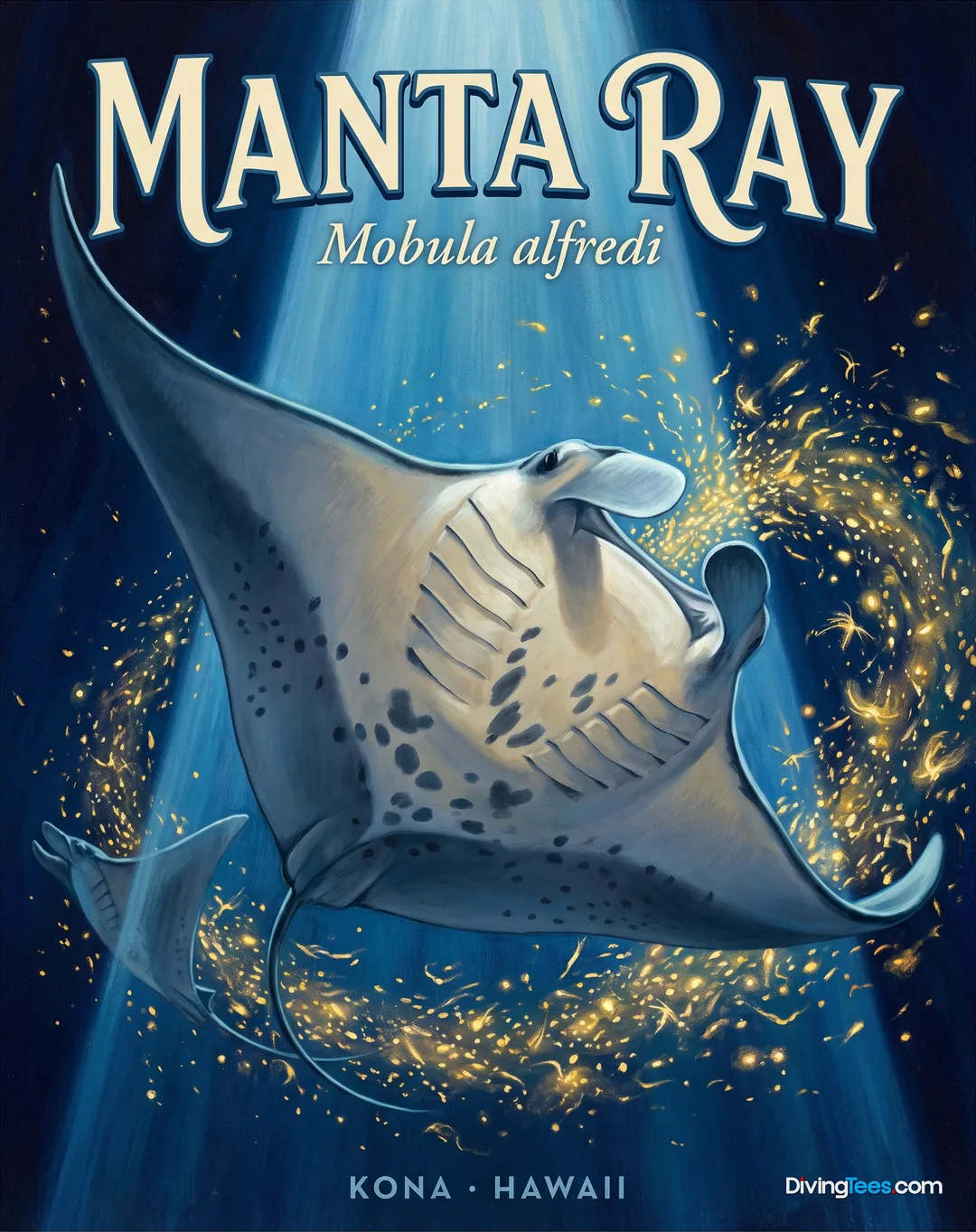
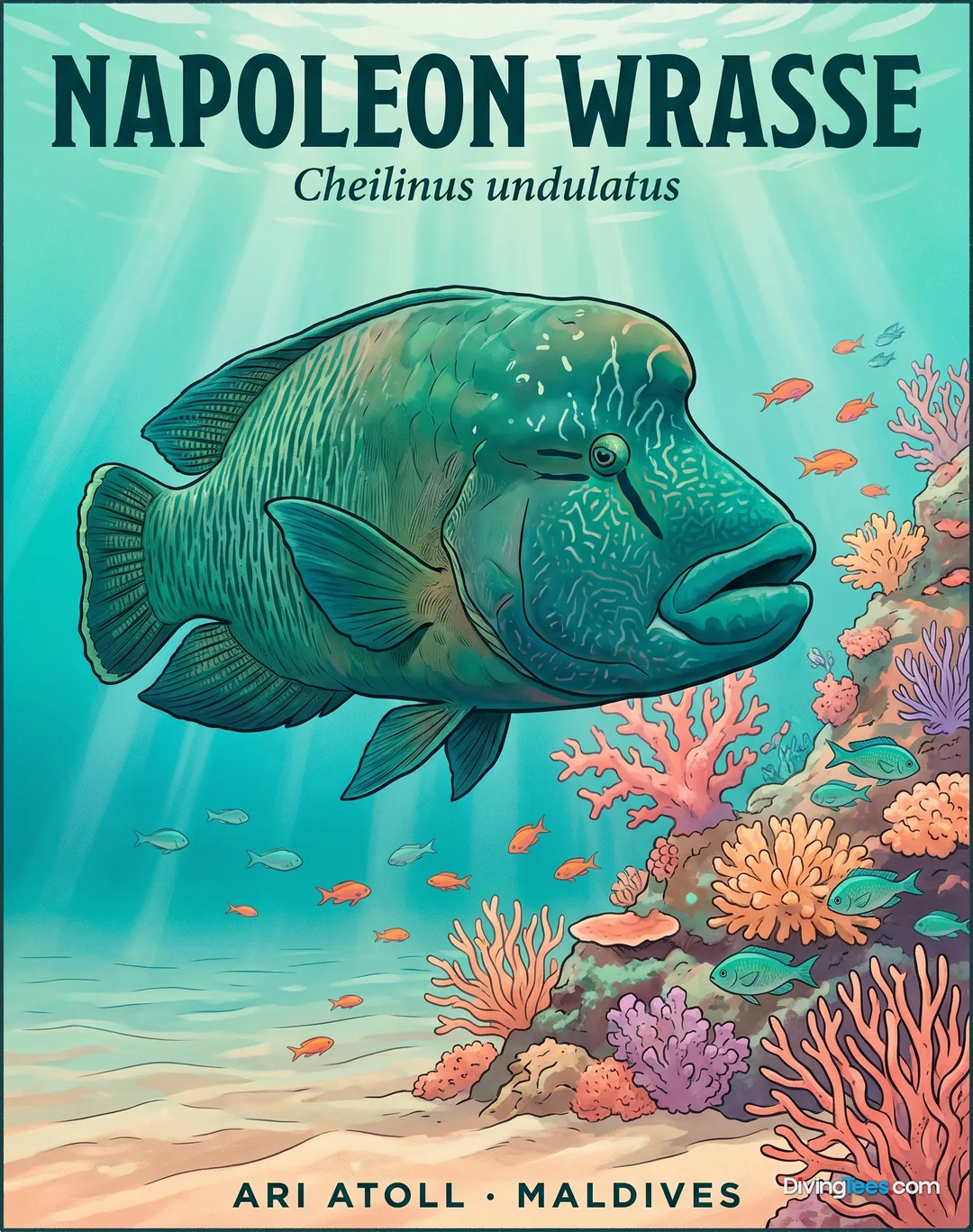
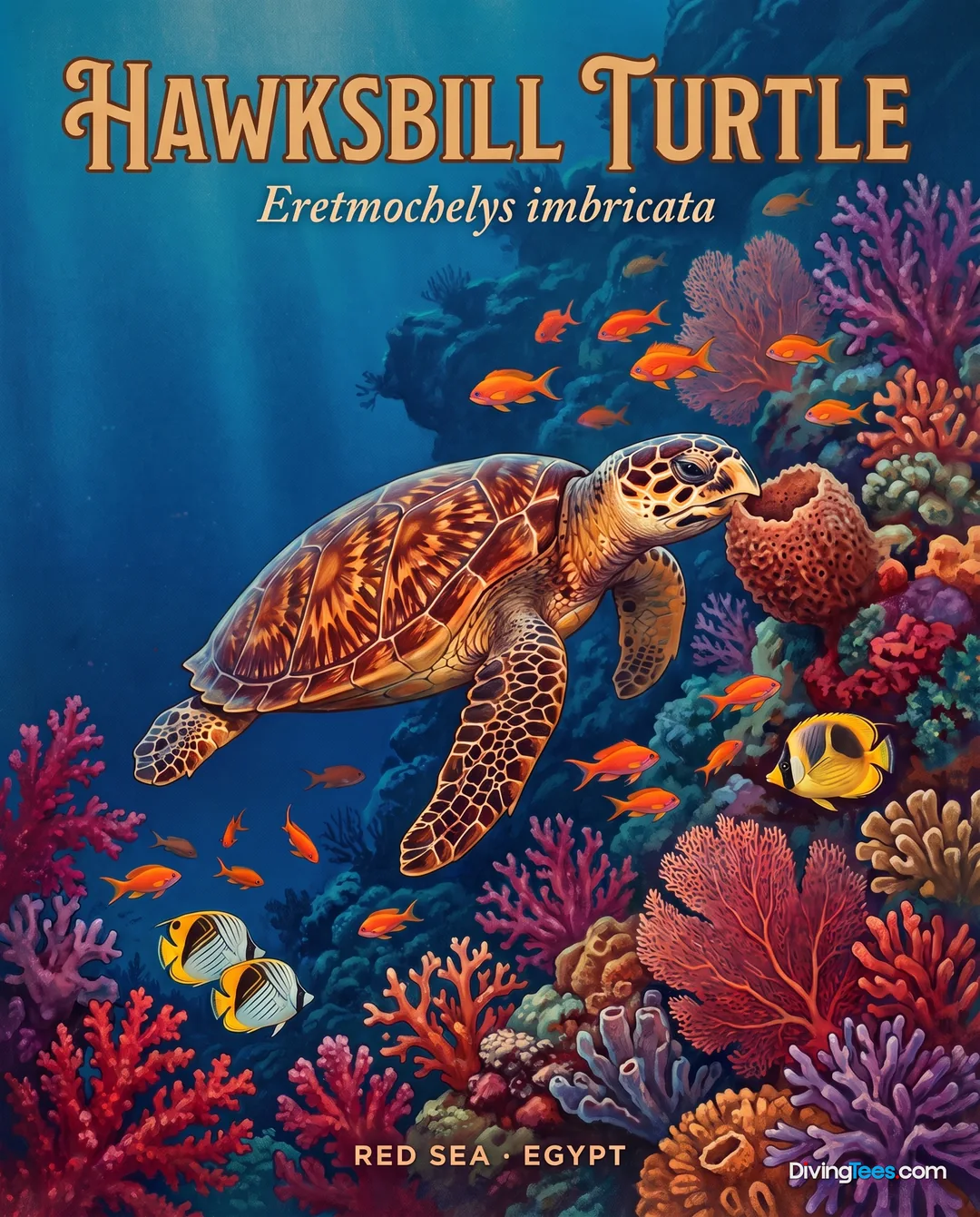
The recurring spectacle is large life moving through current: Napoleon wrasse, fusiliers, grey reef sharks, manta rays, tuna, turtles, barracudas, eagle rays, trevally, jacks, moray eels and batfish appear across much of the route. Cleaning stations explain some of the close encounters, while channels and up-current pinnacles pull in sharks and other pelagics. Hanifaru Bay is the seasonal standout from July to October, when hundreds of reef manta rays can gather to feed in cyclone formation; snorkelling is allowed there, not scuba diving. Whale sharks are associated with Maamigili and Maamigili Beiyru in the South Ari Marine Protected Area. For less common finds, Barracuda Giri is the place on this list for groupers and anthias, Banana Reef for anemones, and Maamigili for gaterins and porcupinefish. Dhigalhi Haa has soft coral and sea fans, while Dhigu Thila is the listed site for hawksbill turtles.
Who puts you in the water
The dive team gives a briefing before each dive, and the guides organise the underwater programme around the reef, current and site conditions. English is the crew language. The operation offers PADI courses including Discover Scuba Diving, Open Water, Advanced Open Water and nitrox training, so the boat can take both newly certified divers and experienced groups, subject to the limits set for each dive. Safety equipment includes oxygen, first-aid kits, VHF radios and emergency equipment on the tenders, plus radio and navigation systems on the liveaboard.
The dive deck and the gear
The dive deck is shaded and built around a platform, rinse tanks and tenders rather than a beach-style entry. Six tenders take divers to the sites and collect them after the dive, which is useful when current or surface drift leaves the group away from the drop point. Nitrox is available, and DIN adapters are provided. Sidemount diving is supported with one tank, and rebreather diving is listed among the available configurations. A separate camera rinse area protects photo equipment from the general rinse routine. Rental equipment can be arranged as an extra. Oxygen, first-aid kits and emergency equipment are carried on the tenders and boat.
Between dives
Between dives, the boat gives guests several different ways to come off the deck. The shaded outdoor areas are the natural place to dry out and compare notes, while the upper deck and sun deck offer loungers and open sky. The air-conditioned saloon has a bar, restaurant seating and entertainment, and the jacuzzi is there for the hours when nobody wants another swim. A dedicated photography area and camera rinse facility matter to anyone carrying more than a compact camera. On selected itineraries, the gap may instead be filled by a beach barbecue, fishing, a city visit, snorkelling or an optional spa treatment. Kayaks, stand-up paddleboards and other water activities are available as optional extras, not part of the basic dive day.
A day on board
A typical dive day starts before breakfast with the first briefing and dive, followed by food, a crossing and another descent. The published schedules place the first dive around 06:30 or 07:00, a second late-morning dive around 10:30, and a third in the afternoon around 14:30. On days with a fourth dive, it may come later in the day or after dark; the full itineraries count 17 dives over the week, including one or two night dives. Breakfast follows the first dive, lunch divides the middle of the day, and dinner comes after the final activity. Between entries, the boat moves between atolls or the group rests on the shaded deck. Some afternoons are reserved for a beach barbecue, island visit, Male City tour, fishing or spa time. The exact route changes with weather, current and monsoon conditions, so the dive team has room to change the order.
What you eat aboard
Meals are served as a full-board programme, with buffet service, local and Western dishes, and snacks available throughout the day. The kitchen can provide vegetarian, vegan and other dietary options when requirements are sent at least seven days before departure. Dinner can be taken outdoors, and the food programme includes a beach barbecue as well as a special dinner. Wine is included with dinner; beer, cocktails and other alcoholic drinks are available separately. For divers, the useful part is the timing rather than the promise of fine dining: breakfast follows the first morning dive, lunch sits between the middle dives, and dinner closes the day after the final activity. That keeps the table practical. It is where a group compares the current, the visibility and the animal that appeared at the end of the dive.
Nights at sea
The cabin choice is what gives the week its shape. Seaview Suites sit on the upper deck, VIP Suites on the main deck, while Junior Suites, Double Cabins and Triple Cabins are on the lower deck. The upper cabins have panoramic windows, and cabins with balconies provide a private place to watch the water without going up to the sun deck. Every cabin has air conditioning, a private bathroom and hot-water showers; beds and storage are arranged for a week rather than a single night. The difference between categories matters more here than a few decorative details: an upper-deck cabin brings daylight and a wider view, while a lower-deck cabin trades that outlook for easier separation from the social areas. At night, the boat's size keeps the saloon and deck life away from the bunk, but engine noise and movement remain part of sleeping at sea.
Junior Suite Lower Deck
Triple Cabin Lower Deck
Double Cabin Lower Deck
VIP Suite Main Deck
Seaview Suite Upper Deck
What to know before boarding
Departures and returns are in Malé, with Velana International Airport used for arrival and departure transfers. The airport transfer to the liveaboard is included, with the boat's dhoni collecting guests and the airport team guiding them to the transfer point. Check-in is at 14:00 and check-out at 10:00. Arriving in Malé the night before is the safer choice if a flight delay would otherwise put the boarding connection at risk.
Deck plan
What the boat does for the ocean
Legend X does not provide single-use plastic water bottles on board. Reusable bottles can be refilled at water stations throughout the trip, as part of the fleet's plastic-free policy.
- Year built
- 2024
- Length
- 41 m
- Maximum number of passengers
- 26
- Number of cabins
- 13
- Number of bathrooms
- 13
- Engines
- Doosan V180ti
- Tenders
- 6
- Website
- maldiveslegend.com ↗
Hello, I'm Marina, DivingDeal.com's AI assistant. I answer in detail about hotels, dive centres and liveaboards.
Thinking about the whole trip and the flights? Talk it over with Edith →
Marina is an AI. Some links are affiliate links: DivingDeal may earn a commission, at no extra cost to you. Bookings are made with the partner.