Kon Tiki
★ 9/10 (753 reviews)
5.1 km away as the crow flies
Dive centre · Ramatuelle · France
5.029 Google reviewsExplore the Mediterranean's wreck and reef sites from the Tempest 750, a modern semi-rigid boat equipped with a Garmin GPS and sonar.
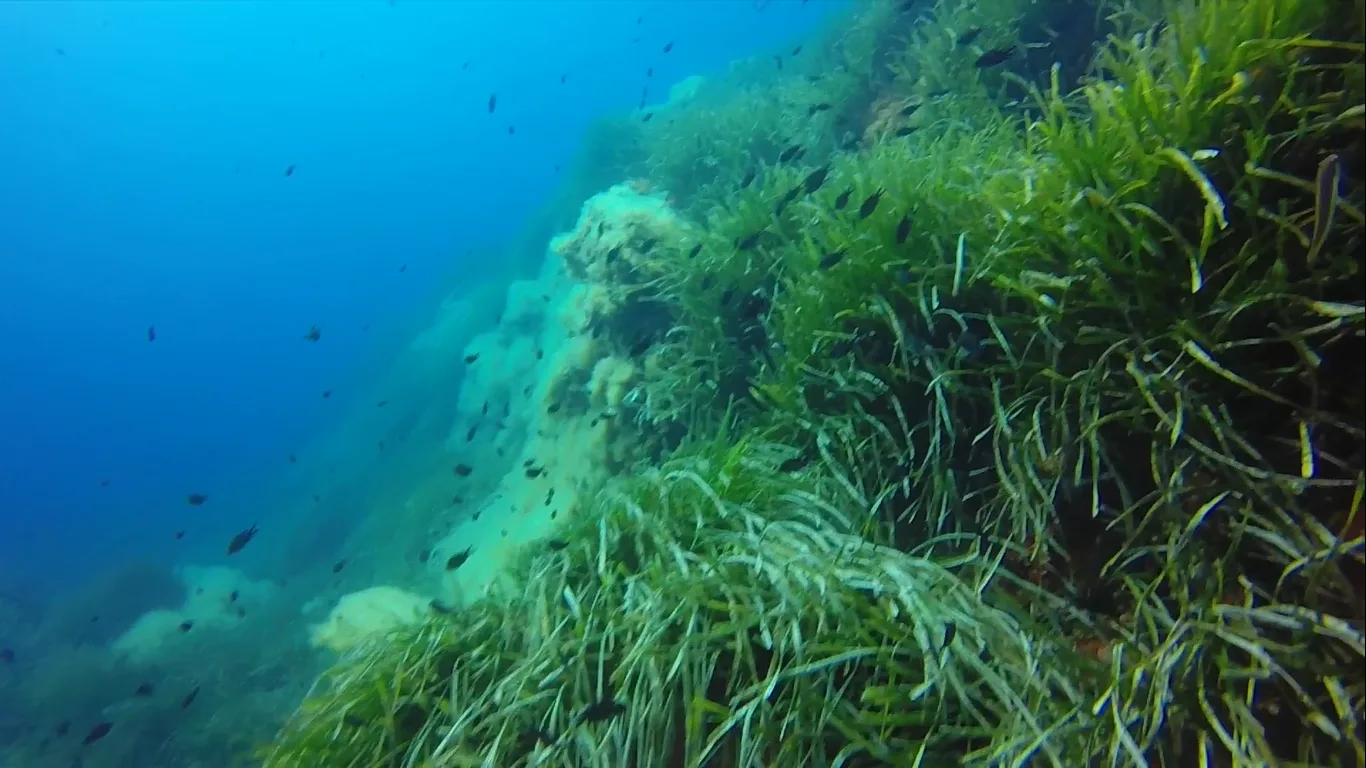
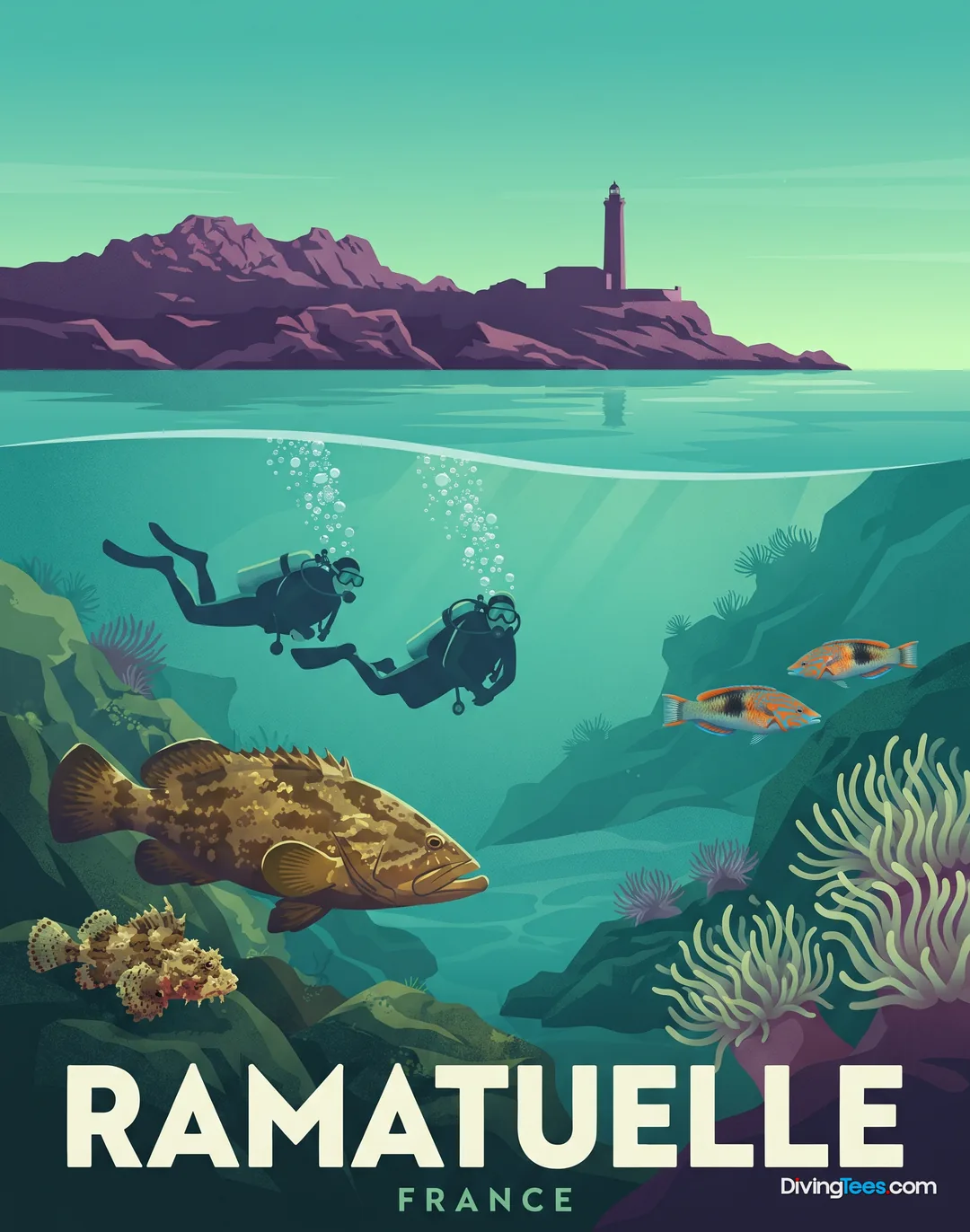
L'Escalet Plongee is situated in the coastal area of Ramatuelle, providing direct access to some of the most varied underwater topography in the region. The centre specialises in a mix of rocky reef exploration, dramatic drop-offs, and significant wreck diving.
Whether you are looking for a shallow discovery dive or a deep technical excursion, the local sites offer everything from sandy bottoms to vertical walls. The club operates from early May until late October, making the most of the Mediterranean season.
The centre is led by Eric Camilleri, a qualified MF2 and DEJEPS instructor. His expertise ensures a high standard of instruction for both recreational divers and those looking to progress through the FFESSM-CMAS certification levels.
In addition to standard training, Eric is a Nitrox instructor, providing specialised training for those looking to extend their bottom times. The club is well-suited for groups of autonomous divers, particularly outside of the peak months of July and August.
The centre offers a comprehensive range of FFESSM-CMAS training programmes. This includes the N1, N2, and N3 levels, as well as specialized PE40 and PE60 certifications.
For divers looking to advance their technical skills, Nitrox Elementary and Nitrox Confirmed courses are available. The centre also provides RIFAP training, ensuring a complete pathway for divers at every stage of their progression.
The primary vessel is the Tempest 750, a modern semi-rigid boat powered by a 225hp Mercury engine. It is configured to carry up to 16 cylinders and features a tip top to provide shade for divers on board.
For navigation and safety, the boat is equipped with a fixed VHF and a Garmin GPS-sonar system. The deck is designed for efficient dive operations, ensuring you can focus on the dive rather than the logistics of the boat.
On shore, the centre is equipped with a BAUER compressor capable of 33m3/h, featuring four air banks and two Nitrox banks. A wide variety of cylinder sizes is available, including 18L, 15L, 10L, 7L, and 6L oxygen pony bottles.
For those requiring rental kit, the centre stocks Scubapro equipment, including MK17, C370, and R095 regulators. Wetsuit hire includes 7mm Oneflex models ranging from size S to XXXL, paired with Equalizer BCDs from size XS to L.
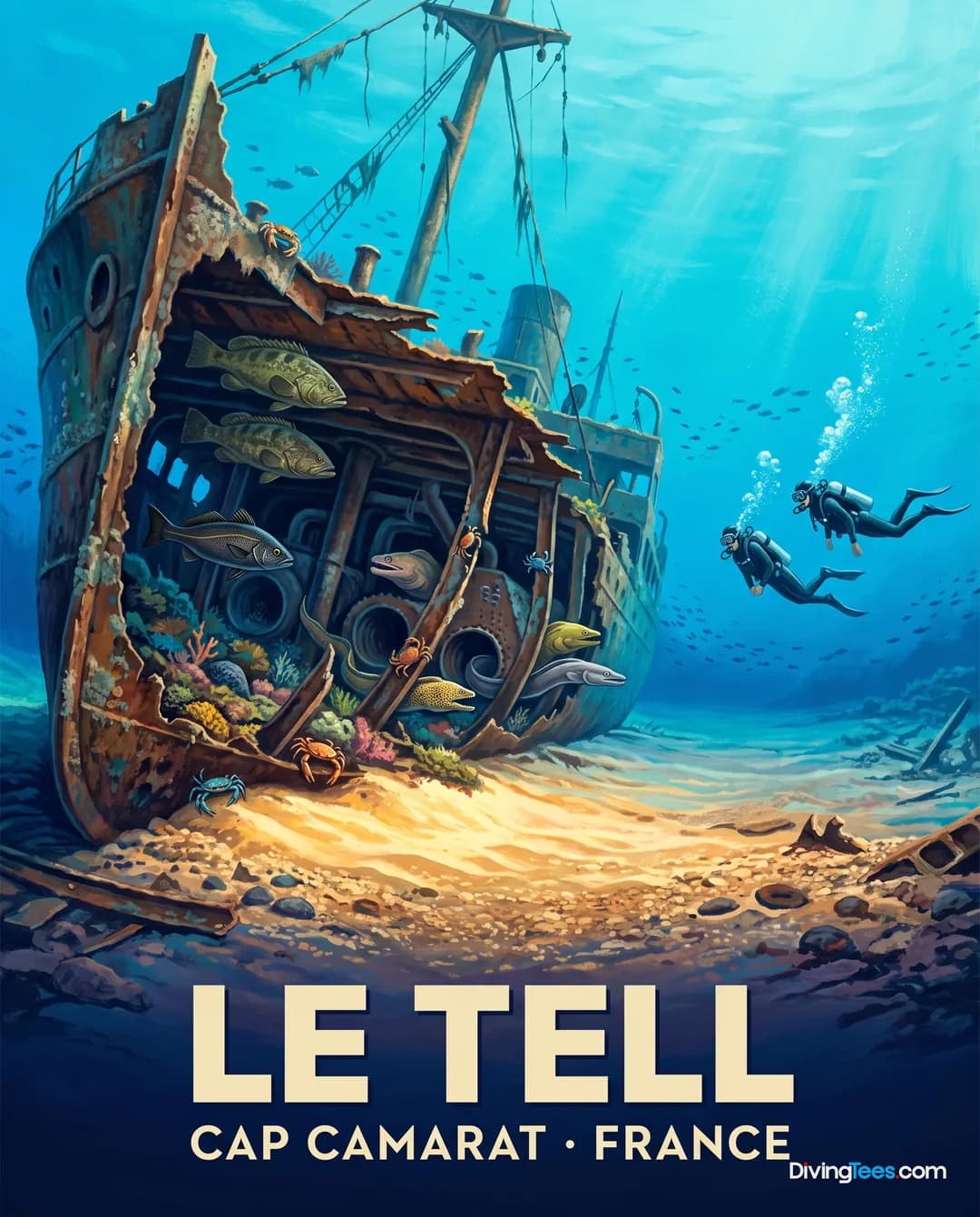
Le Togo is a significant wreck dive involving a large cargo ship split in two, with the main section resting on a sandy bottom at 60m. For those interested in history, Le Prophète offers a dive on a 1860 steamship where the central transmission wheel remains amongst the boilers at 33m.
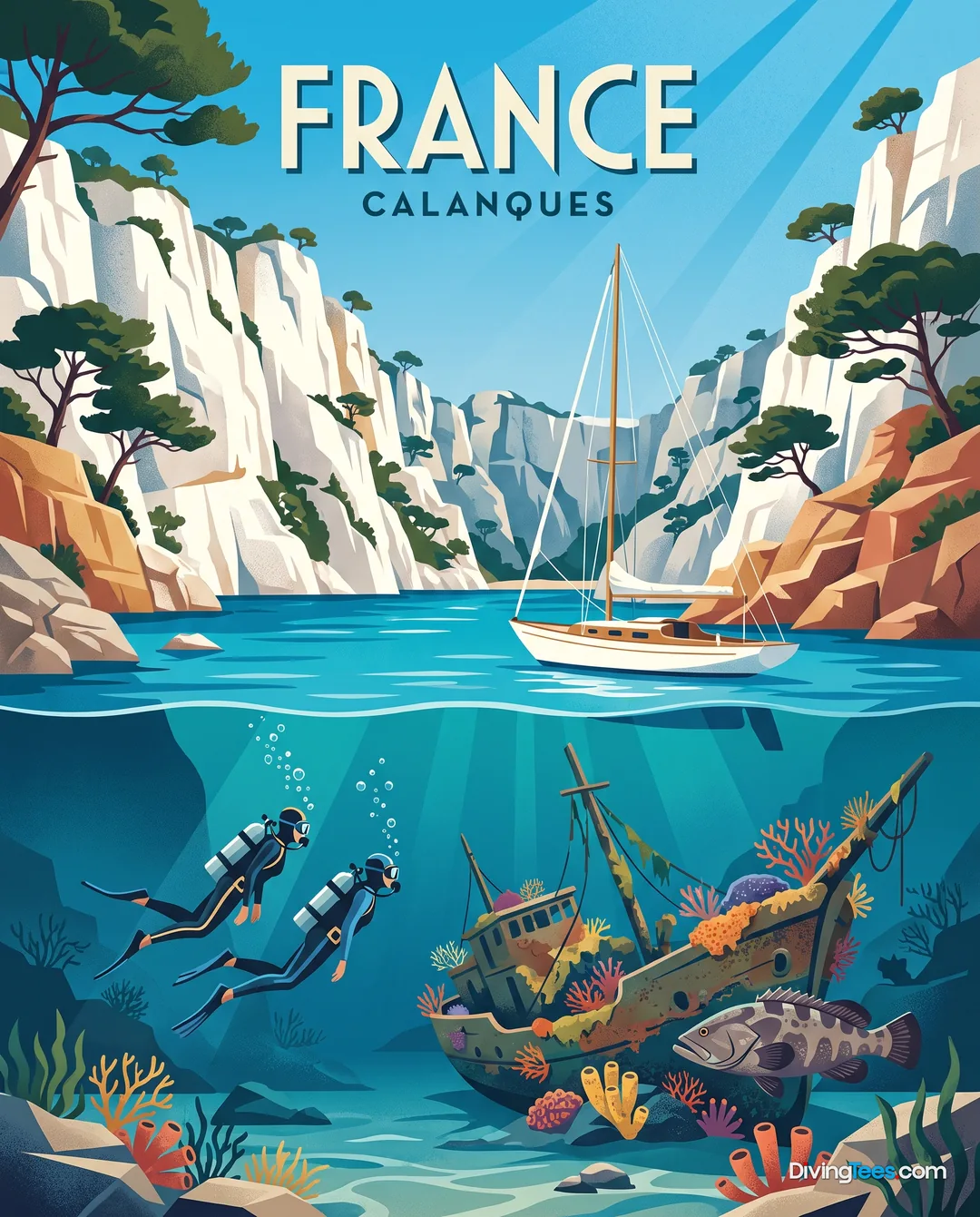
Les Brisés provides a beautiful canyon descent through laminaria kelp, leading to a 35m rocky bottom with a small tunnel and a resident moray eel. For N1 divers, Dent de Requin offers a shallower, sheltered experience at 17m, perfect for observing local bio on a sandy and rocky bottom.
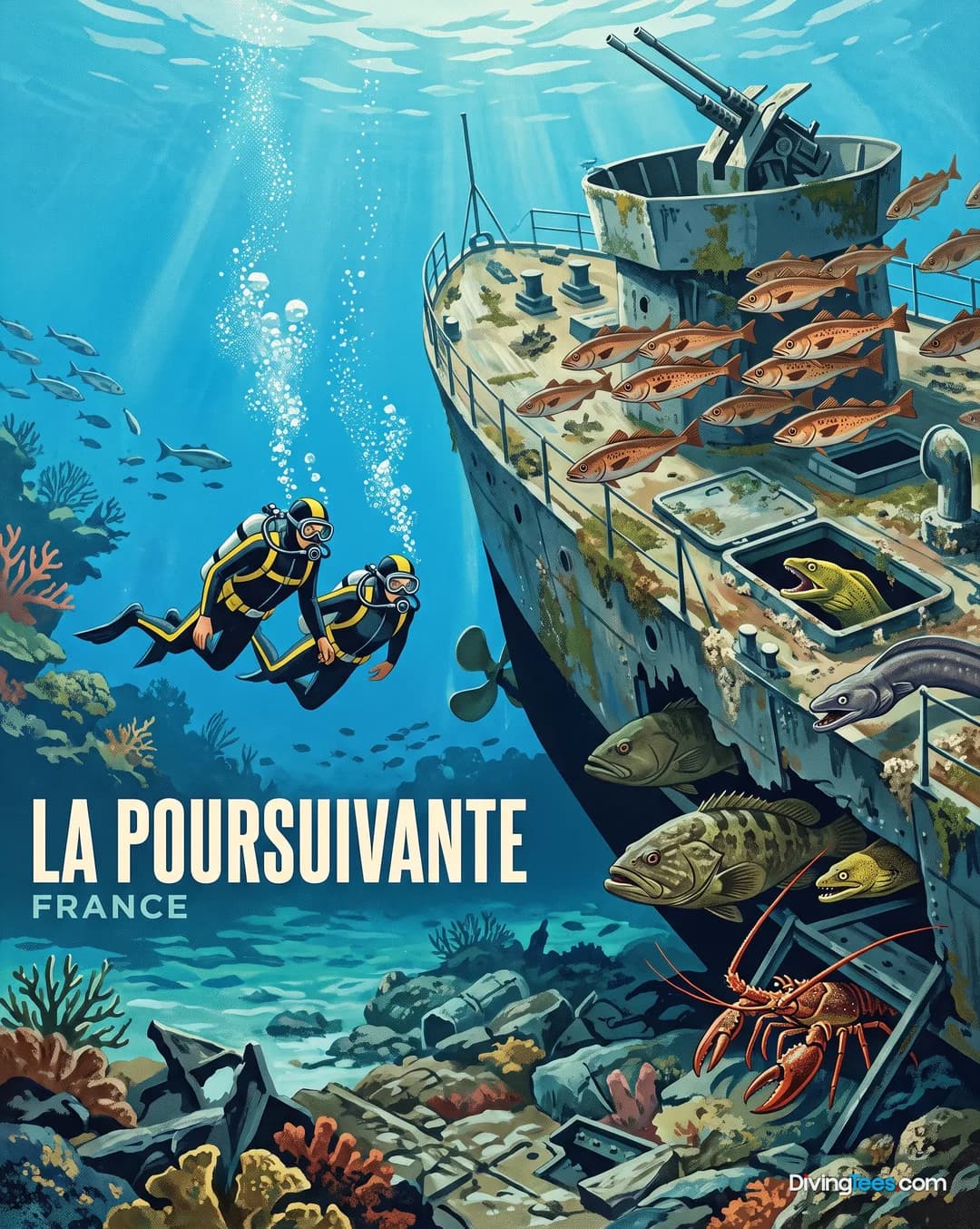
Le Petit Sec is a beautiful coralligenous drop-off that starts at just 1.5m and descends to 25m, noted for its exceptional light levels. For more experienced divers, Le Trafik features a 40m cargo wreck at 60m depth, though it can be subject to strong currents.
And some of the dive sites the centre runs.
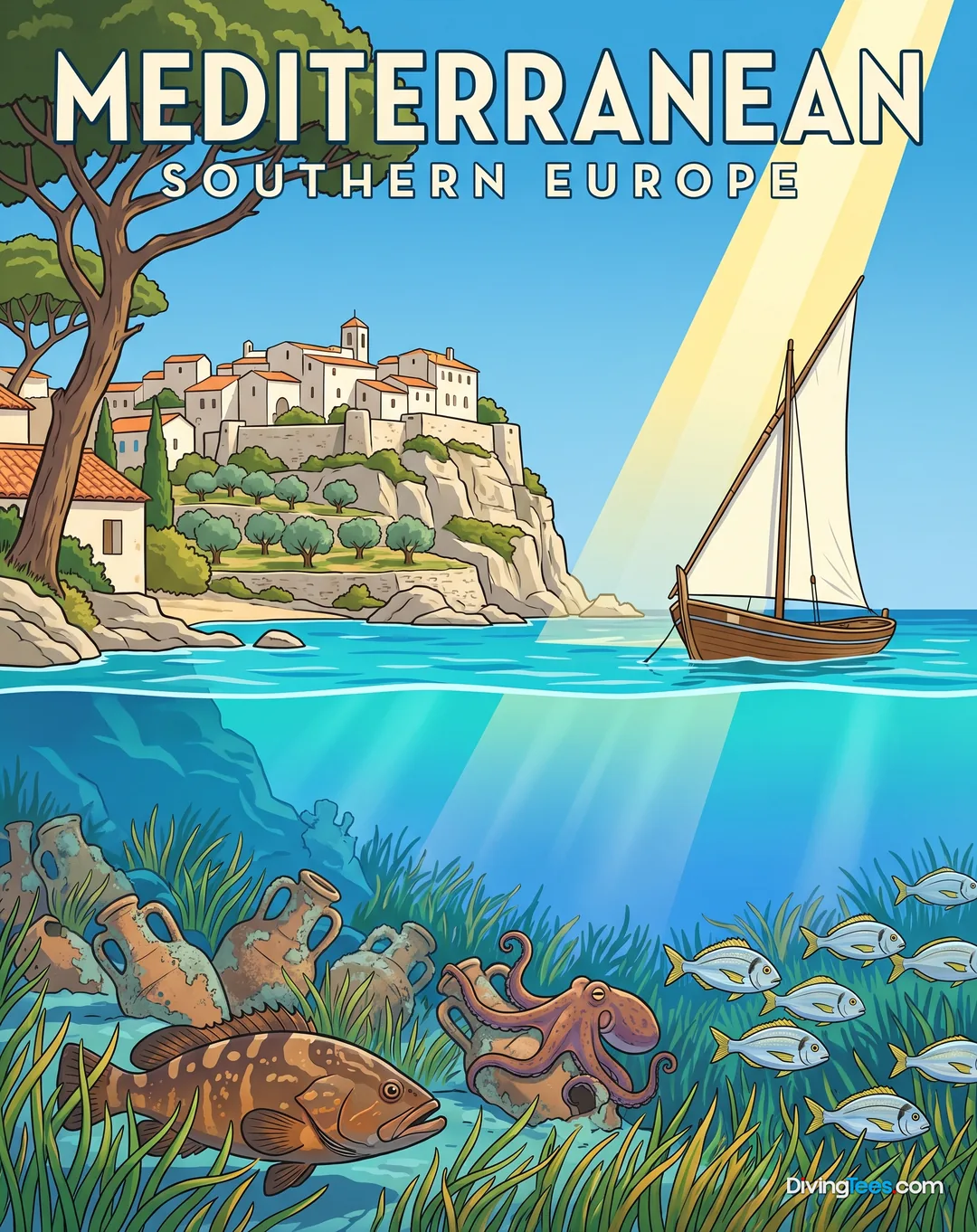
The rocky reefs and canyons are home to a diverse array of Mediterranean life. You will regularly encounter Grouper (Epinephelus), Moray eel (Muraenidae), and Conger eel (Congridae) seeking shelter in the rocks. Sea bream (Sparidae) and various species of wrasse (Labridae) are also common sights along the walls.
For those interested in macro life, the crevices and sandy patches host octopus, nudibranchs, and scorpionfish. You may also spot lobster (Homaridae) and various species of sea urchins tucked into the coralligenous structures.
During certain times of the year, the area may also host Mola-mola, adding a significant highlight to the local pelagic sightings.
Divers should be aware that surface currents can be strong at certain sites, particularly at Petites Querolles, Roche Fouras, and Le Trafik. These currents can make entry and exit more challenging, especially at Petites Querolles.
While many sites offer sheltered environments, the topography of the region includes significant drop-offs and canyons that can influence local water movement. Planning your dive based on the specific site's characteristics is essential.
Hello, I'm Marina, DivingDeal.com's AI assistant. I answer in detail about hotels, dive centres and liveaboards.

Thinking about the whole trip and the flights? Talk it over with Edith →
Marina is an AI. Some links are affiliate links: DivingDeal may earn a commission, at no extra cost to you. Bookings are made with the partner.