CMAS
Cap Camarat Plongee
Google 4.9/5 (286 reviews)
2.7 km away as the crow flies
Ramatuelle · France · Mediterranean
Max. depth · 18 mExplore the scattered remains of a 76-meter coastal cargo ship, resting in the shallow waters off Ramatuelle.
For subtitles in English: start the video firstthen click the gearat the top right of the video, select “Subtitles/CC”, then “Auto-translate” and choose “English”.
Le Tell lies off Cap Camarat, a scattered wreck that was once a 76.60-meter coastal cargo ship. Sunk on October 25, 1913, during a strong easterly wind, the ship initially obstructed shipping channels as it came to rest sideways. To clear the passage, cannons were used, dislocating the vessel and spreading its remains across numerous rock formations. What you encounter today is not a coherent hull, but a wide field of debris and structural fragments.
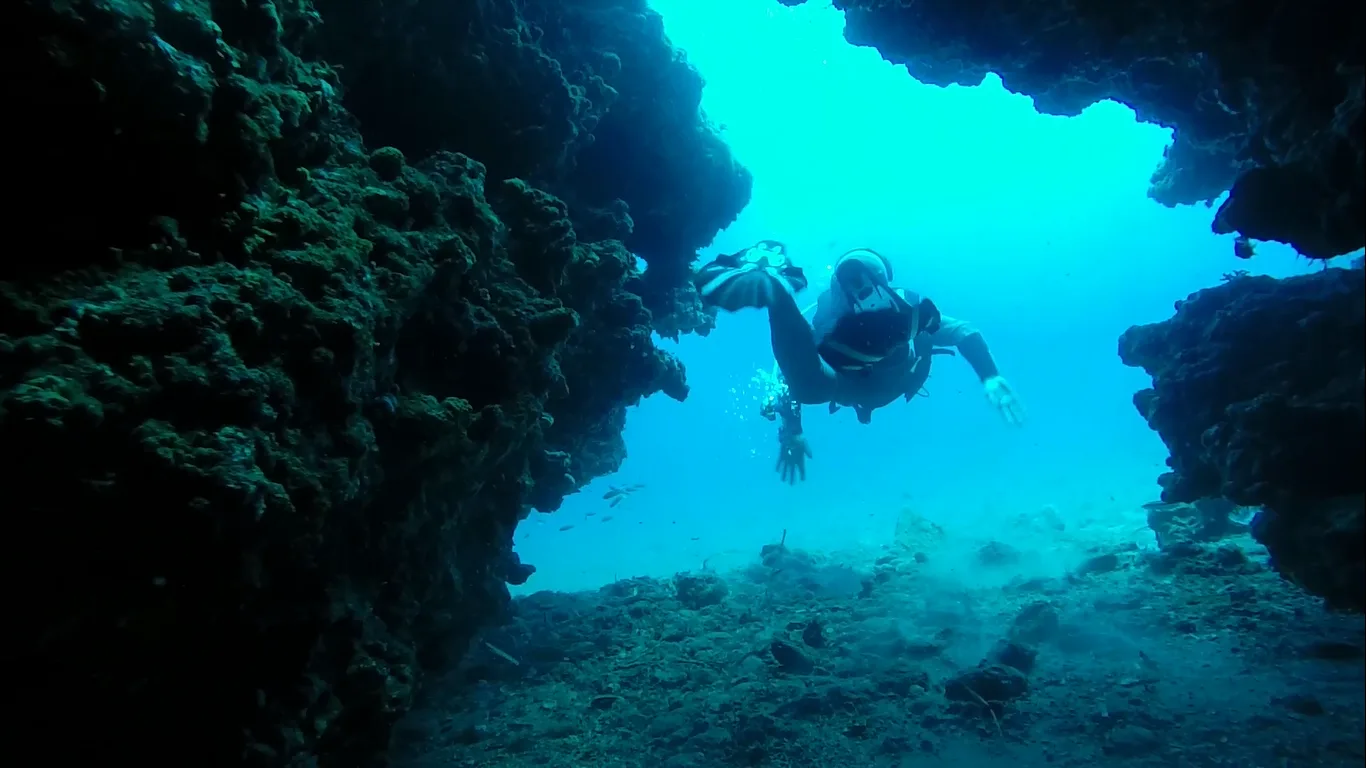
The dive profile for Le Tell is relatively shallow, beginning at a minimum depth of 5 meters and extending down to 18 meters at its deepest points. As you descend, the history of its deliberate destruction becomes clear; the site is characterized by an extensive debris field rather than an intact structure. This scattering, however, creates numerous hiding spots and micro-habitats within the wreck’s former components, which are now seamlessly integrated with the surrounding rocky seabed.
Within the broken sections of Le Tell, you will find a resident population of marine life. Groupers, both juvenile and adult, have made the wreck their home, often observed patrolling between the metal plates and cargo remains. Moray eels and conger eels also inhabit the crevices, visible to those who take the time to look closely into the shadowed areas. The site offers a good opportunity to observe these species in a sheltered environment, using the wreck as both shelter and hunting ground.
Beyond the wreck's structure, schools of brown meagre (Sciaena umbra) are frequently seen moving across the site. The original cargo of cement sacks from the ship's 1913 sinking is still present and dispersed among the debris, forming artificial reefs that further enrich the underwater landscape. These scattered elements, combined with the natural rock formations, provide an intricate environment that supports a diverse range of Mediterranean fauna.
While the depths are well within recreational limits, the nature of a scattered wreck means careful navigation is required to appreciate the full extent of the site. The visibility at Le Tell is generally good, allowing for clear views of the wreck parts and the marine life that congregates around them. This combination of accessible depth, clear water, and rich biodiversity makes Le Tell a site where you can take your time to explore the details of both the wreck and its inhabitants.
This dive site is accessible from a minimum depth of 5 meters down to 18 meters. It is suitable for divers holding a PE 12 certification or equivalent, and is generally considered accessible to all levels, including entry-level certified divers. The best period for diving Le Tell generally begins in early May.
You can plan a dive at Le Tell from early May, when the generally recommended period begins. The site lies off Cap Camarat in the Ramatuelle area, offering a shallow wreck environment where you can explore scattered ship remains, rocky formations, and marine life at an accessible depth.
You can dive Le Tell with a PE 12 certification or equivalent. The site is generally accessible to all levels, including entry-level certified divers. Its relatively shallow profile allows you to explore the scattered wreck sections and surrounding rock formations while taking care around the broken structure.
Le Tell ranges from 5 to 18 metres, making it a shallow wreck dive. You begin over the site at approximately 5 metres and reach its deepest points at 18 metres. The wreck is scattered across rock formations, so you can explore different debris sections throughout the profile.
At Le Tell, you can explore the scattered remains of a 76.60-metre coastal cargo ship, including debris, structural fragments, and dispersed cement sacks. Groupers, moray eels, conger eels, and schools of brown meagre inhabit the wreck and its crevices, which create varied micro-habitats among the rocks.