
Scuba Murcia
Google 5/5 (179 reviews)
2.8 km away as the crow flies
Cabo de Palos · Spain · Mediterranean
Max. depth · 50 mA massive rocky pinnacle rising from the deep, featuring gorgonian walls and dense schools of barracuda.
For subtitles in English: start the video firstthen click the gearat the top right of the video, select “Subtitles/CC”, then “Auto-translate” and choose “English”.
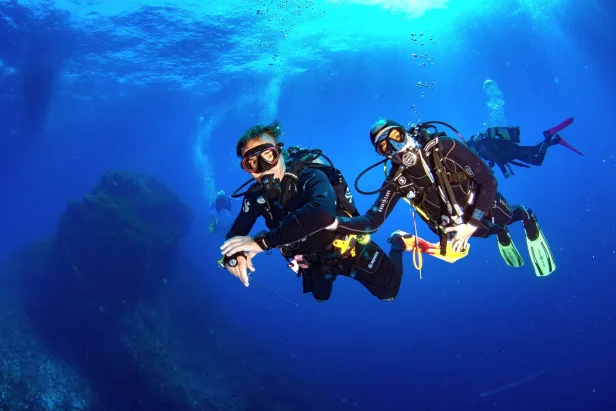
Bajo De Dentro is a significant underwater mountain that rises steeply from the seabed, making it a standout feature of the Cabo de Palos marine area. This pinnacle starts at depths of around 50 metres and climbs sharply toward a shallow summit located at 3 to 4 metres. The site is defined by its dramatic verticality, offering a complex topography that caters to different profiles. You will encounter a landscape of steep rocky walls and broken pillars that drop into deep, blue water. This vertical structure creates various micro-habitats along its flanks, supporting a high density of life.
The topography of the seamount changes depending on which side you choose to follow. The northern side is characterized by a relatively flat plateau sitting at about 15 to 20 metres, which offers a much calmer environment than the outer edges. Moving toward the east, the structure includes a small cave located at approximately 22 metres. On the southwest side, the site transitions into a series of rocky pillars and steep walls that descend into deeper water. These gorgonian-covered walls are a primary feature, providing a rich substrate for many Mediterranean species.
Navigating this site requires a clear plan, as the profile is highly multilevel. Most dives begin by descending near a fixed shot line placed on the seamount to ensure a controlled descent toward the deeper sections. From there, you can choose to work the walls or explore the shallower plateau. The vertical nature of the site means that visibility and light change significantly as you move between the 50-metre base and the 3-metre summit. This depth range allows for a diverse dive profile that can be tailored to your specific decompression limits.
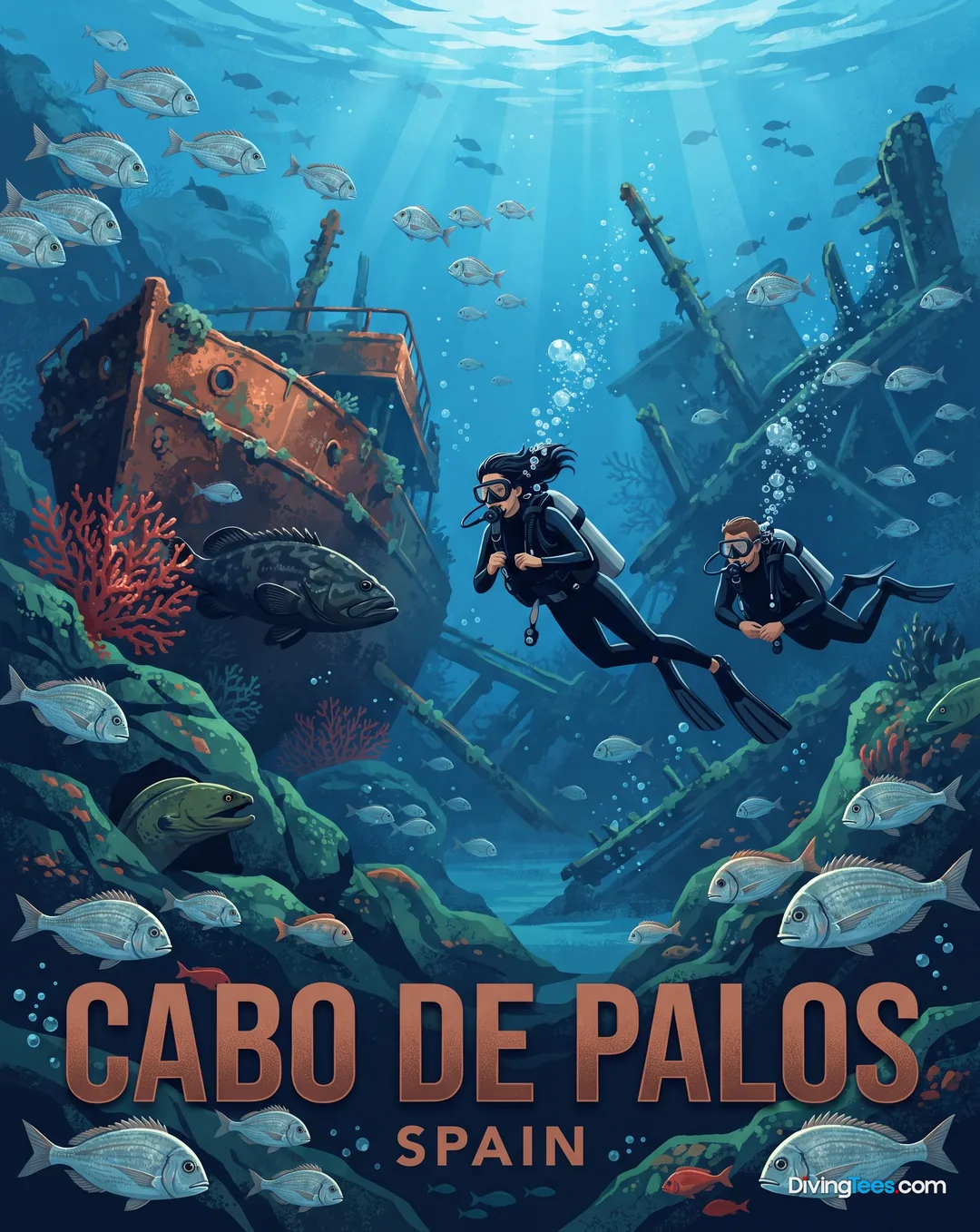
The marine life here is dominated by large, resident species that thrive on the structure's verticality. You will frequently encounter large dusky groupers (Epinephelus morhua) sheltered within the rocky crevices and cave areas. Large schools of barracuda are a common sight, often hovering in the water column along the edges of the pinnacle. The presence of conger eels and moray eels in the rockwork is almost guaranteed. For those observing the reef floor, cuttlefish and various species of bream and bogue move through the water around the rocky substrate.
Pelagic activity is a key reason to visit this site, particularly during the warmer months. Eagle rays are frequently reported, often appearing seasonally as they move through the area. Large amberjack are also known to patrol the currents around the edges of the seamount. The presence of these larger species is closely tied to the nutrient-rich currents that hit the face of the pinnacle. Watching these predators move through the water column adds a layer of dynamic activity to the reef-based life found on the walls.
Currents at Bajo De Dentro can be moderate but are subject to change based on local Mediterranean conditions. You will feel the movement most noticeably along the exposed flanks of the seamount and near the summit. The intensity of the flow depends on the wind, the swell, and the general sea state around Cabo de Palos. Because the current can shift, it is essential to monitor the local forecast and assess conditions before descending. Local operators typically plan routes based on real-time assessments of these moving water masses.
Visibility at this site is generally good, typically ranging between 15 and 35 metres. However, the clarity of the water is heavily influenced by the swell and the weather conditions of the region. During the peak months of June to September, the water is warmer and the visibility tends to be more consistent. This seasonal window also coincides with the increased presence of pelagic species like eagle rays. Even in winter, the site remains active, though the water temperature is noticeably cooler and visibility can vary more frequently.
Advanced level with prior experience in currents and deep multilevel dives. Depths range from 3 to 50 metres. Visibility is 15-35 metres. Currents are variable and can be stronger on the exposed flanks and summit. Best season is June to September.
You can dive Bajo De Dentro throughout the year, but June to September offers warmer water and generally more consistent visibility. This period also coincides with increased sightings of seasonal eagle rays. In winter, the site remains active, although the water is cooler and visibility can change more frequently with conditions.
Bajo De Dentro is suited to advanced divers with prior experience in currents and deep multilevel dives. Its seamount profile changes quickly between shallow and deep areas, while currents may vary along exposed flanks and near the summit. You should plan the route carefully and stay within your decompression limits.
Bajo De Dentro ranges from a summit at about 3 to 4 metres to a base near 50 metres. You can follow steep, gorgonian-covered walls, explore a northern plateau at about 15 to 20 metres, or visit a small cave around 22 metres, creating a varied multilevel profile.
Currents at Bajo De Dentro can be moderate and may change with wind, swell, and sea state, with stronger movement on exposed flanks and near the summit. You may see resident dusky groupers, barracuda, conger and moray eels, cuttlefish, bream, bogue, amberjack, and seasonal eagle rays.