
Scuba Murcia
Google 5/5 (179 reviews)
2.4 km away as the crow flies
Cabo de Palos · Spain · Mediterranean
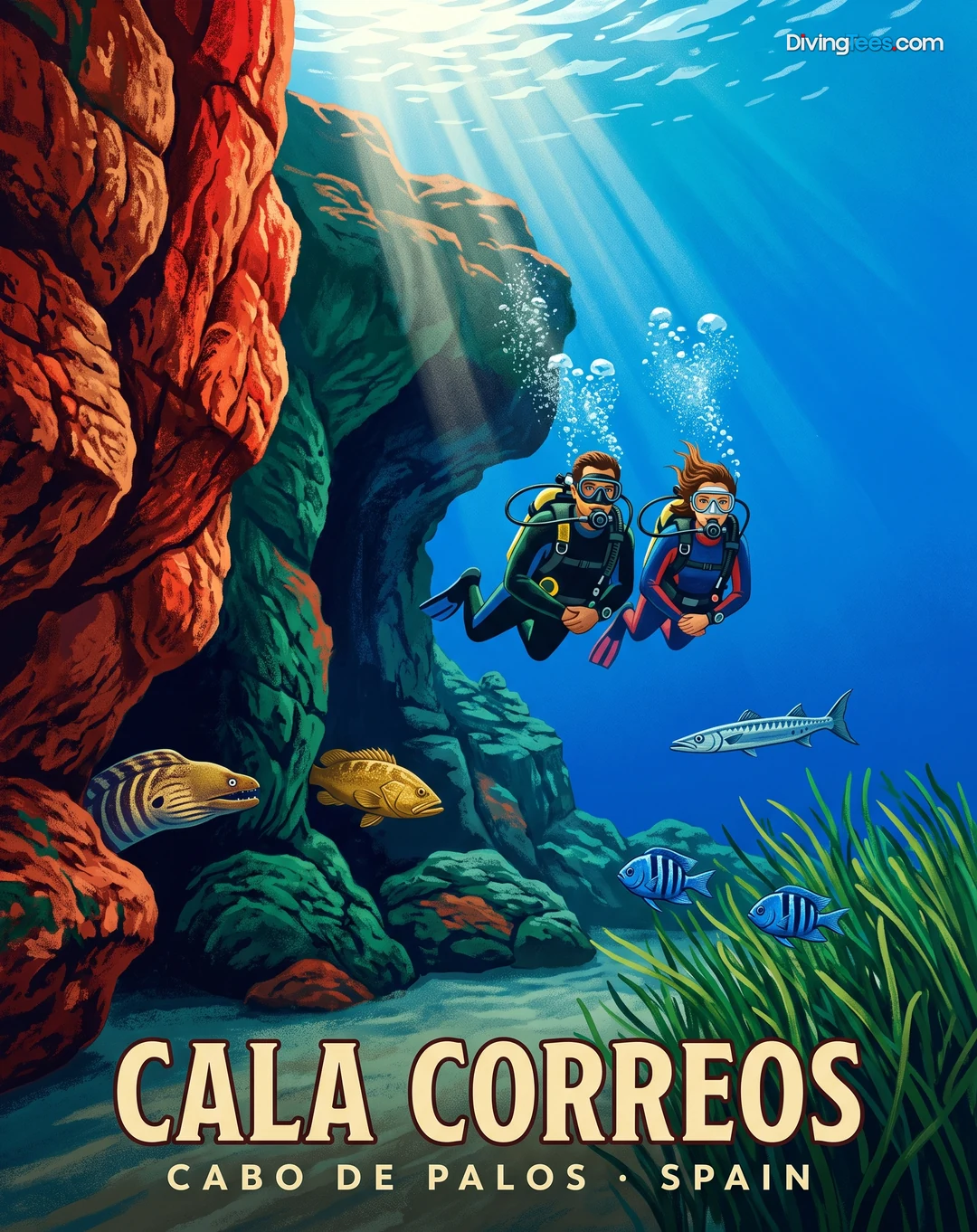
Max. depth · 25 mTwo rocky outcrops rise from the deep to form a central gorge where large groupers and schooling seabream congregate.
For subtitles in English: start the video firstthen click the gearat the top right of the video, select “Subtitles/CC”, then “Auto-translate” and choose “English”.
Bajo De La Morra is a structured reef system located within the Islas Hormigas marine reserve. The site is defined by two adjacent rocky outcrops that emerge from the surrounding sandy seabed, creating a complex underwater topography. One rocky mass to the west presents a gentler slope that shallows to approximately 12 metres. In contrast, the eastern complex rises more abruptly to about 18 metres. This positioning creates a pronounced central gorge or canyon that funnels water through the middle of the site.
The descent typically begins by navigating toward the central canyon, which serves as the primary landmark for the dive. The floor of this gorge lies at a depth of approximately 23 to 25 metres, providing a clear target for anchoring and descent. As you move between the two rocky pinnacles, the terrain shifts from the shallower plateau areas to the steep, abrupt drop-offs of the canyon walls. This relief creates a variety of micro-habitats, from the open sandy areas to the vertical surfaces of the rocky complexes.
Currents at Bajo De La Morra are generally moderate but can become more pronounced due to the site's specific topology. Because the canyon acts as a natural funnel, water movement often accelerates as it passes through the gap between the two rocky structures. You may feel a noticeable increase in flow when navigating the canyon floor or near the steeper drop-offs. It is wise to monitor your positioning relative to the rocky walls to manage these variations in water movement effectively.
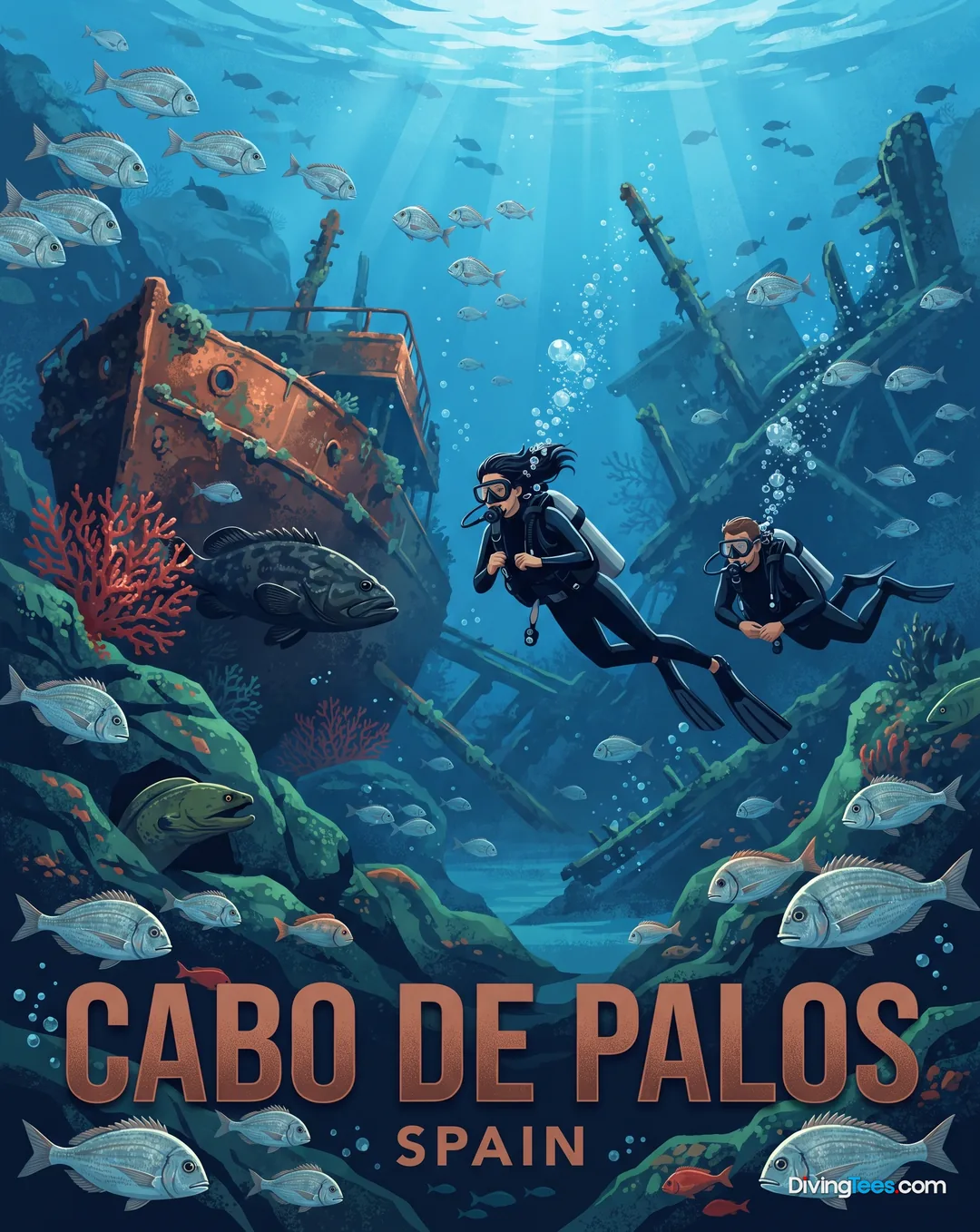
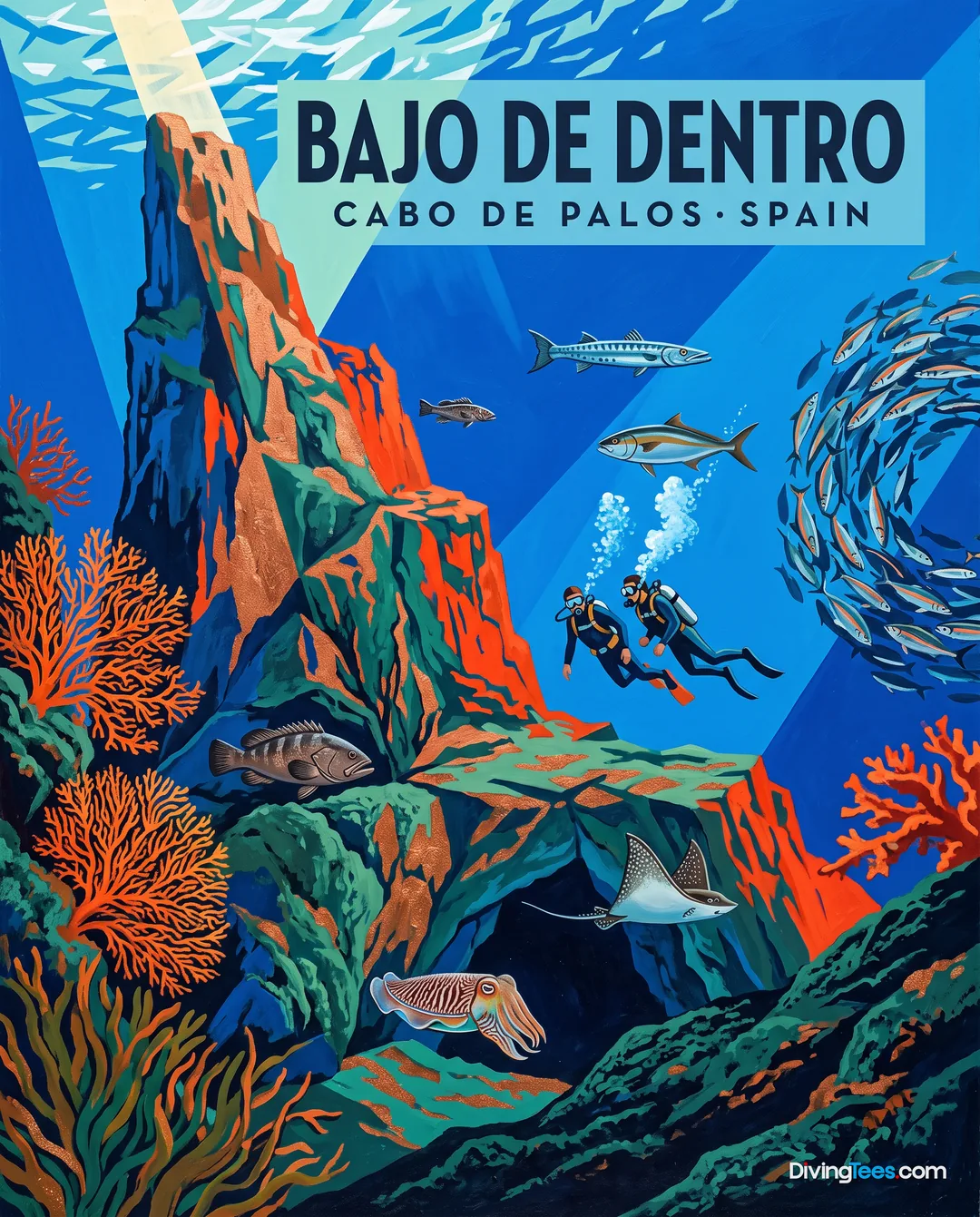
The biological density of the site is driven by the high relief of the reef and its protected status within the marine reserve. Large resident species, particularly dusky grouper (Epinephelus marginatus), are frequently encountered near the rocky crevices and the canyon walls. These fish often hold position within the structure, benefiting from the shelter provided by the outcrops. You can also find brown meagre (Sciaena umbra) inhabiting the deeper sections of the reef, often tucked into the shadows of the rocky complex.
The mid-water column and the shallower sections of the reef are active with moving biomass. Schooling fish, such as white seabream (Diplodus sargus) and saddled seabream (Diplodus mesospilos), move between the rocky heights and the deeper sandy bottom. These schools often provide a dynamic backdrop to the dive, especially when moving through the light-filled upper layers of the reef. Additionally, Mediterranean chromis (Chromis chromis) can be seen in larger numbers around the shallower rocky edges.
For those watching the more open spaces around the reef, larger predators are a regular presence. Barracuda (Sphyraena) are often seen cruising the perimeter of the rocky structures or hovering in the current. Moray eels (Muraena helena) are also common, frequently found peering from the many holes and cracks that define the coralligenous assemblage of the reef. The combination of vertical structure and available cover makes this a highly productive zone for both resident and passing species.
The seasonal character of the site influences the level of activity you will observe. While the reef structure and its residents remain constant year-round, the late summer and autumn periods often bring an increase in pelagic activity. During these months, the presence of bait balls within the reserve can draw larger groups of fish into the area. This shift in the local food web can change the overall energy of the dive, making the canyon a focal point for feeding activity.
Depth ranges from 8 to 25 metres. This site requires an Advanced Open Water certification and a minimum of 50 logged dives to ensure comfort with the variable currents and the canyon topology. Visibility typically ranges between 5 and 25 metres. Currents are moderate but can accelerate within the central canyon due to the funneling effect of the rocky outcrops. The best period for increased activity is late summer to autumn.
Late summer and autumn are the periods associated with increased activity at Bajo De La Morra. During these months, pelagic activity often rises, and bait balls within the marine reserve can attract larger groups of fish. The reef structure and resident species remain present throughout the year.
Bajo De La Morra requires an Advanced Open Water certification and a minimum of 50 logged dives. This experience is intended to ensure you are comfortable with the site's variable currents and canyon topology, including movement around steep drop-offs, rocky walls, and the central underwater gorge.
Bajo De La Morra ranges from 8 to 25 metres deep. The western rocky mass has a gentler slope that shallows to approximately 12 metres, while the eastern complex rises more abruptly to about 18 metres. The central canyon floor lies at approximately 23 to 25 metres.
Currents at Bajo De La Morra are generally moderate but can accelerate through the central canyon, where rocky outcrops funnel the water. You may encounter dusky grouper, brown meagre, white seabream, saddled seabream, Mediterranean chromis, barracuda, and moray eels around the reef structures and crevices.