

Centro de Buceo Islas Hormigas, Islas Hormigas Dive Center
Google 4.8/5 (521 reviews)
less than 1 km away as the crow flies
Cabo de Palos · Spain · Mediterranean
Max. depth · 22 mA relaxed shore entry into a rocky landscape of towers and swim-throughs found in the sheltered Cala del Muerto.
For subtitles in English: start the video firstthen click the gearat the top right of the video, select “Subtitles/CC”, then “Auto-translate” and choose “English”.
Cala Correos, also known as Cala del Muerto, provides a distinct diving experience from the more famous deep-water sites in Cabo de Palos. Instead of a heavy swell or deep drop-offs, you approach this site from the shore, descending through a mix of shingle and rock that slopes steadily into the sand. The orientation of the cove faces SSE, which provides a level of protection from the open sea. This makes the entry and ascent much more manageable than the offshore reefs. It is an ideal location for those seeking a more controlled environment without sacrificing interesting bottom topography.
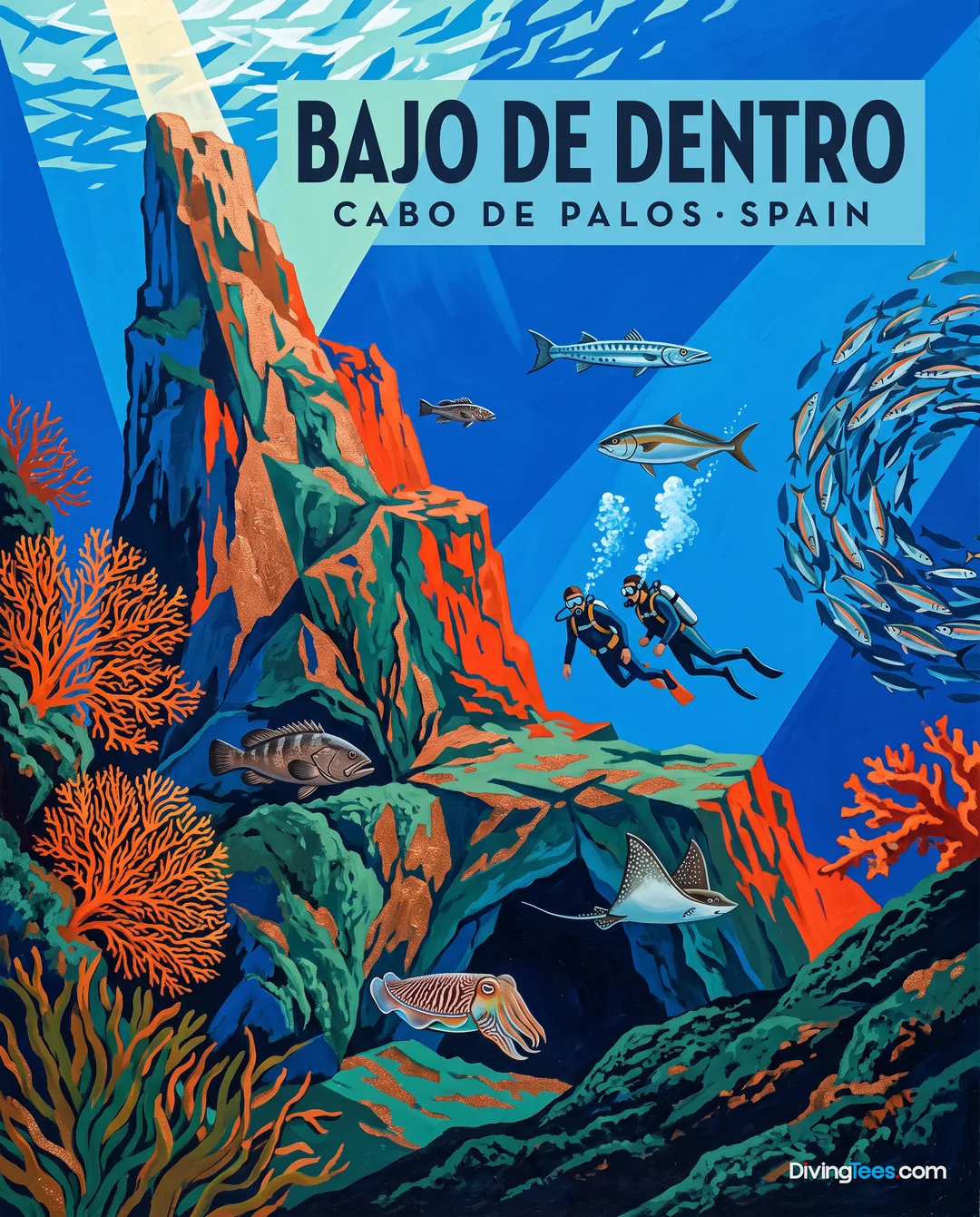
Once you submerge, the seabed reveals a series of tower-like rock formations and ancient-looking underwater structures. These formations create a complex landscape of small valleys and ridges that break up the sandy bottom. You will find several hidden swim-throughs within these rocky outcrops, which provide both navigation points and shelter for resident marine life. The topography is not a sheer wall, but rather a textured, broken terrain that encourages slow, methodical exploration. Moving between these rock towers allows you to encounter different micro-habitats within a very limited depth range.
The dive profile is relatively shallow and consistent, typically oscillating between 12 and 22 metres. This depth range makes it an excellent choice for training or for divers who want to extend their bottom time by avoiding the rapid nitrogen loading associated with deeper wrecks or walls. You can spend a significant amount of time navigating the rocky terrain and the nearby seagrass meadows. These meadows, located primarily to the west of the main rock structures, offer a completely different visual contrast to the hard bottom of the cove. The transition from rocky outcrops to soft seagrass provides a varied landscape for a single dive.
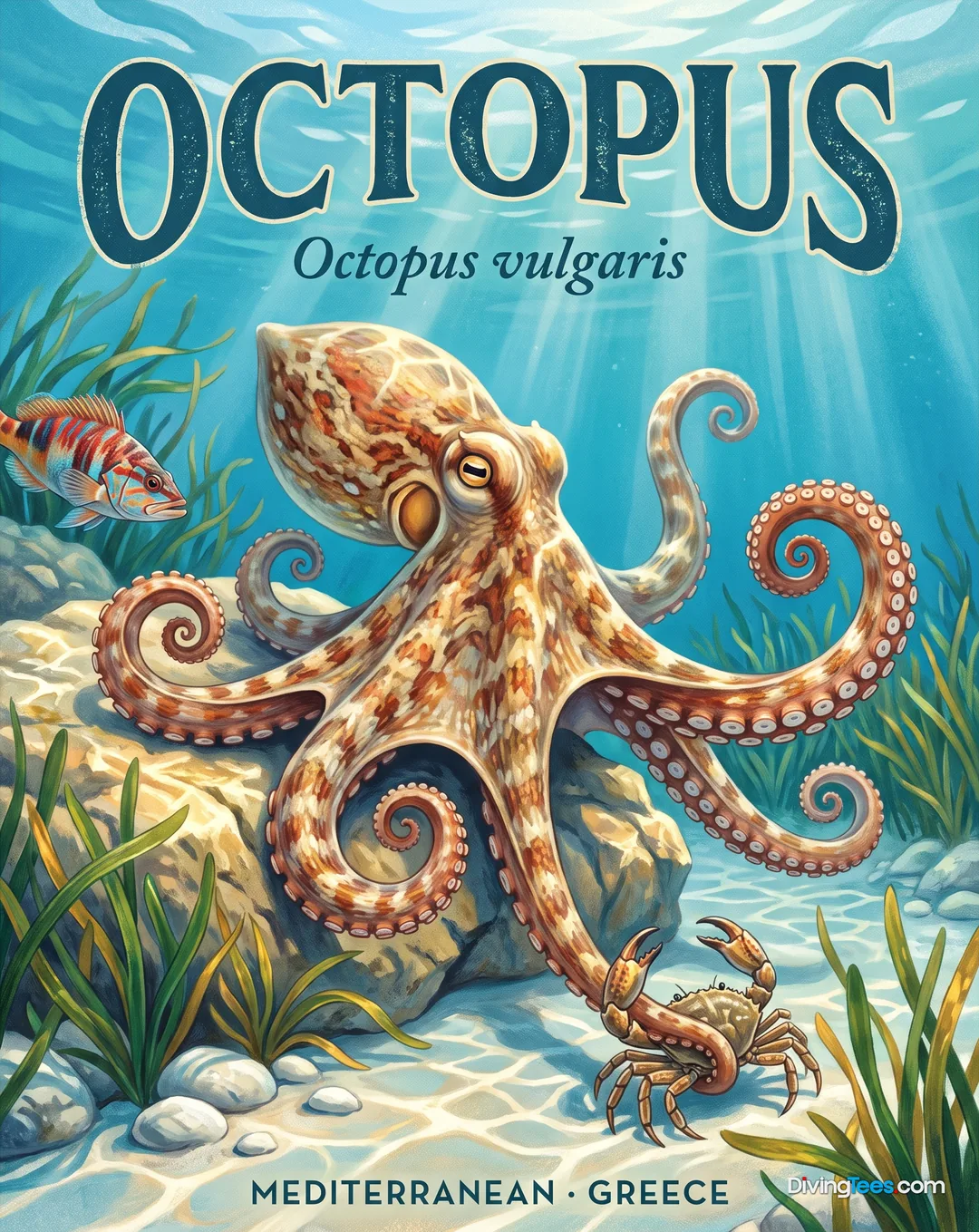
Marine life at Cala Correos is well-distributed throughout the rocky crevices and the surrounding sandy patches. You can frequently spot various species of Wrasse and Damsel fish darting around the rock towers. Larger residents like Grouper often hold position near the larger formations or within the darker recesses of the swim-throughs. If you keep a steady eye on the sandy areas and the edges of the rocks, you may also encounter Octopus or Moray eel tucked into their hiding spots. These species are characteristic of the Mediterranean rocky reef ecosystems found throughout this region.
For those interested in mid-water activity, Bream and Barracuda are often seen cruising the area. They tend to move through the water column above the rocky structures, occasionally dipping down toward the seabed. The presence of these larger predatory fish adds a sense of movement to the site, even when the environment feels calm. The visibility in this area is generally good, ranging from 10 to 20 metres, which helps in spotting these fish from a distance. The light penetration at these shallow depths ensures that the colors of the seabed and the textures of the rocks remain clear.
The site is particularly notable for its calm nature compared to the high-energy sites found in the nearby marine reserve. Because it is a sheltered cove, the current is typically light, allowing for a very relaxed buoyancy control experience. However, the SSE orientation means that if there is a significant swell or wind from that direction, the surge can increase at the shoreline. It is important to be mindful of the sea state during your entry and exit from the shore. When the surface is calm, the site remains one of the most stable and predictable shore dives in the Cabo de Palos area.
The site has a depth range of 12 to 22 metres and is accessible from the Open Water Diver level. Expect light currents, though surge may increase during periods of heavy swell. Visibility typically ranges between 10 and 20 metres. The best time to dive this site is from spring to autumn.
You can dive Cala Correos from spring through autumn. The sheltered cove faces SSE, helping protect it from the open sea, although swell or wind from that direction can increase surge near the shoreline. Check the sea state before entering and exiting, particularly when conditions are unsettled.
Cala Correos is accessible from the Open Water Diver level. The seabed generally ranges from 12 to 22 metres, with a shallow, consistent profile rather than a deep drop-off. This allows you to explore rock formations, swim-throughs, and nearby seagrass meadows while extending your bottom time.
You should generally expect light currents at Cala Correos, making buoyancy control and relaxed exploration manageable. The sheltered cove is usually calm, but surge can increase during heavy swell, especially along the shoreline. Pay attention to sea conditions during your shore entry and exit, particularly with SSE wind or swell.
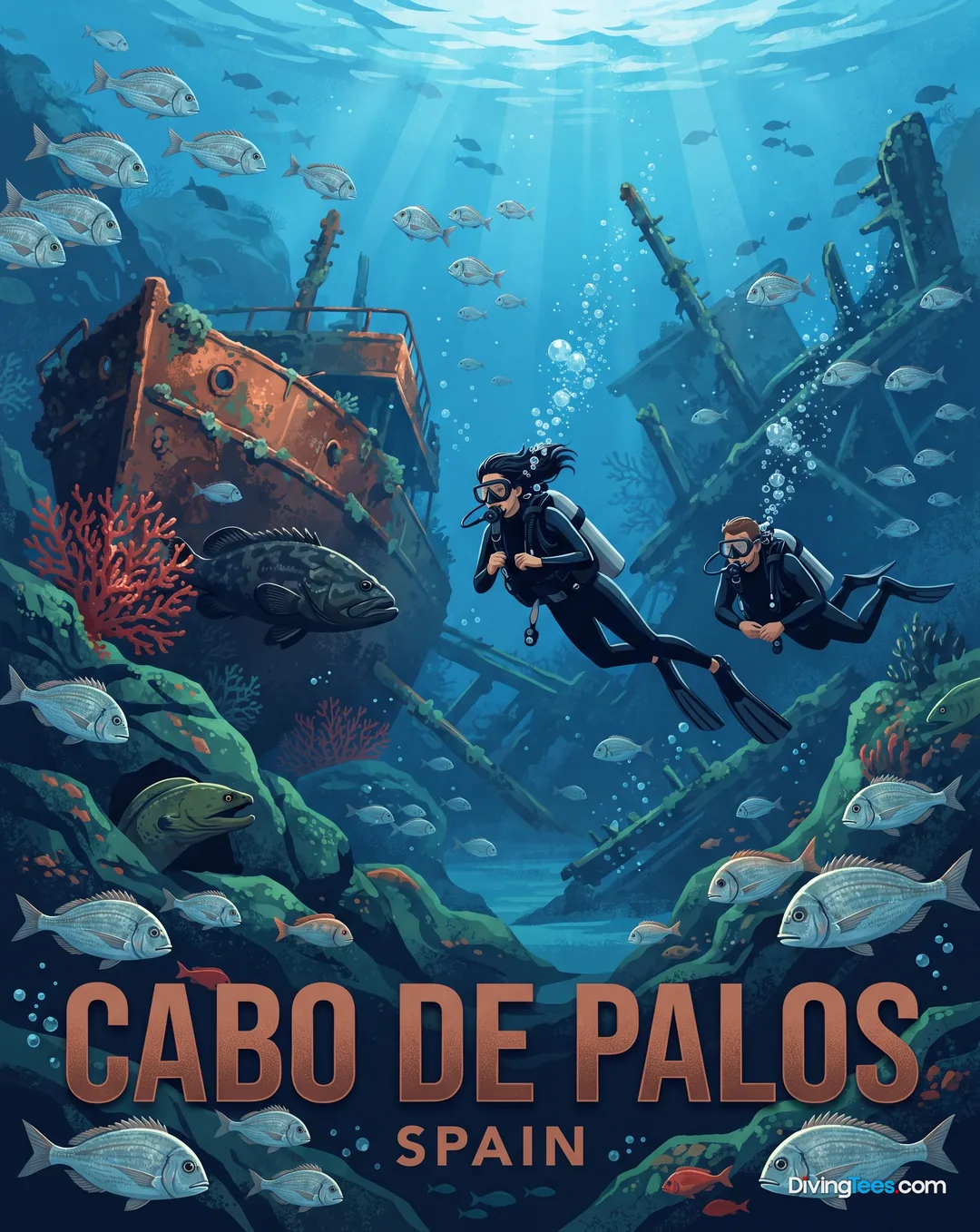
At Cala Correos, you can explore tower-like rock formations, small valleys, ridges, and hidden swim-throughs above sandy patches. Seagrass meadows lie to the west. Resident life includes Grouper, Moray eel, Wrasse, Damsel fish, and Octopus, while Bream and Barracuda may cruise above the rocks.