
Kahaia Lodge
★ 9.8/10 (90 reviews)
1.4 km away as the crow flies
Dive centre · Rangiroa · French Polynesia
4.8557 Google reviewsExperience the legendary currents of the Tiputa and Avatoru passes aboard professional semi-rigid boats equipped with Scubapro kit.
For subtitles in English: start the video firstthen click the gearat the top right of the video, select “Subtitles/CC”, then “Auto-translate” and choose “English”.
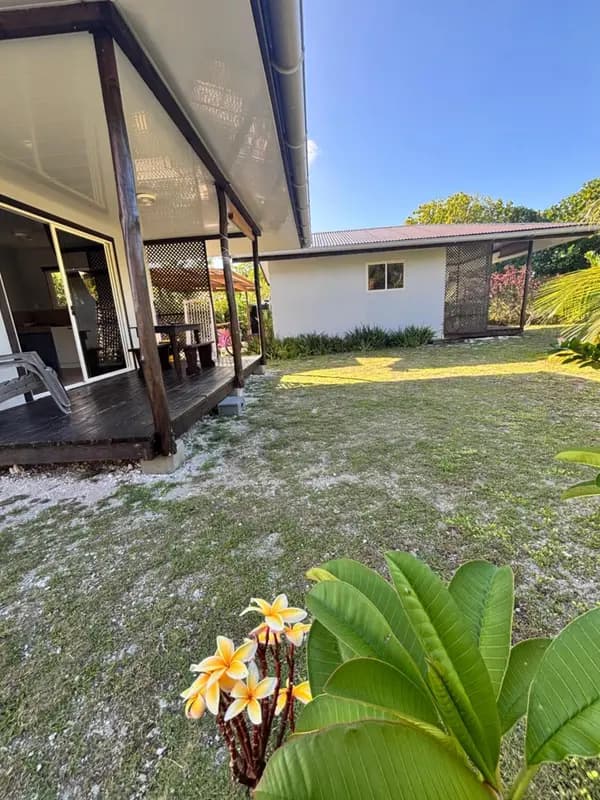
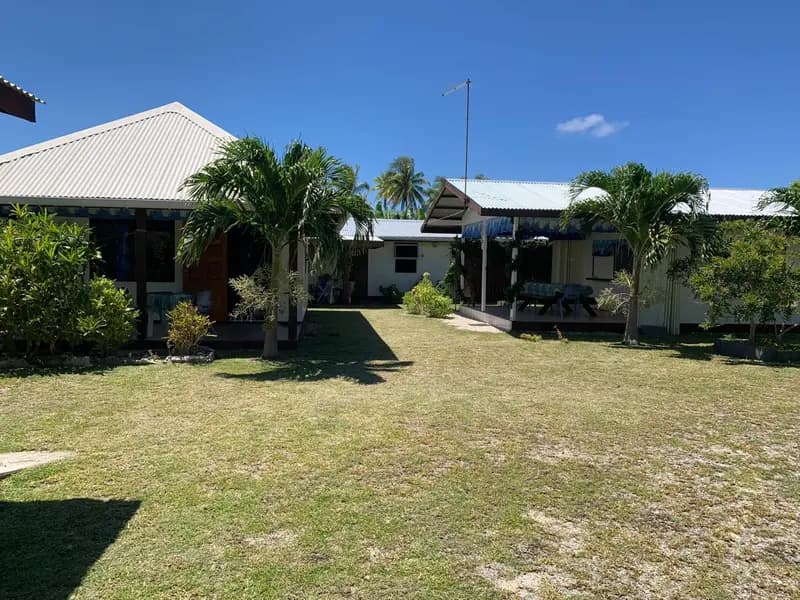
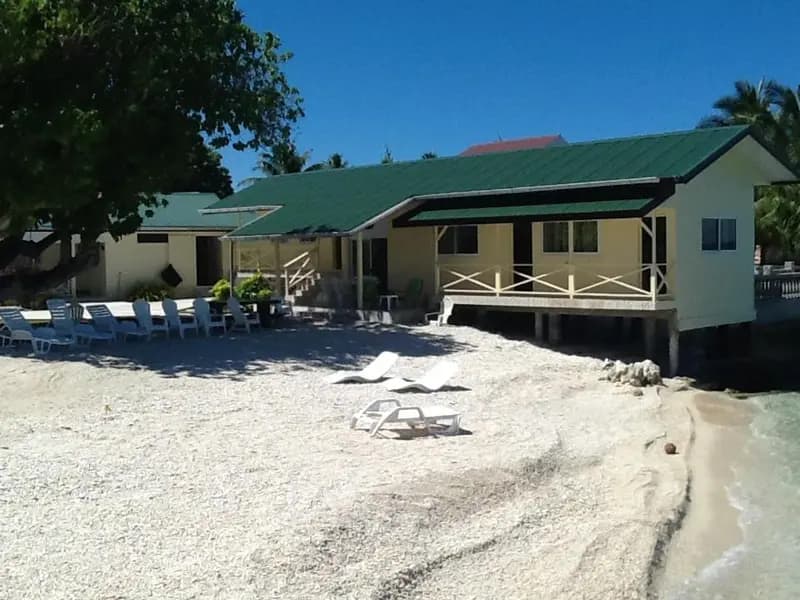
The 6 Passengers is a long-established dive centre situated in Rangiroa, French Polynesia, positioned on the beach of Ohutu Bay near the Kia Ora village. The centre sits at the edge of a natural marina, providing direct access to the lagoon and the powerful currents of the surrounding passes.
With over 25 years of experience, the centre has built a reputation for expertise in big animal encounters. It operates as a PADI 5 Star Dive Resort and a PADI National Geographic Dive Center, focusing on a natural approach to observing the diverse marine life of the Tuamotu Archipelago.
The team consists of state-certified instructors who are specifically trained to manage the challenging diving conditions found in Rangiroa. Their expertise is essential for navigating the strong currents and varying depths of the local passes.
The centre is designed to handle larger groups of up to 30 divers while maintaining professional standards. For those seeking a more tailored experience, private instructor options and private boat charters are available.
The centre provides a comprehensive range of training, from beginner levels through to advanced certifications. You can complete your Open Water Diver course or progress through Advanced Open Water and higher-level certifications.
They also cater to divers following different certification paths, including CMAS Niveau 1, Niveau 2, and Niveau 3, as well as FFESSM and CEDIP/ANMP standards. For those looking to specialise, PE40 training is available.
The centre operates four semi-rigid boats, each powered by twin 250hp motors to ensure reliable transit through the passes. These vessels are equipped with VHF radio, a first aid kit, and oxygen therapy for safety.
Each boat is set up to handle multiple daily trips, including morning, afternoon, and sunset sessions. This scheduling allows the team to time departures with the changing currents to provide the best possible diving conditions.
The shore-based facilities include a dedicated technical room and a clubhouse for post-dive debriefings. A large 450m² wooden deck and a pontoon allow for efficient boarding and equipment preparation.
On-site gas management is handled by two Bauer mini vertical compressors with a 14m³ capacity each. The centre provides a wide variety of cylinders, including 6L, 12L, and 15L options, and offers Nitrox for divers looking to extend their bottom time.
Passe de Tiputa (La Grotte aux requins) is a drift dive involving a cavity at 35 metres where grey sharks congregate. After observing the sharks, you drift with the current through the pass toward the calm waters of the lagoon.
Passe de Tiputa (Les Canyons) is a site reserved for experienced divers due to the heavy currents found in the canyon sections. It is a premier location for seeing grey sharks and is particularly notable in June during the shark reproduction season.
Passe de Tiputa (La Marche) is a deep dive reaching depths of 45 to 55 metres, typically best visited between January and March. This site offers the chance to see large schools of leopard rays and hammerhead sharks.
Passe d'Avatoru (La Petite Passe) is a challenging dive for experienced divers due to the strong, impetuous currents in the channel. The dive follows the current into the lagoon, passing through colourful, life-filled small caves and offering encounters with manta rays and whitetip reef sharks.
And some of the dive sites the centre runs.
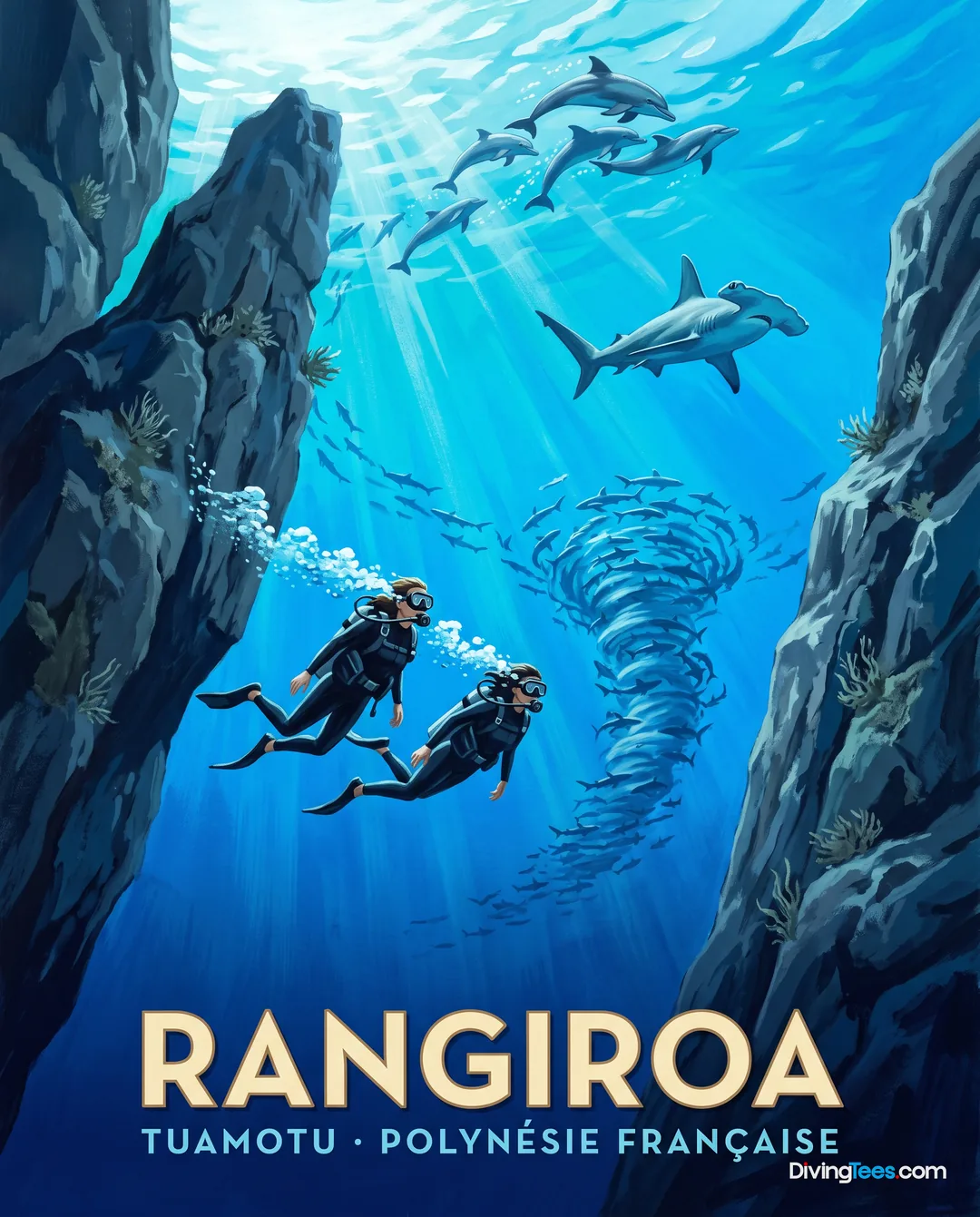
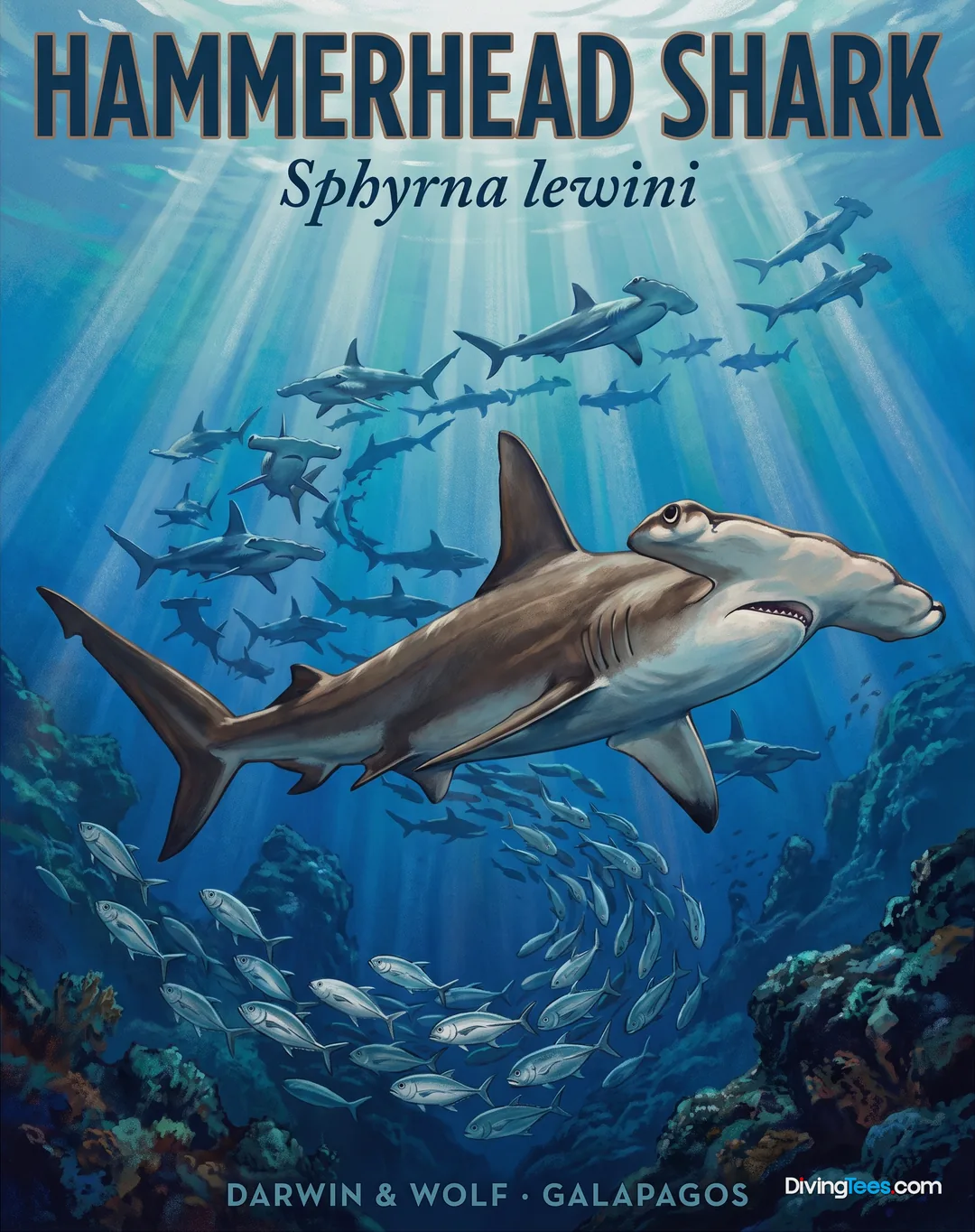
The passes are famous for large pelagics. You can expect to encounter grey sharks, whitetip reef sharks (Triaenodon obesus), and silky sharks. During the months of January to March, the area sees frequent visits from leopard rays and hammerhead sharks (Sphyrna lewini), while June is the ideal time to witness the reproduction of grey sharks.
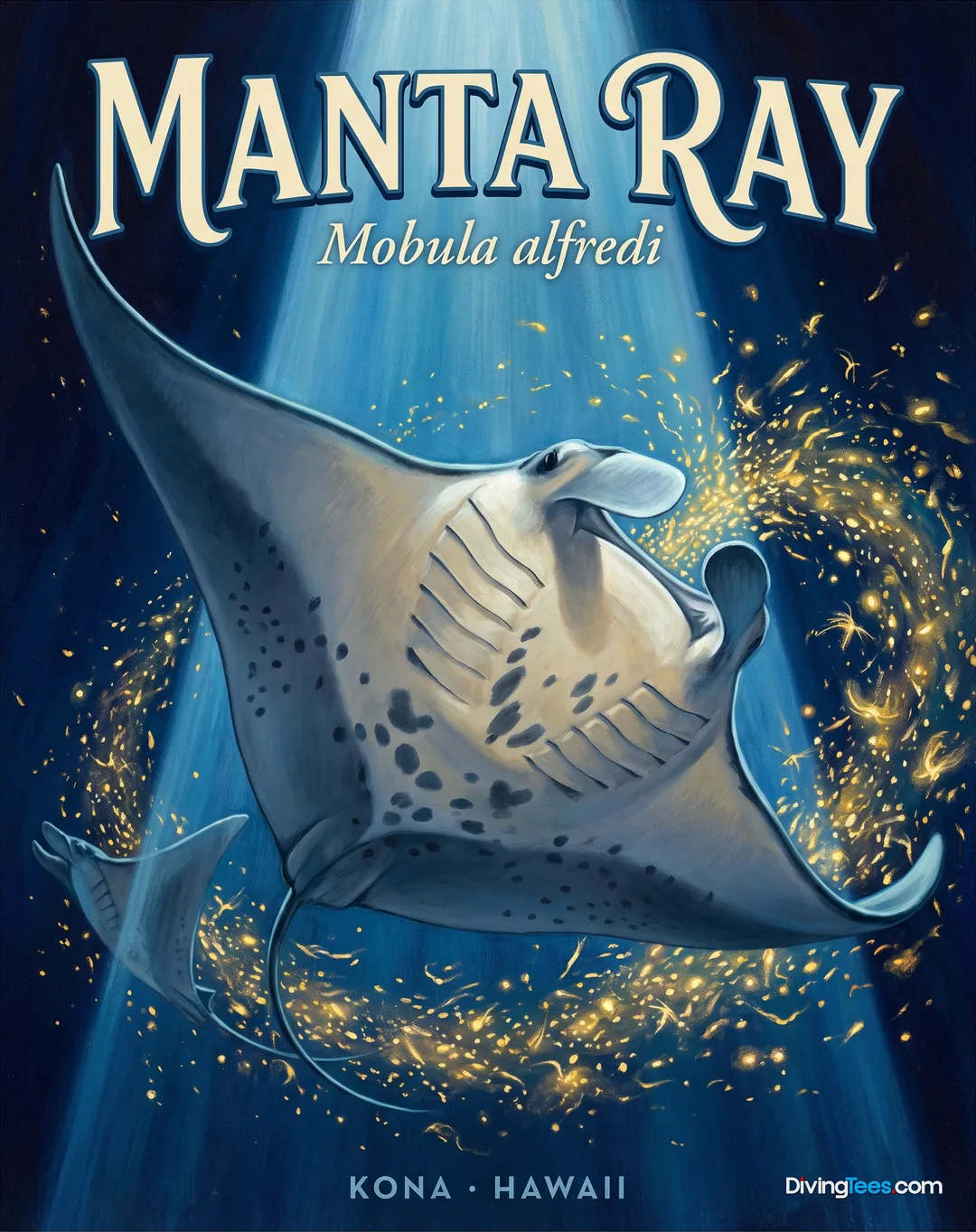
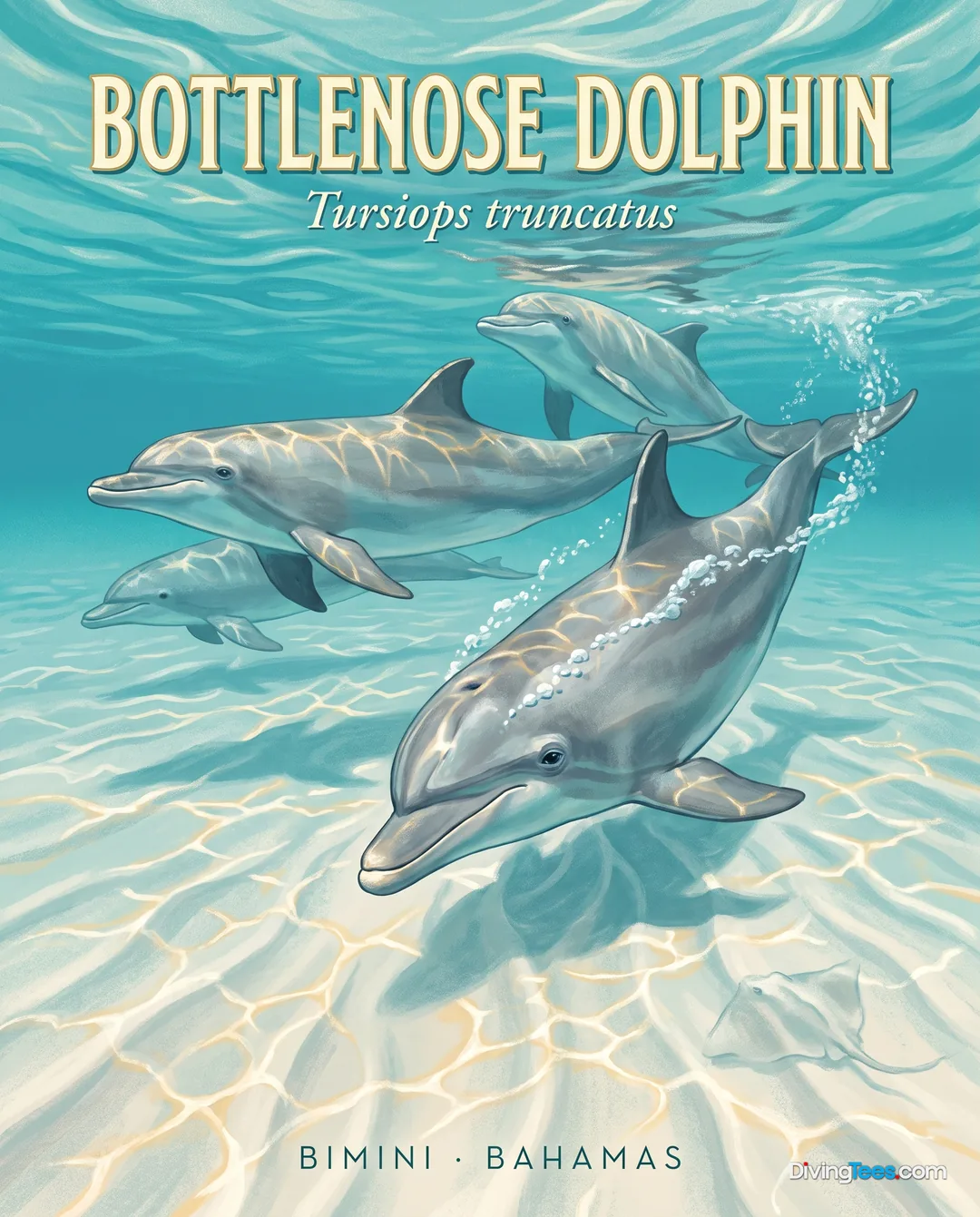
In the open water and near the reef edges, you will find bottlenose dolphins, manta rays (Mobula alfredi), and various species of tuna (Thunnus). Large schools of bigeye trevally and yellow snappers are common, alongside Napoleon wrasse (Cheilinus undulatus) and various turtles (Cheloniidae).
Smaller reef residents include great barracudas (Sphyraena barracuda), jack (Carangidae), and various tropical reef fish. The reef structures themselves are enriched with vibrant life, providing a backdrop of corals and diverse marine architecture.
Diving in Rangiroa is heavily dictated by the tidal currents within the Tiputa and Avatoru passes. These currents can be very strong, and the centre optimises its daily schedule to match the incoming or outgoing flows.
Divers should be prepared for varying conditions, including the possibility of encountering counter-currents. The centre manages these variables by selecting specific dive sites based on the daily movement of the water to ensure safety and optimal viewing.
Hello, I'm Marina, DivingDeal.com's AI assistant. I answer in detail about hotels, dive centres and liveaboards.

Thinking about the whole trip and the flights? Talk it over with Edith →
Marina is an AI. Some links are affiliate links: DivingDeal may earn a commission, at no extra cost to you. Bookings are made with the partner.