Liveaboards · Egypt
Blue Pearl — an established Red Sea dive boat built around the diving
What makes this boat unique
- Blue Pearl carries up to 20 divers in 10 air-conditioned cabins with private bathrooms.
- Free nitrox is available, with 12-litre aluminium tanks, DIN valves and INT adapters on board.
- The shaded dive deck has a camera area, charging stations, separate camera rinse and two Yamaha tenders.
- Routes from Hurghada include North and Tiran, North and Wrecks, North and Brothers, and North-Tiran-Dahab, all listed at 8 days and 7 nights.
For subtitles in English: start the video firstthen click the gearat the top right of the video, select “Subtitles/CC”, then “Auto-translate” and choose “English”.
The invitation
Blue Pearl suits divers who choose a liveaboard for the water first, but do not want to give up a proper cabin, hot showers or good food after the fourth dive. It is an established Red Sea boat rather than the newest hull in the fleet, and that is part of the choice: the boat has been working since 2003, while its crew, guides and galley are the parts passengers rate most strongly. The diving programme can move from shallow coral gardens and walls to wreck remains, current-swept marine parks and the open-water reefs of Brothers Islands. Come here for a week in which the boat gets the practical things right, the guides explain enough for divers to explore with their buddy, and the Red Sea remains the main event.
Boarding
From the dock, Blue Pearl presents a substantial liveaboard with a classic rather than ultra-modern character. The 2013 renovation matters more than the launch date: it keeps an older hull relevant without pretending it is a new yacht. Inside, the layout separates the air-conditioned salon from the outdoor decks and the dive platform, so wet gear and evening clothes do not compete for the same space. The boat is large enough to spread out between dives, yet small enough that a group of 20 does not disappear into separate corners. Once aboard, the useful signs are the diving platform, the shaded work areas and the direct movement between cabin, saloon and sea. This is a boat chosen for a proven diving setup and a crew-led week, not for showroom gloss.
The atmosphere on board
Blue Pearl's atmosphere is shaped by a local and international crew who speak English and German, and by guides who stay involved beyond the briefing. The tour guide introduces the boat, safety and diving arrangements on the first evening, then the week quickly becomes a shared project: tanks are ready, jackets stay mounted, meals appear between dives, and the same faces meet again at the platform. Divers with fewer logged dives are placed in small groups with more experienced divers or a guide, rather than being left to match the pace of the strongest team. Evenings tend to gather people in the saloon or on deck, comparing the day's wall, wreck or shark sighting. Blue Pearl is remembered less for being the newest boat than for the way the crew carries the week.
The sites you’ll dive
The route selection is the reason to choose Blue Pearl carefully: the recorded departures are 8 days and 7 nights from Hurghada to Hurghada, covering North and Tiran, North and Wrecks, North and Brothers, or North-Tiran-Dahab. Northern reefs bring walls, pinnacles and wrecks. At Fanadir North, a vegetated wall reaches -30m and shelters stonefish, scorpionfish, lionfish, morays and blue-spotted rays; Gotha Abu Nugar North stays shallow, with a coral garden down to -9m. Shaab Ruhr Umm Gamar combines an oval reef, fish-filled plateau, pinnacles and the remains of at least three wrecks to -40m. Shaab Sabina is a maze-like coral garden to -14m, while El Fanadir follows a wall to -40m and includes a cleaning station on a shallow pinnacle. The stronger marine-park itineraries reach Brothers Islands, isolated oceanic reefs dropping to -85m, where current and pelagic encounters define the dive. Other recorded sites include Ras Abu Galum to -80m, the Blue Hole to -130m, Napoleon Reef to -30m, The Islands to -18m, Strait of Tiran to -40m and the Canyon of Dahab to -54m. Exact sites depend on the selected route, weather and the group.
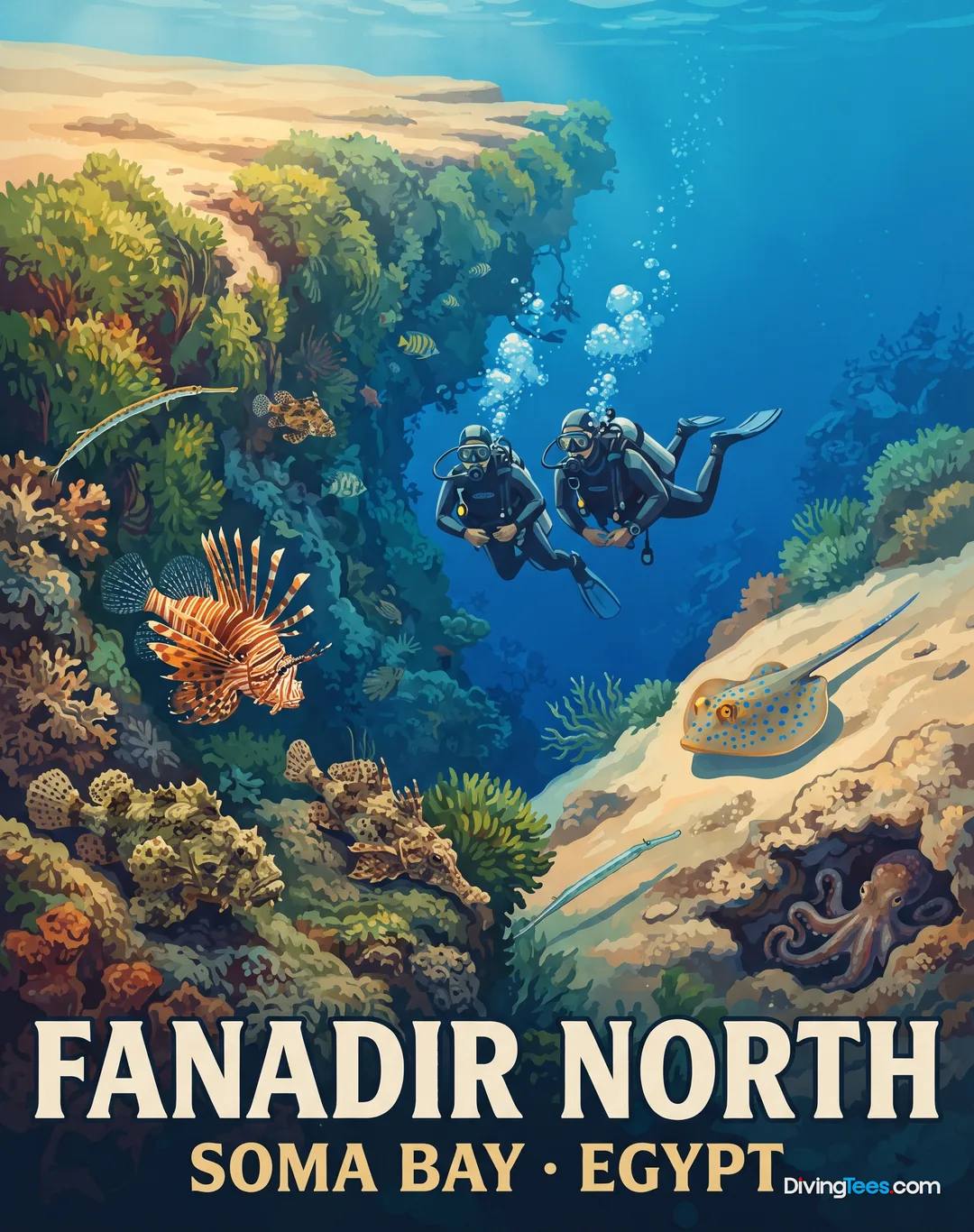
Fanadir North →
Max. depth · 30 m
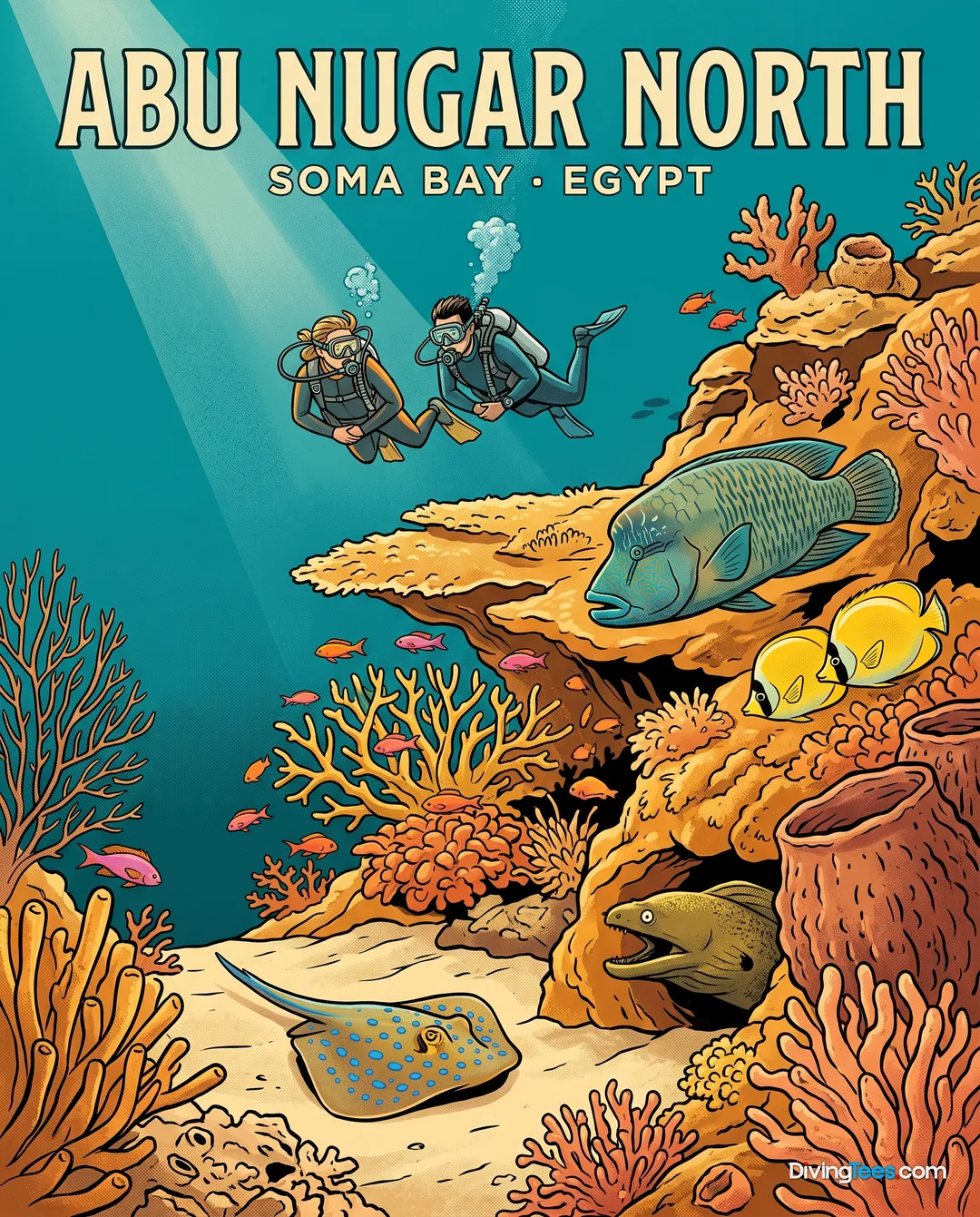
Gotha Abu Nugar North →
Max. depth · 9 m
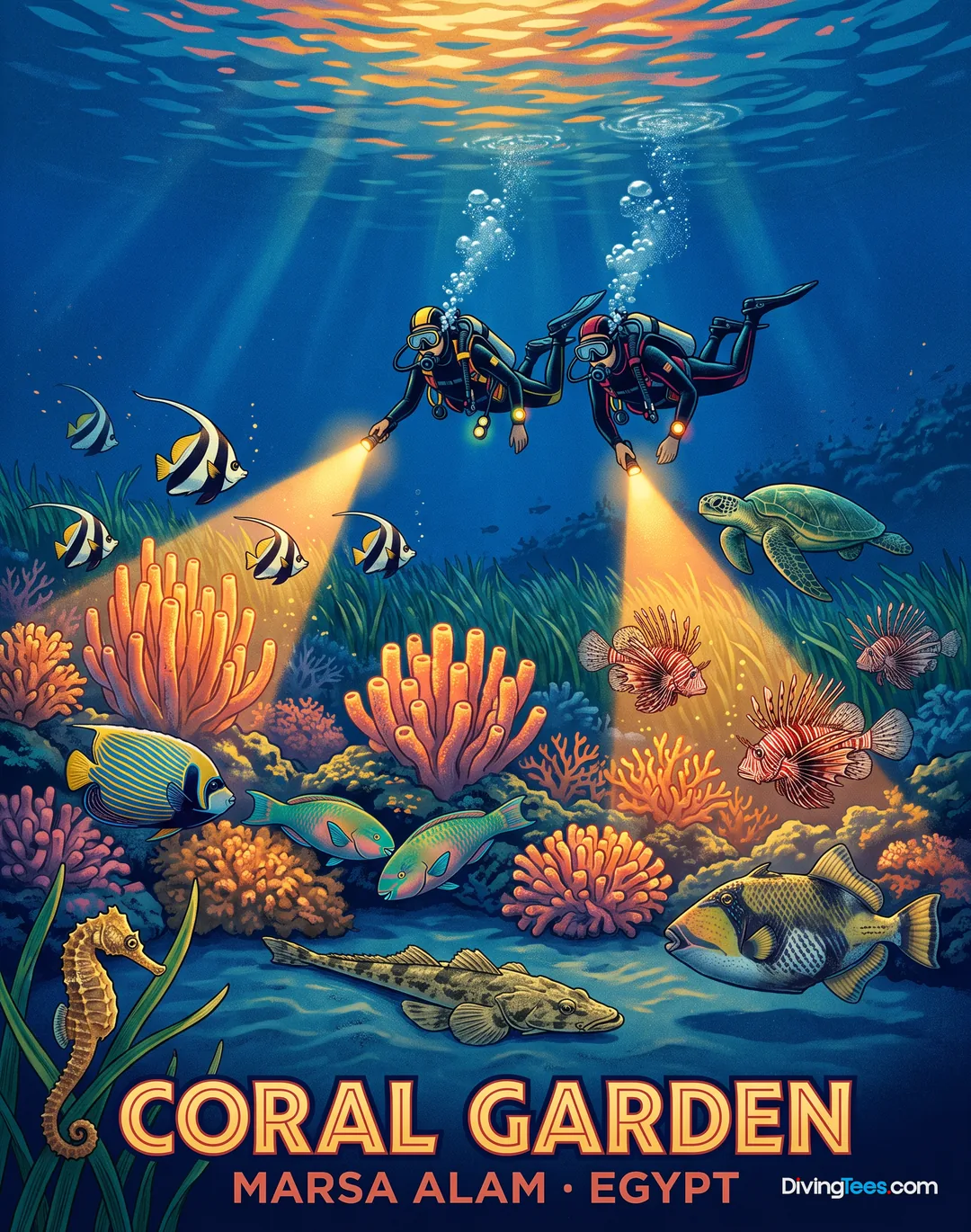
Coral Garden →
Max. depth · 20 m
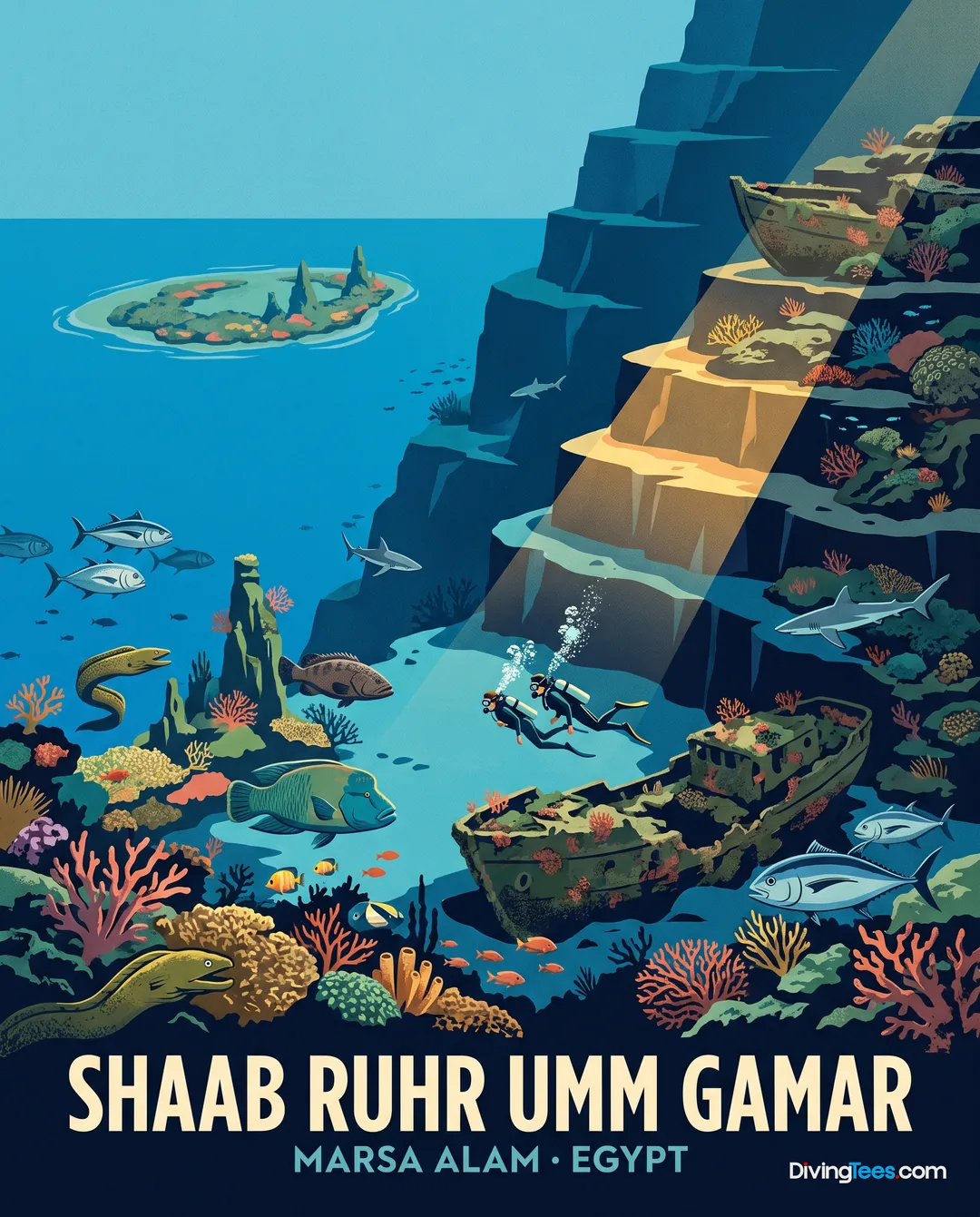
Shaab Ruhr Umm Gamar →
Max. depth · 40 m
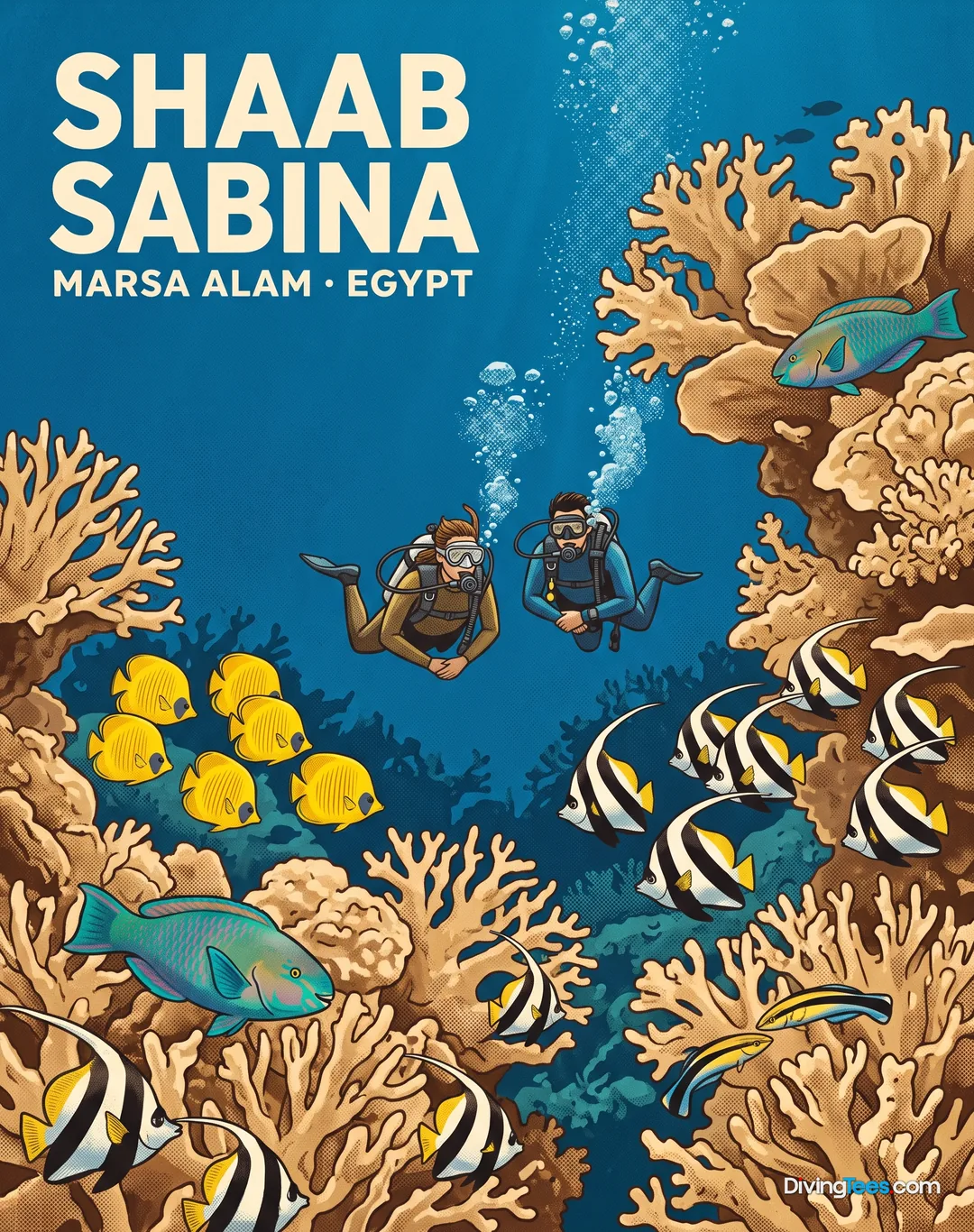
Shaab Sabina →
Max. depth · 14 m
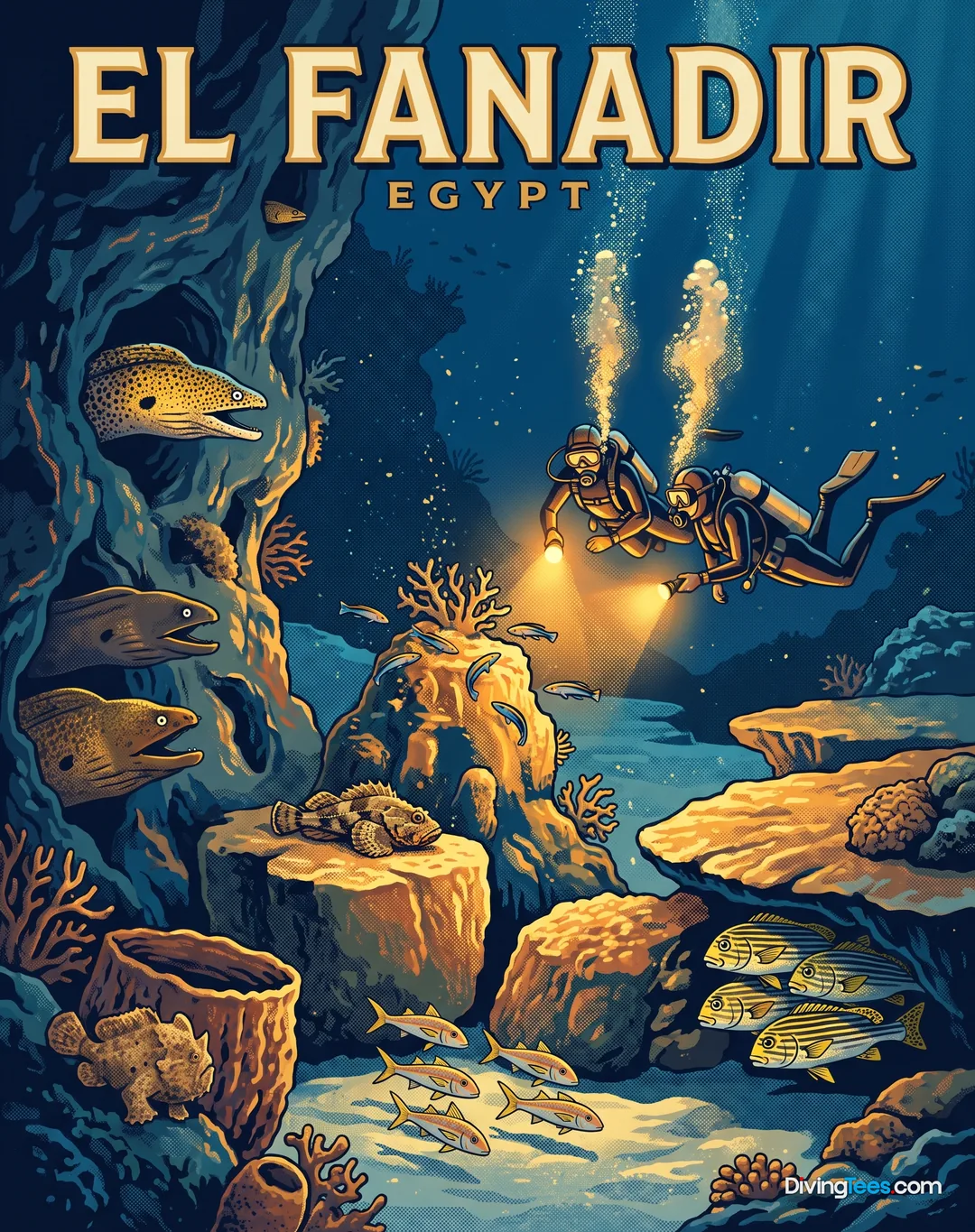
El Fanadir →
Max. depth · 40 m
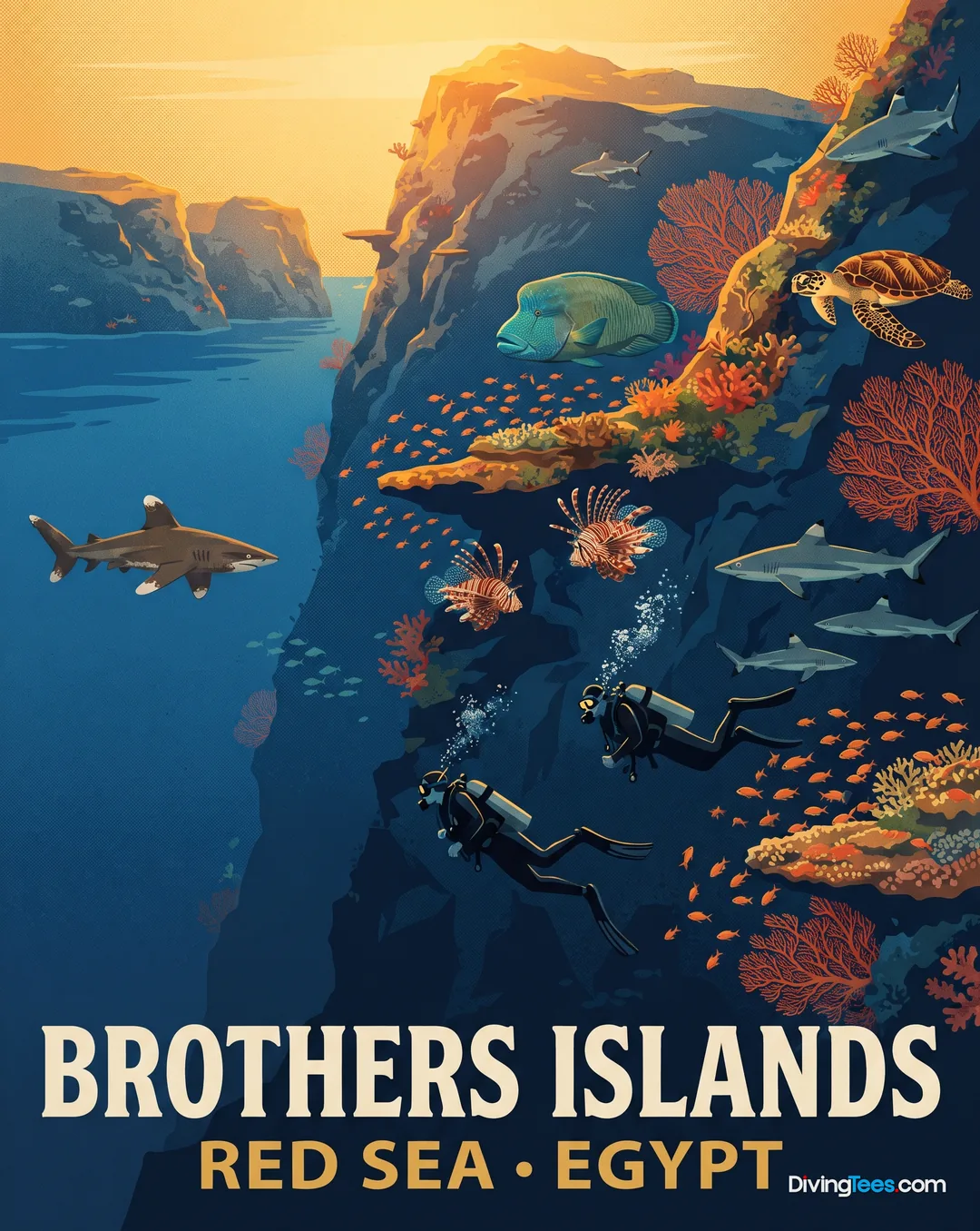
Brothers Islands →
Max. depth · 85 m
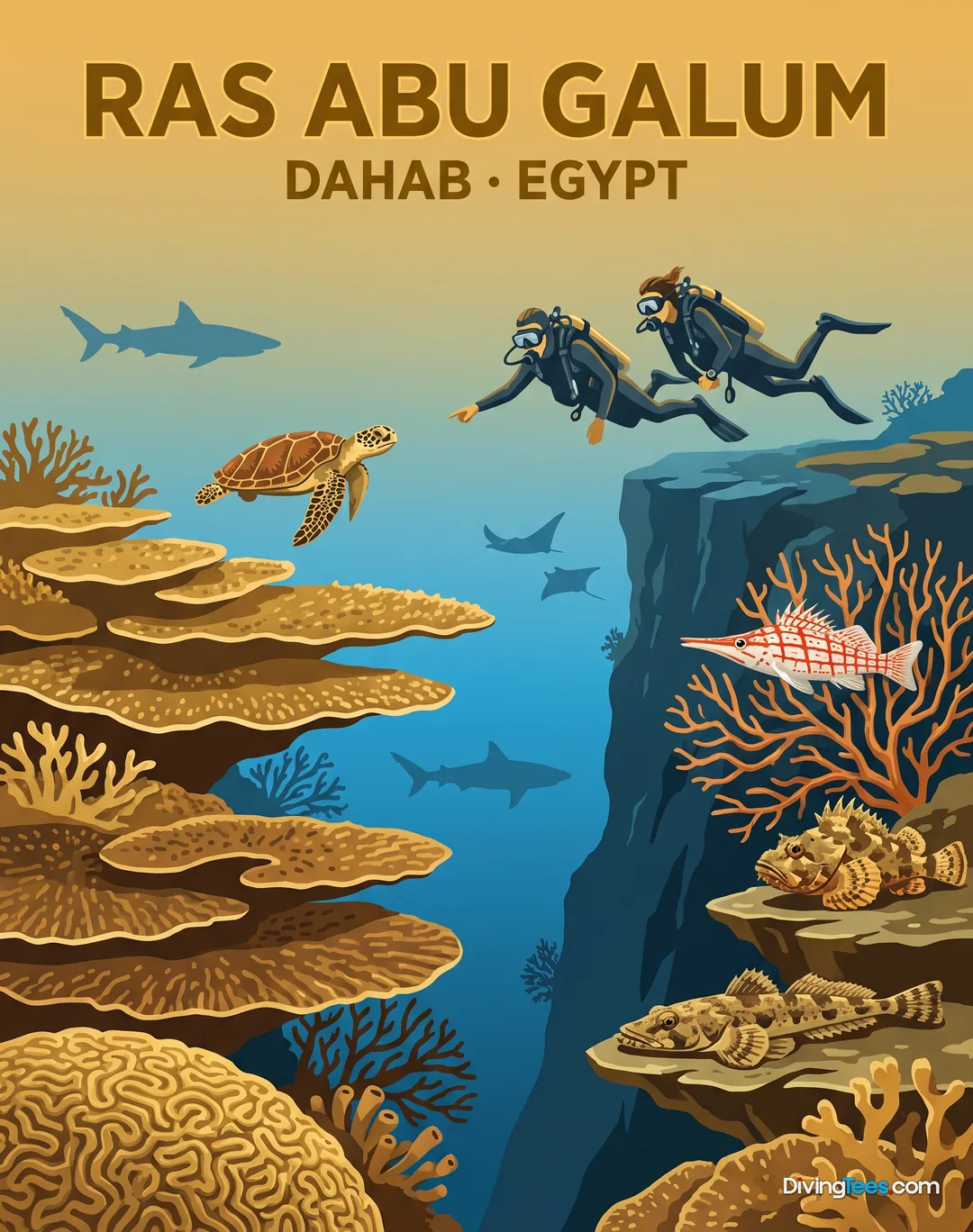
Ras Abu Galum →
Max. depth · 80 m
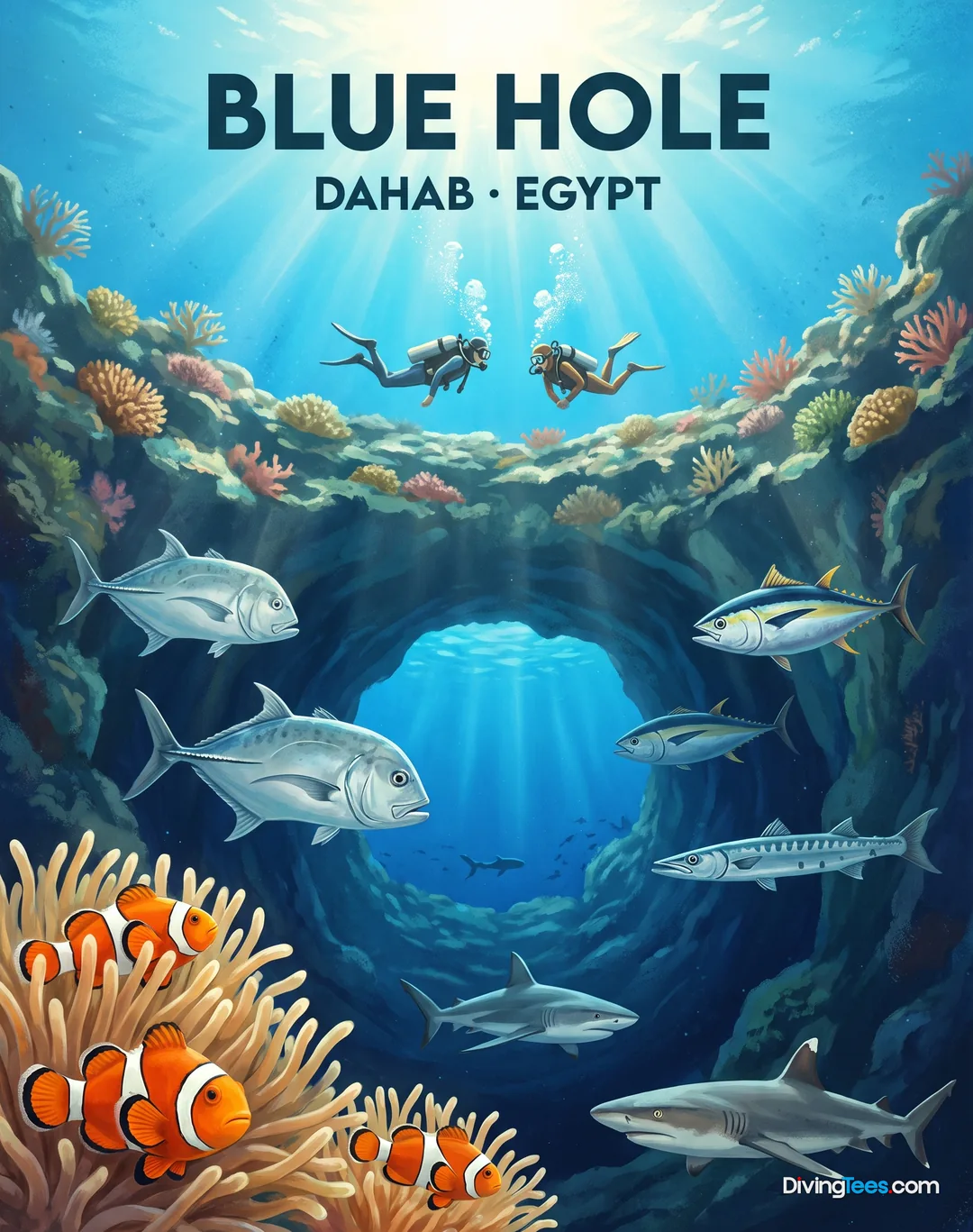
Blue Hole →
Max. depth · 130 m
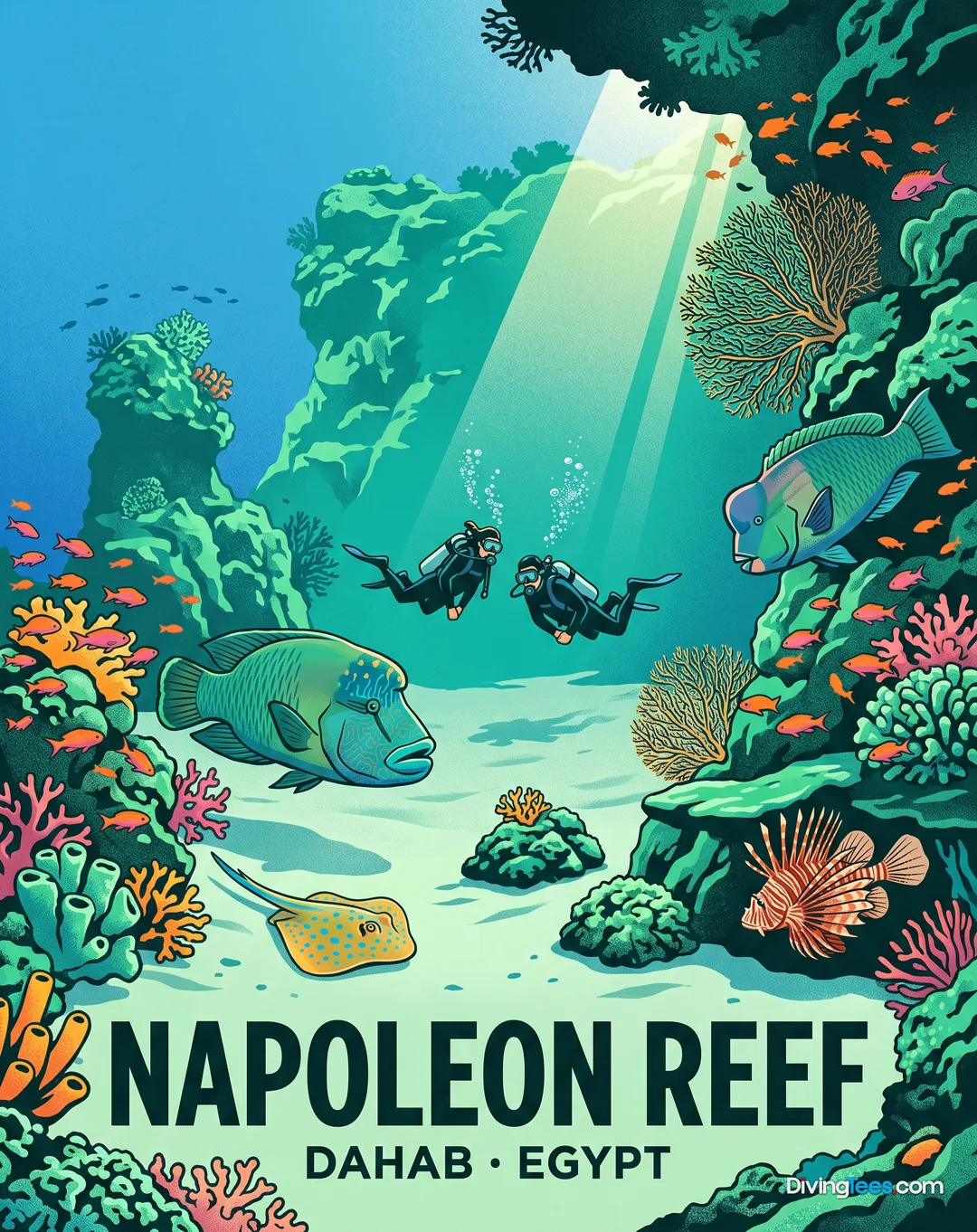
Napoleon Reef →
Max. depth · 30 m
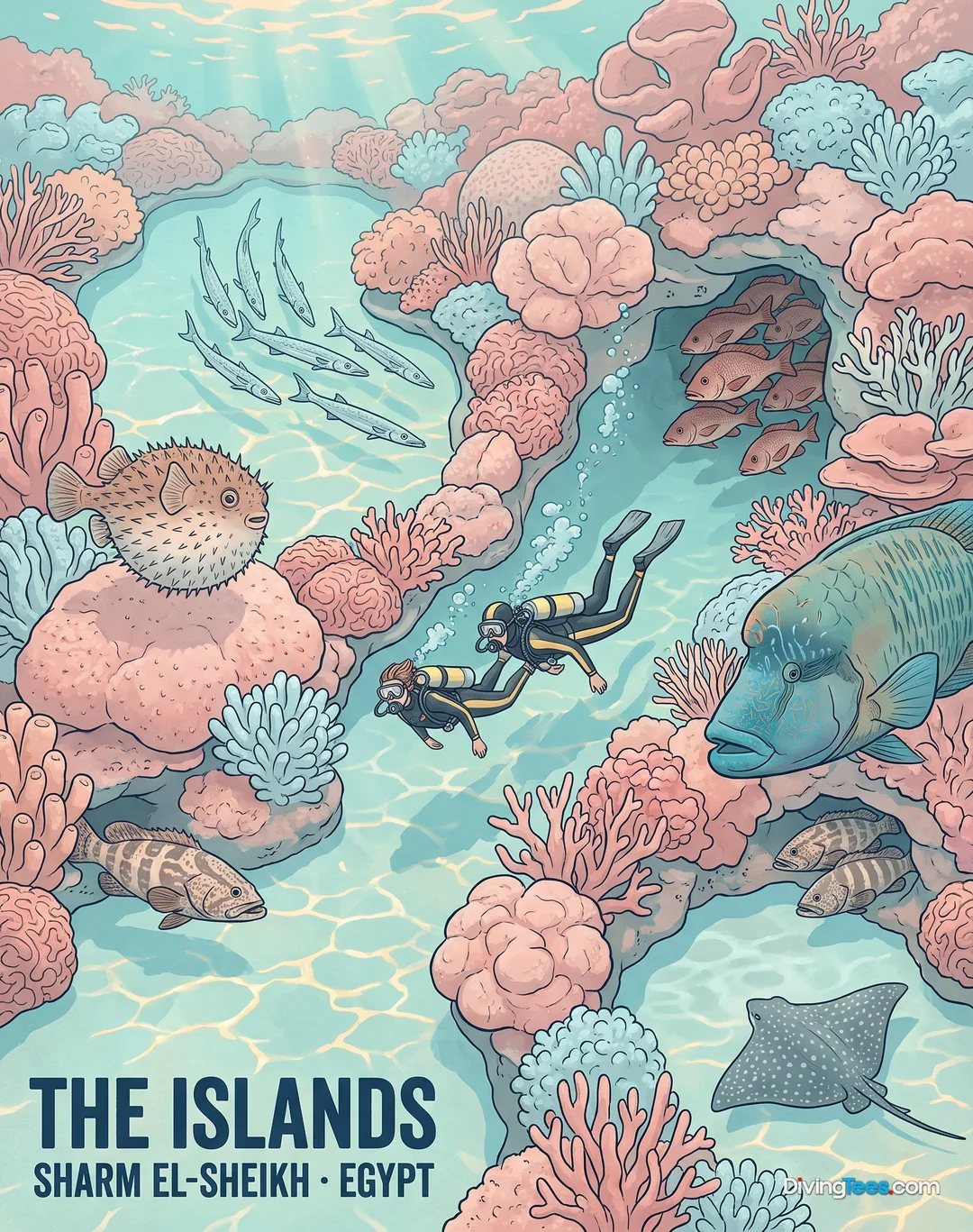
The Islands →
Max. depth · 18 m
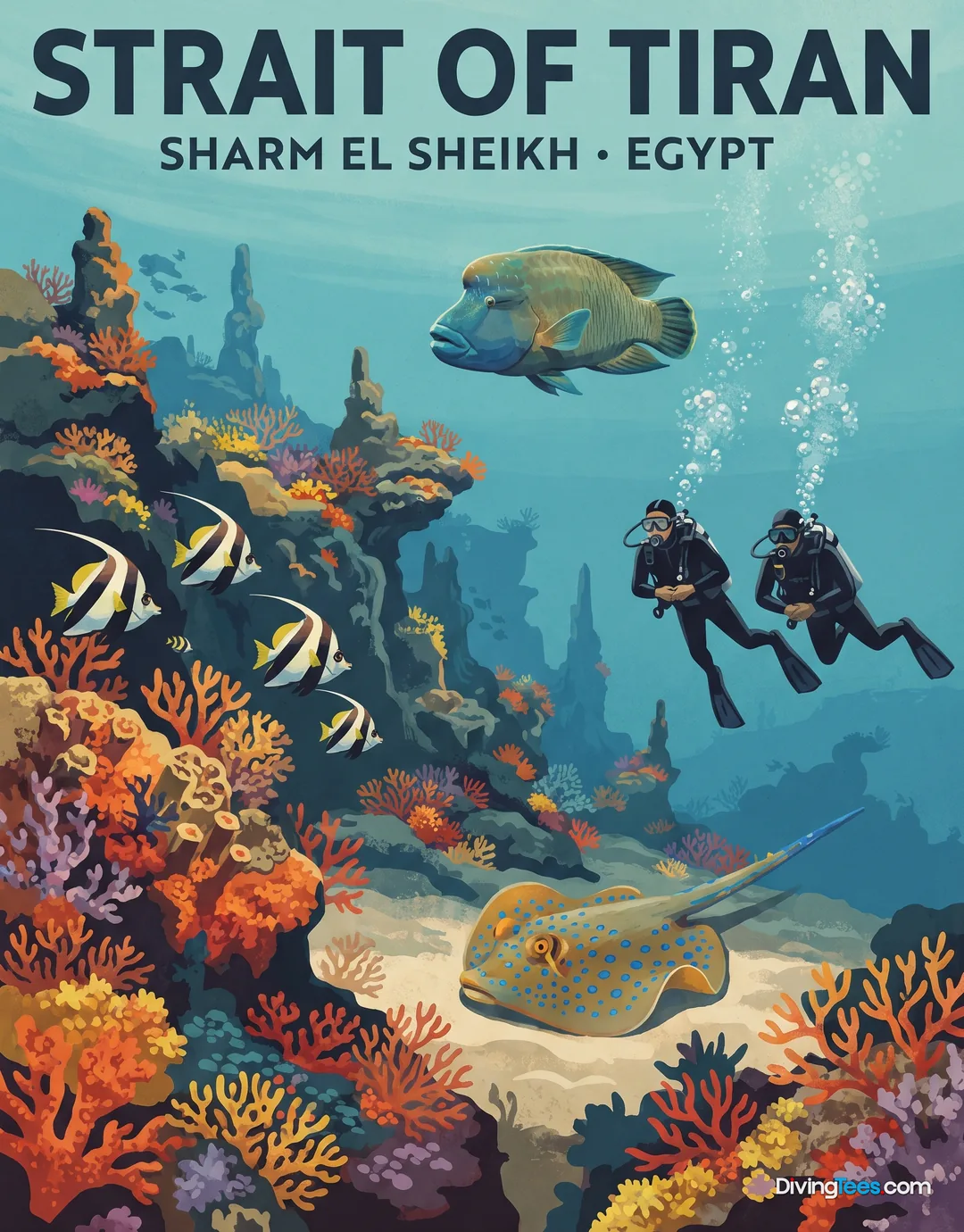
Strait of Tiran →
Max. depth · 40 m
What you’ll meet underwater
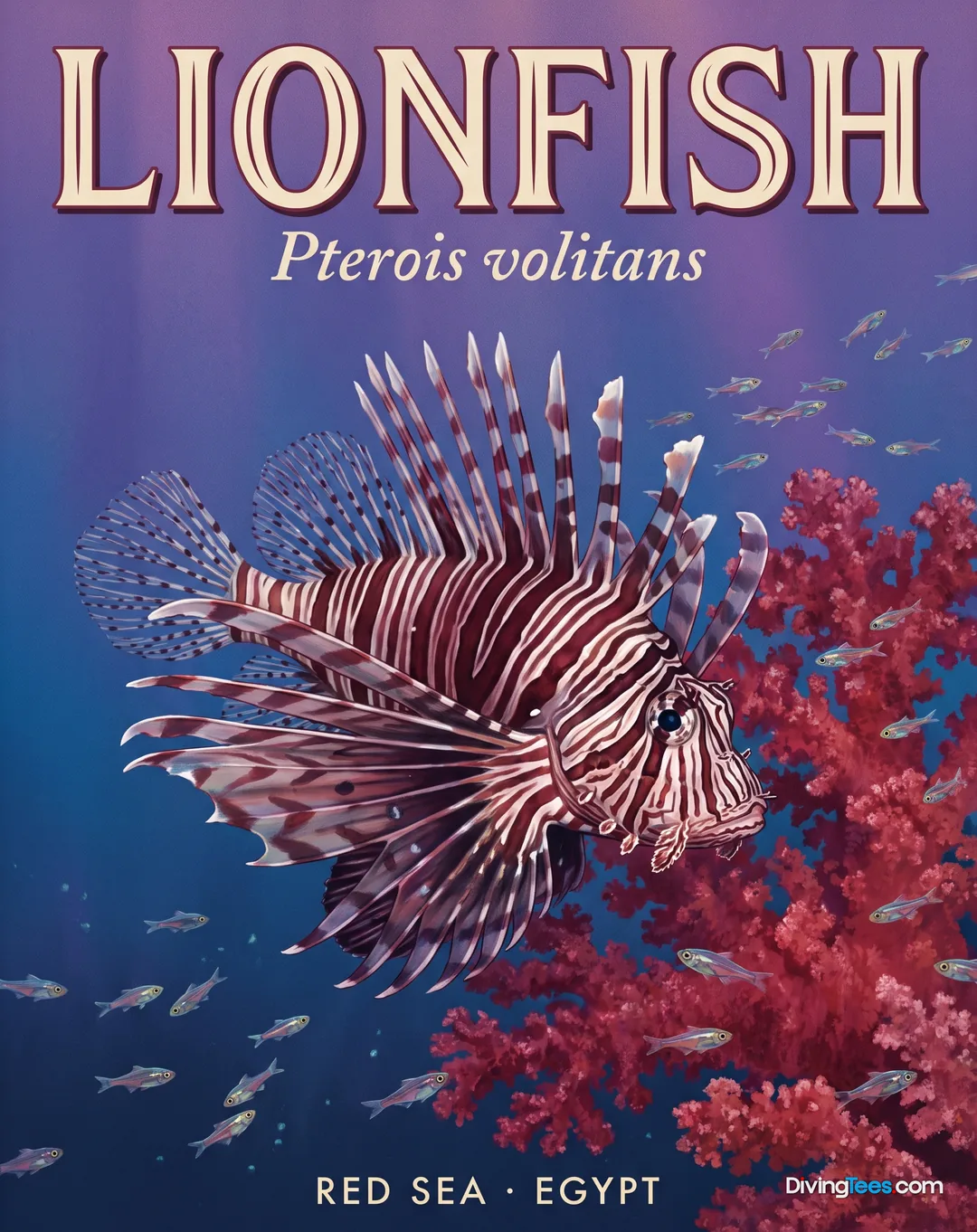
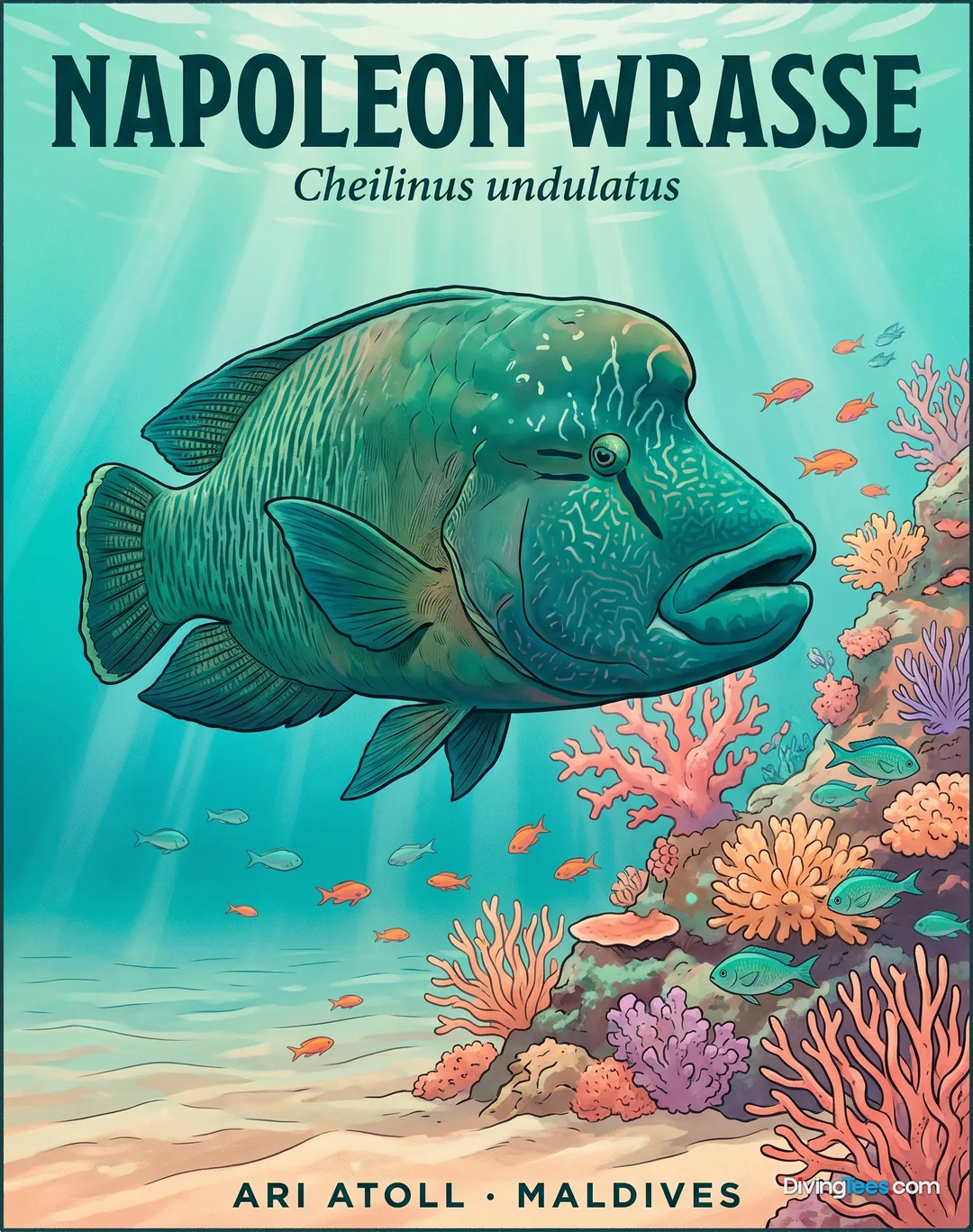
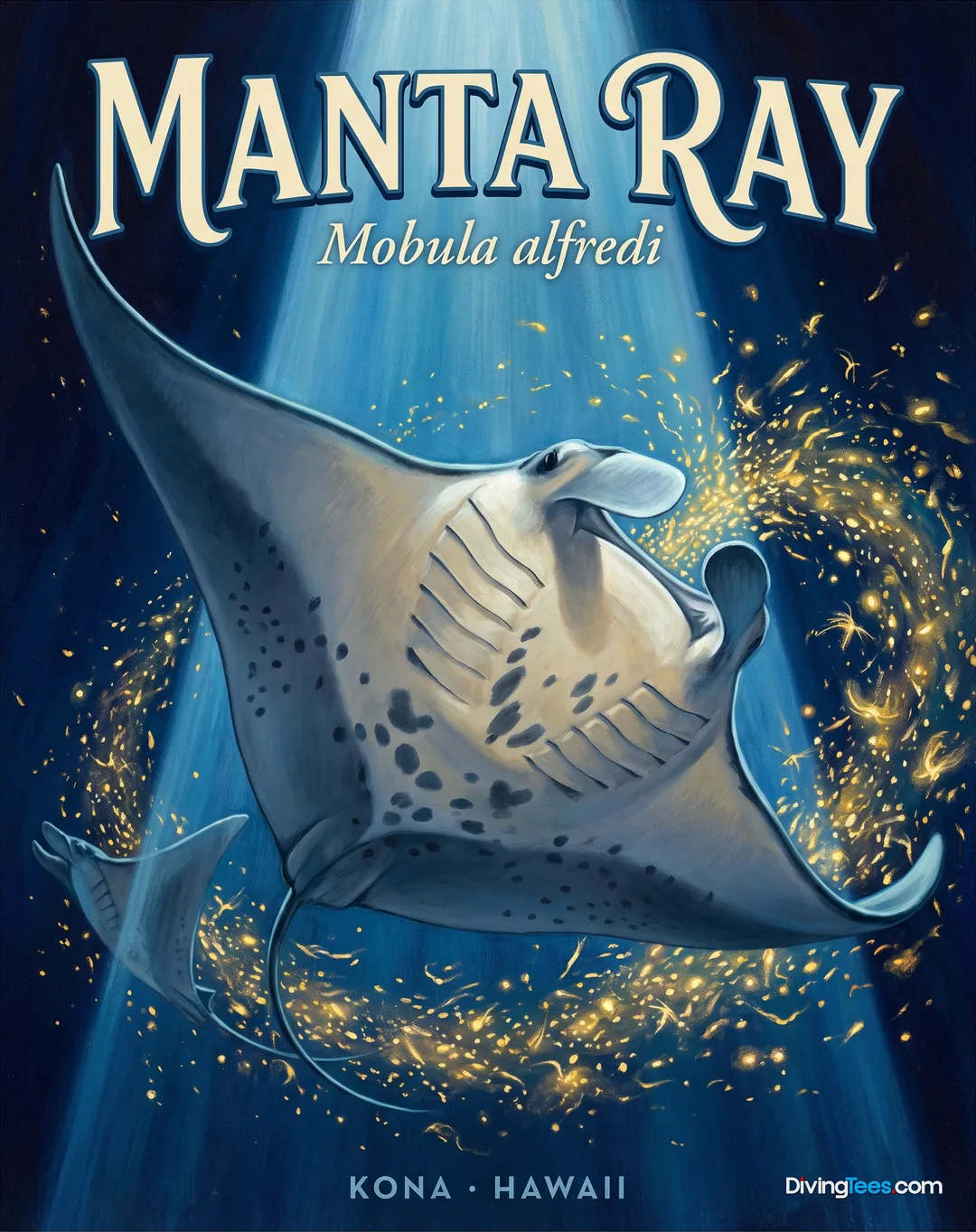
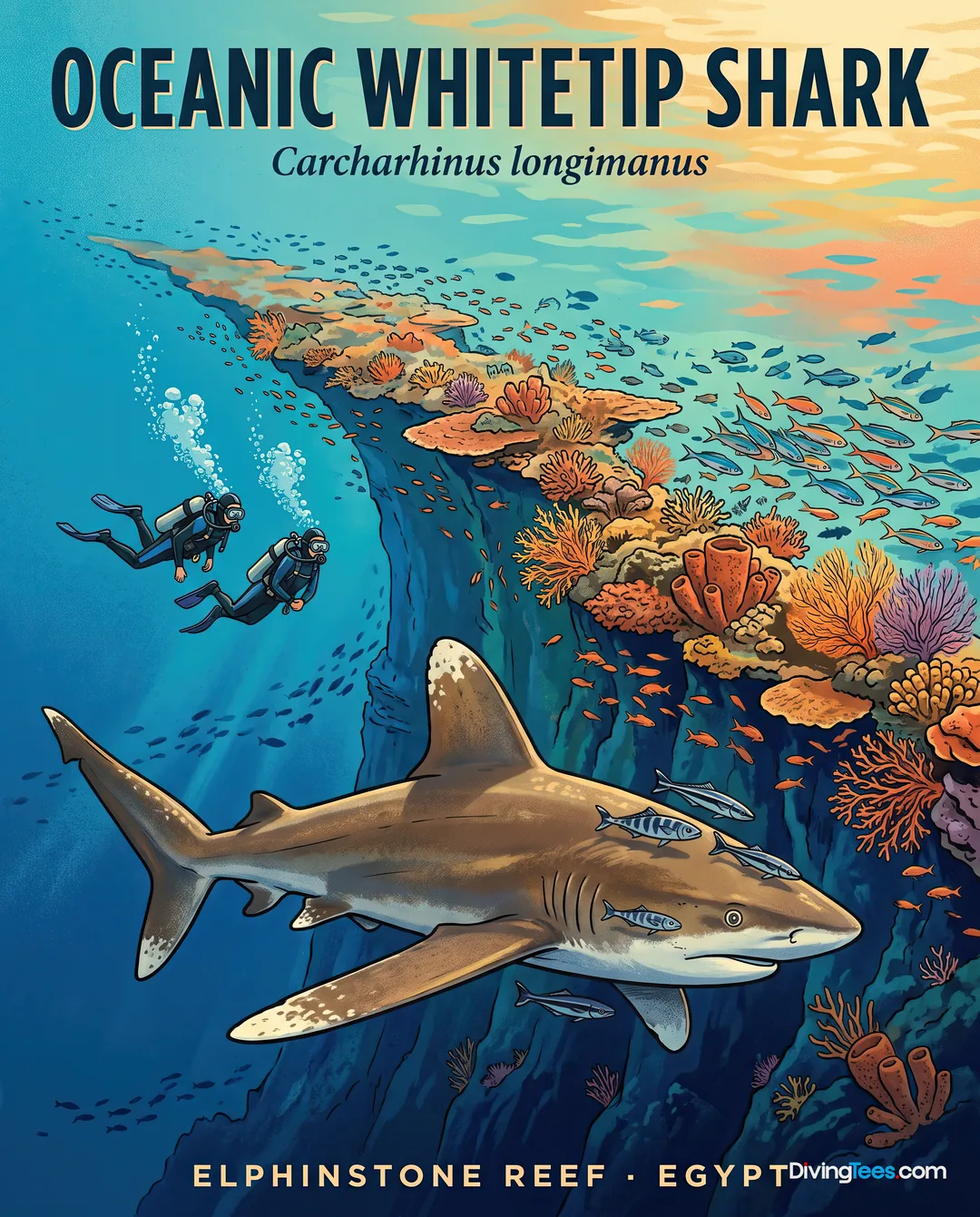
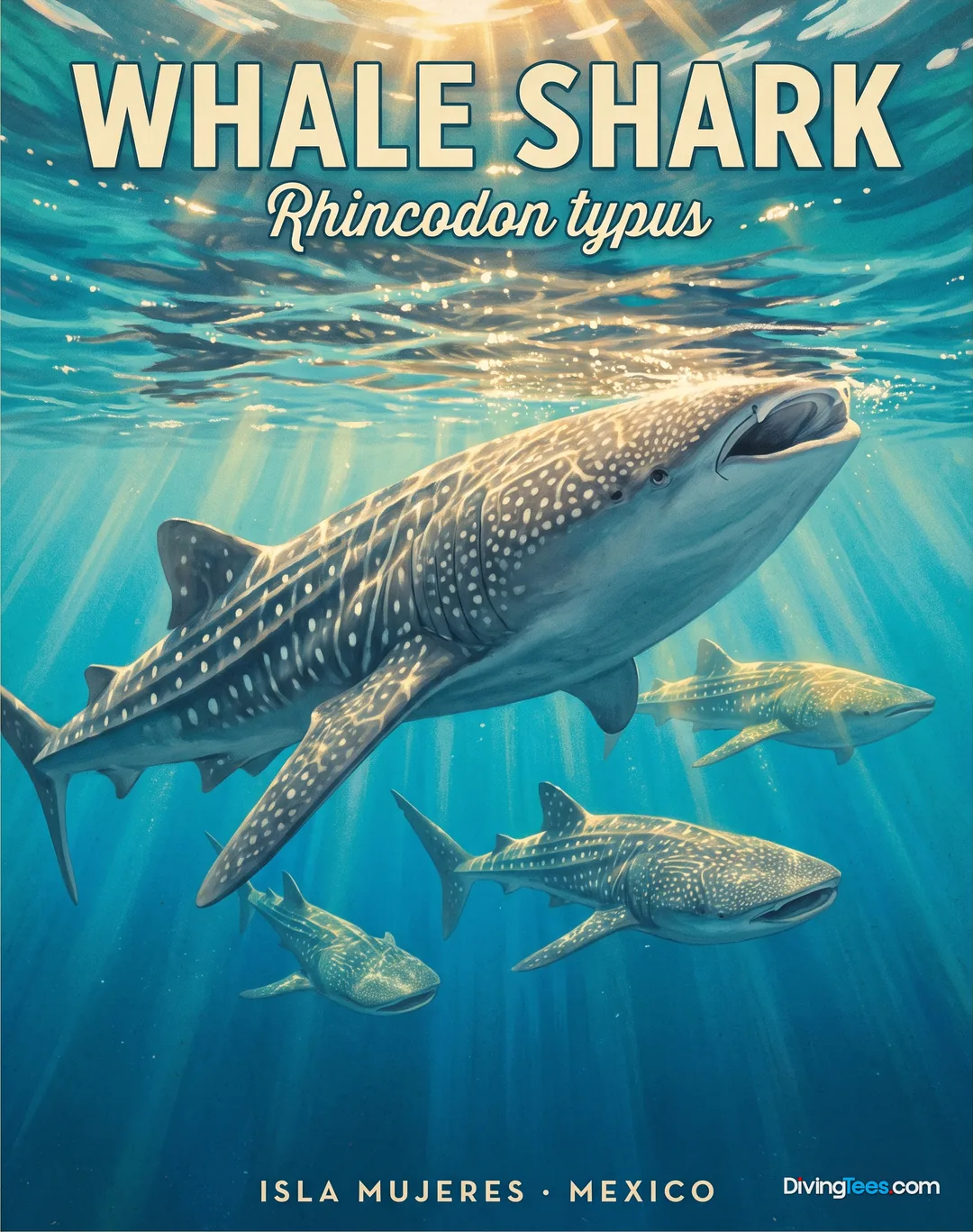
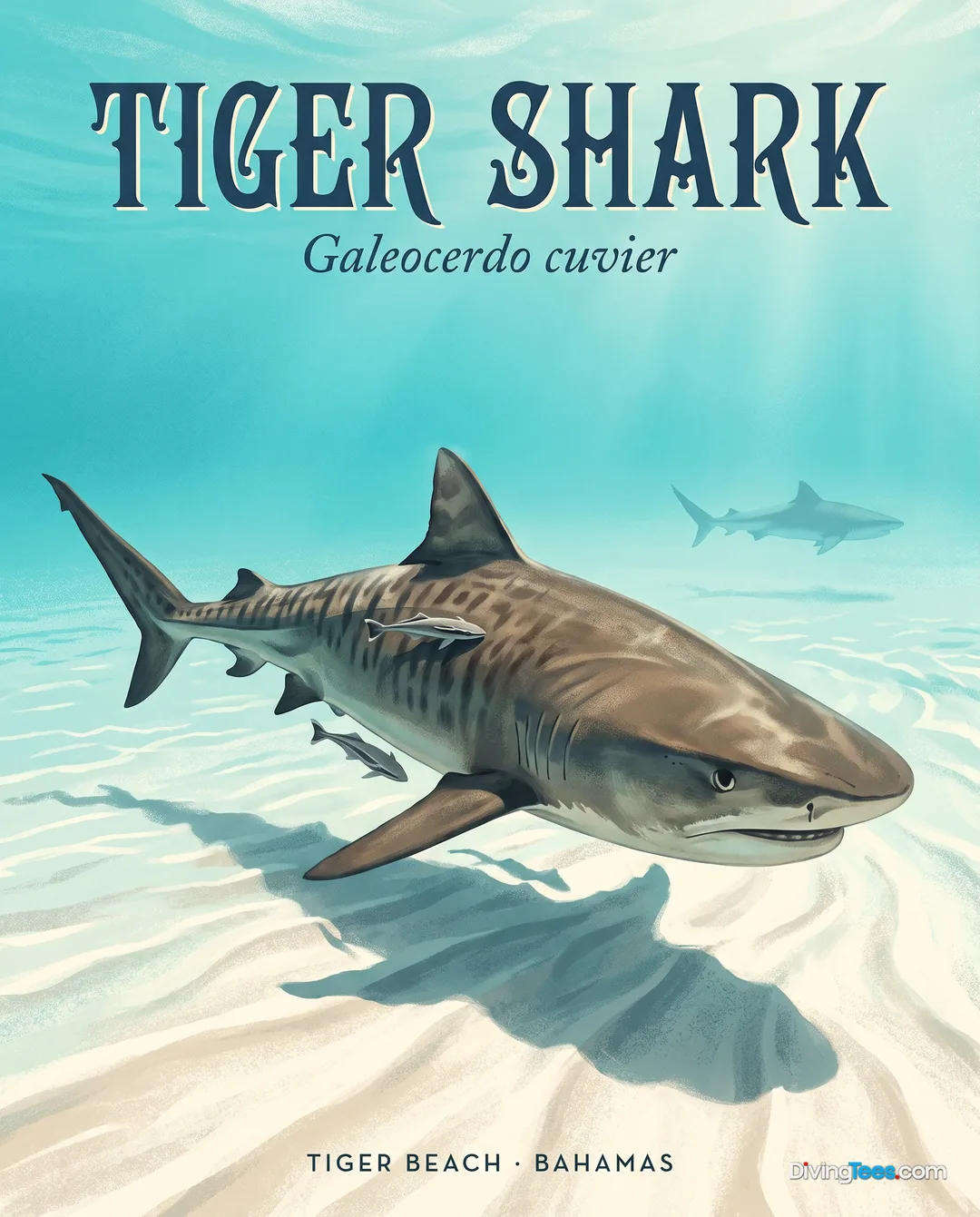
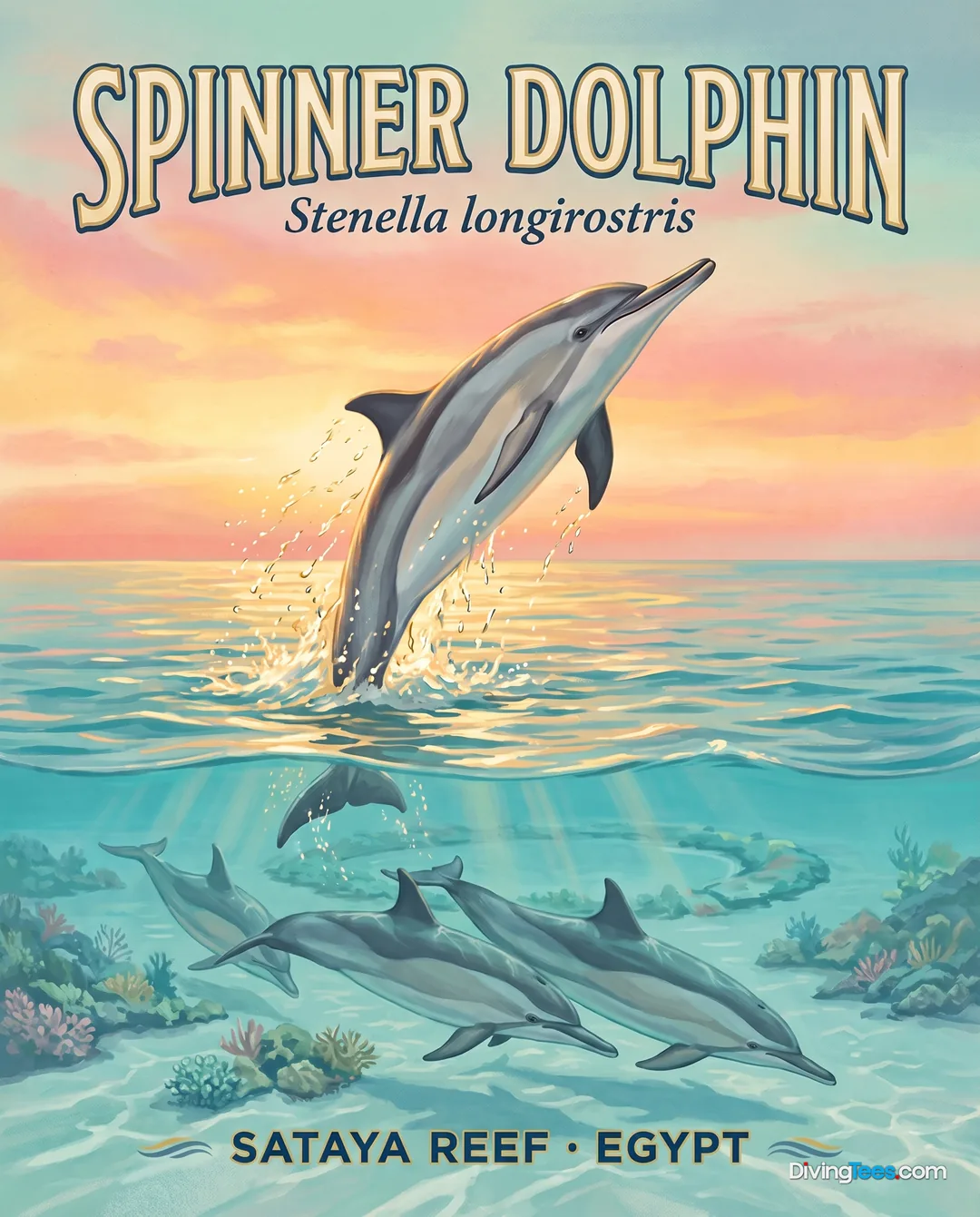
Across this route, the Red Sea's recurring cast is substantial: turtles, barracudas, groupers, Napoleon wrasse, tuna, moray eels, scorpionfish, anthias, octopus, unicornfish, blue-spotted rays and both hard and soft corals. Walls and reef edges give the larger animals room to pass, while cracks and cleaning stations reward a slower inspection. The specific sites add the reasons experienced divers still return. Brothers Islands are the place to look for manta rays, oceanic whitetip sharks, whale sharks and anemones. The Strait of Tiran is the only listed site for tiger sharks, green turtles and surgeonfish. Blue Hole is where triggerfish are recorded, Ras Abu Galum for big-eye trevally, El Fanadir for sweetlips, Shaab Sabina for damselfish, and Gabr el Bint for gorgonians. At Shaab El Erg, spinner dolphins are part of the possibility; at Gabr el Bint, whale sharks are occasional. None of these encounters is promised. The site, current and timing have to line up.
Who puts you in the water
Two or three dive guides work with the group, supported by a larger crew, and the guides speak English and German. Briefings are detailed enough for divers to understand the reef and then explore it independently with a buddy; anyone with fewer dives is kept in a small group with an experienced diver or guide. Marine-park routes, including Brothers Islands, require 50 logged dives, and the same level of experience is important when current, depth and open-water exposure become part of the dive. Night dives are prohibited in the marine parks. On board are oxygen, first-aid equipment and a defibrillator, while the boat carries the radio, radar and emergency equipment expected for Red Sea liveaboard work. Deco diving is not permitted, and the maximum dive depth on these operations is 40 metres. A nitrox course runs on board.
The dive deck and the gear
The dive deck is laid out for repeated diving: a shaded working area, fixed dive stations, rinse tanks and a platform for entries and exits. The standard cylinders are 12-litre aluminium tanks with DIN valves; INT adapters are carried on board, and 15-litre steel tanks can be arranged as a paid extra. Nitrox 32 is free for certified nitrox divers, and an analyser is available on board; a basic nitrox course can also be completed during the trip as an extra. Rebreather divers are accepted, with rebreather support available. Photographers get a dedicated camera area, separate camera rinse and charging stations for lights and batteries. Two Yamaha 25 HP tenders handle sites that are not reached directly from the hull, collecting divers from the surface and bringing them back to the platform. Rental equipment, torches and computers require prior reservation.
Between dives
Between dives, the shaded outdoor space is the natural base. Divers can leave the salt and noise of the platform behind, settle on the terrace, or move into the air-conditioned salon when the sun becomes too much. The photo area and camera room give photographers somewhere to deal with batteries and housings instead of spreading equipment across the dining tables. Wi-Fi and audio-video entertainment are available, but the useful habit is simpler: dry off, eat, check the next briefing and let the body recover. When the boat is moving between reefs, the upper deck gives the route a changing horizon rather than another hotel wall. Non-divers and snorkellers are welcome, with snorkelling equipment and a guide available.
A day on board
A day begins with the first briefing and, for early risers, an optional early-morning dive before breakfast. The common breakfast follows, then the boat sets up for the main reef dive: a wall, plateau, wreck or coral garden chosen for the route and conditions. Lunch fills the next surface interval, with another dive in the afternoon and snacks available whenever a diver comes back hungry. On ordinary route days, three to four dives are planned; marine-park days allow up to three, and the final day has two. A night dive can close the day where local rules permit it, but not in the marine parks. Between entries, the sequence is simple and physical: rinse, hydrate, eat, check the next briefing, then rest while Blue Pearl moves to the next reef. Dinner comes after the diving, and the deck quietens before the cycle starts again.
What you eat aboard
Three freshly prepared meals keep the day anchored around the diving. Breakfast follows the first part of the morning programme, lunch arrives when divers are back from the main reef dives, and dinner closes the day after the last return to the platform. The kitchen combines Western and local dishes, with buffet service and à la carte dinners, plus vegetarian options. Snacks remain available between dives rather than forcing a diver to wait for the next formal meal. Water, tea, coffee and soft drinks are included, while beer and wine can be taken on board. The high food rating is easy to understand as a practical advantage: after repeated entries, exits and surface intervals, a proper plate matters more than elaborate presentation.
Nights at sea
The lower-deck twin cabins are the practical choice: separate beds, air conditioning and a private bathroom, with the boat's working life kept outside the sleeping space. The two sea-view cabins on the sun deck add a double bed and a panoramic window, so the surface of the Red Sea is part of the room rather than something seen only between dives. Blue Pearl's nights are therefore about privacy and cooling down after a long day, not hotel-scale rooms. The saloon gives a darker, quieter place when the wind is up or the sun is still strong; outside, the terrace and sundecks let divers sleep with the sea air when conditions allow. The boat's age is visible in its established character, but the renovated interior and private facilities keep the basics comfortable.
Twin Lower Deck
Double Sea View Sun Deck
What to know before boarding
The recorded departures and returns for these routes are from Hurghada, with airport and hotel transfers included. A Blue Planet Liveaboards guide meets arriving guests at the Egyptian airport, leads them to the air-conditioned transfer and takes the diving luggage to the boat's personal diving box. The boat is boarded in the evening, with dinner before departure the following morning. Arriving the night before gives a safer margin for flights and transfers and avoids turning the first dive day into a race.
- Year built
- 2003
- Year renovated
- 2013
- Length
- 36 m
- Beam
- 8 m
- Maximum number of passengers
- 20
- Number of cabins
- 10
- Number of bathrooms
- 12
- Engines
- 2 × Caterpillar, each 764 hp
- Cruising speed
- 12 knots
- Tenders
- 2 × Yamaha 25 hp
- Website
- blueplanet-liveaboards.com ↗
Hello, I'm Marina, DivingDeal.com's AI assistant. I answer in detail about hotels, dive centres and liveaboards.

Thinking about the whole trip and the flights? Talk it over with Edith →
Marina is an AI. Some links are affiliate links: DivingDeal may earn a commission, at no extra cost to you. Bookings are made with the partner.