
SeaMax Sharm
Google 4.9/5 (4,488 reviews)
44 km away as the crow flies
Sharm El Sheikh · Egypt · Red Sea
Shab Ali serves as the primary gateway for divers aiming to explore the historically significant SS Thistlegorm wreck.
Shab Ali is a significant offshore area in the Red Sea, distinguished primarily as the access point for the SS Thistlegorm, a renowned World War II wreck. This position, located a considerable distance from the Sharm El-Sheikh coastline, necessitates either a multi-day liveaboard safari or an early morning departure on a day boat to reach the dive site. The journey itself underscores the site's reputation, as divers commit to the transit specifically to experience the Thistlegorm.
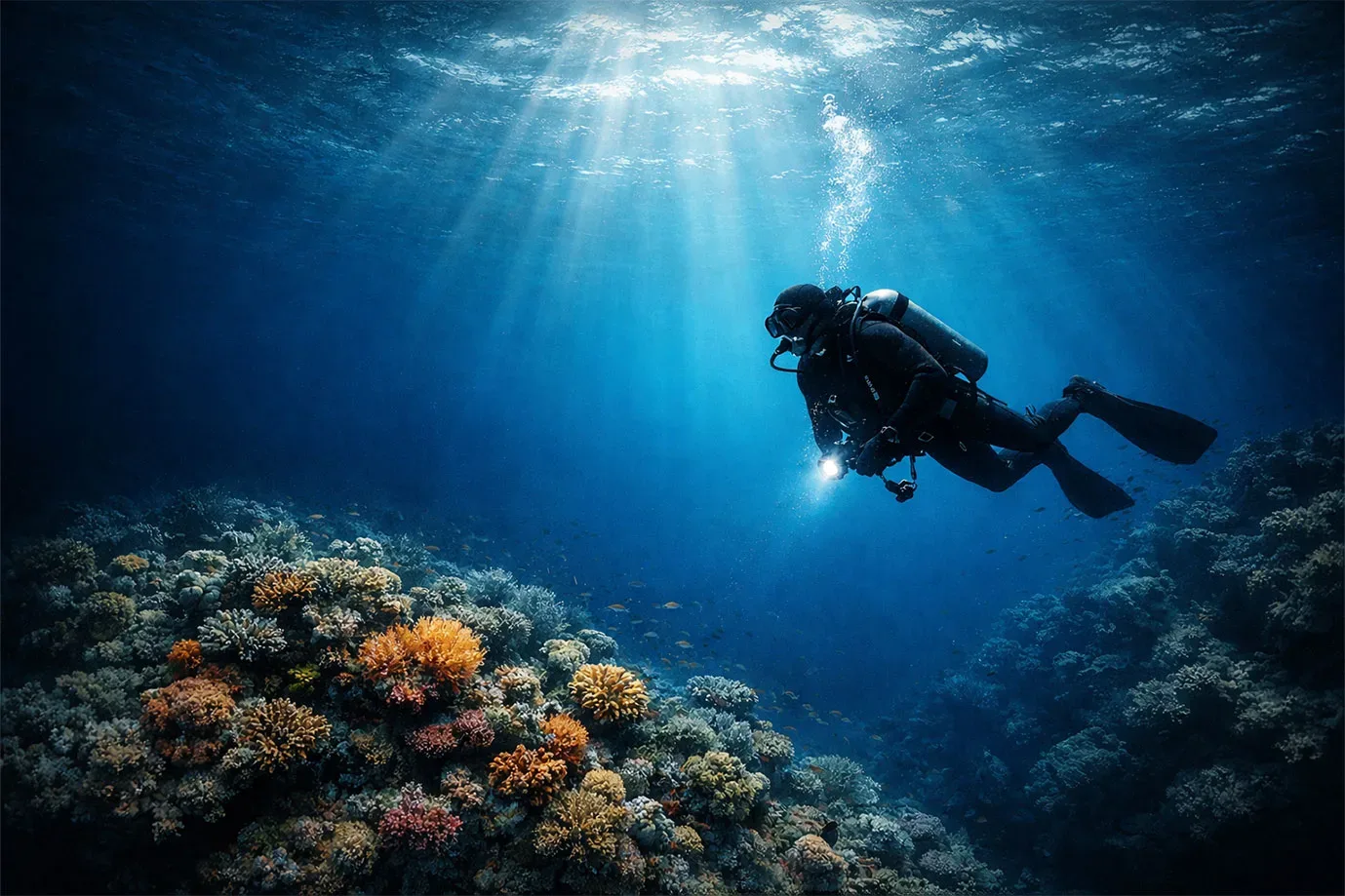
Approaching Shab Ali, you're looking at an open water dive scenario. There isn't a traditional reef system defining the entry; rather, the focus immediately shifts to boat maneuvers and the descent strategy towards the wreck. Due to its exposure, the general conditions in the Shab Ali area can fluctuate, and understanding these can dictate your pre-dive preparation and approach to the main objective.
While the immediate surroundings of the Thistlegorm wreck itself offer various depths and exploration points, the broader Shab Ali area is primarily a transit and staging point. The dive profile is almost entirely dictated by the wreck, involving a descent to the wreck structure and then exploring its various sections. This means planning your gas consumption and decompression stops carefully, as the environment is open and centered around the vessel.
The marine life encountered in the Shab Ali area often follows the patterns of open water. Pelagic species such as green sea turtles (Chelonia mydas), trevallies (Caranx ignobilis), snappers (Lutjanidae), barracudas (Sphyraena), and even tuna (Thunnus) can be observed during the transit or as you descend and ascend from the wreck. These sightings are common for the Red Sea's offshore locations, particularly those with nutrient-rich currents.
While specific depth and current are relative to the SS Thistlegorm wreck itself, expect open water diving conditions in the Shab Ali area. As a general rule for exposed Red Sea sites, currents can be dynamic and variable, dictated by tides and local weather patterns. Visibility typically remains good in the Red Sea, often exceeding 20 metres, but plankton blooms, particularly in areas with strong currents, can reduce it while attracting larger marine life. This dive is accessible to Open Water Divers, but experience with boat dives and potentially dealing with current is beneficial.
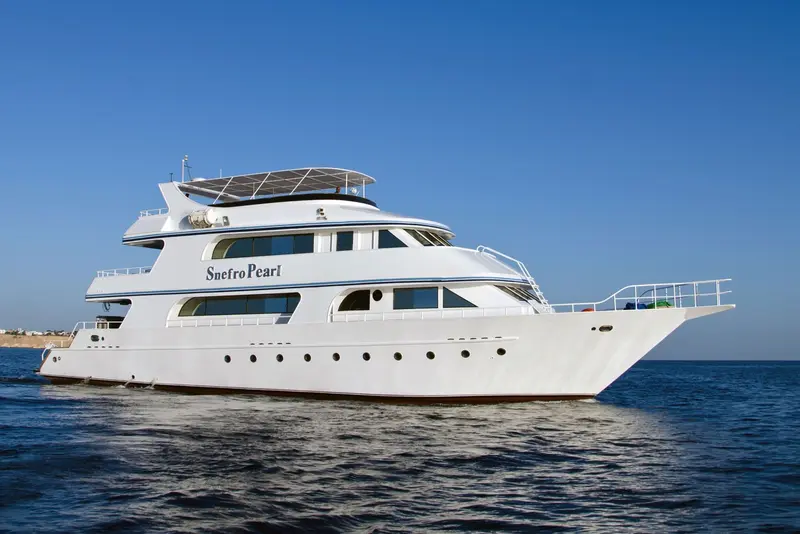
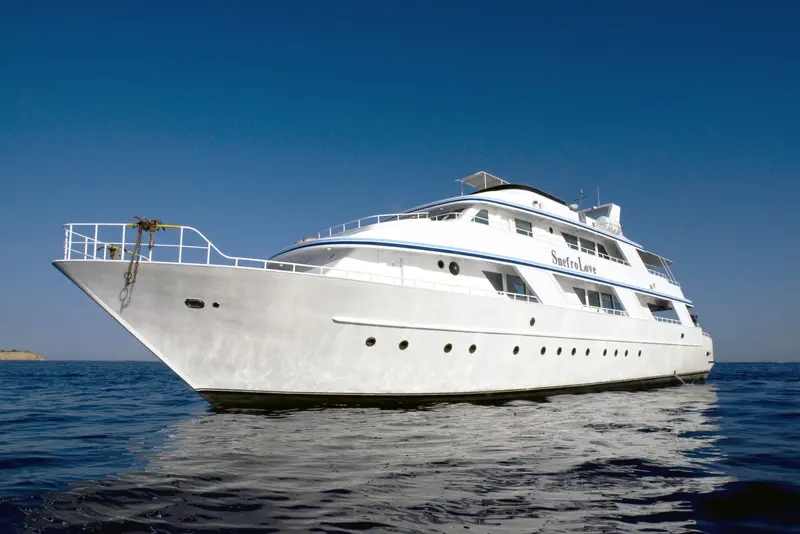
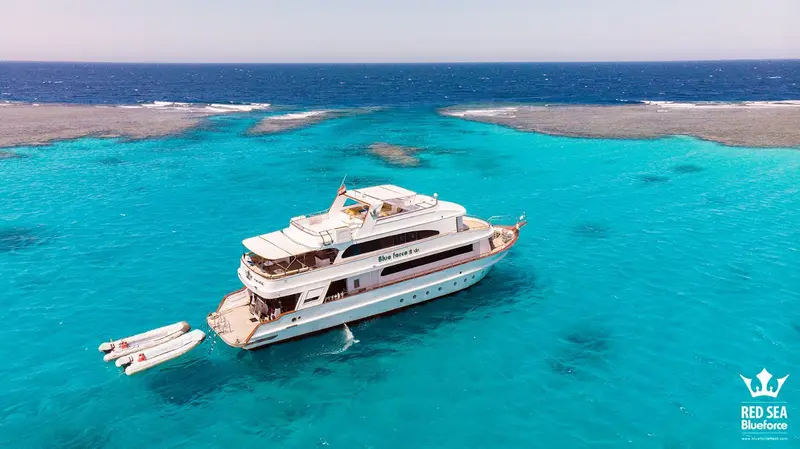
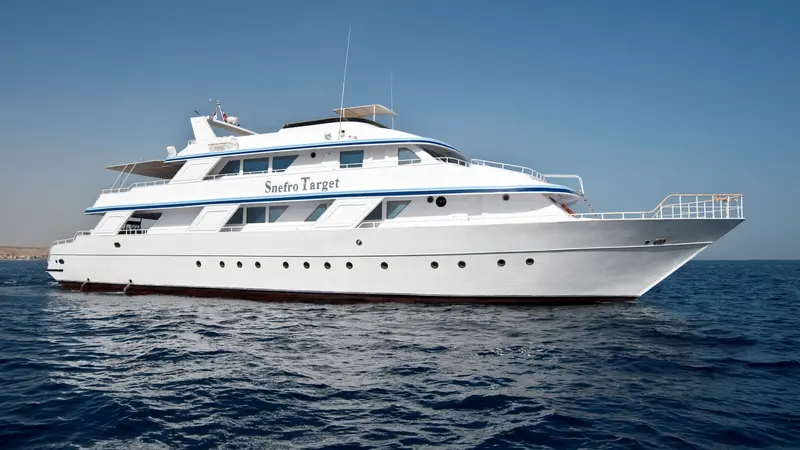
11 liveaboards depart from Sharm El Sheikh another way to explore the region, over several days at sea.
You can reach Shab Ali on a multi-day liveaboard safari or an early morning departure by day boat from Sharm El-Sheikh. The site lies offshore, so the journey takes planning and the dive is centered on reaching the SS Thistlegorm wreck rather than making a short coastal trip.
Shab Ali is accessible to Open Water Divers. You should have experience with boat diving and be prepared for open water conditions, including the possibility of current. The dive involves boat maneuvers, a descent toward the SS Thistlegorm, and exploration focused on the wreck structure.
A specific depth for Shab Ali is not defined because the dive profile is dictated by the SS Thistlegorm wreck and the sections you explore. You descend to the wreck structure, plan your gas consumption carefully, and account for decompression stops during this open water dive.
Currents at Shab Ali can be dynamic and variable, influenced by tides and local weather. Visibility is typically good, though plankton blooms may reduce it while attracting life. During transit, descent, or ascent, you may see green sea turtles, trevallies, snappers, barracudas, and tuna.