

Diving Puerto Morelos OMDelfin
Google 5/5 (852 reviews)
10 km away as the crow flies
Puerto Morelos · Mexico · Americas
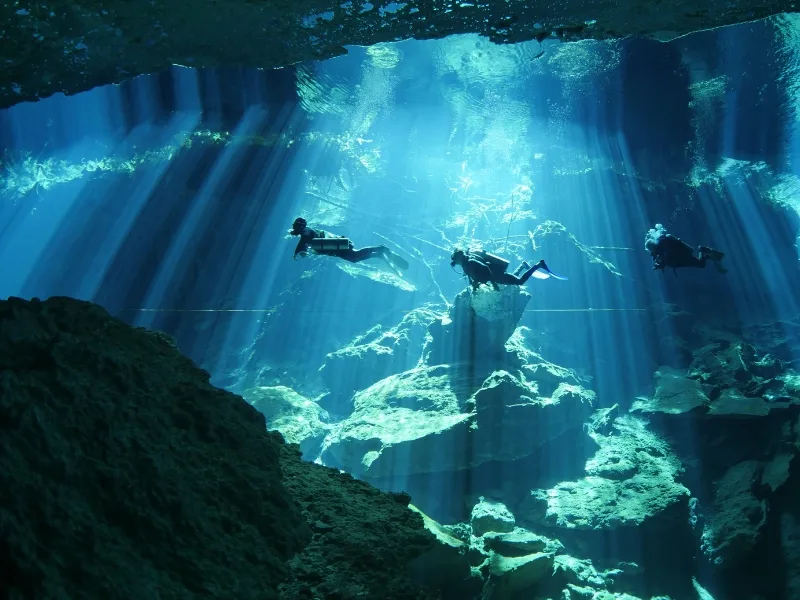
Max. depth · 30 mDescend into Cenote Maravilla to experience the dramatic light rays piercing through a dense cloud of sulfur, illuminating cavern formations at depths of up to 30 metres.
For subtitles in English: start the video firstthen click the gearat the top right of the video, select “Subtitles/CC”, then “Auto-translate” and choose “English”.
Cenote Maravilla is an expansive sinkhole that begins with a relatively small surface opening, quickly expanding into a large submerged chamber. This geological formation creates a distinctive dive profile, where you descend through the narrow entrance before the space opens up, offering a sense of vastness underwater. The cavern diving here focuses on controlled buoyancy and a deliberate pace, allowing you to observe the unique interplay of natural light and the cenote's features.
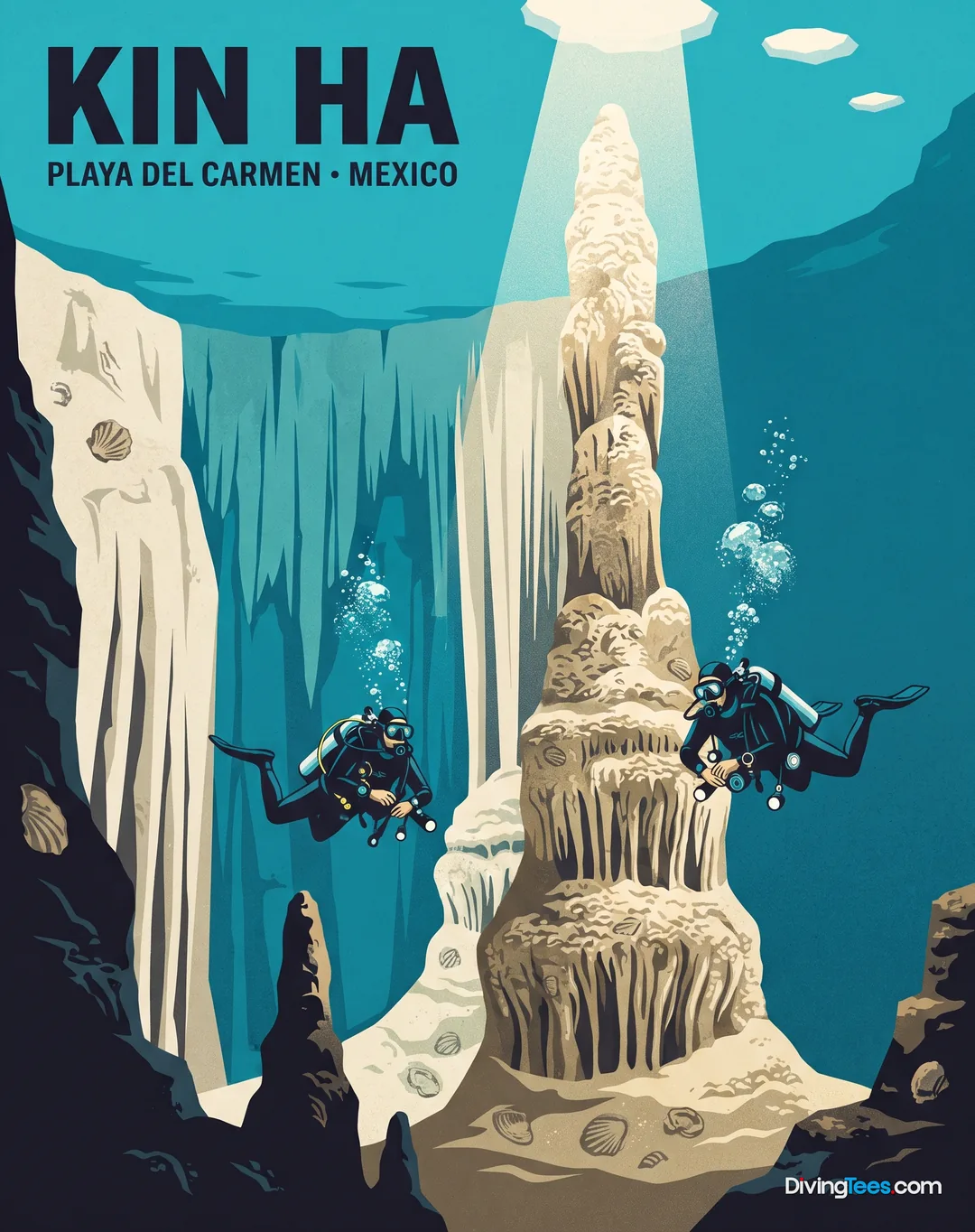
The primary draw to Cenote Maravilla is the exceptional light penetration from openings in the cavern's ceiling. As you descend, these light beams become almost surreal, cutting through the water in distinct shafts. This effect is amplified by a dense sulfur cloud found at certain depths, which diffuses and refracts the light, transforming the underwater landscape into a visual spectacle that sets it apart from other cenotes.
Visibility within Cenote Maravilla is generally excellent above the sulfur cloud, offering clear views of the limestone formations that have been sculpted over millennia. These natural structures are dramatically highlighted by the penetrating sunlight, ranging from delicate stalactites and stalagmites to larger, more imposing features that define the cavern's architecture. The gentle contrasts created by the light and shadows are a continuous feature of the dive.
This cenote encourages a focused approach to buoyancy control, allowing for slow exploration of its distinct sections. The lack of current within the cenote means divers can concentrate on their position and movements without the added challenge of external forces. This calm environment is ideal for practicing precise trim and finning techniques, which are beneficial for navigating any overhead environment with minimal disturbance.
While the cenote itself is a major geological feature, its overall tranquil environment invites a contemplative style of diving. The experience is about appreciating the natural architecture and the unique light phenomena rather than searching for large marine life commonly found in ocean dives. It provides a different kind of underwater exploration, emphasizing geological discovery and the serene beauty of a freshwater system.
Cenote Maravilla is an advanced dive, requiring at least an Advanced Open Water certification due to its depth and cavern environment. You can descend to a maximum depth of 30 metres during a cavern dive, though the site does not exceed 40 metres for technical diving. Currents within the cenote are consistently noted as absent, providing a stable environment for exploration.
Cenote Maravilla is an advanced dive in a cavern environment, so you need at least an Advanced Open Water certification. The dive involves descending through a relatively small entrance into a spacious submerged chamber, making controlled buoyancy, precise trim, and careful finning important skills for exploring the overhead setting.
At Cenote Maravilla, cavern divers can descend to a maximum depth of thirty metres. The site reaches greater depths only for technical diving, while the cavern dive follows a distinctive profile through the narrow entry and into the larger submerged chamber, with a deliberate pace and controlled buoyancy throughout.
Cenote Maravilla has no current, giving you a stable environment for exploration. This calm setting lets you focus on buoyancy, trim, and finning without external water movement. A controlled, deliberate approach helps you move through the cavern with minimal disturbance while observing its natural architecture and light effects.
You can see dramatic shafts of natural light entering through openings in the cavern ceiling, along with a dense sulfur cloud that diffuses and refracts the beams. Above the cloud, excellent visibility reveals limestone formations, including stalactites, stalagmites, and larger structures shaping the submerged chamber.