

La Calypso Dive Center - Cenote diving
Google 5/5 (768 reviews)
15 km away as the crow flies
Tulum · Mexico · Americas
Max. depth · 30 mCenote Angelita offers a profound and otherworldly diving experience, defined by its unique visible hydrogen sulfide layer that creates the illusion of an underwater river flowing through a submerged, ghostly forest.
For subtitles in English: start the video firstthen click the gearat the top right of the video, select “Subtitles/CC”, then “Auto-translate” and choose “English”.
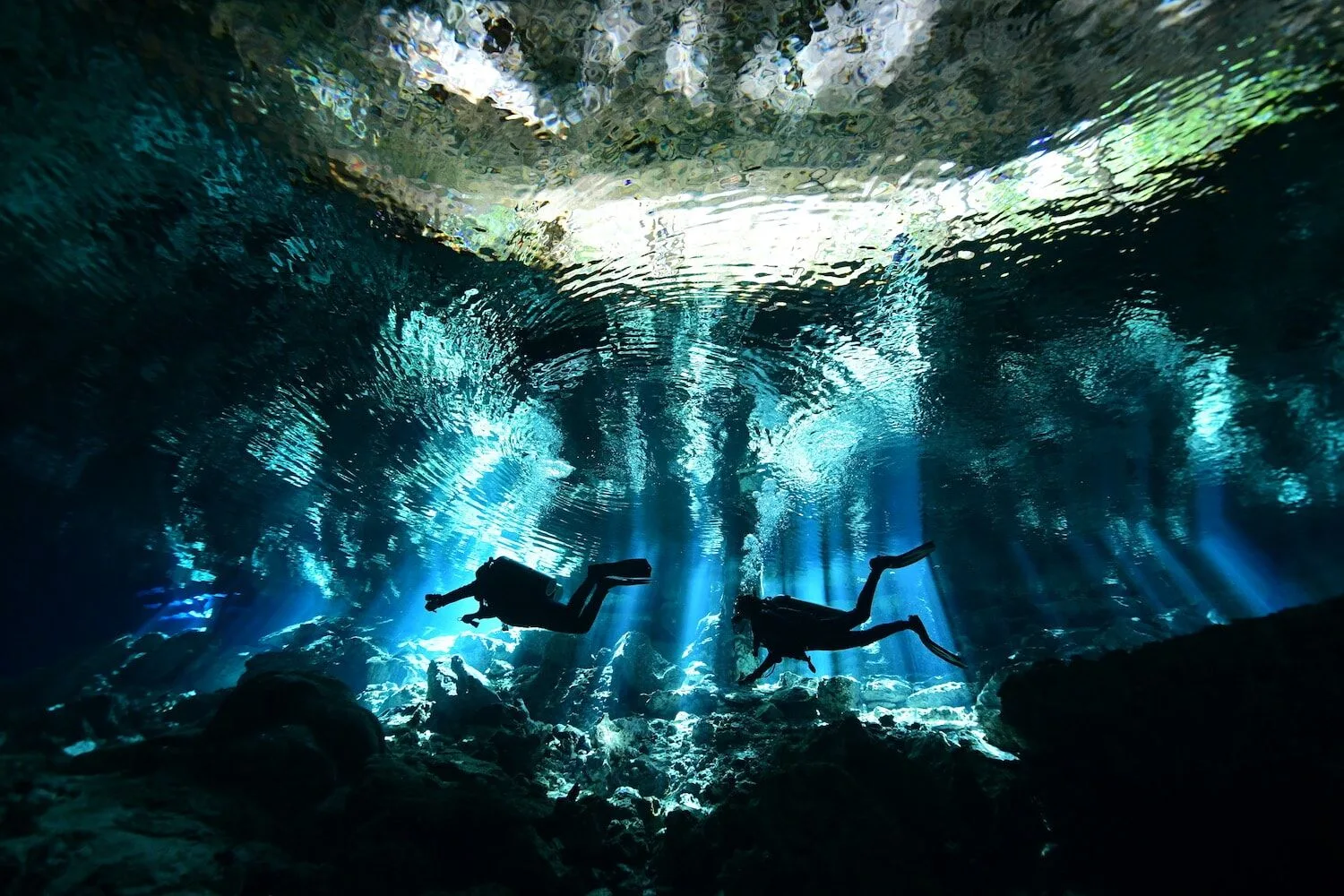
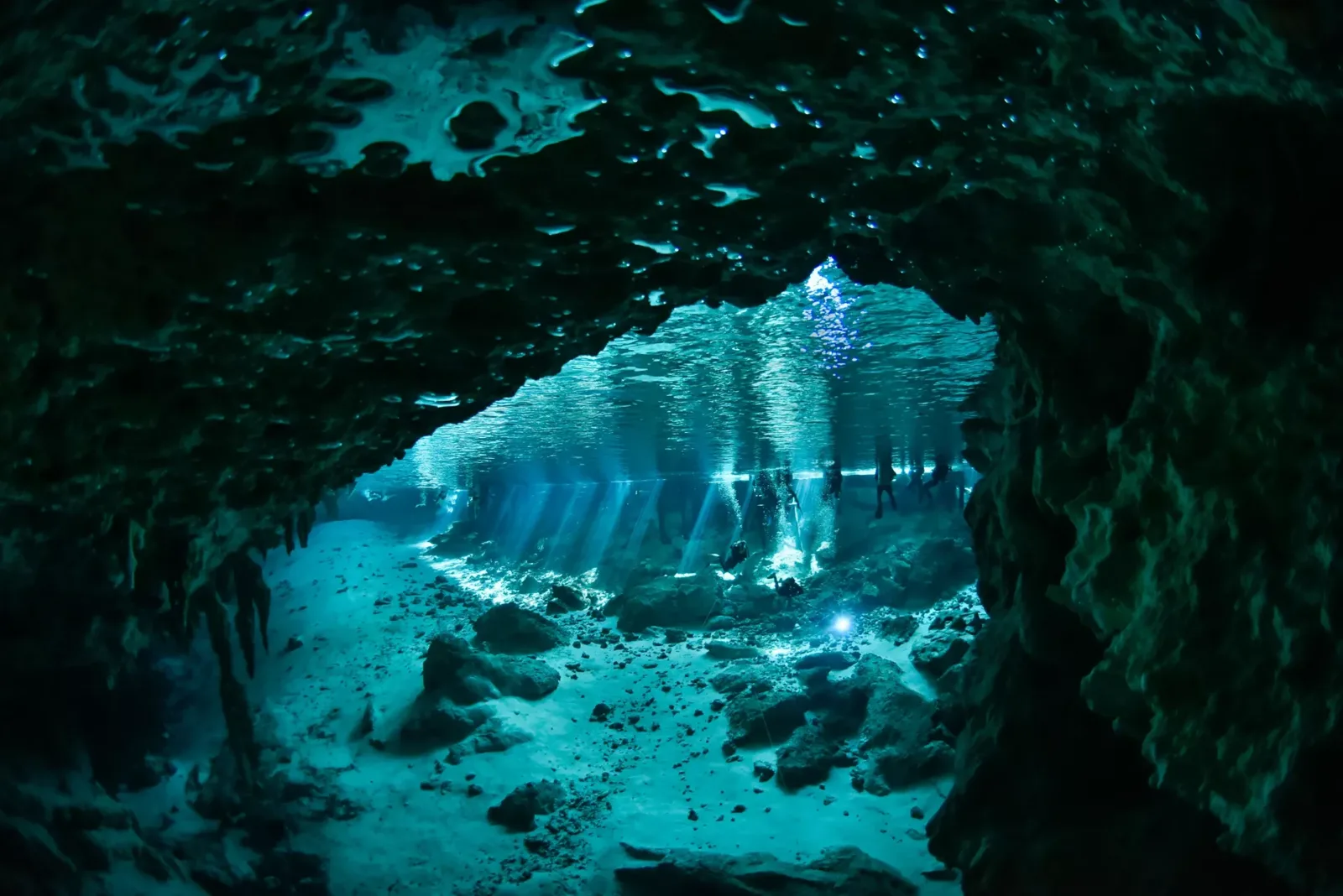
Angelita Cenote, meaning 'Little Angel', is a unique sinkhole dive in the Yucatan, offering an alien landscape distinct from typical reef, wall, or even other cenote dives. Your dive begins in a serene, greenish pool, approximately 25 metres in diameter, surrounded by lush jungle foliage. The initial descent through clear freshwater reveals stark light rays penetrating from the surface, often cutting through the water column and illuminating the upper sections. As you descend, the open shaft transitions into a more enclosed cavern feel, even in daylight, and the light gradually dims. This chimney-shaped cenote means the dive profile is essentially a freefall descent, a direct down and up, with the 'action' concentrated at and below the 27 to 30-meter mark.
The most striking feature of Angelita appears as a dense, milky layer of hydrogen sulfide, consistently located at around 27 to 30 metres. This sulfated layer creates the illusion of an actual underwater river, complete with its own surface and current-like appearance, where freshwater from the cenote meets denser saltwater. Positioned above this cloud, the experience is akin to flying over a mystical landscape. Submerged trees, still rooted in the ancient earth, pierce through this cloudy layer, their mineral-encrusted branches reaching upwards as if from a ghostly forest. These old trees and debris create spectral silhouettes, contributing to the surreal vista. The contrast between the clear water above and the opaque, flowing hydrogen sulfide below forms a truly surreal scene, making precise buoyancy control paramount to fully appreciate it without disturbing the delicate layers. This 'river' effect is so pronounced that it often disorients divers initially, making it crucial to maintain depth awareness and reference points during the transition.
Dropping through the hydrogen sulfide cloud takes you into another realm. The visibility significantly decreases, and the environment becomes significantly darker, emphasizing the eerie glow that can emanate from below as light struggles to penetrate. Below the hydrogen sulfide, the water becomes saline, and the dive continues into deeper sections, reaching maximum depths of 40 meters. Here, you can observe more of the submerged forest floor, with ancient trees, long fallen and now covered in white minerals, contributing to the ethereal, almost ghostly appearance of this submerged jungle. The environment below the cloud is calm and peaceful, a stark contrast to the visual drama of the cloud itself. Your dive light becomes essential here, not just for illumination but for accentuating shadows and depths within this deep environment. The absence of significant marine life within the cenote itself only enhances the focus on the geological and chemical phenomena, making it an experience defined by sight and sensation rather than active interactions with fauna.
Navigating Angelita demands proficient buoyancy and gas management due to its depth and the distinct layers. The key is to maintain a stable position, especially when approaching and passing through the hydrogen sulfide cloud, to avoid disturbing it unnecessarily. The dive typically involves exploring the edges of this cloud, observing the 'island' formed by the trees extending through it, before making a slow, controlled ascent. Angelita's hydrogen sulfide cloud and submerged forest set it apart from other cenote dives, offering a unique geological and chemical stratification that creates an optical illusion unlike almost anything else. The dive profile is essentially a vertical exploration of this natural phenomenon, with the cloud serving as the main event.
This is an Advanced Open Water Diver (AOWD) level dive, or equivalent, specifically requiring comfort and experience with deep diving. Given the depth and the unique environment below the halocline, an expert level of experience is recommended. The main feature of Angelita Cenote is found at 27 to 30 metres, with the dive reaching significant depths below this layer, up to 40 meters. Good buoyancy control is essential to navigate the hydrogen sulfide layer without disrupting its structure and for overall safety in this deep, overhead environment. There is no significant current within the cenote, offering calm conditions throughout the dive. Visibility is typically excellent in the upper freshwater sections, exceeding 30 meters, but decreases significantly below the hydrogen sulfide cloud. Proper gas management and decompression planning are essential.
Angelita is an Advanced Open Water Diver dive, or equivalent, and requires comfort and experience with deep diving. Expert-level experience is recommended because the dive enters a deep overhead environment, reaches significant depth below the hydrogen sulfide layer, and requires strong buoyancy control, gas management, and decompression planning.
Angelita has no significant current, so conditions within the cenote are calm. Precise buoyancy control remains essential while approaching and crossing the hydrogen sulfide layer, because disturbing its structure can reduce the visual effect and affect your position. Maintain depth awareness and use reference points during the transition.
At Angelita, you can see a dense hydrogen sulfide layer, submerged trees rising through the cloud, and a surreal underwater river effect where freshwater meets saline water. The chimney-shaped cenote creates a vertical profile, with light rays above, mineral-encrusted trees below, and an eerie submerged forest.
The main feature at Angelita lies at 27 to 30 metres, while the dive reaches depths of up to 40 metres. Visibility is typically above 30 metres in the upper freshwater sections, then decreases significantly below the hydrogen sulfide cloud, where the water becomes darker and saline.