

La Calypso Dive Center - Cenote diving
Google 5/5 (768 reviews)
Tulum · Mexico · Americas
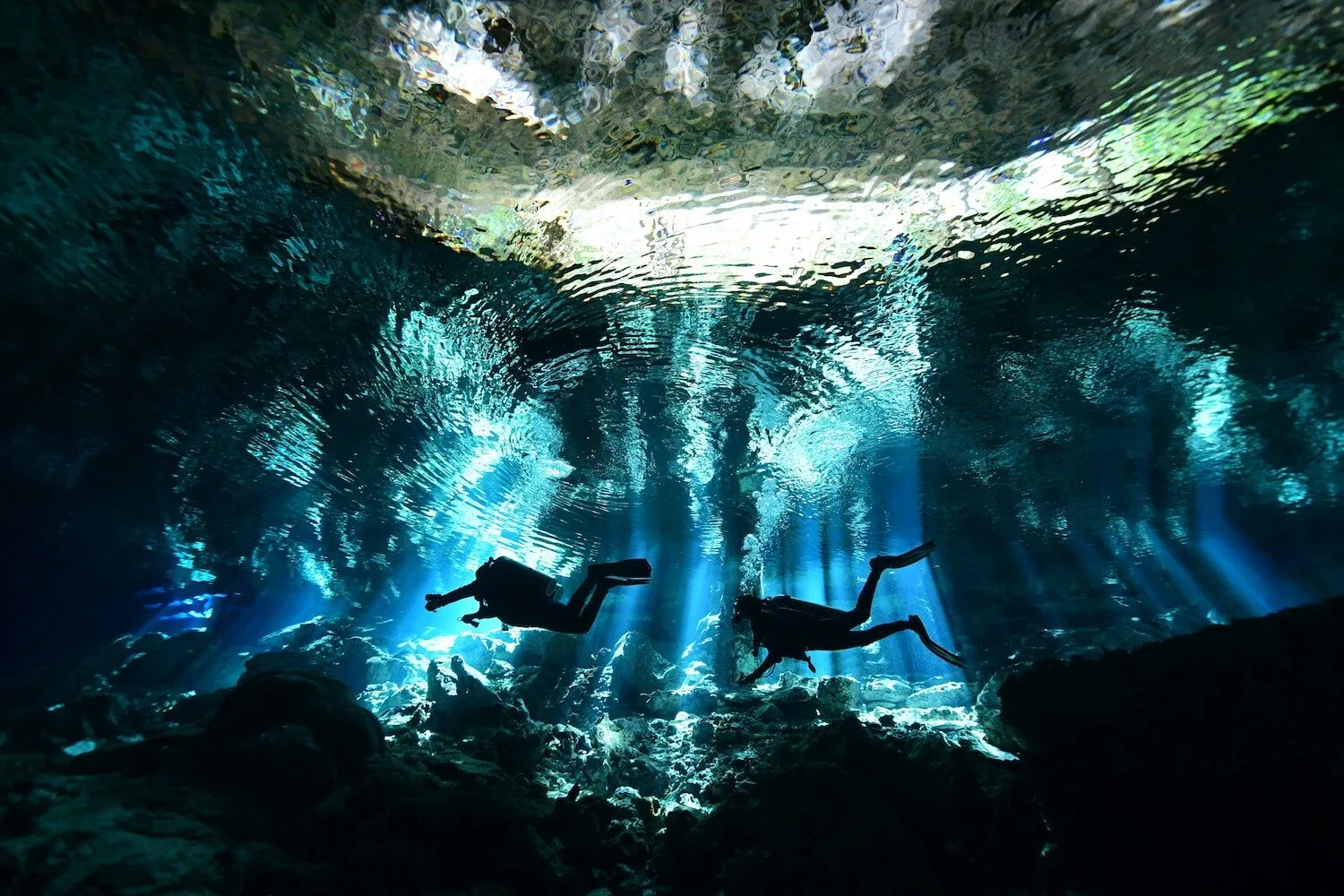
Nicte Ha offers a dive through limestone tunnels, where sunlight filters through lily pads, creating patterns of light on grey sediment formations.
For subtitles in English: start the video firstthen click the gearat the top right of the video, select “Subtitles/CC”, then “Auto-translate” and choose “English”.
Diving Nicte Ha brings you into a cenote system that blends open-water garden sections with a distinct cavern environment. The initial entry often leads you through areas characterized by dense lily pad gardens on the surface, which become natural filters for the sun. As you orient yourself, the light penetrating these surface plants creates a dynamic interplay of shadows and beams underwater, a defining feature of the dive.
Transitioning further into Nicte Ha, you begin to explore the cavern sections, moving into an overhead environment. This part of the dive navigates through limestone tunnels, where the light shifts from direct beams to diffused glows, guiding your path. The formations here are elaborate, with stalactites and stalagmites carving out the spaces you traverse, all formed by millennia of water flow.
The character of the cenote changes as you progress, with areas featuring distinct grey sediment on the cavern floor and walls. This fine sediment, coupled with the clear turquoise water, enhances the effect of light penetration, even in the deeper, more enclosed spaces. Maintaining precise buoyancy here is not just about environmental protection, but also about preserving the visual clarity by avoiding disturbance of these delicate layers.
Nicte Ha is known for being a quieter site compared to some of the larger, more trafficked cenotes in the region. This intimacy allows for a more contemplative dive, where you can focus on the delicate details of the formations and the subtle shifts in illumination. The dive profile is designed to showcase these aesthetic elements, emphasizing the intricate beauty of the limestone architecture and the filtered light.
The water temperature in the cenotes around Tulum ranges between 24 and 28 degrees Celsius, which contributes to the tranquil atmosphere. While marine life is not the primary focus of a cenote dive like Nicte Ha, the absence of strong currents allows for an unhurried exploration. You can take time to absorb the unique environment, where the geological features are the main attraction.
Navigating these cavern systems requires a controlled and deliberate dive style. Movement should be minimal, prioritizing smooth fin kicks to avoid contact with the fragile formations or disturbing the fine sediment. This attention to detail ensures the pristine condition of the cenote for all divers and allows you to fully engage with the subtle beauty of the site.
The experience at Nicte Ha is less about deep exploration and more about the delicate balance of light, water, and rock. It offers a photographic canvas, particularly for close-up compositions that capture the clarity of the water and the intricate details of the formations. The dive provides a quiet immersion into the unique subterranean world characteristic of the Yucatan.
Diving Nicte Ha requires an Advanced Open Water Diver certification as a minimum due to the overhead environment of the caverns; a solid grasp of buoyancy control is essential here to protect the fragile formations. While some sources indicate this cenote is accessible to all levels, the specific demands of sustained good buoyancy in an overhead environment make it best suited for divers with at least 50 logged dives in varied conditions and prior experience in similar delicate environments. There is no current to contend with in Nicte Ha, allowing for relaxed movement through the cavern system. The best period for diving cenotes generally spans November to April, for the dry season, or May to September for optimal light conditions.
You can plan a Nicte Ha dive during the dry season from November to April, or from May to September when light conditions are optimal. These periods frame the cenote’s visual character, from sunlight filtering through surface lily pads to shifting illumination across the limestone caverns and clear turquoise water.
Nicte Ha requires Advanced Open Water Diver certification because the route includes an overhead cavern environment. You also need solid buoyancy control to protect fragile formations and avoid disturbing grey sediment. Prior experience in similar delicate environments and at least fifty logged dives in varied conditions suit the demands of this site.
Nicte Ha has no current to contend with, allowing you to move calmly through the cavern system. You should use smooth fin kicks and maintain precise buoyancy, keeping your movements minimal so you avoid touching fragile limestone formations or disturbing the fine sediment on the cavern floor and walls.
At Nicte Ha, you will see open-water garden sections with surface lily pads that filter sunlight into shifting patterns, followed by limestone tunnels containing intricate stalactites and stalagmites. Clear turquoise water, grey sediment layers, diffused cavern light, and a quiet atmosphere shape the dive, while geological features remain the main attraction.