
La Calypso Dive Center - Cenote diving
Google 5/5 (768 reviews)
9.6 km away as the crow flies
Tulum · Mexico · Americas
Max. depth · 12 mCasa Cenote offers a unique Riviera Maya dive, where the fresh waters of the cenote meet the Caribbean Sea, creating a clear, vibrant ecosystem beneath ancient mangroves.
For subtitles in English: start the video firstthen click the gearat the top right of the video, select “Subtitles/CC”, then “Auto-translate” and choose “English”.
Casa Cenote, also known as Cenote Manatí, is an open-air cenote near Tulum that acts as a natural lagoon, forming a direct link between the extensive Sac Aktun cave system and the Caribbean Sea. This connection creates a dynamic environment where fresh and saltwater merge, defining a unique ecosystem not often seen elsewhere. The cenote is essentially a vast, natural open pool, enveloped by dense mangroves that contribute significantly to its unique appeal. These mangroves are not just scenery; their root systems offer shelter and serve as nurseries, creating a dynamic habitat for a diverse array of juvenile marine life.
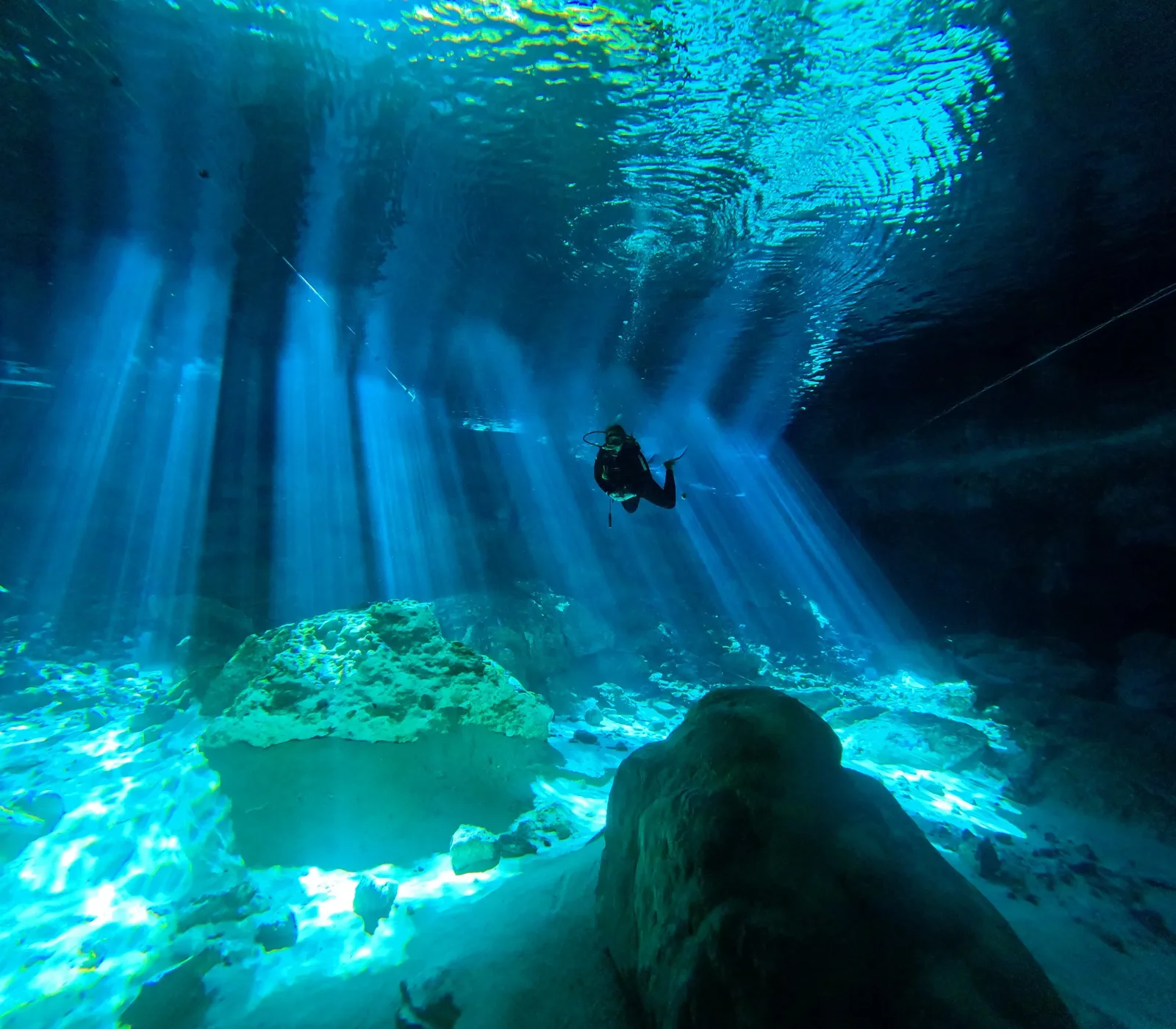
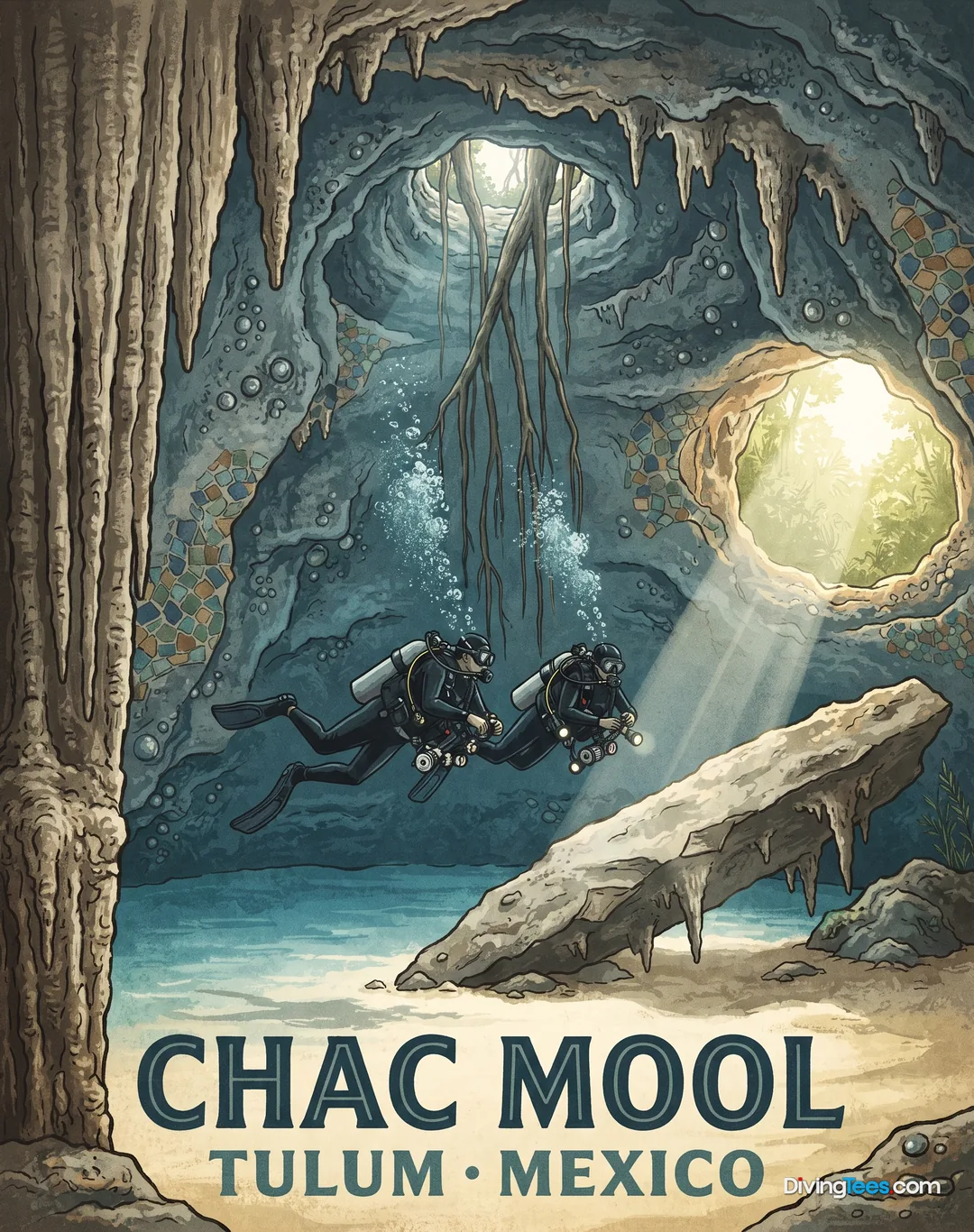
The underwater landscape of Casa Cenote is characterized by its intricate mangrove network, through which you navigate. Sunlight filters through the overhead canopy, producing dramatic light effects that illuminate the water column and the cavern below. The visual experience is further enhanced by the clarity of the water, allowing these light beams to cut sharply through the space. This interplay of light and structure provides not only aesthetic pleasure but also helps orient divers as they explore the various channels and open areas within the cenote.
Exploring Casa Cenote involves encountering the distinct phenomenon of a halocline, where the freshwater from the inland permeates the saltwater coming in from the ocean. This creates a visible boundary, often described as a shimmering layer, where the two water densities meet. While primarily a cavern dive, the site also offers opportunities for more experienced divers to explore deeper parts of the cave system. The maximum depth of the regularly dived areas is around 9 to 12 meters, making for extended bottom times and a relaxed dive profile. This depth range, combined with typically calm conditions, makes it a comfortable environment for buoyancy practice and exploring delicate formations.
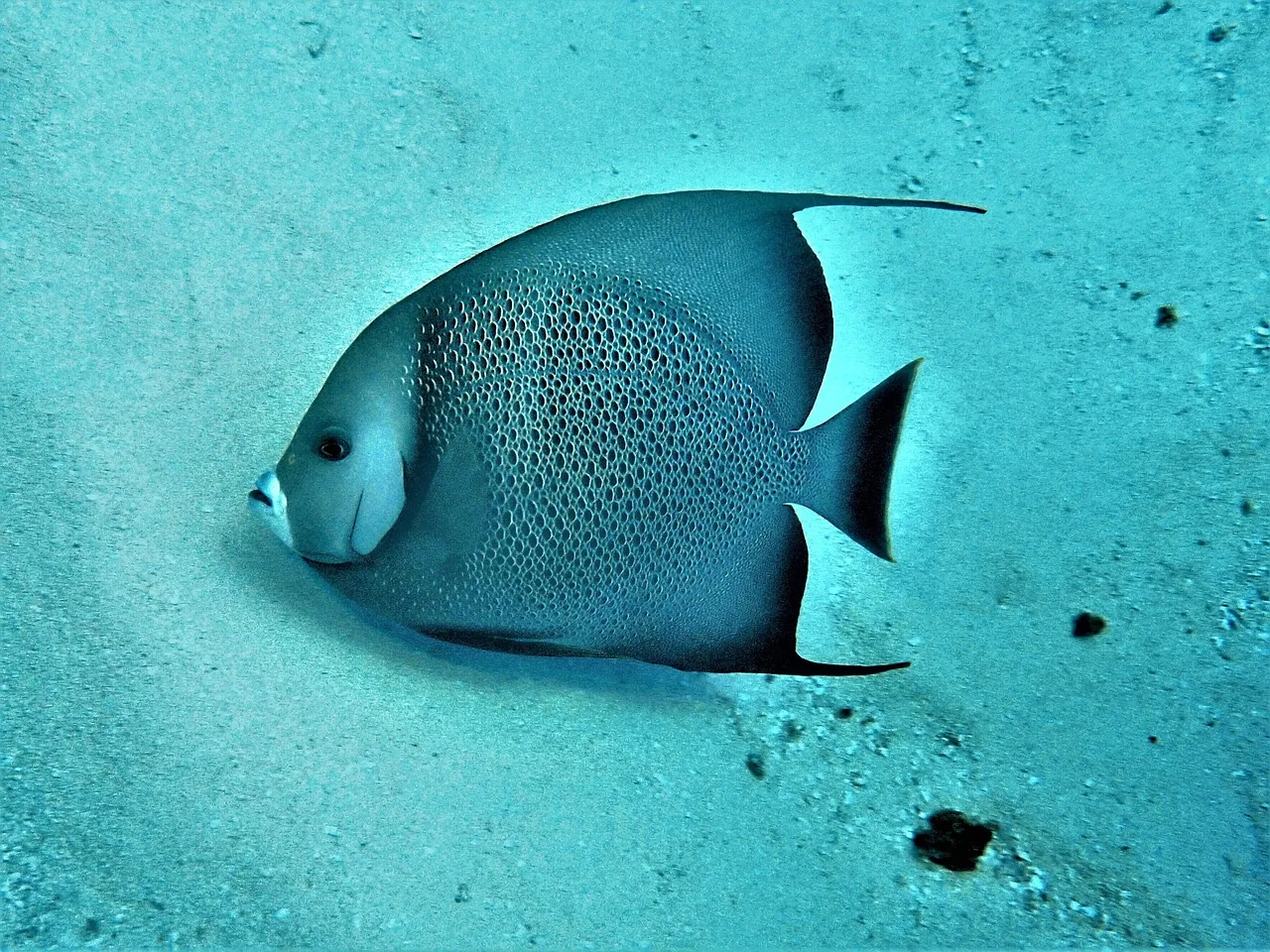
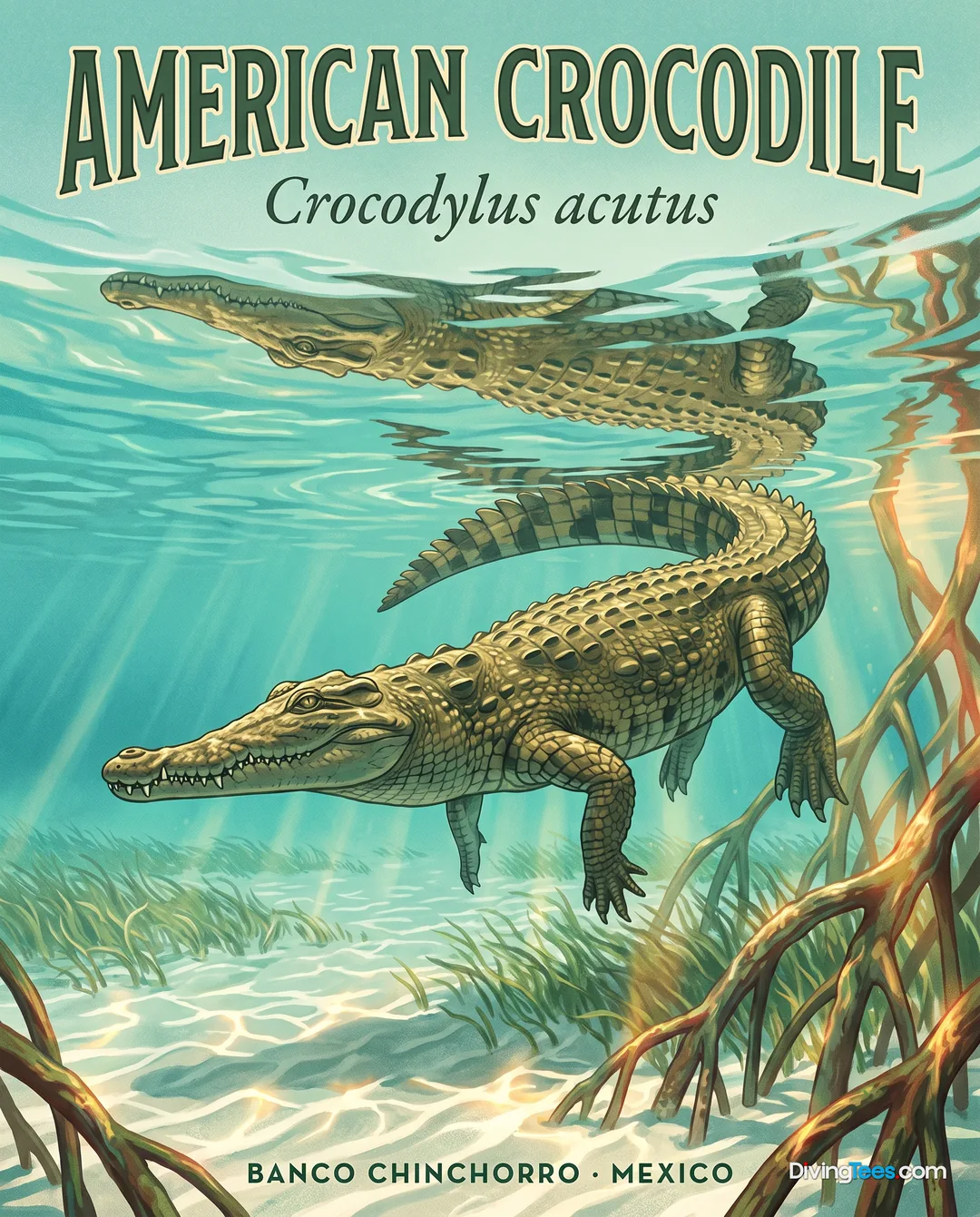
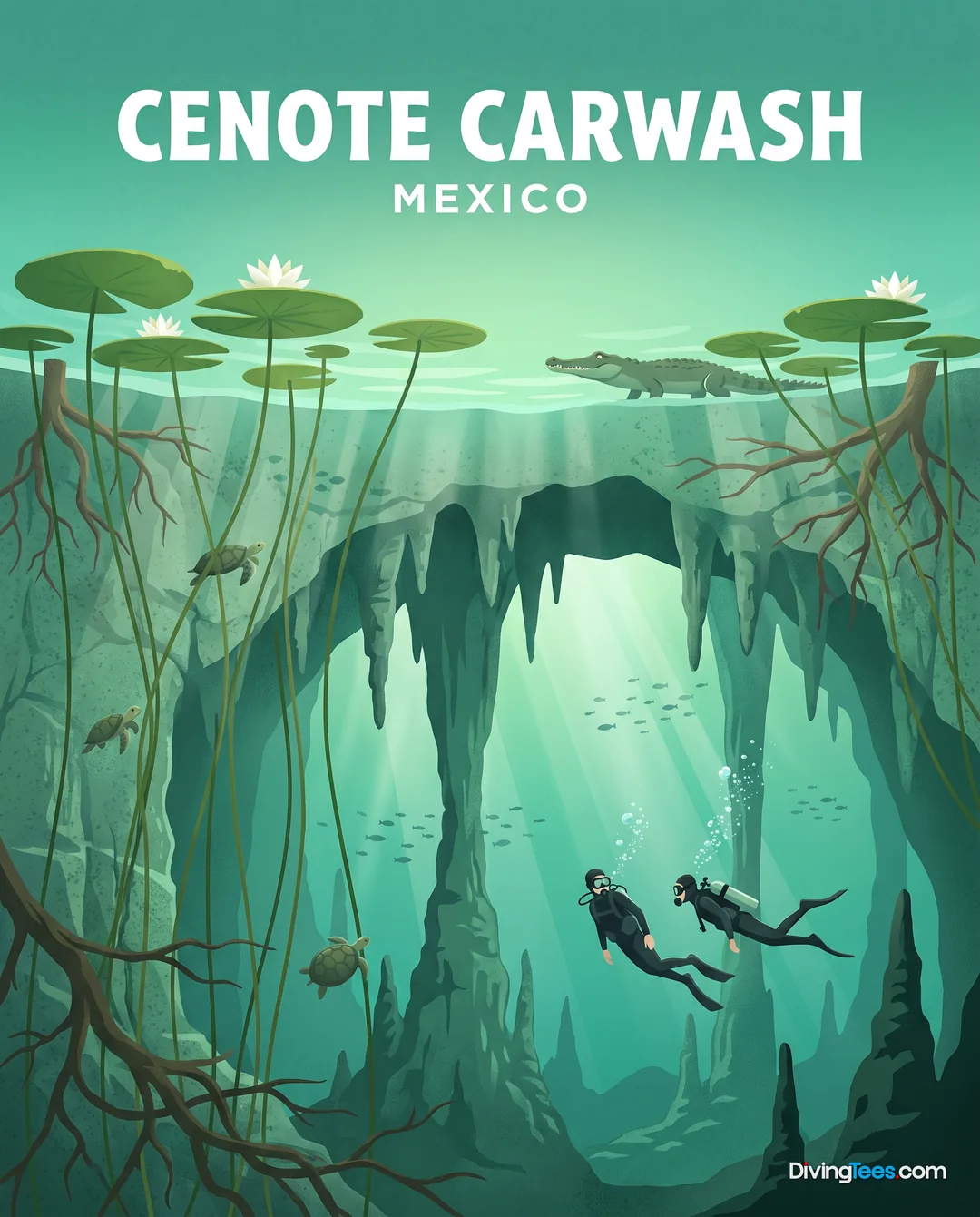
Fauna at Casa Cenote is varied due to the mix of fresh and saltwater. You will typically encounter schools of snapper (Lutjanidae), green sea turtles (Chelonia mydas), and juvenile reef fish navigating through the mangrove roots and along the sandy bottom. Additionally, the cenote is known for its resident freshwater crocodiles, with one particular individual, affectionately known as Panchito or Pancho, often observed. While observations of crocodiles are usually from a safe distance and they are generally shy, their presence adds a unique element to the dive experience, reinforcing the rich biodiversity of this transition zone.
The connection to the larger Sac Aktun cave system extends beyond the visible open water, offering a glimpse into the vast underwater networks that crisscross the Yucatán Peninsula. For those with appropriate training and experience, sections of the cenote transition into overhead environments. These cavern zones require careful buoyancy control and an understanding of specific cave diving protocols to navigate safely and protect the fragile formations. The accessibility of both open-water and cavern environments within the same site provides a progression for divers looking to develop their skills in different aquatic settings.
Diving Casa Cenote presents a unique blend of open-water experience with the allure of a cavern environment, all within a sheltered, calm setting. The site is a natural nursery, thriving with young marine life due to the protective nature of the mangroves. This makes it an ideal location not just for divers but also for observing the early stages of the marine food chain. The ease of access and the stable conditions allow for multiple dives, each revealing new perspectives of the mangrove tunnels and the interaction between fresh and saline waters, truly distinguishing it from typical open-ocean sites.
The blend of these characteristics — the distinct halocline, the sheltering mangroves, the resident wildlife, and the connection to the extensive cave system — makes Casa Cenote more than just a typical dive. It serves as a living illustration of the local ecosystem's complexity. Your dive here is an exploration of a hydrological marvel, where geological formations and biological diversity converge. The constantly shifting light and the subtle changes in water density create a sensory experience that is both engaging and educational, offering a deep appreciation for this specific aquatic environment.
Depths at Casa Cenote typically range from 8 to 12 metres, with a maximum of 9 metres in other reports, accommodating various dive profiles. The site is accessible from Open Water Diver certification and is particularly suitable for those needing a refresher. Visibility remains good, commonly between 15 and 25 metres, given the calm and sheltered nature of the cenote. Current is consistently reported as negligible to none, offering a relaxed environment for both new and experienced divers.
Casa Cenote is accessible from Open Water Diver certification and is particularly suitable if you need a refresher. Its shallow, calm profile also supports buoyancy practice. More experienced divers can explore deeper parts of the cave system, while cavern zones require appropriate training, experience, careful buoyancy control, and knowledge of cave diving protocols.
Casa Cenote typically ranges from 8 to 12 metres, with regularly dived areas reaching around 9 to 12 metres. This shallow profile allows extended bottom times and a relaxed dive. The site accommodates different dive profiles, while deeper sections connected with the cave system are intended for divers with appropriate training and experience.
Casa Cenote is sheltered and calm, with current consistently reported as negligible to none. These conditions create a relaxed environment for new and experienced divers, while the clear water and stable setting support buoyancy practice. The open-air cenote includes channels, open areas, and mangrove passages to explore at an easy pace.
At Casa Cenote, you can navigate mangrove tunnels and observe juvenile reef fish among the roots, along with schools of snapper and green sea turtles. You may also encounter resident freshwater crocodiles from a safe distance. The dive features a visible halocline, sunlight beams, clear water, and a connection to the Sac Aktun cave system.