
La Calypso Dive Center - Cenote diving
Google 5/5 (768 reviews)
14 km away as the crow flies
Tulum · Mexico · Americas
Max. depth · 119 mDive into Cenote El Pit for a unique journey through ancient submerged forests, dramatic light shafts, and distinct water layers, offering a profound exploration of geological time and human history.
For subtitles in English: start the video firstthen click the gearat the top right of the video, select “Subtitles/CC”, then “Auto-translate” and choose “English”.
Cenote El Pit, an integral part of the extensive Sac Actun underwater cave system near Playa del Carmen, offers a distinct deep cenote dive experience. The dive begins with an open water descent into a massive natural chamber, revealing white limestone walls that enclose the sinkhole like an amphitheater. This initial visual spectacle, with its deep, clear opening, immediately sets El Pit apart, drawing divers into its mysterious depths.
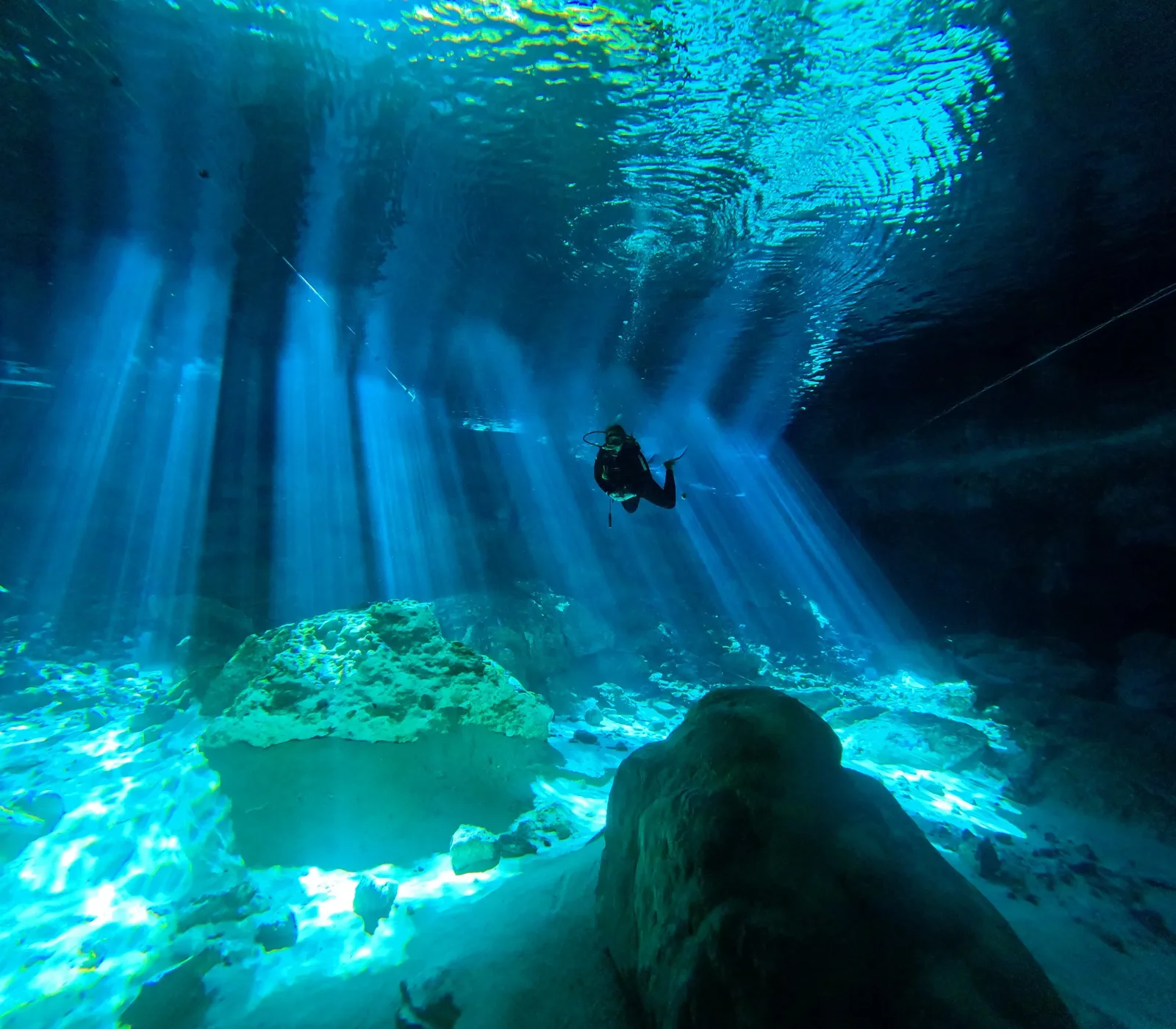
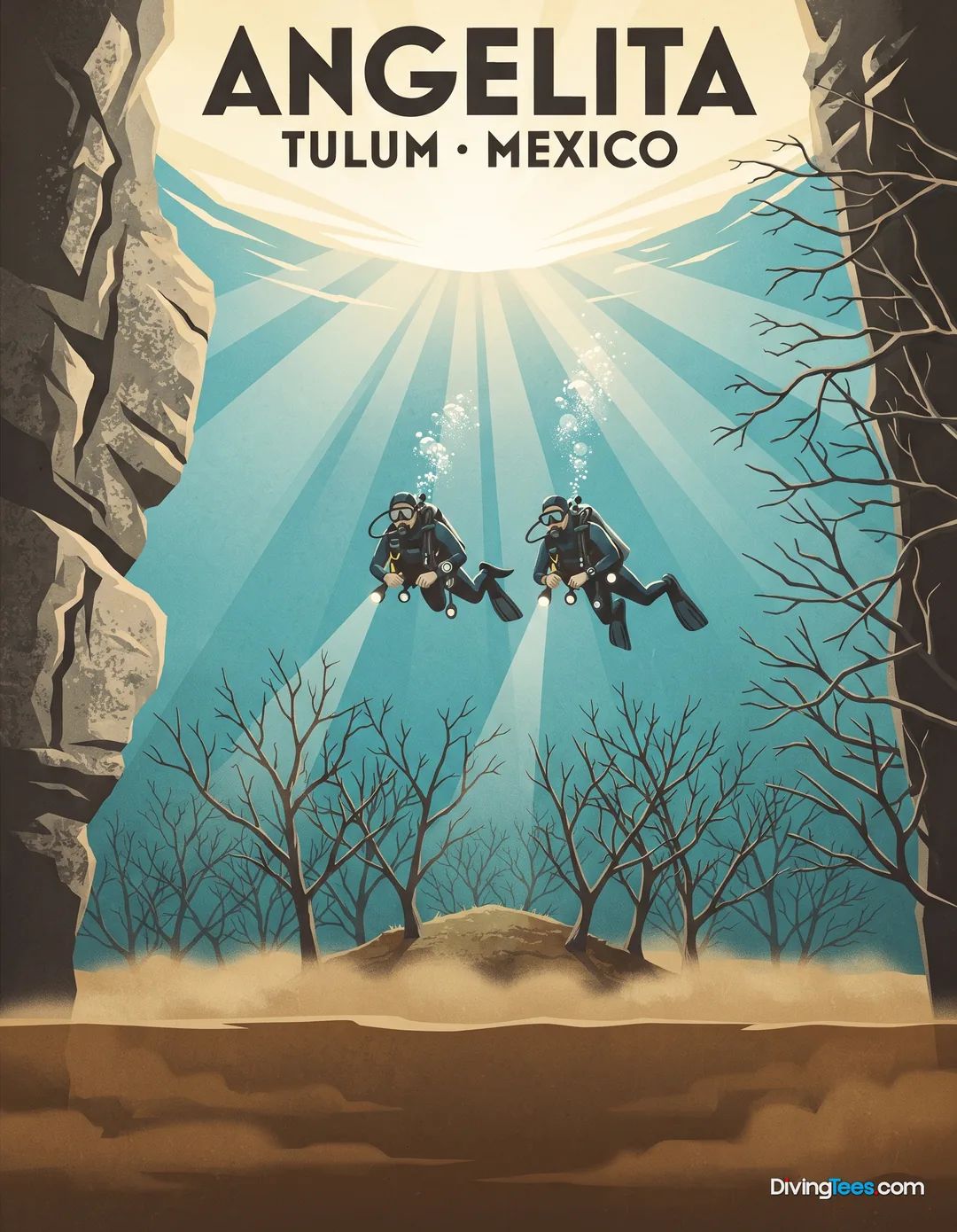
As you descend, the ambient light from the surface permeates the upper layers, creating captivating shafts of sunlight that cut through the water, especially during specific times of day. This expansive light shaft gradually diminishes, transitioning from a wide, open-air basin into a cavernous embrace. The feeling is one of entering a monumental, submerged cathedral, with ethereal beams dancing through the water, illuminating the path downward.
Your dive profile involves navigating through multiple distinct layers, initially passing through a freshwater column before encountering the halocline. This visible layer, where fresh and saltwater meet and mix, can cause visual distortions due to differing densities, offering a unique sensory experience. Below this, visibility often remains extensive, allowing views into the deeper reaches of the cenote.
A notable feature of El Pit is the presence of a hydrogen sulfide cloud, typically found around 30 to 35 meters. This dense, misty layer appears to hover, obscuring what lies beneath and creating an ethereal, 'ghost forest' effect as it envelops submerged ancient trees. Descending through this cloud requires careful buoyancy control and an understanding of its visual impact, transforming the dive into a journey through distinct atmospheric zones.
Around 30 meters, the true character of El Pit reveals itself, as the bottom of this deep light shaft is uniquely adorned with enigmatic tree branches. These ancient remnants, preserved by the anoxic conditions, create a hauntingly beautiful landscape. Beyond the hydrogen sulfide cloud, the cenote continues its descent, revealing more ancient submerged timber, thousands of years old, resting peacefully in the deeper sections.
Beyond the main shaft, El Pit beckons into its cavern system, requiring careful navigation and a keen eye. Exploring these hidden recesses uncovers further archaeological and geological treasures, including numerous bones, ancient pottery fragments, and intricate geological formations that have developed over millennia. The cave's ceiling is covered in speleothems, which contribute to the 'laser-like' sunbeam effect visible from above.
The maximum recreational depth for diving El Pit is generally considered to be around 40 meters, though the geological formation extends significantly deeper, reaching up to 119 meters, making it one of the deepest known cenotes in Quintana Roo. The dive maintains a sense of spaciousness, even at depth, providing ample room for movement within the cavern without feeling confined. The transition between the open light shaft and the enclosed cavern areas offers a dynamic dive profile, shifting from boundless vertical visibility to more intimate, detailed exploration.
Visibility in El Pit is consistently high in the freshwater and saltwater layers, often described as 'limitless' above the cloud, contributing to the feeling of flying through an immense space. There is no notable current within the cenote, allowing for a relaxed pace to explore the layers and formations. The dive requires attention to depth and gas management, especially when exploring the deeper sections and passing through the halocline and sulfur cloud.
Often combined as a double-tank dive with nearby cenotes like Cenote Barbie Line or Batcave, El Pit stands out for its dramatic visual appeal and geological characteristics. The interplay of light, the distinct water layers, and the ancient submerged landscape create an environment that differs fundamentally from open-water ocean diving, offering a profound sense of exploration into the earth's submerged underworld.
Cenote El Pit is accessible to Advanced Open Water Divers (AOWD) with experience in deep diving. The maximum recreational depth typically reached is 40 meters, with the hydrogen sulfide cloud appearing around 30 to 35 meters. Visibility is generally boundless in the clear water layers, and there is no current within the cenote, allowing divers to focus on buoyancy and the intricate surroundings.
Dive Cenote El Pit when the sunlight creates visible shafts through the water, especially during specific times of day. The beams begin in the open upper basin and gradually diminish as you descend, illuminating the limestone walls, halocline, cavern areas, and speleothems on the ceiling.
Cenote El Pit is accessible to Advanced Open Water Divers with experience in deep diving. You need careful buoyancy control while passing through the halocline and hydrogen sulfide cloud, along with attention to depth and gas management during the deeper sections and cavern exploration.
Cenote El Pit reaches a geological depth of 119 meters, while the maximum recreational diving depth is generally around 40 meters. The hydrogen sulfide cloud typically appears between 30 and 35 meters, with ancient tree branches and submerged timber found around 30 meters and deeper.
Cenote El Pit has no current, allowing you to explore at a relaxed pace while focusing on buoyancy and the surroundings. Visibility is generally boundless in the clear water layers and remains extensive in the freshwater and saltwater sections, including above the hydrogen sulfide cloud.