
DeepDiveMexico
Google 5/5 (1,626 reviews)
5 km away as the crow flies
Playa del Carmen · Mexico · Americas
Max. depth · 20 mDescend onto the Barracuda reef, a fringing wall dive defined by its finger-like coral outcroppings and the persistent north-south current.
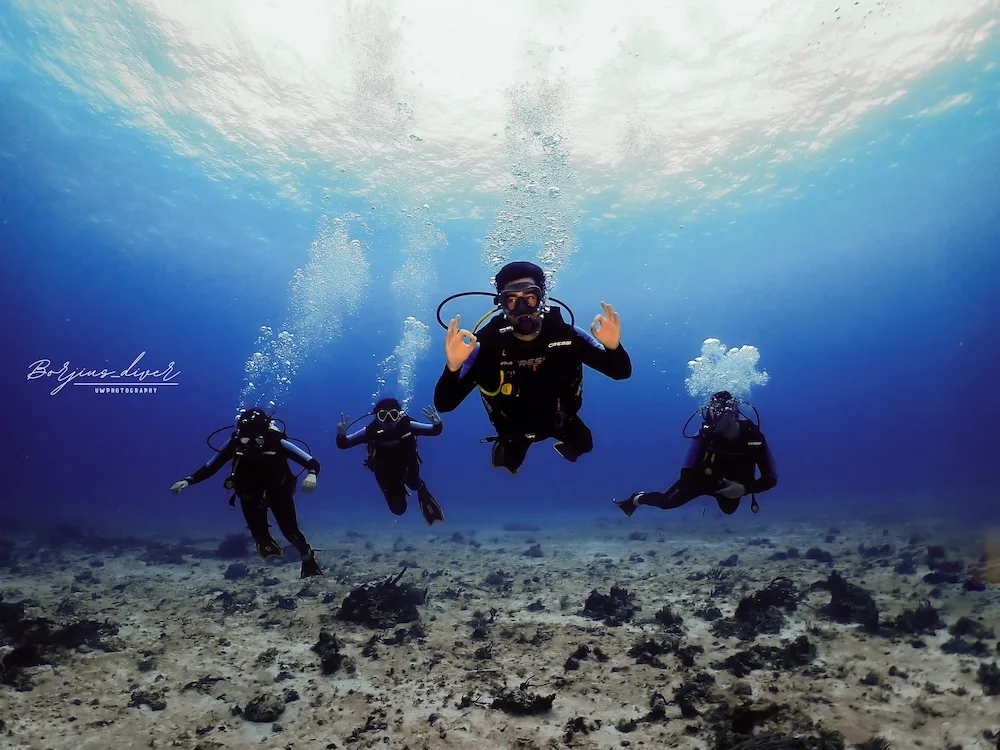
Diving Barracuda Reef begins with a boat drop upstream, allowing the prevailing north-south coastal current to carry you along the reef line. This site is defined by a long, low wall running parallel to the shore, punctuated by finger-like coral formations that extend into the sand. You'll find yourself navigating between these coral structures, which create natural channels and hideaways, making the most of the drift profile.
As you descend, typically holding a depth between 8 and 20 meters, the topography shifts between the structured reef and interspersed sandy patches. The finger-like outcroppings and ledges form a series of small caverns and overhangs. These features are not just aesthetic; they concentrate schools of grunts and snappers, offering dynamic photographic opportunities as you drift past their congregating points.
The current here is a defining element, ranging from moderate to strong, particularly along the deeper edge of the wall. This makes Barracuda Reef a typical drift dive, where the boat follows your bubbles from above. While challenging, the current also brings a constant supply of nutrients, supporting a vibrant ecosystem and enhancing the feeling of an active, flowing dive. Comfort with drift diving is essential to fully appreciate the site.
Beyond the schools of grunts and snappers, the reef structure itself is rich with macro life tucked into its many crevices. Keep an eye out for moray eels peering from their holes and lobsters and crabs scuttling within the protected spaces. These intricate details contrast with the wider view of rays and stingrays often found resting on the sandy bottom adjacent to the reef.
The diverse marine community also includes numerous smaller reef fish that thrive in the current-swept environment. Sergeant majors, trumpetfish, angelfish, and butterflyfish are common sights, moving through the coral. The presence of boxfish and the occasional seahorse adds to the richness, rewarding careful observation within the reef's sheltered nooks.
Barracuda Reef stands out among its neighboring Playa del Carmen sites for its unique geological formations. The pronounced finger-like outcroppings and the abundance of small caverns and overhangs create a distinct habitat that concentrates marine life, differentiating it from more uniform reef profiles in the area. This specific topology offers more intricate exploration paths.
Many choose Barracuda as a second, shallower dive during the day or even for night dives, due to its manageable depth profile of 8 to 15 meters on its main sections and the rich, easily observed marine life. This combination of accessible depth and concentrated biodiversity makes it a consistent choice for divers looking for a rewarding experience without venturing into deeper or more exposed waters.
Diving at Barracuda Reef is typically conducted as a drift, with depths ranging from 8 meters down to a maximum of 20 meters. The current is consistently moderate to strong, driven by prevailing north-south coastal flows, and comfort with drift diving is a requirement. Visibility generally holds between 18 to 30 meters, offering clear views of the reef structure and marine inhabitants.
Barracuda Reef can be chosen as a second, shallower dive during the day, with its main sections offering a manageable depth profile. It is also used for night dives, when the reef’s concentrated marine life and sheltered coral features remain readily observed within the site’s accessible depth range.
Barracuda Reef is a drift dive, so you need to be comfortable with drift diving. The current is consistently moderate to strong and follows prevailing north-south coastal flows, becoming particularly strong along the deeper edge of the wall. The boat drops you upstream and follows your bubbles during the dive.
Barracuda Reef ranges from eight meters to a maximum of twenty meters. Its main sections commonly stay between eight and fifteen meters, making the site suitable as a shallower second dive. You move along a fringing reef wall, with structured coral, sandy patches, ledges, small caverns, and overhangs.
At Barracuda Reef, you can drift past finger-like coral outcroppings, small caverns, and overhangs occupied by dense schools of grunts and snappers. Look for rays and stingrays over nearby sand, plus moray eels, lobsters, crabs, angelfish, butterflyfish, trumpetfish, boxfish, sergeant majors, and occasional seahorses.